Tambat Anushka Bhuvaneshwar Harsha

UH4051

PUH24043

This research examines the relationship between logistics policy frameworks, infrastructure systems, and logistics real estate development in India. The study analyses national and state-level logistics policies, evaluates regional competitiveness using a multi-factor district-scoring framework, and investigates warehousing market trends across major Indian cities. Using spatial analysis and K-Means clustering, the research further explores Bengaluru’s logistics ecosystem and emerging warehouse corridors. The work highlights how multimodal connectivity, policy integration, and industrial growth influence logistics investment patterns and regional development. The study ultimately proposes policy and planning recommendations to strengthen India’s logistics efficiency and to support sustainable growth in logistics real estate.

View Additional Work
Report Content

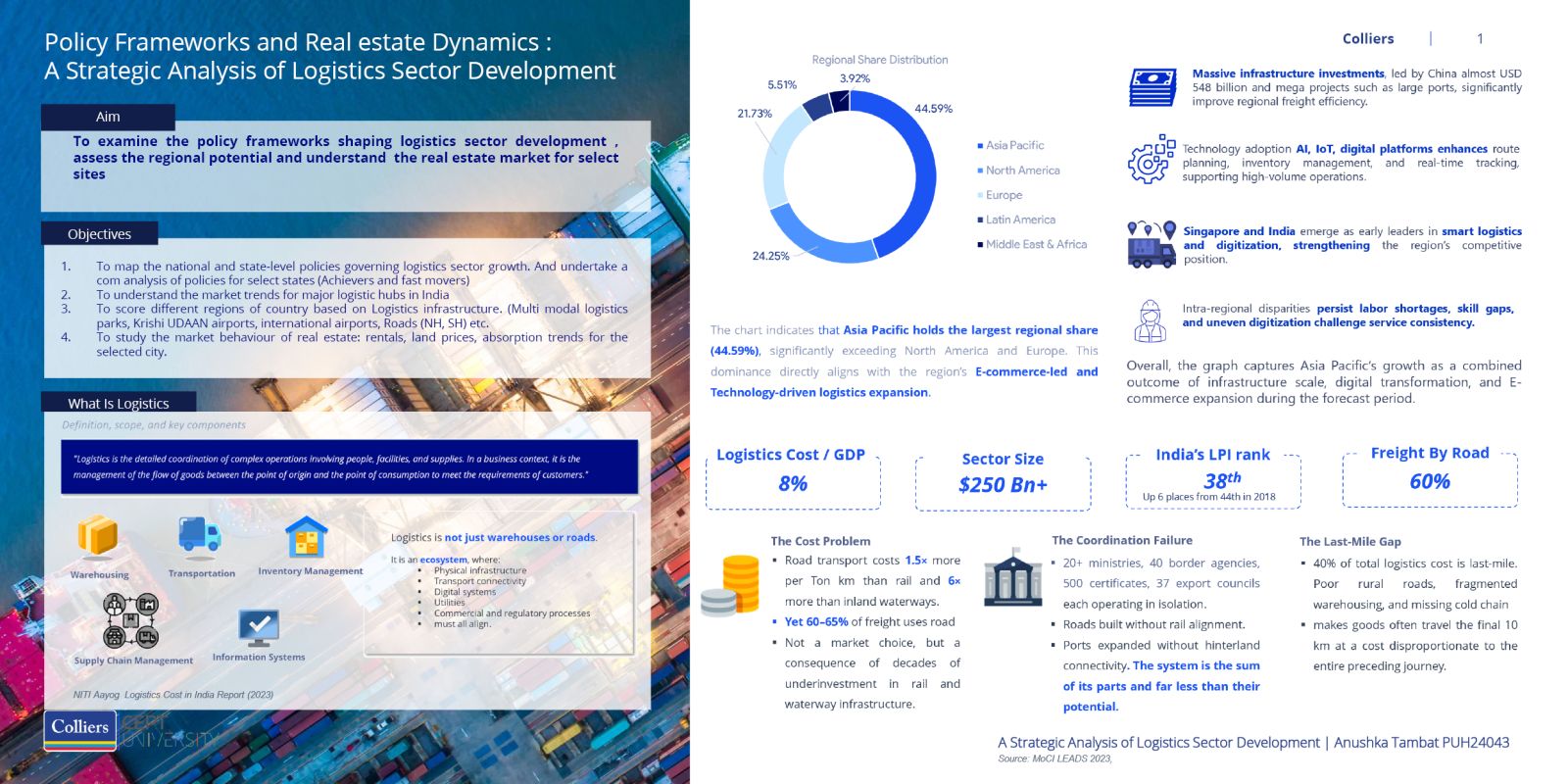
India’s logistics transformation is being driven by infrastructure investment, digitalisation, and integrated freight systems, but high logistics costs and coordination gaps remain major structural challenges.

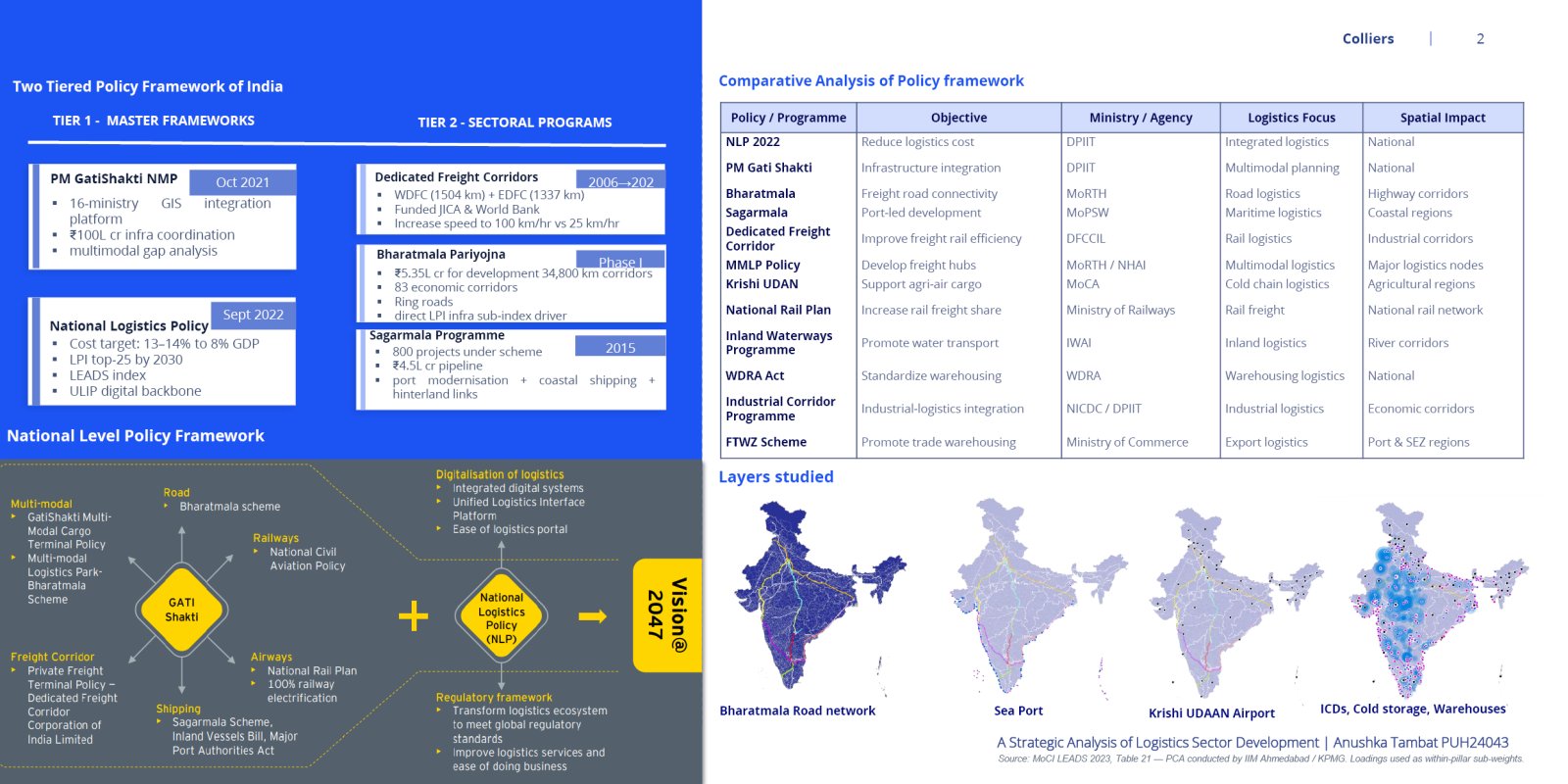
Two-tier national logistics framework integrating multimodal infrastructure, policy, and digital systems.

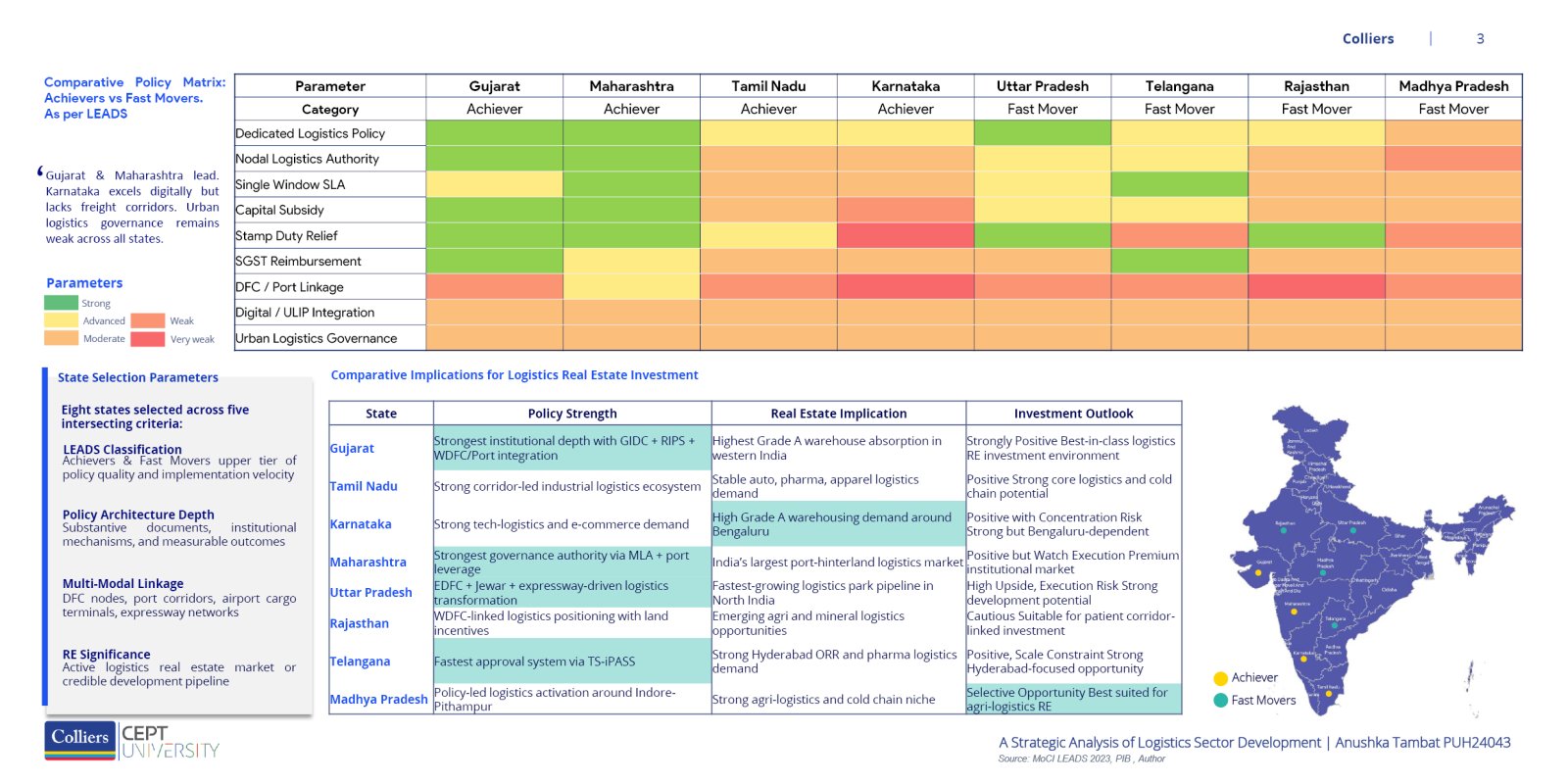
Comparative evaluation of logistics policies across Achiever and Fast-Mover states.

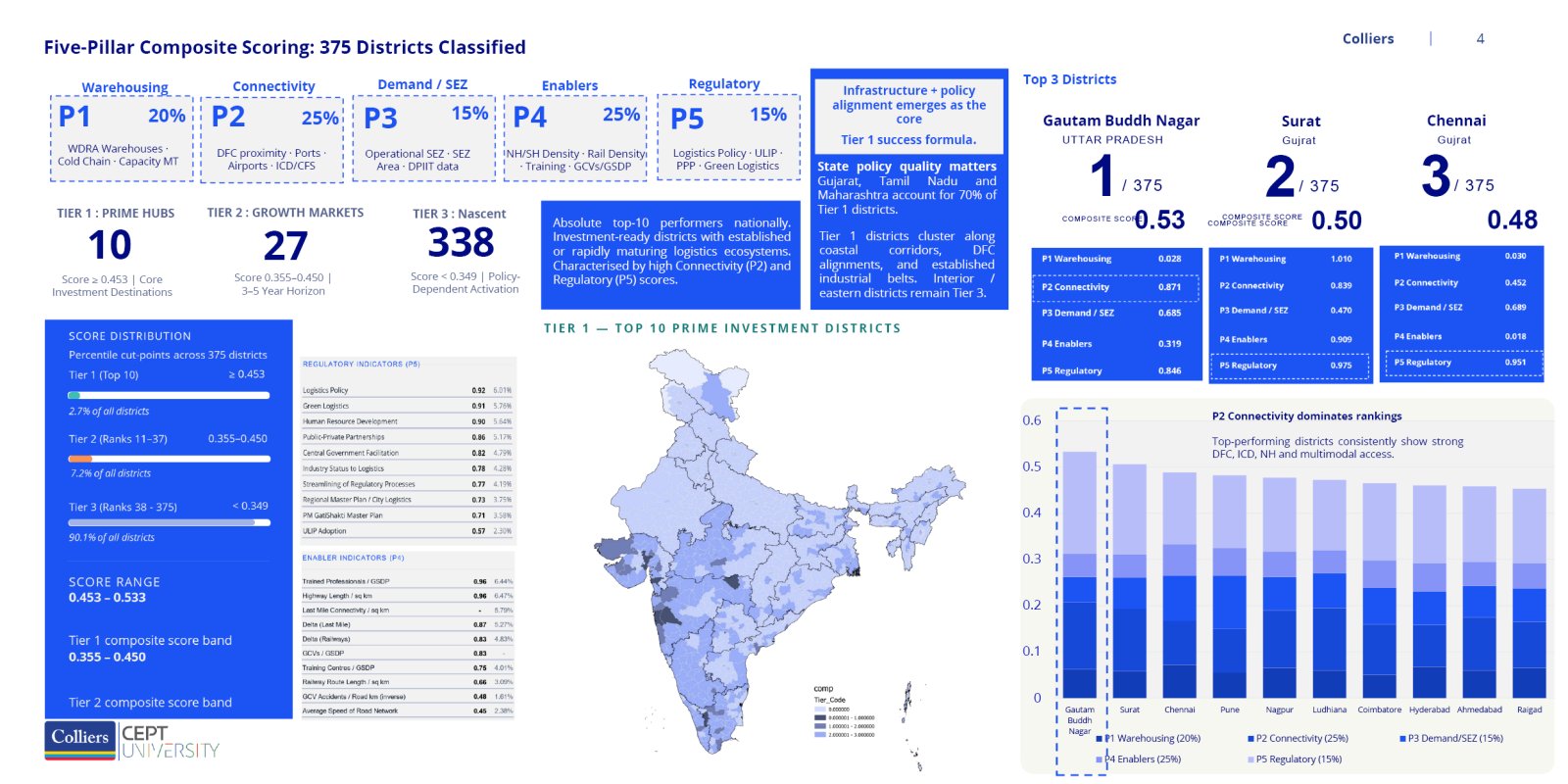
National logistics competitiveness assessment of 375 districts using a five-pillar composite model.

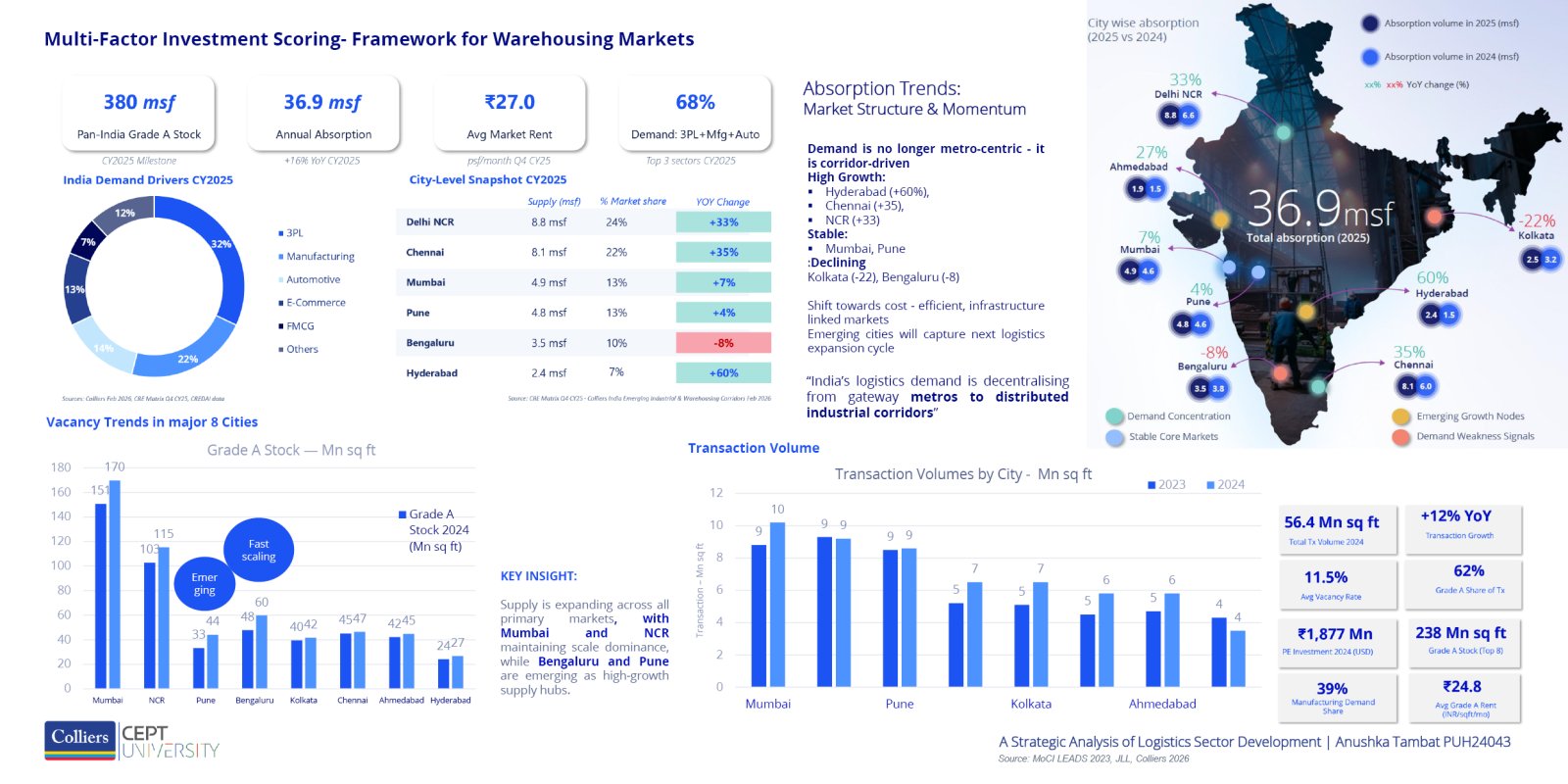
Analysis of Grade A warehousing demand, absorption, and market decentralization across Indian cities.

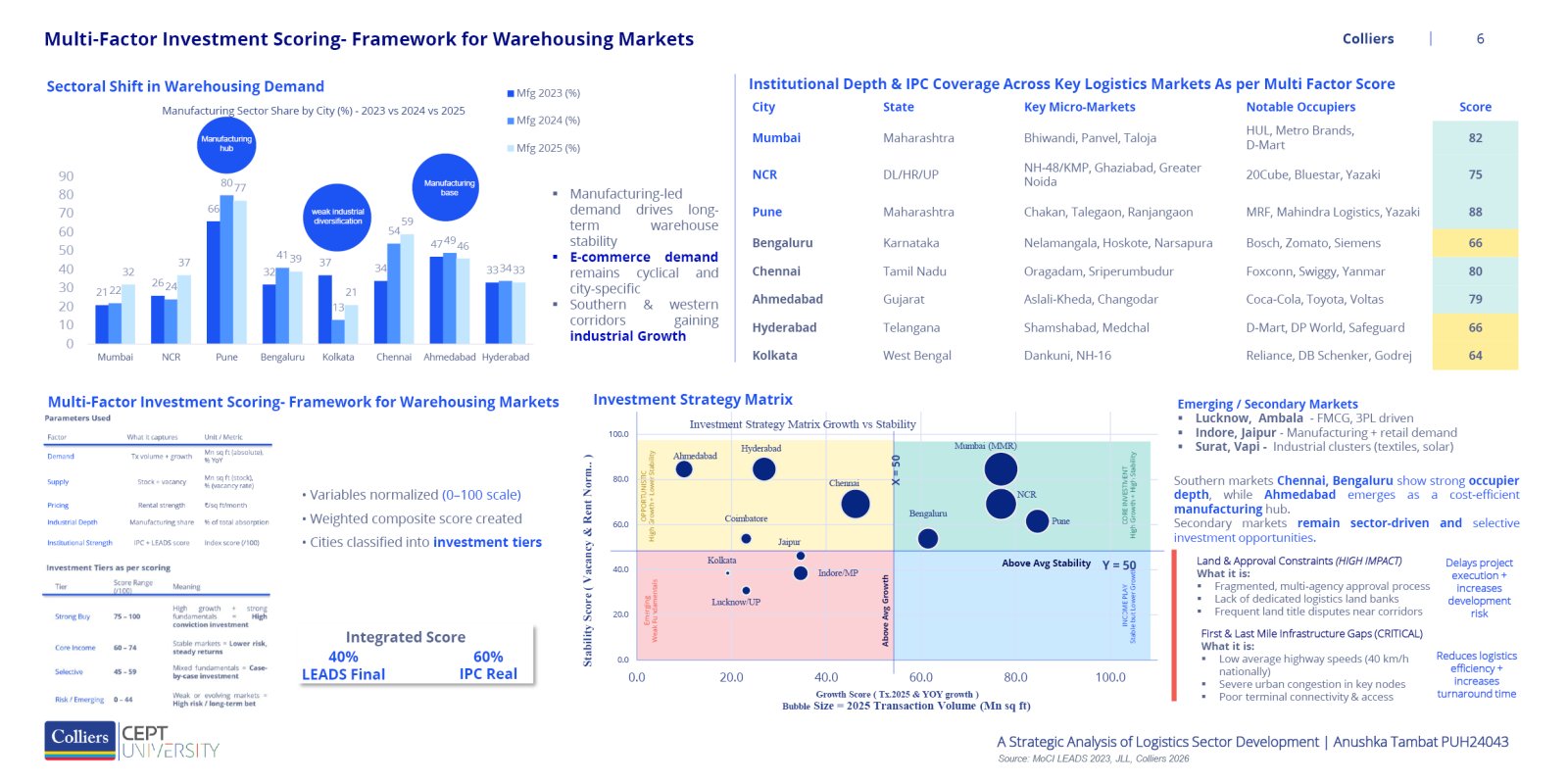
Growth-versus-stability investment framework for India’s warehousing markets.

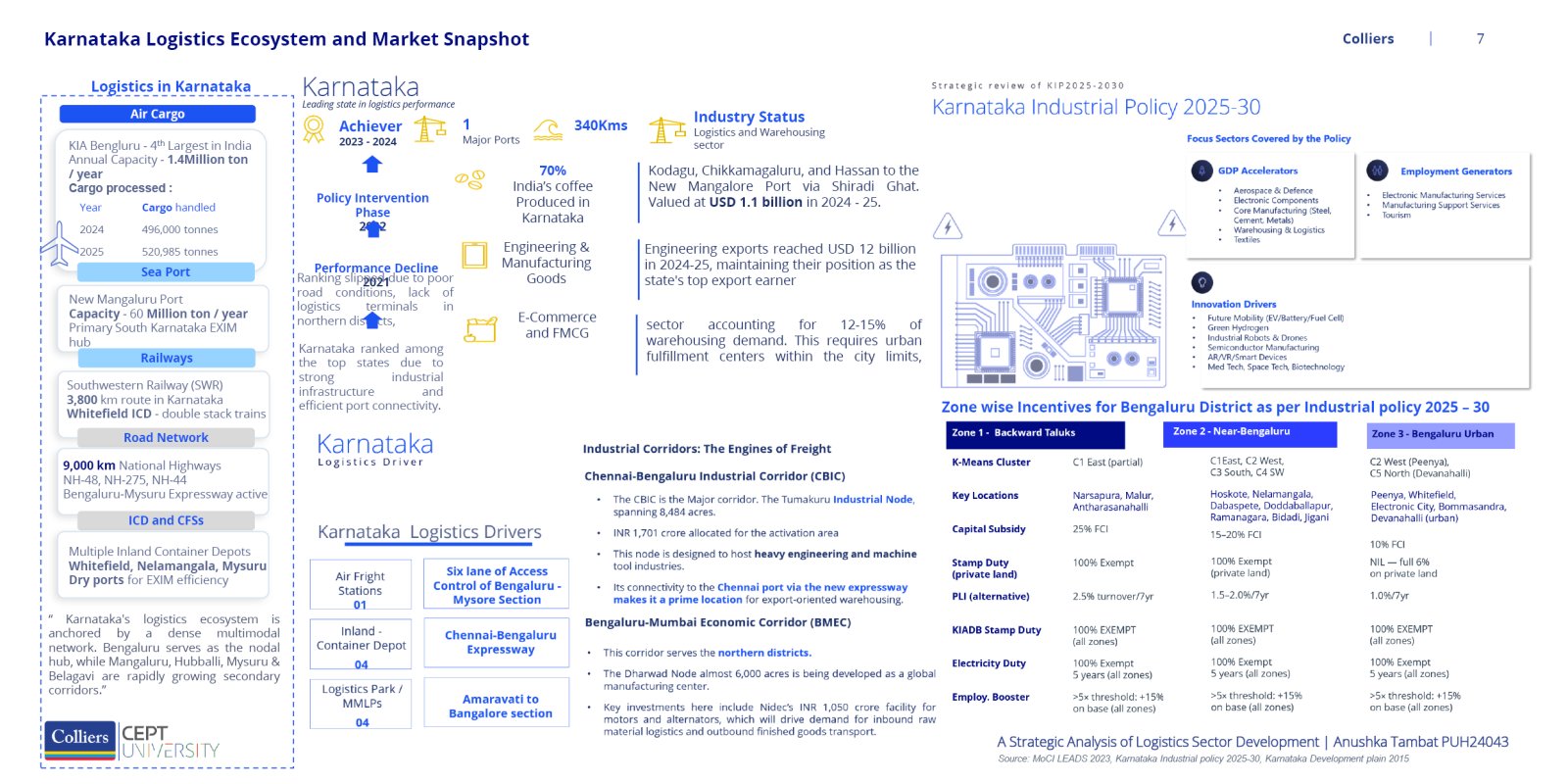
Karnataka’s multimodal logistics network and industrial policy-led logistics growth.

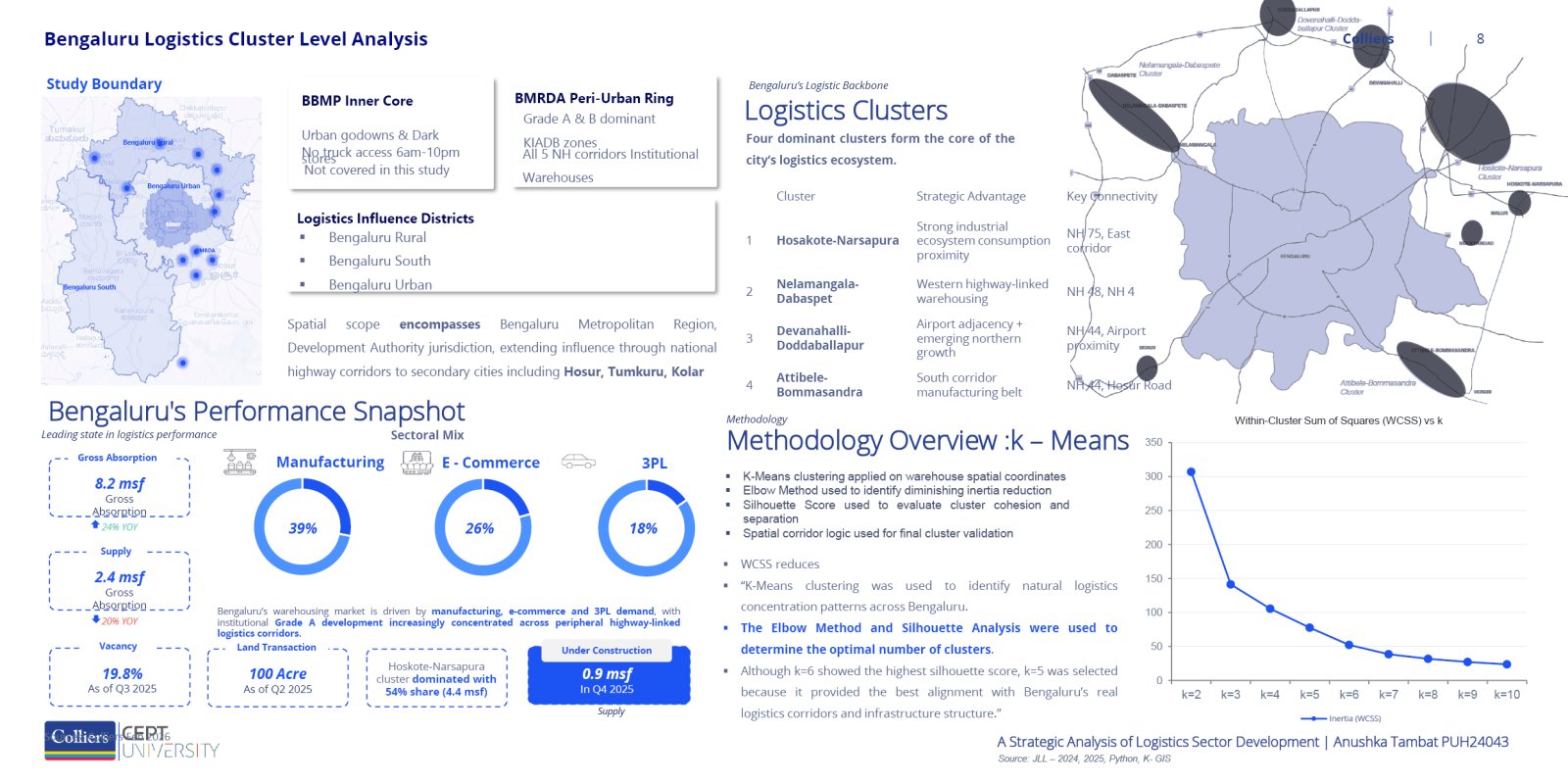
Clustering analysis identifying Bengaluru’s major logistics corridors and warehouse concentrations.

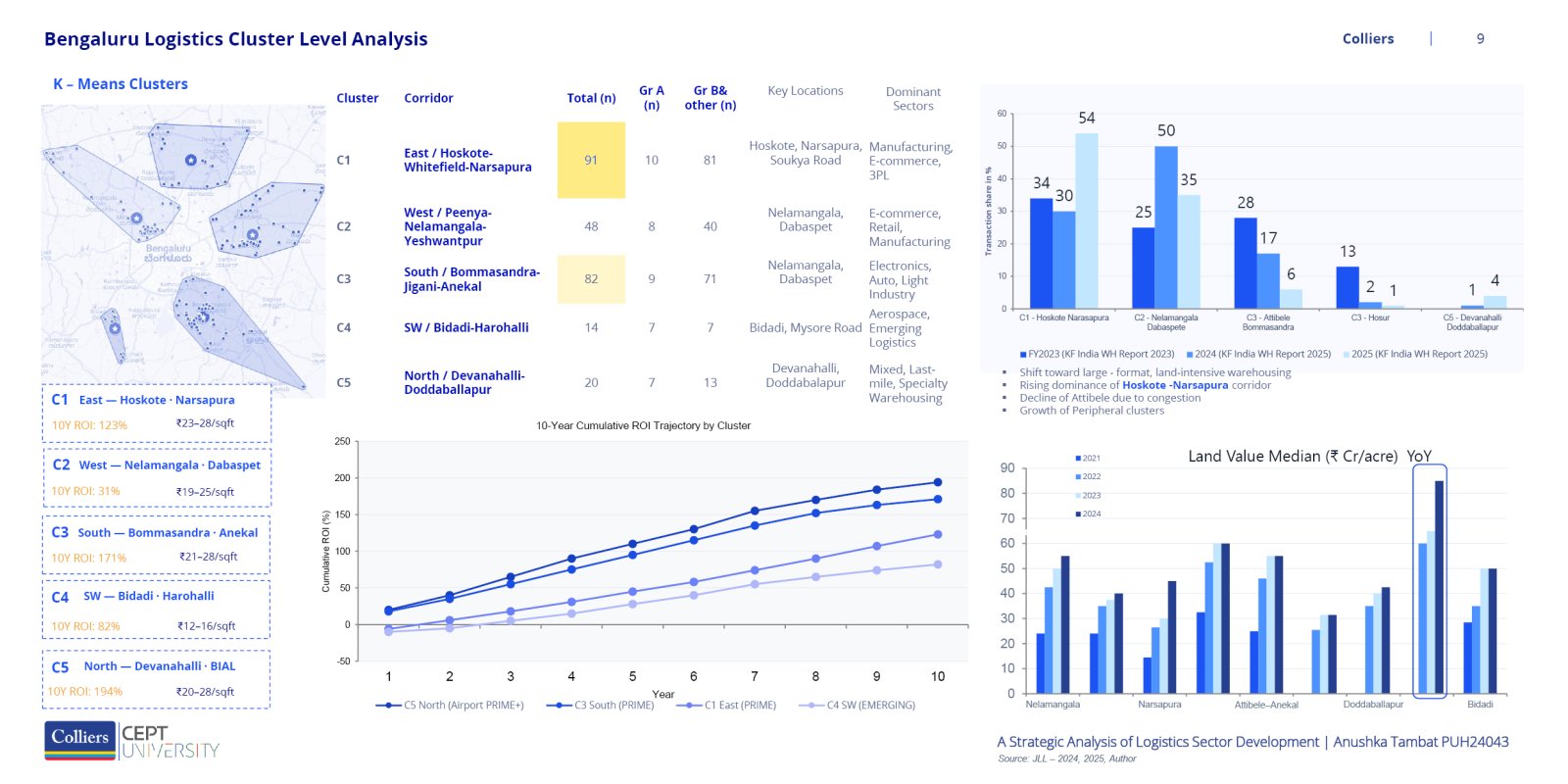
Comparative performance of Bengaluru logistics clusters based on transactions, land values, and ROI trends.

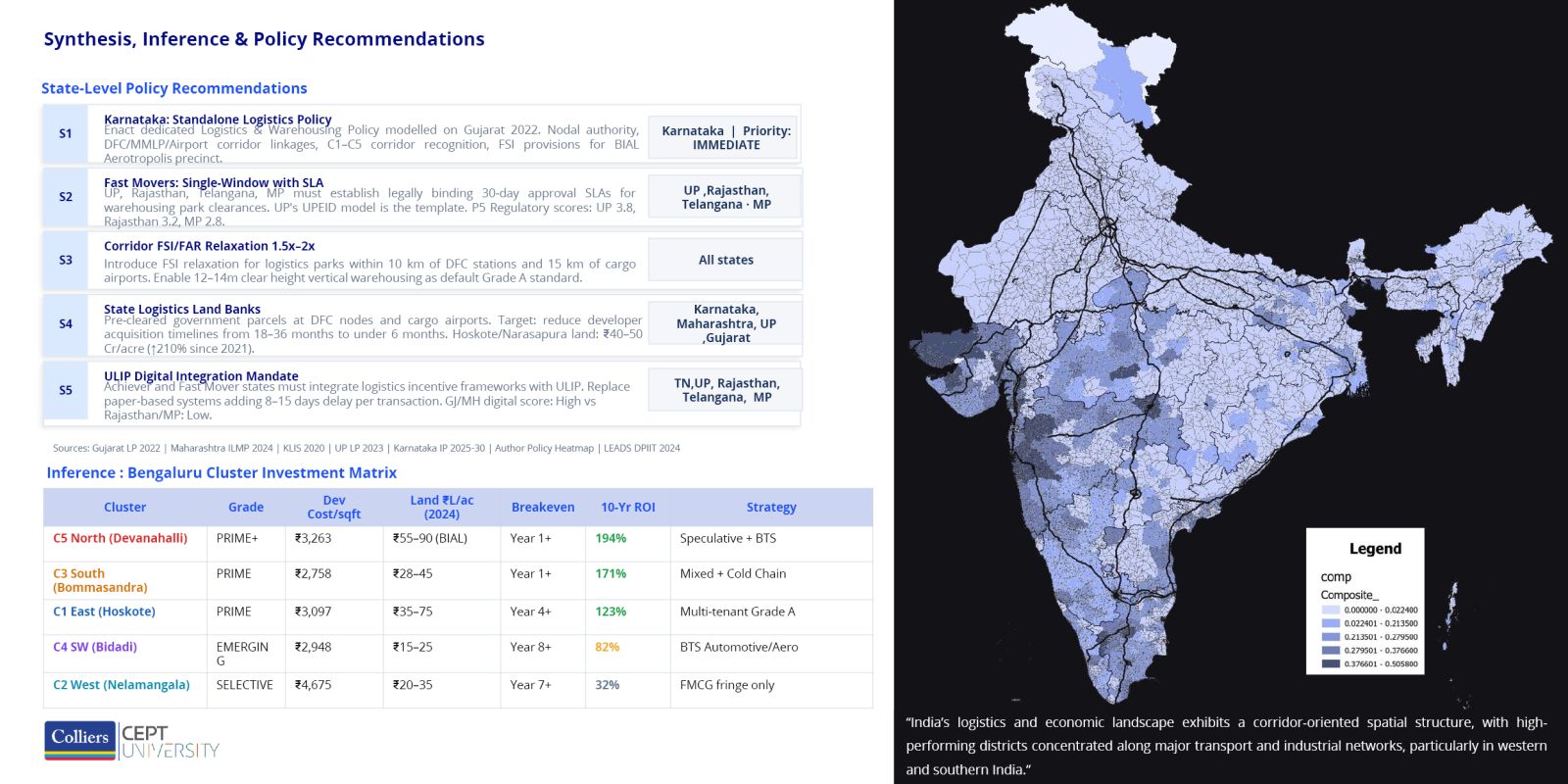
Policy recommendations and investment strategy framework for logistics-led regional development.