Your browser is out-of-date!
For a richer surfing experience on our website, please update your browser. Update my browser now!
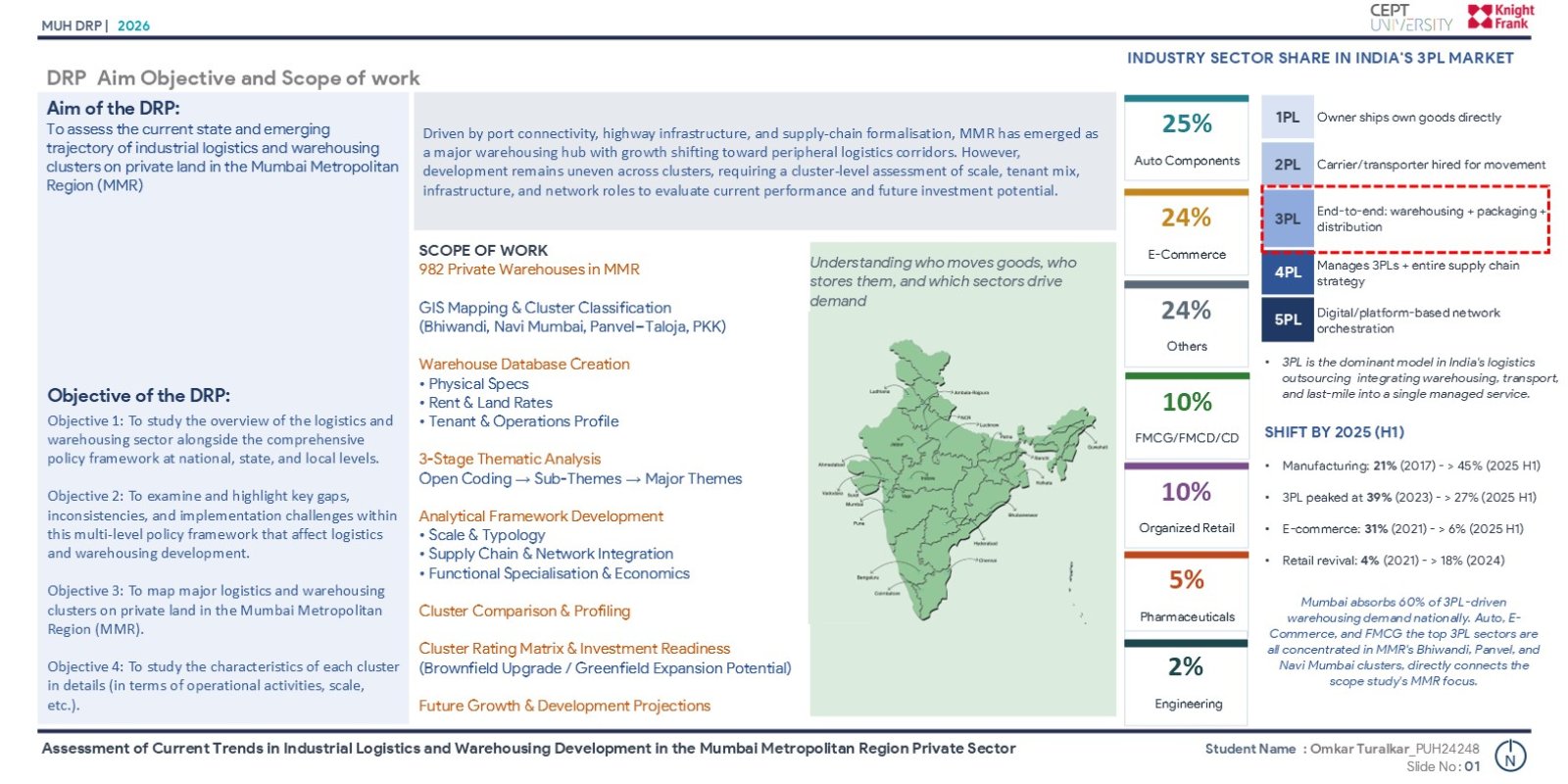
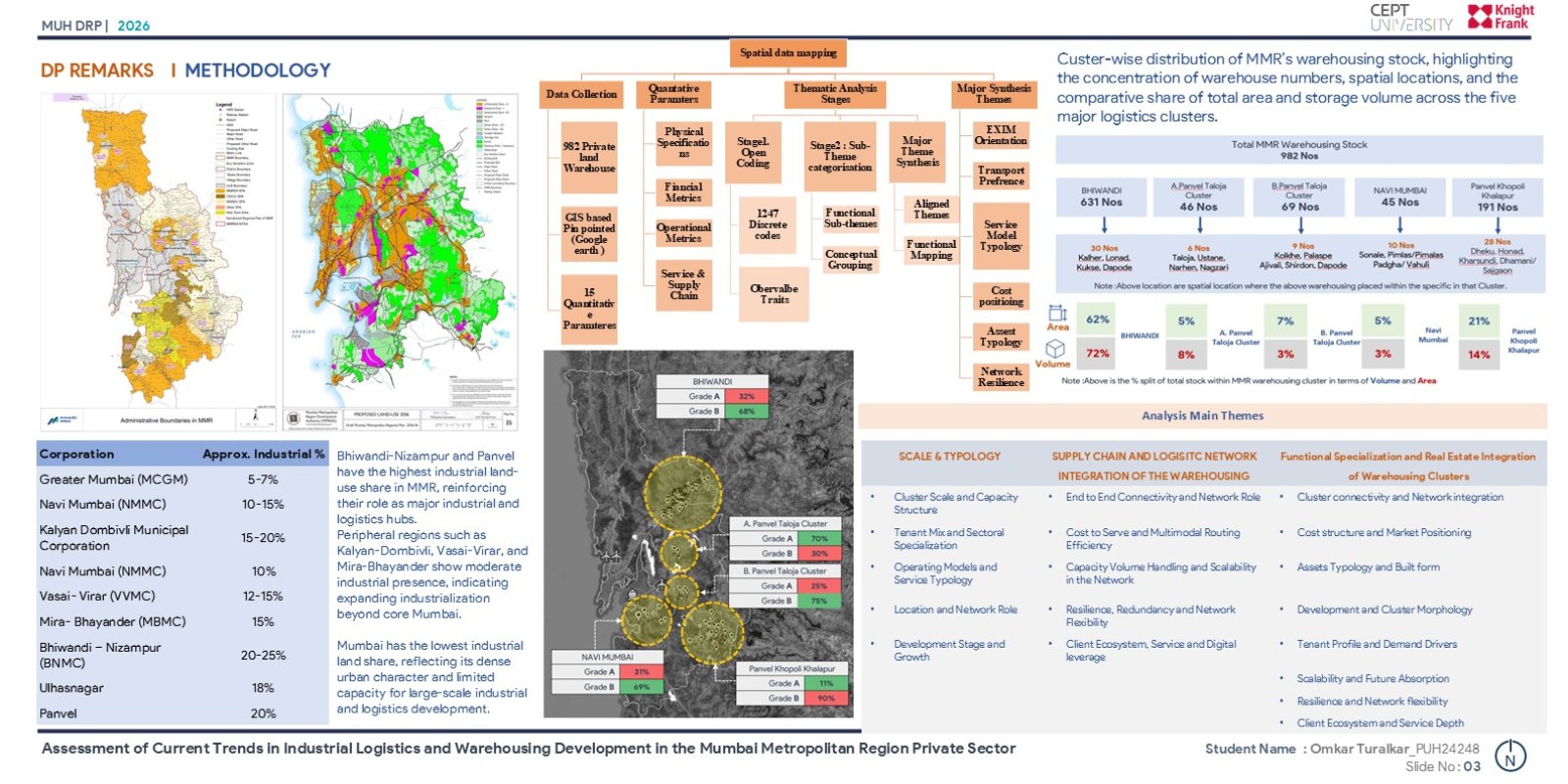
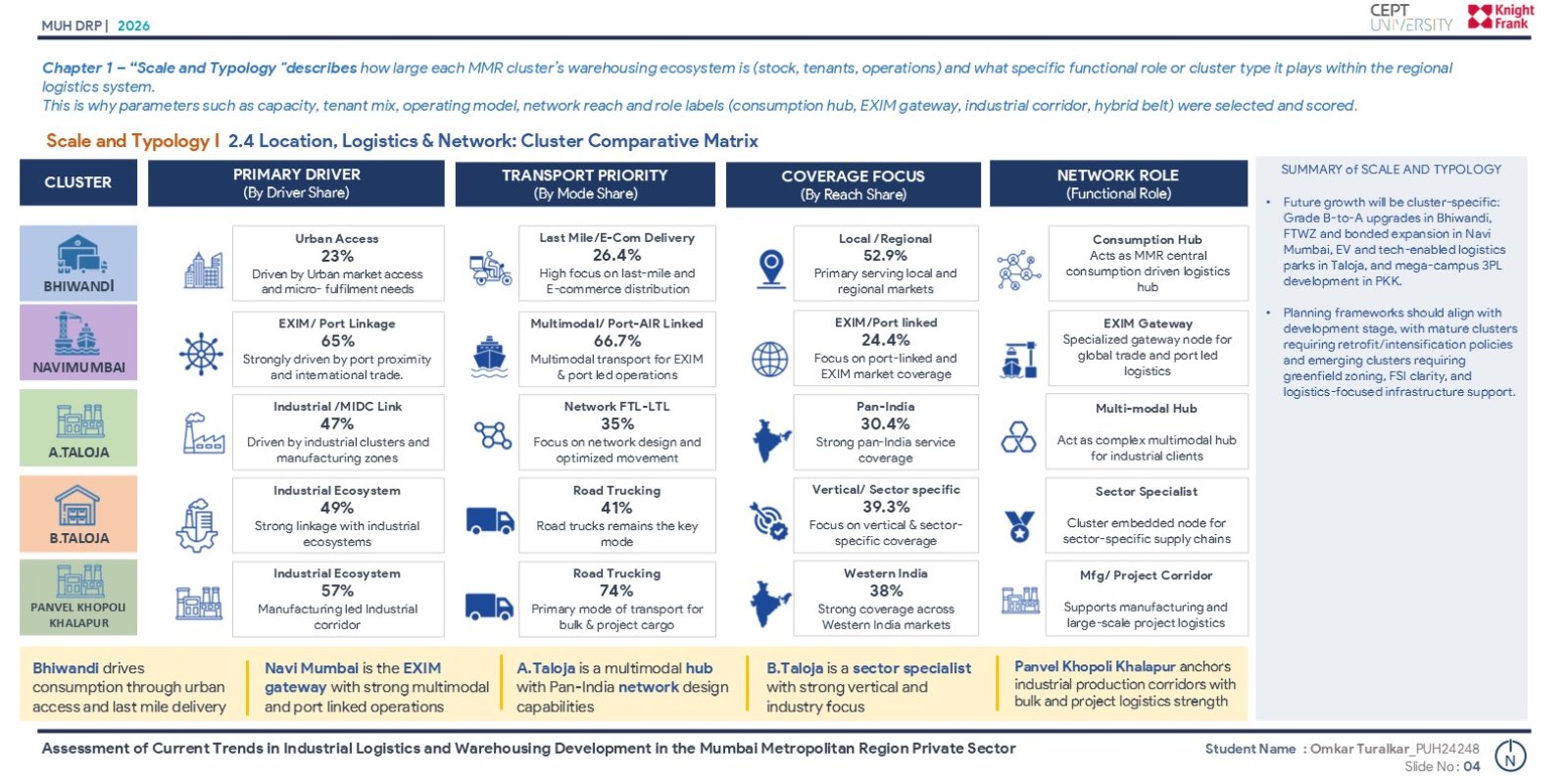
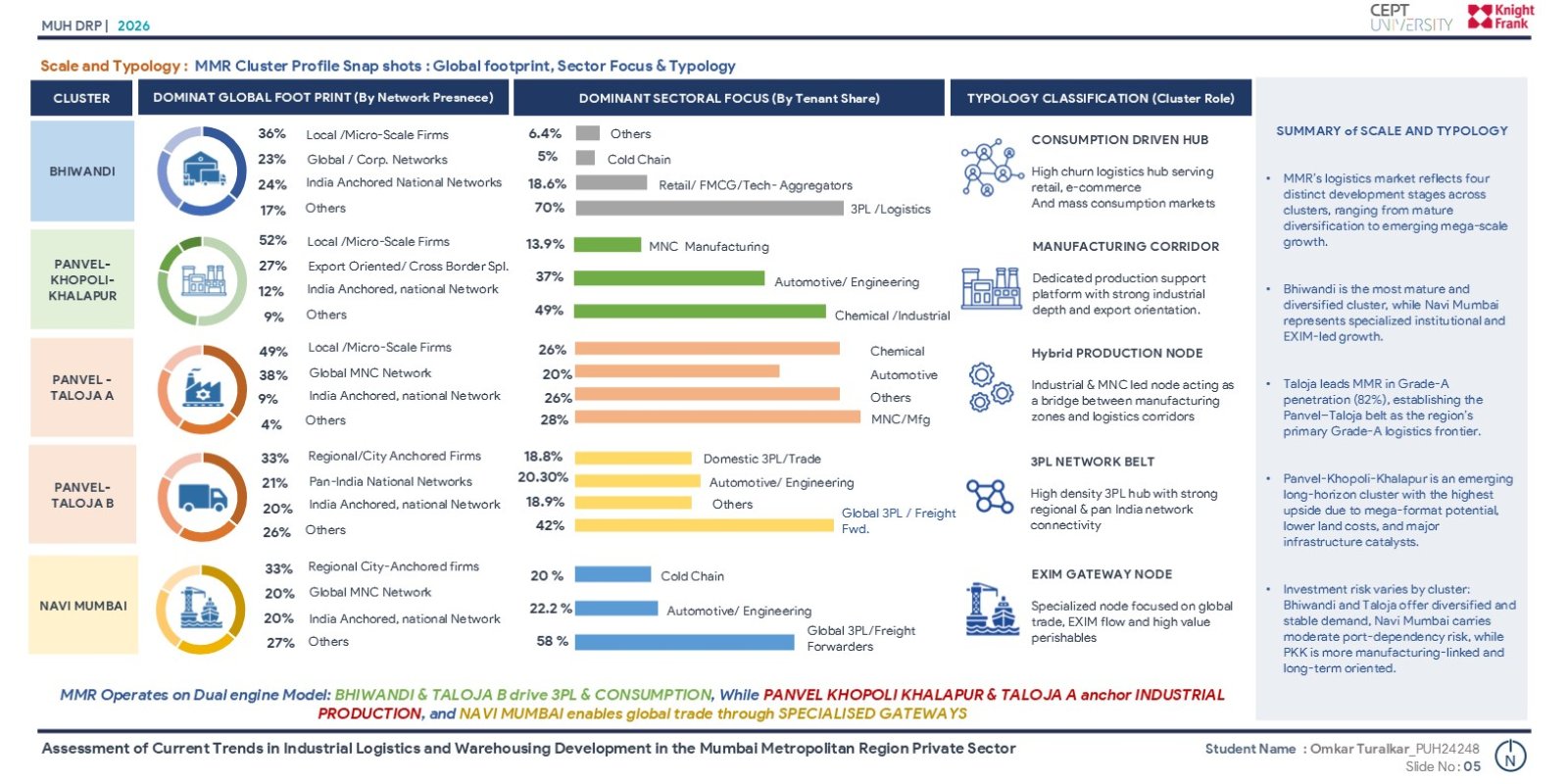
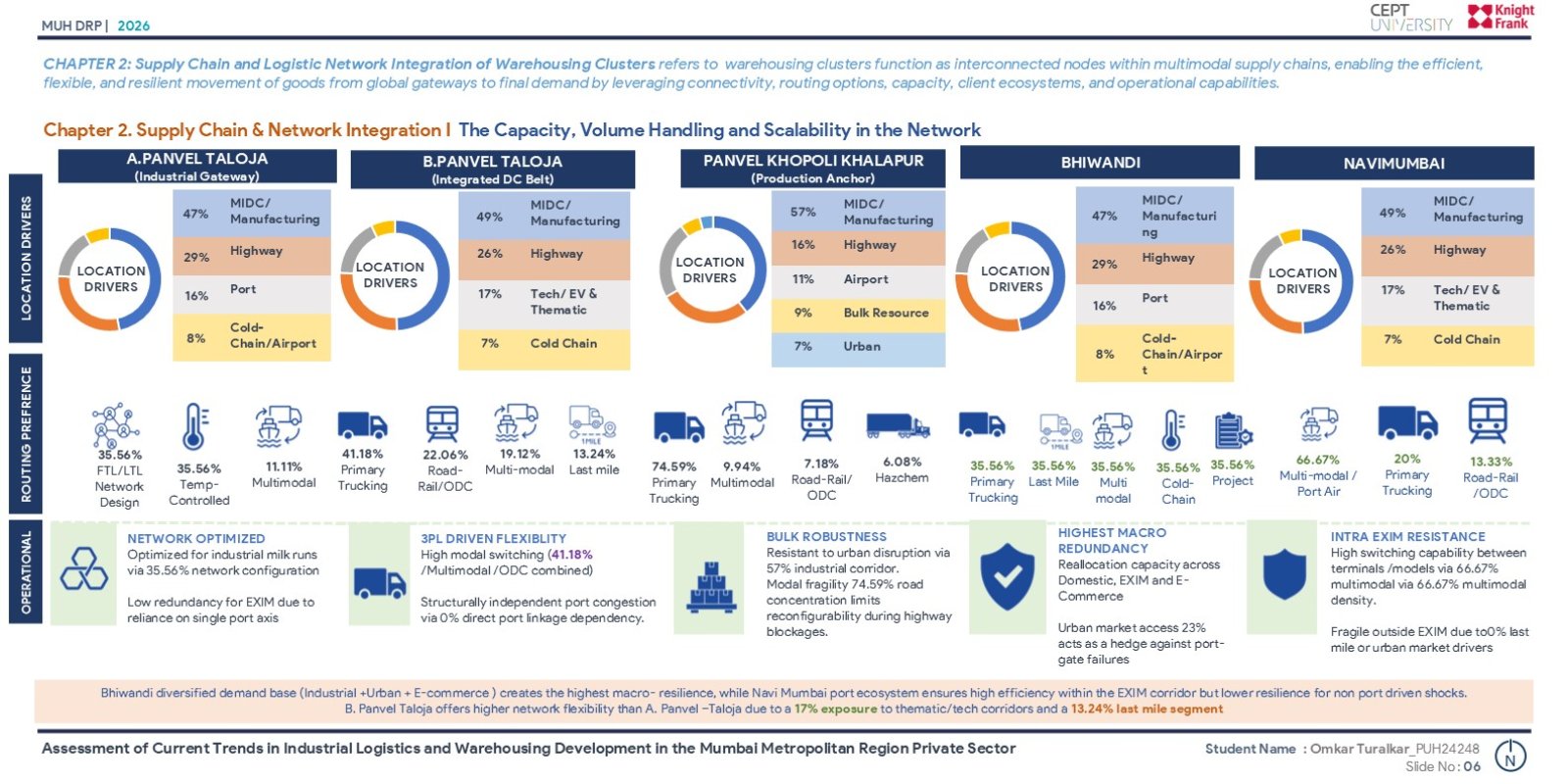
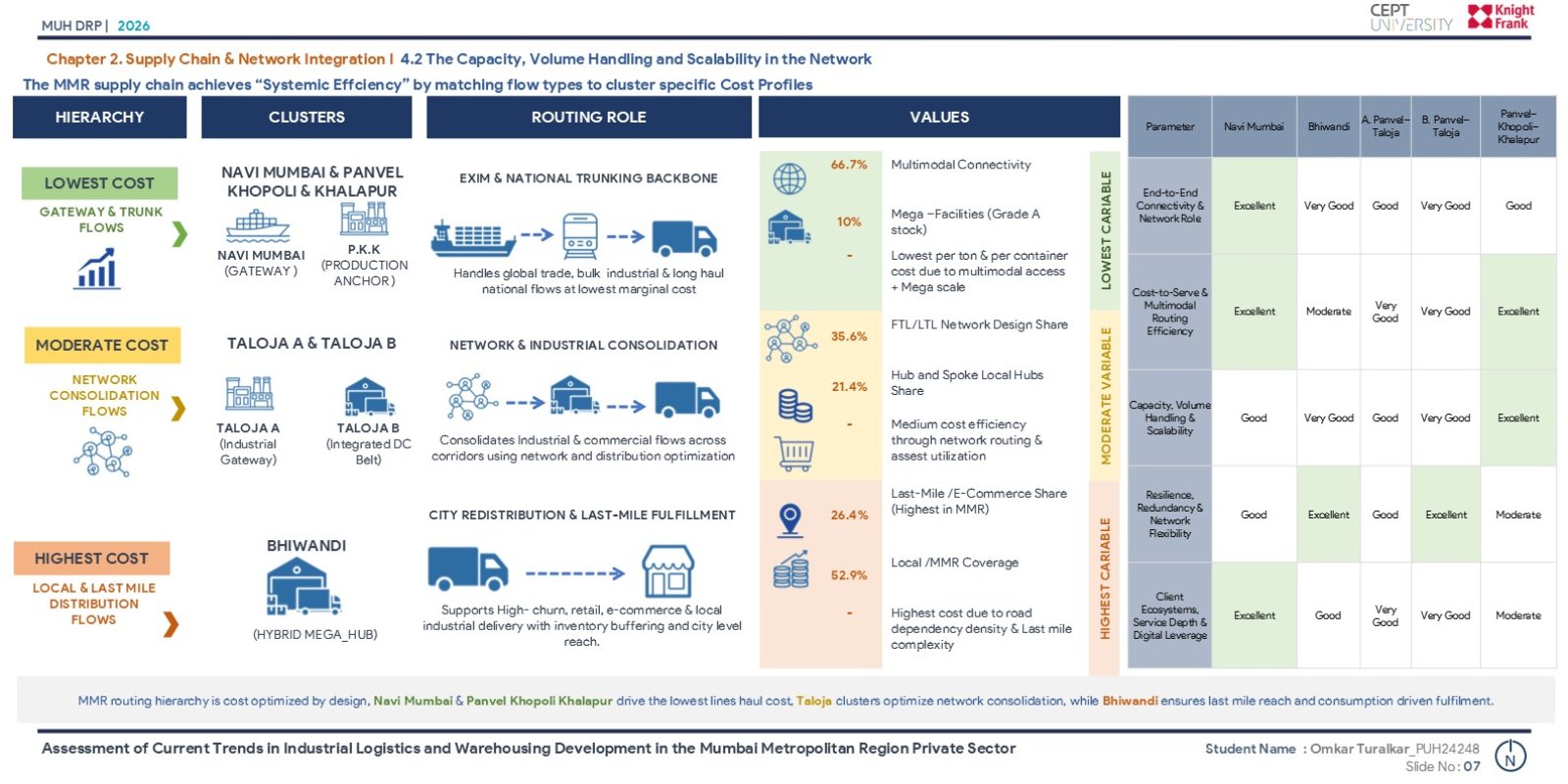
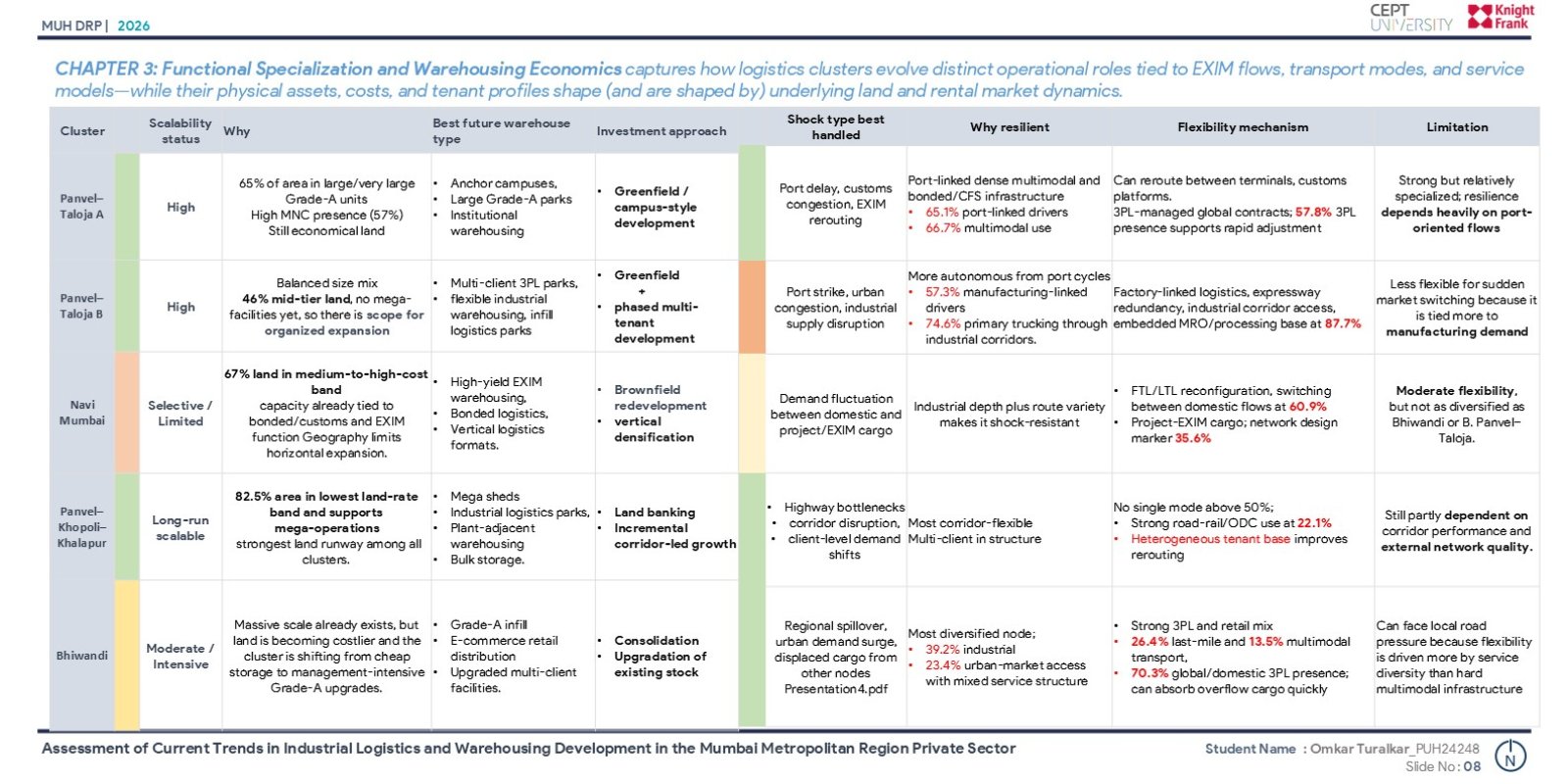
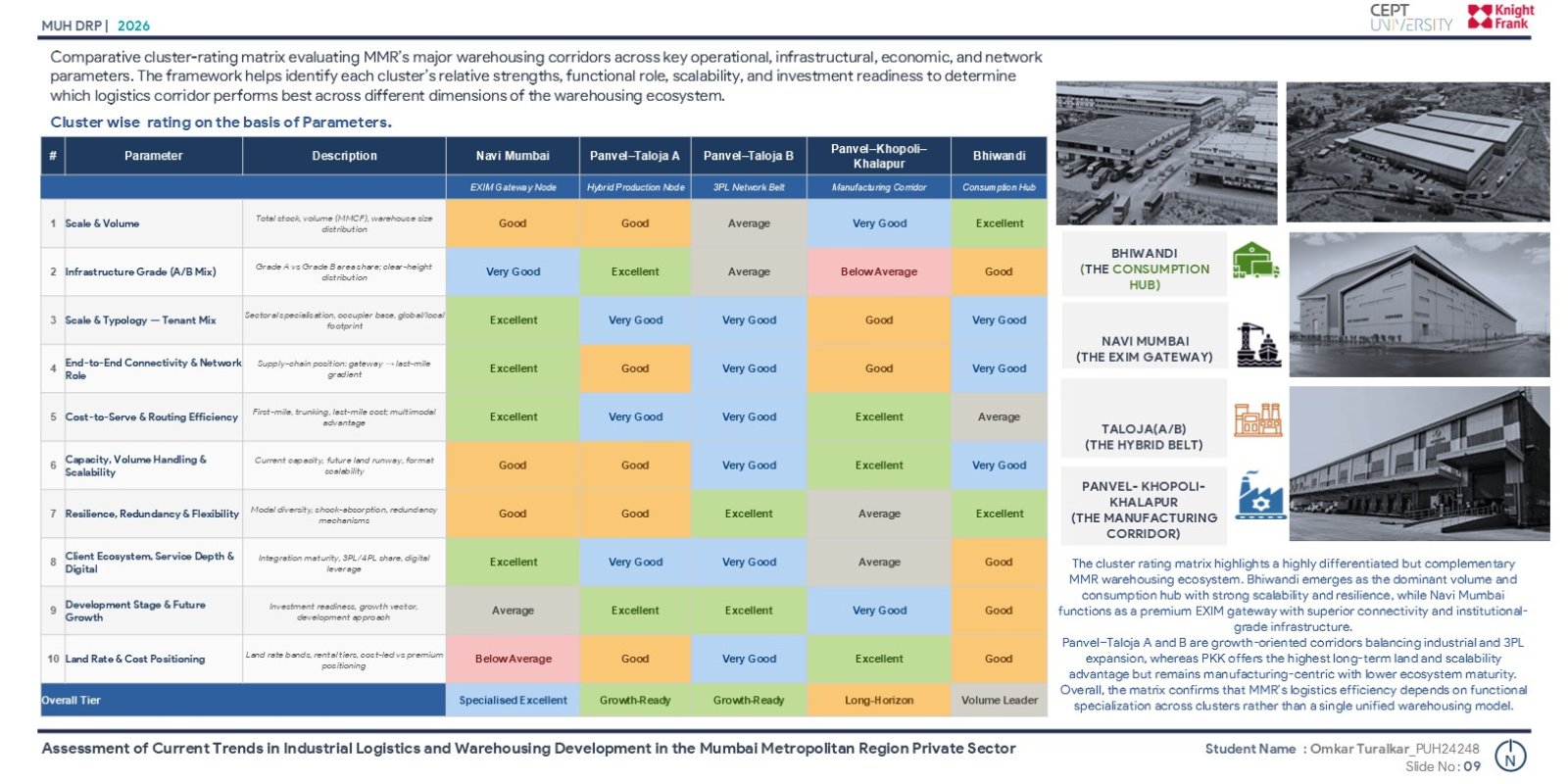
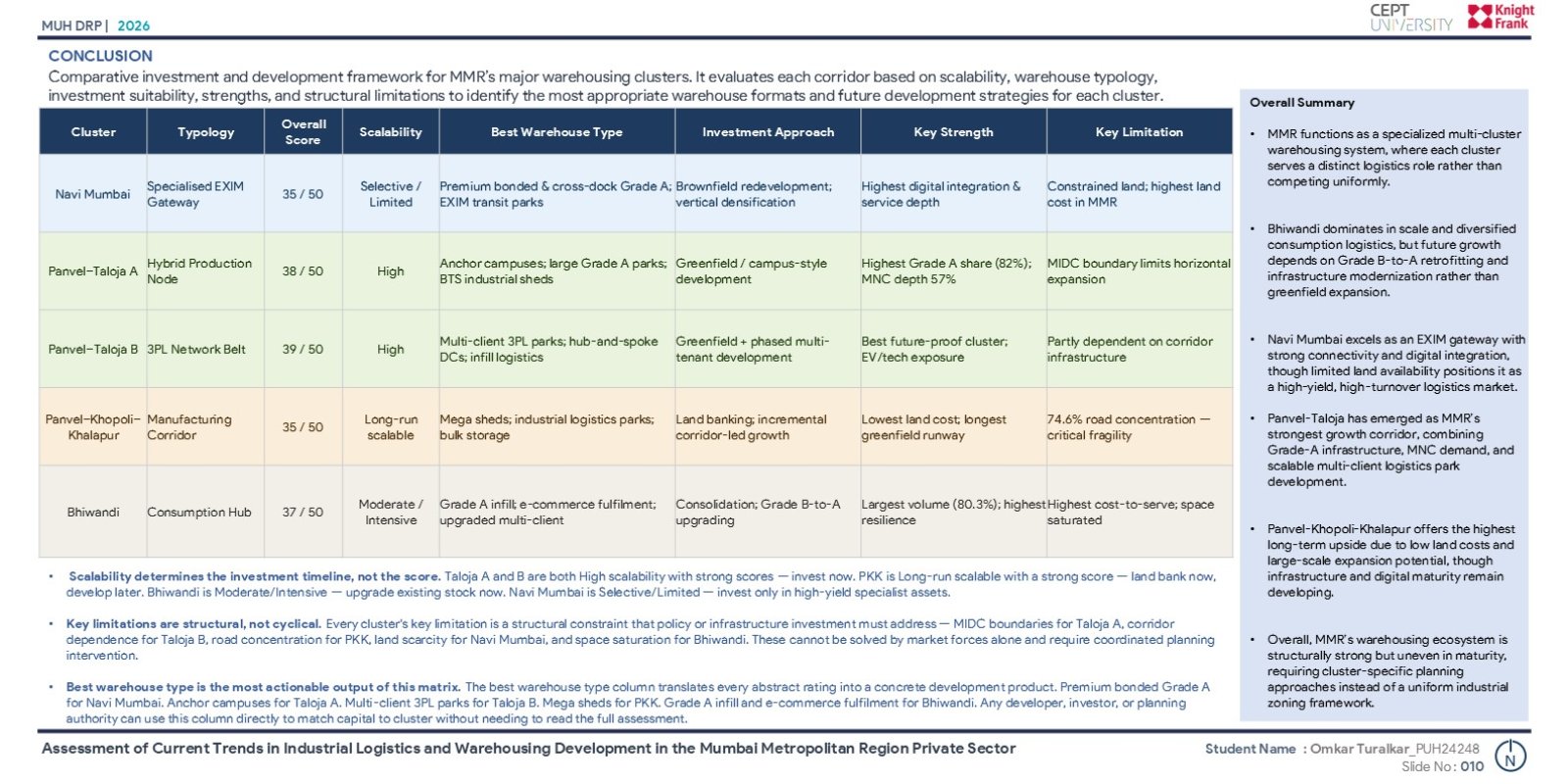
This study assesses current trends in industrial logistics and warehousing development within the private sector of the Mumbai Metropolitan Region (MMR). It examines how freight flows, transport corridors, land markets, and tenant ecosystems shape warehousing growth across major clusters. Using GIS mapping of 982 warehouses and a 15-parameter database, the research analyses scale, typology, network integration, functional specialization, and warehousing economics. Through thematic and comparative cluster analysis, the study evaluates investment readiness, operational characteristics, and future development potential, identifying opportunities for brownfield intensification and greenfield expansion across MMR’s evolving logistics landscape.