Abhipsa Ray

UI4051

PUI24009

This project assesses the climate responsiveness of urban local bodies and vulnerable communities during flood disasters through the case of Ichalkaranji, Maharashtra. The study examines how governance systems, infrastructure networks, and communities prepare for, respond to, and recover from flooding events. Using a mixed-methods approach that combines literature review, policy analysis, field visits, interviews, and focus group discussions, the research identifies critical gaps between planned systems and on-the-ground realities. Particular focus is placed on recovery, which emerged as the weakest phase across both institutional and community systems. The project proposes operational improvements to strengthen preparedness, coordination, infrastructure management, and post-flood recovery processes.
Report Content

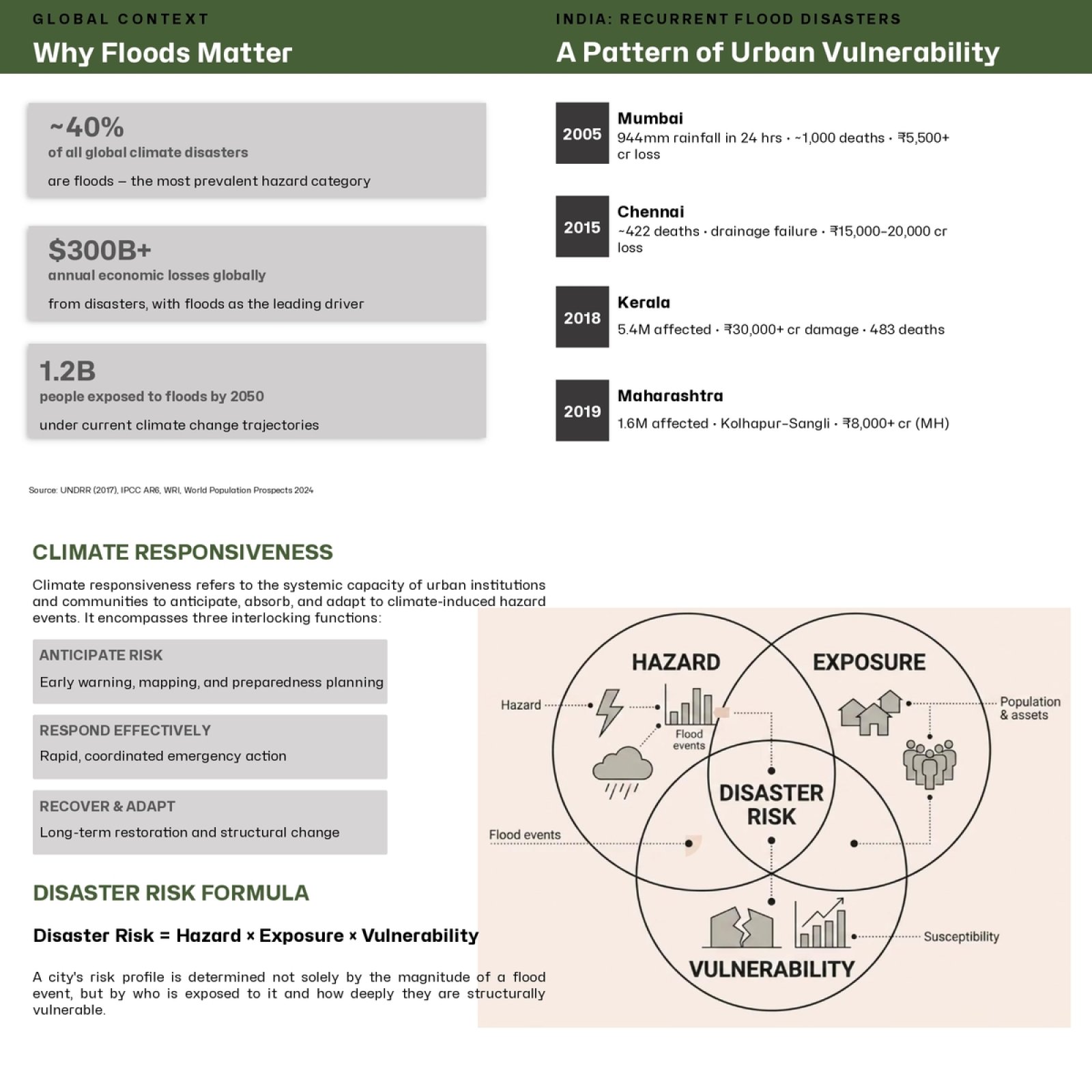
1: Global and National Context Establishing the scale of the crisis: Positioning urban floods as the leading global climate hazard and highlighting India’s pattern of recurring urban vulnerability.

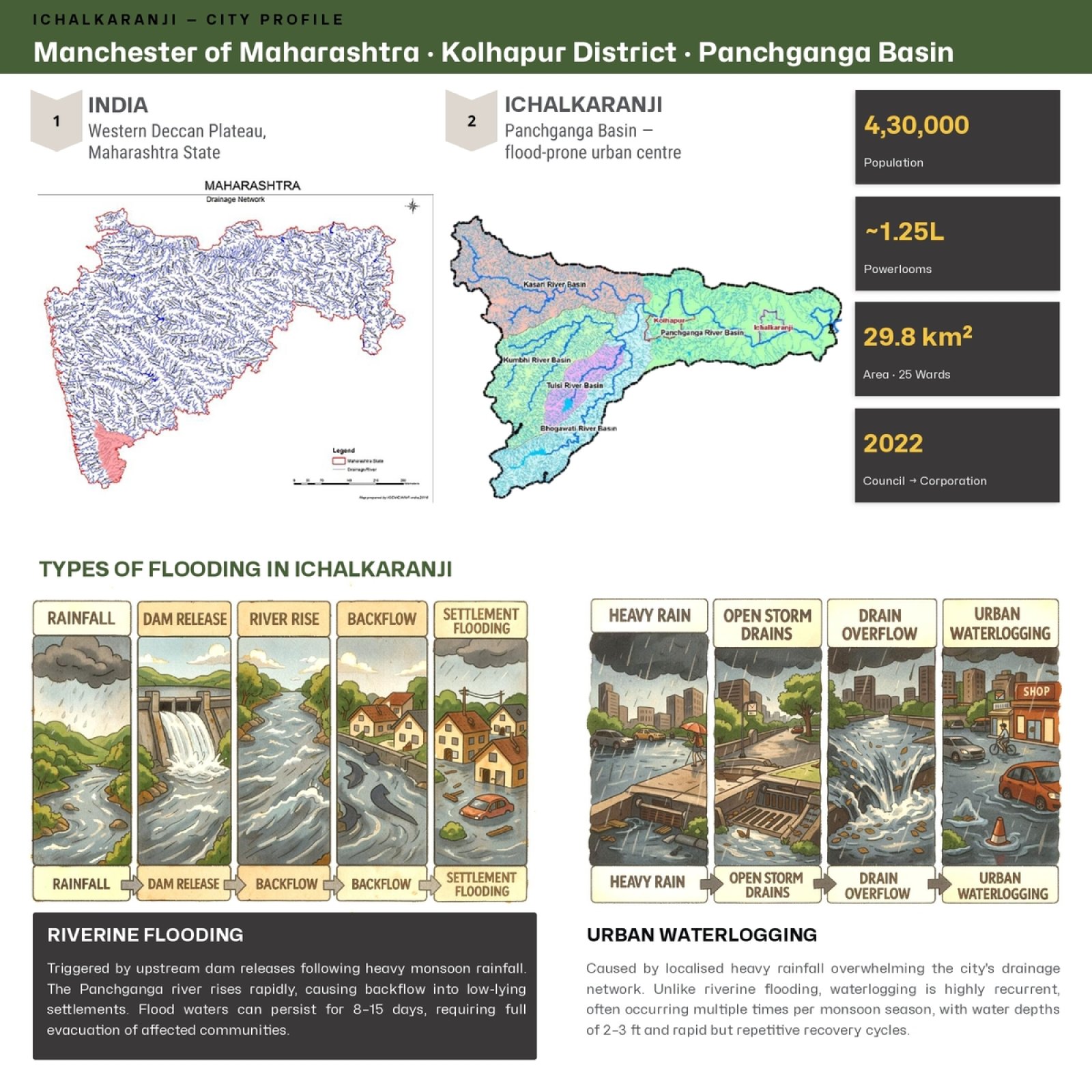
2: City Profile: Ichalkaranji Defining the geography of risk: An overview of the "Manchester of Maharashtra" and the dual challenges of riverine flooding and urban waterlogging.

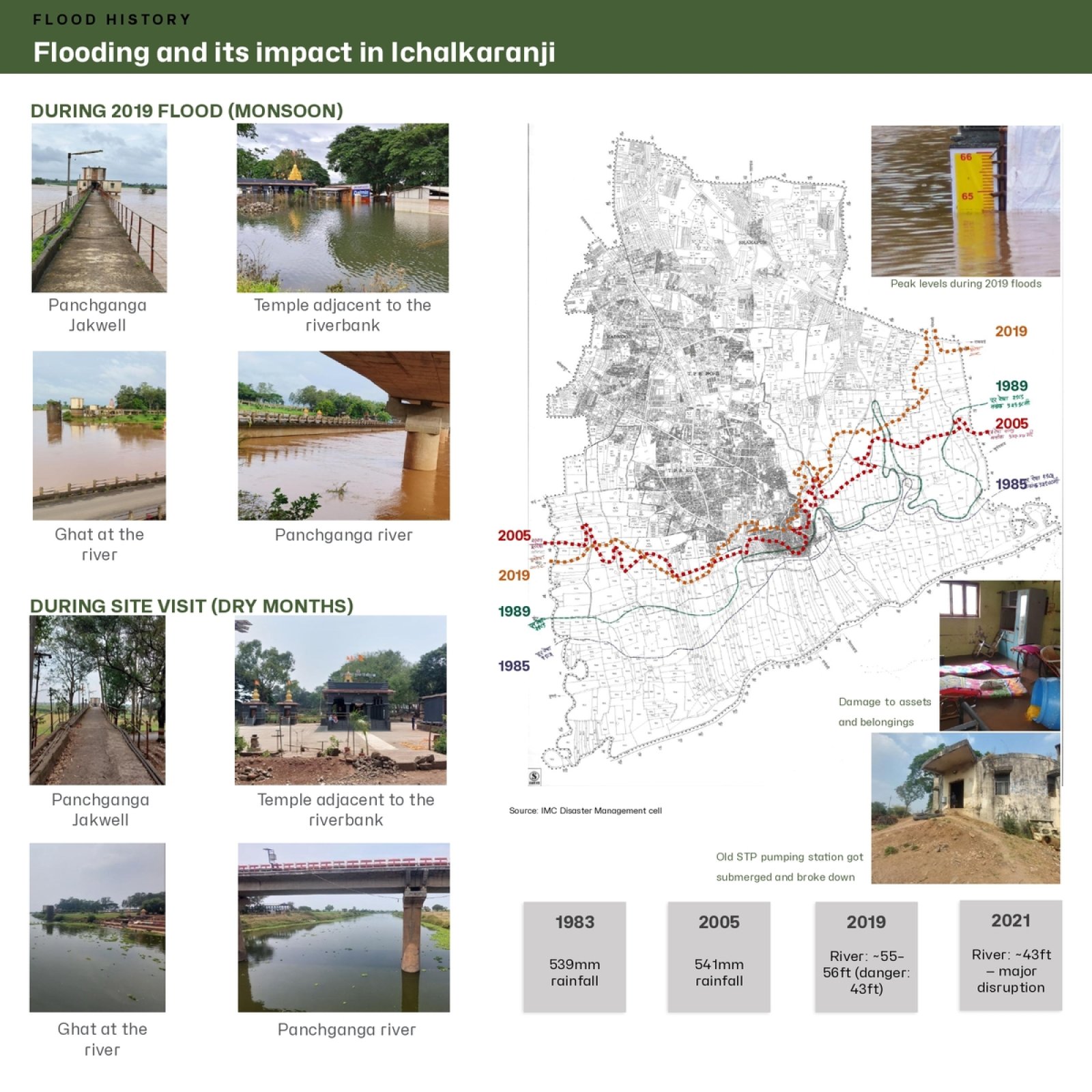
3: Flood History and Visual Impact The reality of inundation: Mapping historical flood levels and documenting the stark contrast between dry-season stability and monsoon-driven submersion.

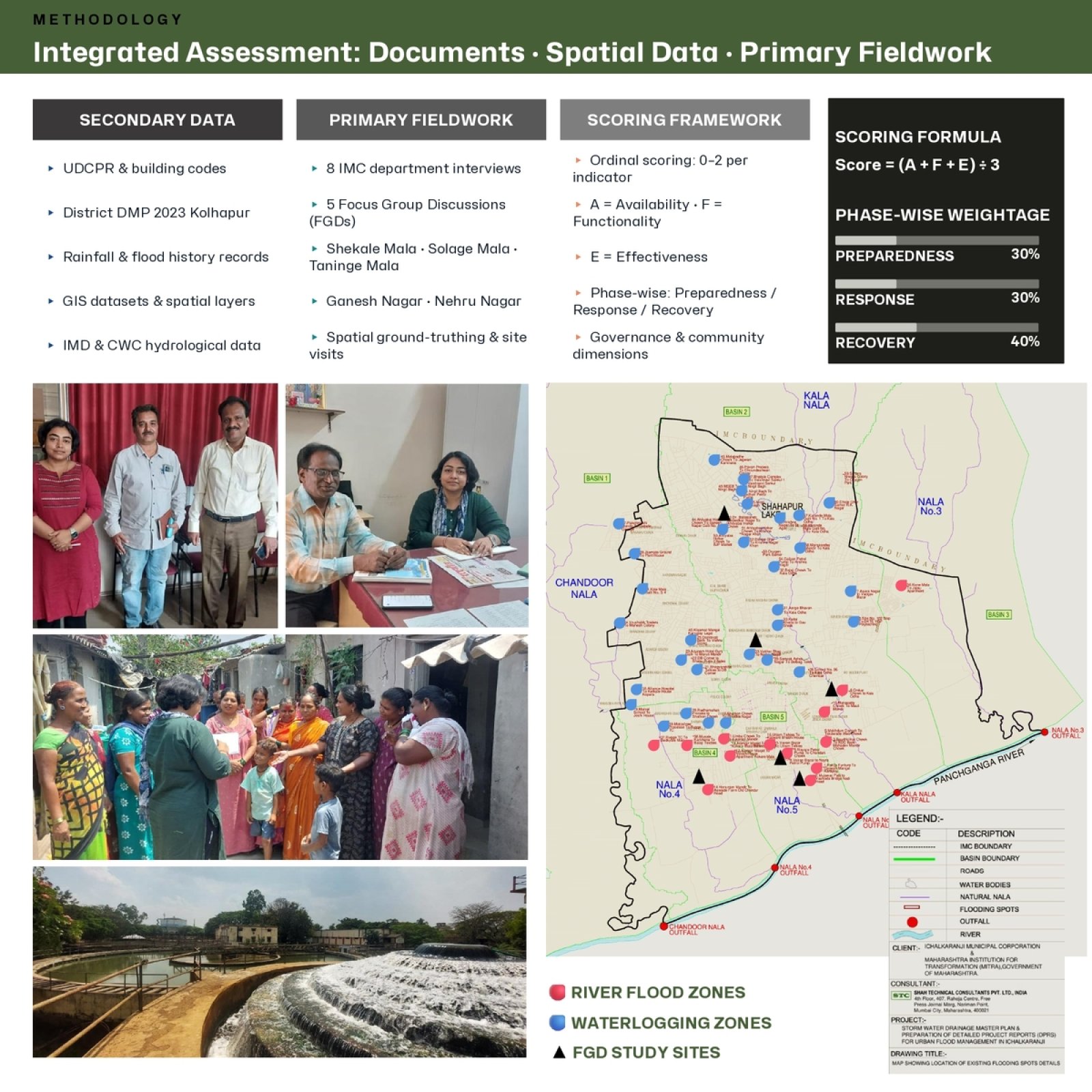
4: Integrated Research Methodology A multi-dimensional approach: Combining secondary data, spatial mapping, and primary fieldwork (FGDs) to quantify governance and community resilience.

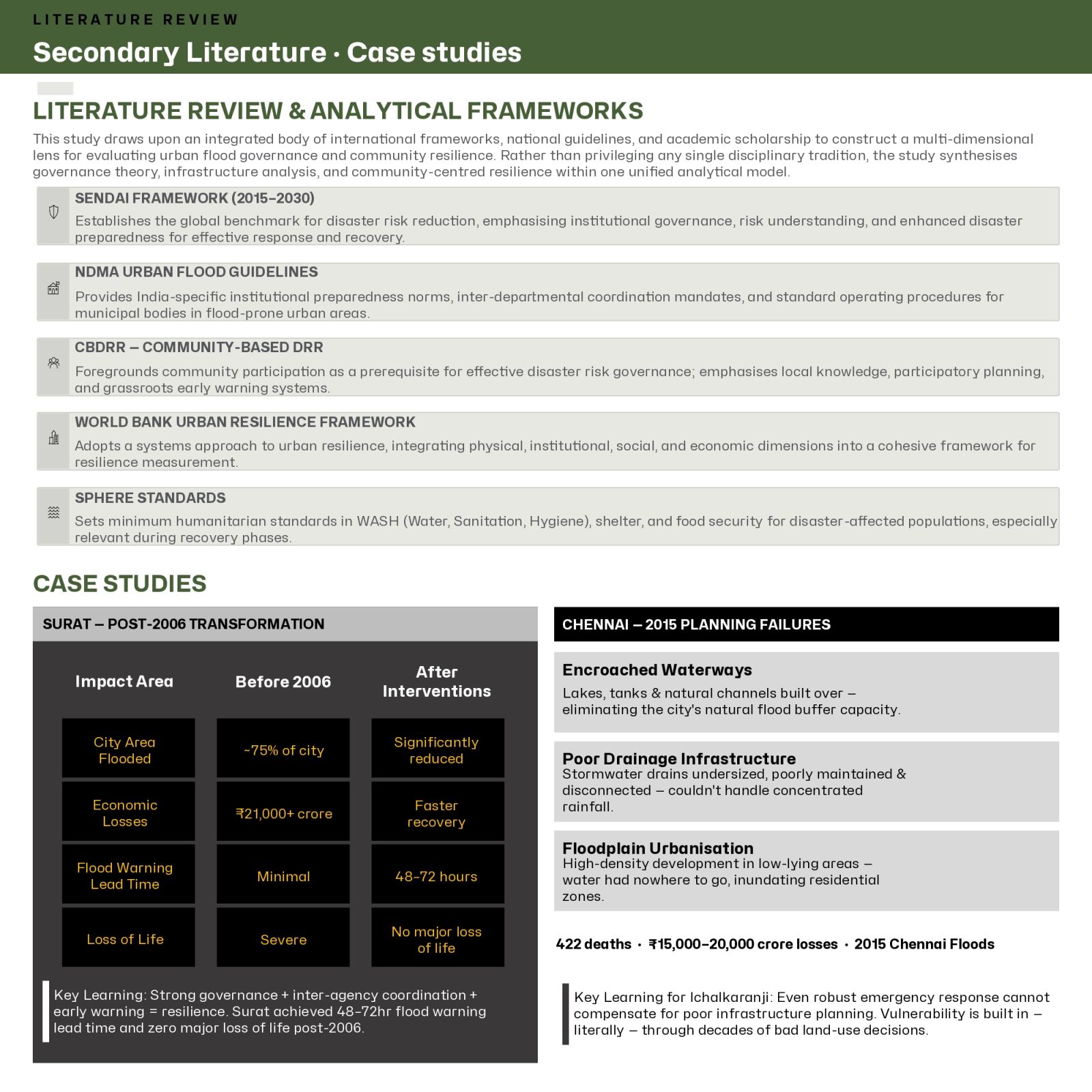
5: Literature Review & Case Studies Learning from the past: Synthesizing international frameworks like Sendai and SPHERE with comparative case studies of Surat and Chennai.

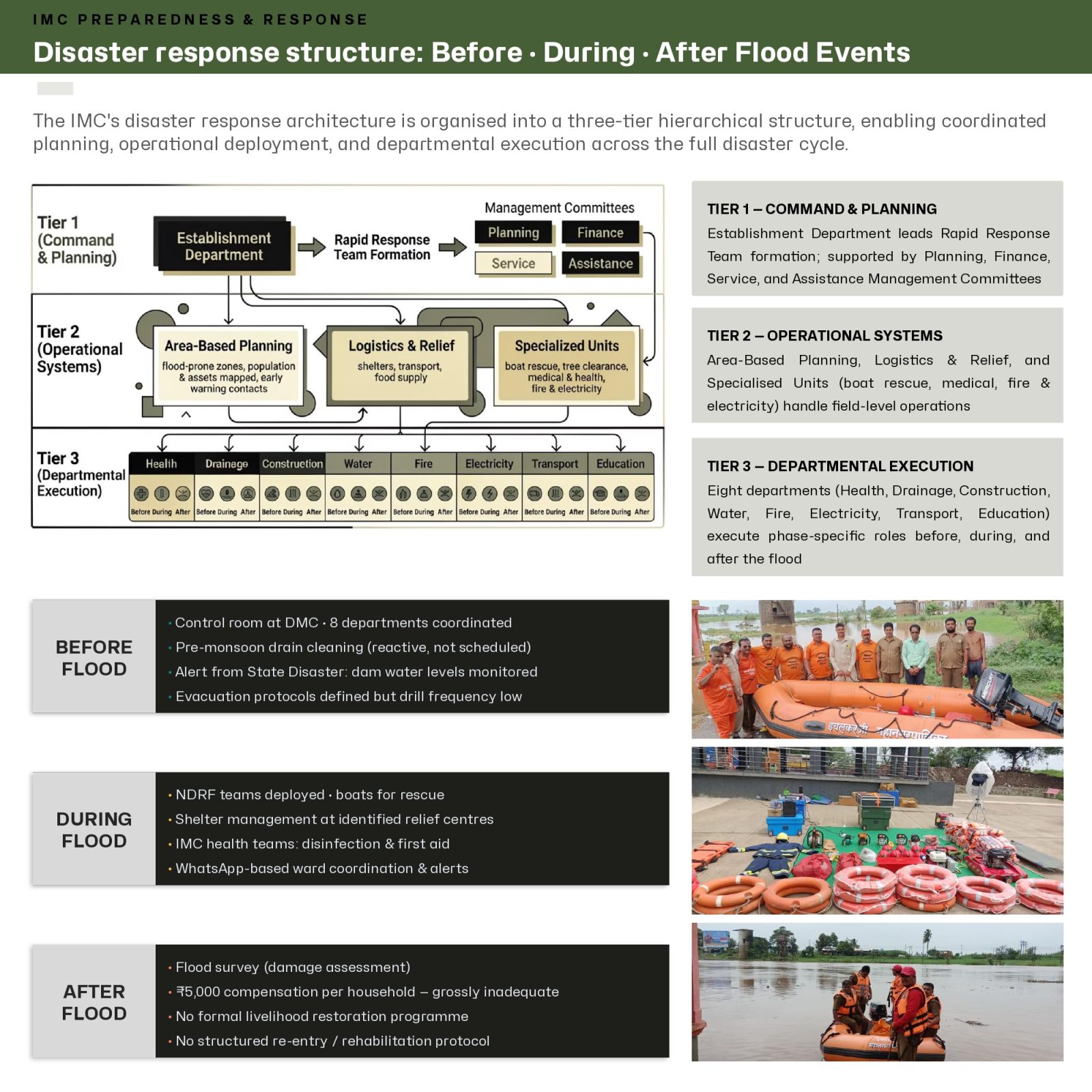
6: Institutional Response Structure The IMC hierarchy: Evaluating the three-tier disaster response architecture and the phase-specific roles of municipal departments.

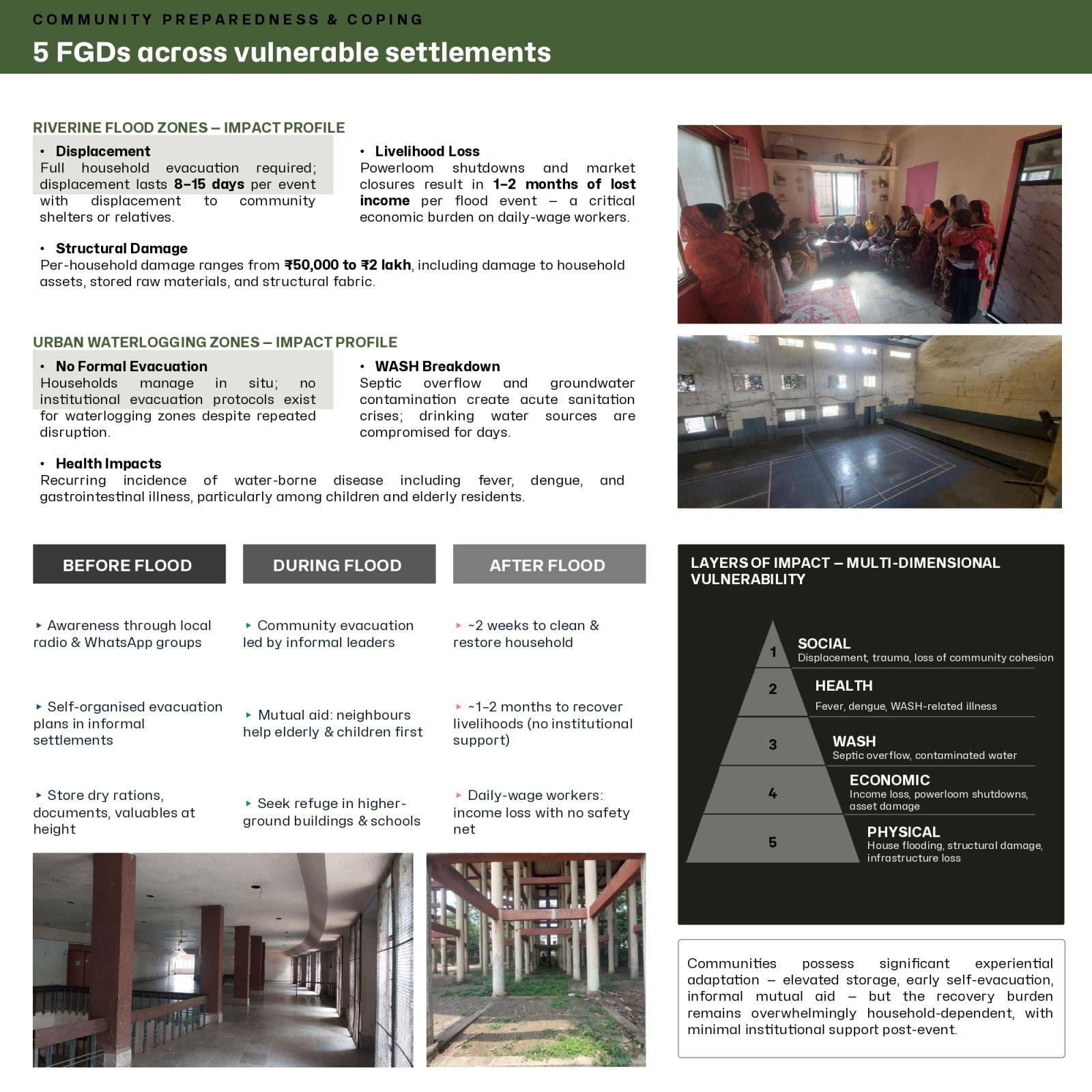
7: Community Preparedness & Coping The human cost: Analyzing the multi-dimensional vulnerability of residents, from physical asset damage to long-term livelihood and health impacts.

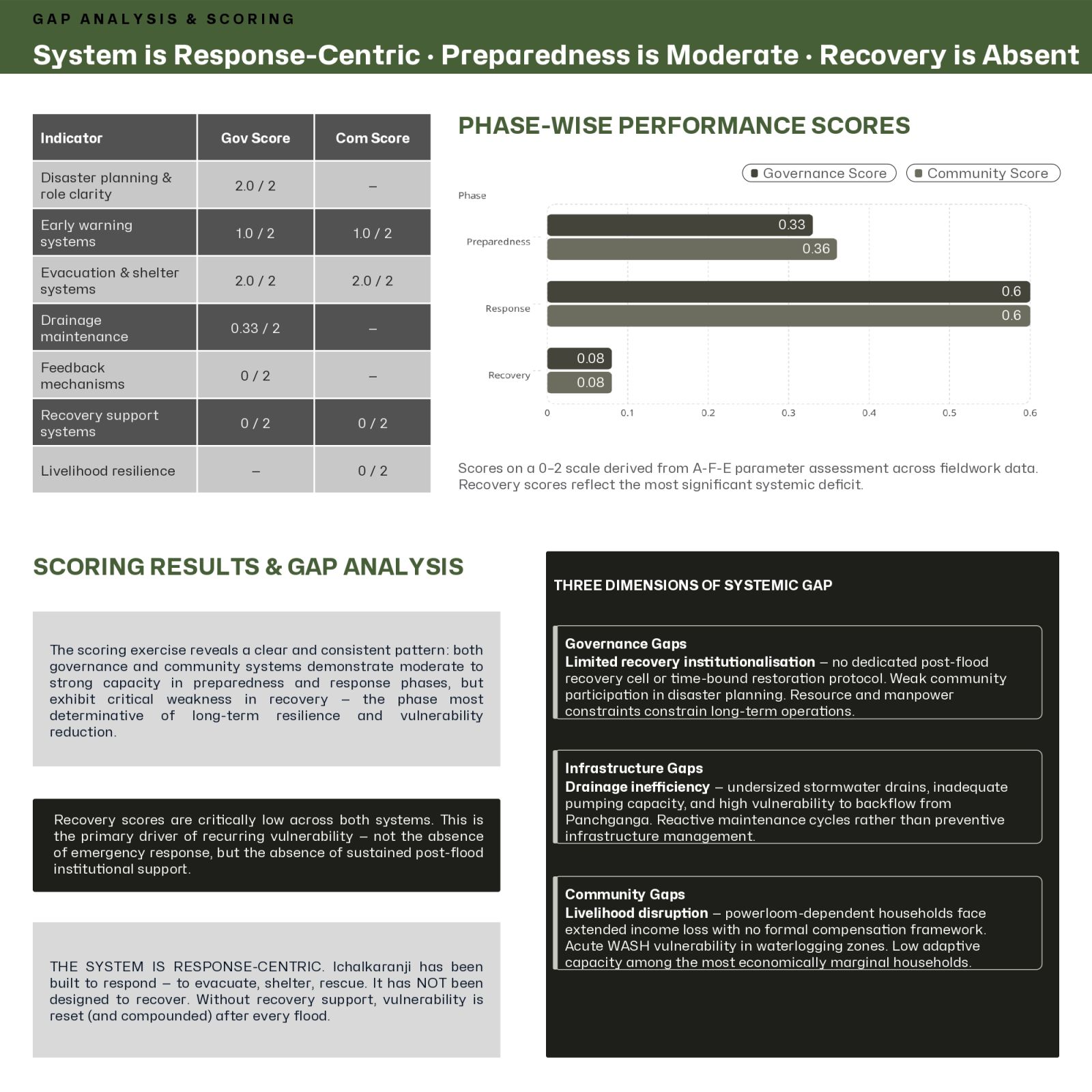
8: Gap Analysis & Scoring A systemic deficit: Visualizing the performance scores that reveal a "response-centric" system where recovery remains the most critical missing link.

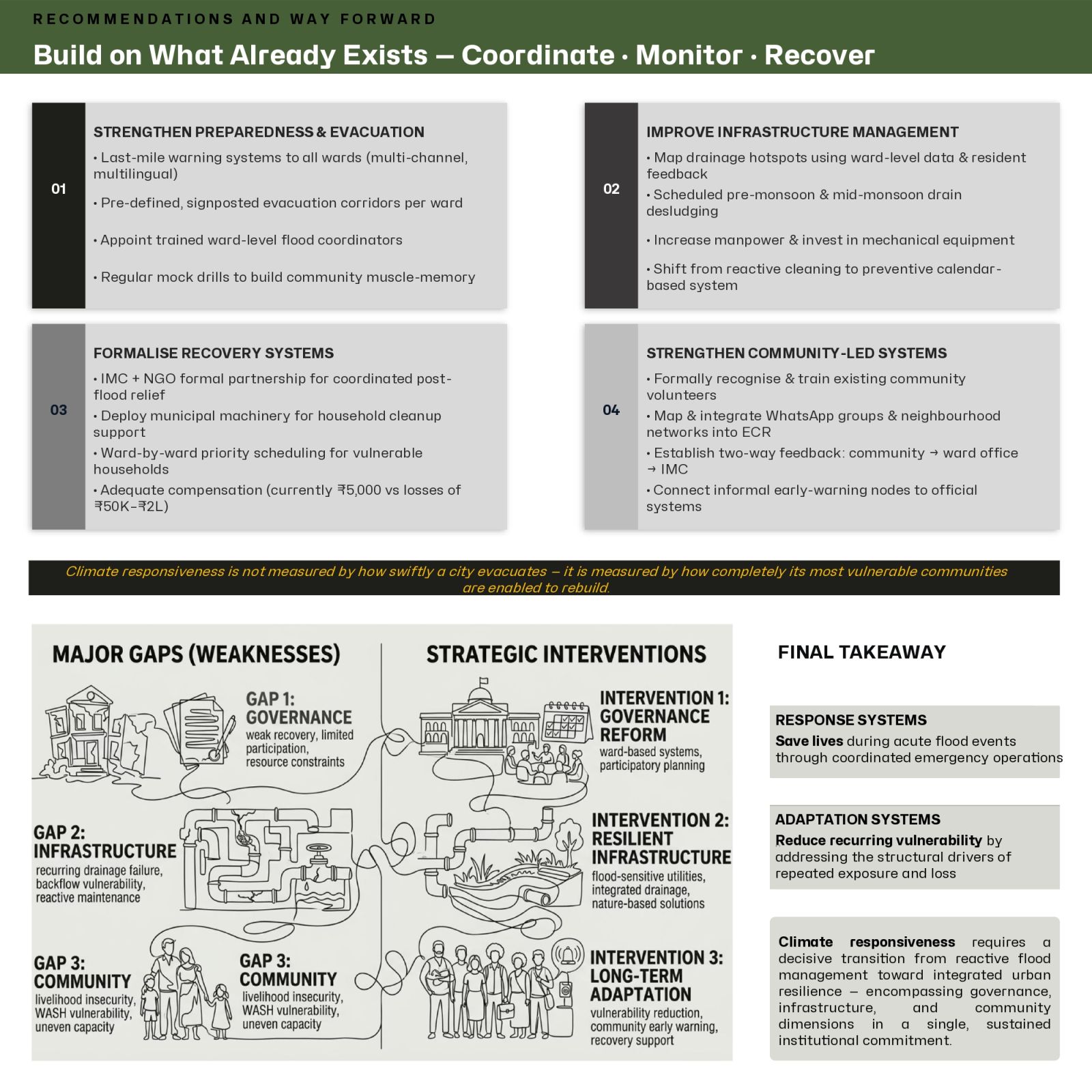
9: Recommendations & Way Forward Building for resilience: A strategic roadmap focused on formalizing recovery, strengthening community-led systems, and transitioning to preventive infrastructure.