Shreya

UM4050

PUM24356

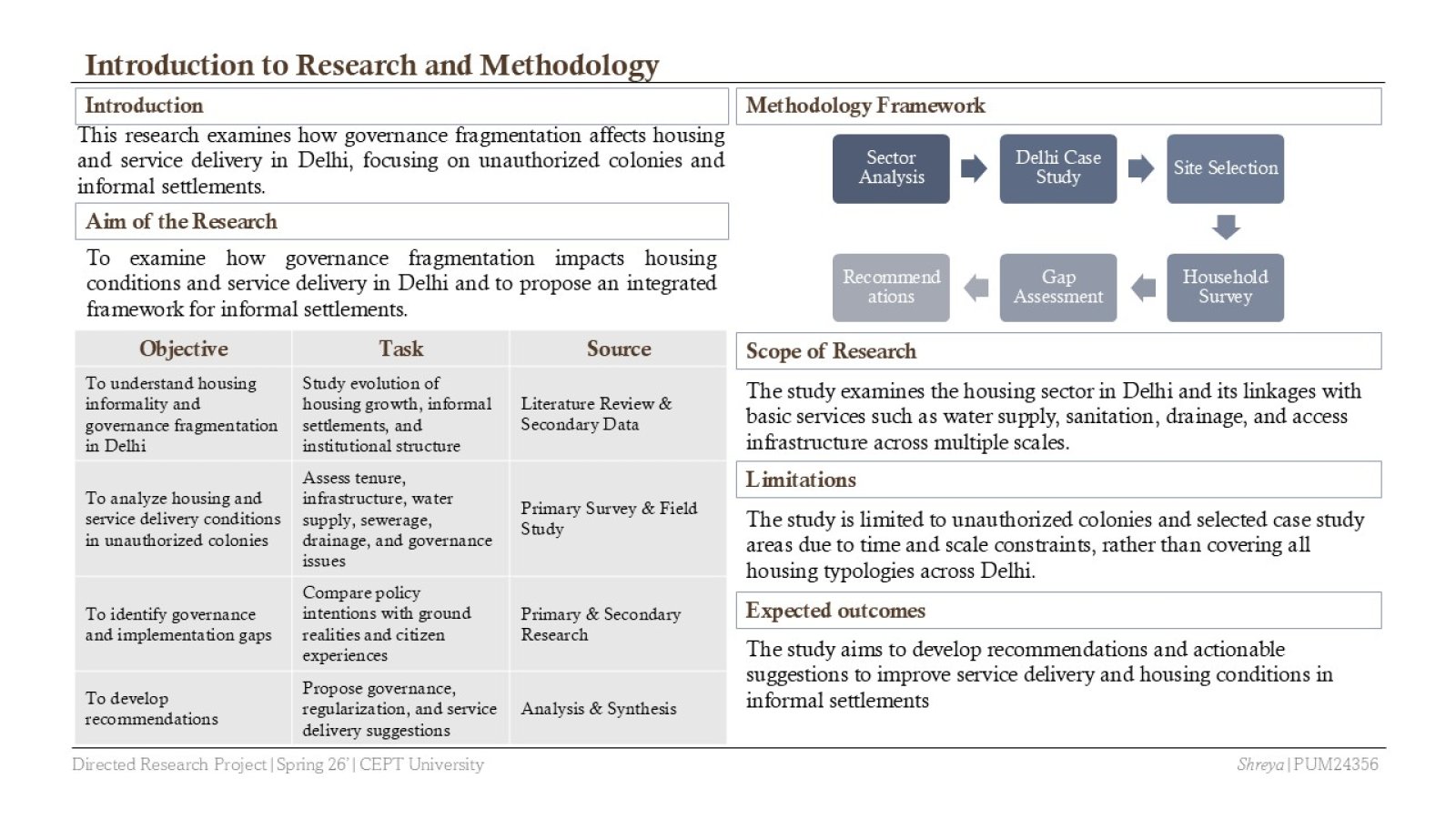
Delhi’s rapid urbanization has increased pressure on housing, infrastructure, and governance systems, resulting in the growth of unauthorized colonies and informal settlements. Many residents continue to face challenges related to affordability, inadequate infrastructure, insecure tenure, and limited access to basic services. This research examines the relationship between housing informality and fragmented governance in Delhi, particularly within unauthorized colonies. Using literature review, policy analysis, case studies, and household surveys, the study explores how overlapping institutional responsibilities affect housing regularization and service delivery. The research aims to propose integrated planning and governance strategies to improve housing accessibility, infrastructure, and living conditions in informal settlements.
Report Content

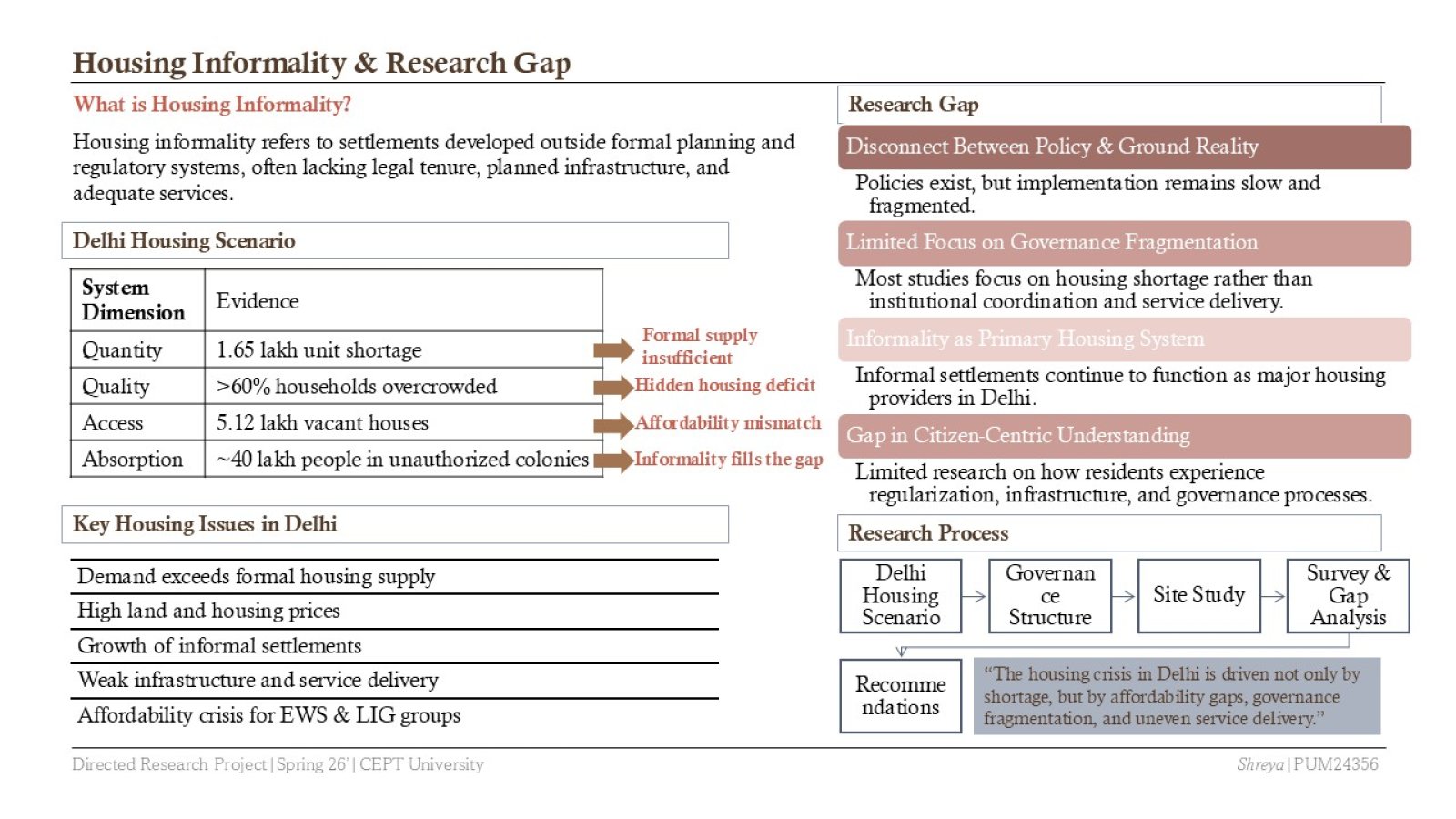
Delhi’s rapid urbanization, population growth, and rising land prices have increased pressure on housing and urban services, especially in informal settlements. The study examines how fragmented governance structures affect housing conditions, infrastructure provision, and regularization processes in unauthorized colonies across Delhi.

More than 60% of households in Delhi face overcrowding, while nearly 40 lakh people live in unauthorized colonies. Although policies for regularization and housing improvement exist, implementation remains fragmented and slow. Existing research largely focuses on housing shortage, with limited attention given to governance coordination and citizen experiences.

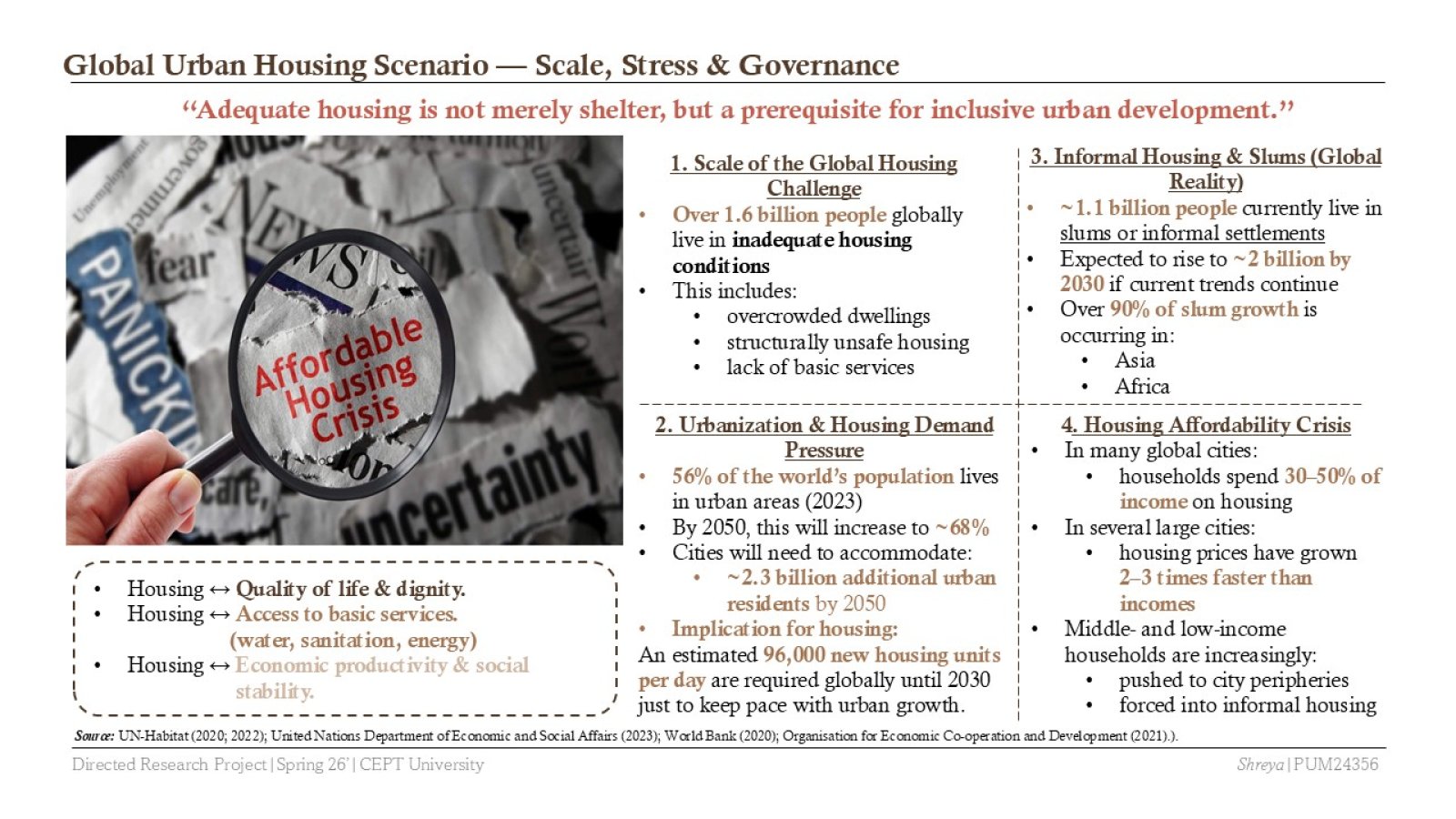
Globally, over 1.6 billion people live in inadequate housing conditions, and nearly 1.1 billion people reside in slums or informal settlements. By 2050, urban areas are expected to accommodate approximately 2.3 billion additional residents, increasing demand for affordable housing, basic services, and inclusive urban infrastructure.

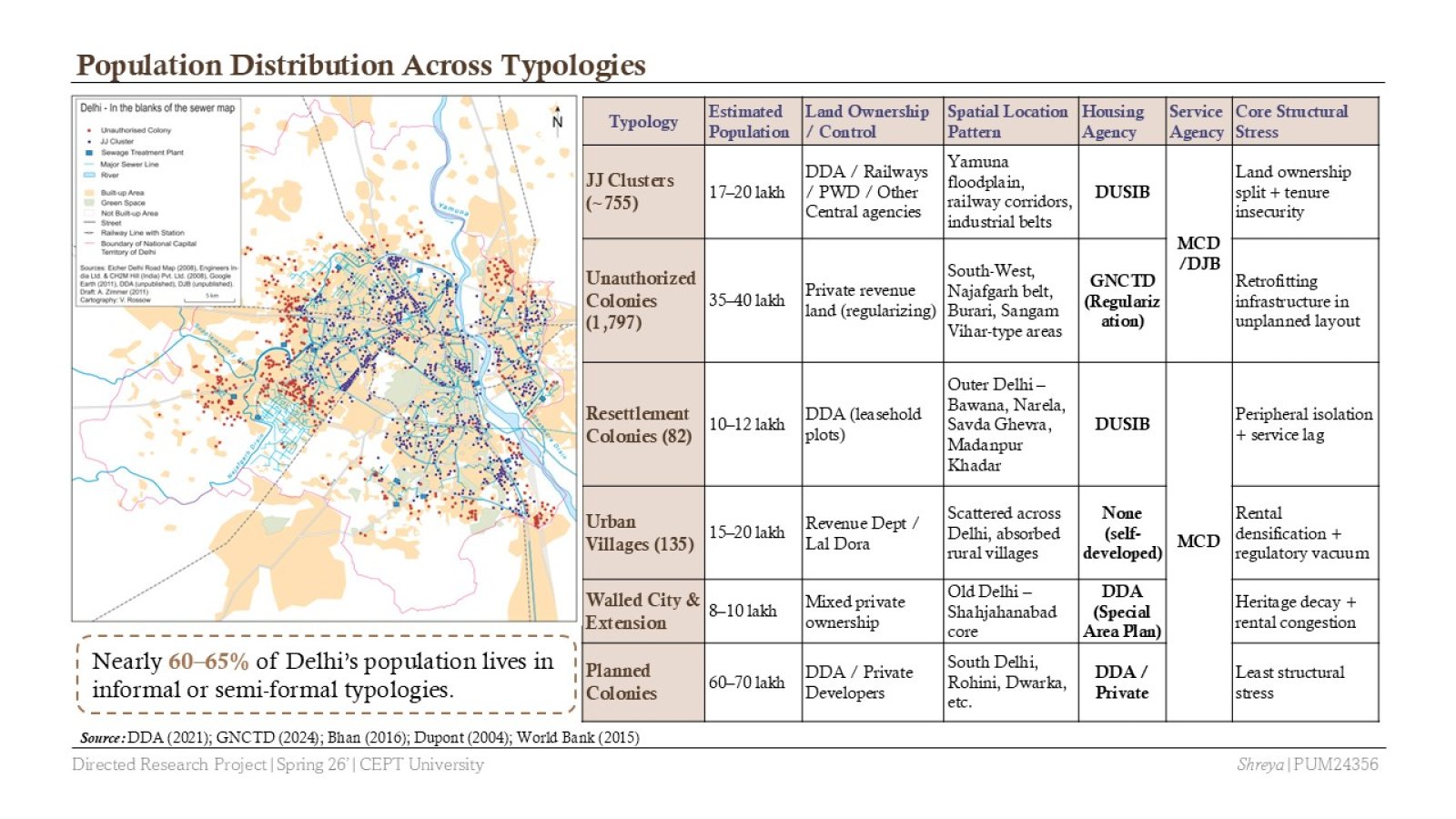
Nearly 60–65% of Delhi’s population lives in informal or semi-formal housing typologies such as JJ clusters, unauthorized colonies, resettlement colonies, and urban villages. Unauthorized colonies alone accommodate around 35–40 lakh residents and continue to face infrastructure deficits, tenure insecurity, and fragmented governance systems.

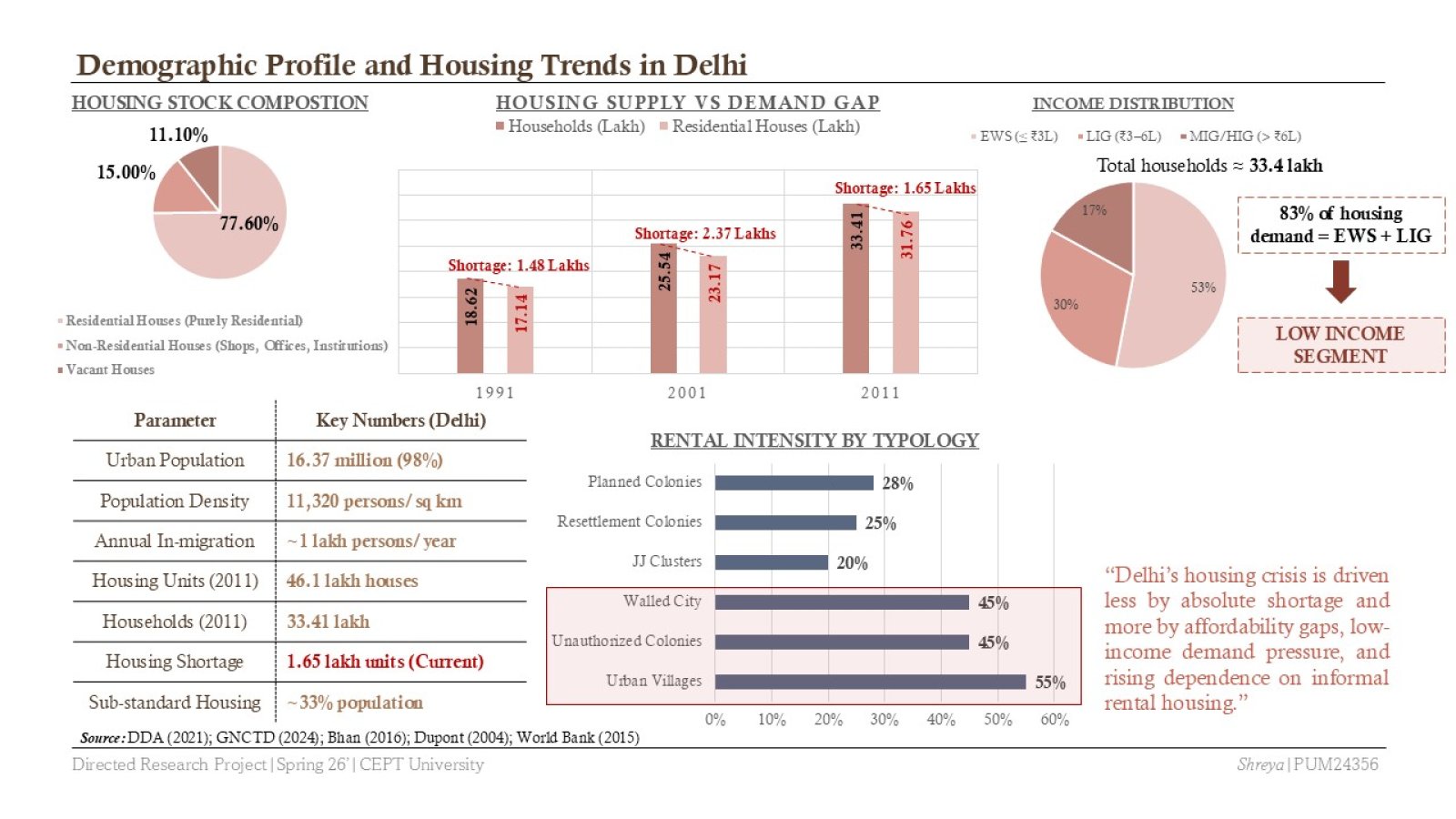
Delhi has an urban population of nearly 16.3 million with a density exceeding 11,000 persons per sq. km. Around 83% of housing demand comes from EWS and LIG groups, while the city continues to face a housing shortage of nearly 1.65 lakh units. Informal rental housing remains a major source of affordable accommodation.

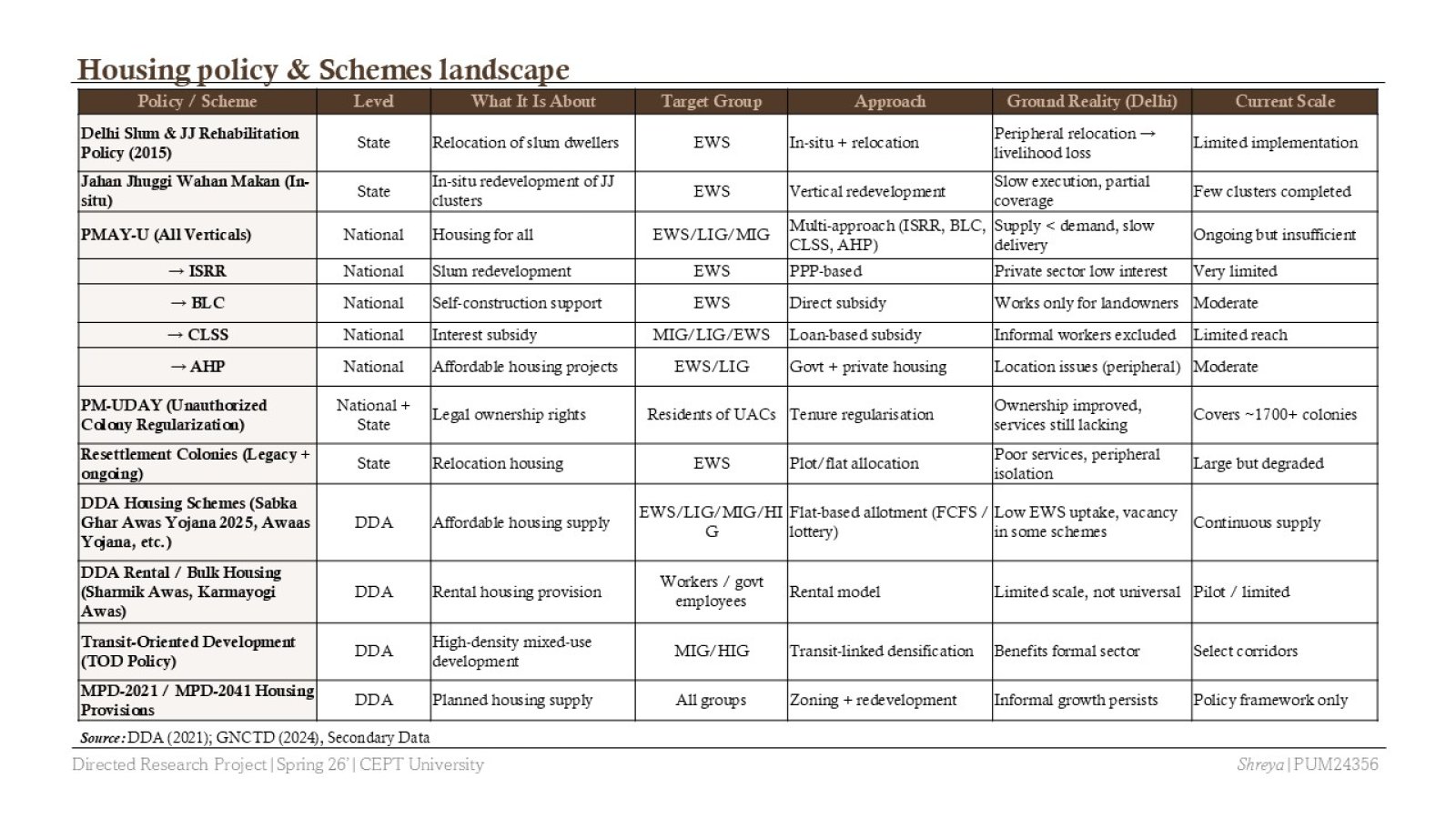
Housing policies in Delhi have focused on rehabilitation, affordable housing, regularization, and slum redevelopment through schemes such as PMAY-U, JNNURM-BSUP, and DDA housing programs. However, limited implementation, peripheral relocation, weak infrastructure, and affordability barriers continue to reduce their effectiveness on the ground.

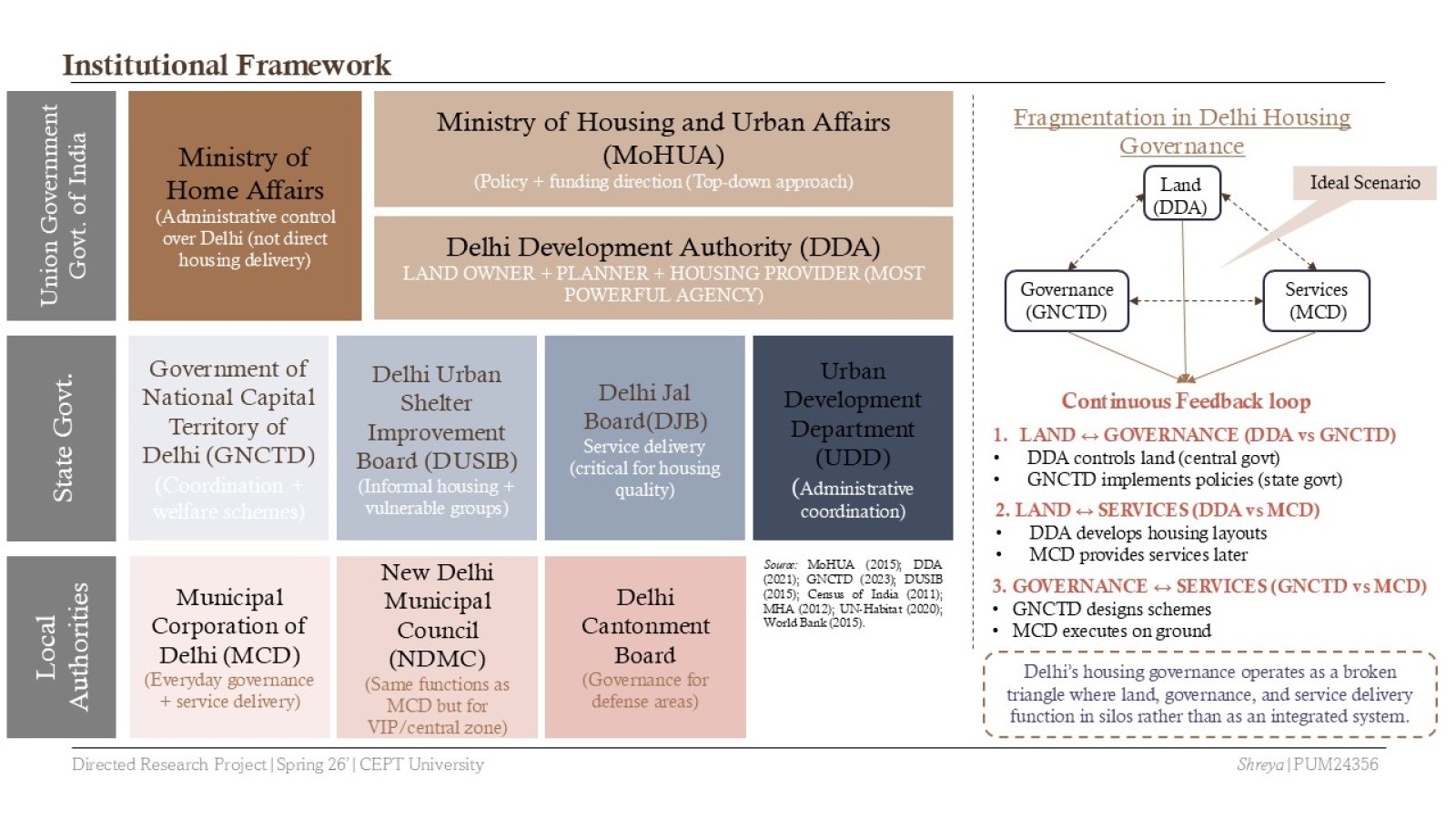
Delhi’s housing governance system is divided among multiple agencies including DDA, GNCTD, MCD, DJB, and DUSIB. While DDA controls land and planning, service delivery is managed by separate agencies, resulting in delays, overlapping responsibilities, and weak coordination in housing and infrastructure development.

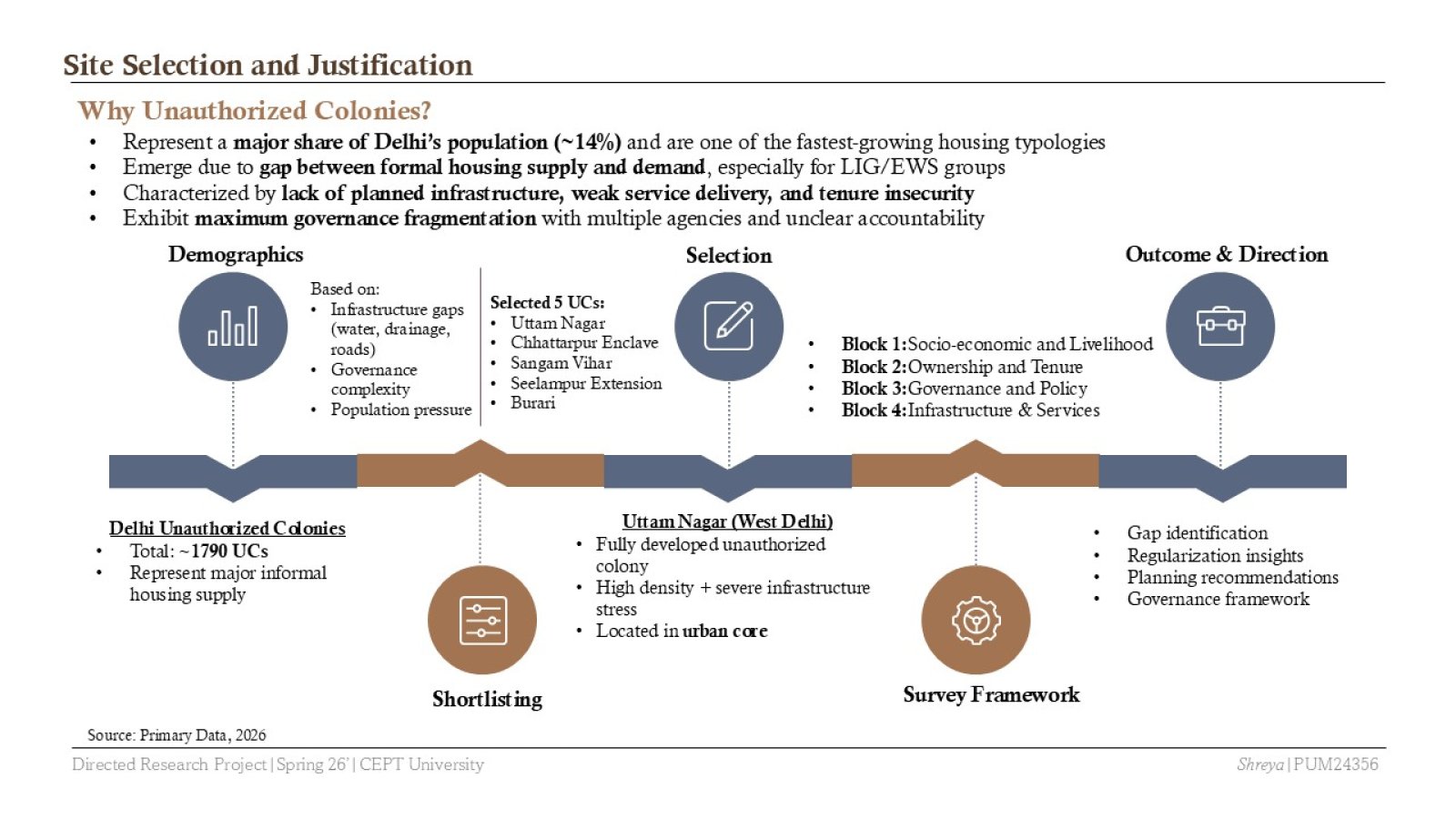
Unauthorized colonies were selected due to their large population share, rapid growth, and severe infrastructure stress. Around 1,790 unauthorized colonies exist in Delhi, many lacking planned drainage, water supply, road networks, and legal tenure. Five colonies were shortlisted based on governance complexity, infrastructure gaps, and population density.

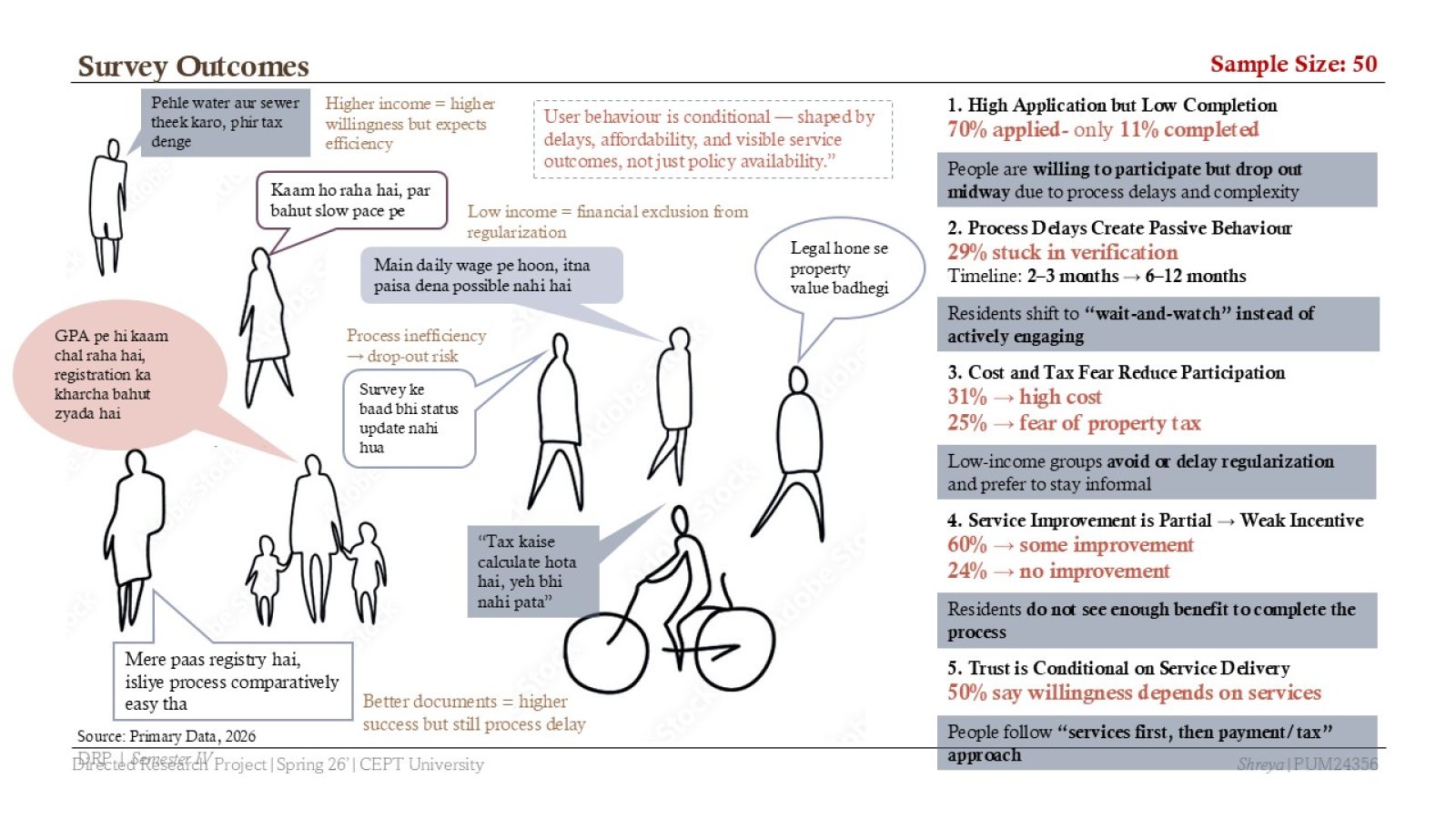
Survey findings reveal that although nearly 70% of residents applied for regularization, only about 11% completed the process successfully. Around 31% identified high costs as the main barrier, while 25% feared increased property taxes. More than 50% of respondents linked their willingness to regularize with visible improvements in public services.

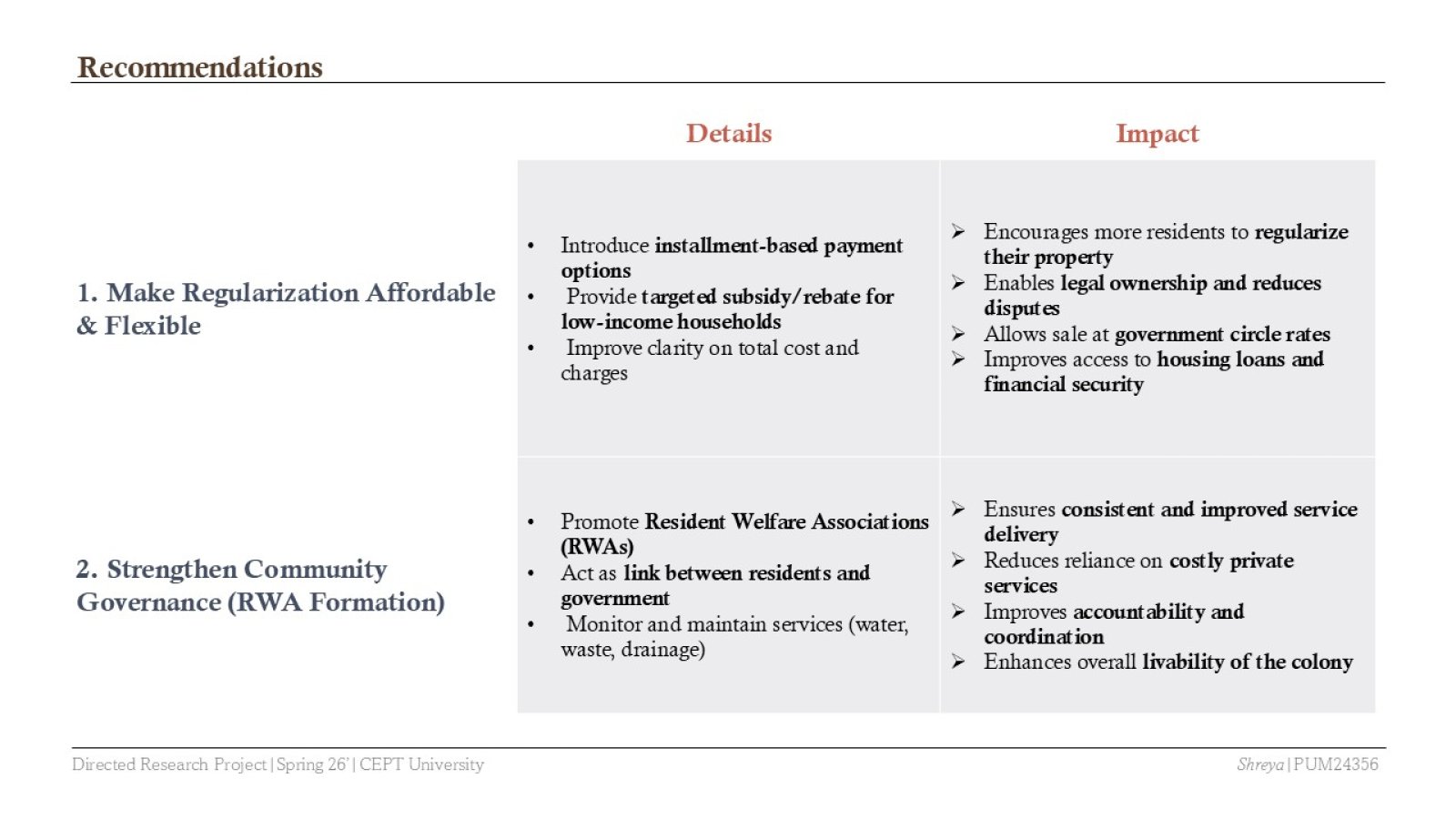
Improving affordability through installment-based payments, subsidies for low-income households, and transparent cost structures can increase participation in regularization. Strengthening Resident Welfare Associations (RWAs) and improving coordination between agencies can enhance accountability, service delivery, infrastructure maintenance, and overall living conditions in informal settlements.