Your browser is out-of-date!
For a richer surfing experience on our website, please update your browser. Update my browser now!
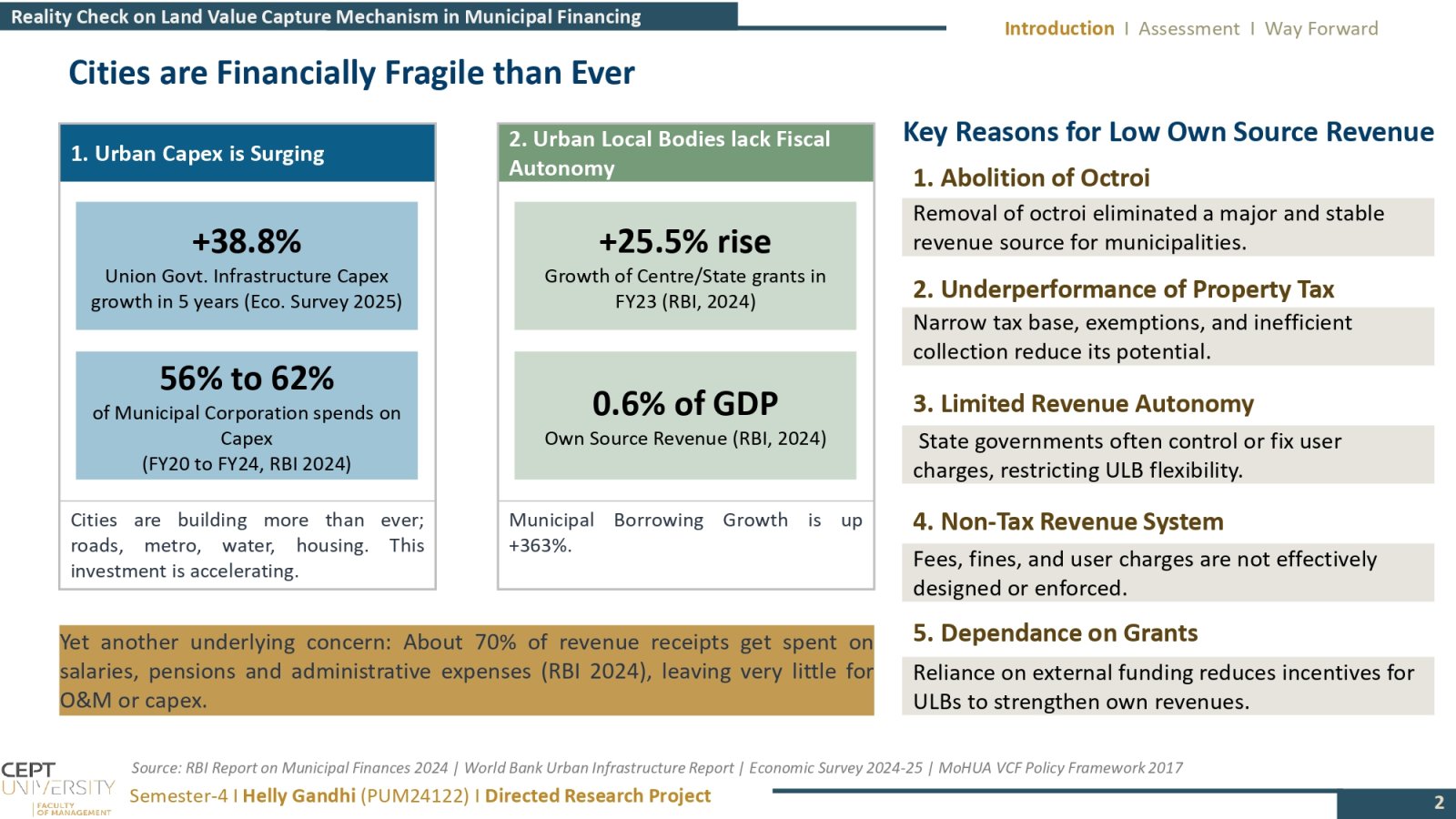
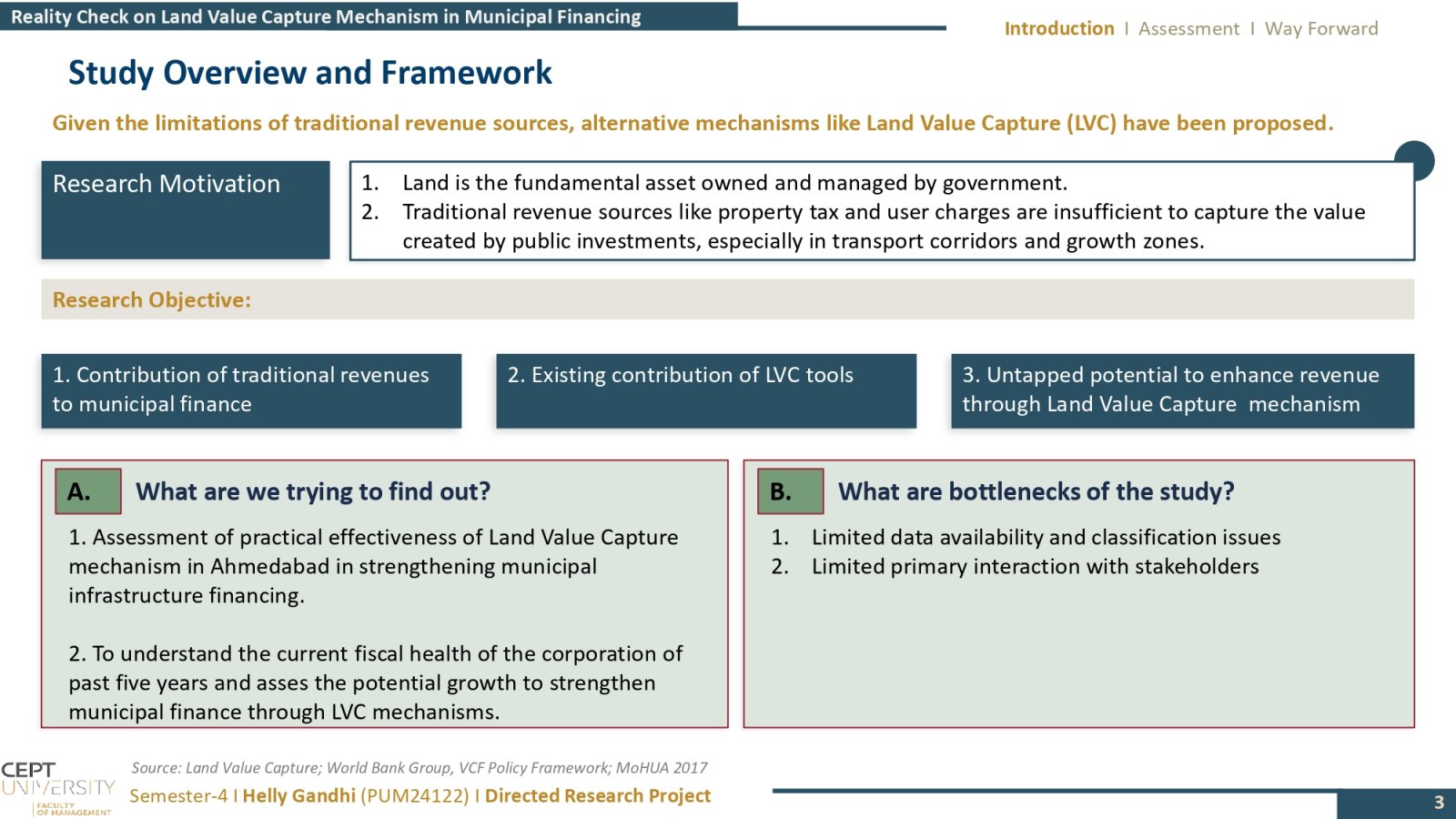
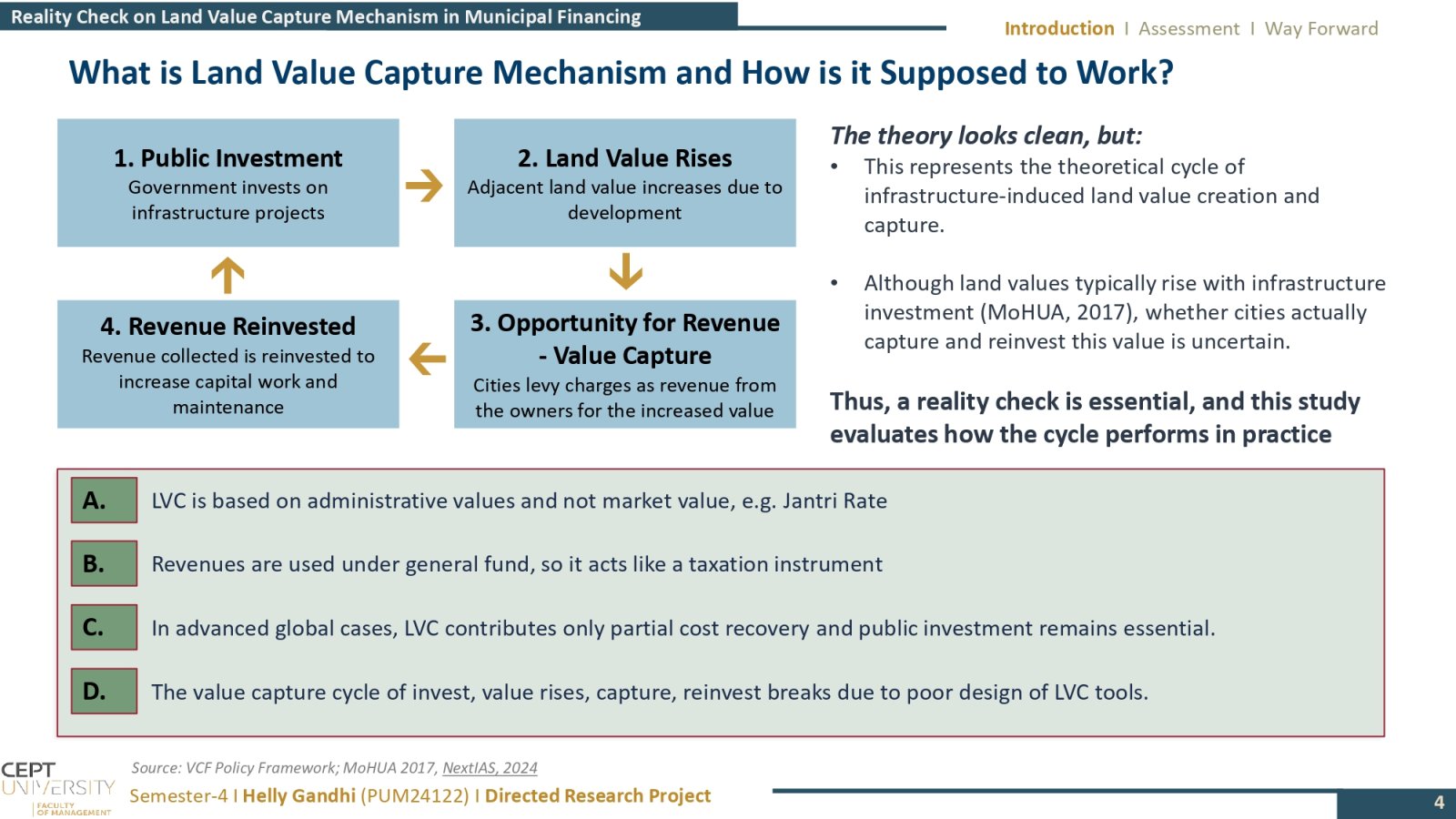
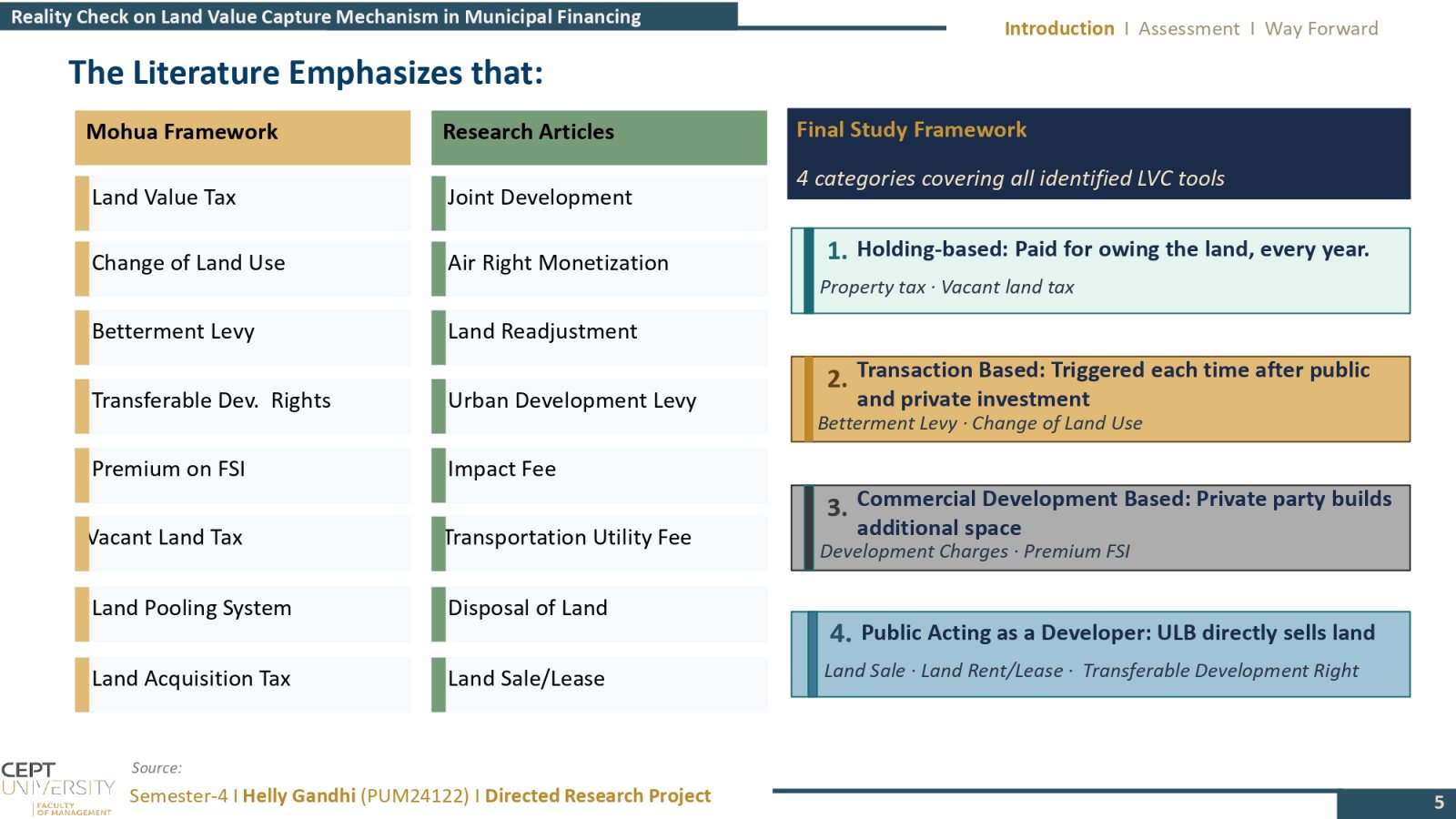
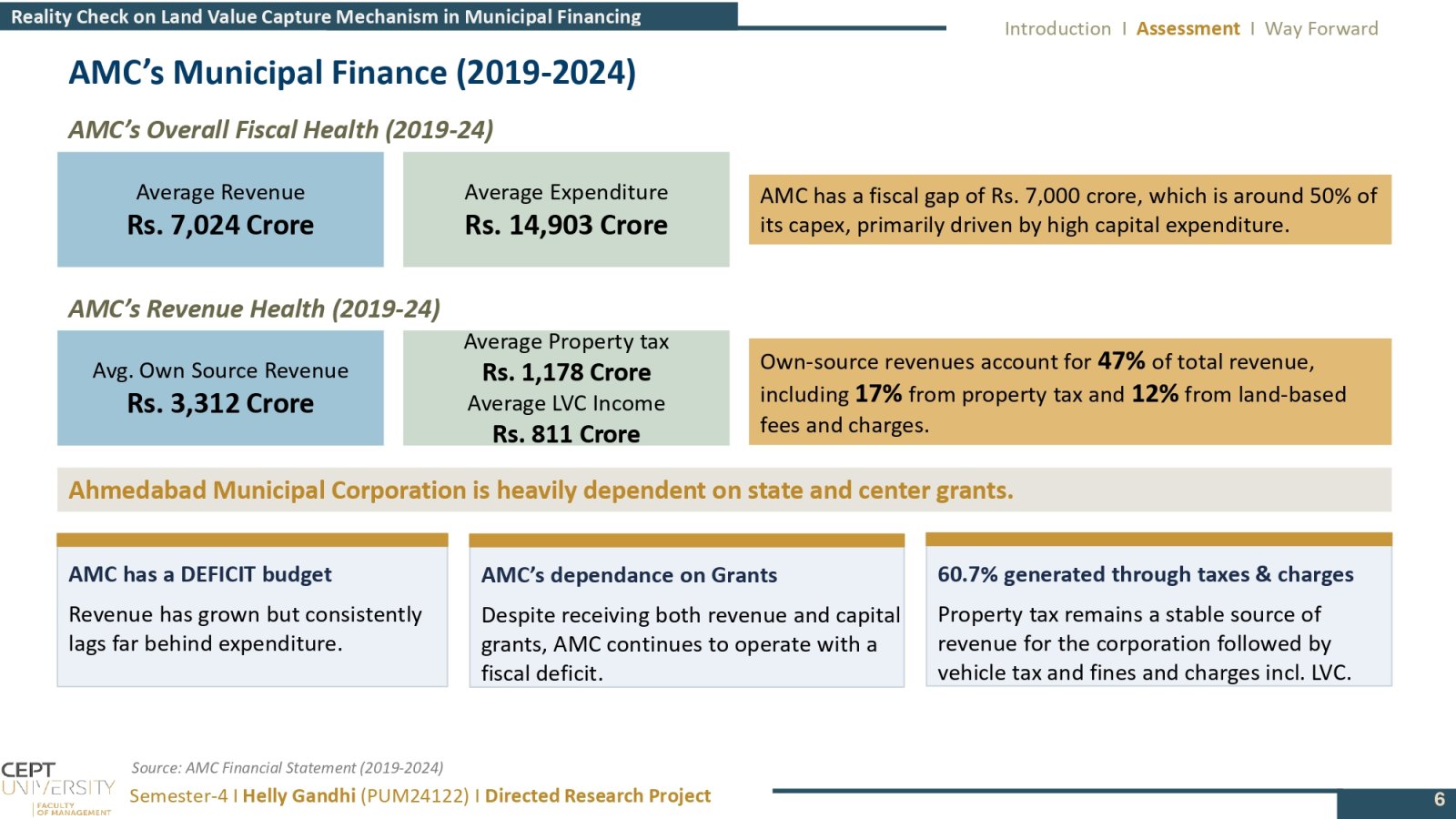
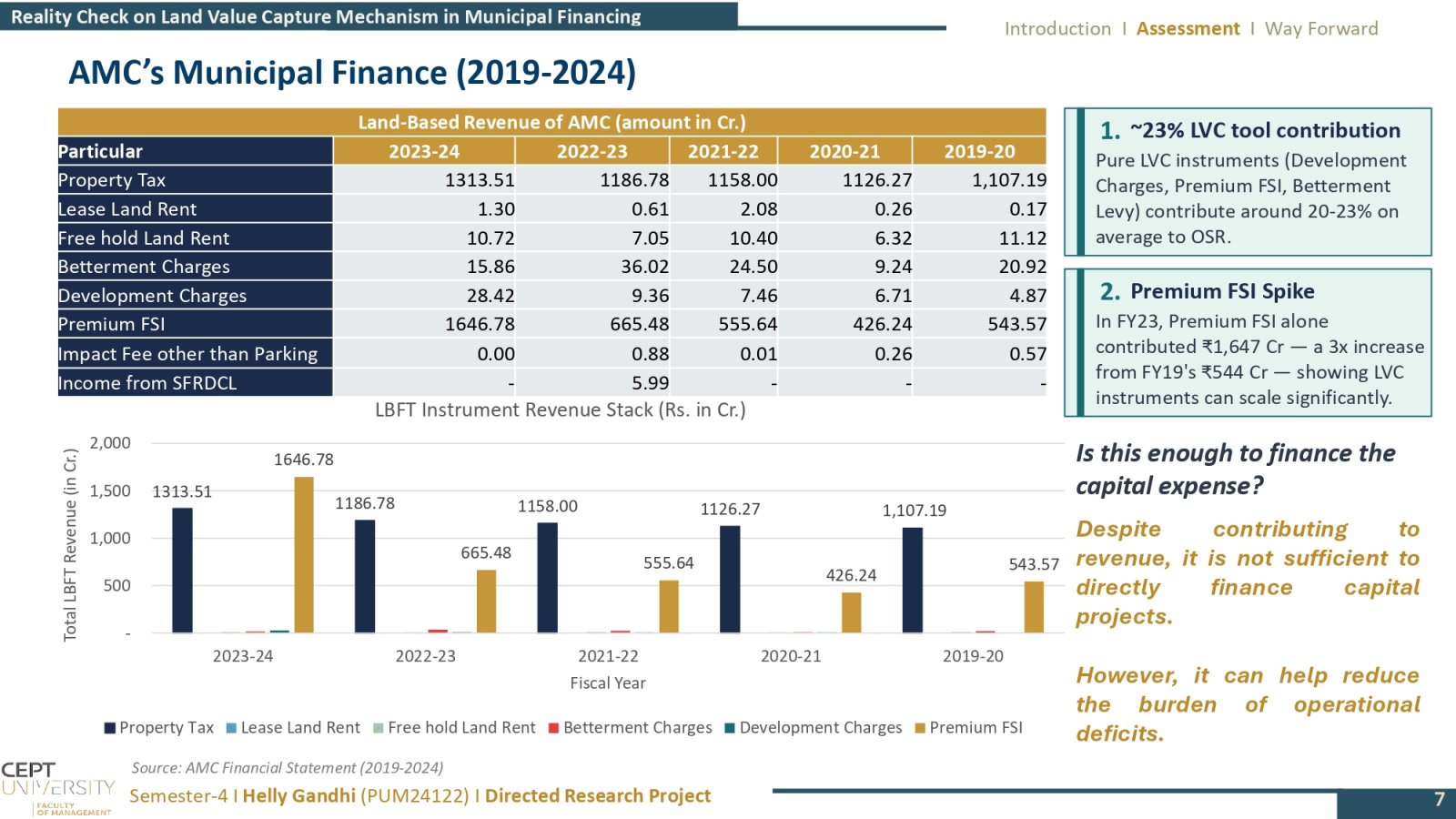
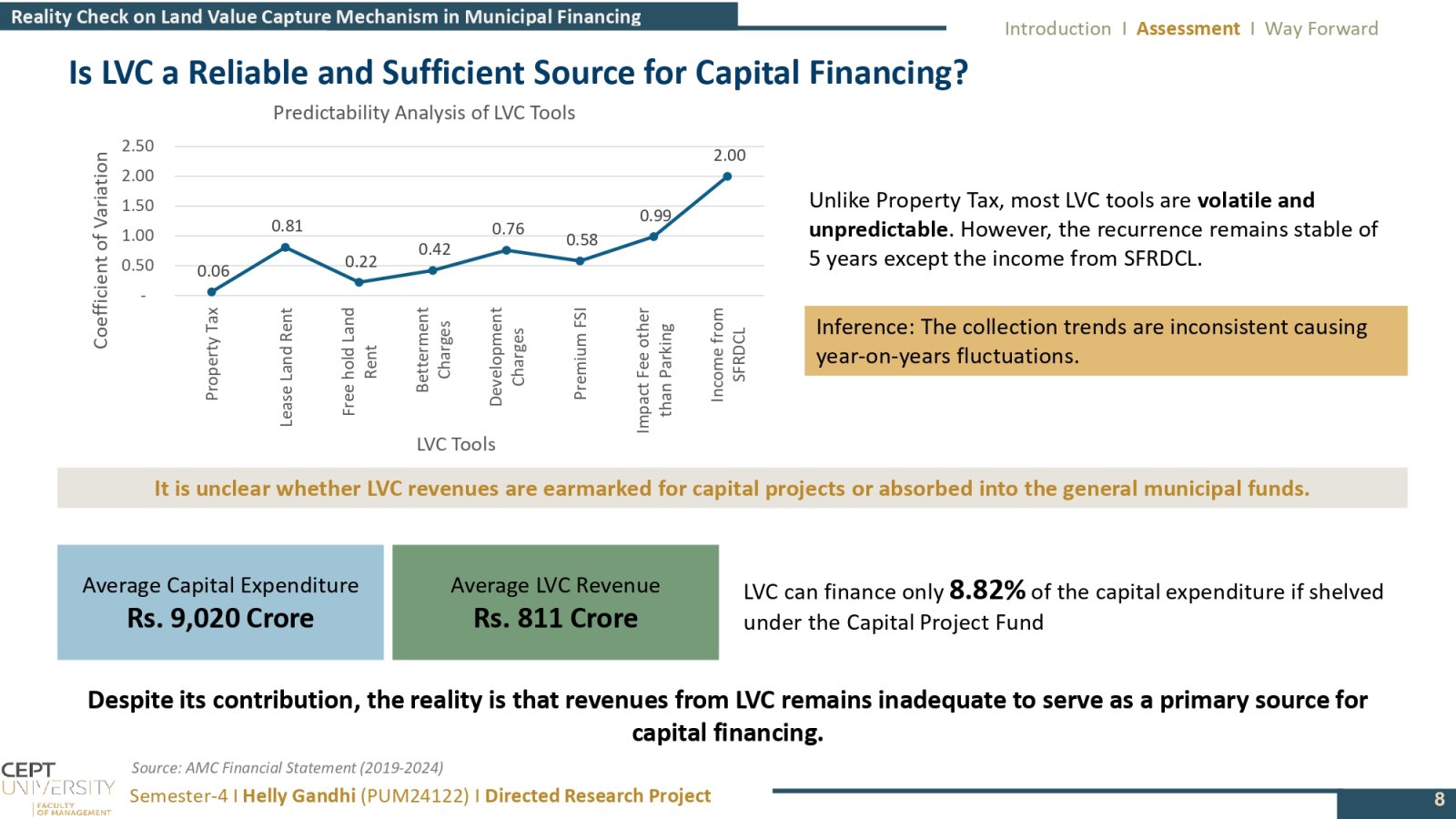
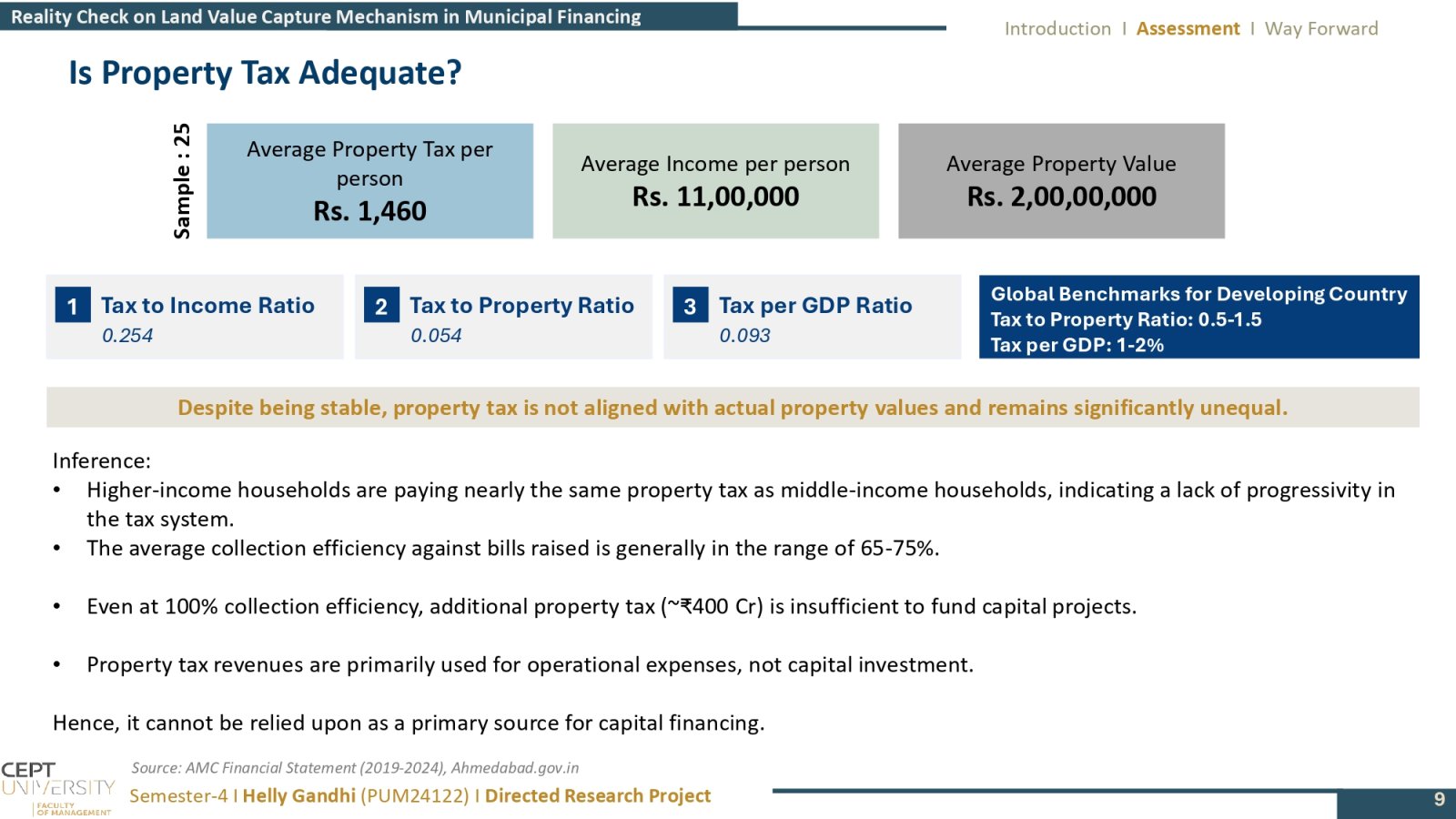
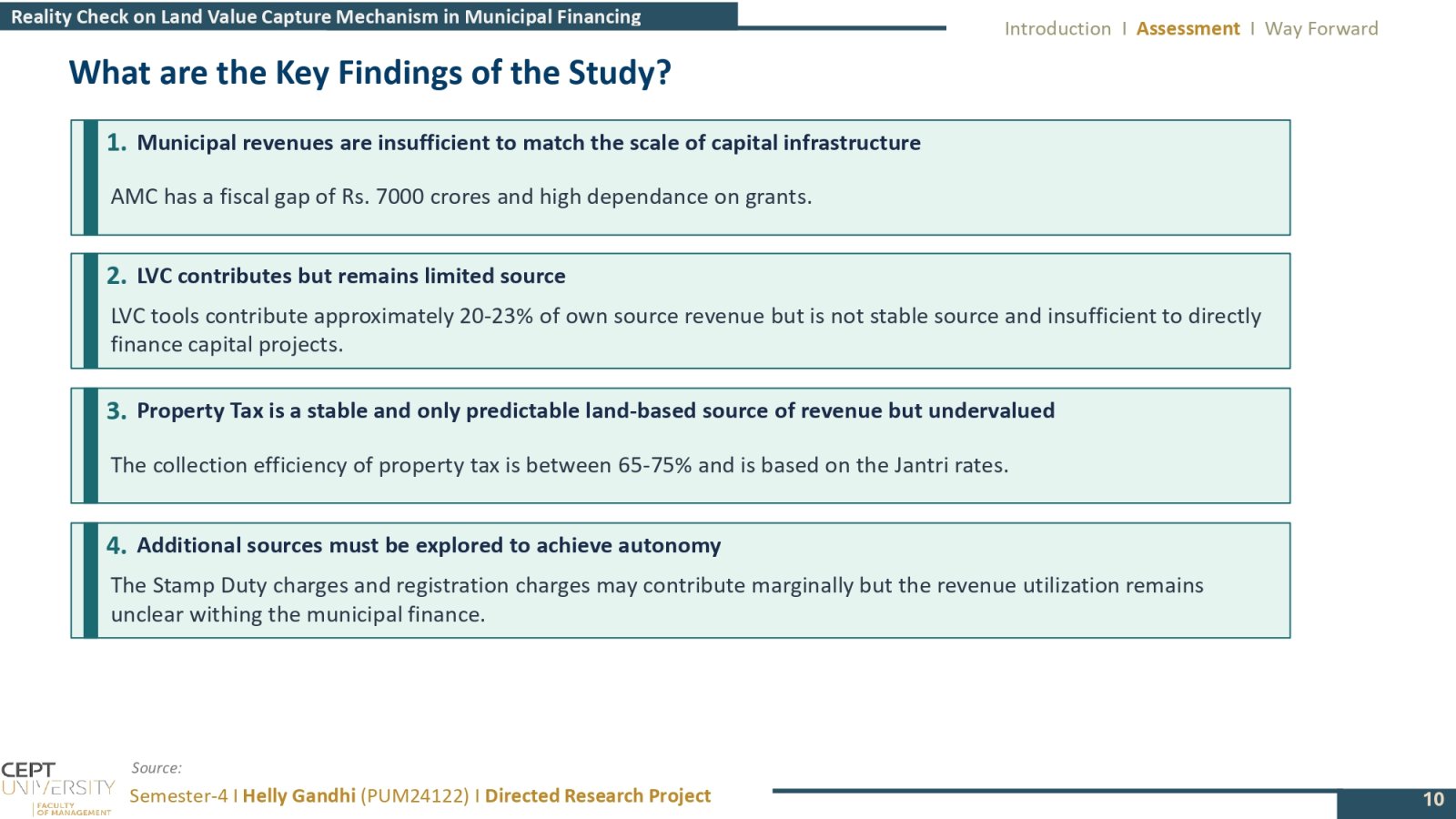
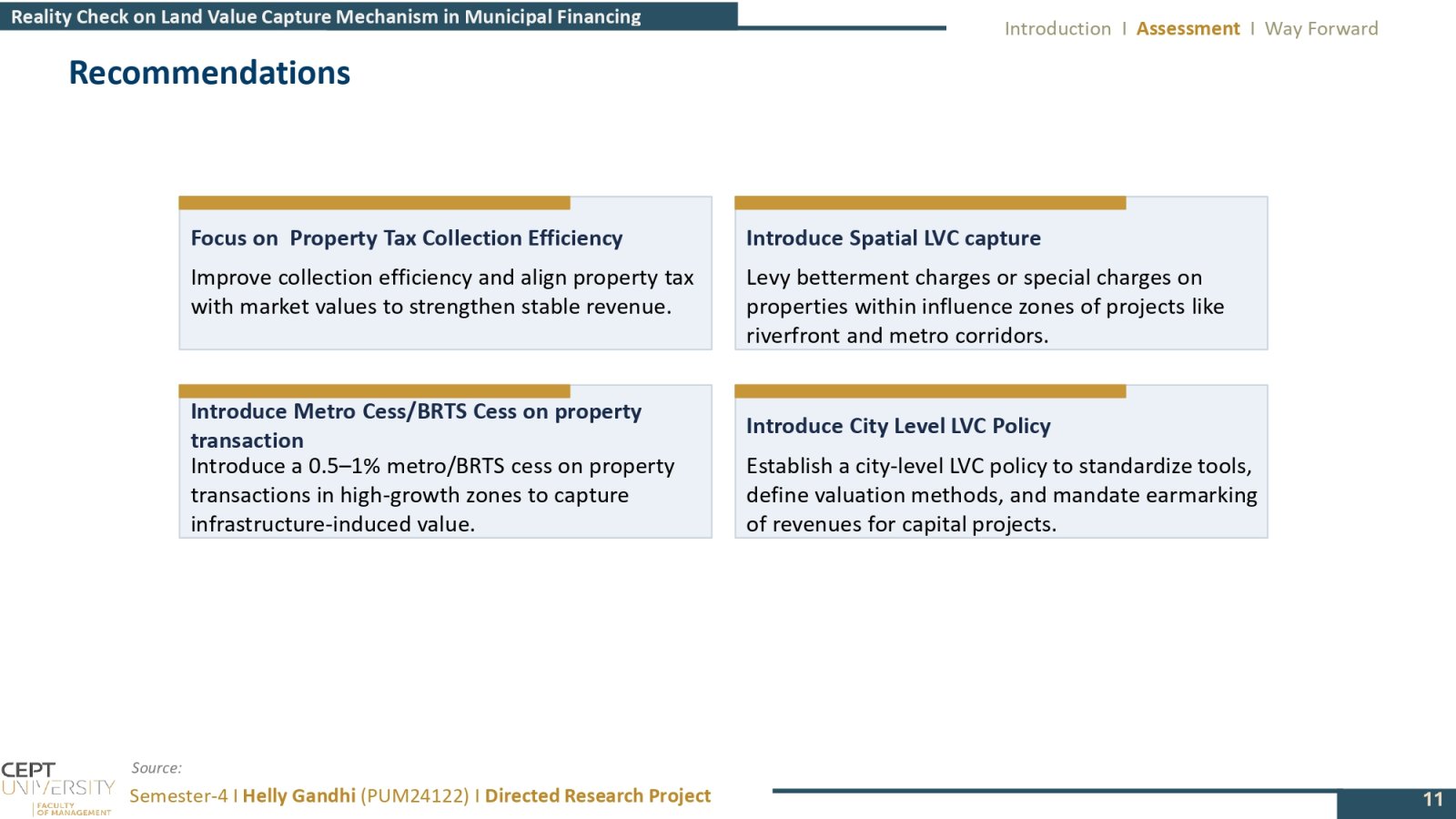
This study examines the practical effectiveness of Land Value Capture mechanisms in strengthening municipal finance, with specific reference to Ahmedabad Municipal Corporation between 2019–2024. The research analyses the fiscal health of AMC, evaluates the contribution of land-based financing instruments such as Premium FSI, development charges, and transaction-based revenues, and examines the gap between the theoretical framework of LVC and its practical implementation within municipal finance systems. The findings indicate that AMC continues to operate under significant fiscal pressure due to rising infrastructure expenditure and dependence on grants. Although LVC mechanisms contribute approximately 20–23% of own-source municipal revenue, their contribution remains insufficient to independently finance large-scale capital infrastructure projects. Among all instruments, Premium FSI emerged as the strongest revenue-generating mechanism but was found to be highly dependent on real estate market conditions and therefore financially volatile. The study further identifies property tax as the most stable and predictable municipal revenue source; however, the current taxation framework remains significantly undervalued due to reliance on Jantri-based assessment systems and moderate collection efficiency levels of approximately 65–75%. Benchmarking analysis reveals that Ahmedabad’s property tax indicators remain substantially below international standards, indicating considerable unrealised municipal revenue potential. The study also highlights that transaction-based revenues such as stamp duty possess strong supplementary revenue potential but lack a structured reinvestment framework within municipal finance systems.