Pankaj Khandelwal

UM4050

PUM24249

This Directed Research Project examines the practical role of Land Value Capture (LVC) in financing urban infrastructure in Indian cities. Through a comparative analysis of Mumbai, Indore, and Bhopal, the study evaluates the scale, reliability, and financing potential of LVC instruments such as Premium FSI, Development Charges, TDR, and Betterment Levies using municipal finance data. The research finds that although LVC is strongly promoted in policy, its revenues remain limited, volatile, market-dependent, and non-recurring across cities. In contrast, property tax emerges as the only relatively stable land-based revenue source. The study concludes that LVC cannot function as a primary infrastructure financing tool under current institutional and market conditions, and is better positioned as a supplementary revenue mechanism alongside stronger municipal fiscal reforms.
Report Content

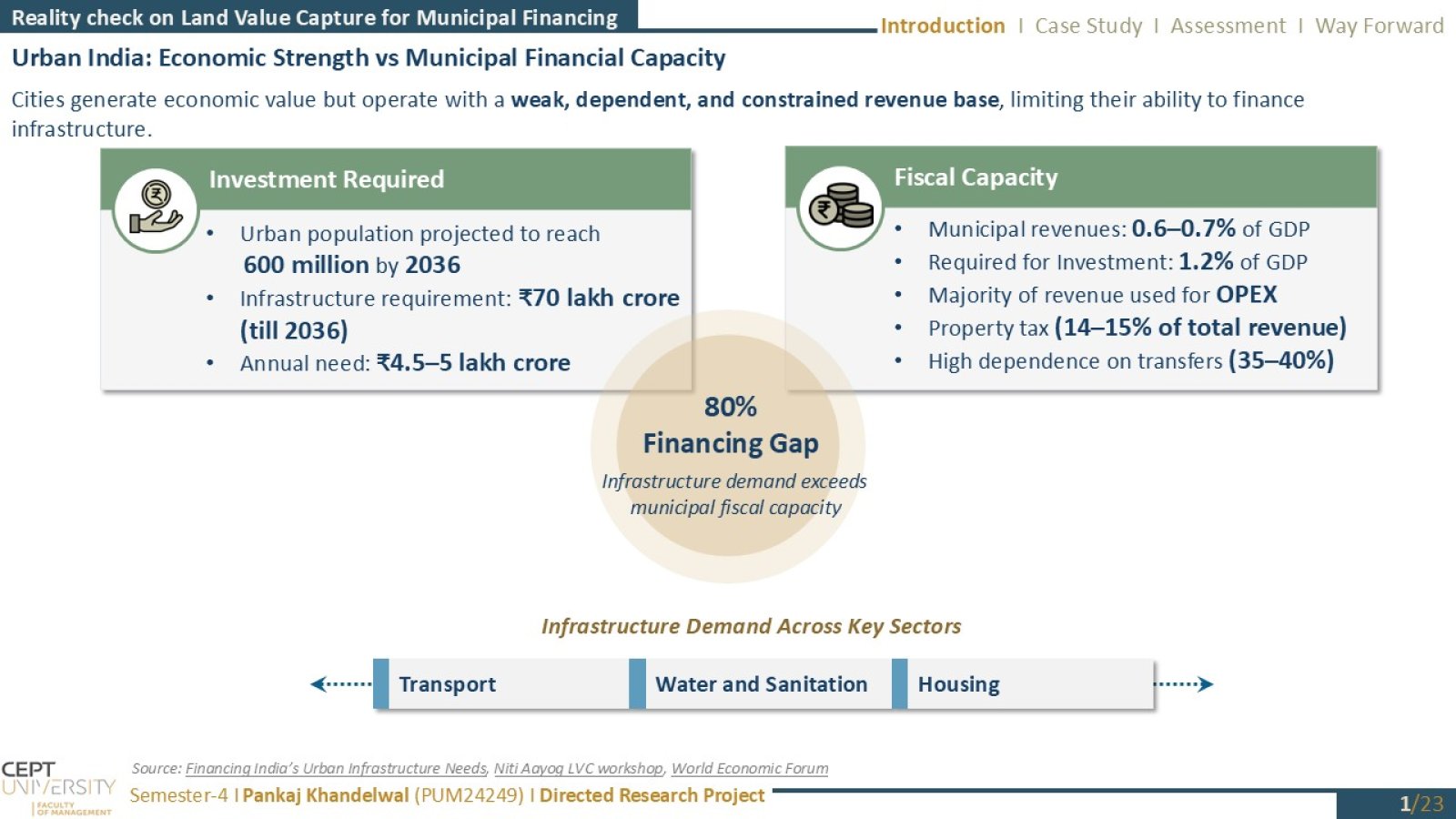
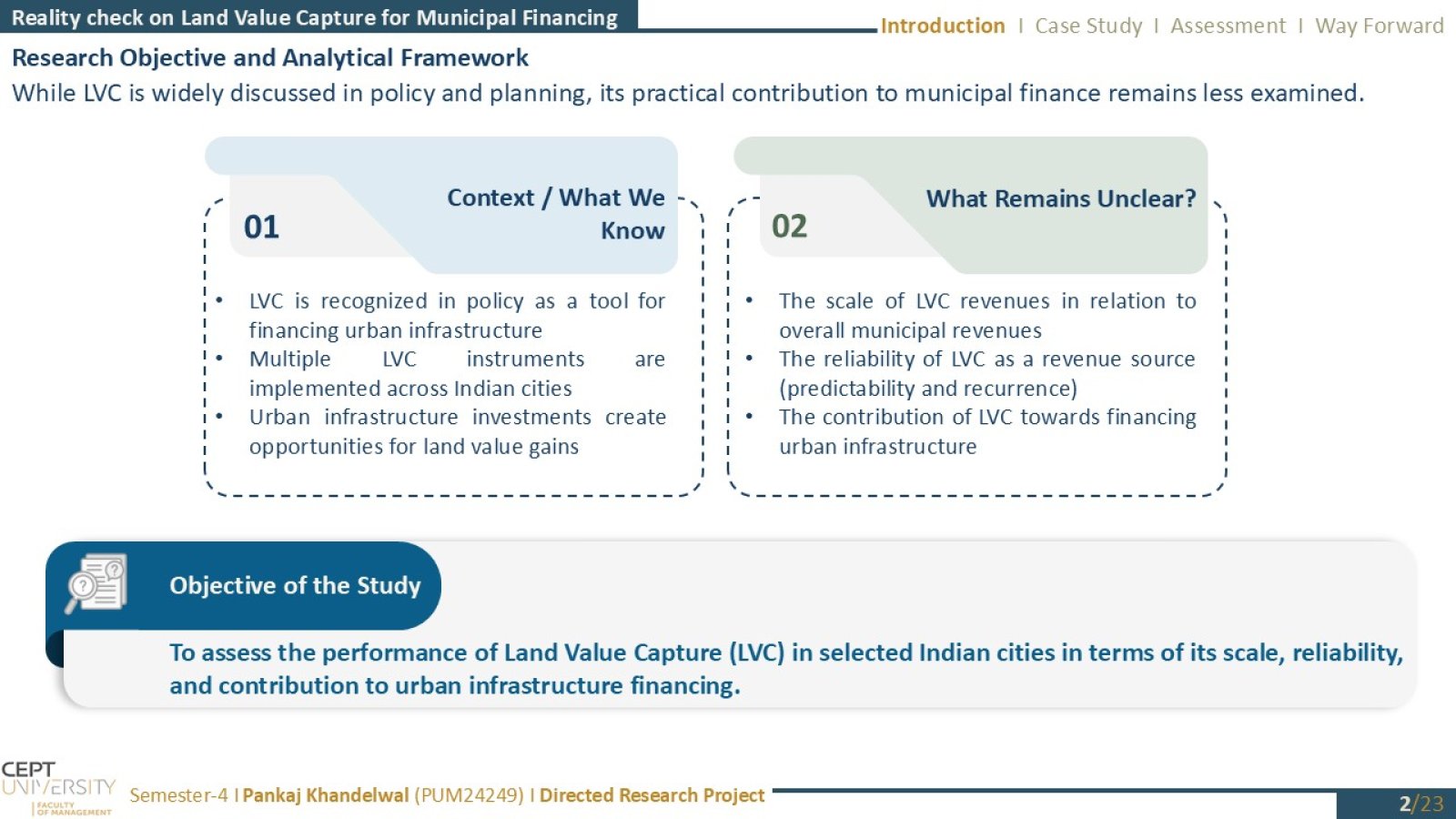
Indian cities face a widening gap between growing infrastructure demand and weak municipal fiscal capacity, limiting their ability to independently finance urban development.

The study examines whether Land Value Capture (LVC) functions as a scalable, reliable, and sustainable source of municipal infrastructure financing in Indian cities.

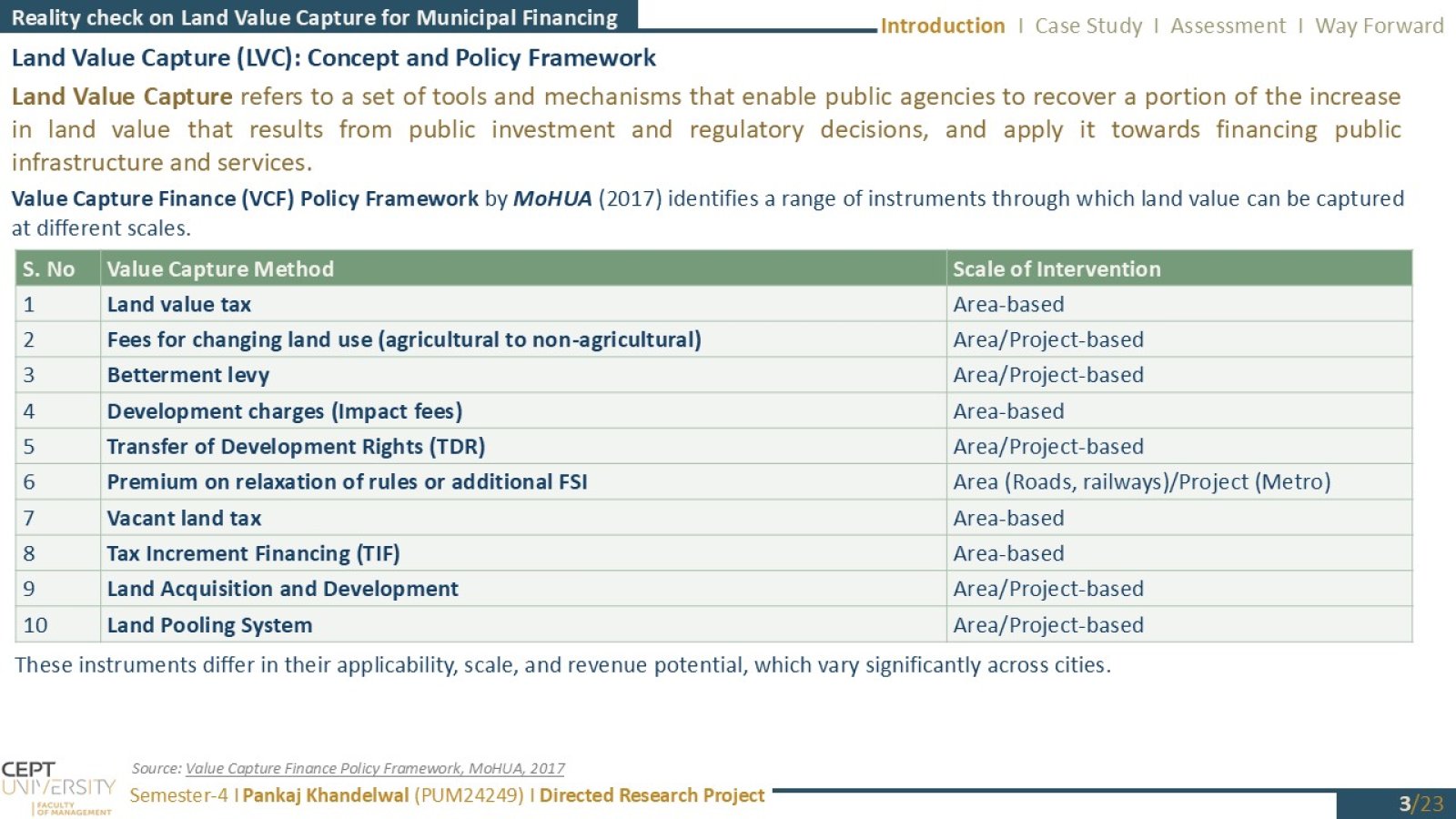
LVC instruments aim to recover land value gains generated through public investment, but their applicability and revenue potential vary significantly across urban contexts.

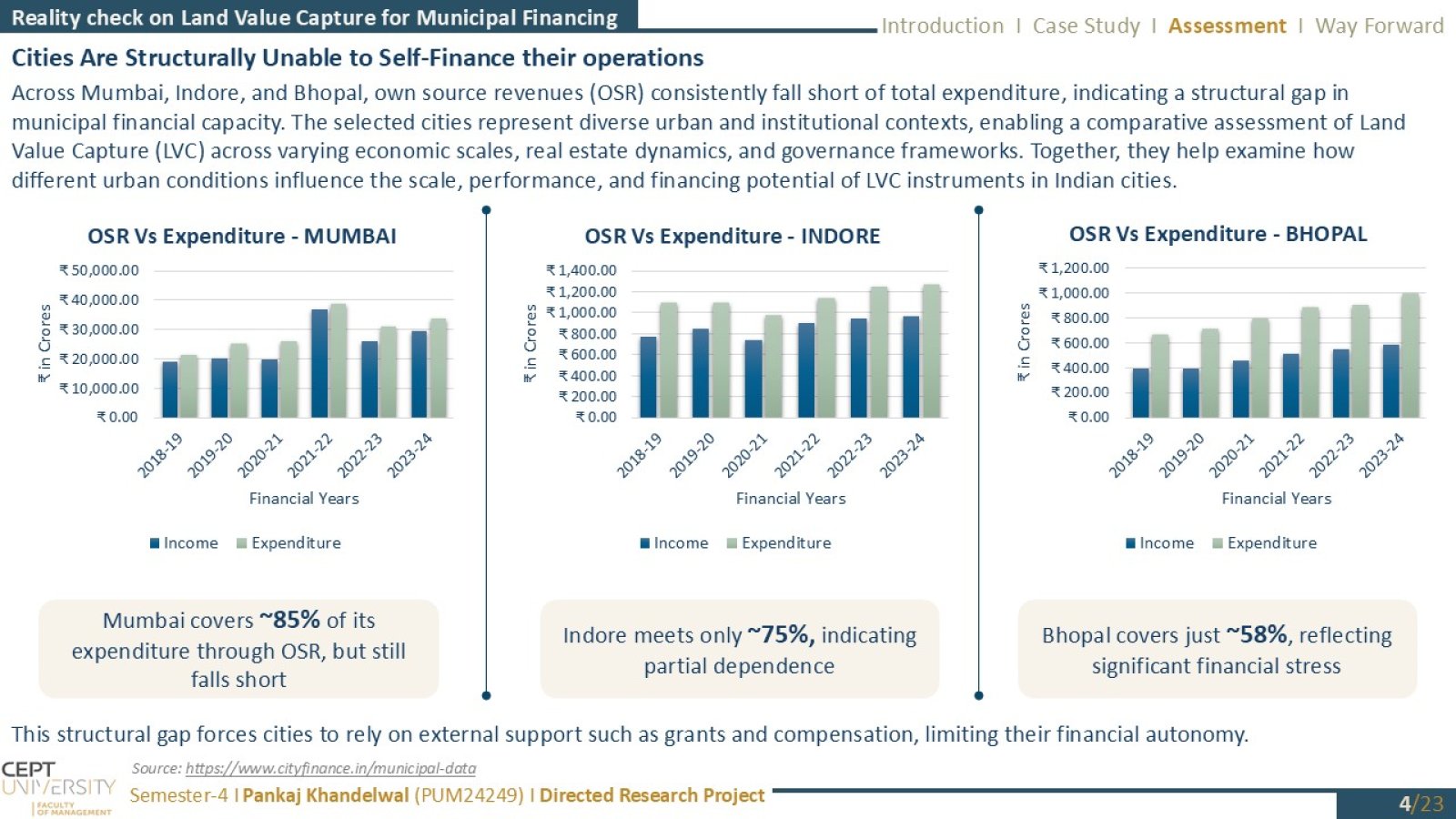
Across Mumbai, Indore, and Bhopal, municipal revenues consistently remain below expenditure levels, reflecting structural dependence on external fiscal support.

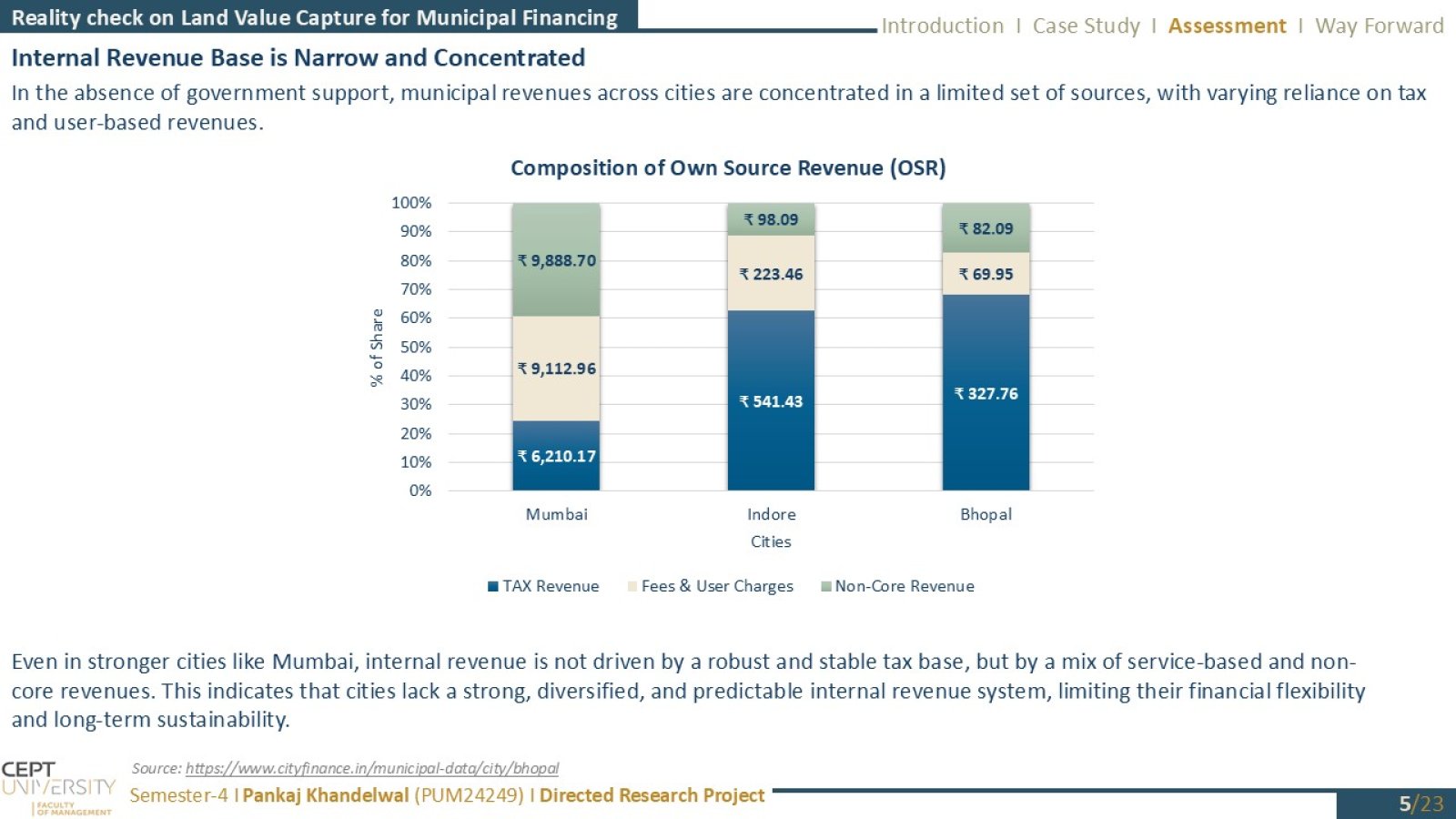
Municipal own-source revenues are concentrated in limited revenue streams, indicating weak diversification and constrained fiscal resilience.

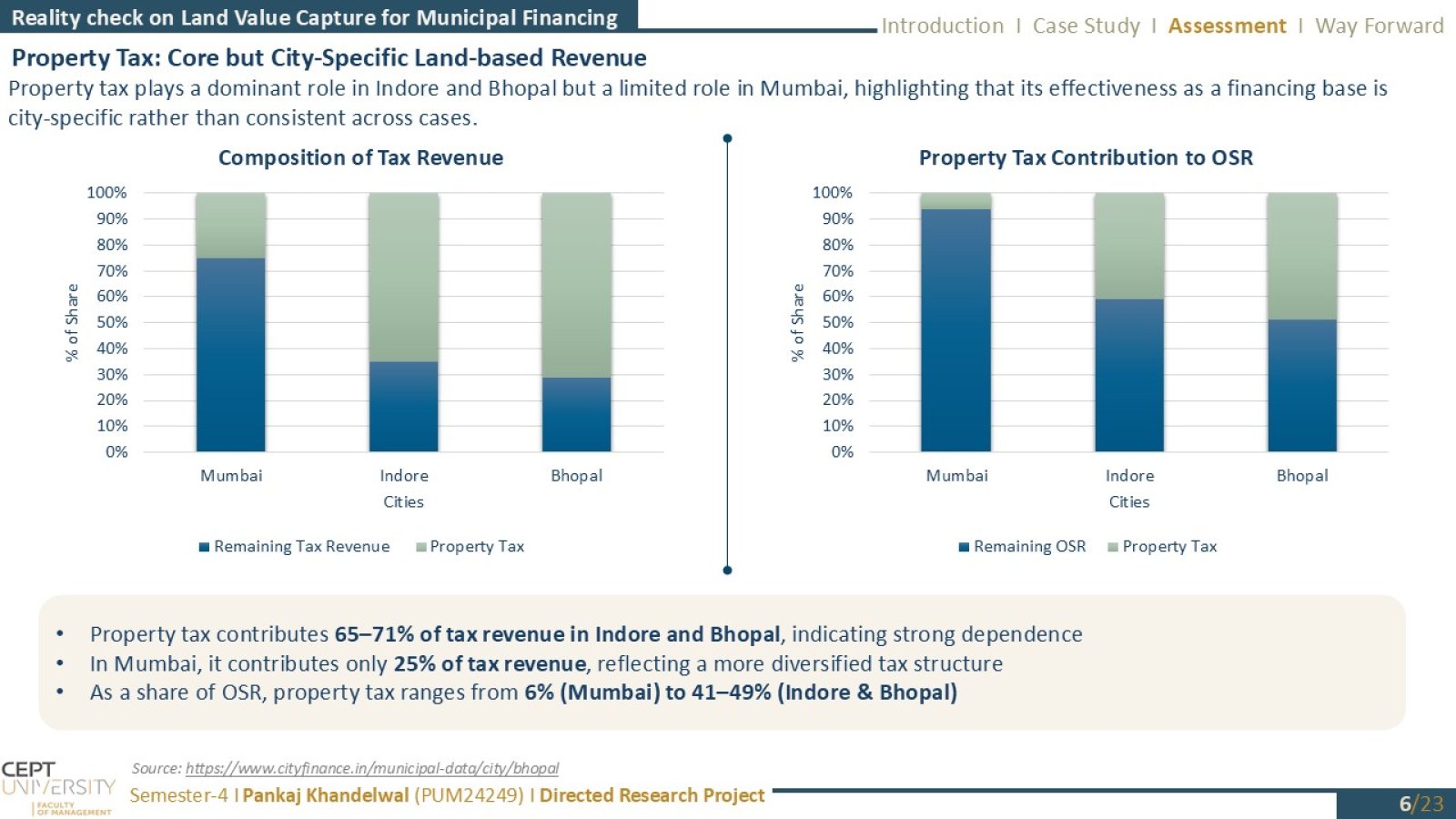
Property tax remains the most stable land-based revenue source, though its contribution and effectiveness differ significantly across cities.

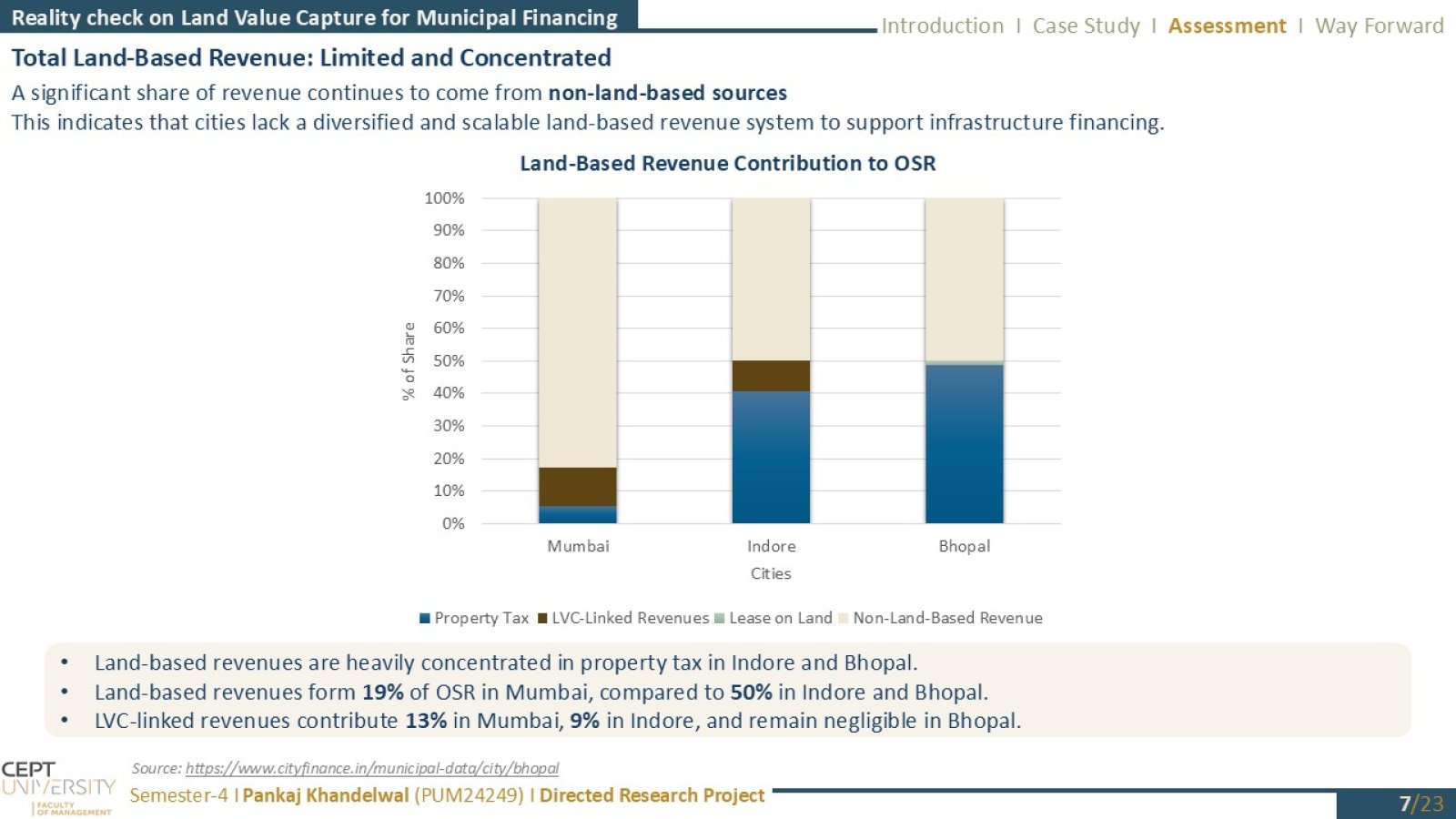
Land-based revenues remain heavily dependent on property tax, while LVC-linked revenues contribute only a limited share to municipal finances.

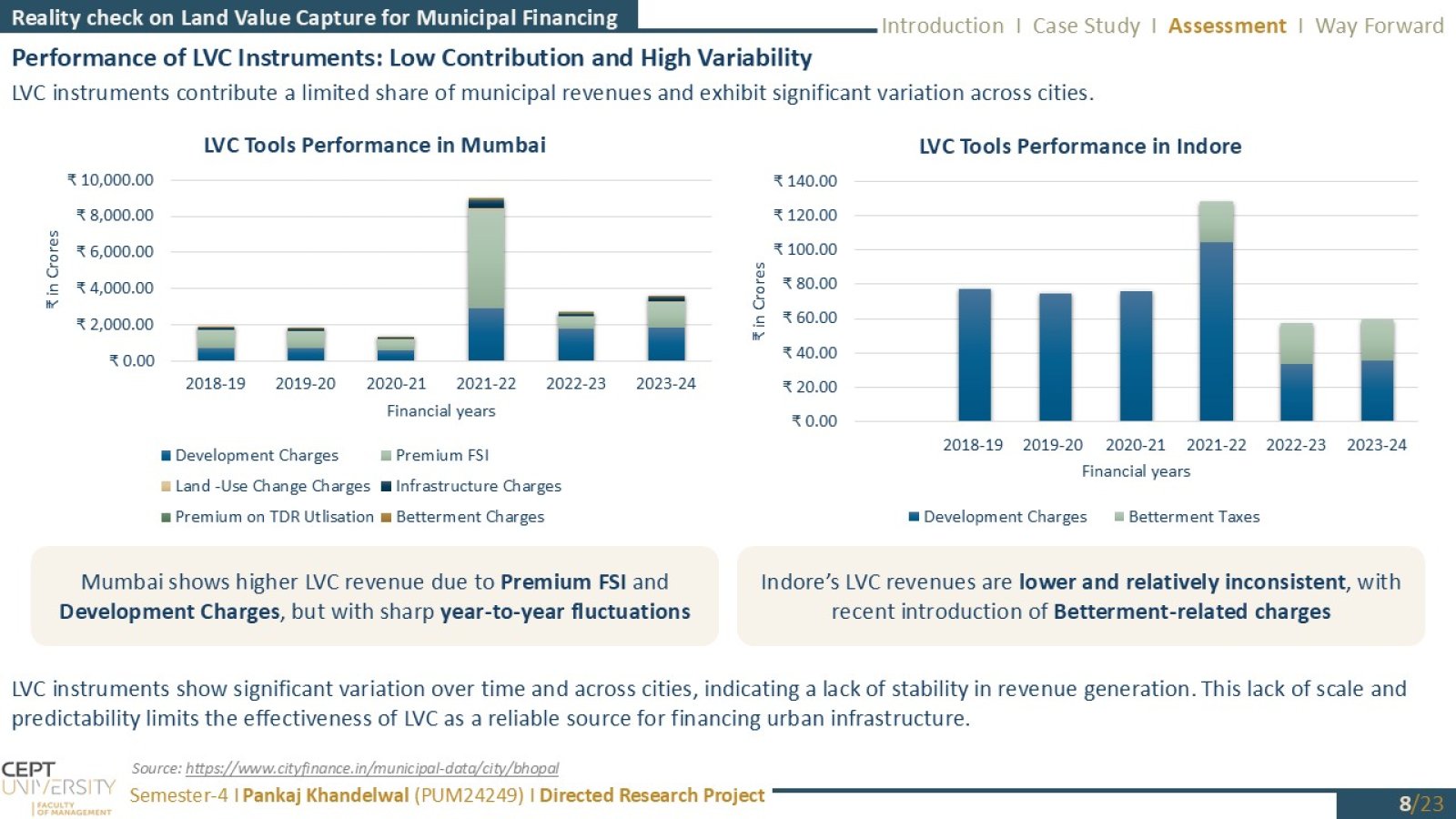
LVC revenues fluctuate significantly across cities and years, highlighting their dependence on real estate activity and limited financing reliability.

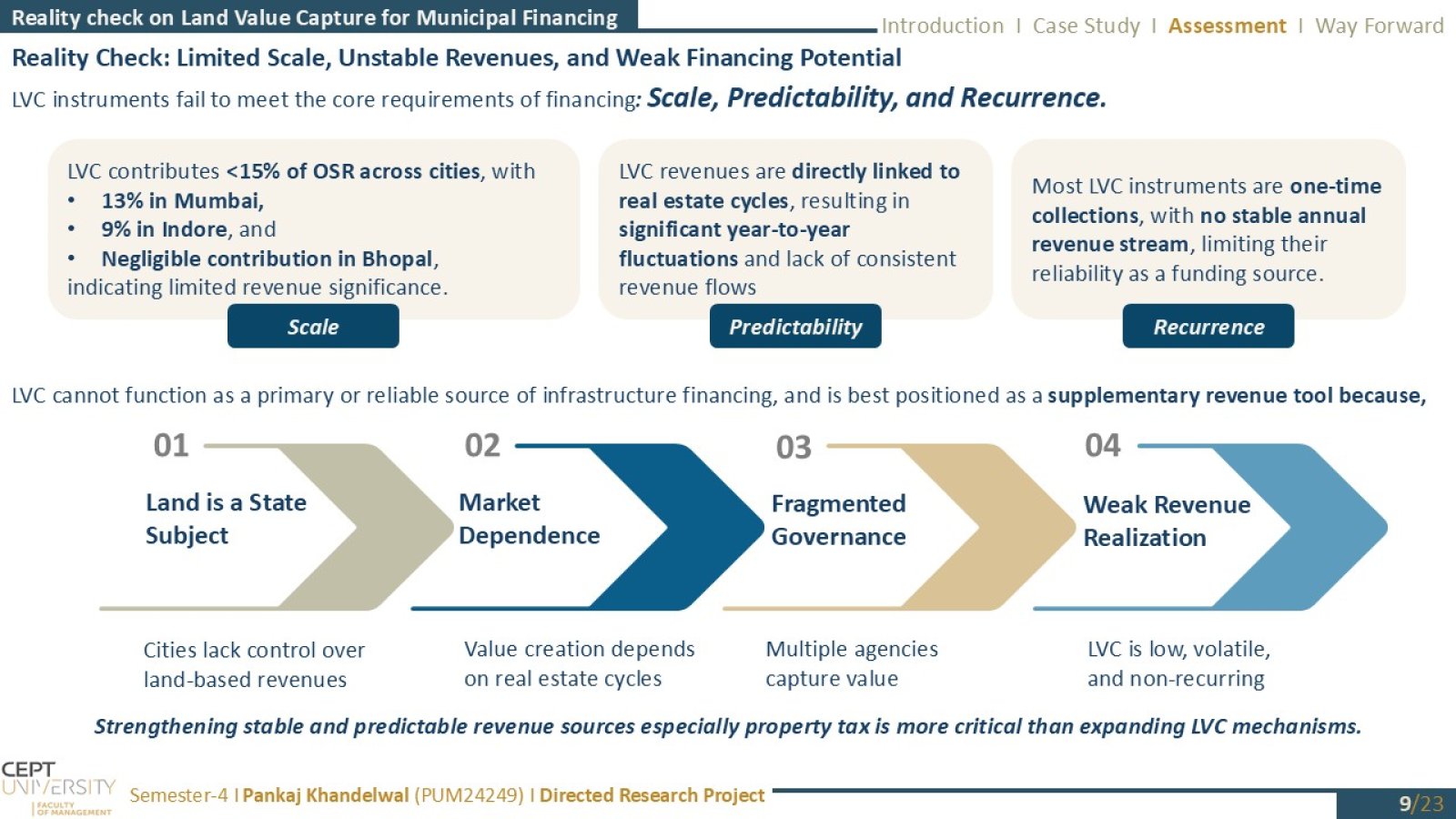
LVC instruments fail to provide the scale, predictability, and recurrence required for long-term infrastructure financing under current institutional conditions.

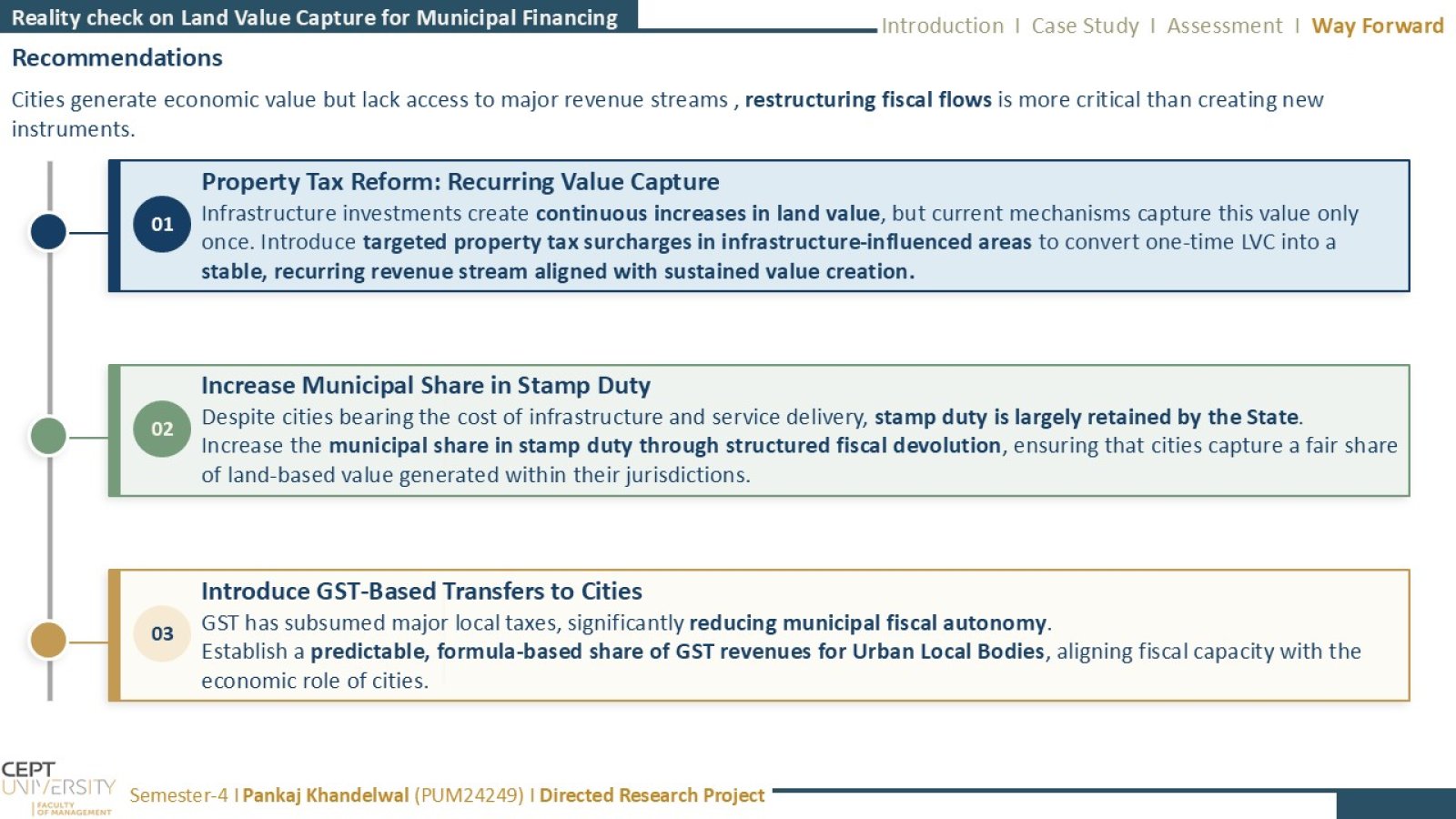
Strengthening recurring municipal revenue systems through property tax reforms, fiscal devolution, and GST-based transfers is more critical than expanding standalone LVC mechanisms.