Khandelwal Purvesh Ganesh

UM4050

PUM24487

This study looks at how the economy of the Bhopal Metropolitan Region(BMR) actually functions beyond just growth numbers and sector-wise contribution. The research maps industrial specialisation, employment patterns, exports, and value chains to understand how different sectors connect with each other and where major structural gaps exist. Using tools like Location Quotient, Shift Share Analysis, and cluster mapping, the study identifies why certain industries grow while the wider regional economy remains weakly integrated. The objective is to build a more grounded understanding of Local Economic Development and identify opportunities for stronger regional linkages, MSME growth, and long-term economic resilience.
Report Content

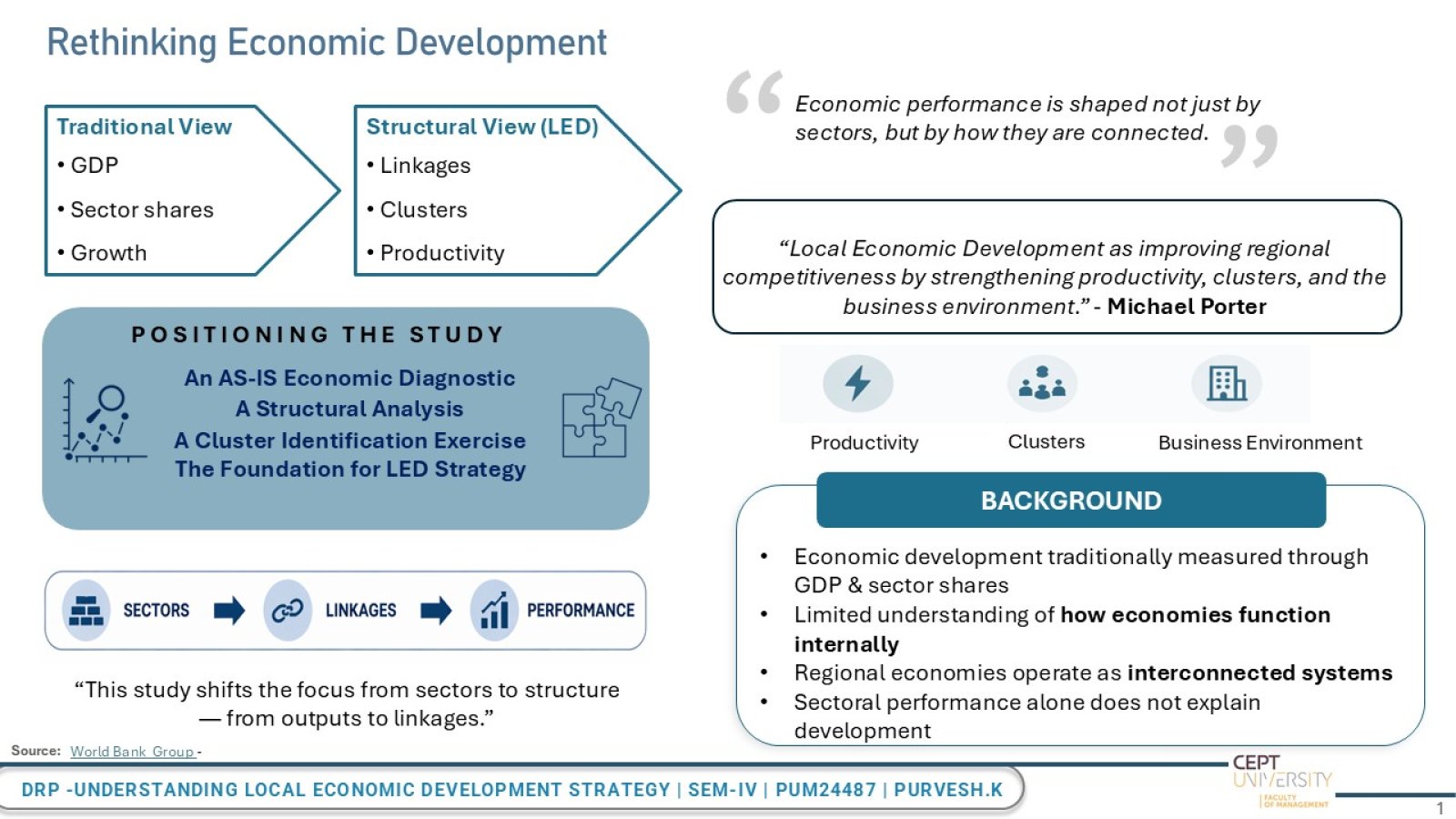
Economic growth is not determined only by sectoral output, but by the strength of linkages, productivity systems, and institutional integration within the regional economy.

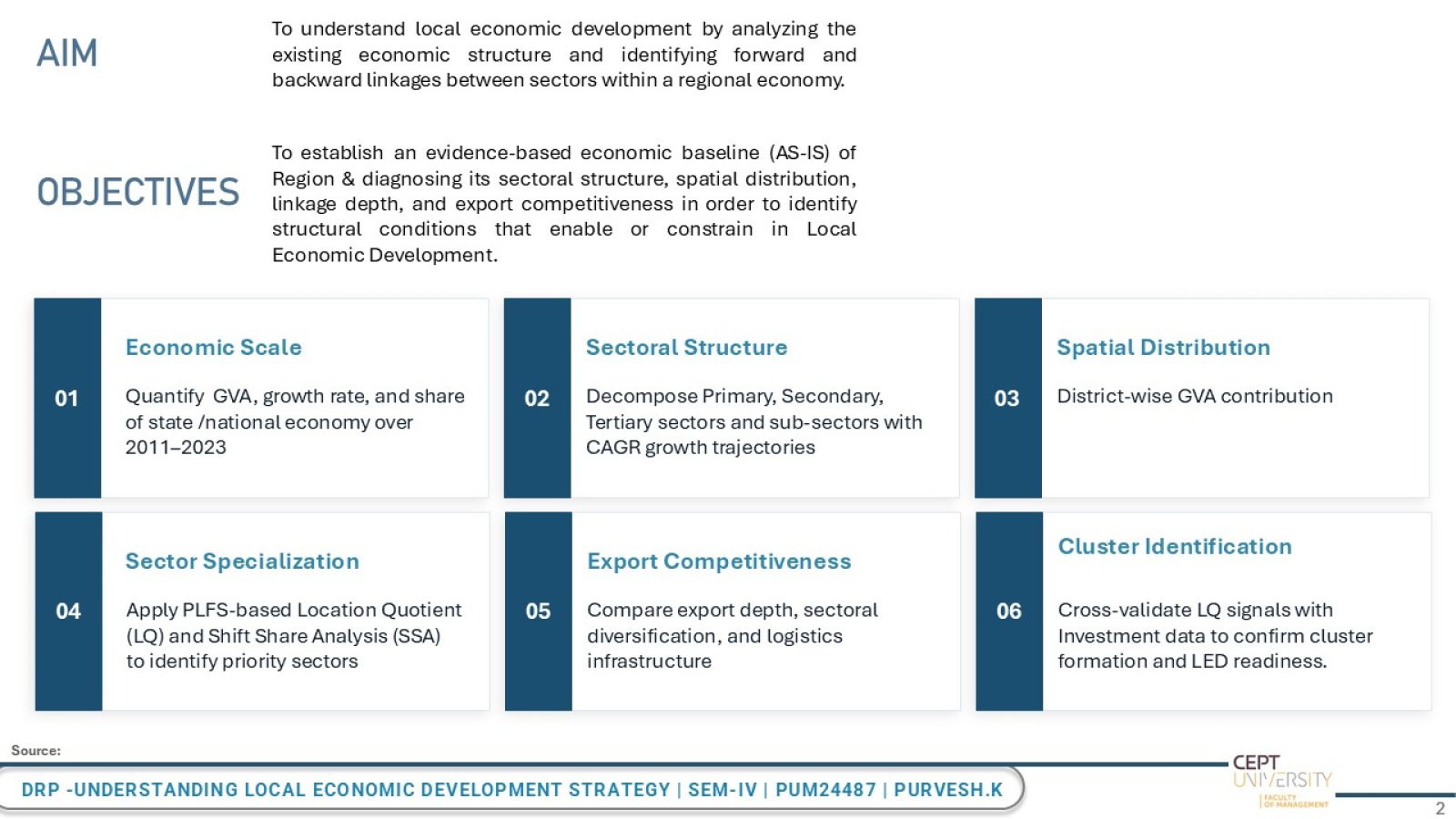
The study establishes an evidence-based economic diagnostic for BMR by analysing sectoral structure, spatial distribution, competitiveness, and cluster potential through quantitative and spatial methods.

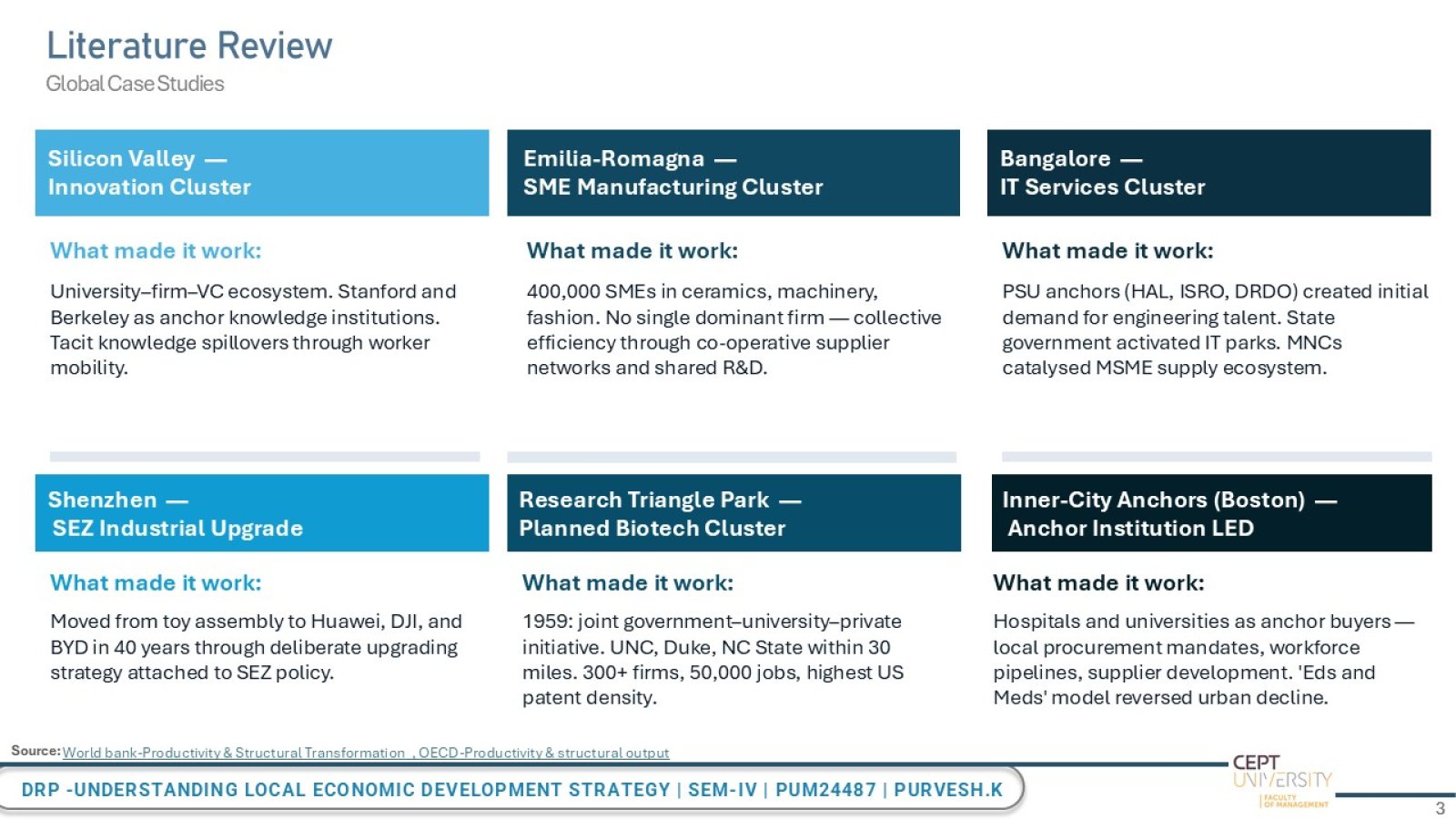
Global economic clusters demonstrate that long-term regional competitiveness emerges from institutional coordination, specialised supplier networks, innovation ecosystems, and strategic industrial upgrading.

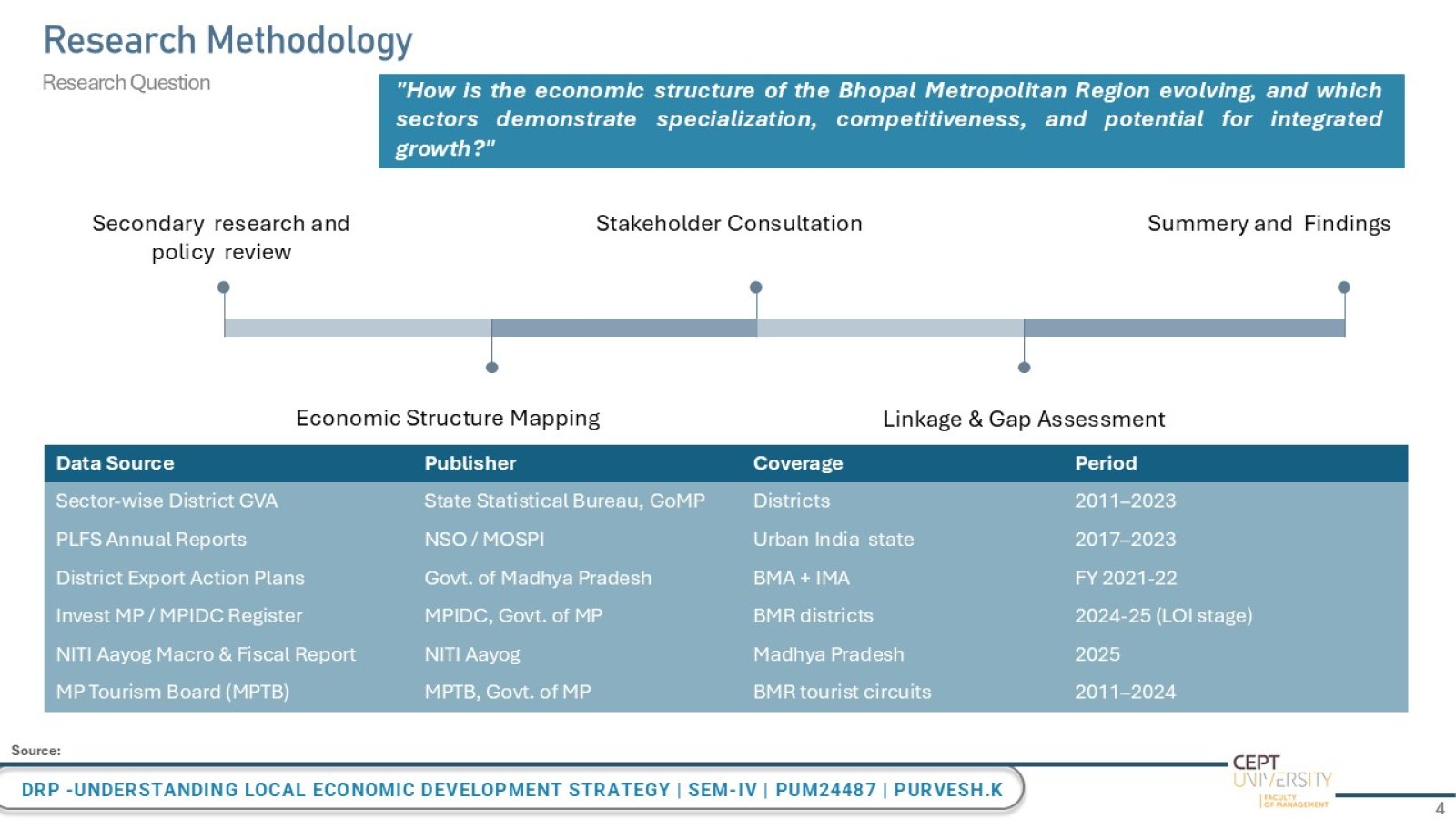
The methodology combines secondary economic datasets with stakeholder consultations to validate structural patterns, cluster linkages, and sectoral competitiveness within the regional economy.

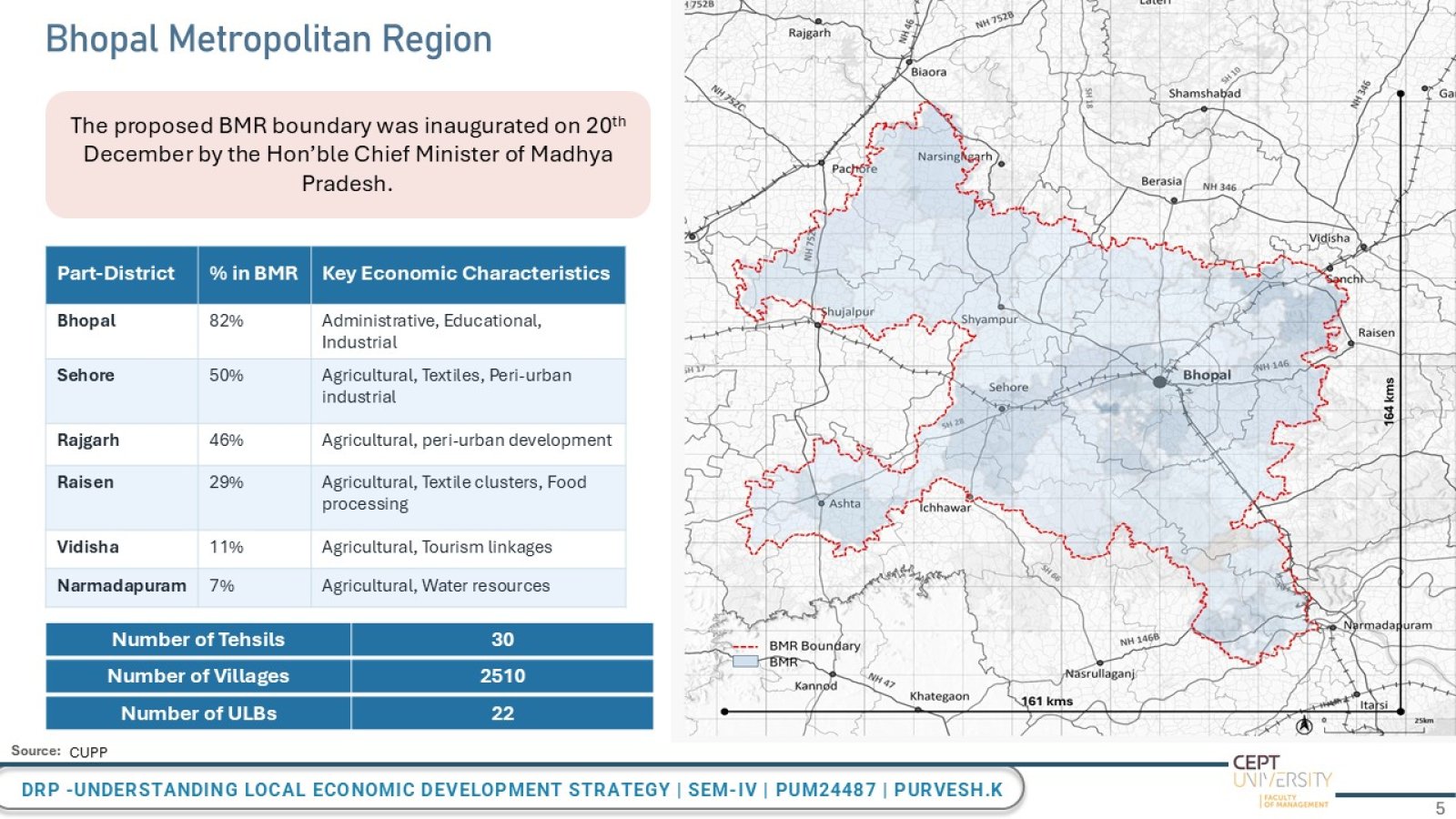
The Bhopal Metropolitan Region represents a multi-district economic system where industrial, agricultural, administrative, and logistics functions interact across spatially connected regional economies.

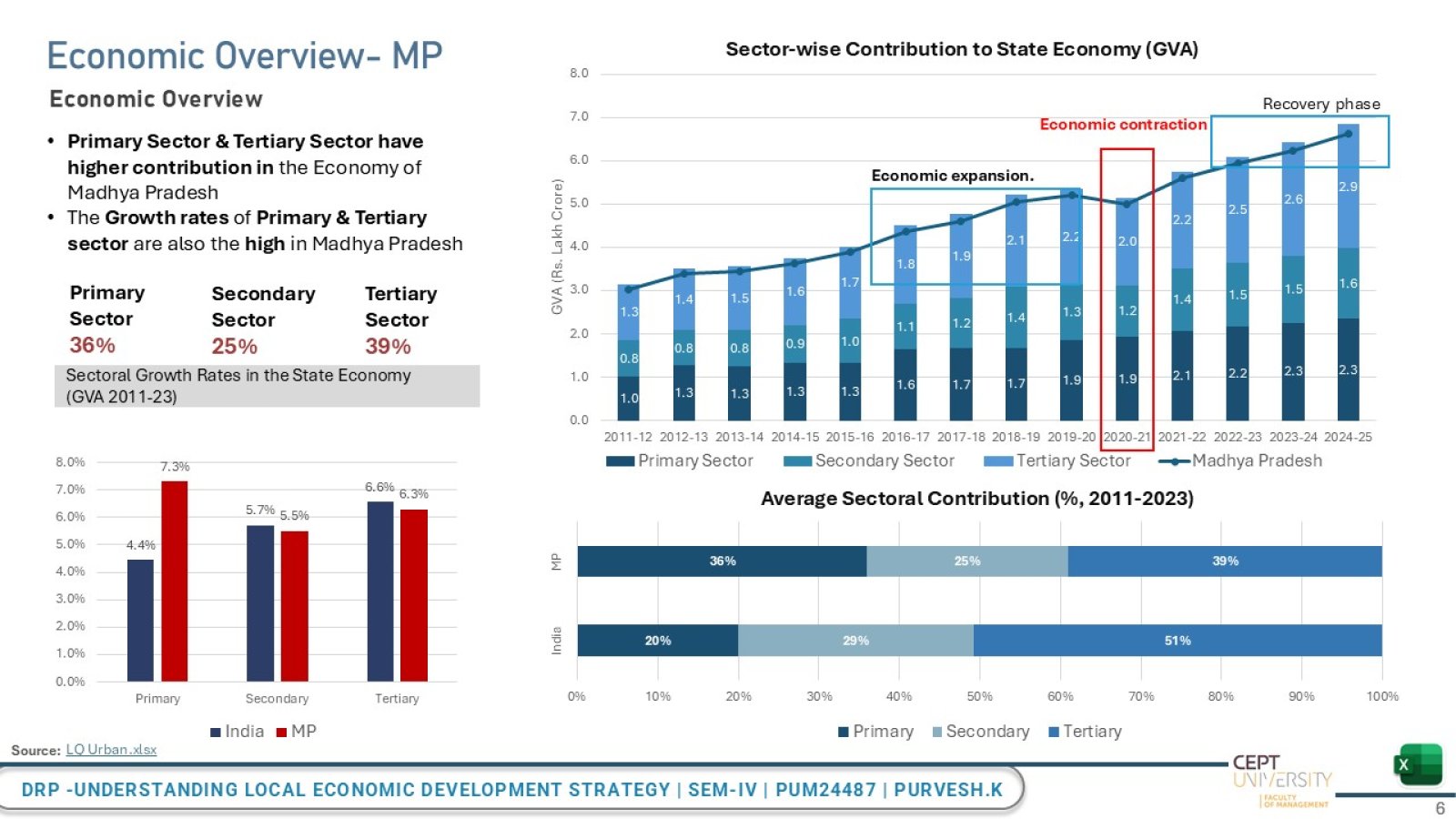
Madhya Pradesh’s economy continues to remain primary and tertiary sector driven, with structural shifts indicating gradual diversification alongside uneven industrial depth.

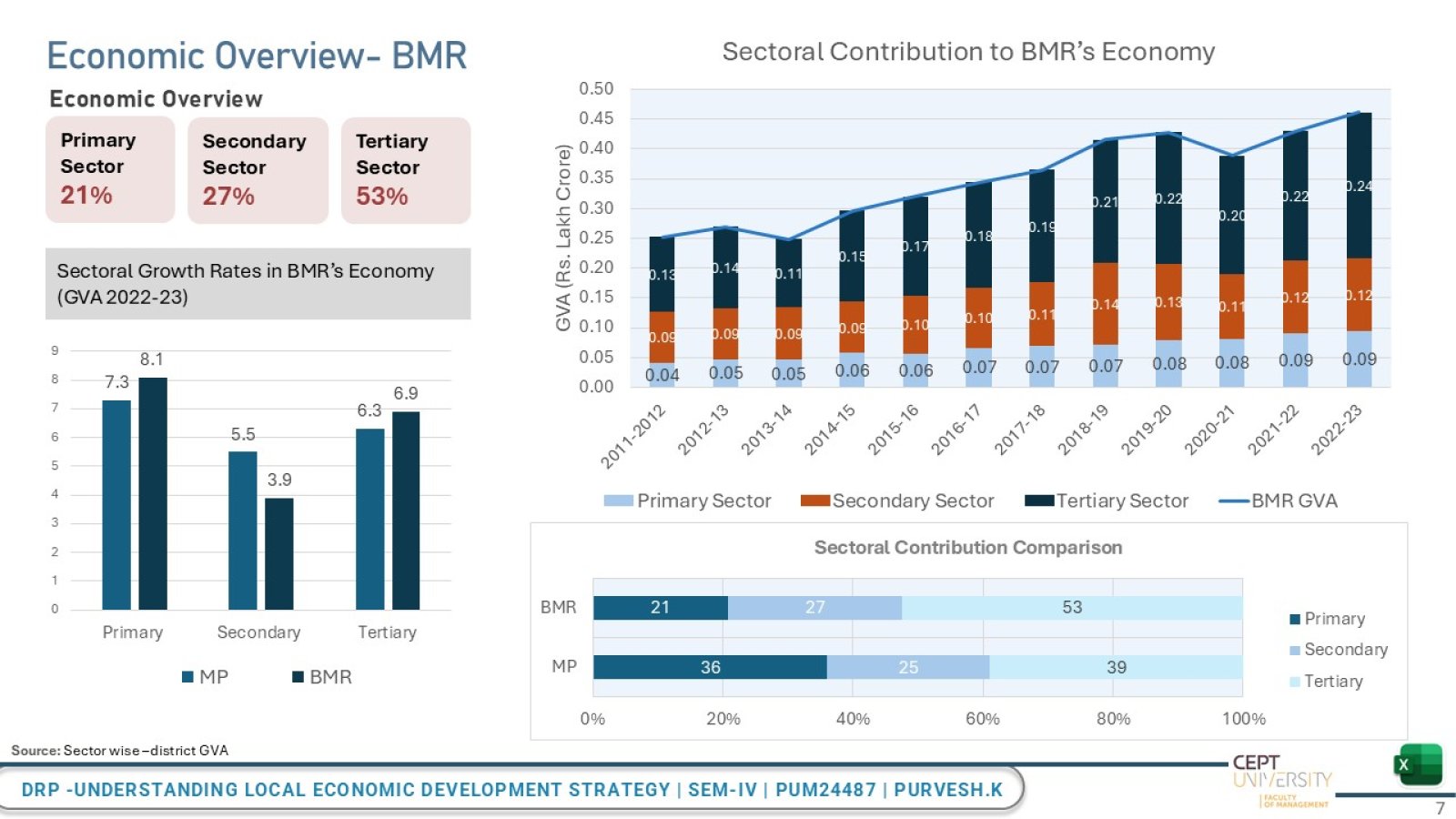
Compared to the state economy, BMR demonstrates a stronger tertiary sector orientation and a more urbanised economic structure with emerging industrial concentration.

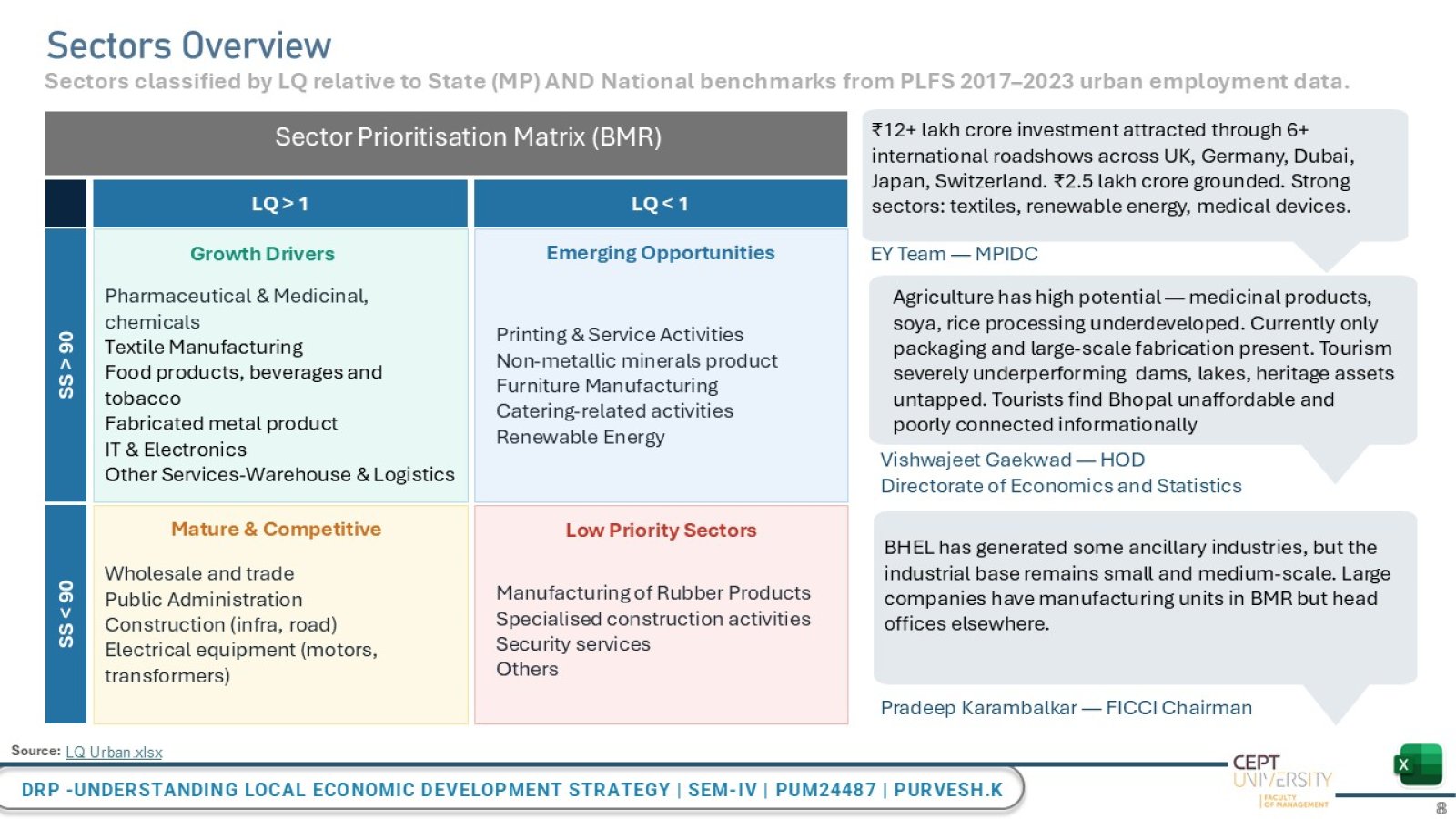
The prioritisation matrix identifies sectors with structural competitiveness, growth potential, and cluster readiness by combining LQ analysis, shift-share performance, and stakeholder validation.

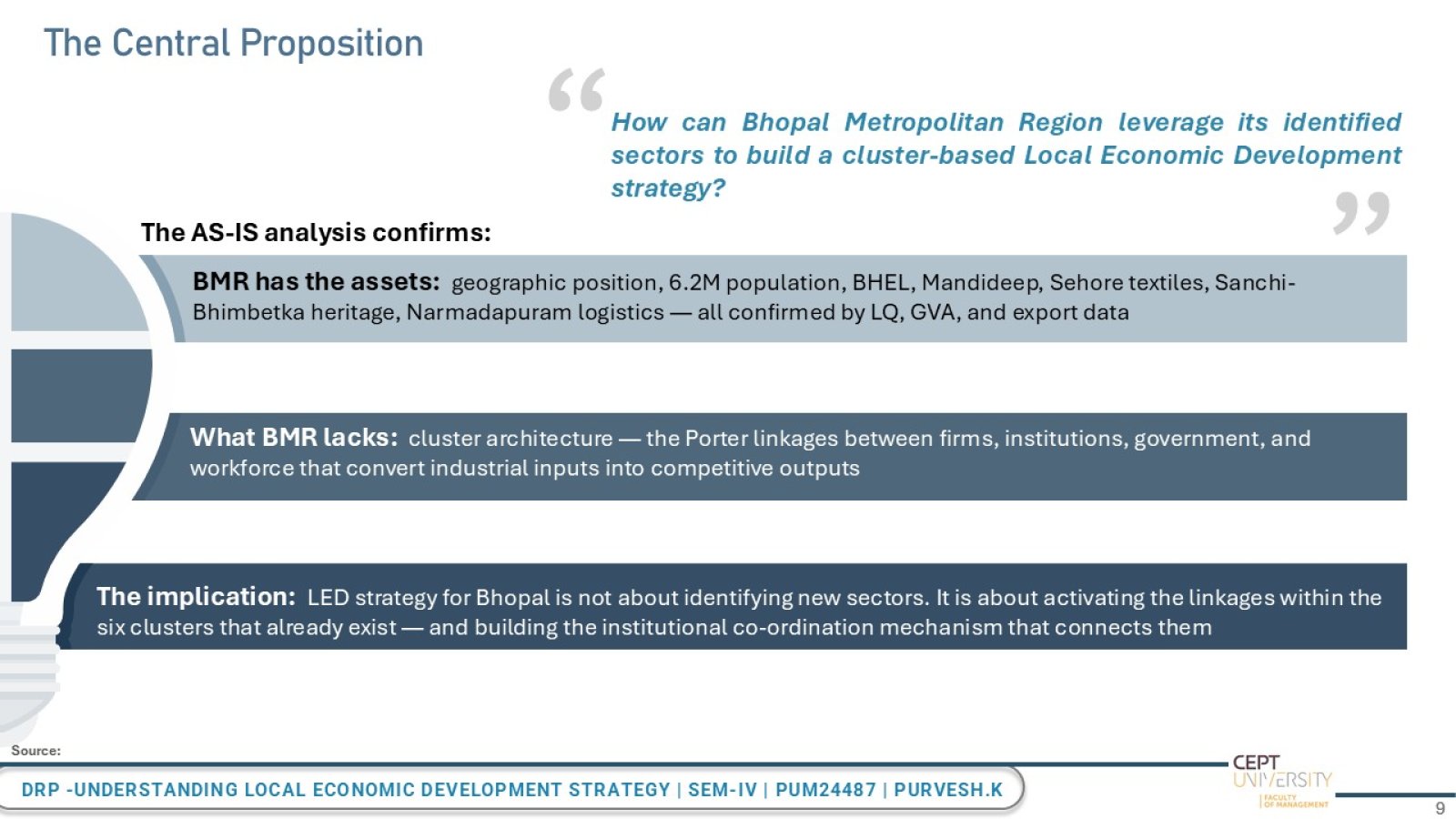
The challenge for BMR is not the absence of economic assets, but the absence of integrated cluster architecture capable of translating existing strengths into regional competitiveness.

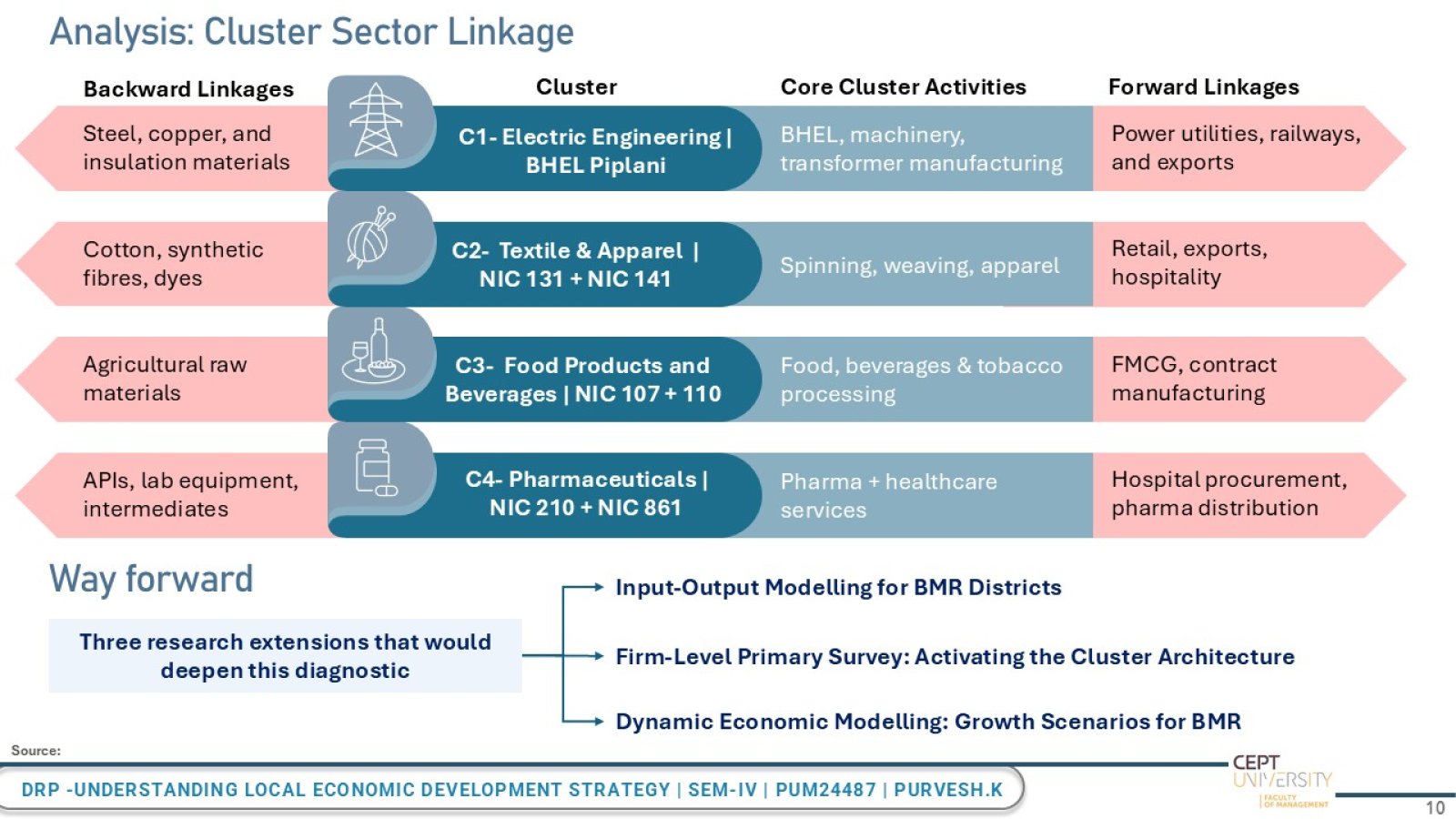
Future research must move from sector identification toward deeper firm-level linkage analysis, input-output modelling, and dynamic cluster integration within the regional economy.