Your browser is out-of-date!
For a richer surfing experience on our website, please update your browser. Update my browser now!
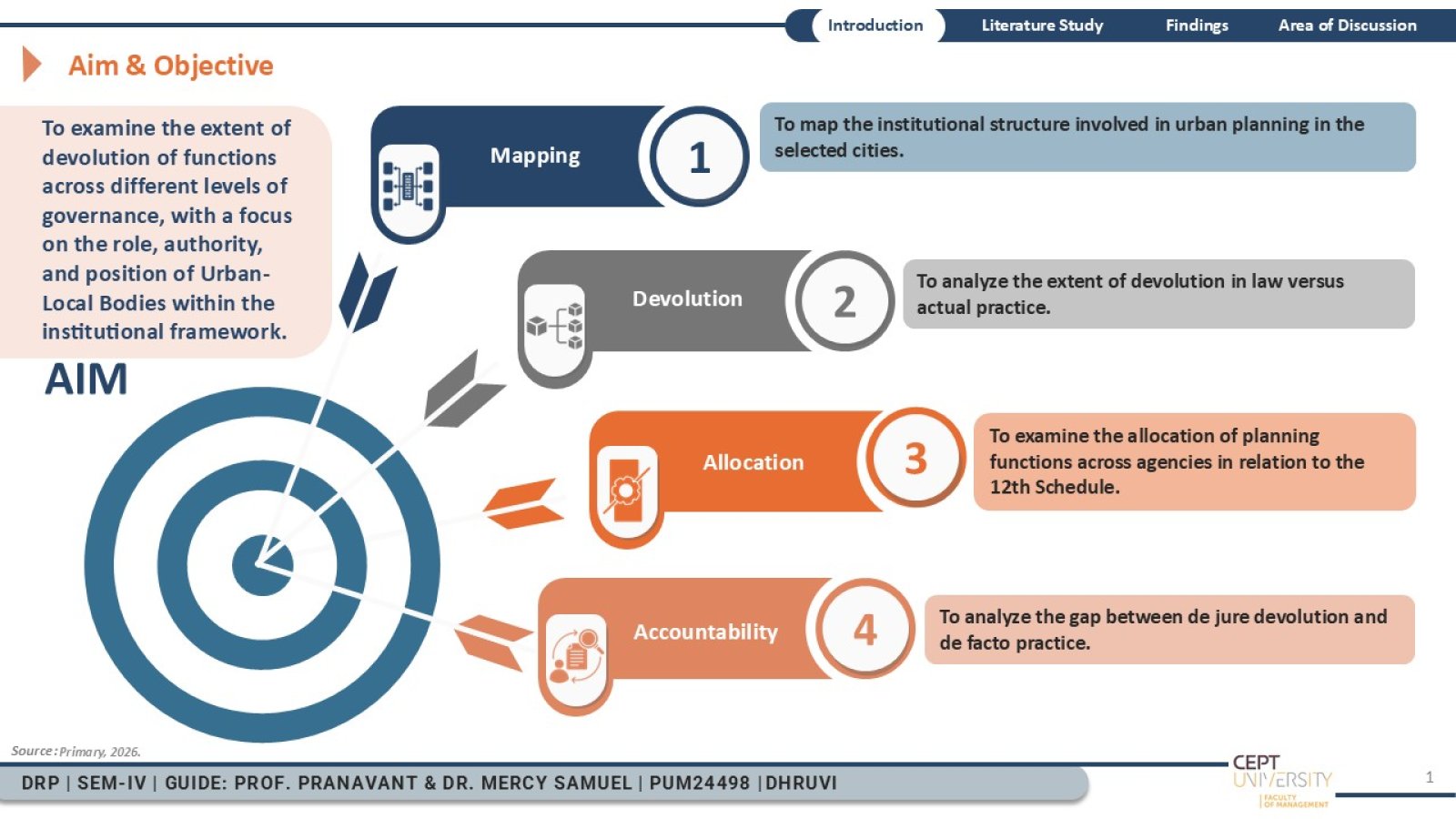
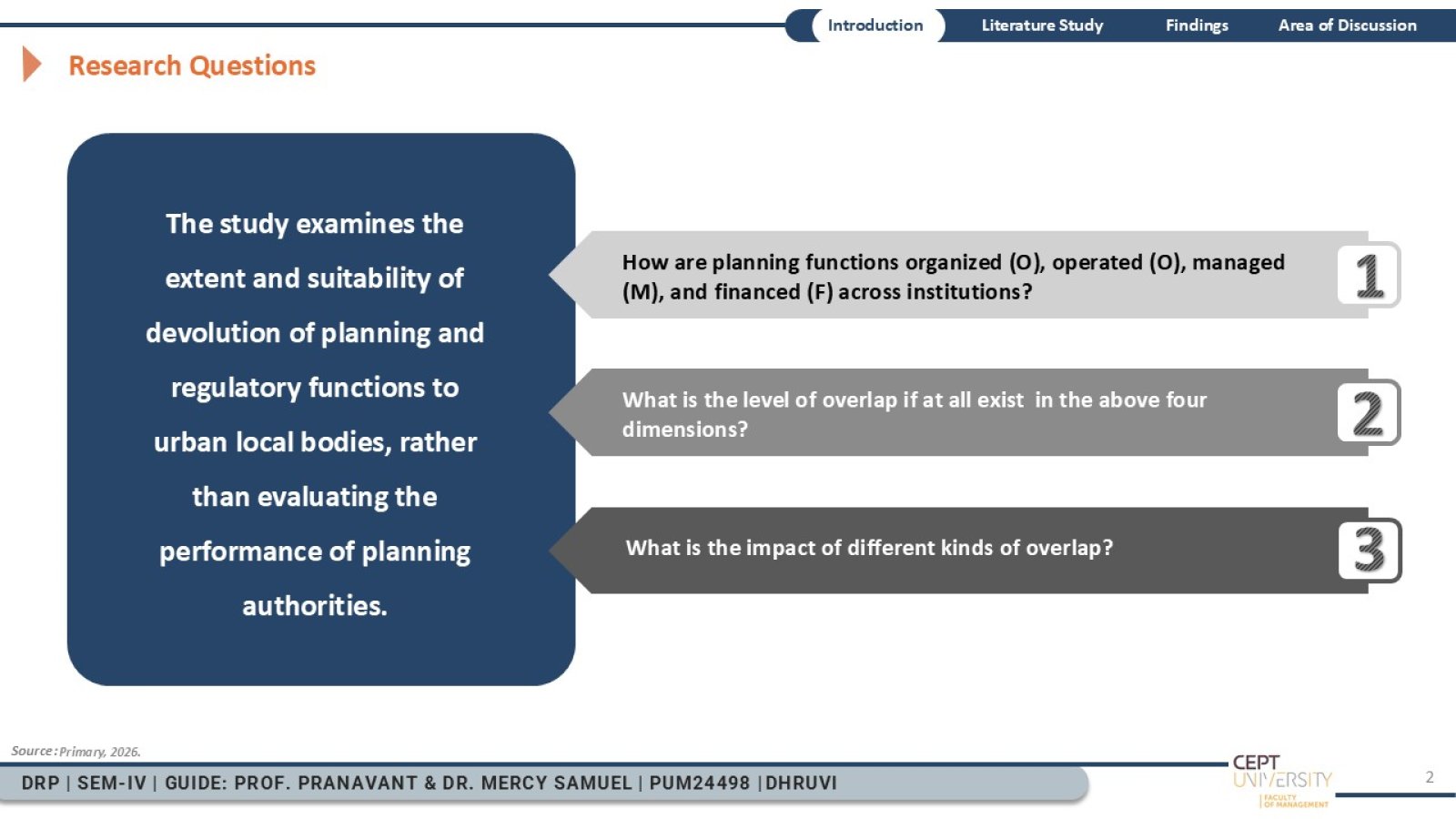
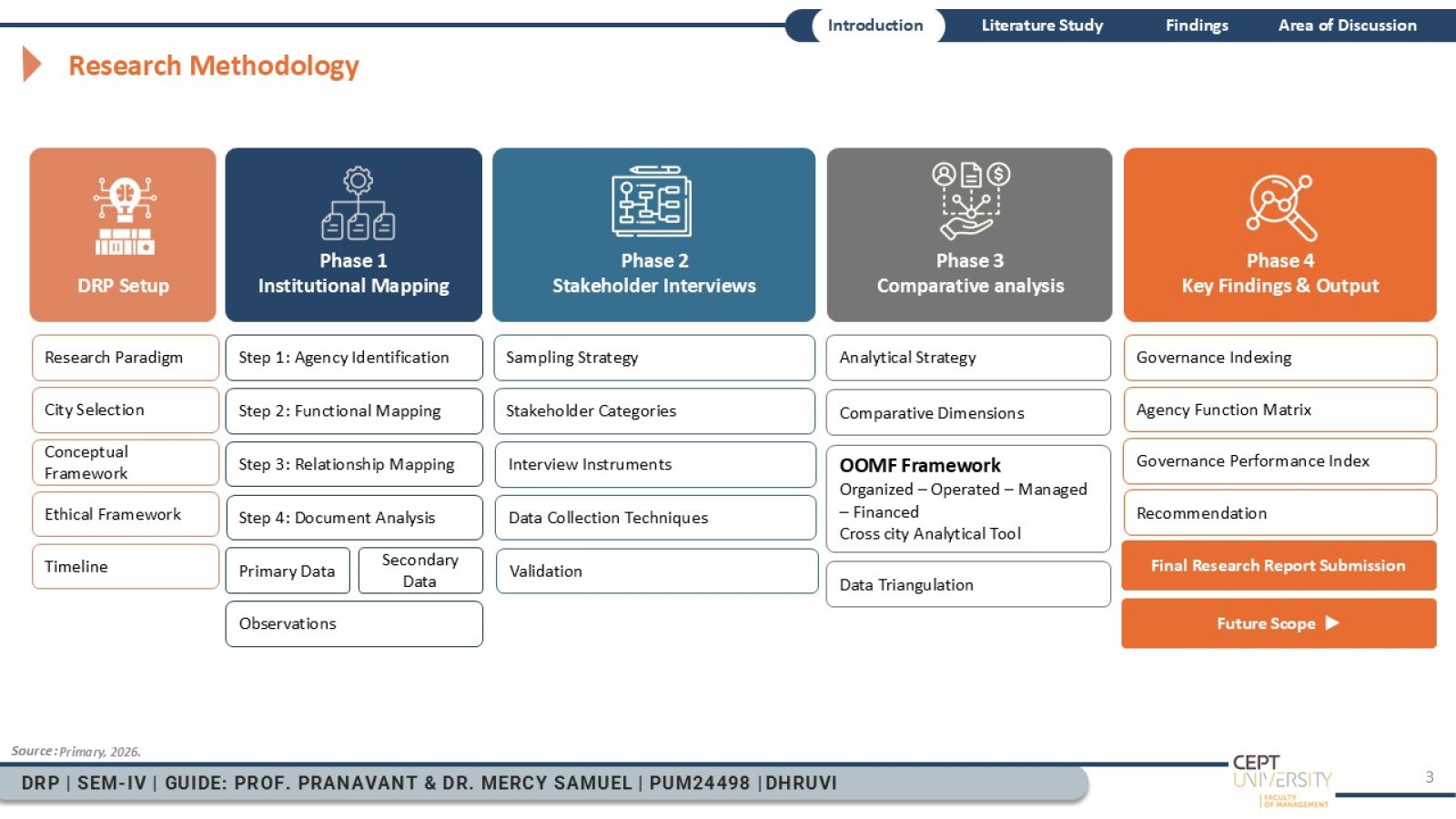
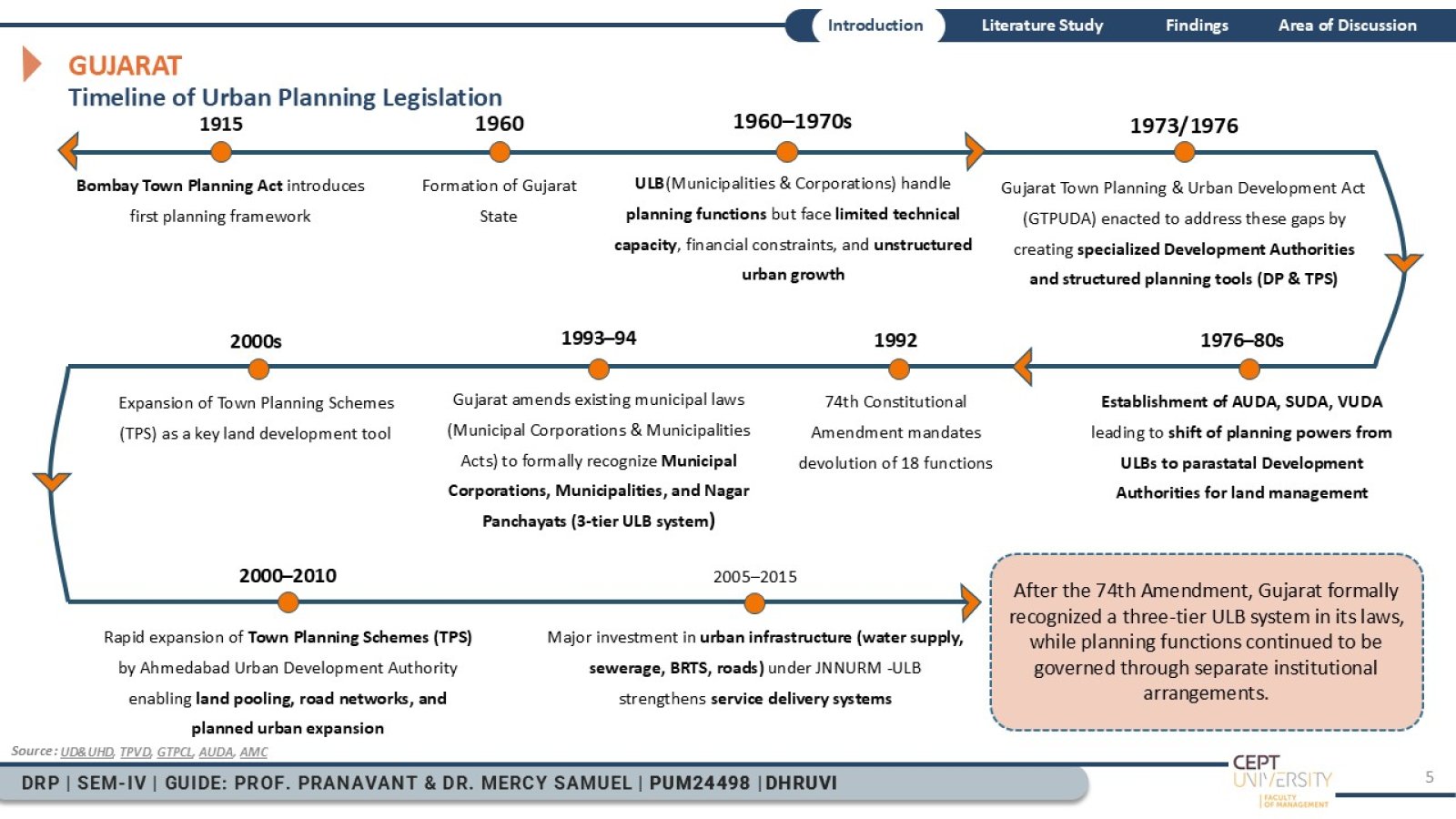
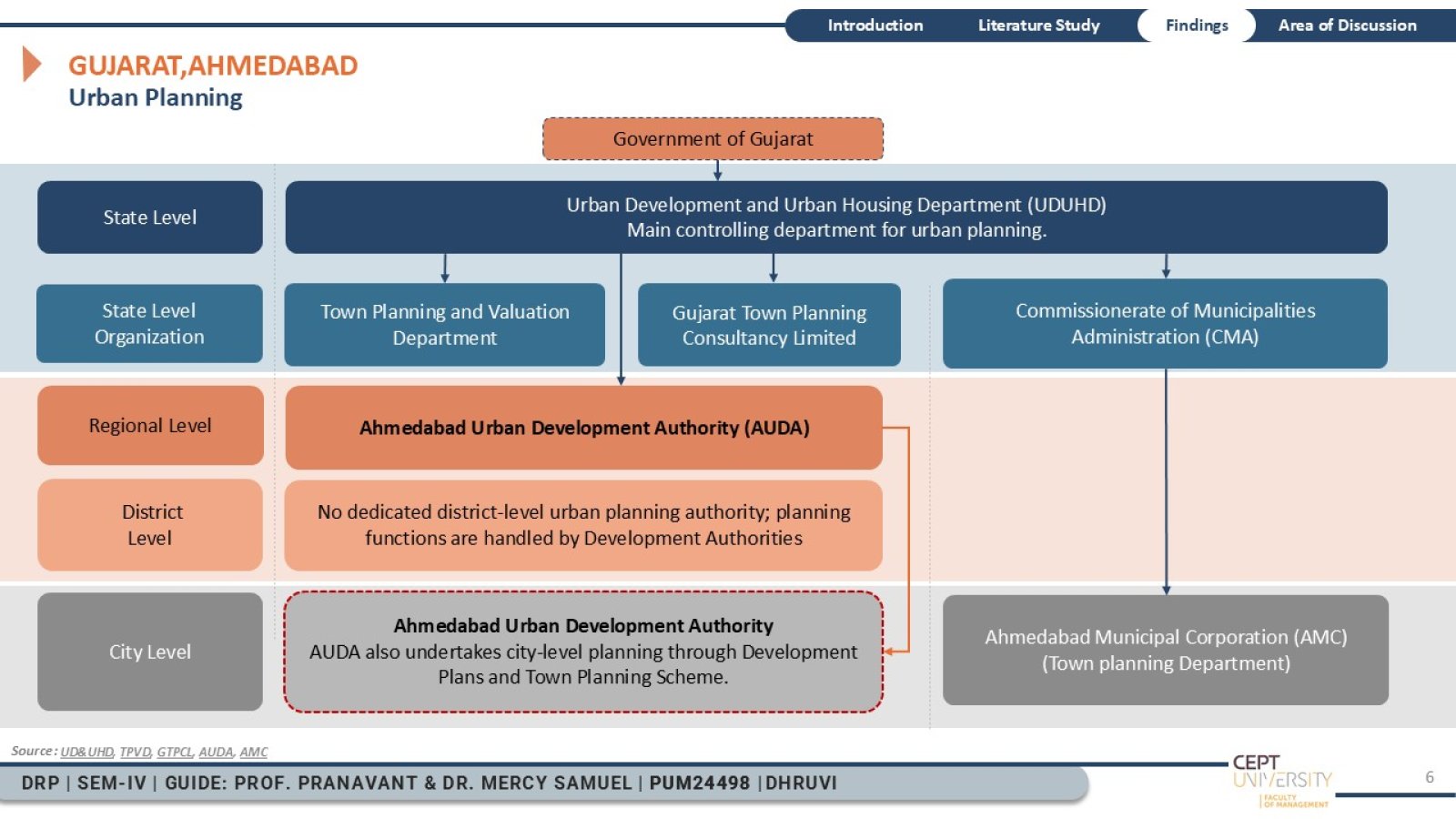
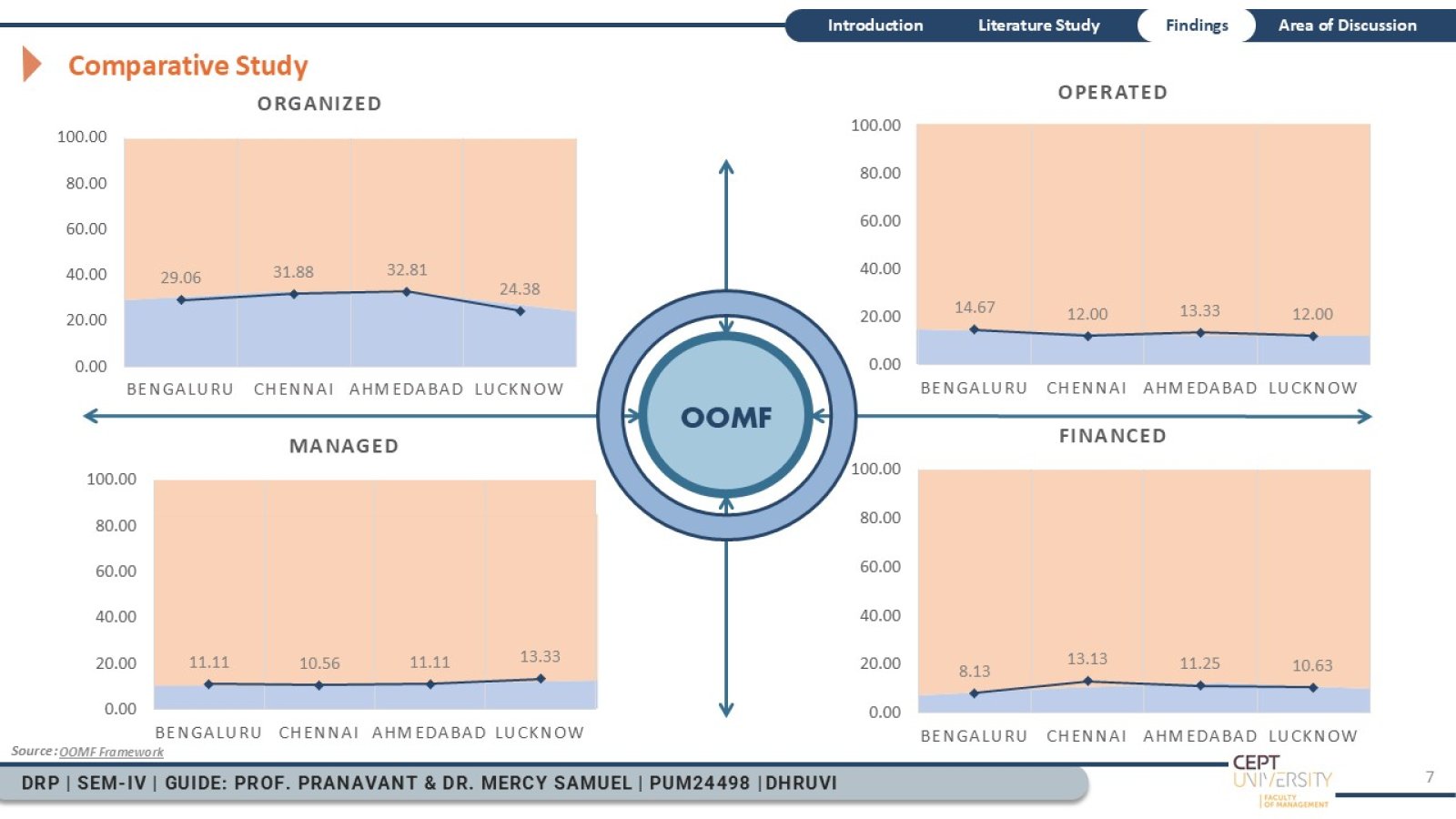
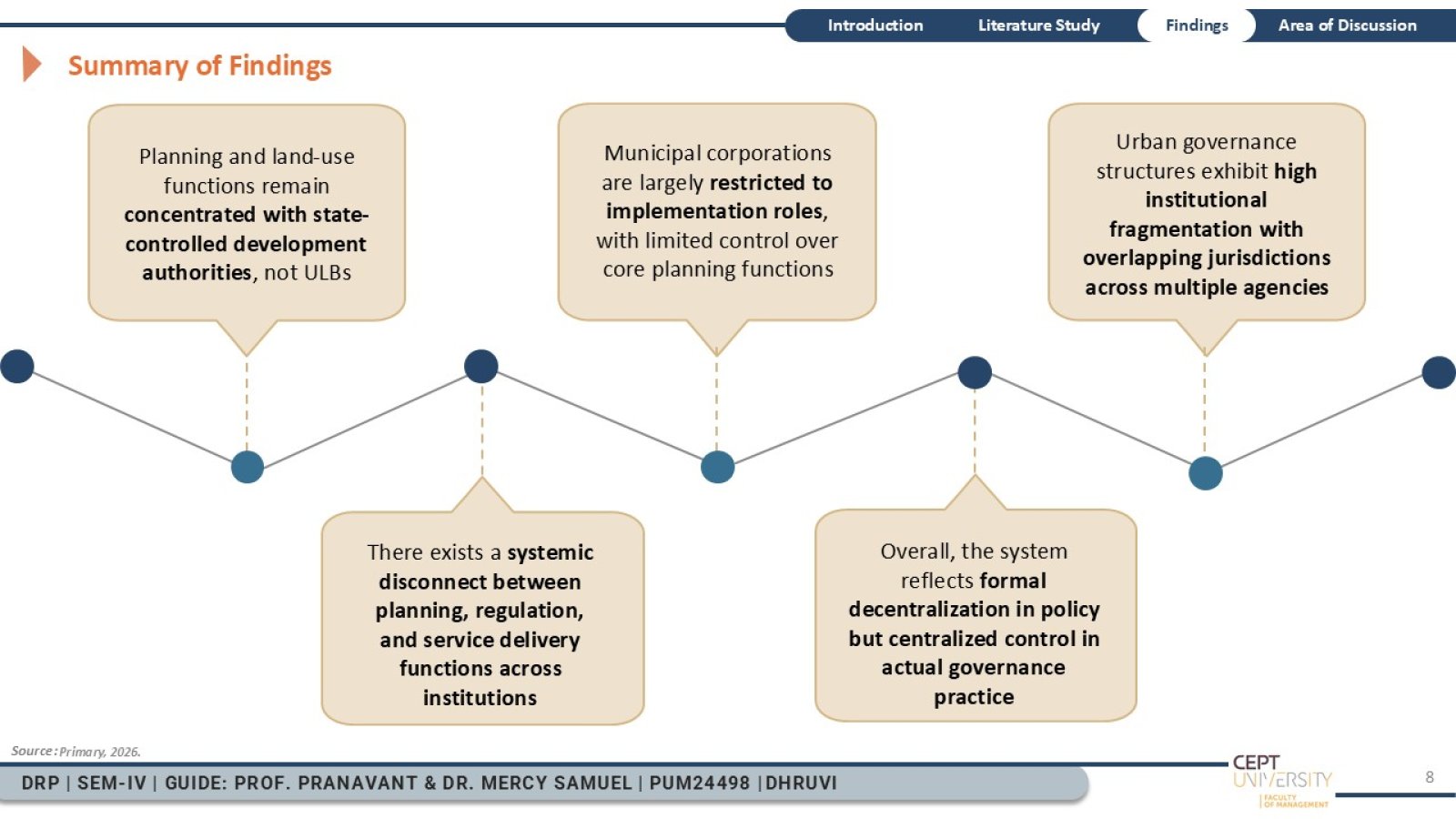
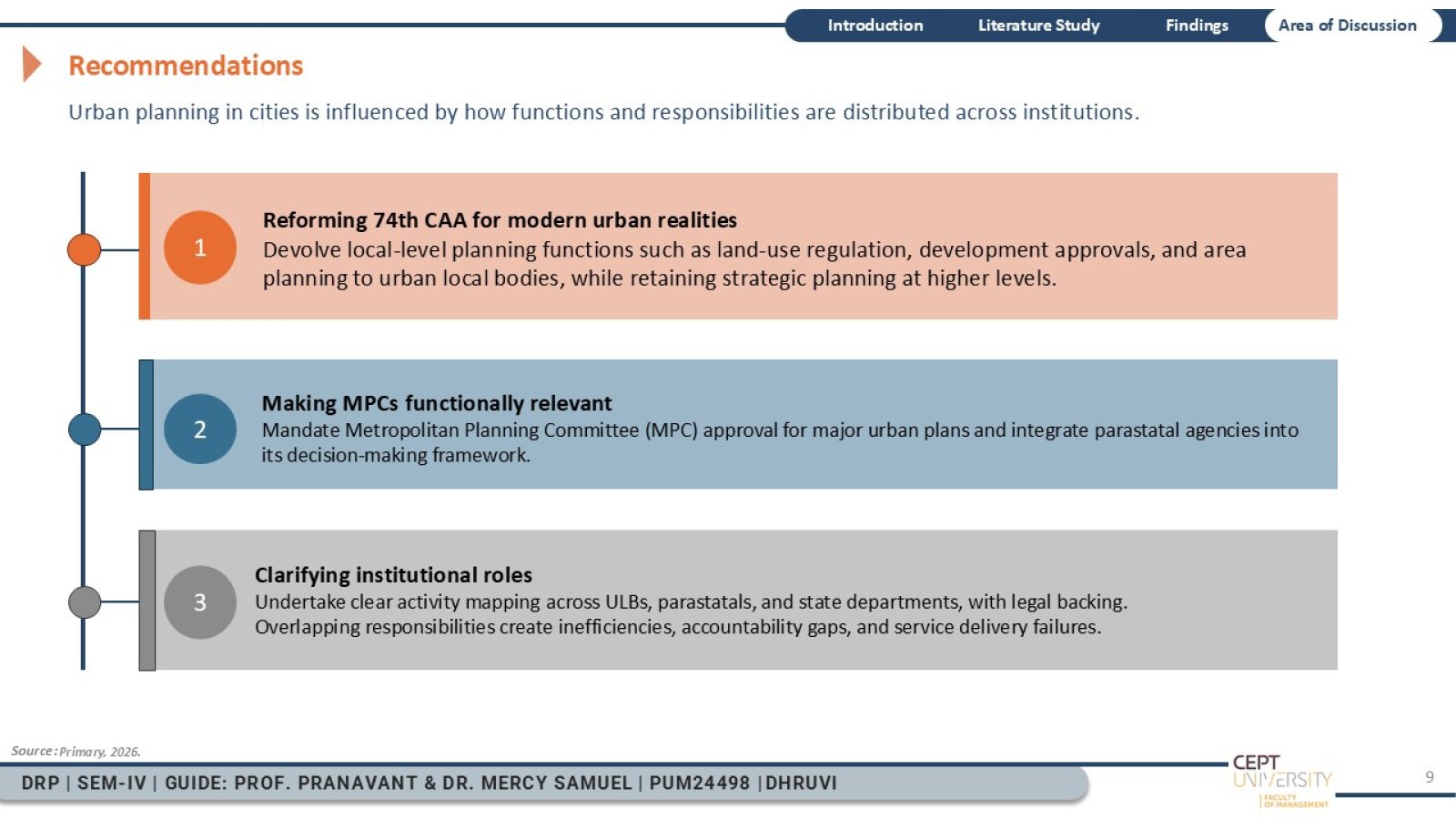
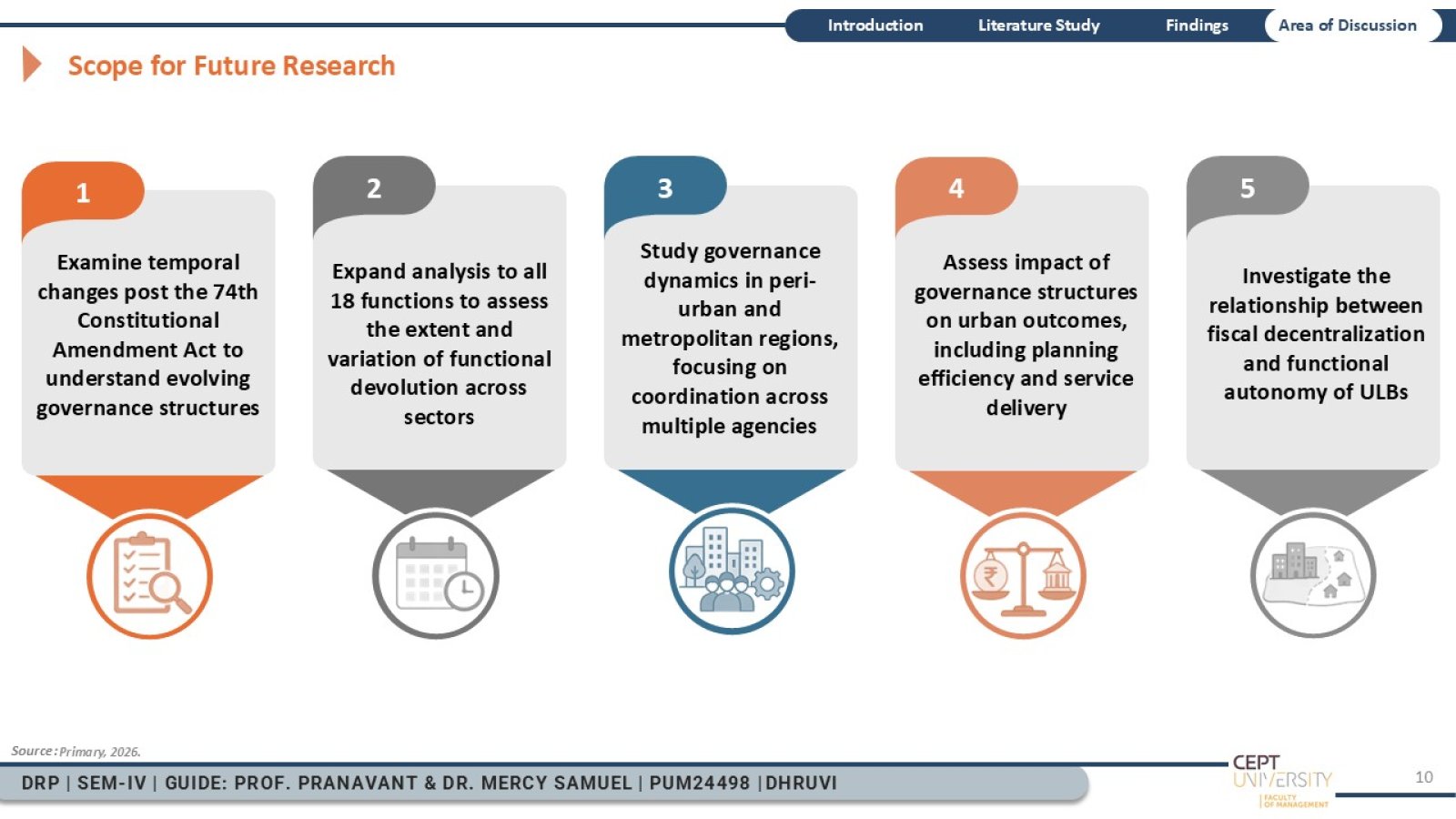
This study examines urban governance through the lens of functional devolution, with particular emphasis on the relationship between policy frameworks and institutional practices. While decentralization frameworks encourage greater authority and autonomy for Urban Local Bodies (ULBs), planning functions and decision-making processes continue to be guided largely by state-controlled institutions and parastatal agencies. The study highlights the presence of multiple institutions and overlapping functional responsibilities that shape governance, planning, and service delivery processes within the urban context. Using the OOMF framework as a basis for comparative analysis, the research evaluates how urban planning functions are organized, operated, managed, and financed across different governance systems. The study further examines the structural and administrative arrangements that influence coordination among institutions and contribute to the functioning of urban governance mechanisms. Ultimately, the research emphasizes the need for structural reforms that support stronger functional devolution, improved metropolitan-level coordination, and clearer institutional accountability within the urban governance framework. (jp)