Salokhe Sairaj Ajit

UM4050

PUM24314

This project studies the fiscal health and governance structure of Urban Local Bodies (ULBs) in Maharashtra through an analysis of municipal finance data across different ULB Categories and Zones. The study evaluates revenue patterns, expenditure trends, tax and non-tax revenue sources, grant utilization, and financial autonomy of municipalities. Using data collected from audit reports, budgets, and field visits, the project develops comparative insights and a diagnostic dashboard for performance assessment. The research highlights structural fiscal challenges, regional disparities, and governance inefficiencies while suggesting strategies such as asset monetization, GIS-based tax mapping, and diversified revenue generation for sustainable urban financial management.
Report Content

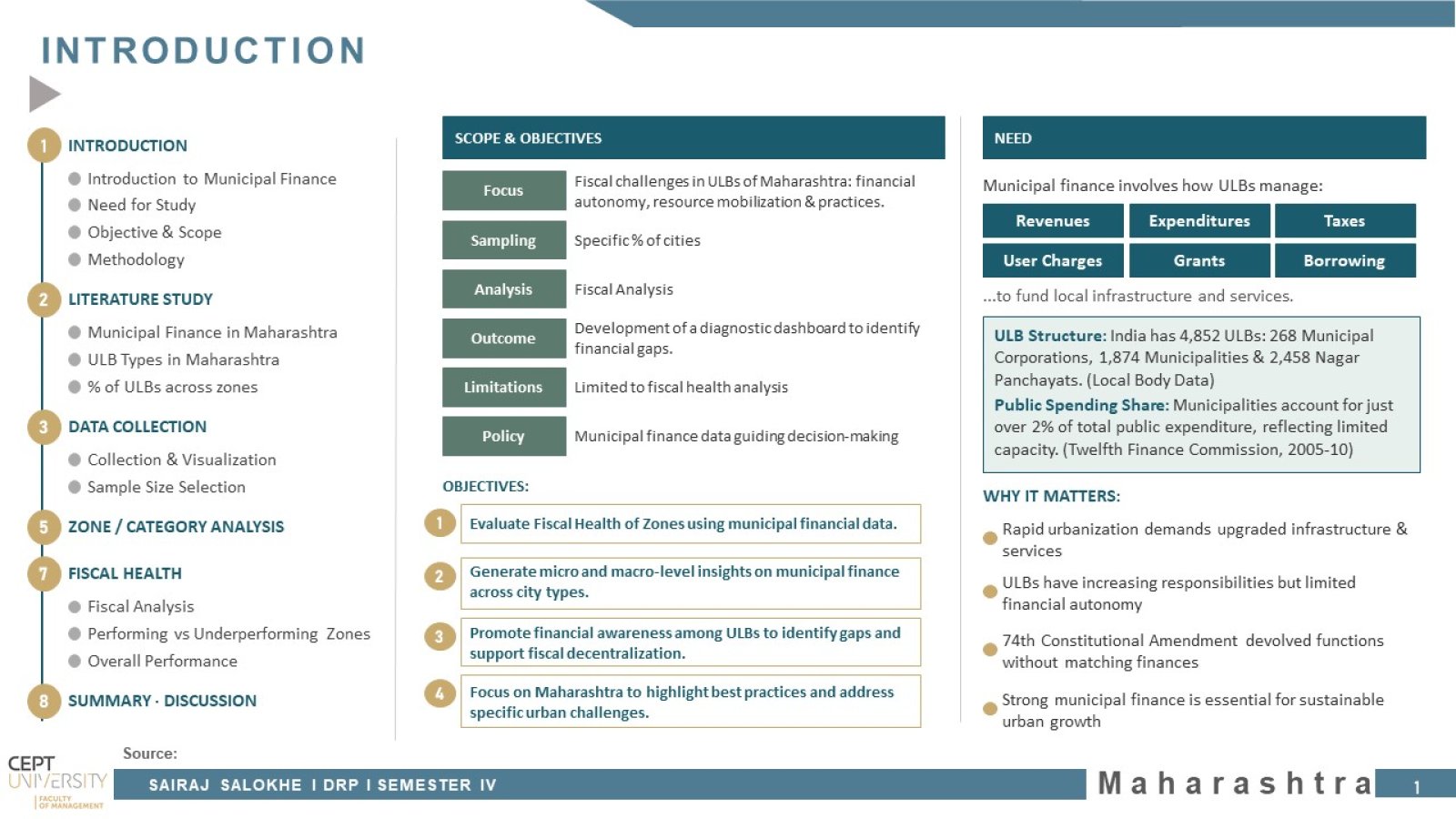
The project evaluates financial autonomy, revenue systems, and governance challenges of ULBs through fiscal analysis and policy-based insights

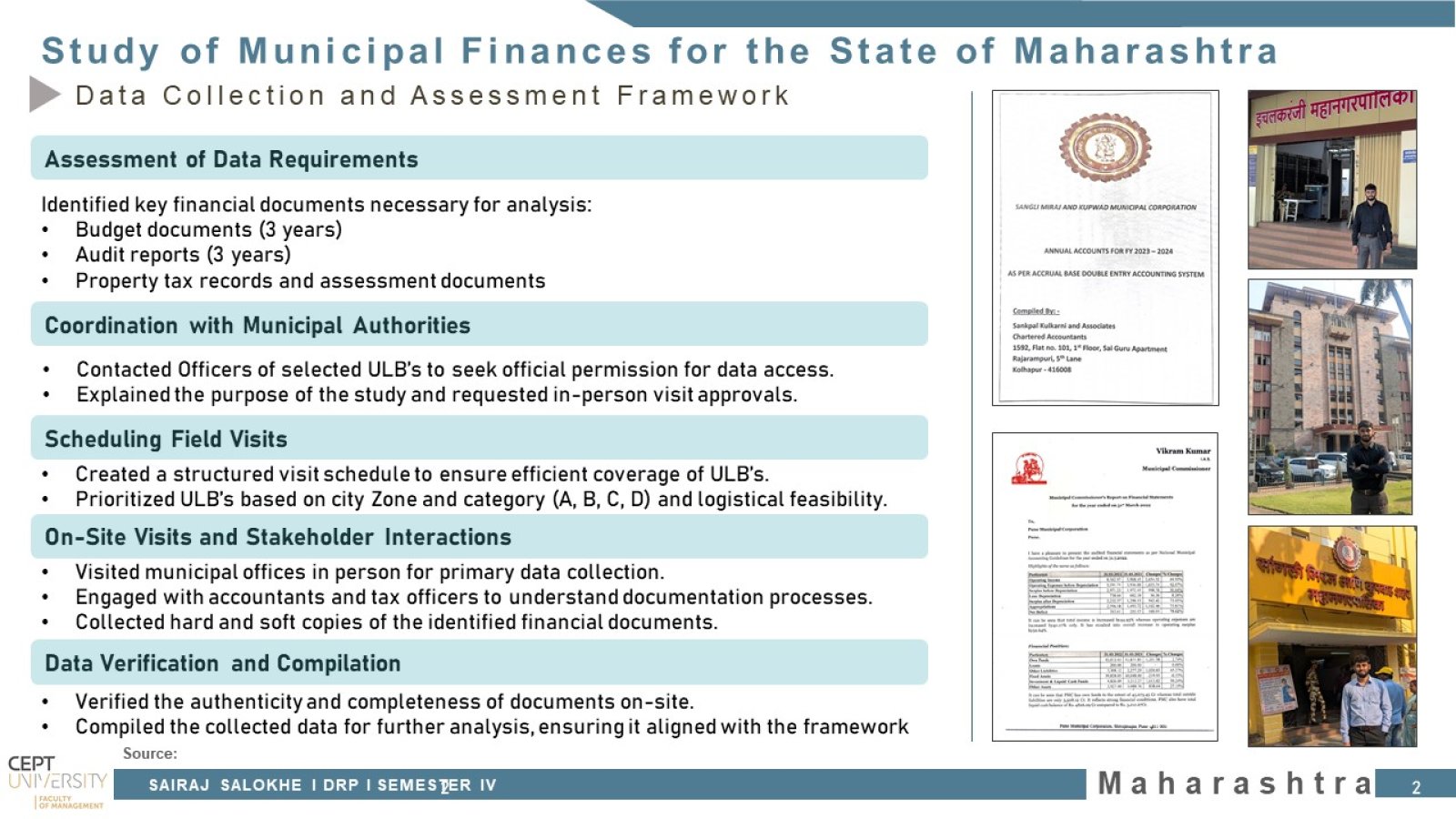
A structured field-based data collection framework was developed using municipal budgets, audit reports, and stakeholder interactions

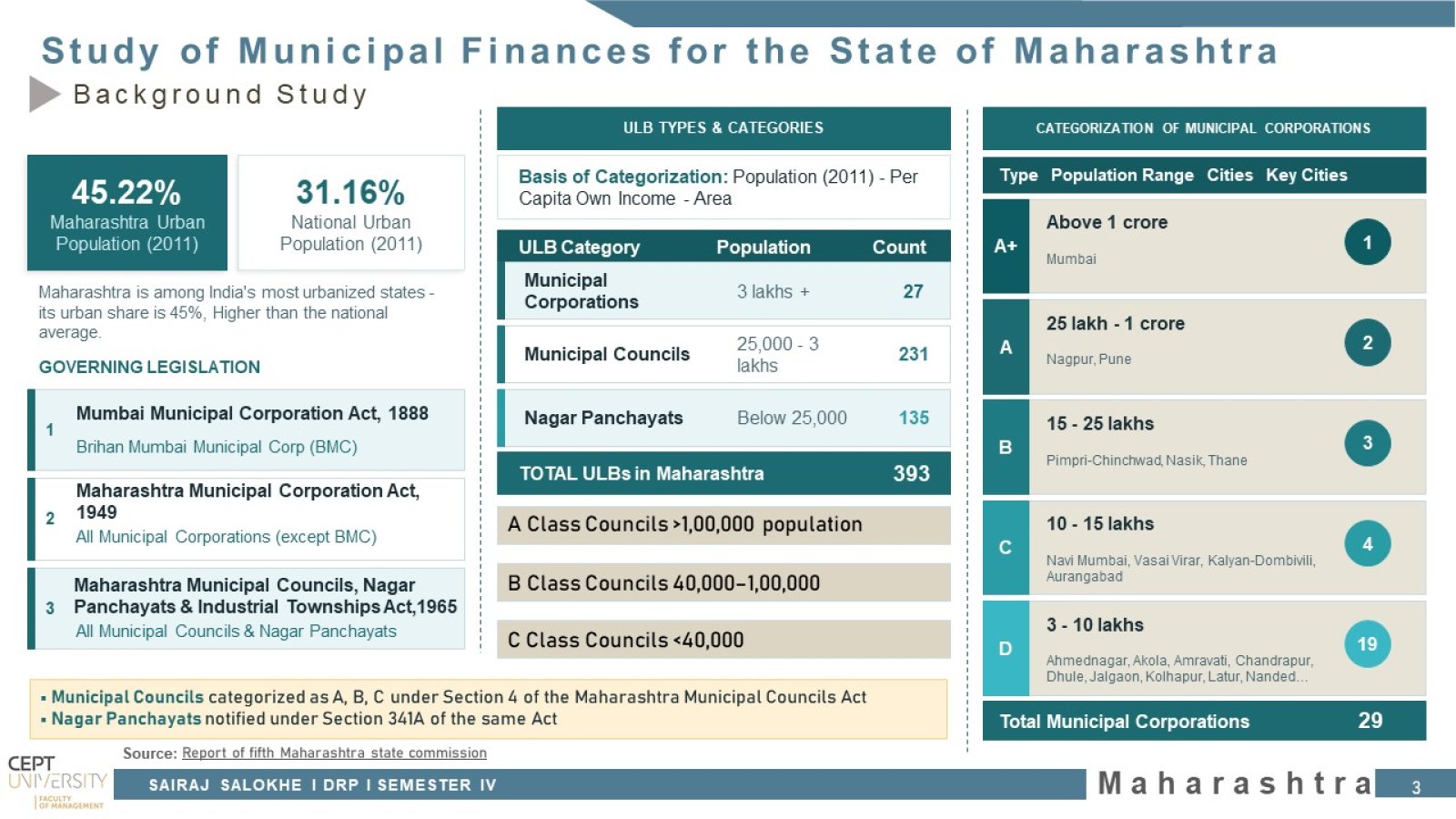
The study analyzes Maharashtra’s urban governance structure, legislative framework, and categorization of Urban Local Bodies

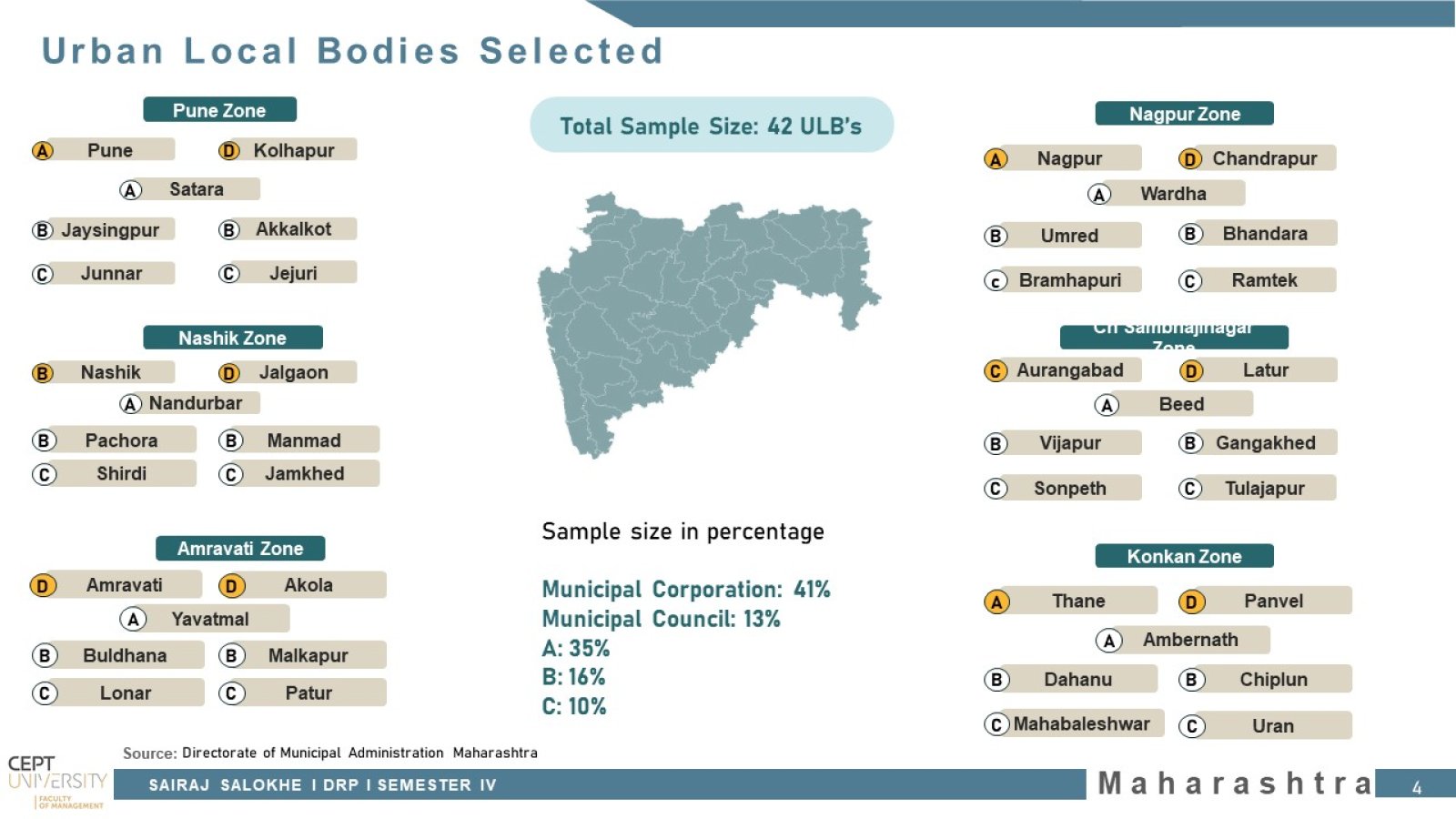
A representative sample of 42 ULBs across six zones was selected to ensure regional and typological diversity in analysis

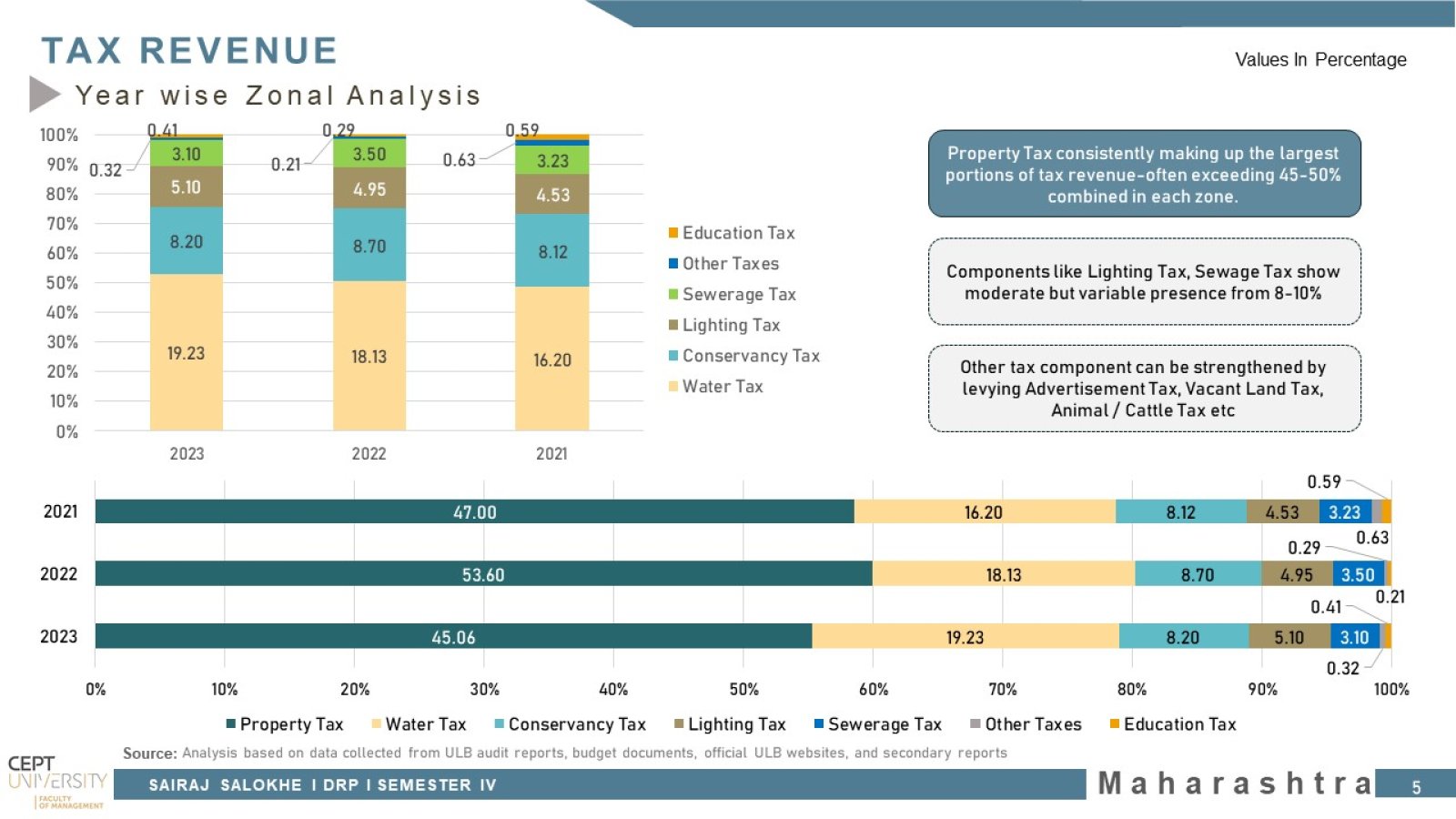
Property tax emerged as the dominant revenue source across all zones, highlighting dependence on conventional municipal taxation

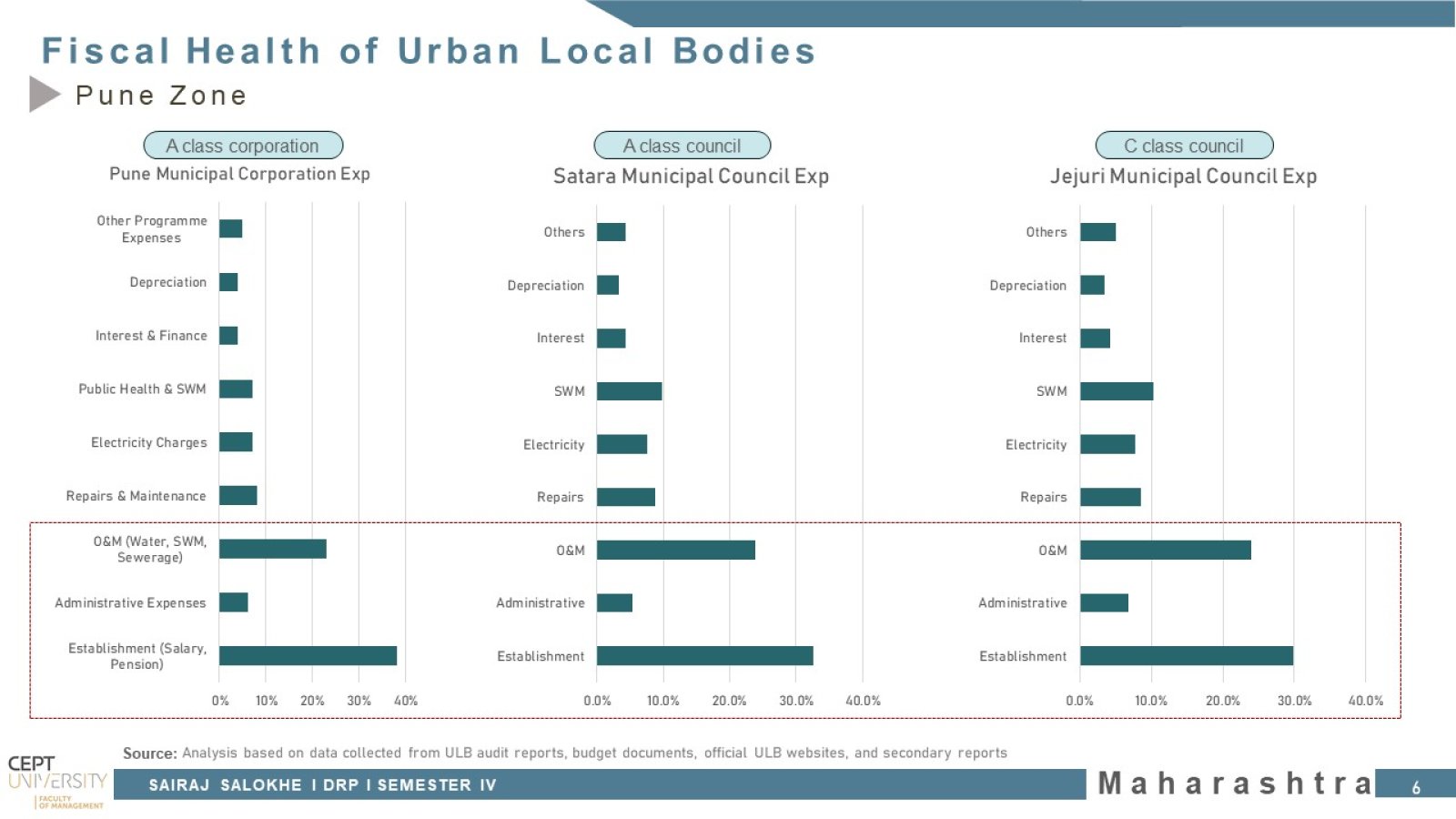
Expenditure analysis of Pune Zone reveals that operational and establishment costs consume a major share of municipal spending

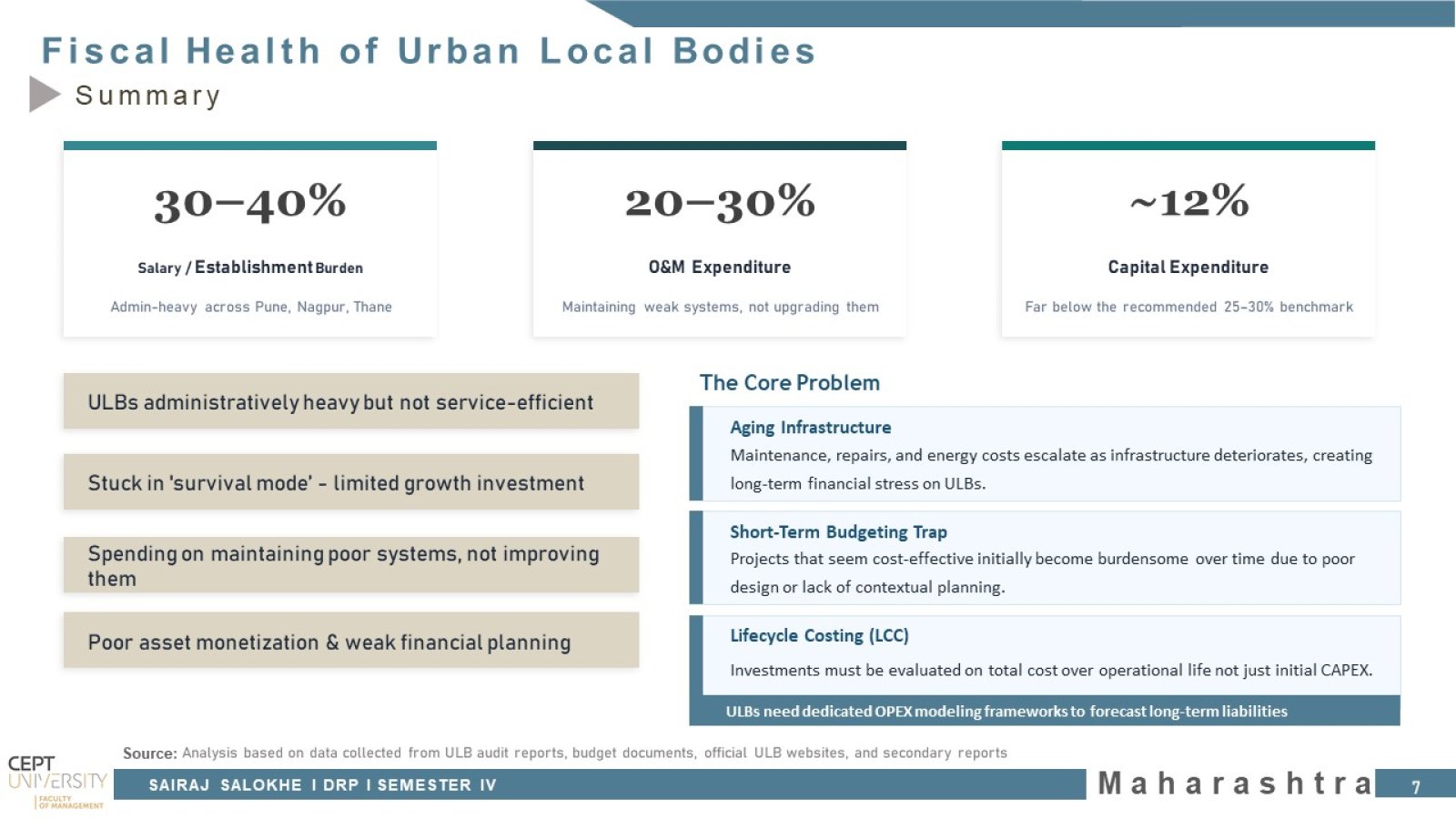
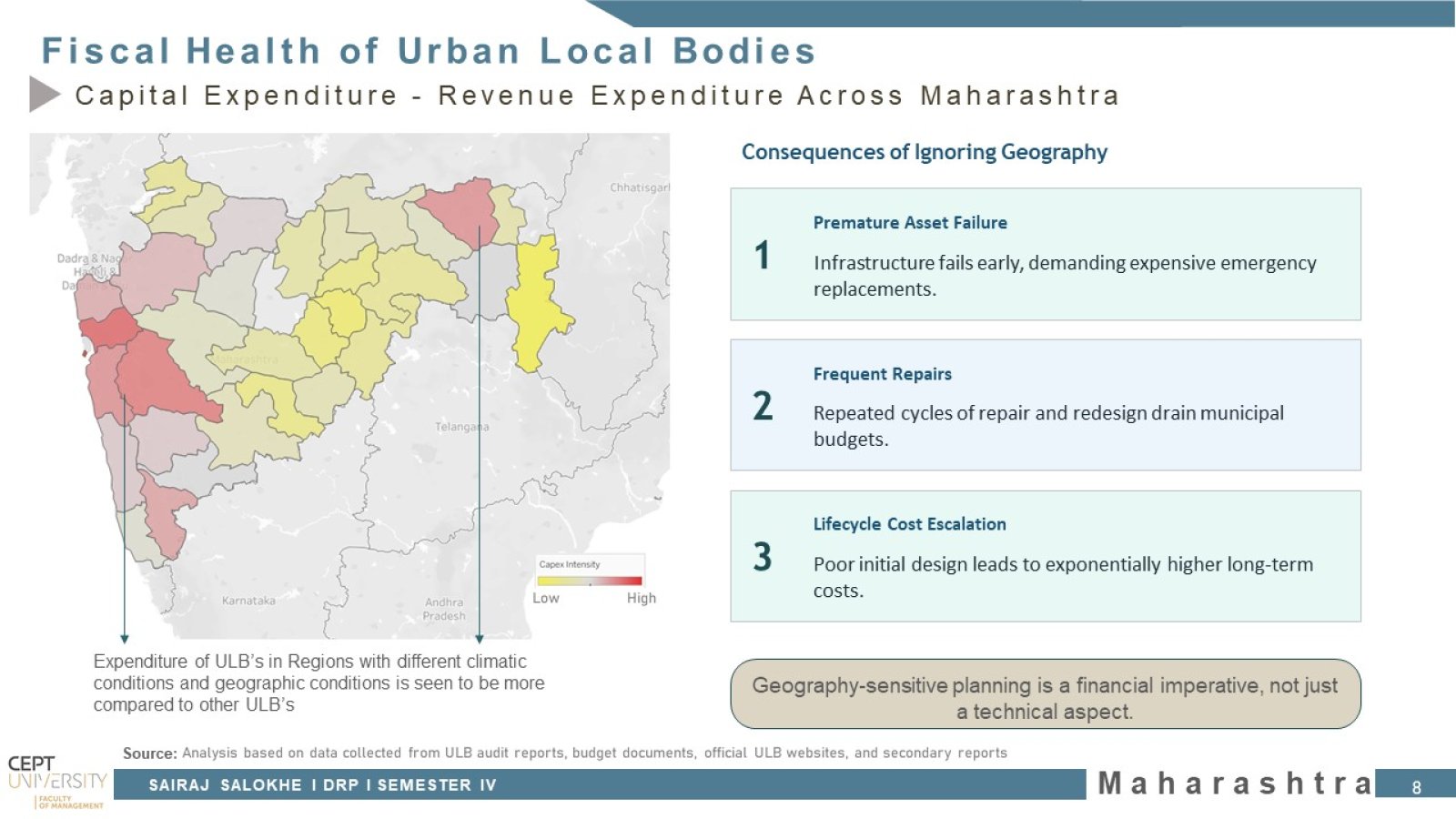
The study identifies structural fiscal stress in ULBs caused by high maintenance expenditure and limited capital investment

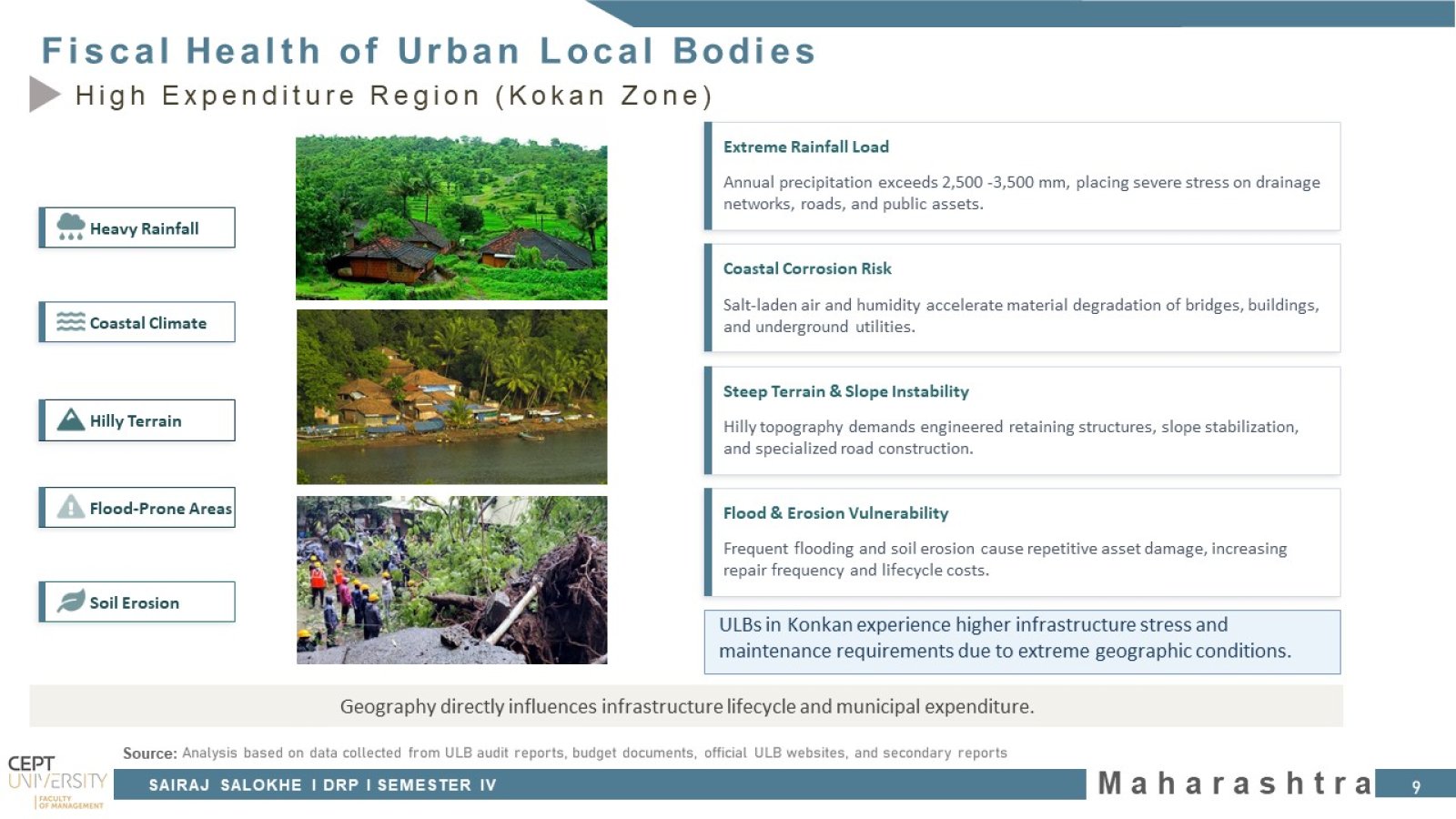
Regional geography and climatic conditions significantly influence infrastructure expenditure and long-term municipal financial burden

Konkan Zone demonstrates how extreme climatic and geographic conditions increase lifecycle costs and infrastructure stress for ULBs

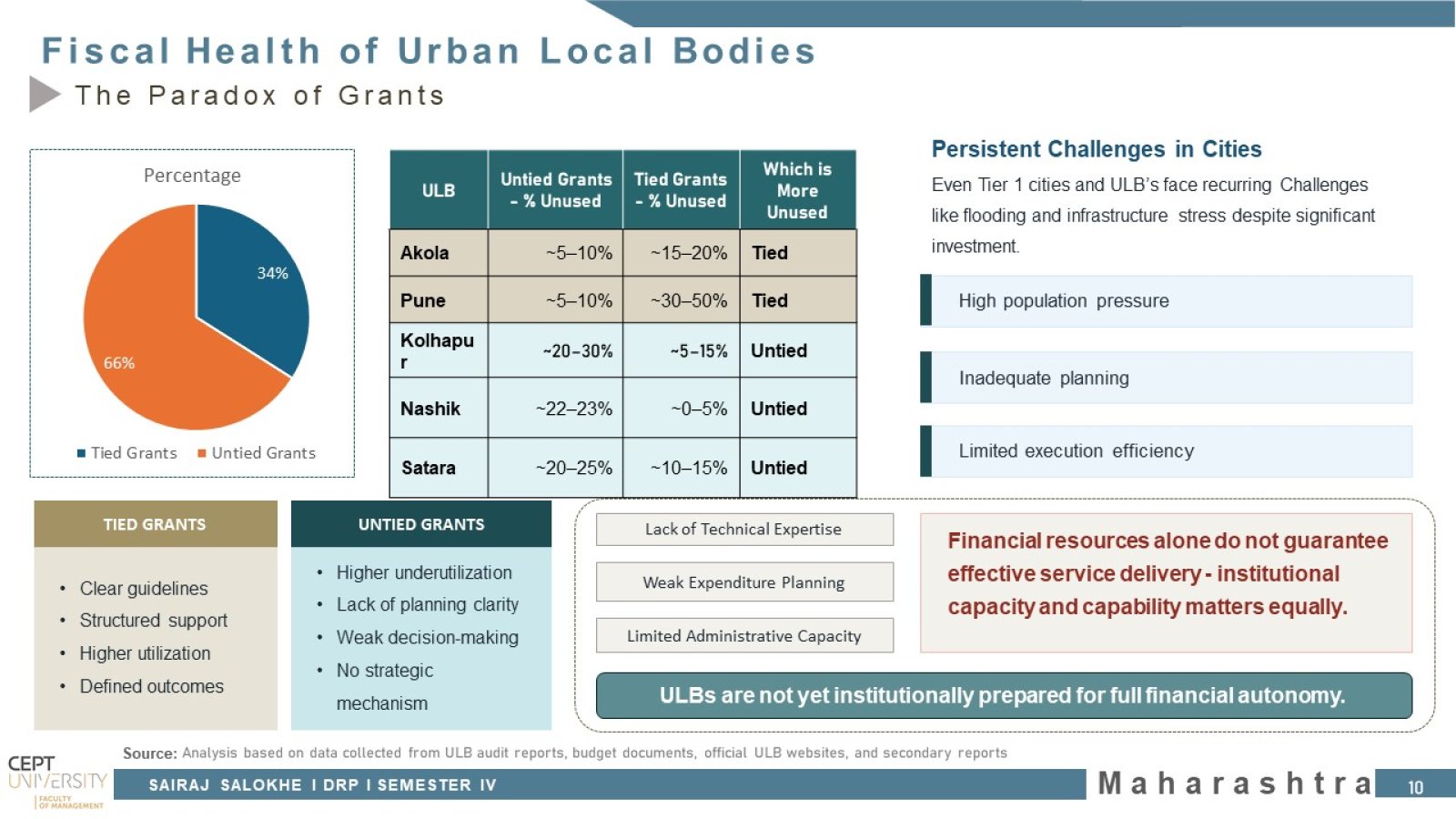
The project highlights that institutional capacity and planning efficiency are equally important as financial resources for effective urban governance