Janmejaye Singh

UP4051

PUP24143

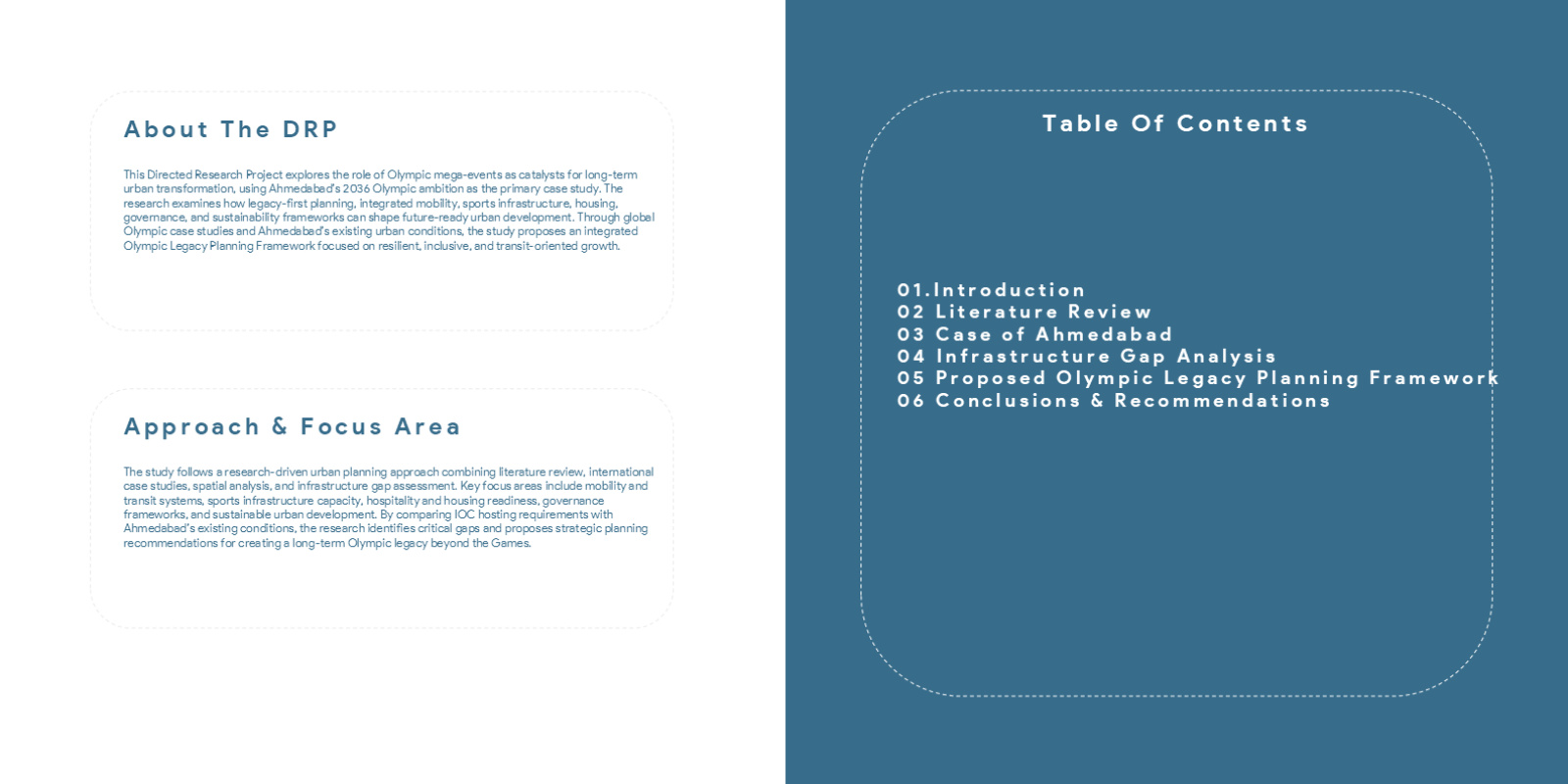
This Directed Research Project explores the role of Olympic mega-events as catalysts for long-term urban transformation, using Ahmedabad’s 2036 Olympic ambition as the primary case study. The research examines how legacy-first planning, integrated mobility, sports infrastructure, housing, governance, and sustainability frameworks can shape future-ready urban development. Through global Olympic case studies and Ahmedabad’s existing urban conditions, the study proposes an integrated Olympic Legacy Planning Framework focused on resilient, inclusive, and transit-oriented growth. 

Report Content

Exploring how Olympic-led urban development can shape long-term, inclusive, and sustainable transformation in Ahmedabad.

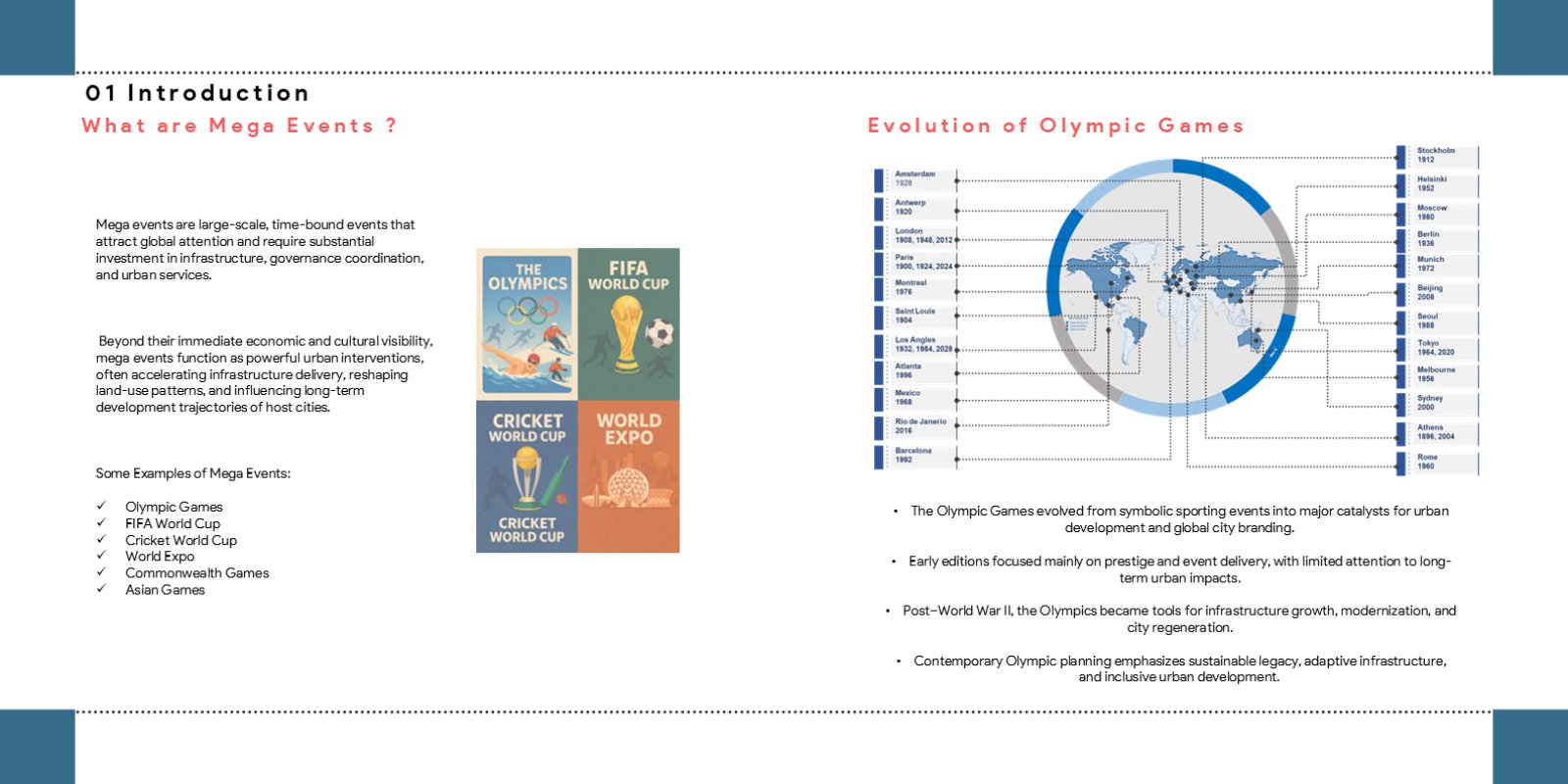
Mega-events have evolved from short-term sporting spectacles into strategic tools for urban regeneration, infrastructure growth, and global city branding.

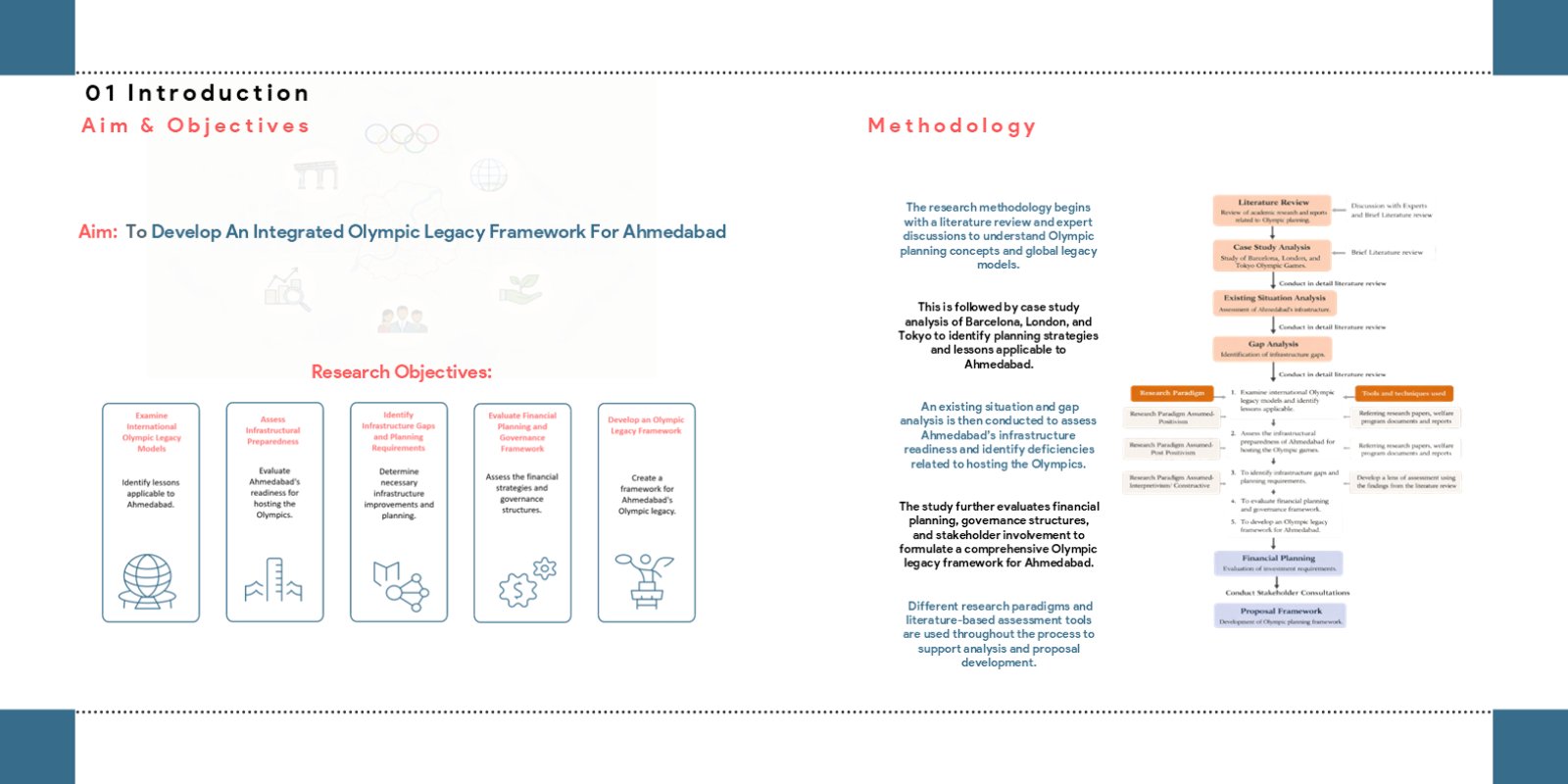
A research-driven framework integrating literature review, case studies, infrastructure assessment, and governance analysis to develop an Olympic legacy strategy for Ahmedabad.

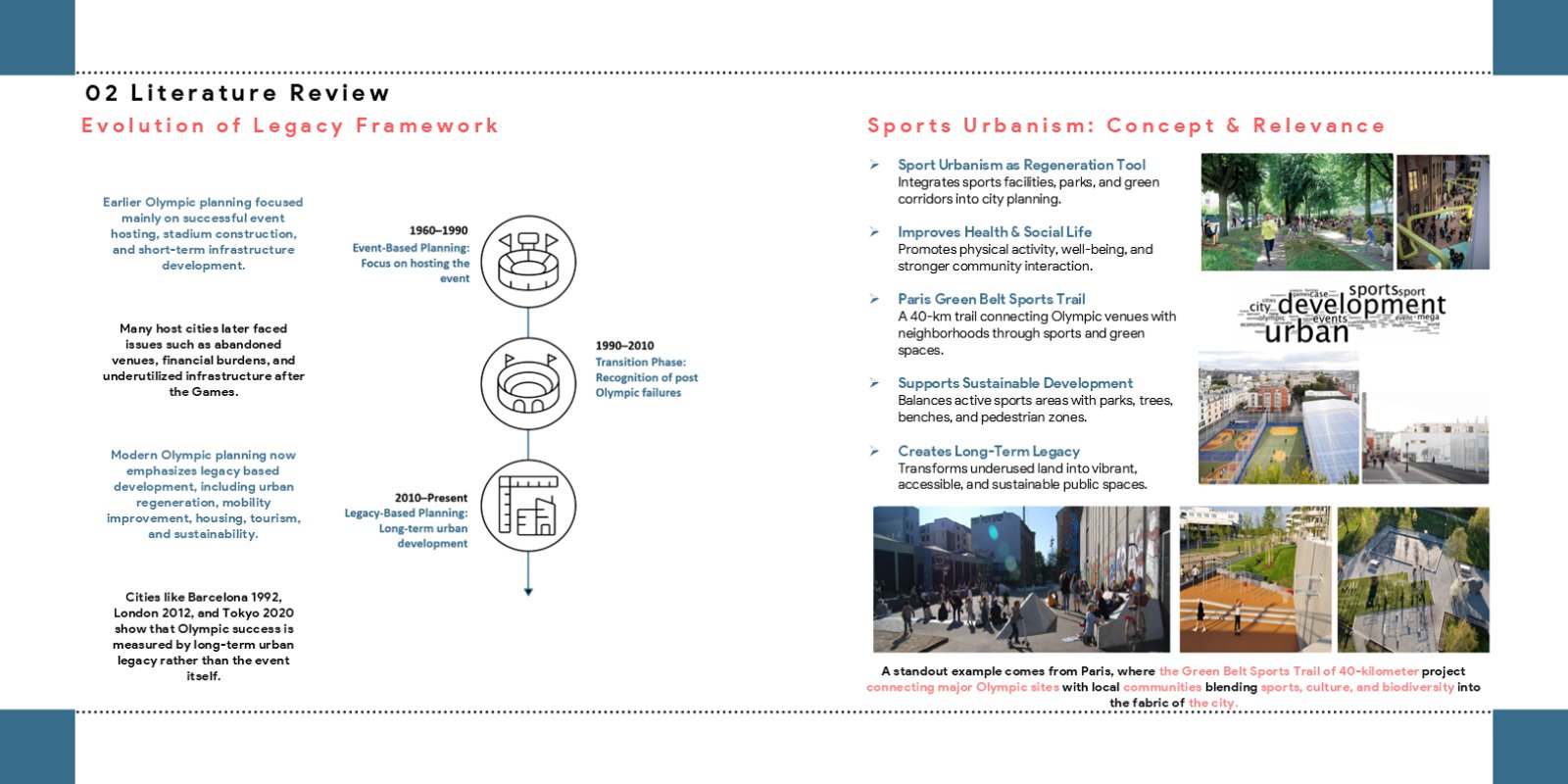
Contemporary Olympic planning emphasizes long-term urban legacy through integrated mobility, public spaces, sustainability, and community-oriented development.

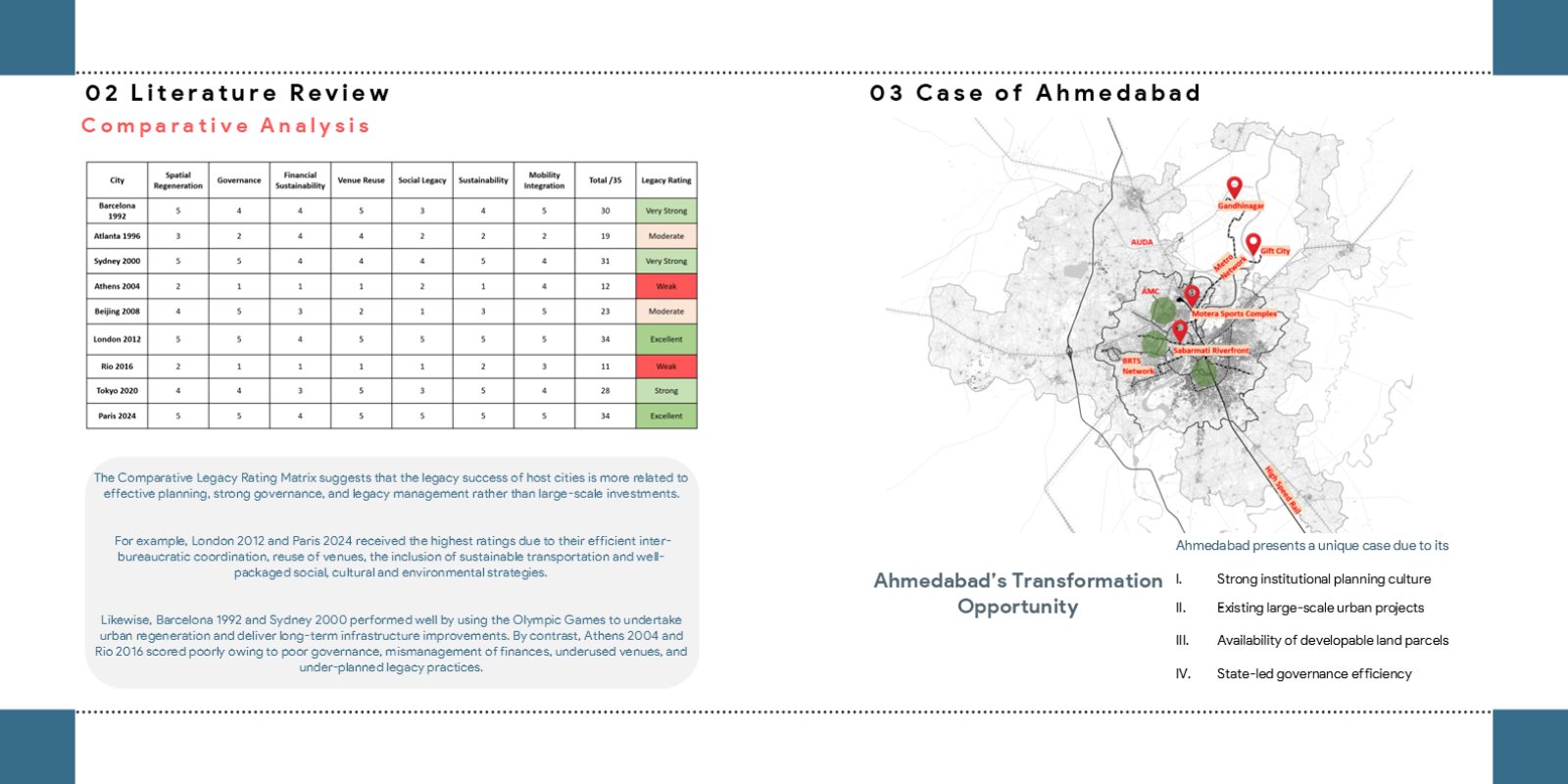
Comparative analysis of global Olympic host cities highlights how governance, infrastructure investment, and legacy planning influence long-term urban outcomes.

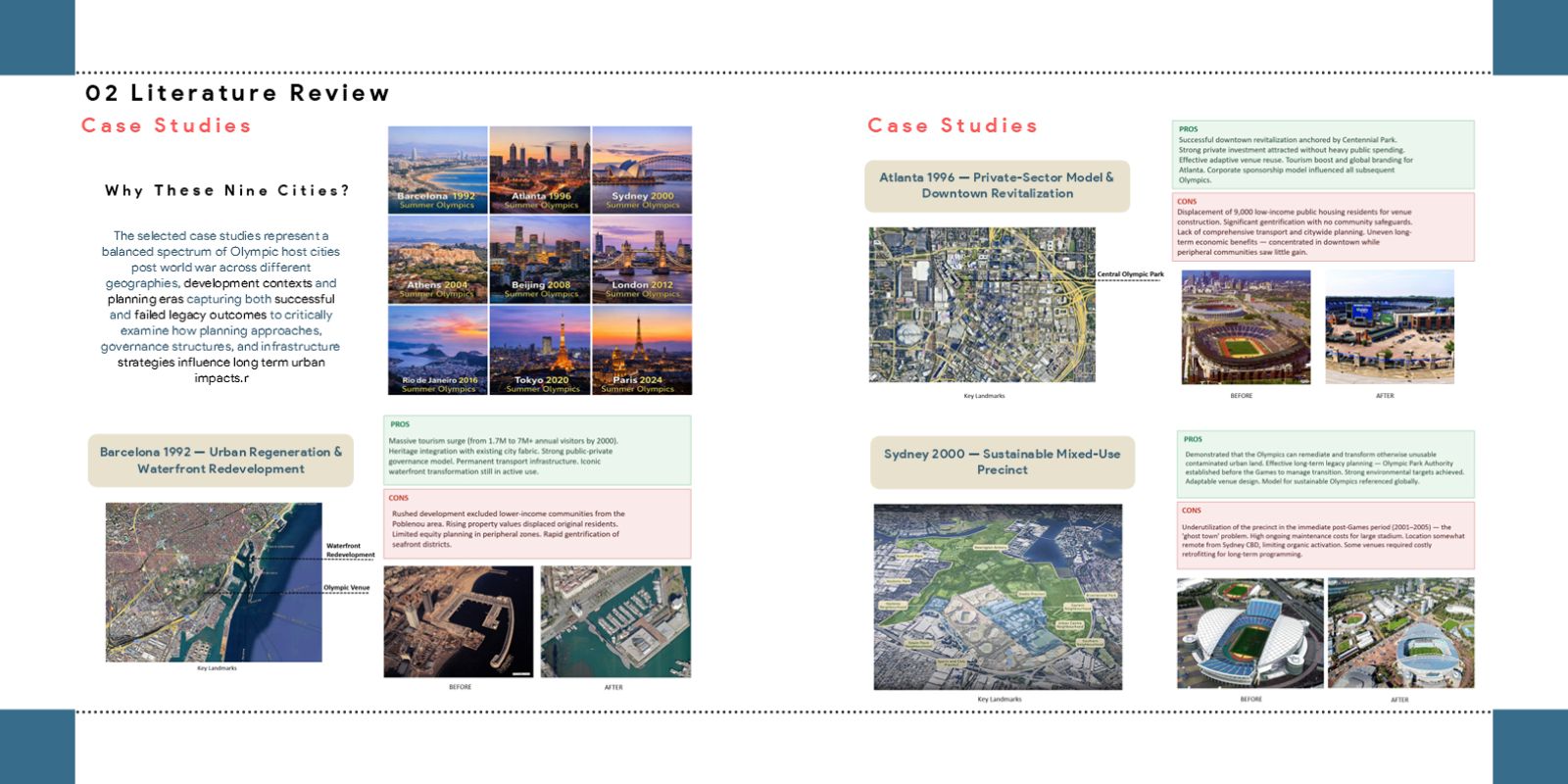
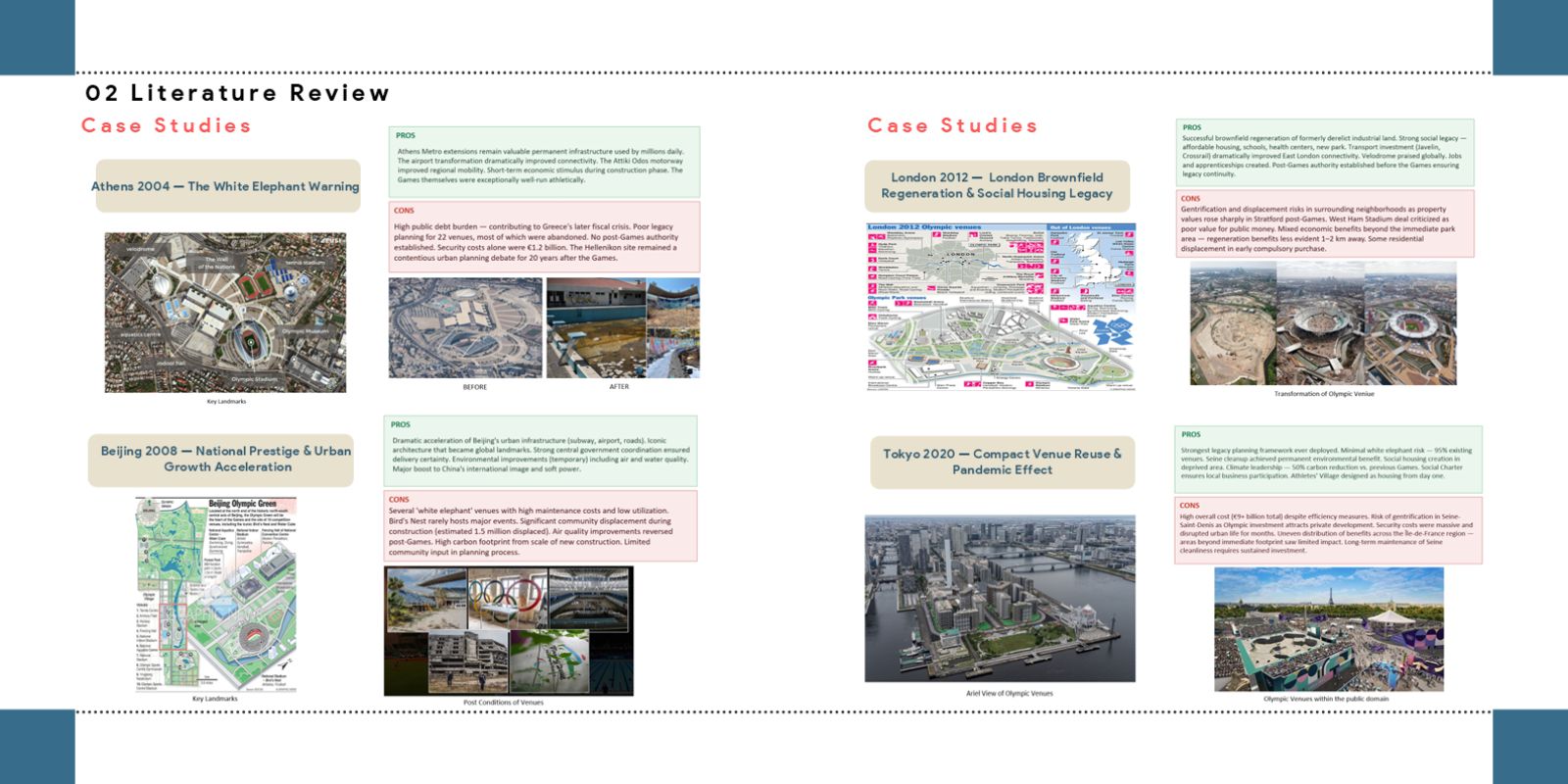
International Olympic case studies reveal how governance, planning strategies, and legacy frameworks shape long-term urban transformation outcomes.

The comparative assessment identifies governance, mobility integration, and legacy-oriented planning as critical factors for Ahmedabad’s Olympic transformation potential.

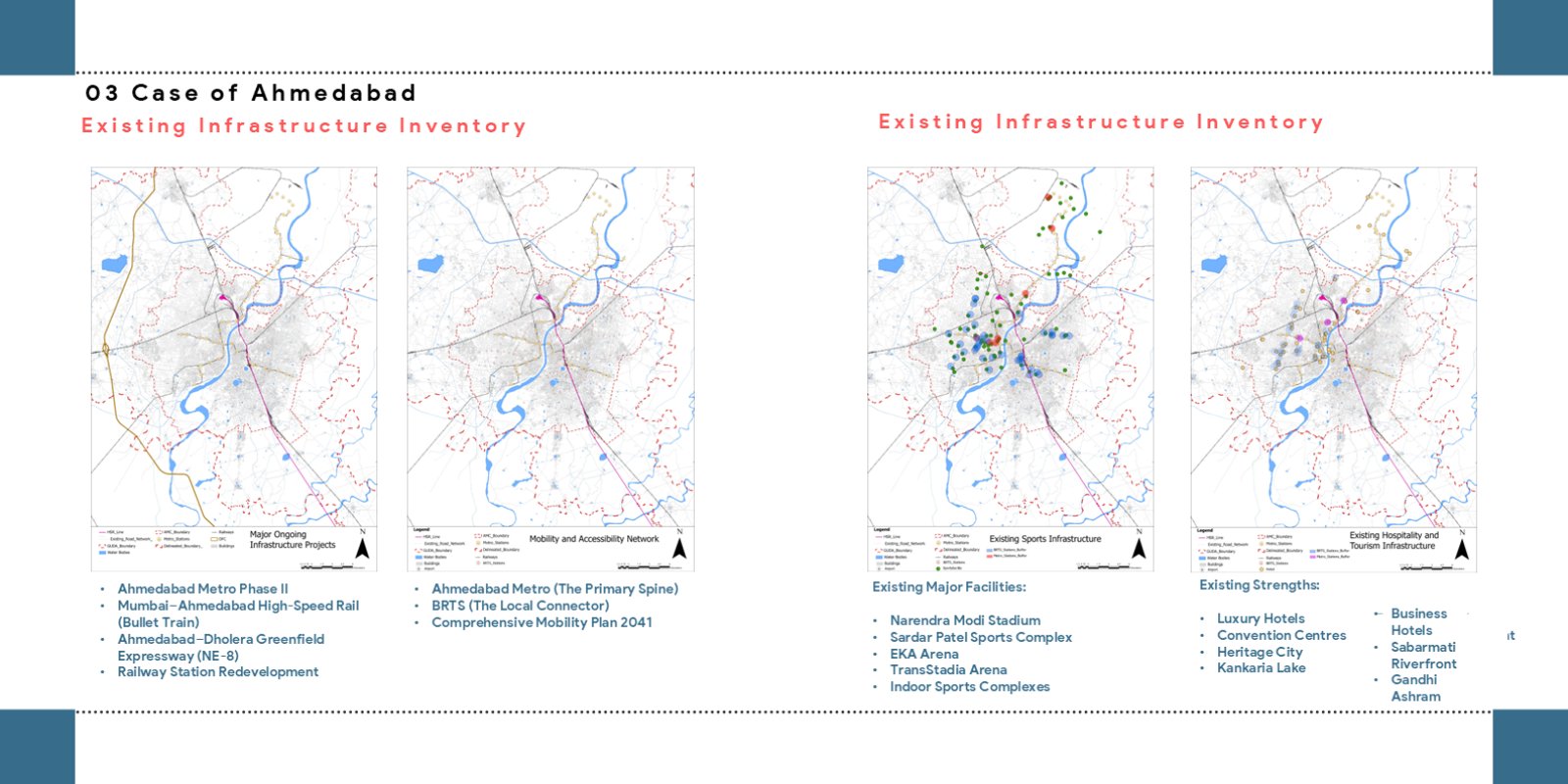
Ahmedabad’s expanding mobility network, regional connectivity, and urban infrastructure provide a strong foundation for future Olympic-scale development.

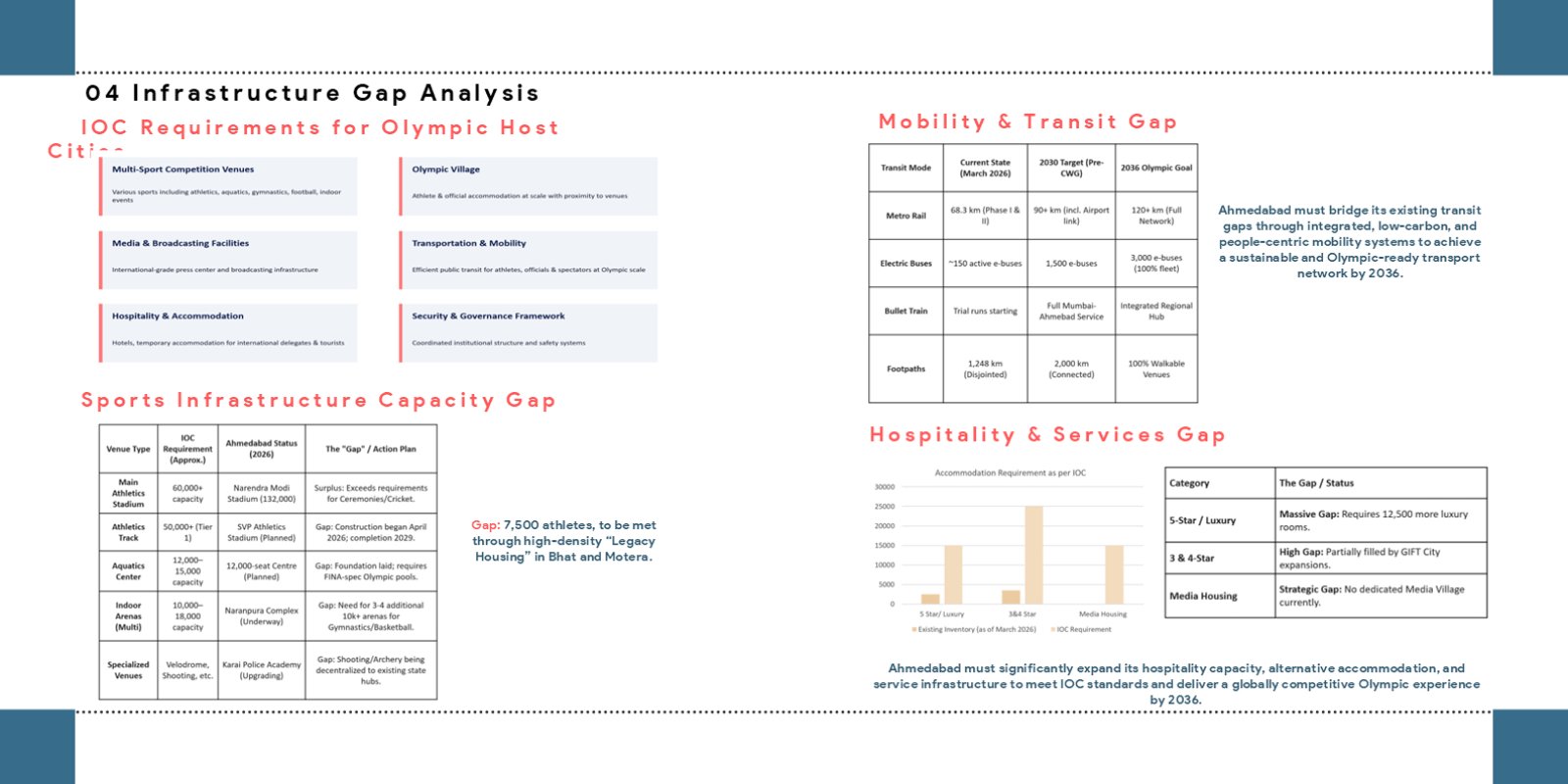
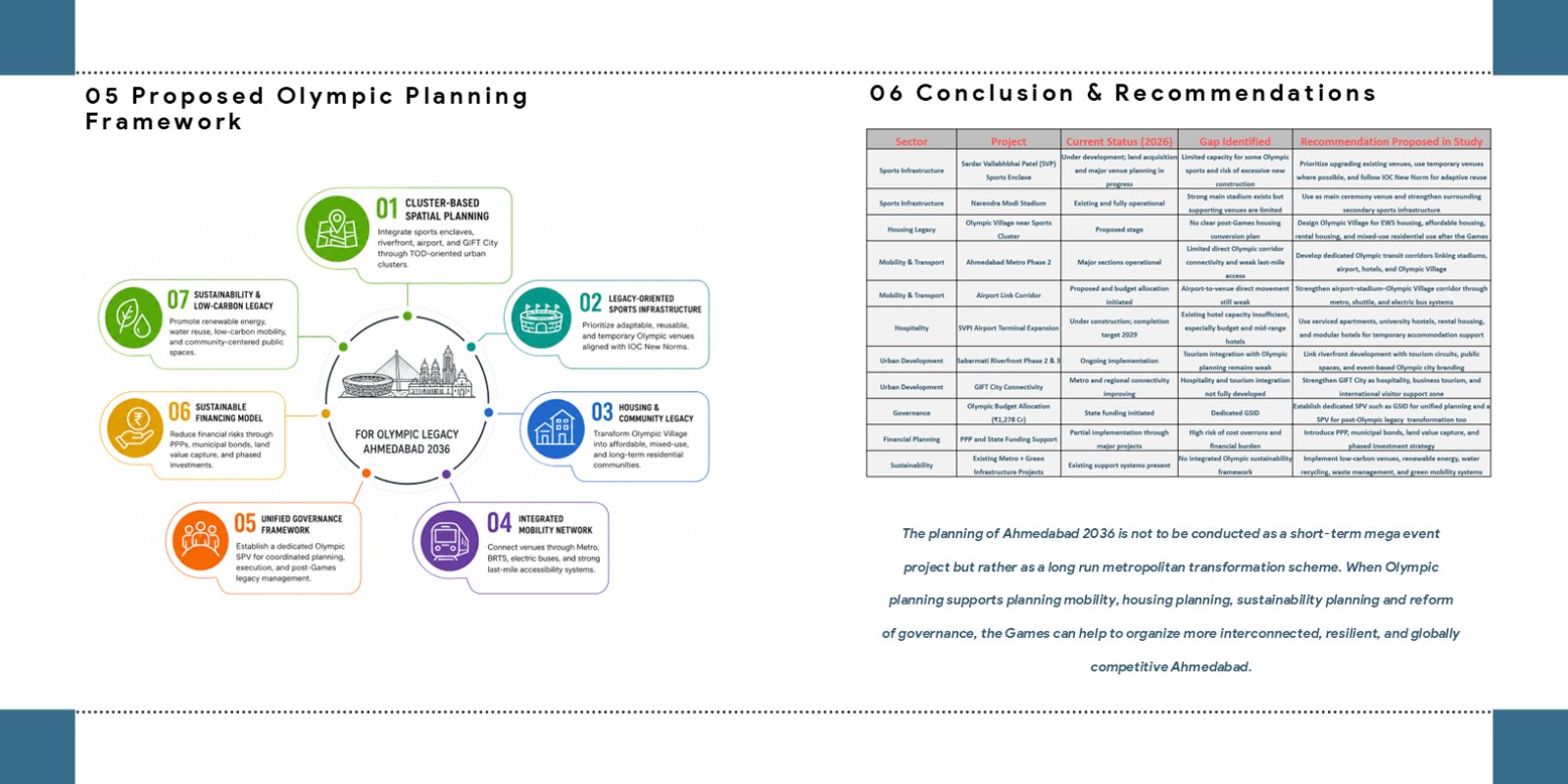
Despite major ongoing investments, Ahmedabad must address critical gaps in mobility, hospitality, and sports infrastructure to meet IOC requirements.

The proposed framework positions the Olympics as a catalyst for long-term urban regeneration through integrated mobility, sustainability, governance, and legacy-focused planning.