Gharat Urvish Sandesh Padmaja

UP4051

PUP24428

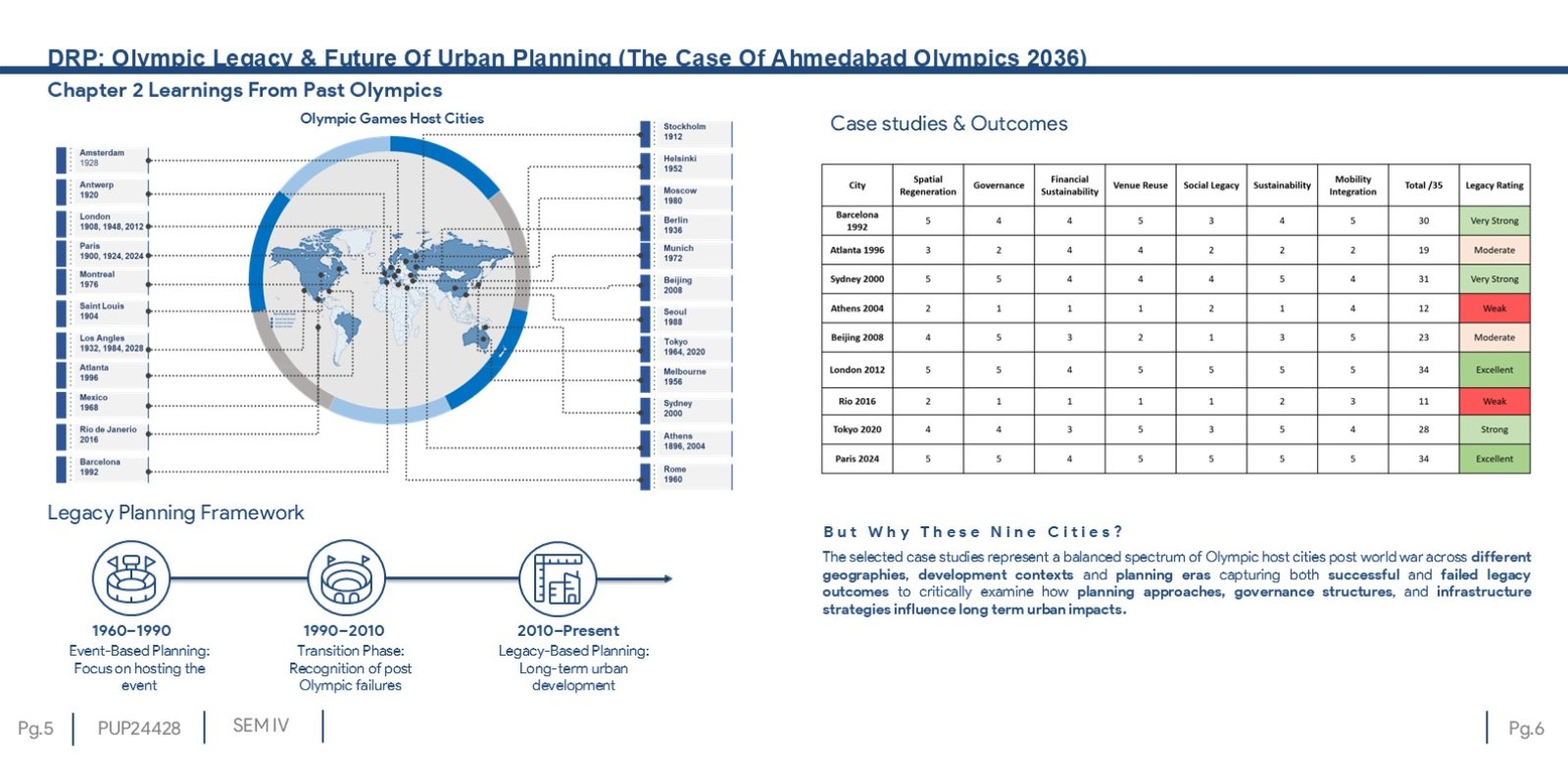
The 2036 Olympic bid represents a transformative milestone, positioning India to showcase its status as a global superpower. This study evaluates how strategic legacy planning can serve as a catalyst for Ahmedabad’s urban evolution, accelerating long-term infrastructural goals. The research transitions from global theoretical insights to localized applications. By benchmarking success stories from host cities like Barcelona, Atlanta, Sydney,  Athens, Beijing, London, Rio, Tokyo and Paris. The study identifies best practices and "Legacy-First" approach. Ultimately, it seeks to ensure that the Games deliver a sustainable, high-utility impact that permanently enhances the city’s socio-economic and spatial fabric.
Report Content

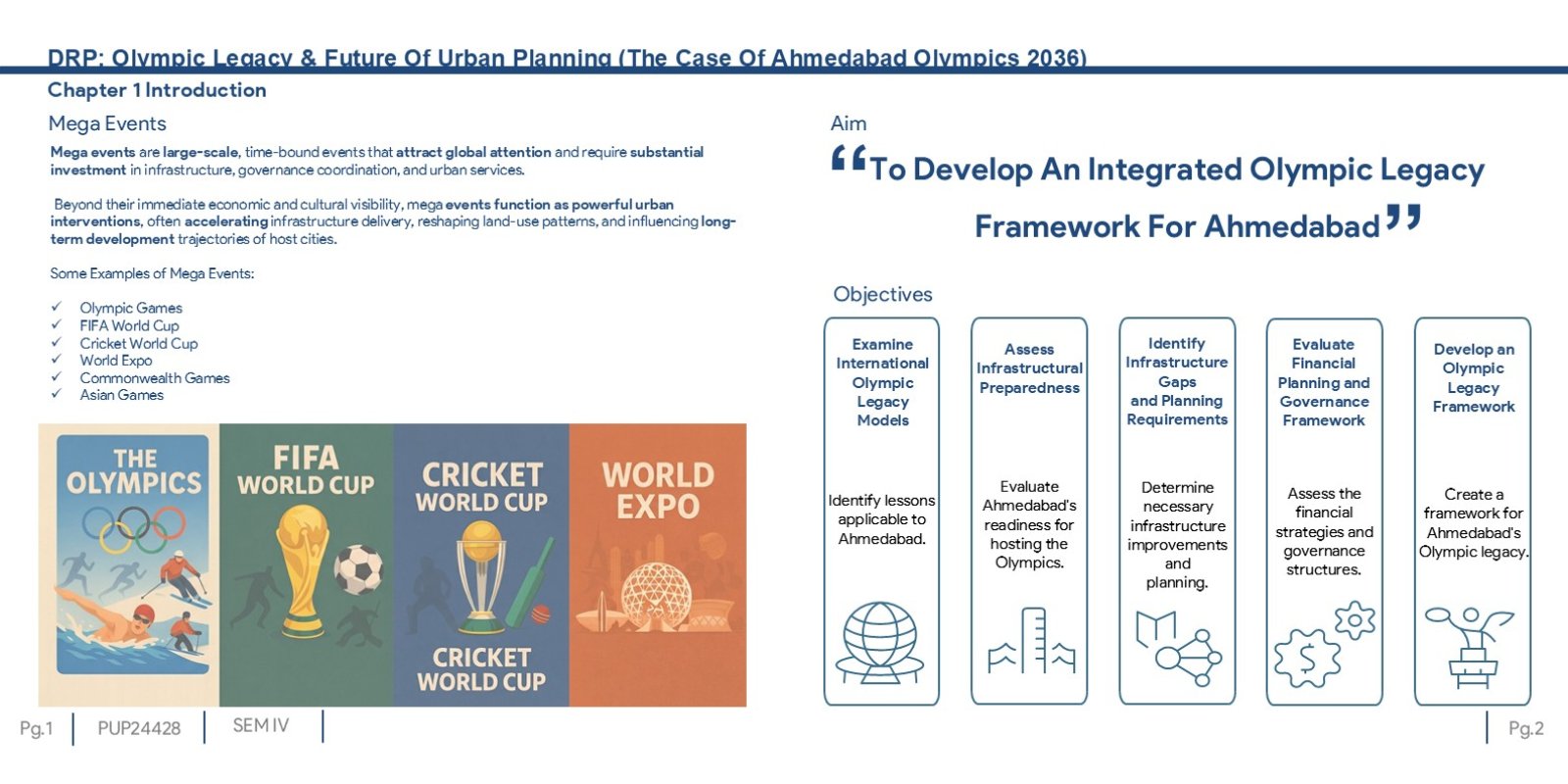
Hosting multi-nation events presents a transformative opportunity for the host nation.

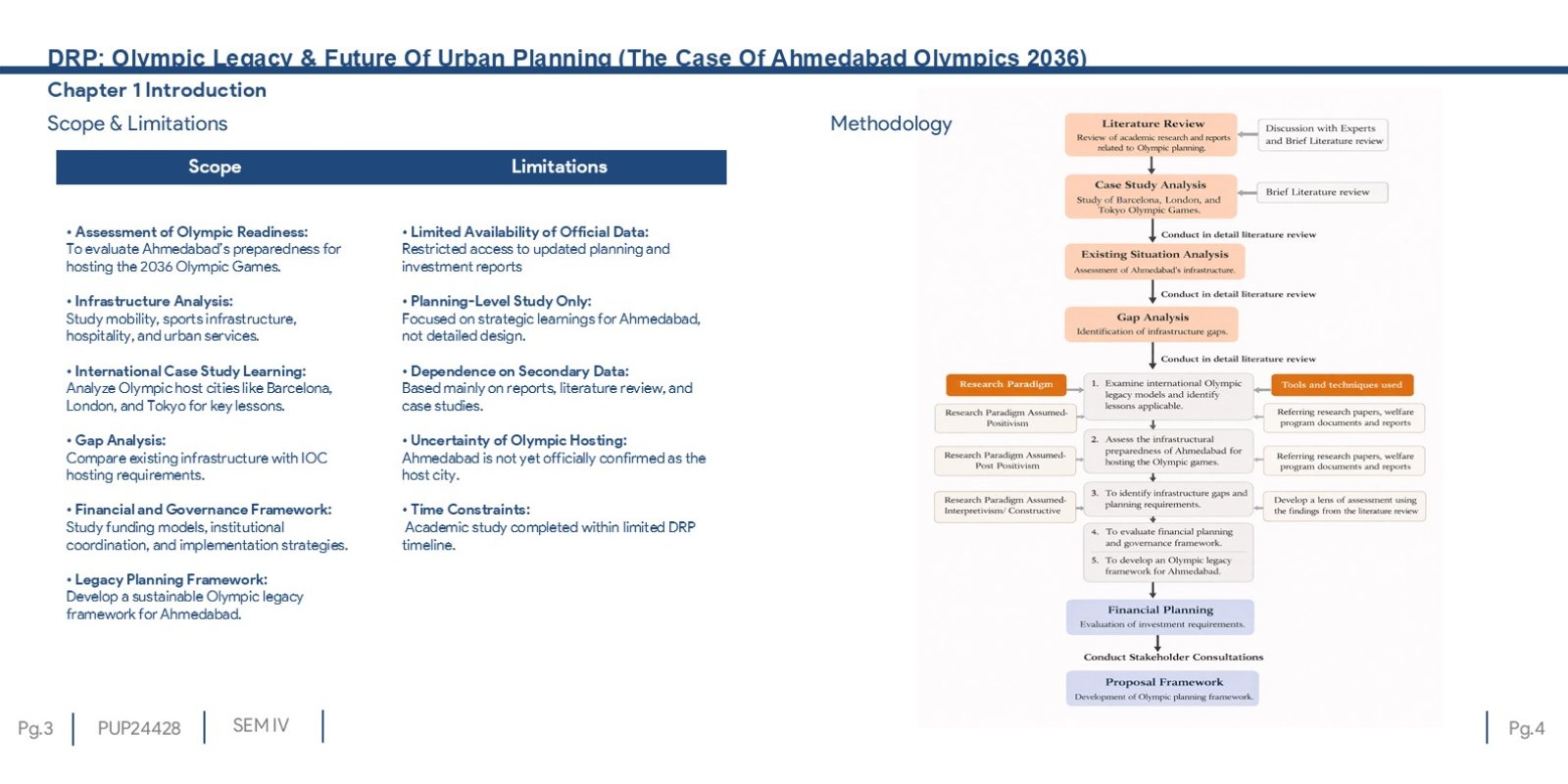
Identifying the scope and limitations helps establish a strong methodological framework for Ahmedabad’s Olympic development strategy.

How hosting the Olympic Games has influenced various host cities and nations.

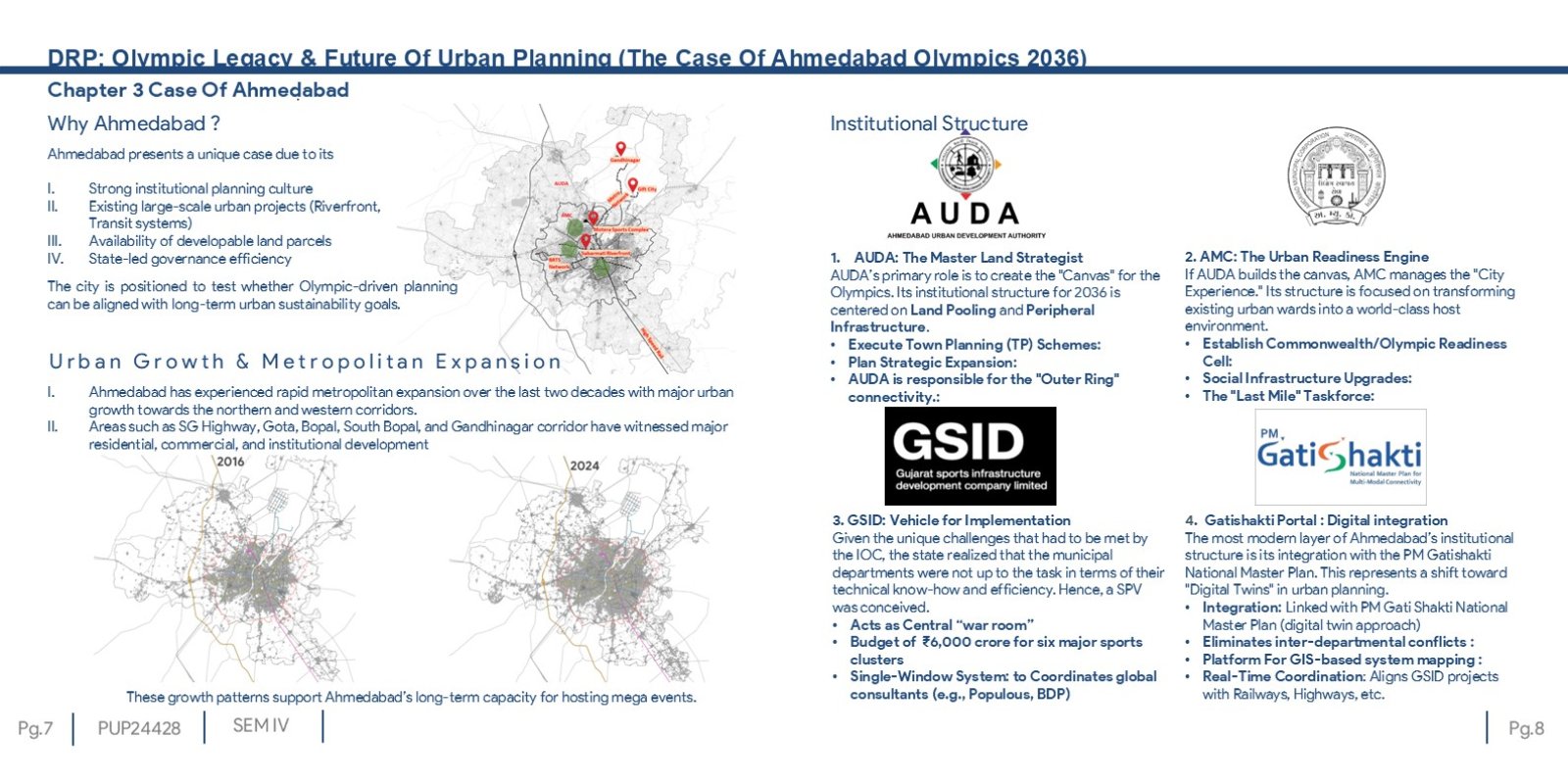
Rapid expansion over the past few years and strong institutional framework ensure Ahmedabad is emerging as the frontrunner to host the Olympic Games in India.

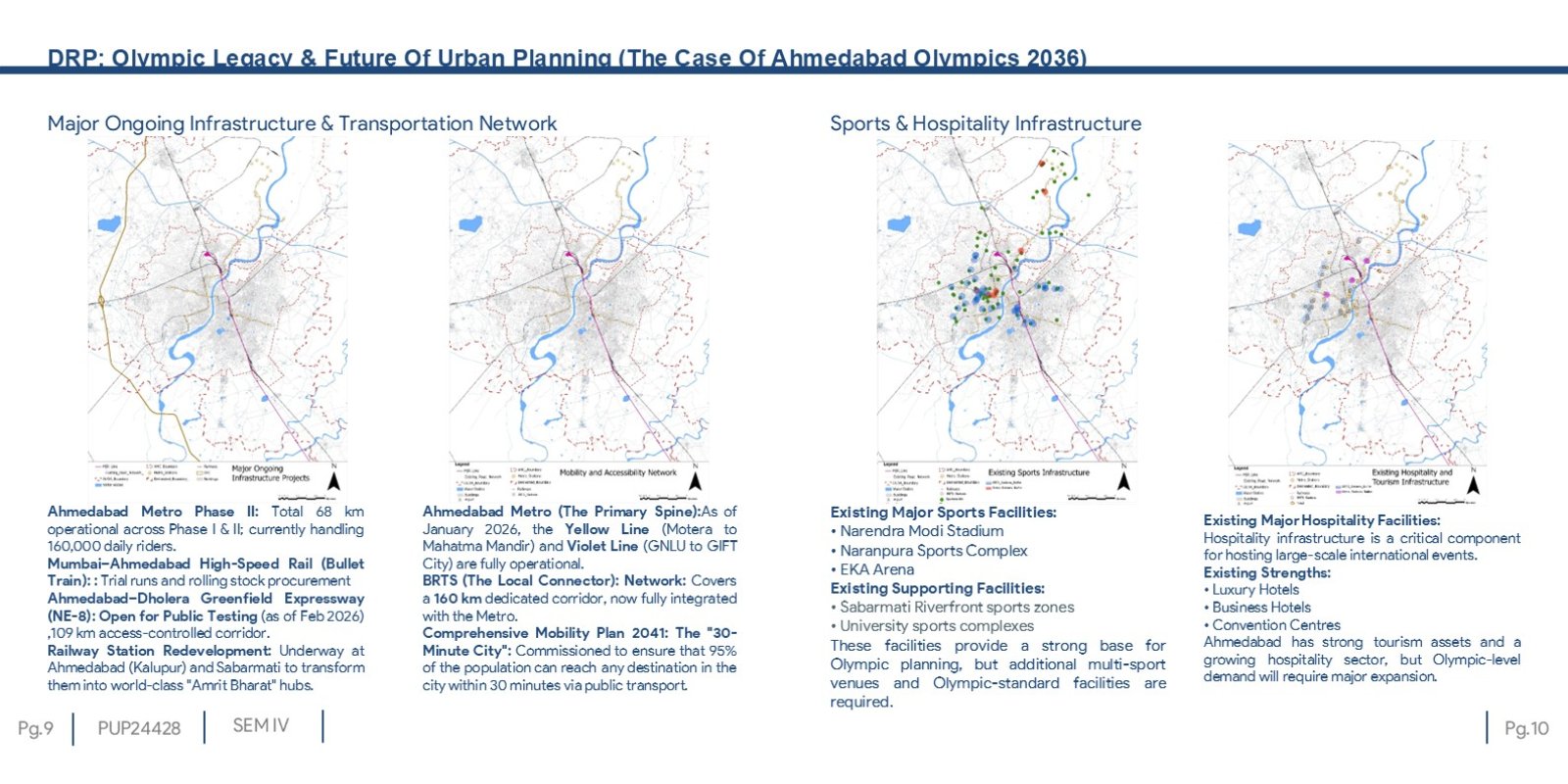
Various upcoming mega-projects, strong regional connectivity, and the rapidly expanding sports and hospitality sectors significantly strengthen Ahmedabad’s potential to emerge as a host city for the Olympic Games.

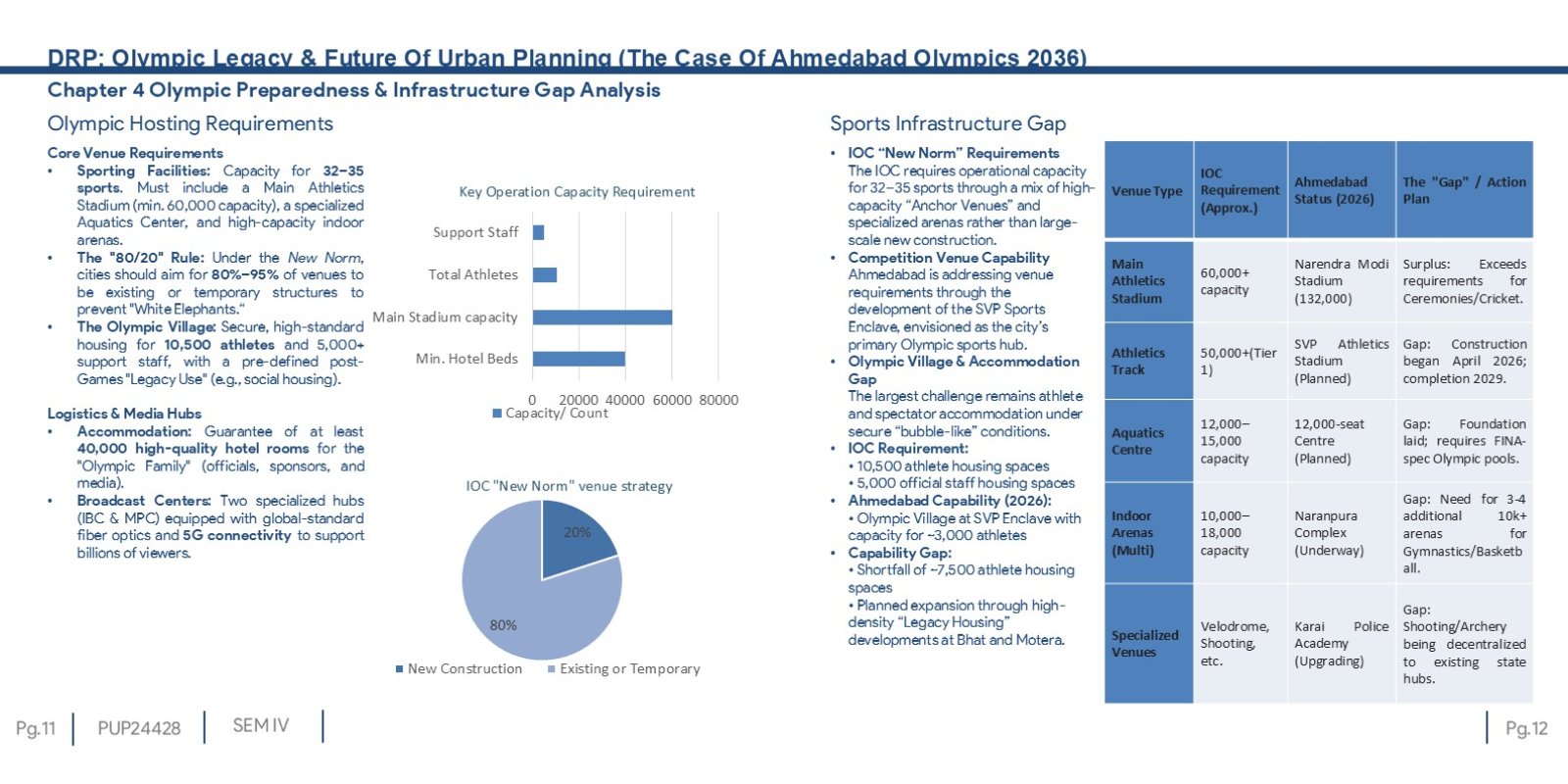
The stringent requirements imposed by the International Olympic Committee present significant challenges for Ahmedabad in its pursuit of hosting the Olympic Games.

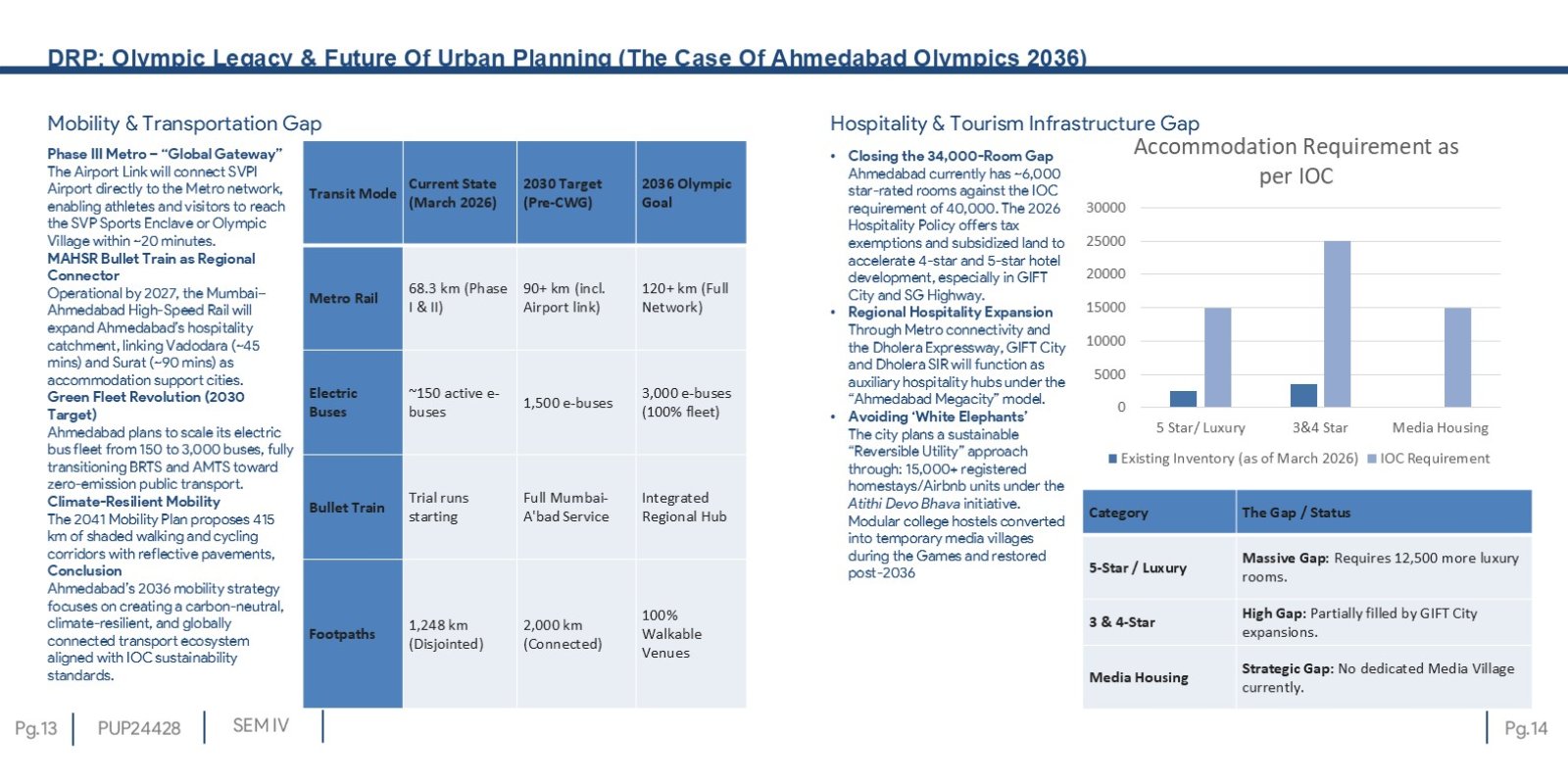
Hospitality and sports infrastructure emerge as critical gaps that Ahmedabad must address to strengthen its readiness for hosting the Olympic Games.

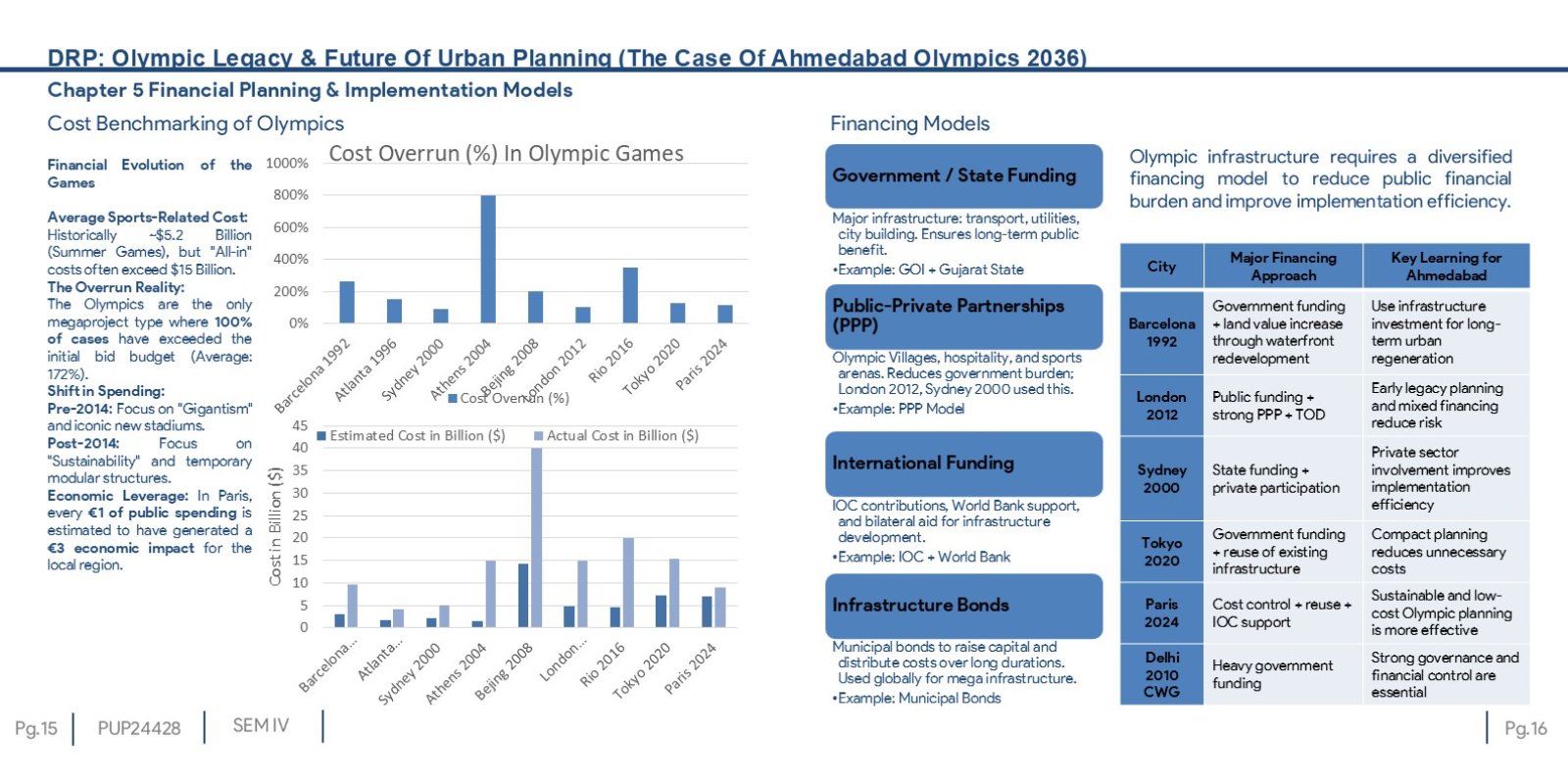
Over the years, it has been observed that hosting the Olympic Games requires substantial financial investment, which can be supported through diverse financing models such as public-private partnerships, government funding, infrastructure bonds, sponsorships, and value-capture mechanisms.

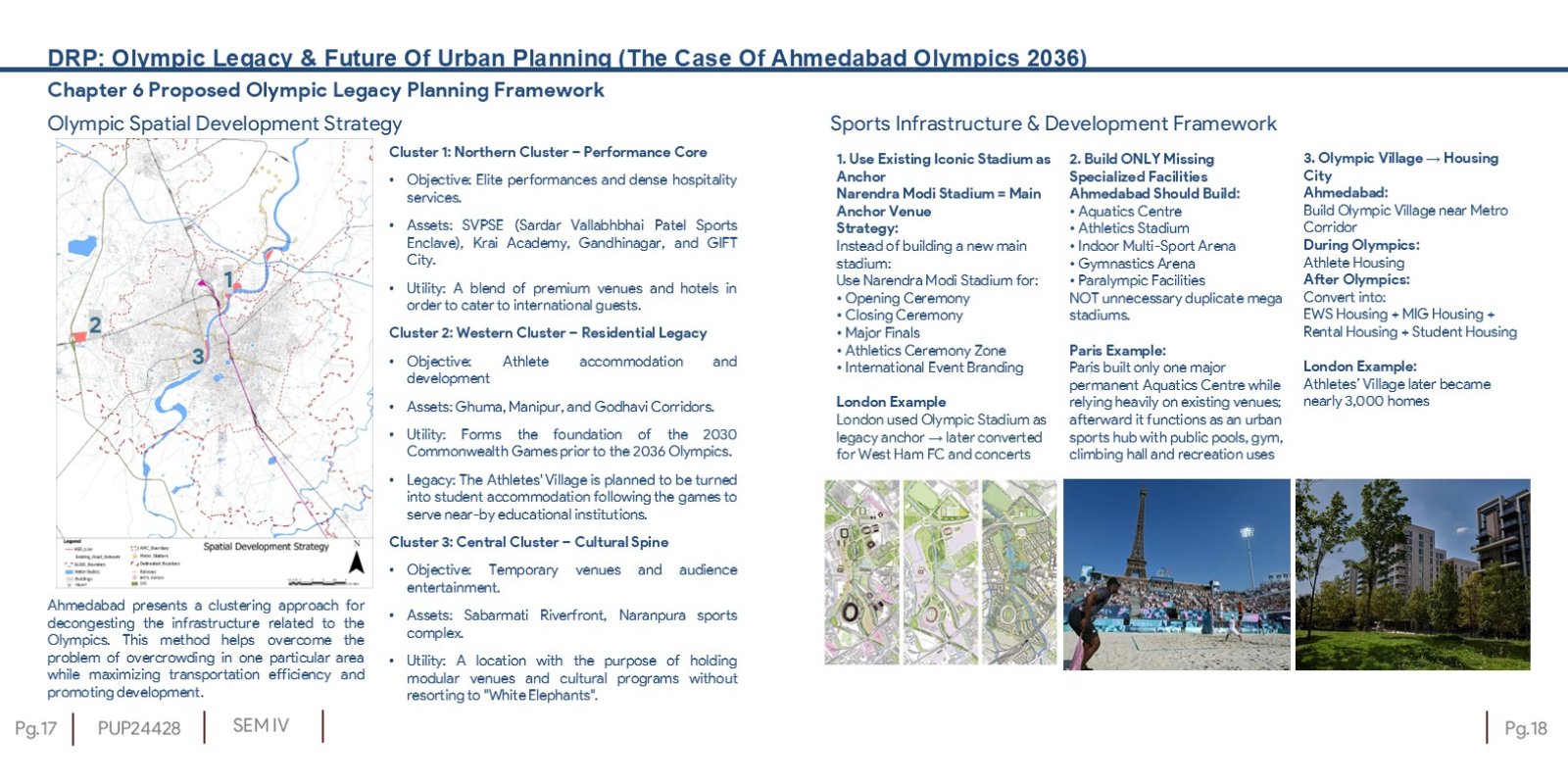
Adopting a cluster-based approach, in which each cluster is designated for a specific function, enables a more efficient and sustainable legacy-oriented development strategy.

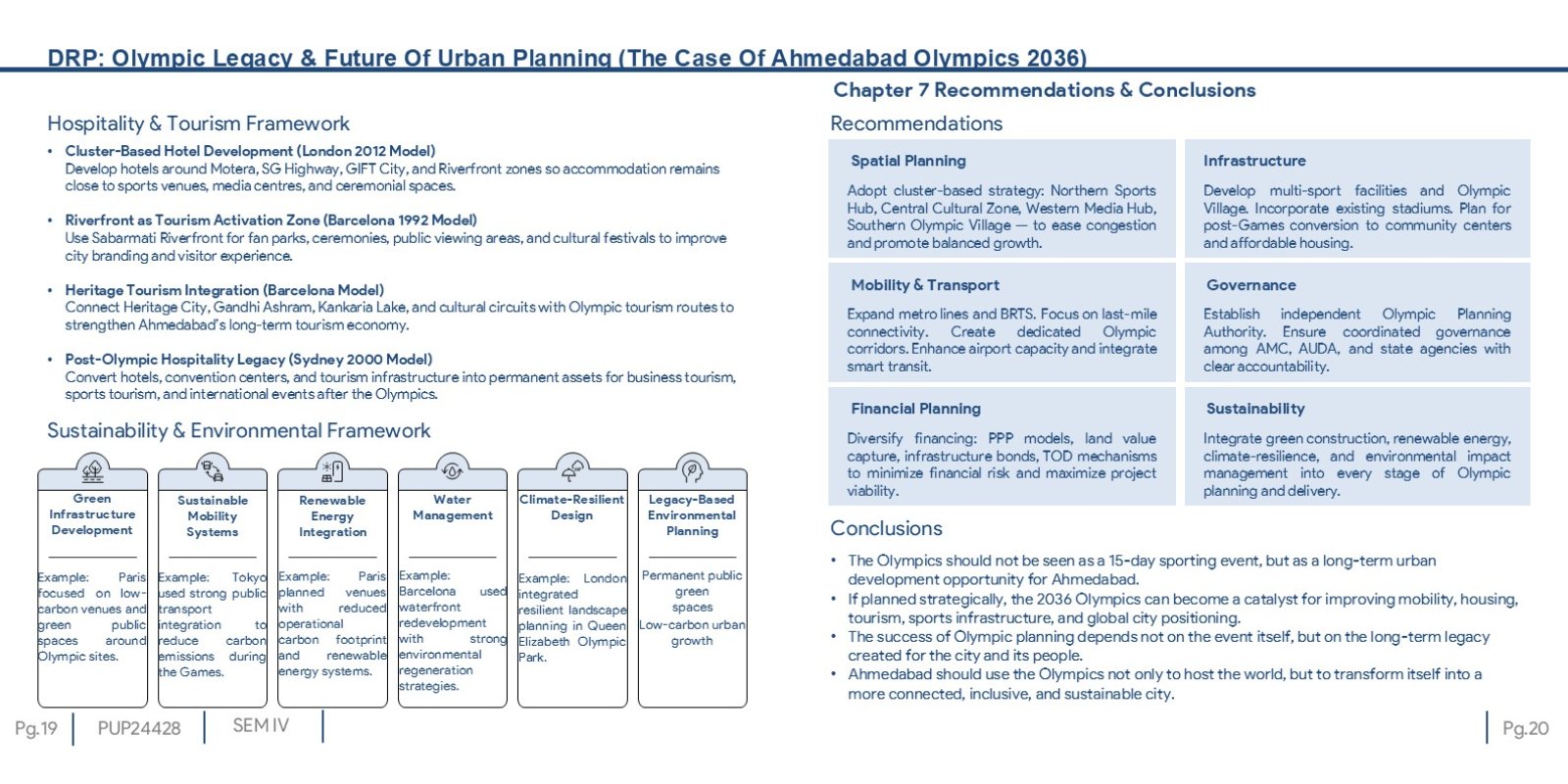
With a major focus on boosting tourism and promoting a sustainable urban development approach, Ahmedabad’s Olympic vision demonstrates that the event is not being viewed merely as a 15-day sporting spectacle, but as a long-term catalyst for the city’s economic, social, and infrastructural growth for decades to come.