Your browser is out-of-date!
For a richer surfing experience on our website, please update your browser. Update my browser now!
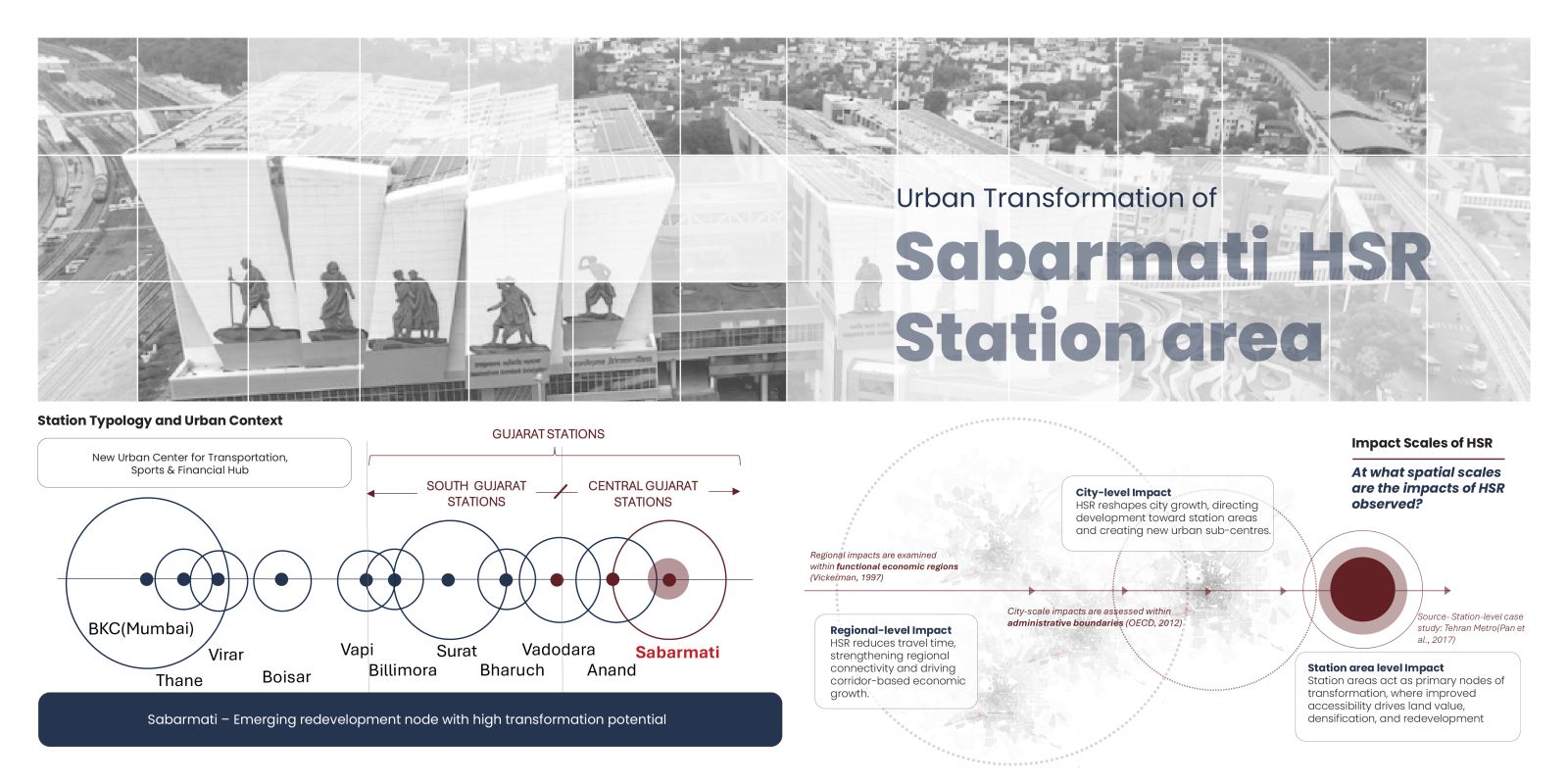
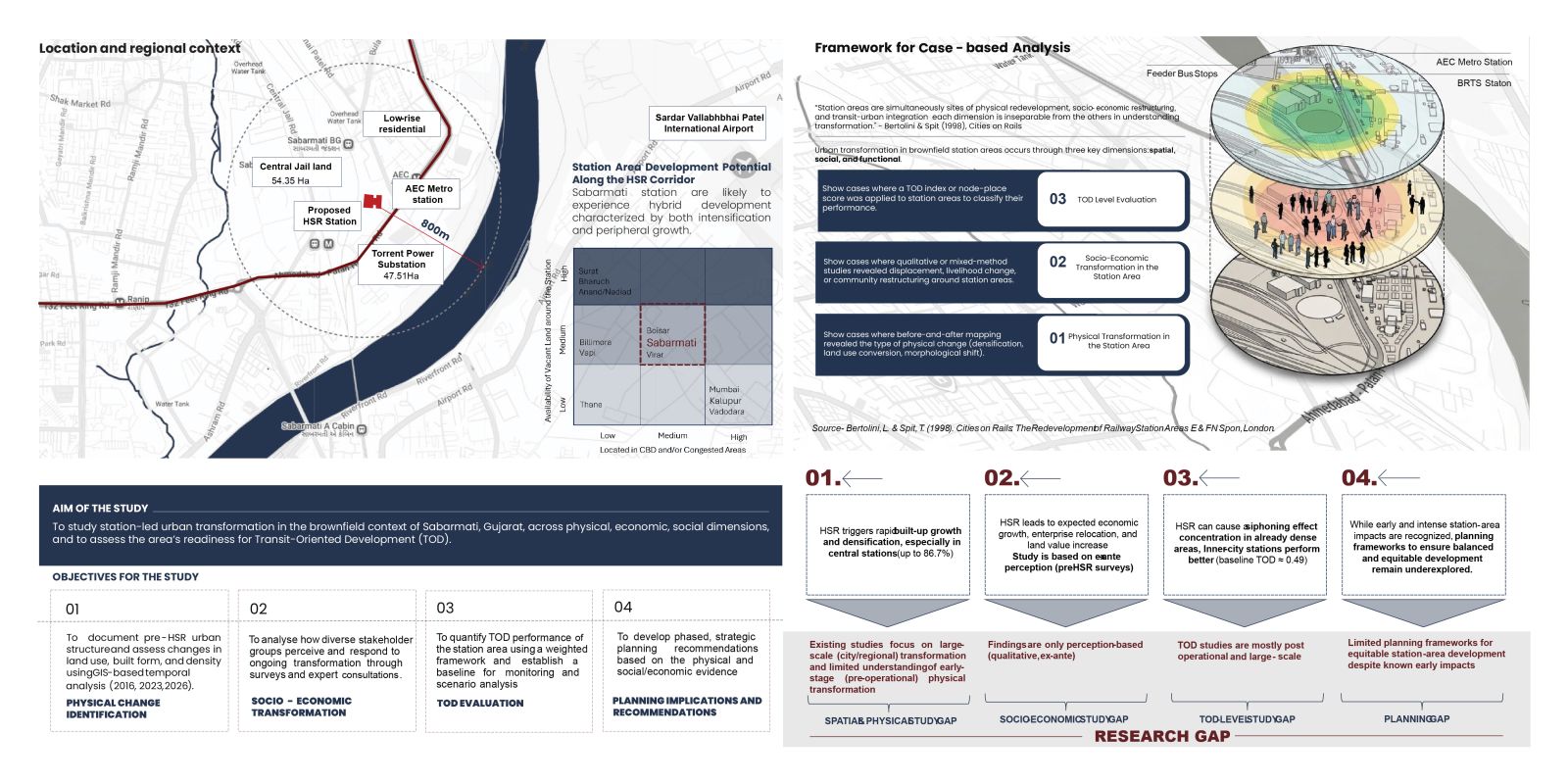
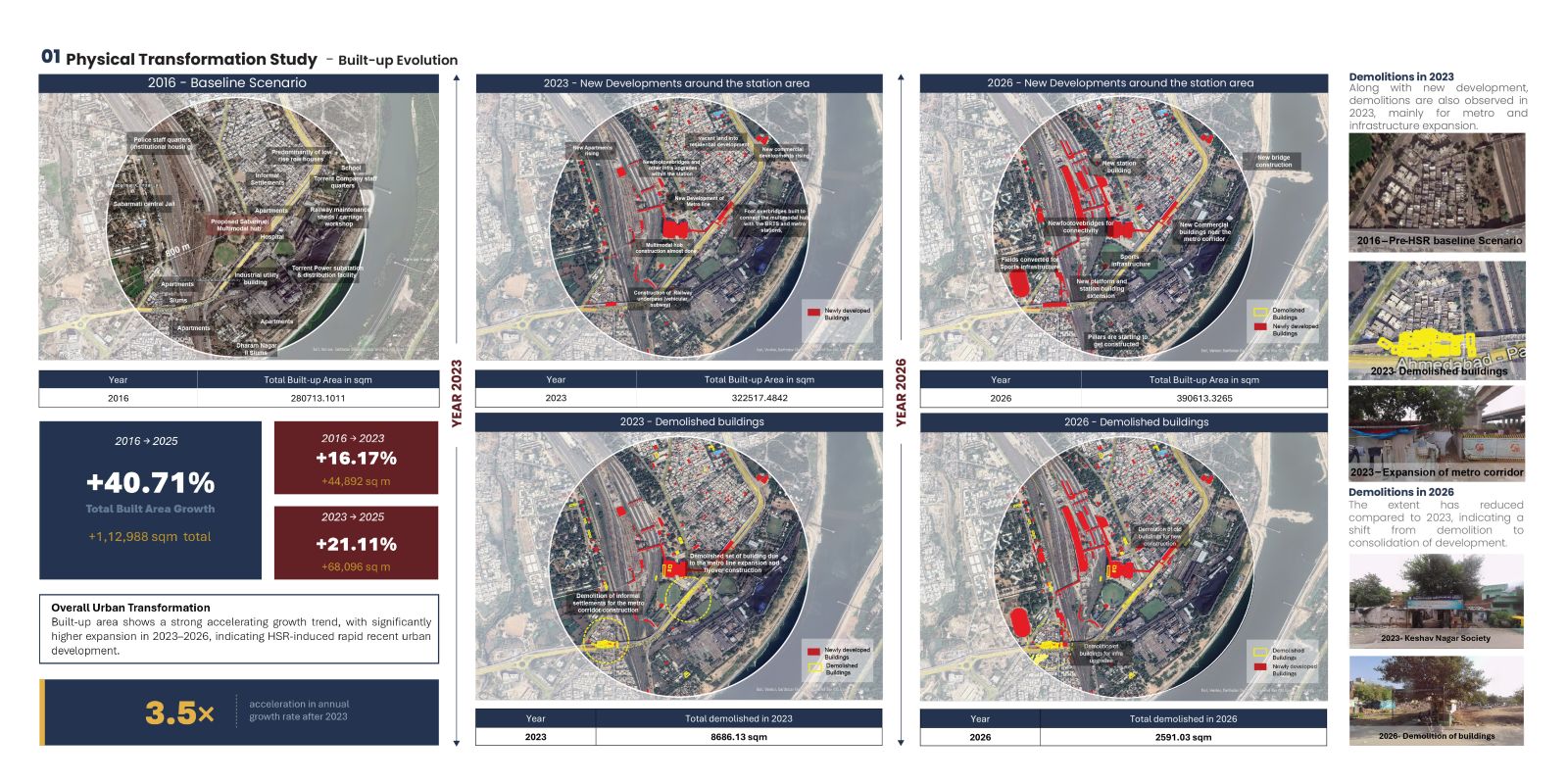
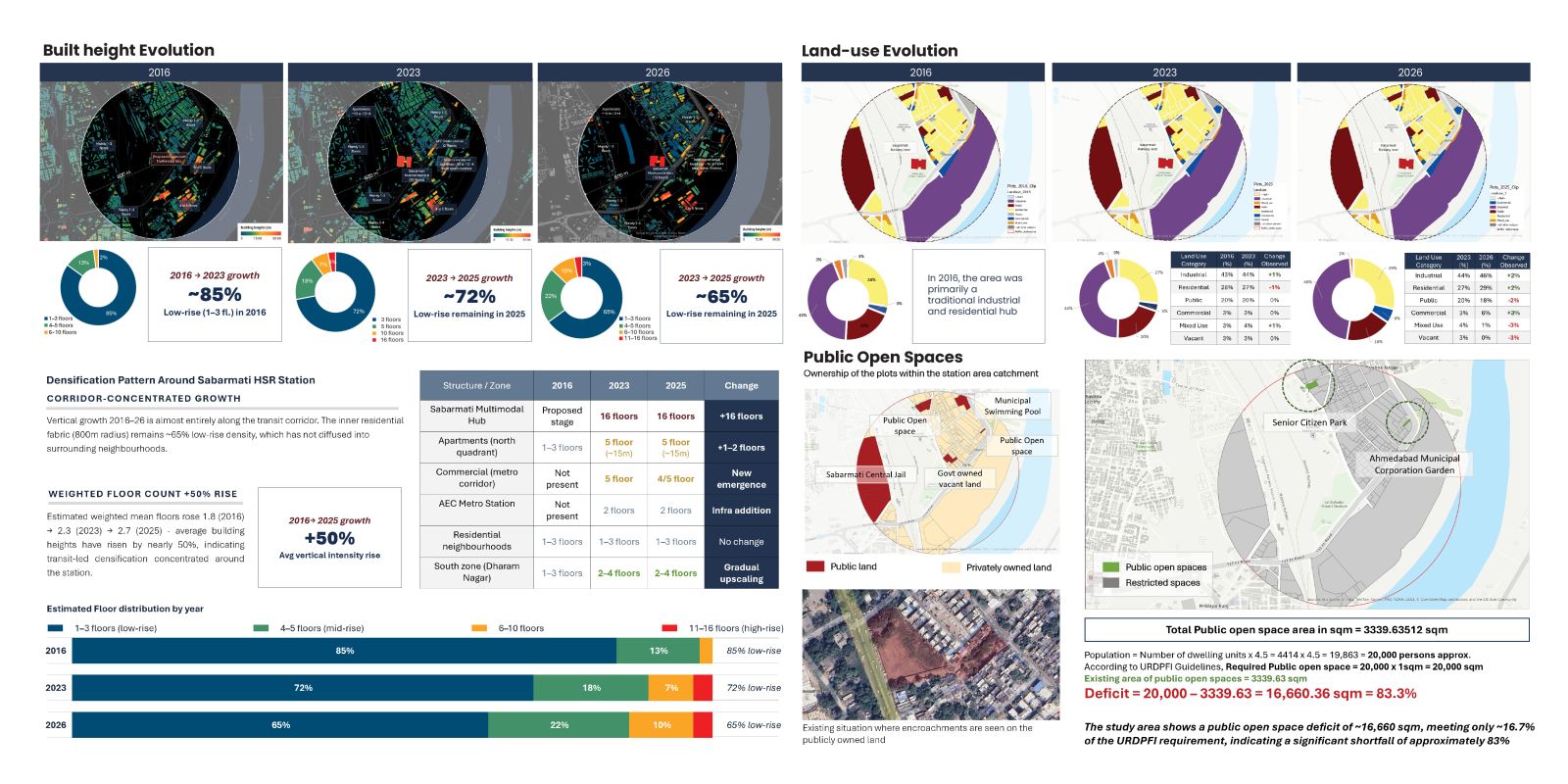
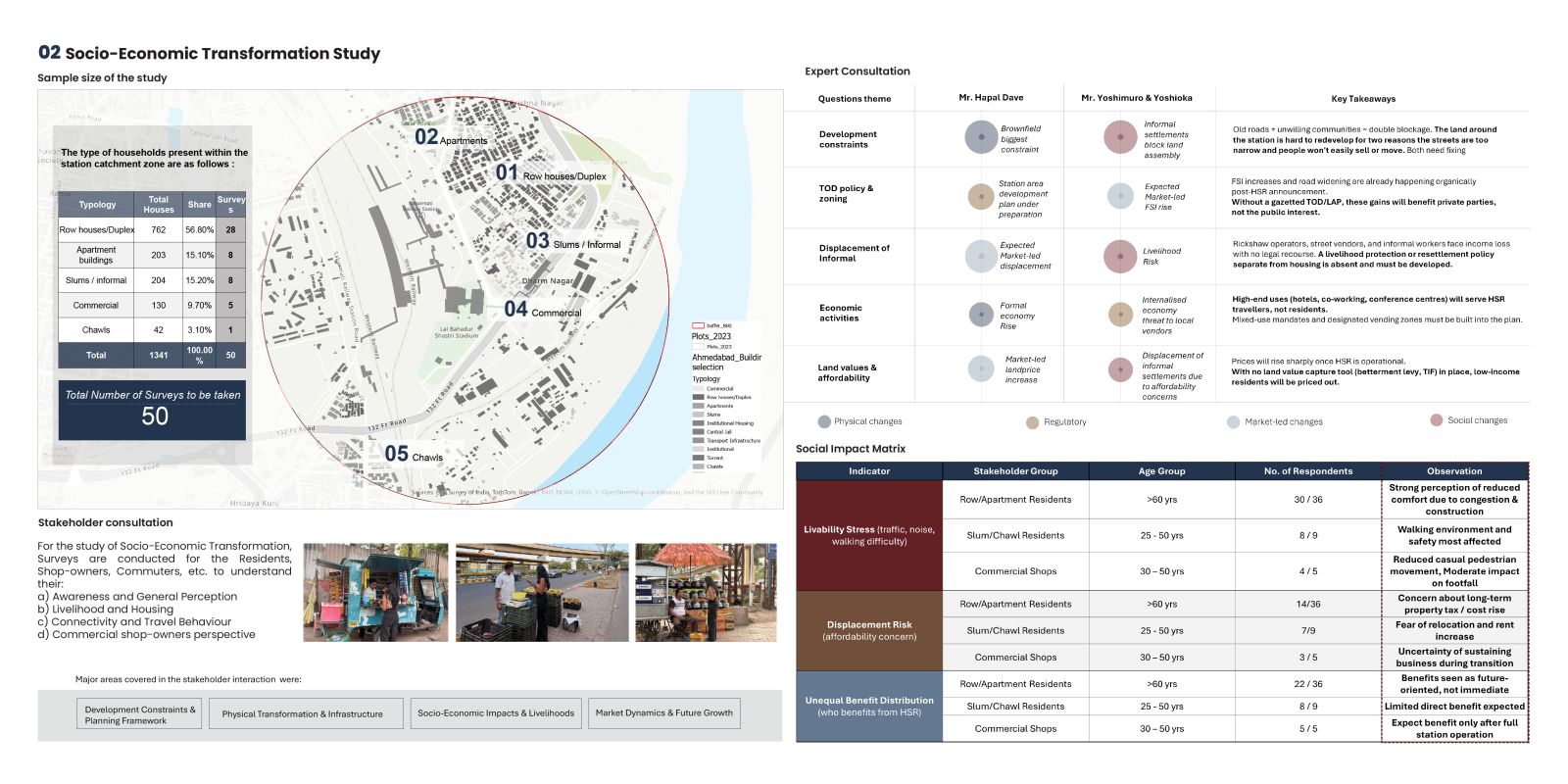
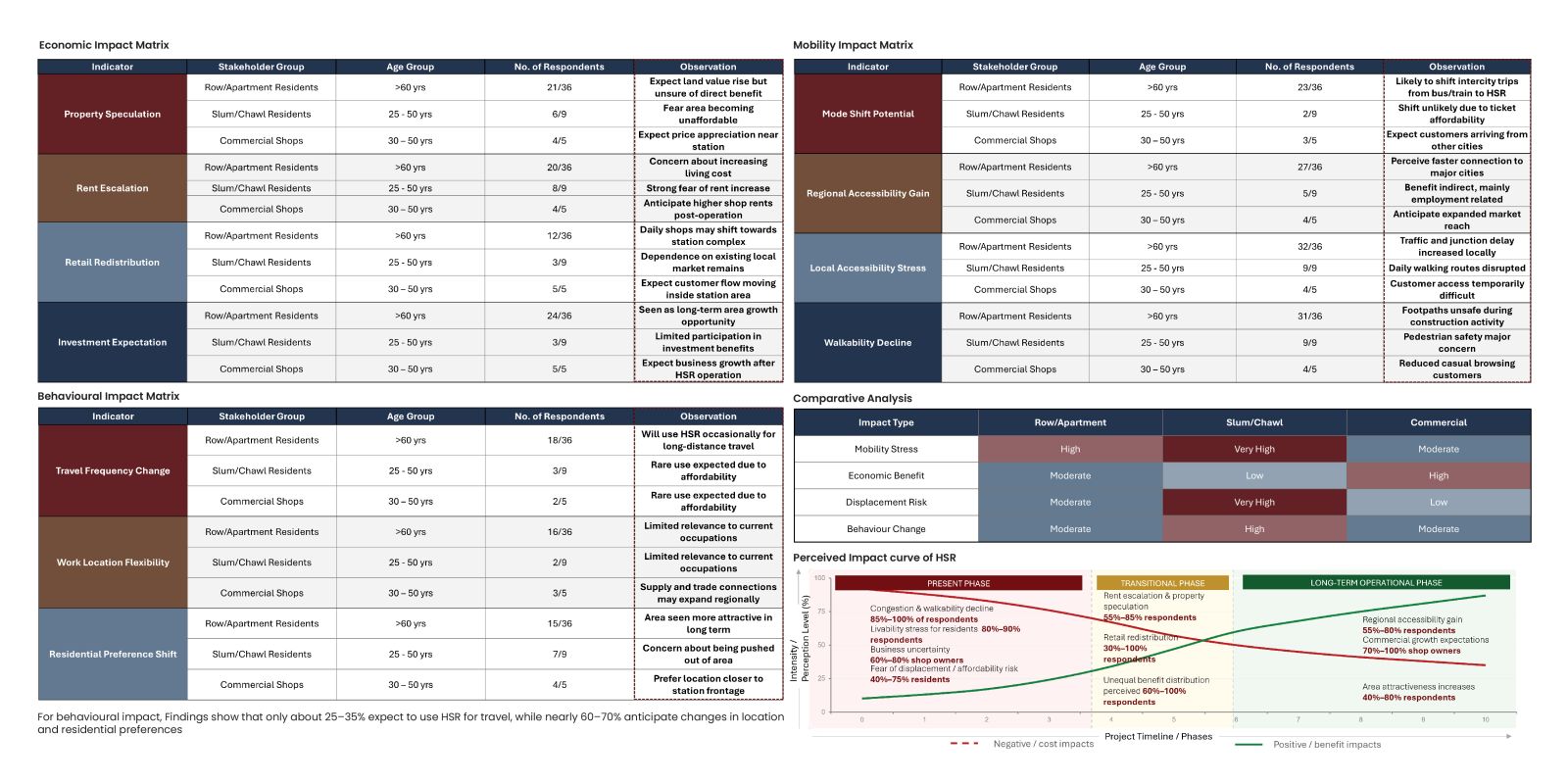
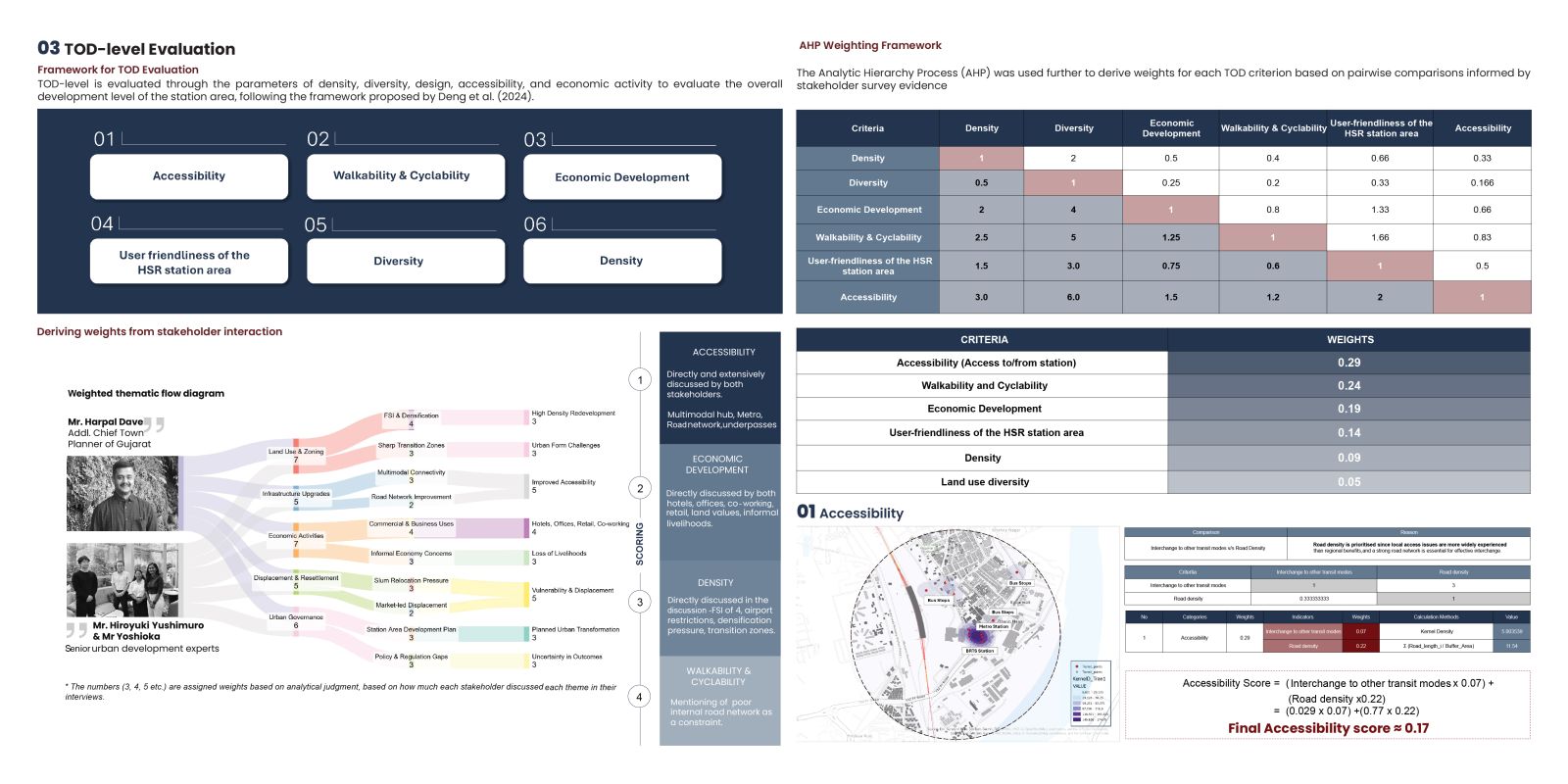
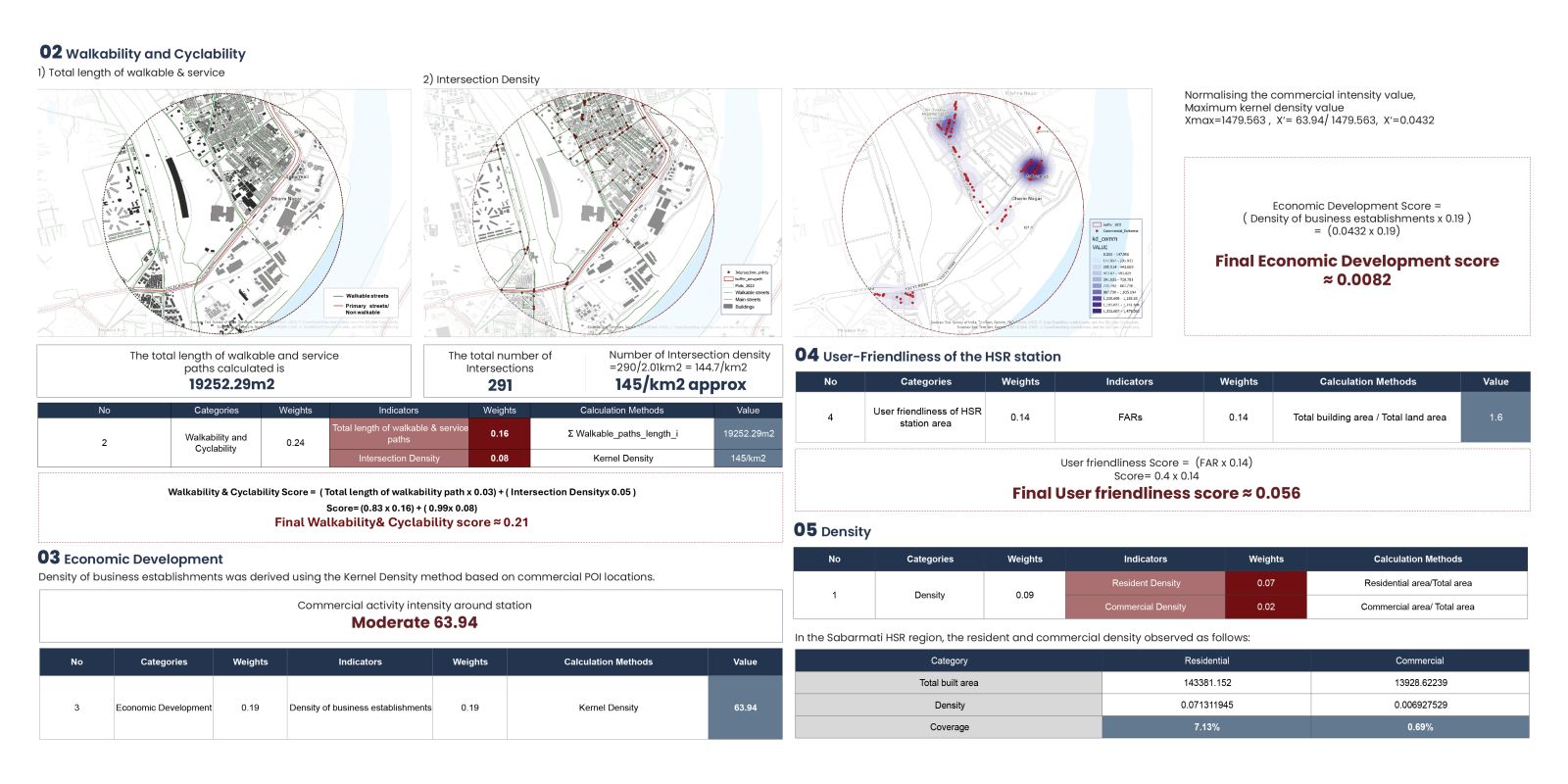
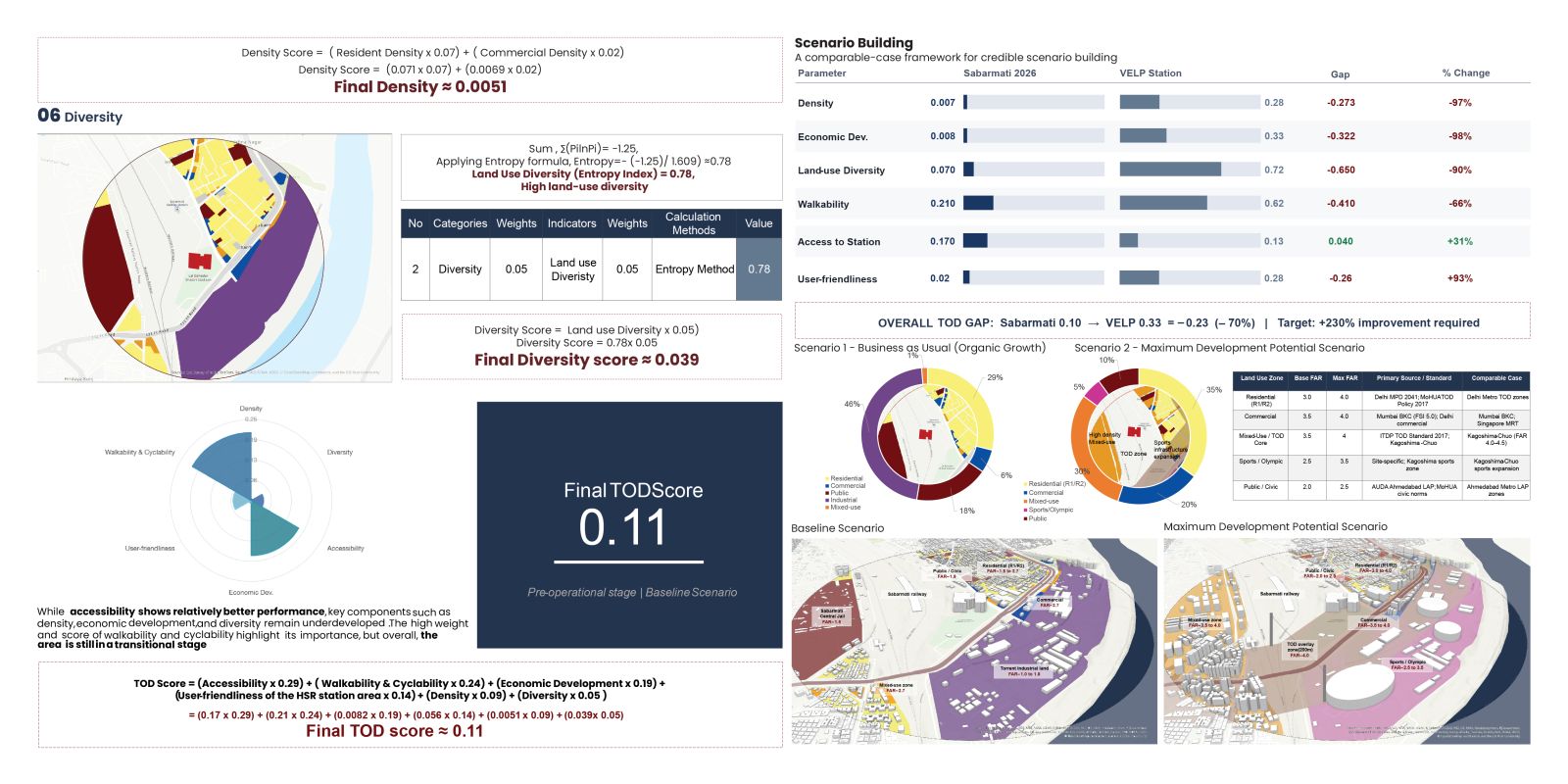
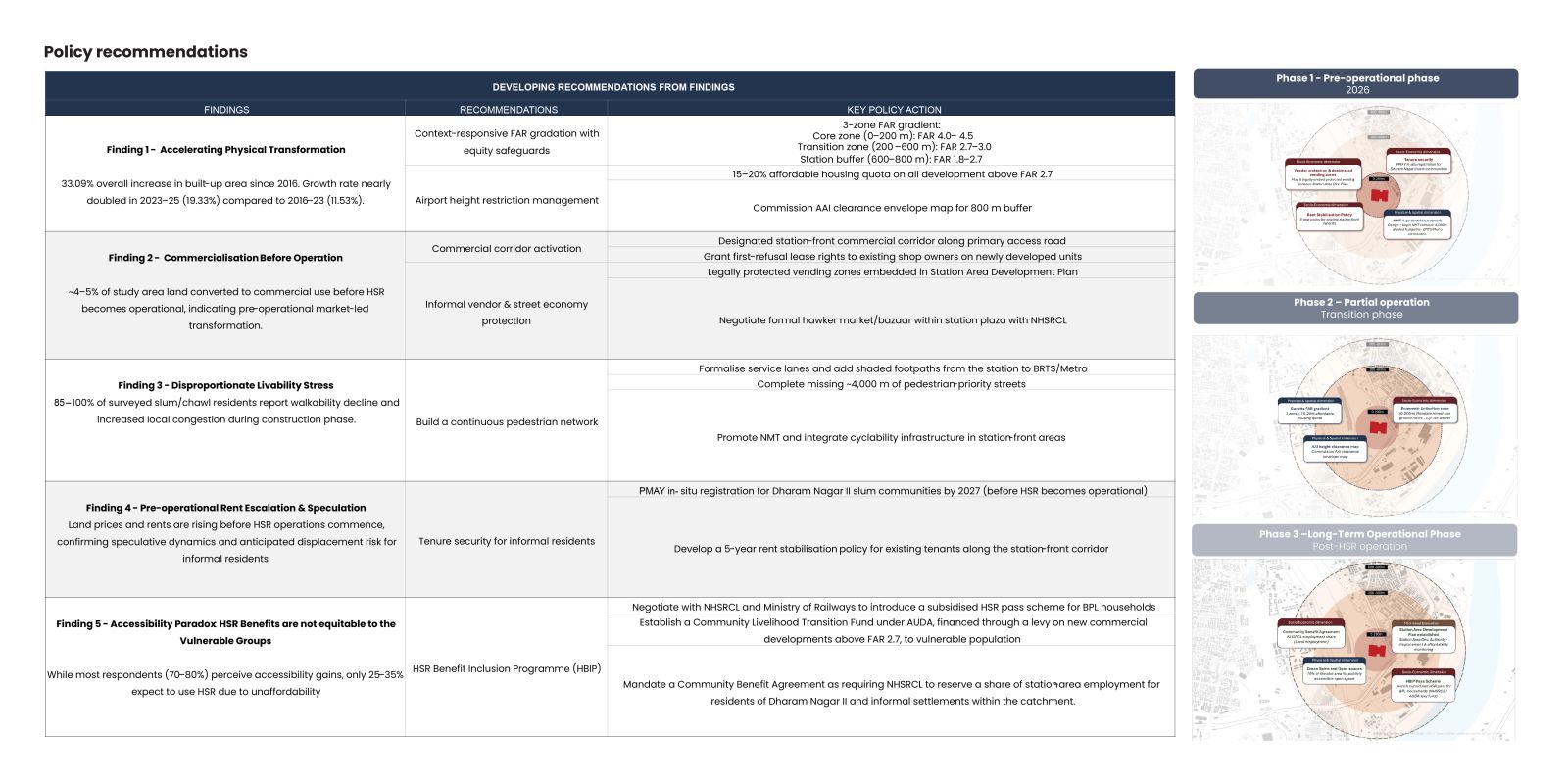
This study examines the ongoing urban transformation around the Sabarmati station area under the Mumbai–Ahmedabad High-Speed Rail project through a multi-method framework combining spatial analysis, stakeholder surveys, TOD evaluation, and scenario building. Using temporal mapping across 2016, 2023, and 2026, the research documents significant built-form growth, emerging vertical development, and increasing commercialisation within the 800 m station influence zone. Socio-economic assessment highlights concerns related to liveability stress, rent escalation, displacement risk, and unequal benefit distribution, particularly among vulnerable informal households. The study further evaluates TOD readiness and proposes strategic planning recommendations for equitable and transit-oriented urban development.