Your browser is out-of-date!
For a richer surfing experience on our website, please update your browser. Update my browser now!
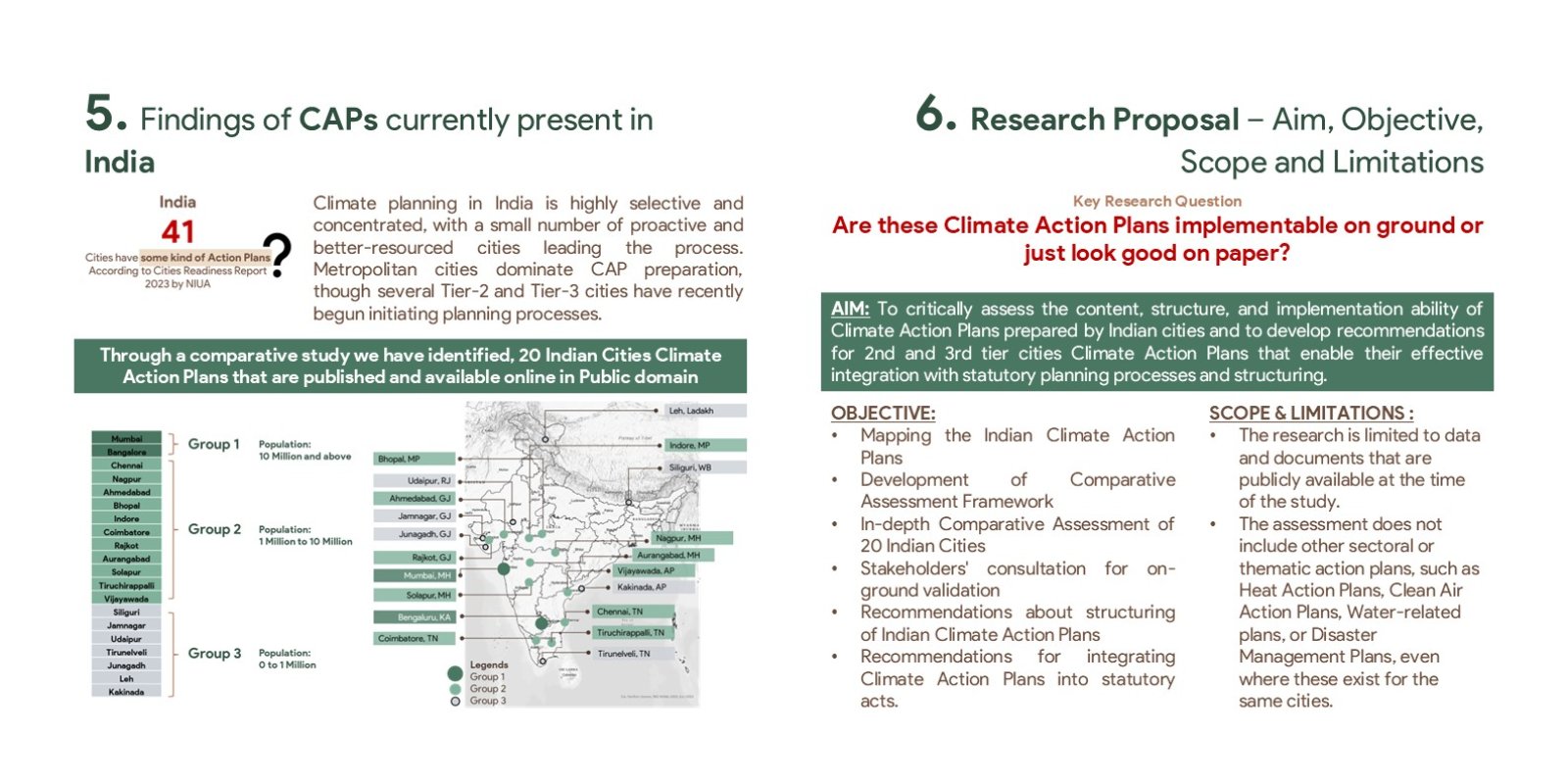
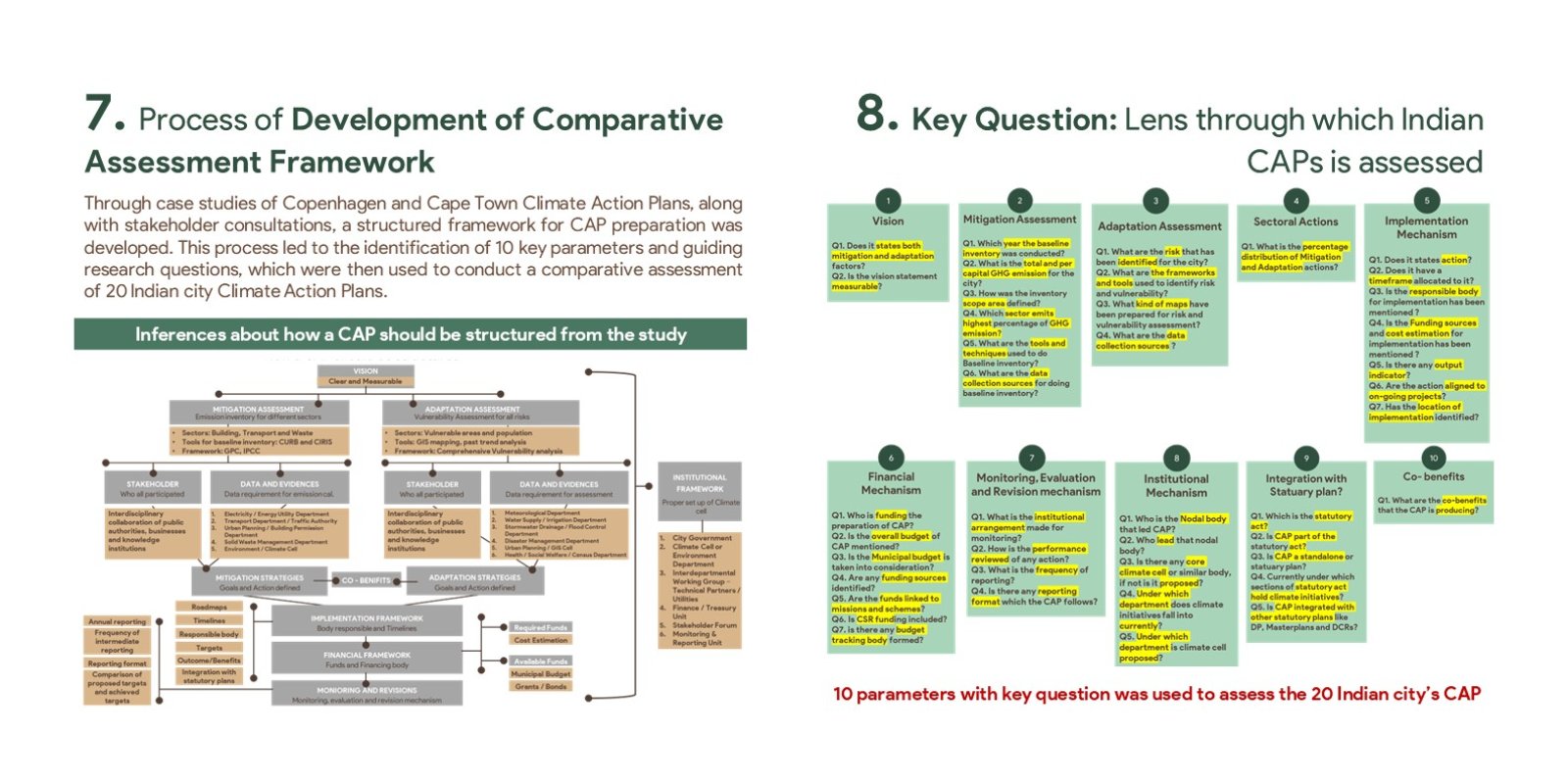
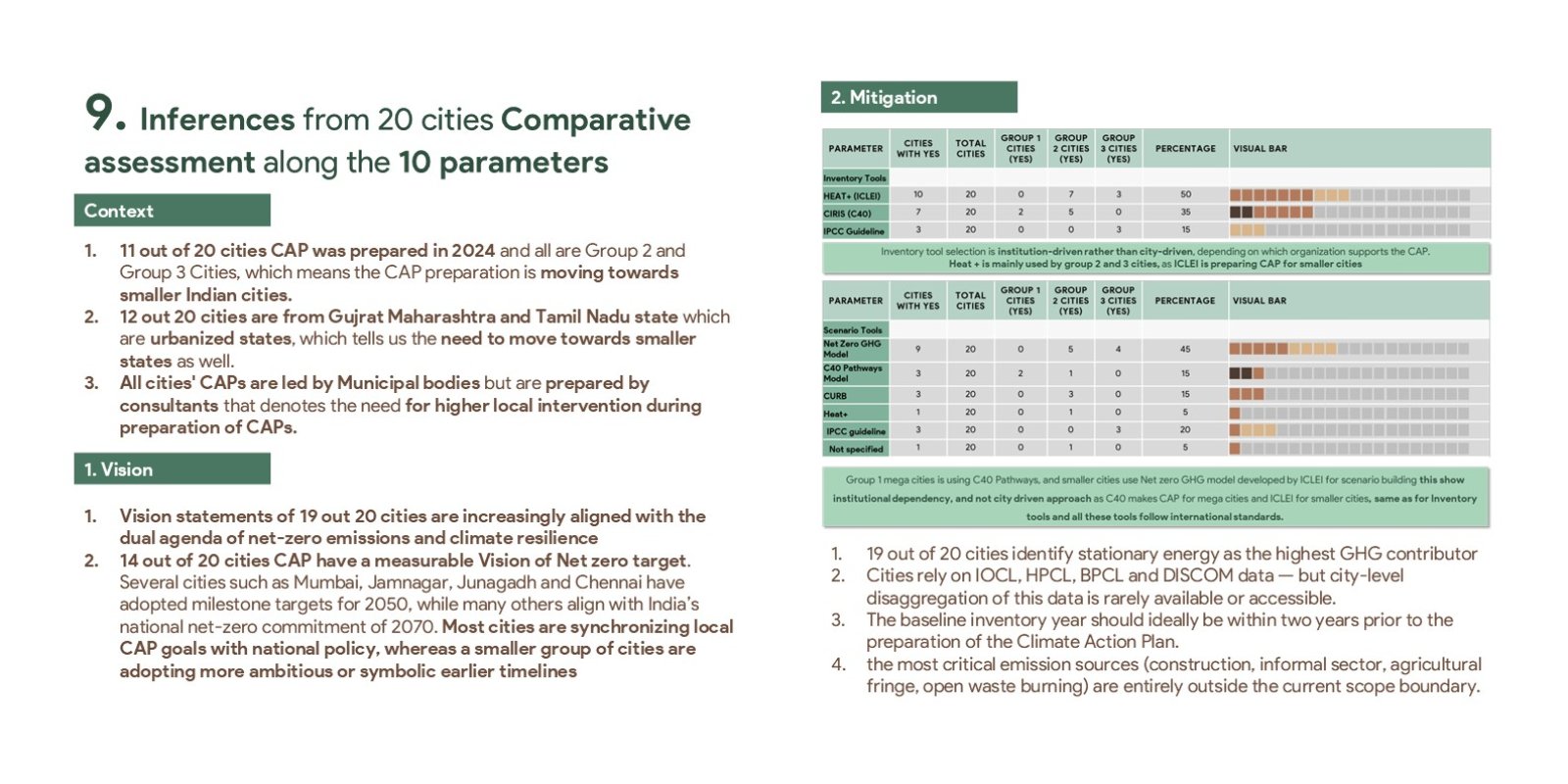
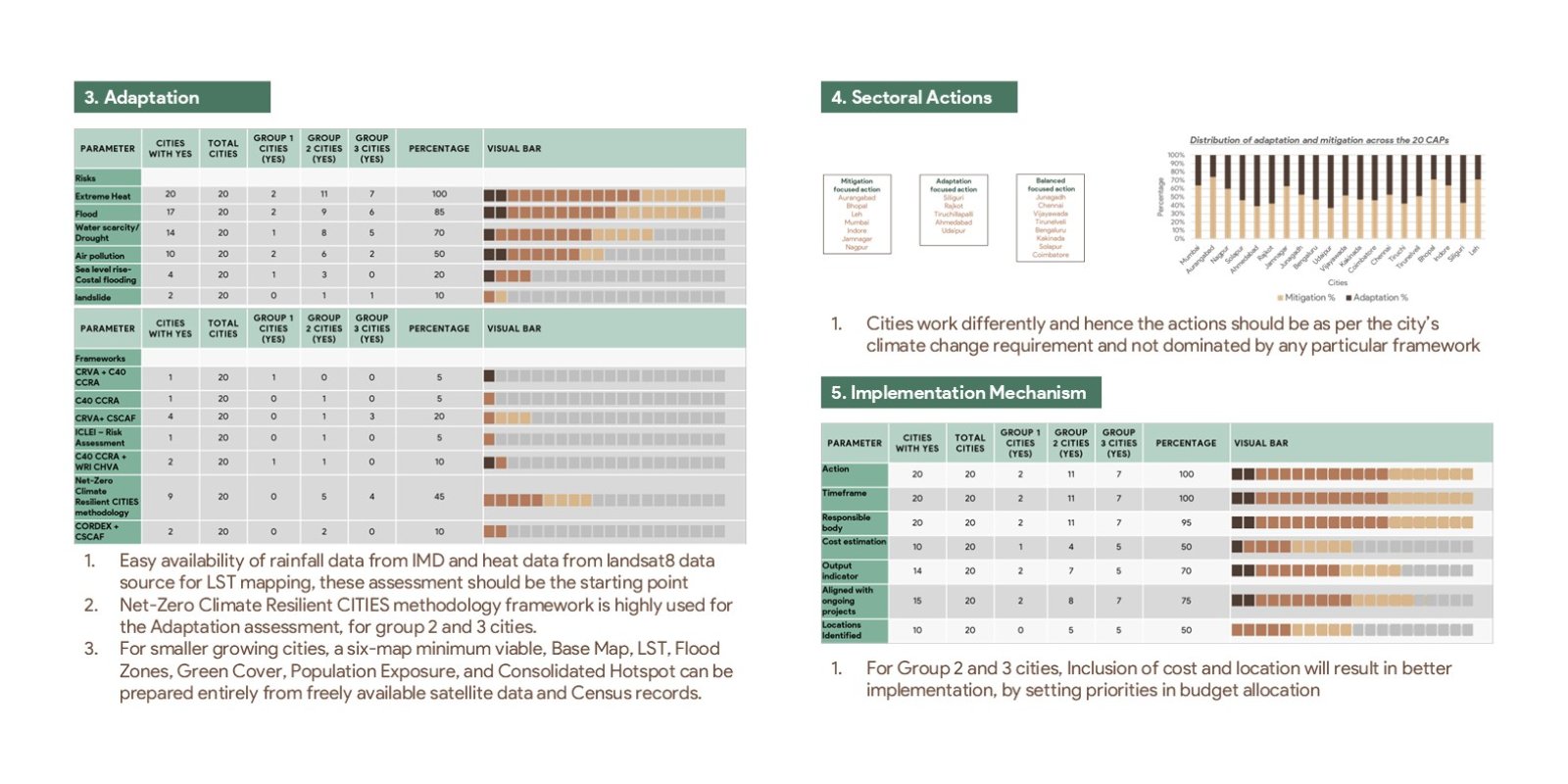
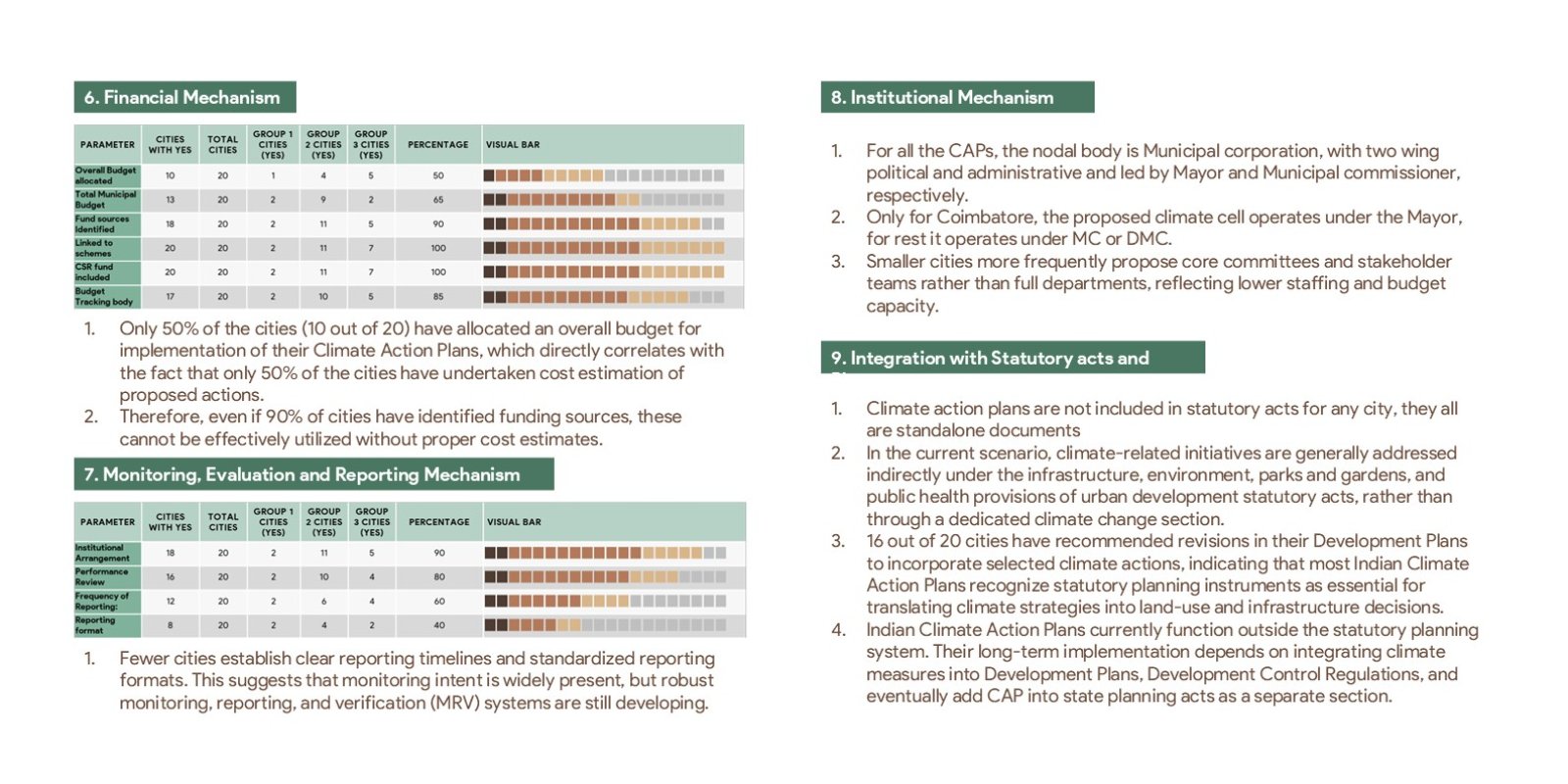
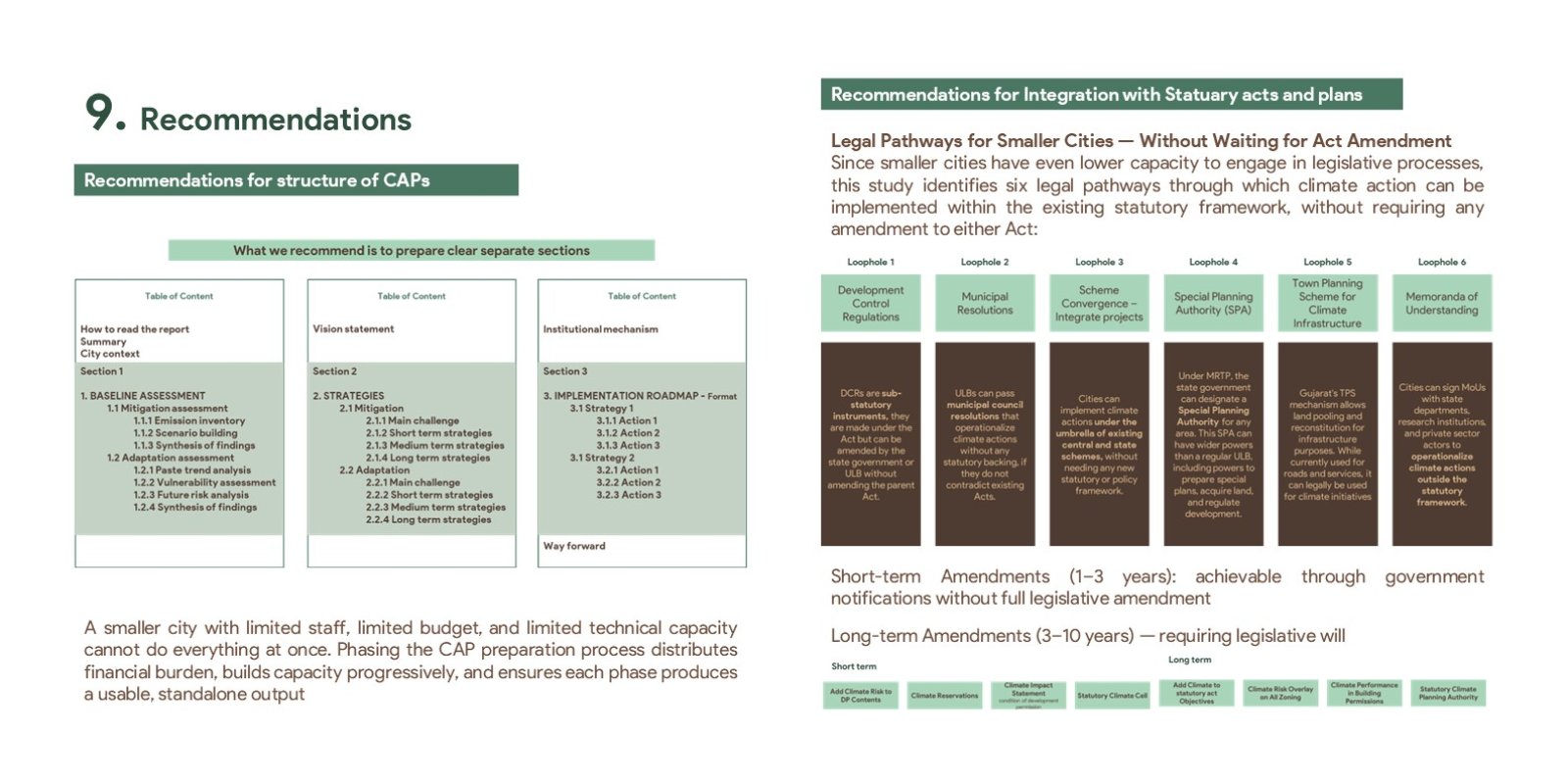
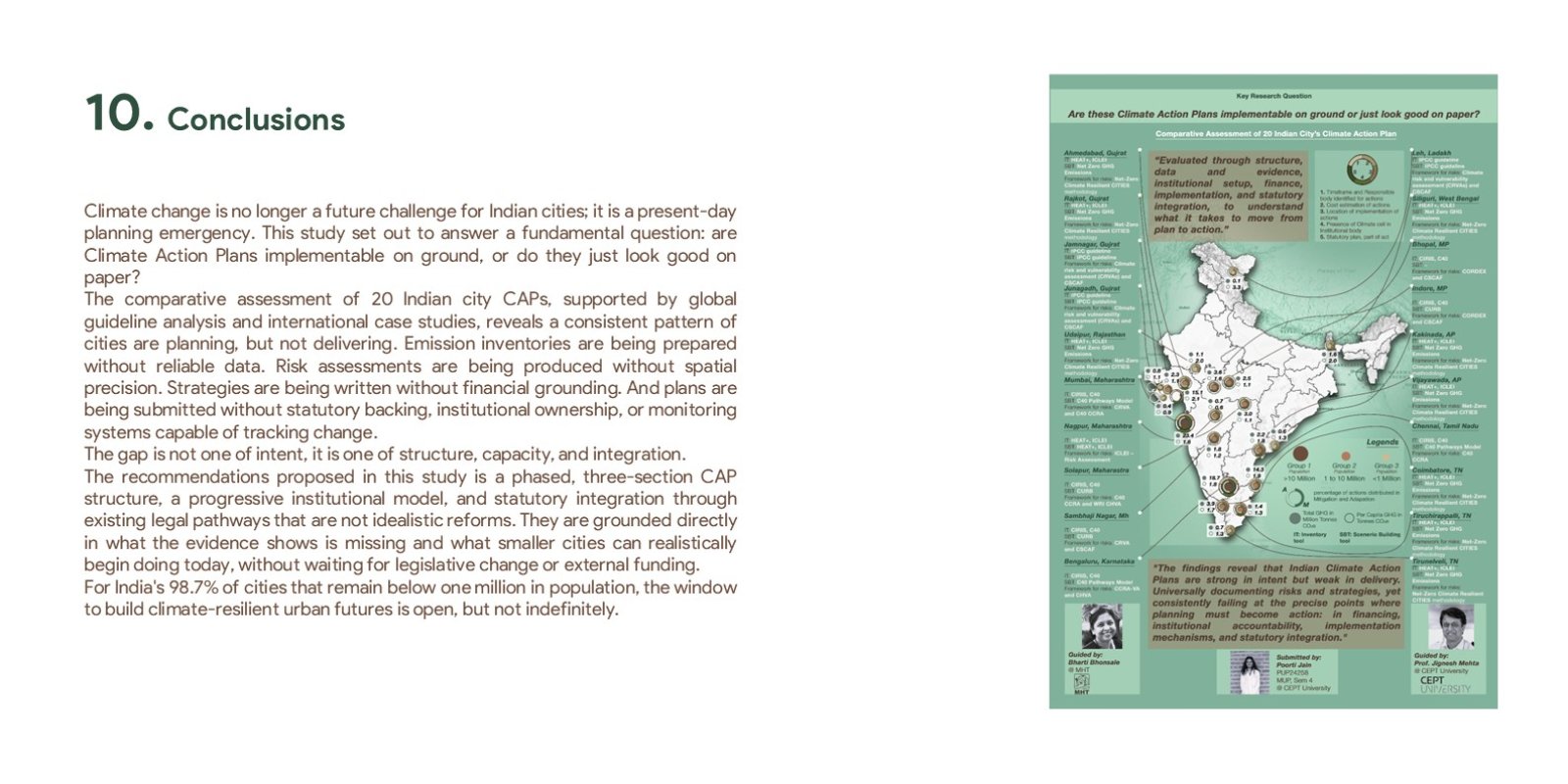
Climate change poses an escalating challenge for Indian cities, which simultaneously contribute to greenhouse gas emissions and face growing risks of flooding, heat stress, and water scarcity (IPCC, 2022). While approximately 41 Indian cities have developed or are developing Climate Action Plans (CAPs) (Press Information Bureau, 2024), these plans largely remain non-statutory, weakly integrated with statutory planning systems, and limited in financing, implementation, and monitoring mechanisms (National Institute of Urban Affairs, 2020; Council on Energy, Environment and Water, 2025). This gap is particularly acute in Tier-2 and Tier-3 cities, which face significant constraints in institutional capacity, technical expertise, and data availability (All India Institute of Local Self Government, 2023). This study undertakes a comparative assessment of 20 Indian city CAPs, supported by a review of seven global CAP guidelines and international case studies of Copenhagen and Cape Town, to identify structural and implementation gaps and propose actionable recommendations. A 12-pillar evaluation framework — encompassing city context, vision, emissions inventory, risk assessment, mitigation and adaptation strategies, governance, implementation, financing, monitoring, and statutory integration — was developed and validated through stakeholder consultation. The assessment reveals a consistent pattern: cities are planning but not delivering. Emission inventories lack reliable data, risk assessments lack spatial precision, and strategies lack financial grounding and statutory backing. The study proposes a phased CAP structure, a progressive institutional model, and statutory integration pathways through existing legal mechanisms , recommendations grounded in evidence and designed to be implementable by smaller Indian cities without awaiting legislative change.