Your browser is out-of-date!
For a richer surfing experience on our website, please update your browser. Update my browser now!
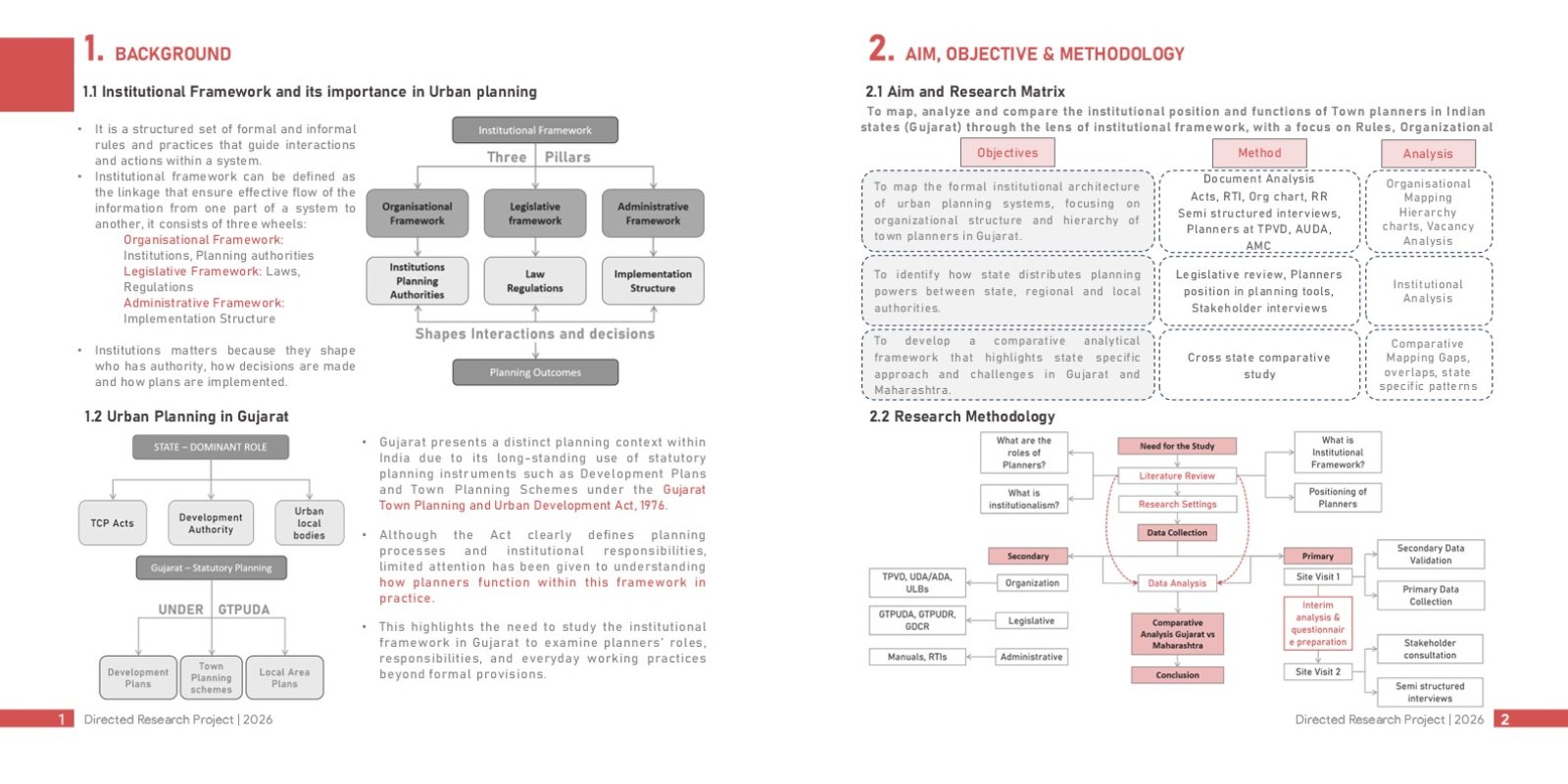
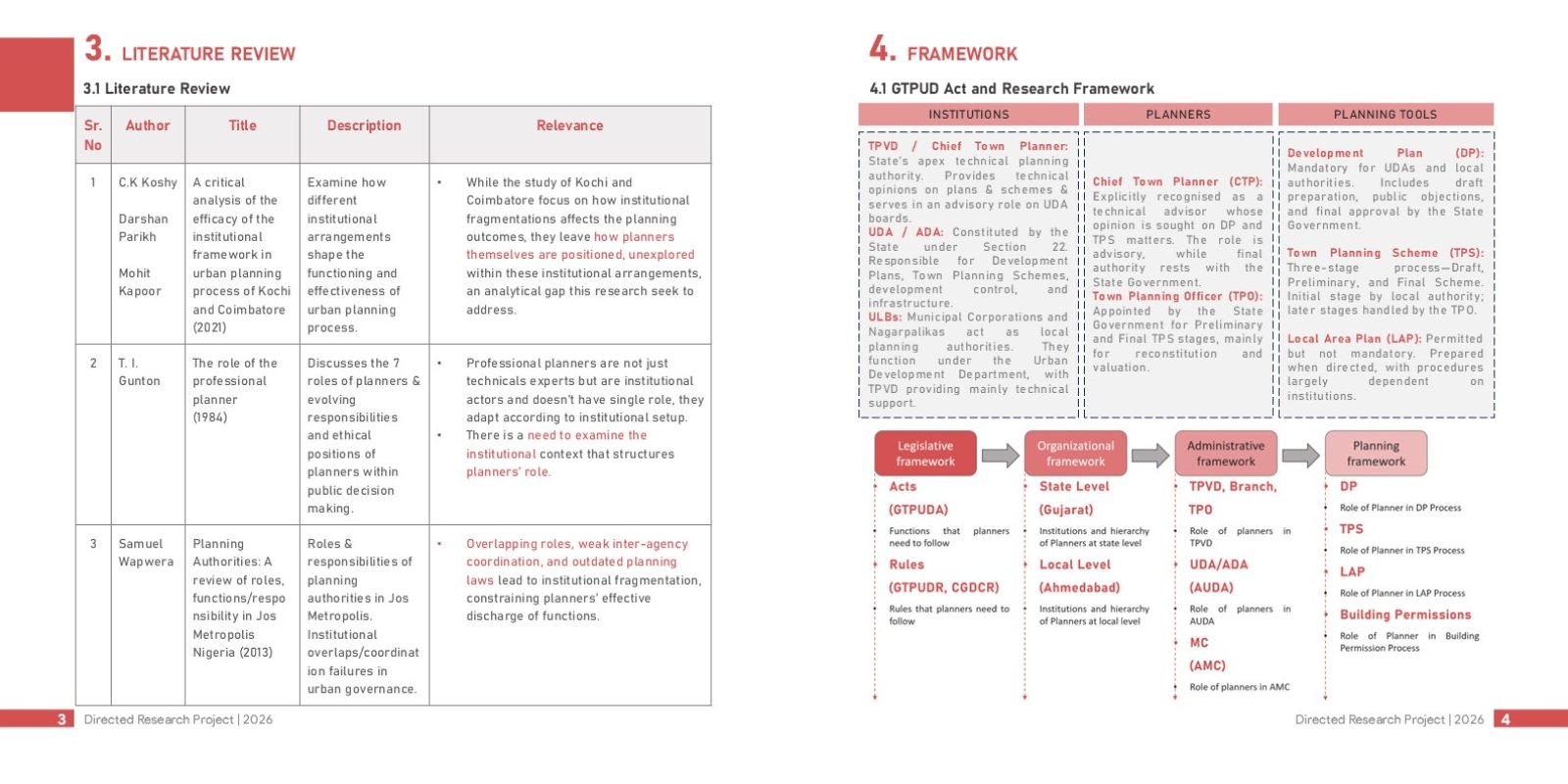
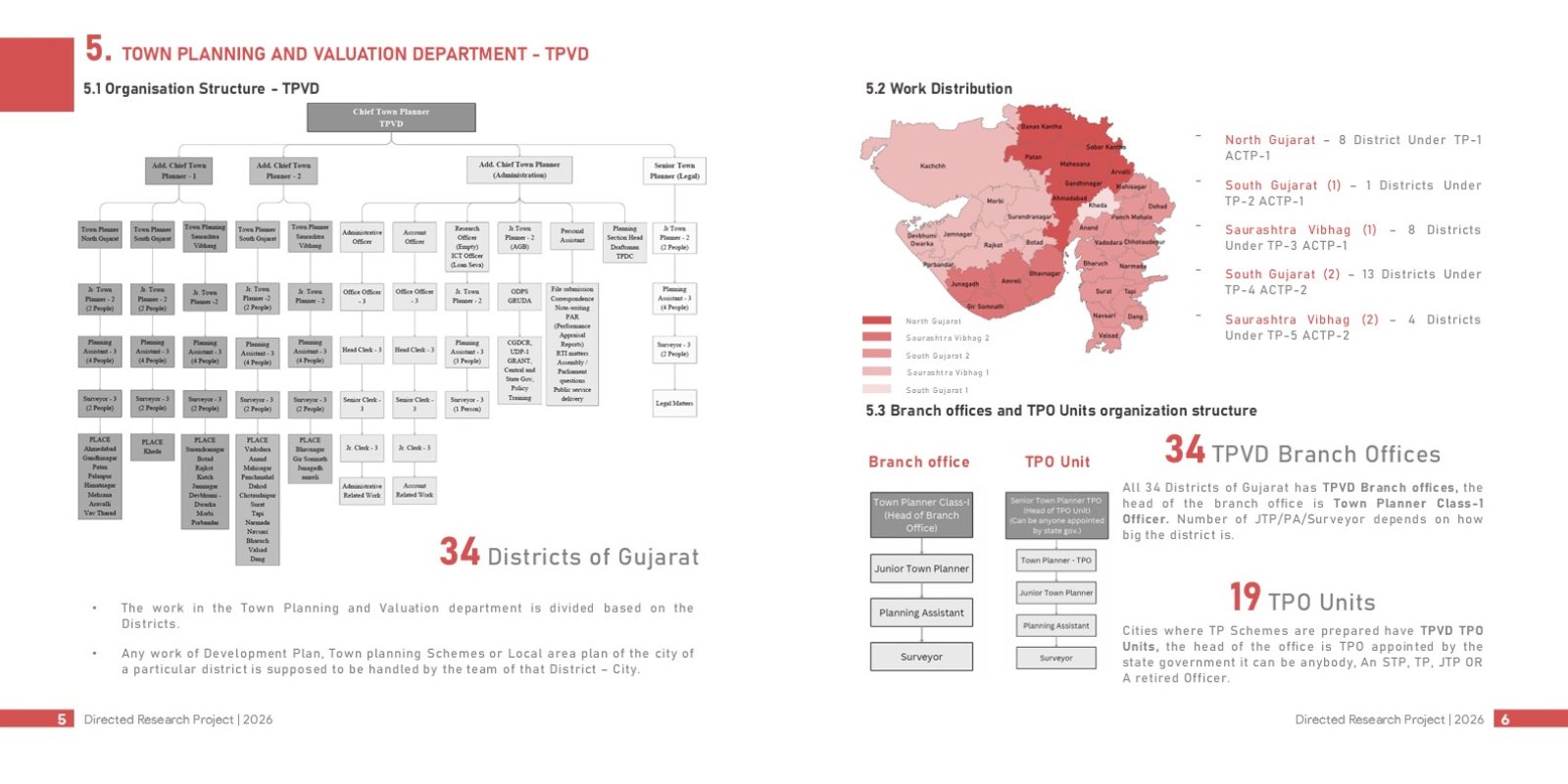
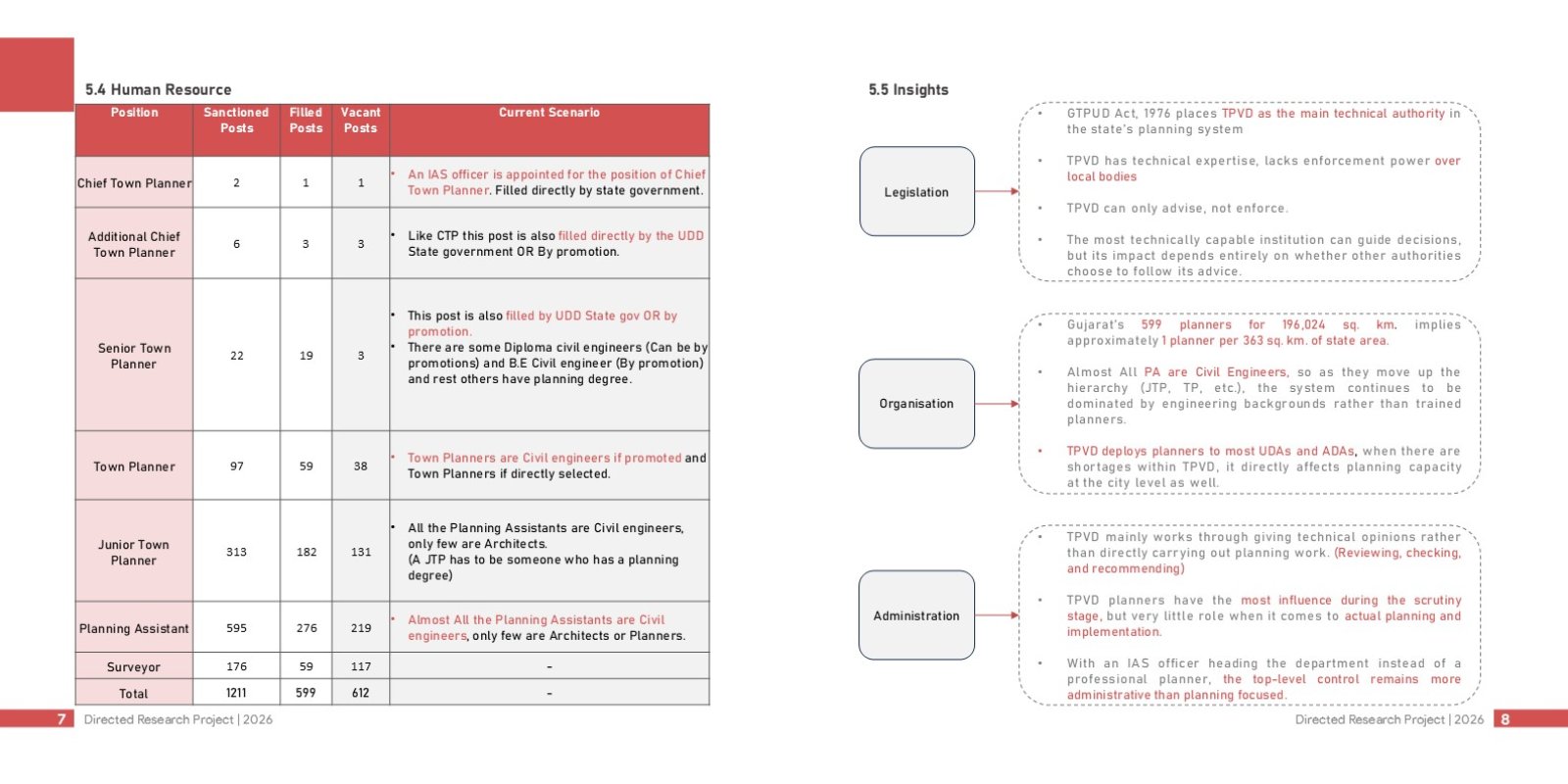
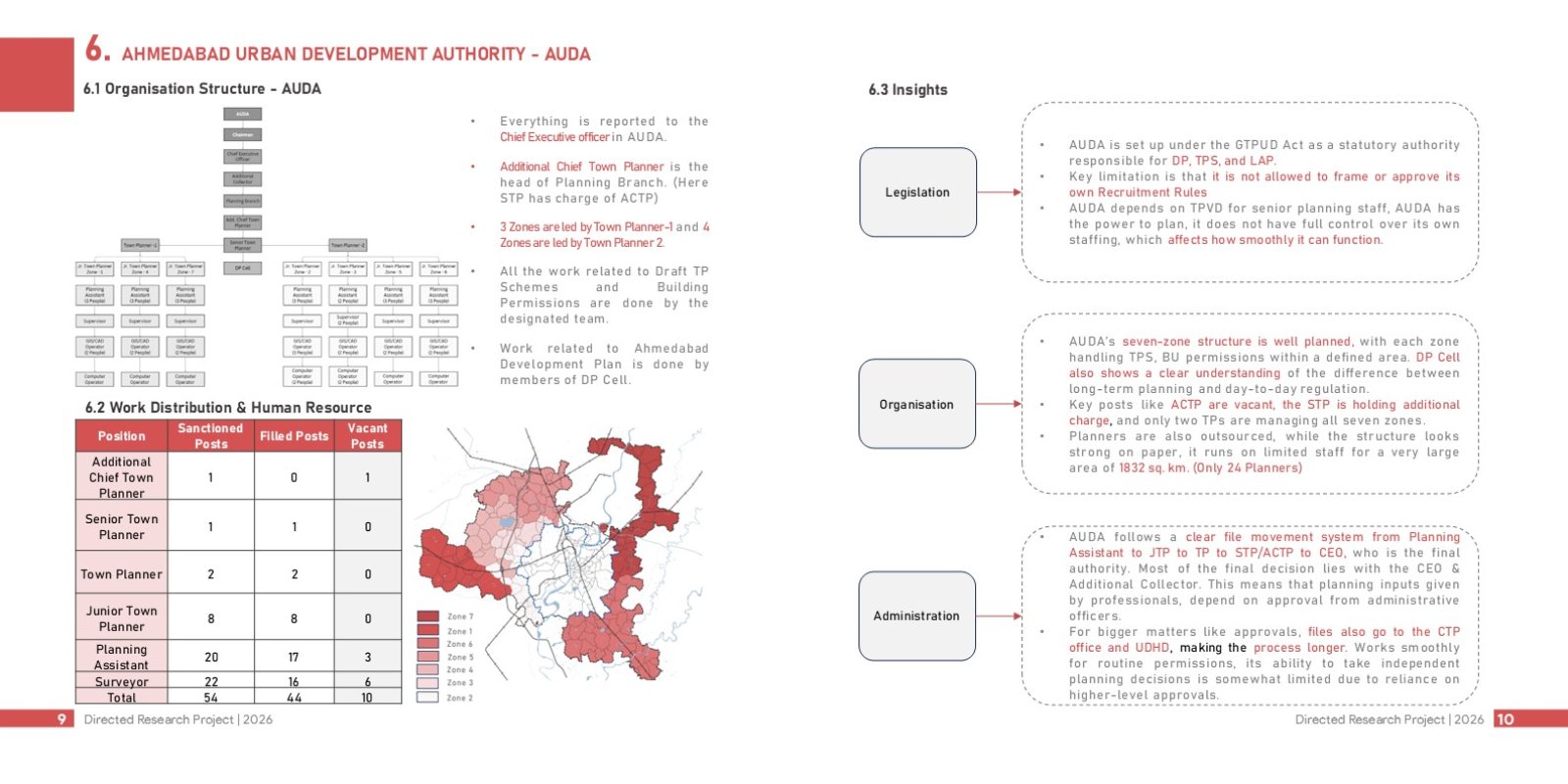
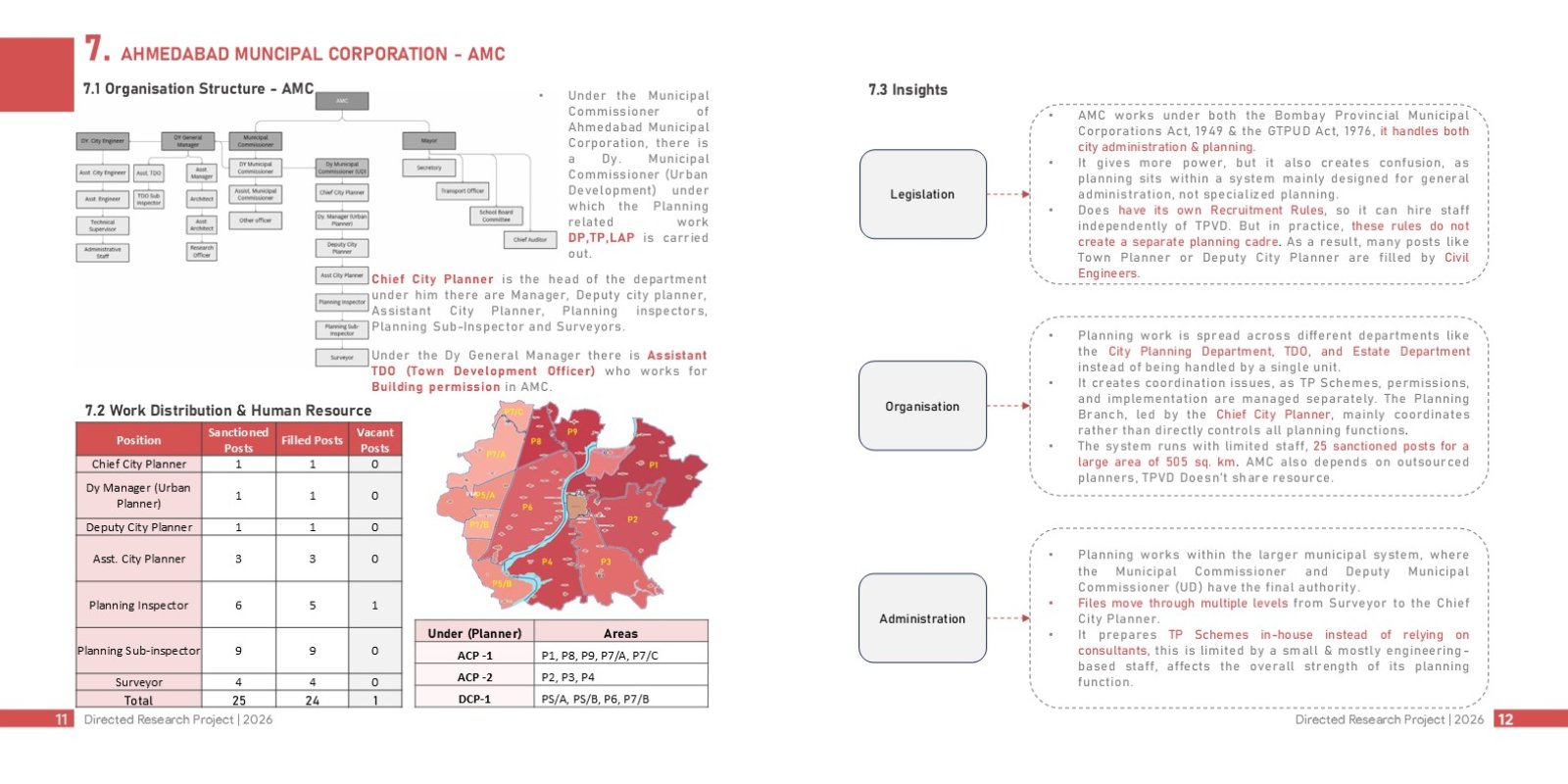
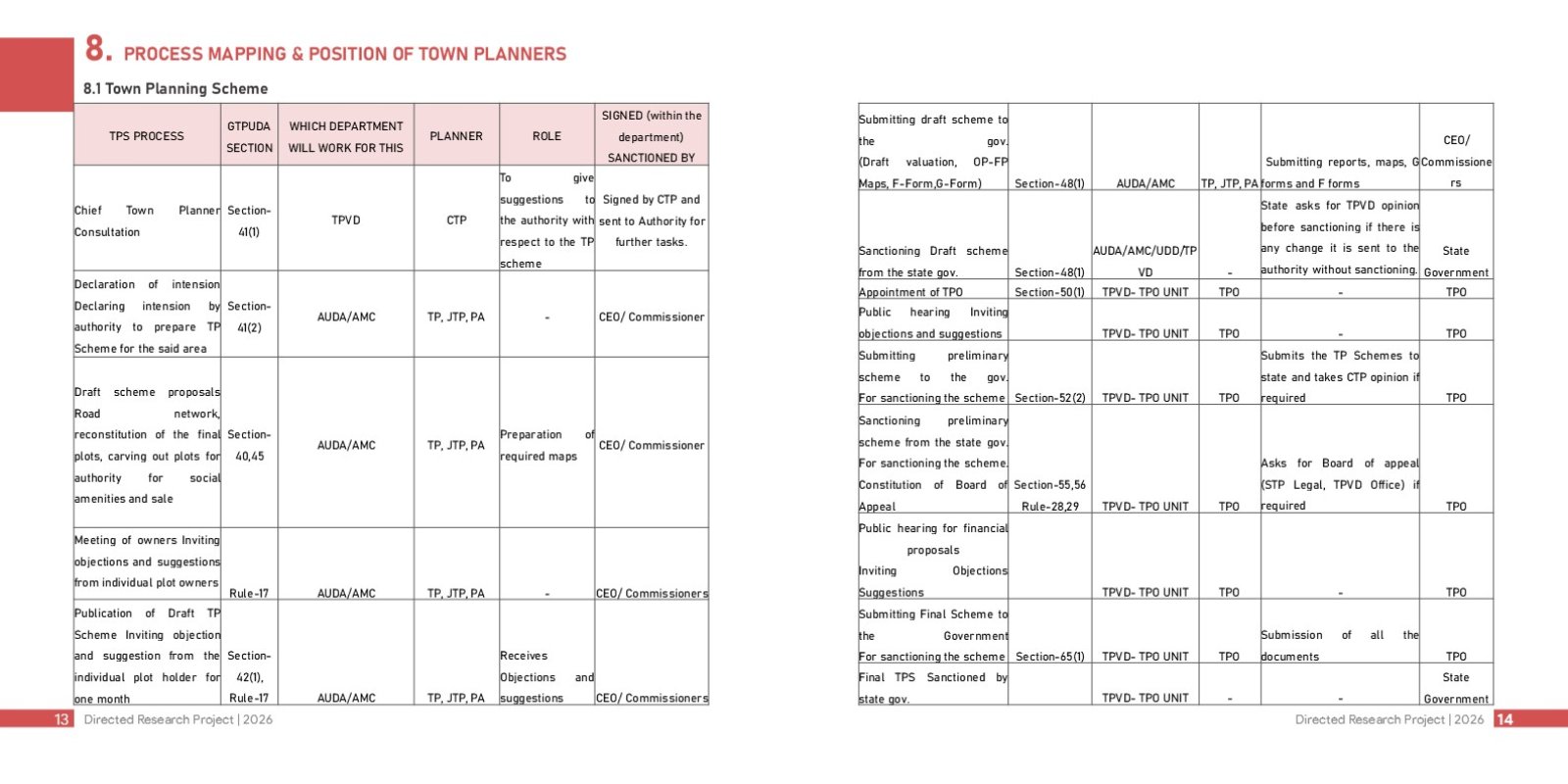
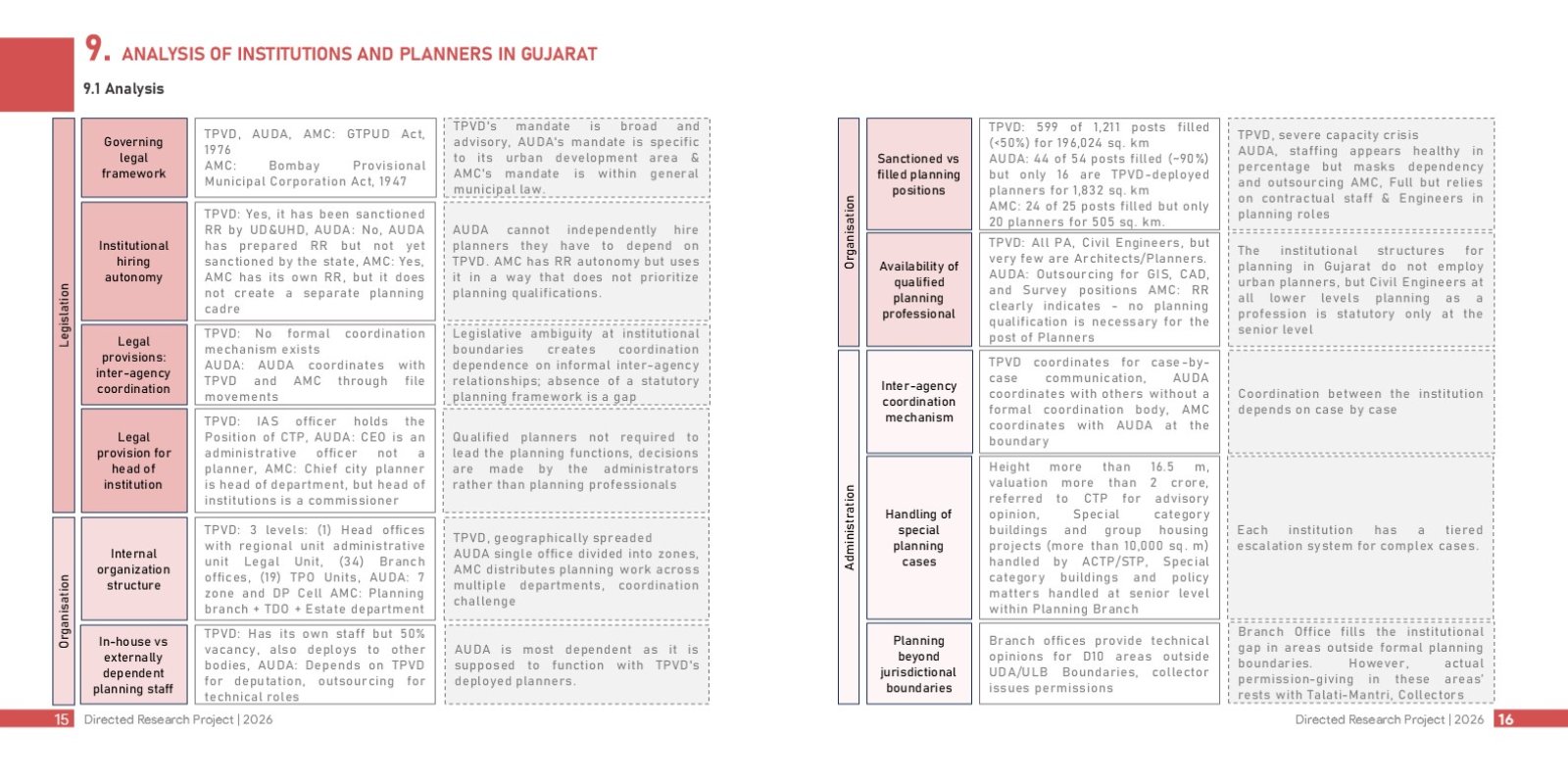
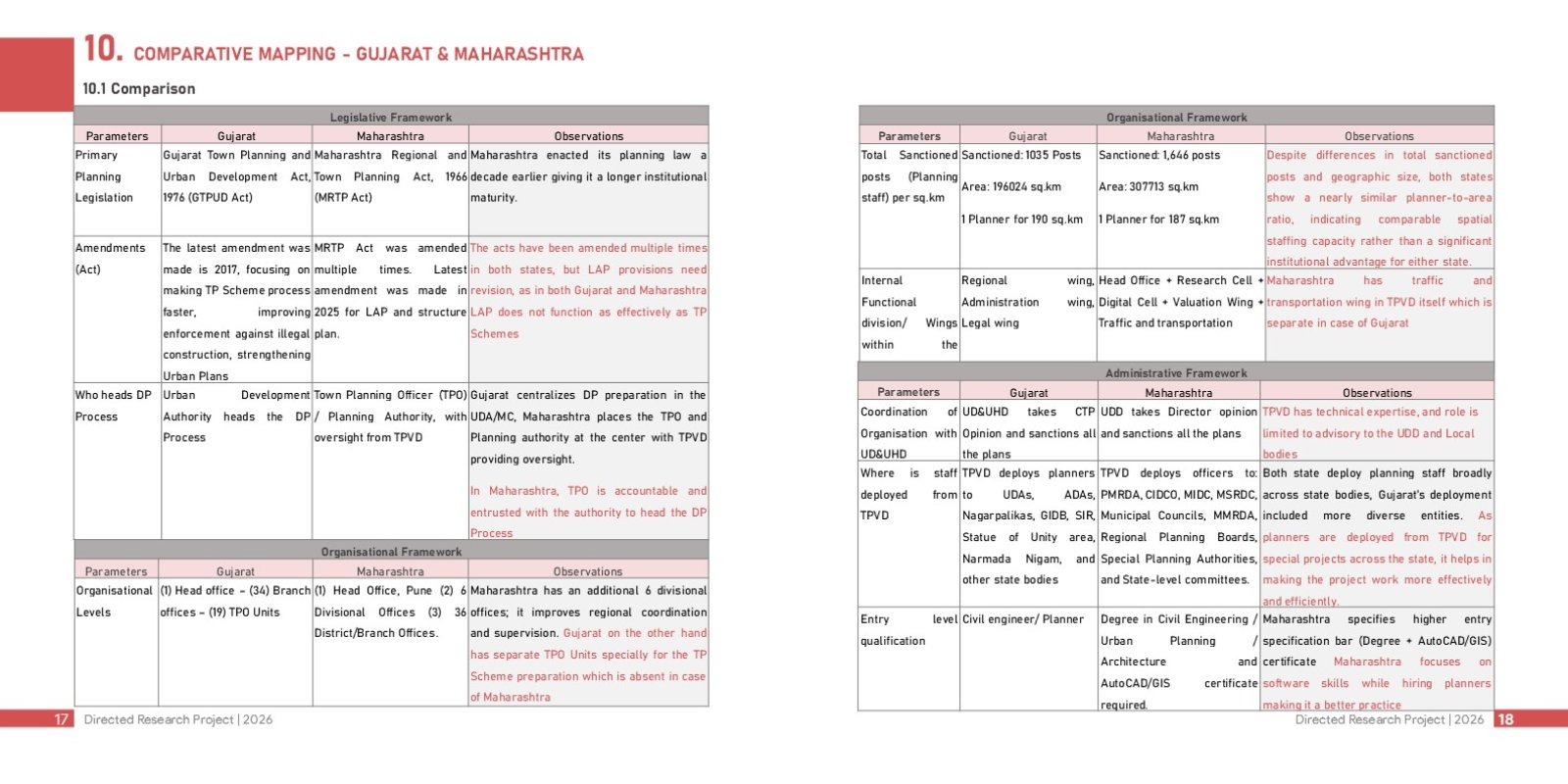
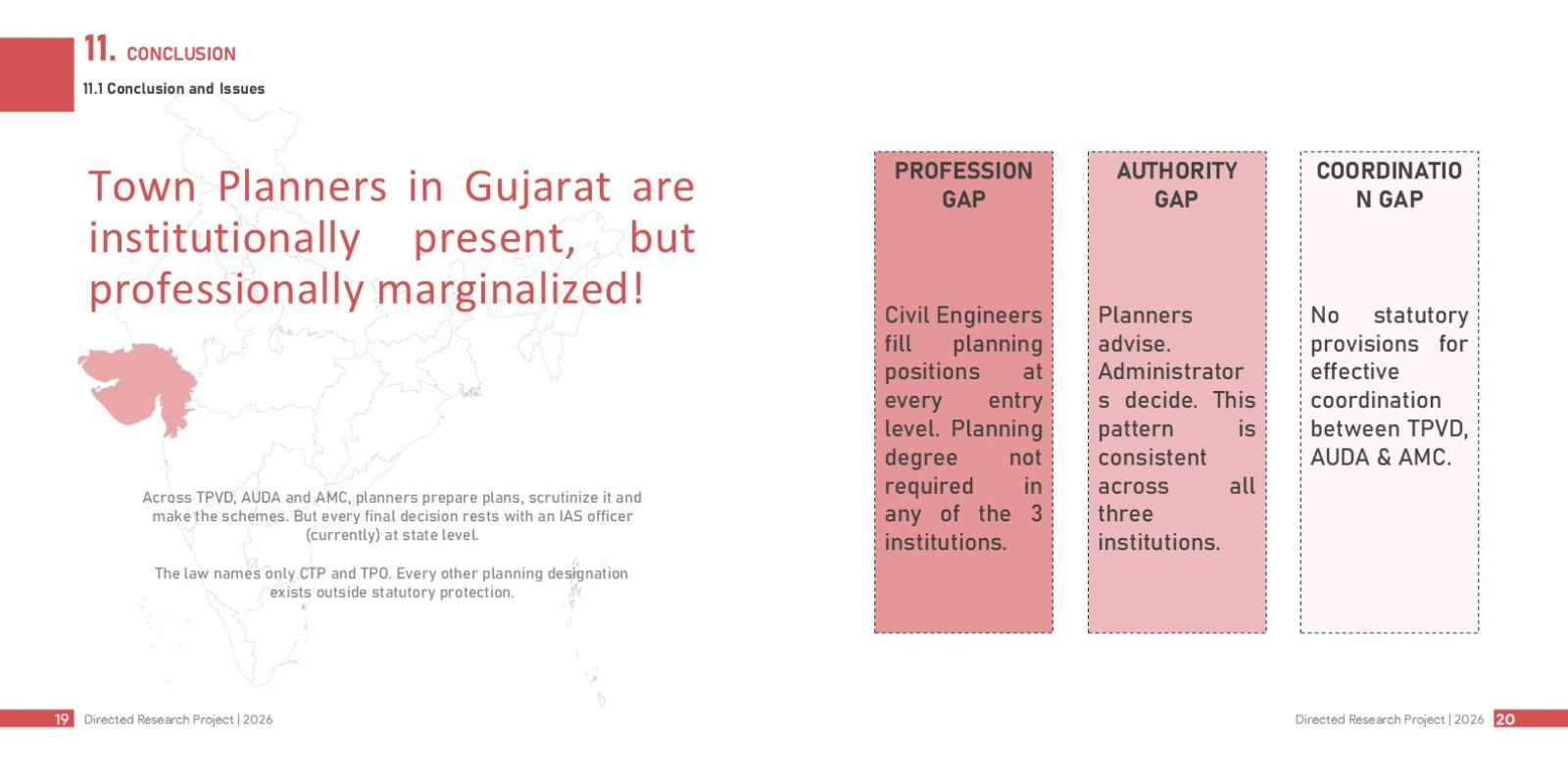
Urban planning outcomes are shaped not just by plans and policies, but by the institutions within which planners operate. This Directed Research Project examines how institutional arrangements define the role, authority, and professional agency of town planners in Gujarat. The study comparatively maps three key planning institutions, the Town Planning and Valuation Department (TPVD), the Ahmedabad Urban Development Authority (AUDA), and the Ahmedabad Municipal Corporation (AMC) through three analytical dimensions: Legislative, Organisational, and Administrative. Drawing on the GTPUD Act 1976, GDCR, RTI disclosures, and primary data from field visits and stakeholder consultations, the study maps the formal roles, hierarchical positions, recruitment conditions, and functional responsibilities of planners across all three institutions. The findings reveal a consistent gap between legislative intent and administrative reality, planners play a central technical role, but decision-making authority rests with administrative officers across all three institutions. TPVD operates at less than 50% staff capacity; AUDA depends on TPVD deputation due to unsanctioned Recruitment Rules; and AMC lacks a separate planning cadre, with Civil Engineers occupying positions designated for town planners. The study additionally develops a comparative framework between Gujarat and Maharashtra's state planning departments, enabling a cross-state understanding of how planners are institutionally positioned.