Simran Deo

UP4051

PUP24376

Order in Informality: Challenges in Formalization of Informal Markets in Ahmedabad.
When planning formalizes Ahmedabad's informal markets, who gains and who bears the cost? This research maps the vending ecosystem at Thaltej, Law Garden, and Ravivari through an evaluative matrix tracking four parameters: Spatial Configuration, Livelihood, Governance, and Infrastructure, across three stakeholders: Vendor, User, and Authority. This research reveals how the burden of formalization falls unevenly and where formal planning disrupts the very ecosystem it seeks to organize.
View Additional Work

Report Content

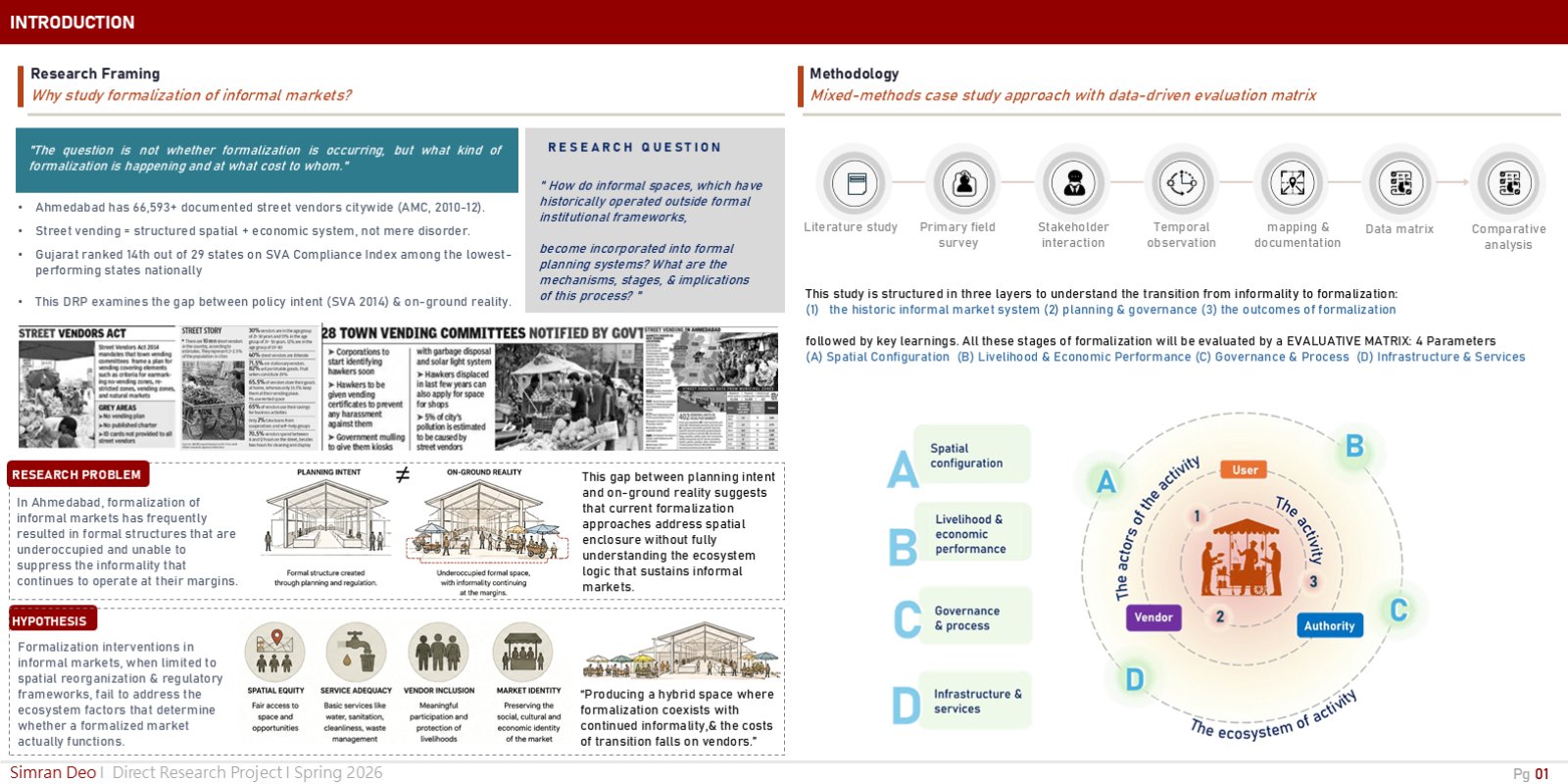
Why Ahmedabad's Informal Markets Fail After Formalization: The Research Framework

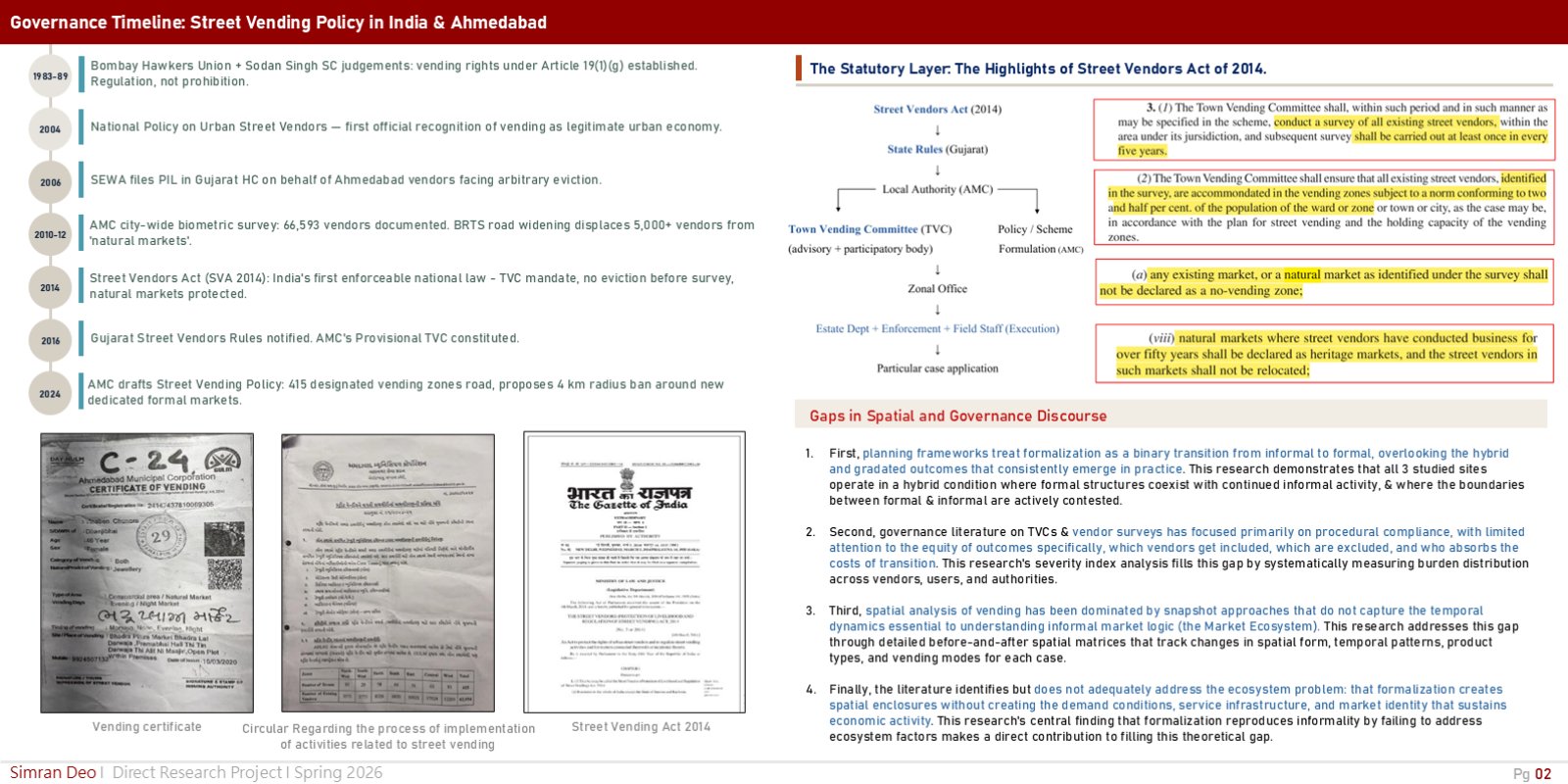
Street Vending Policy in India: From Constitutional Rights to Implementation Gaps

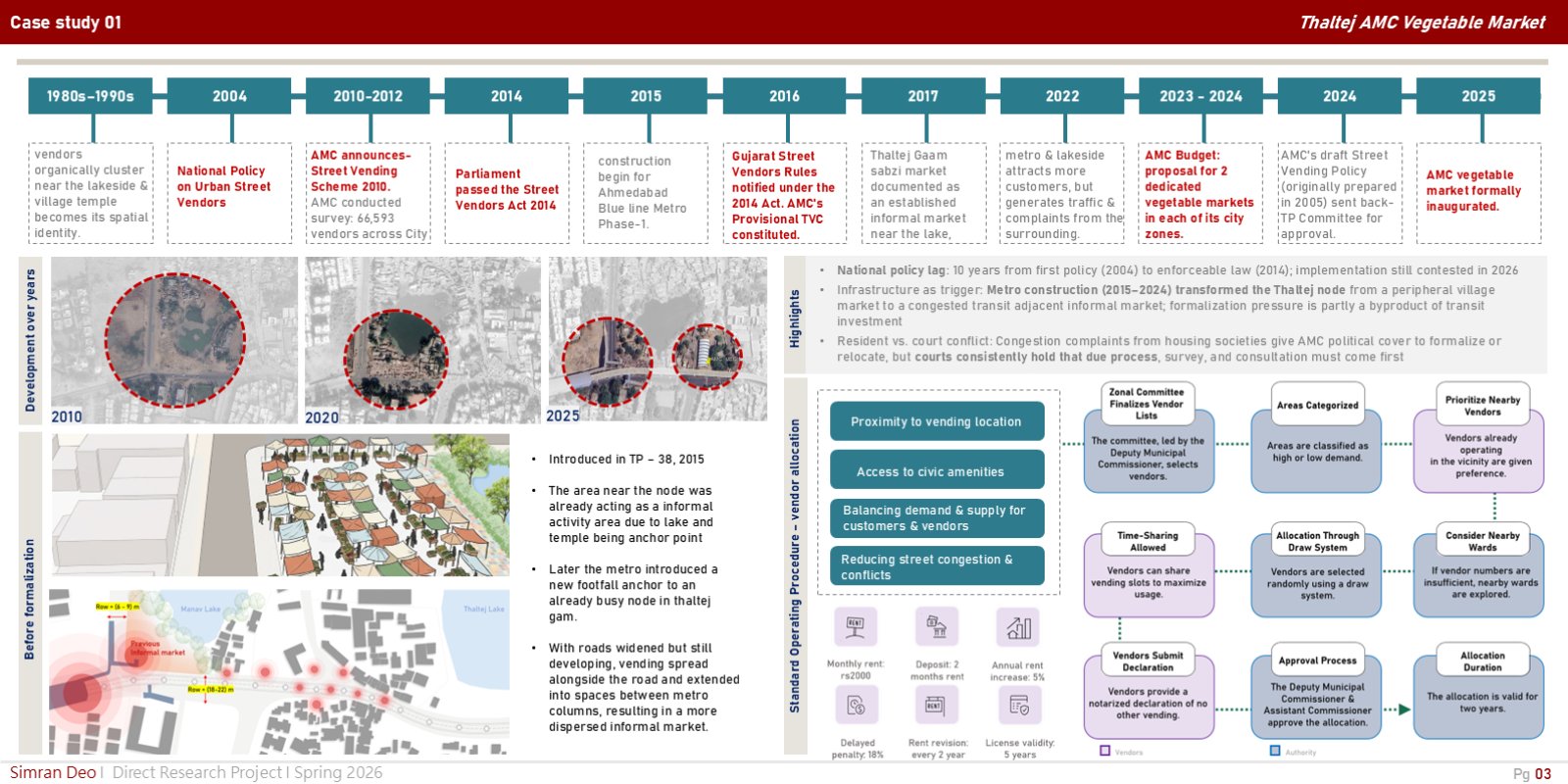
Thaltej AMC Vegetable Market: How a Lakeside Village Market Became a Formal Municipal Structure

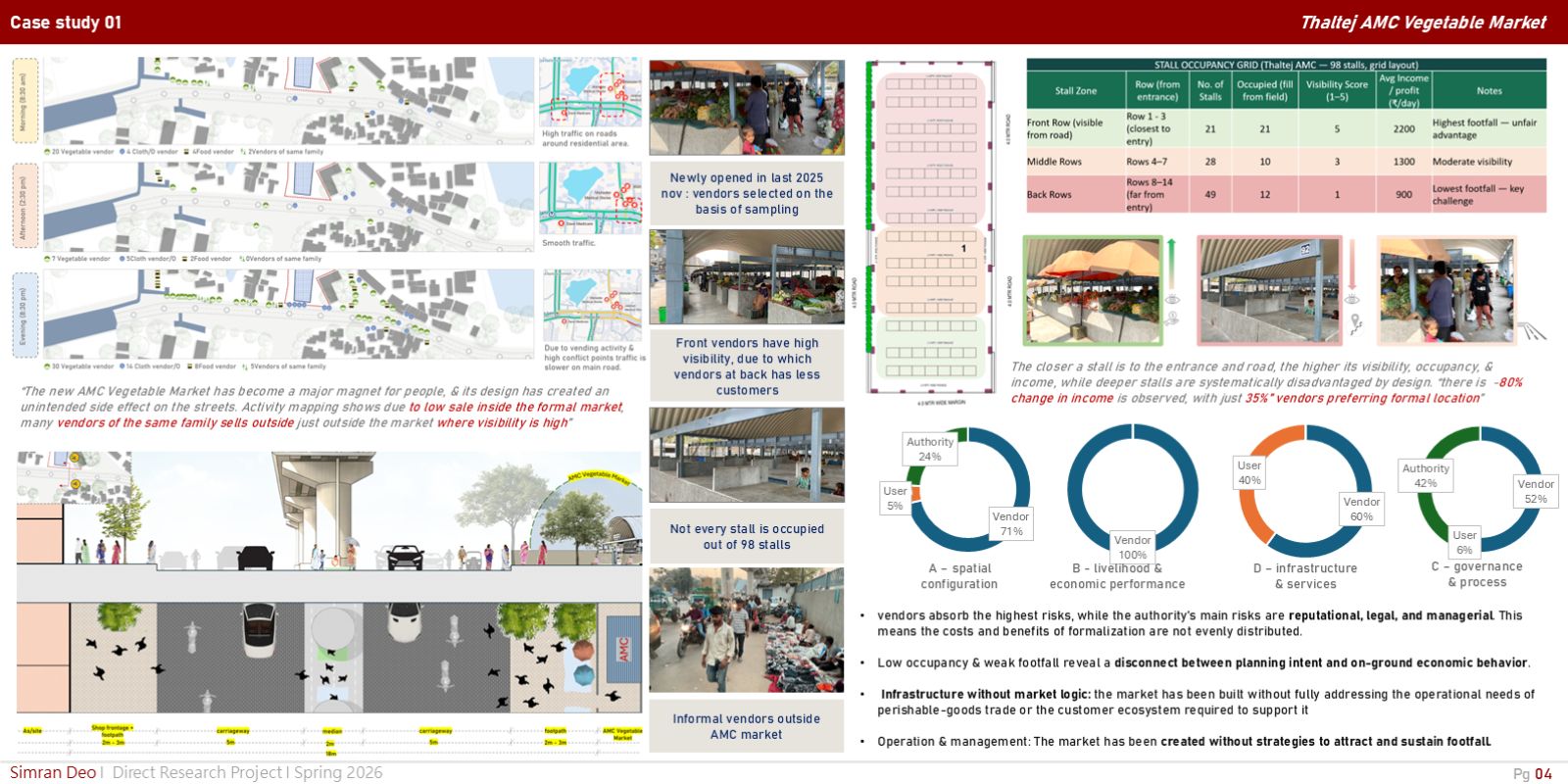
Thaltej AMC Market: Spatial Design Failures and Unequal Economic Outcomes Across Stall Rows

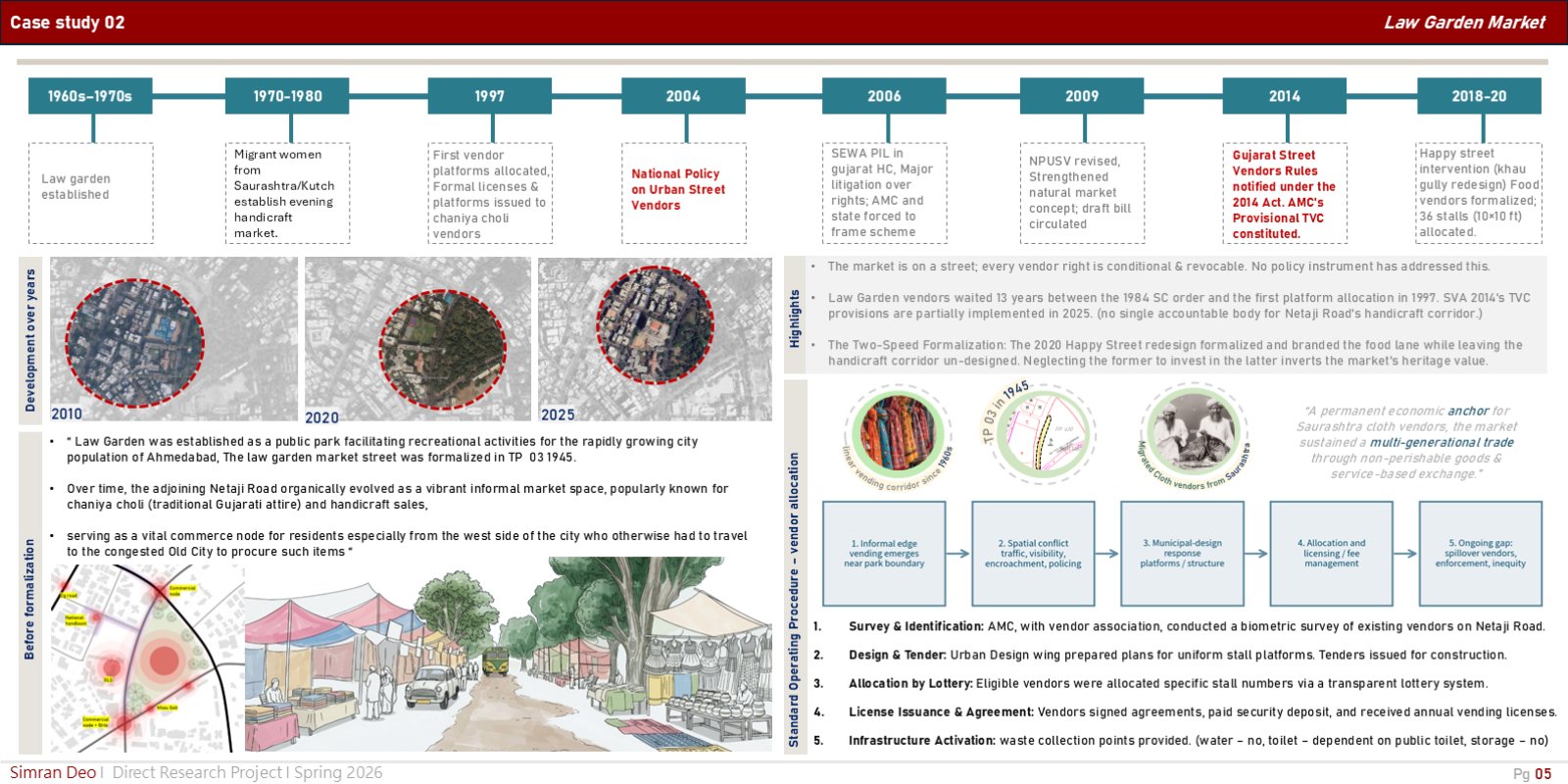
Law Garden Market: History, Growth and the Path to Formalization

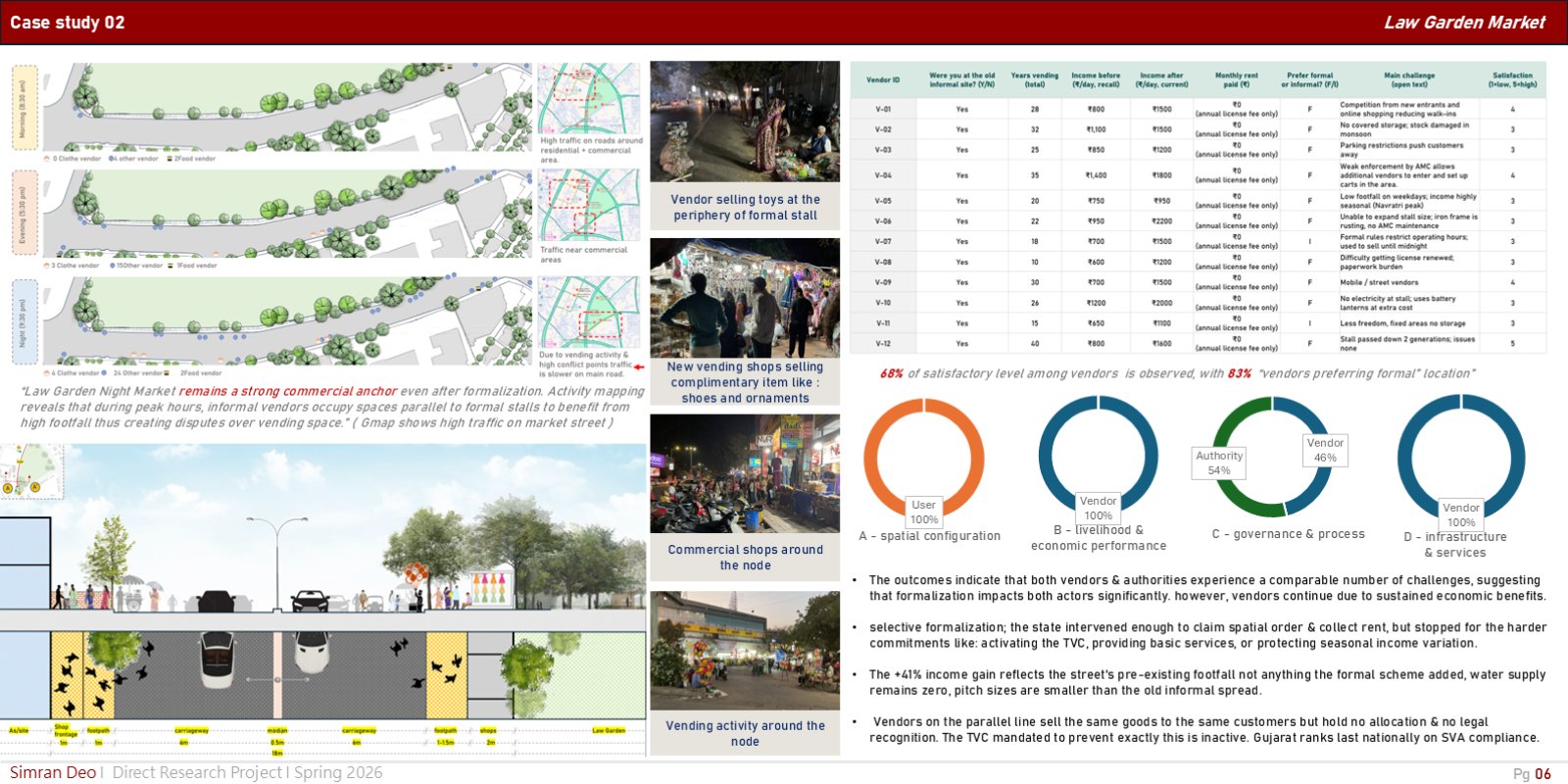
Law Garden Market: Selective Formalization That Collected Rent but Skipped Basic Services

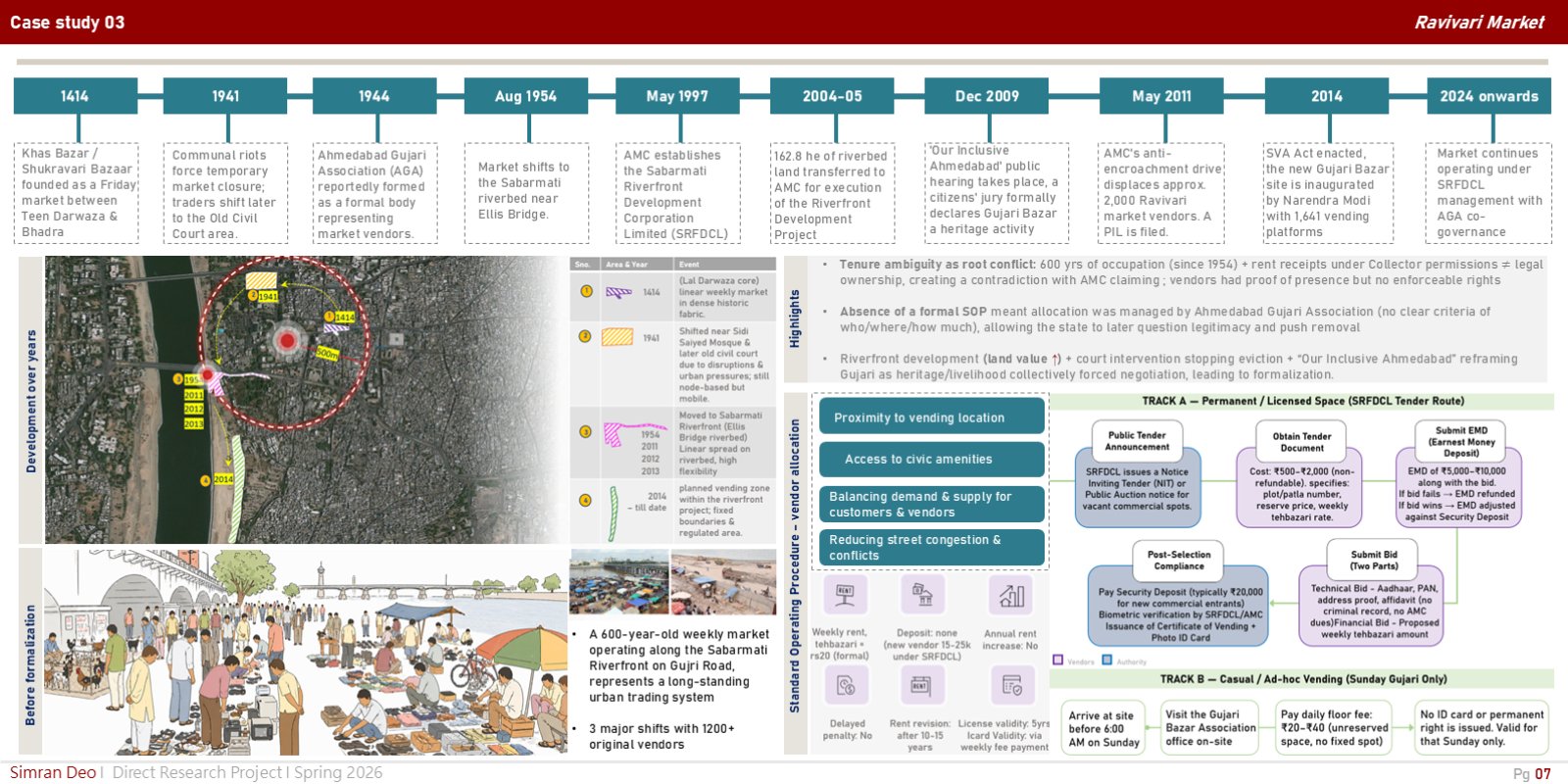
Ravivari Sunday Market: A 600-Year Weekly Trading System Across Three Relocations

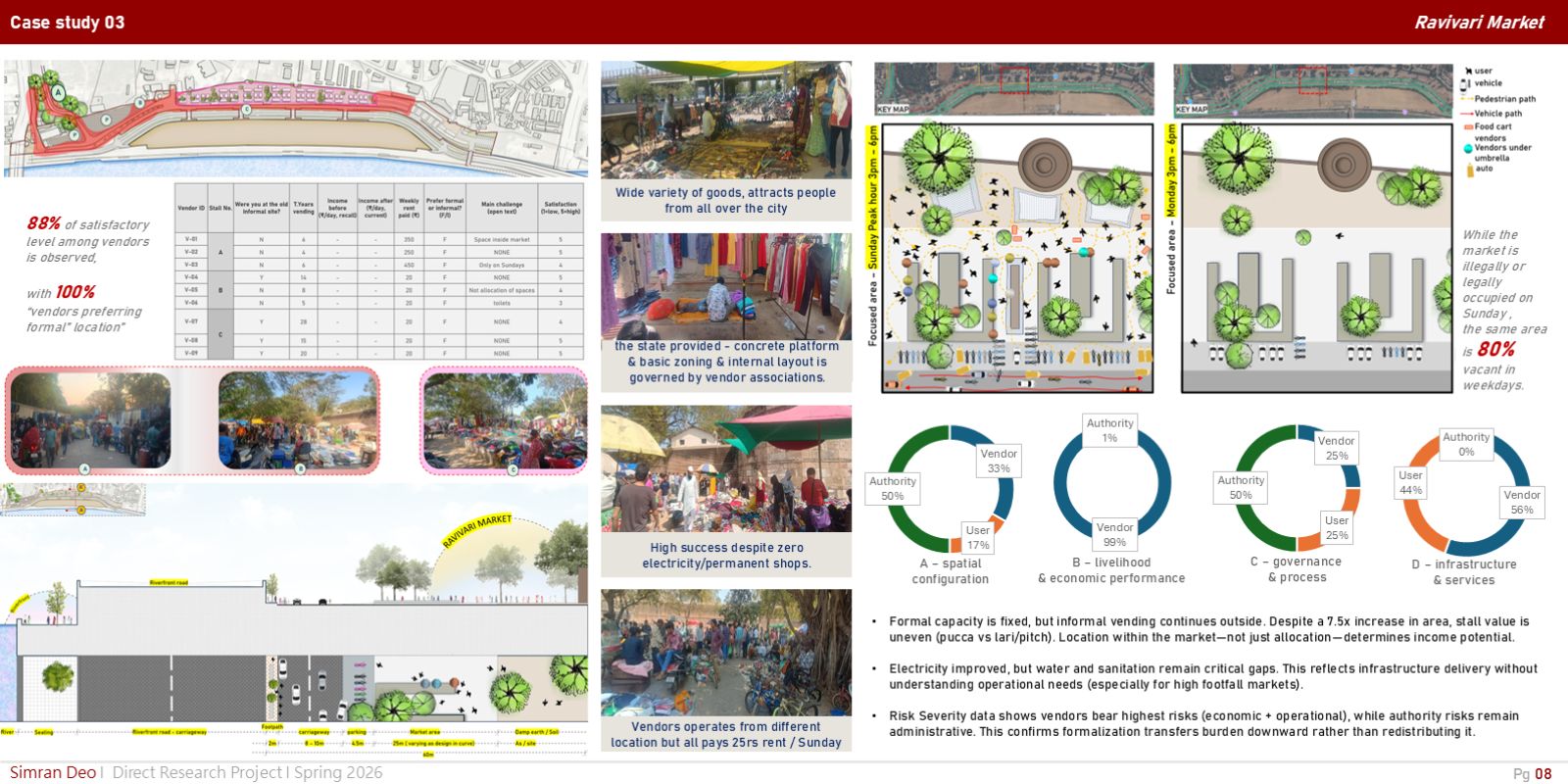
Ravivari Market: Vendor-Led Governance Delivering High Satisfaction Despite Minimal Infrastructure

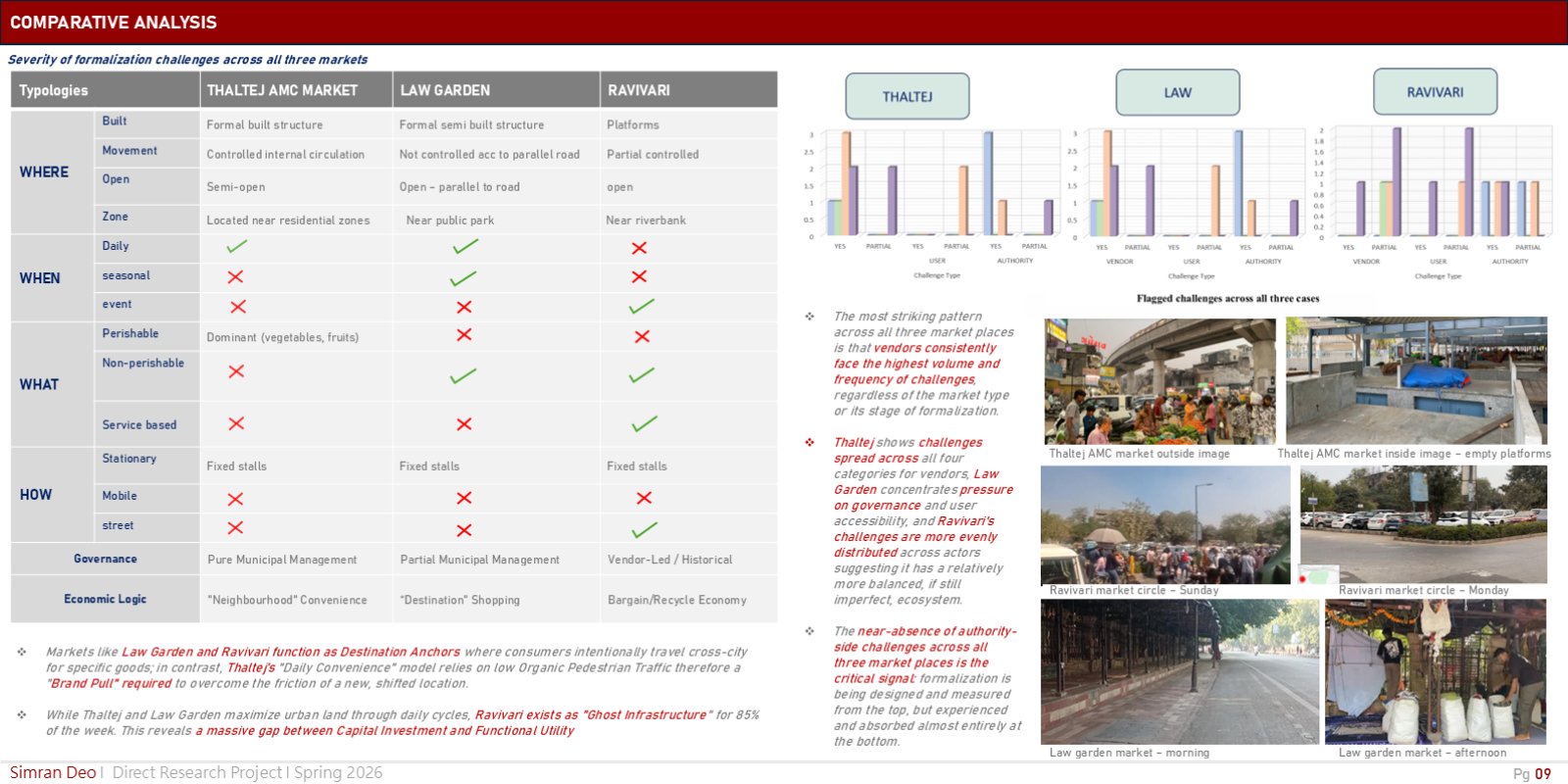
Comparing Three Markets: Formalization Consistently Shifts Risk and Cost onto Vendors

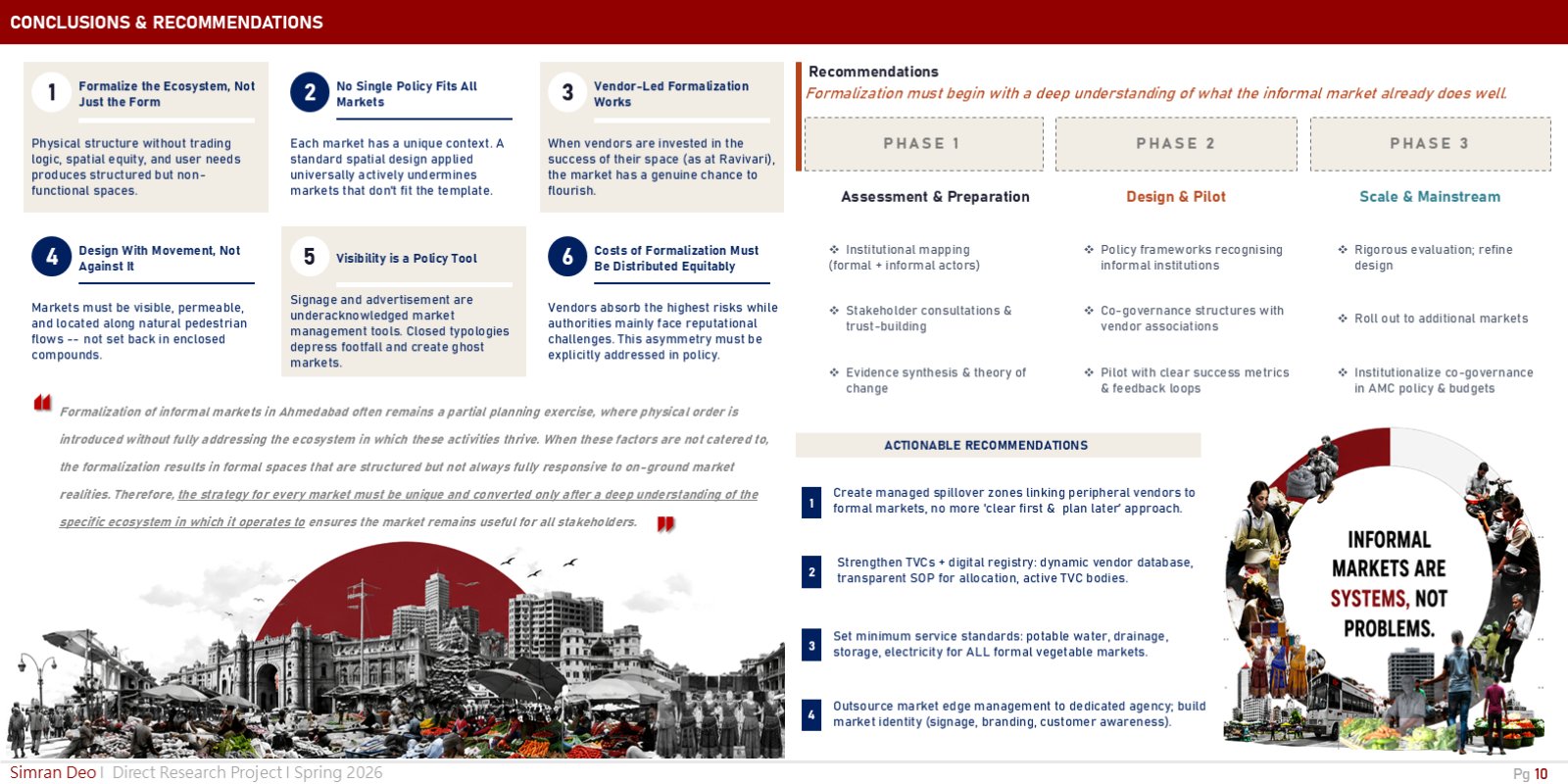
Recommendations: Formalize the Ecosystem, the Trading Logic and the Vendor - Not Just the Structure

Project Video