Your browser is out-of-date!
For a richer surfing experience on our website, please update your browser. Update my browser now!
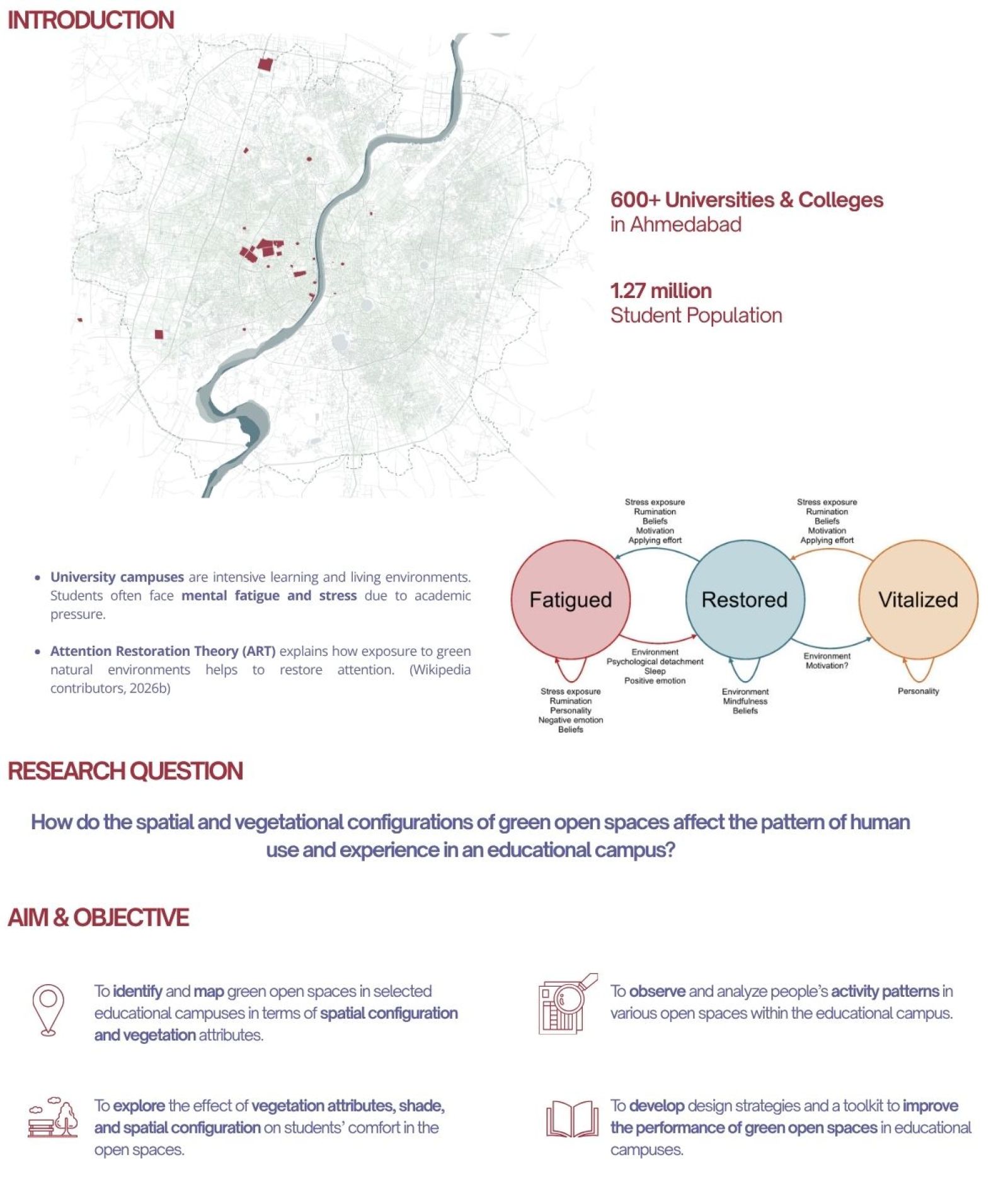
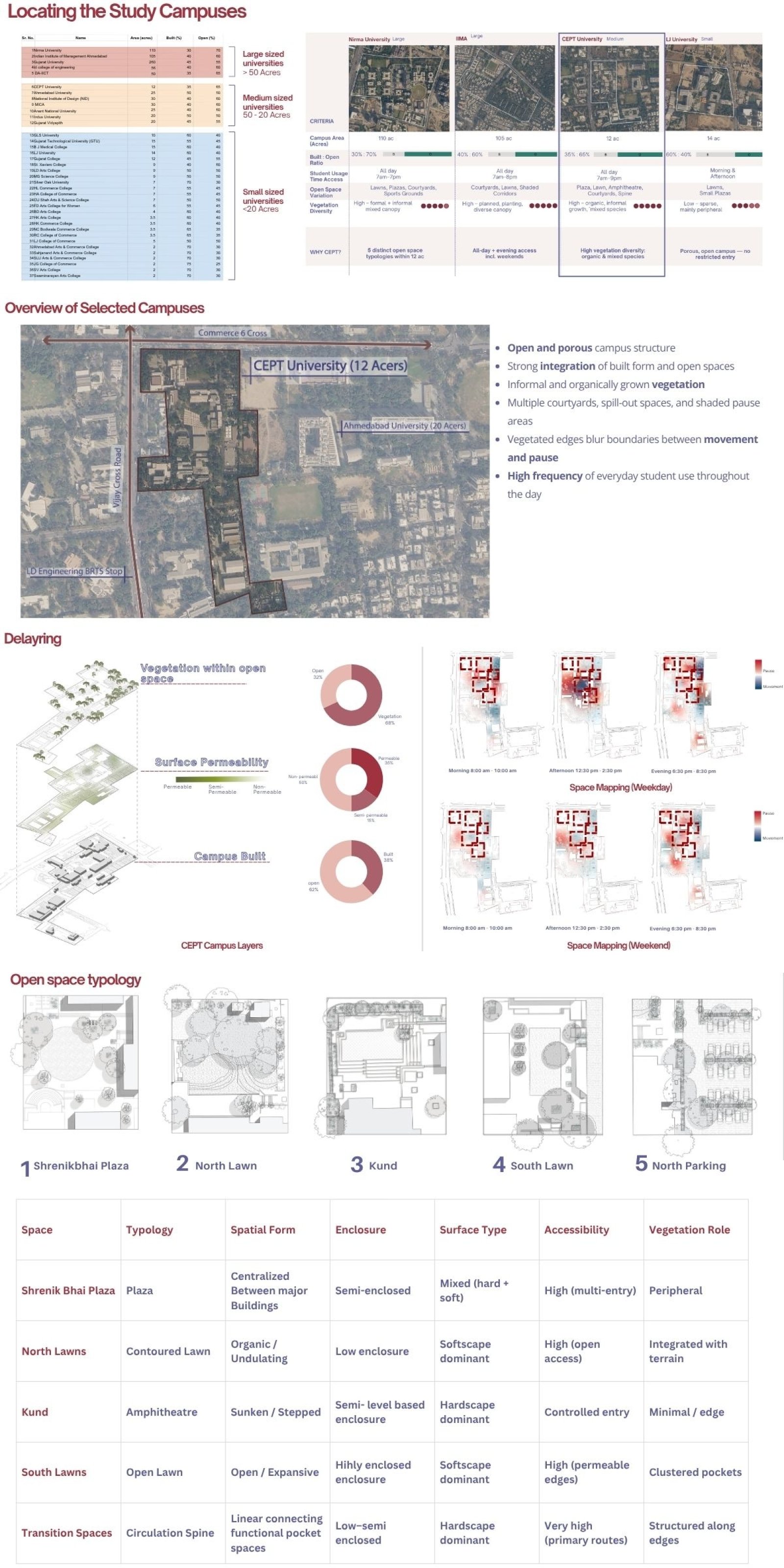
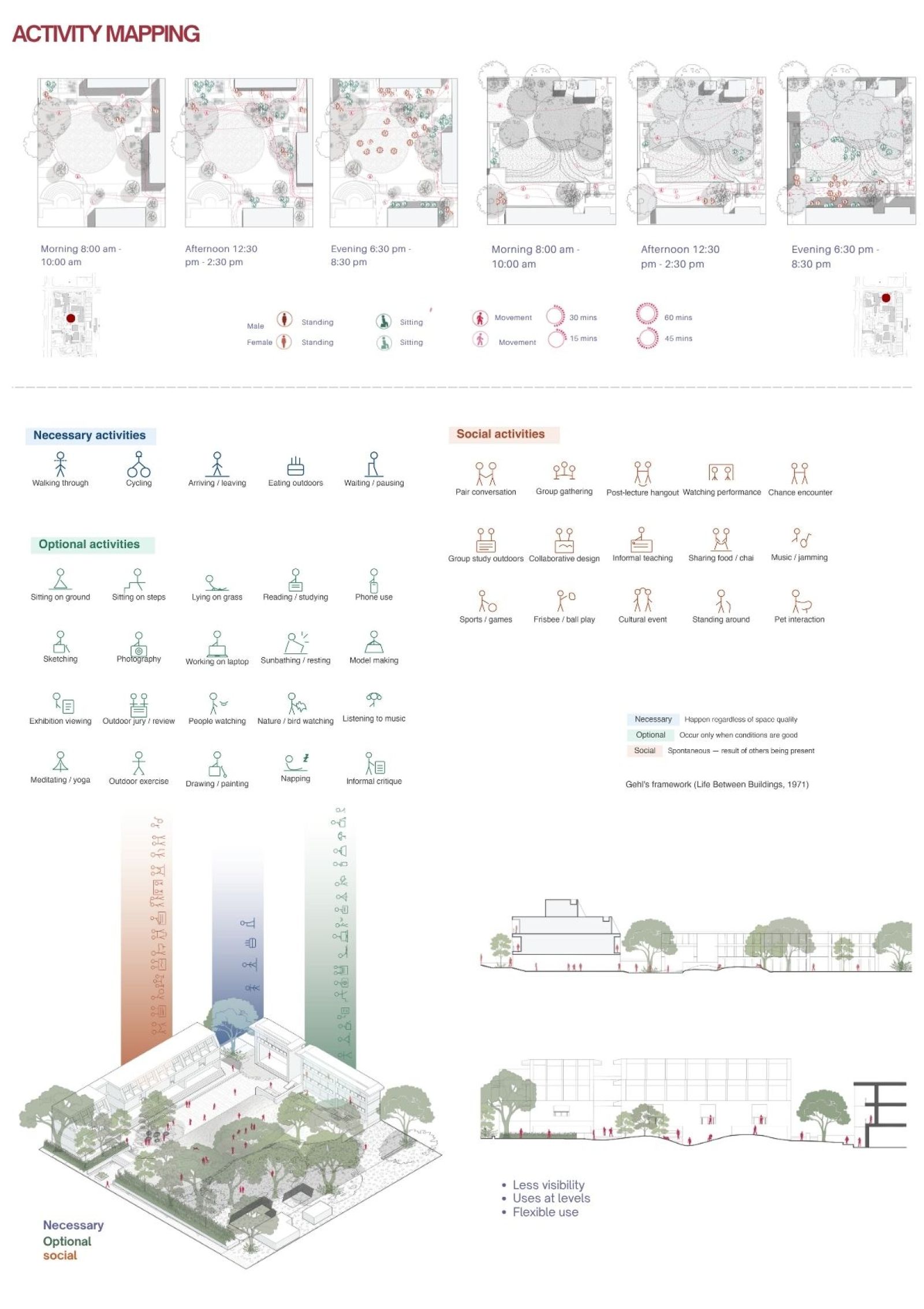
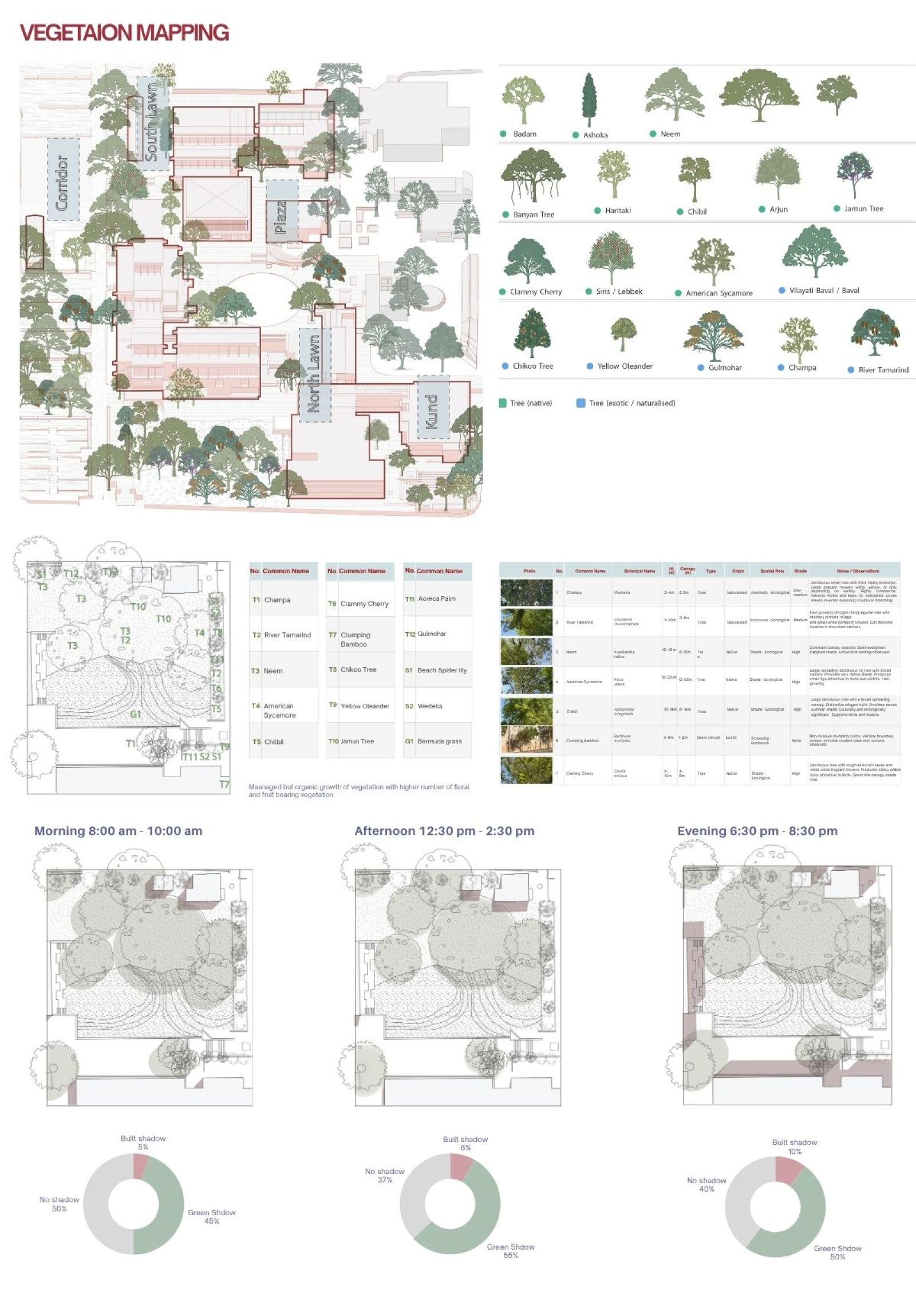
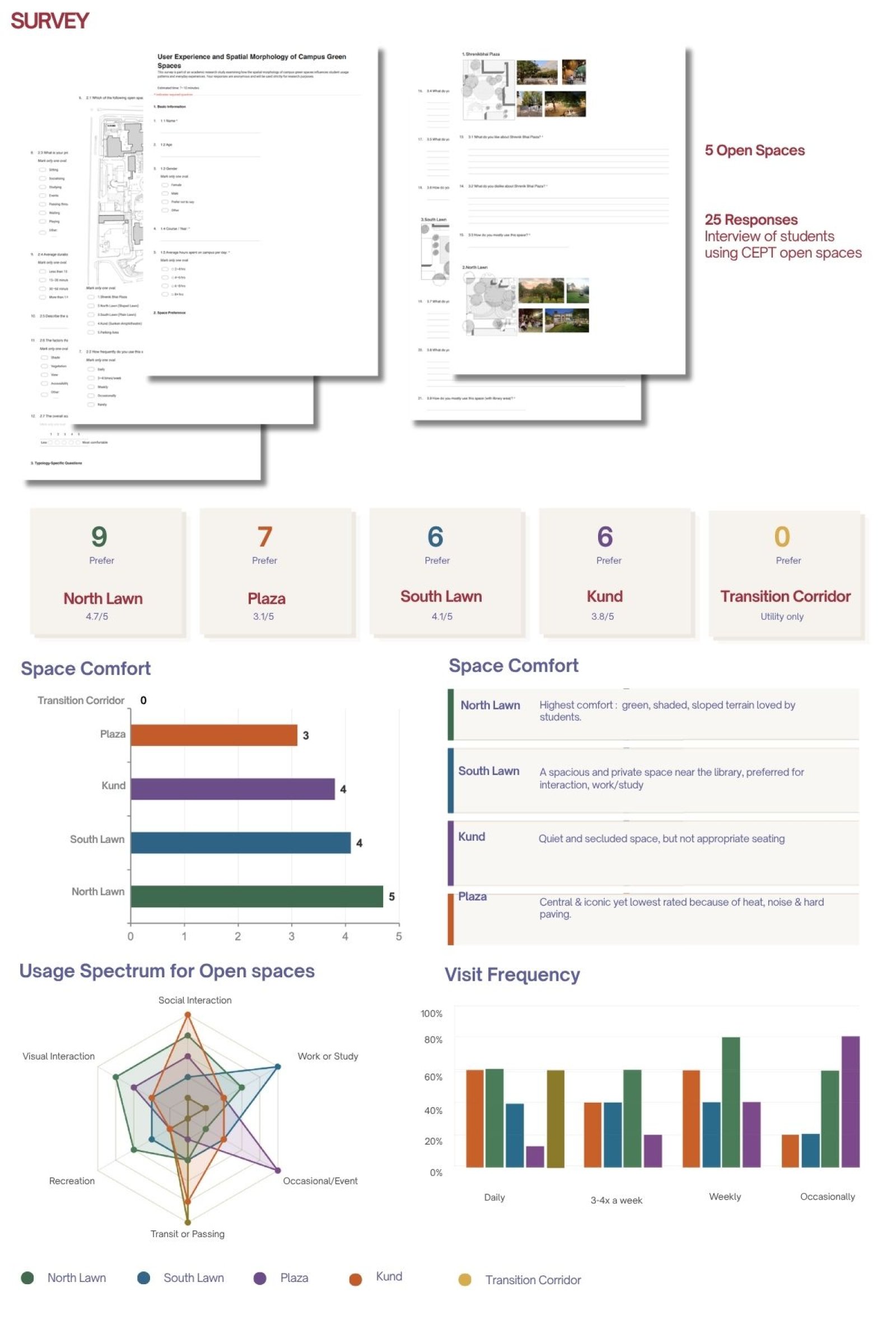
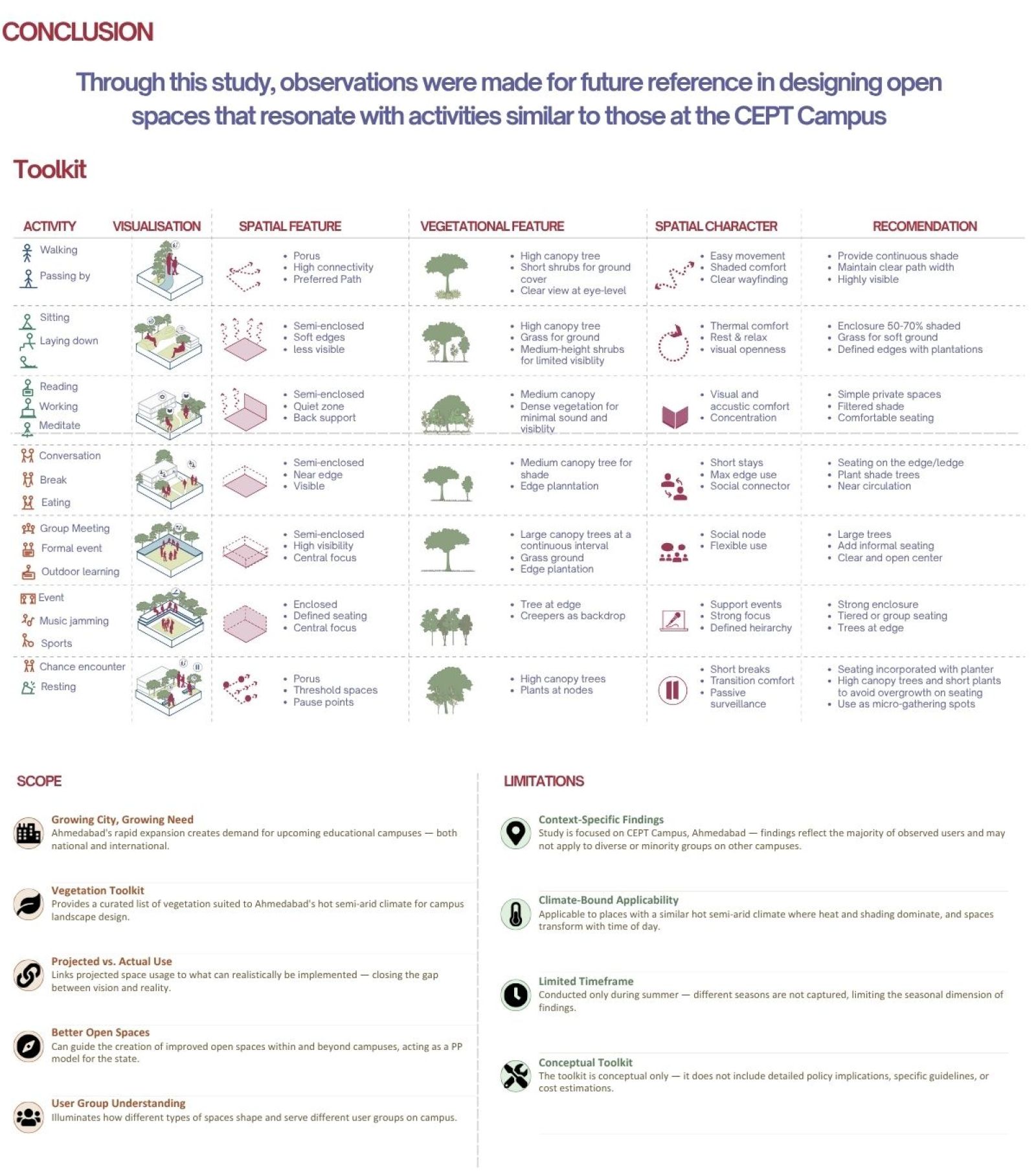
University campuses are high-stress environments where green open spaces offer critical opportunities for restoration and social engagement. This research investigates how the spatial configuration and vegetation characteristics of campus green spaces influence human usage patterns and experiences at CEPT University, Ahmedabad. The study examines five open spaces: the Plaza, North Lawn, South Lawn, Kund and Transition Corridor, using behavioural observation, spatial mapping, shadow analysis and student perception surveys. It identifies key relationships between shade, enclosure, vegetation and occupancy. Findings indicate that thermally comfortable, semi-enclosed, vegetated edges consistently draw the most dwell activity.he research concludes with a spatial design toolkit that links student activity types to vegetation and spatial recommendations for restorative campus landscapes.
View Additional Work