Your browser is out-of-date!
For a richer surfing experience on our website, please update your browser. Update my browser now!
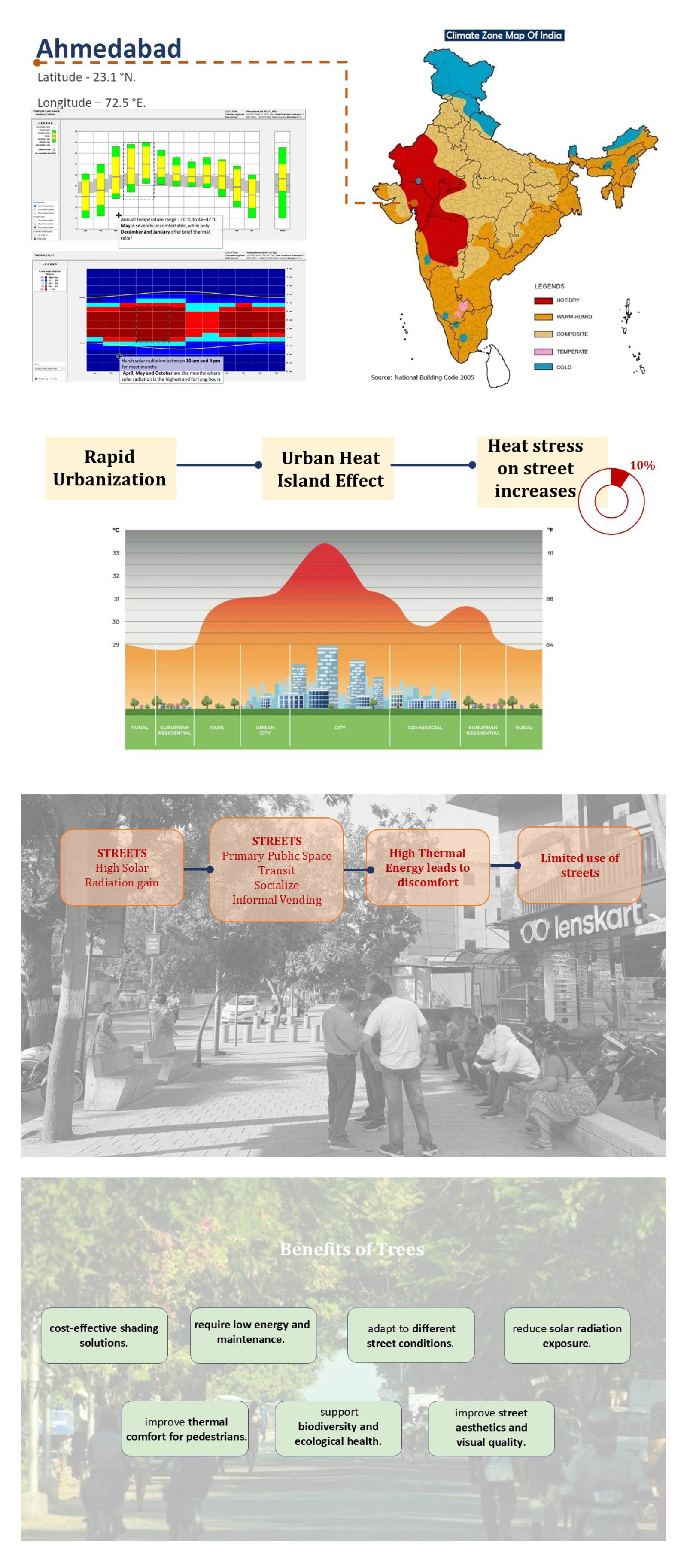
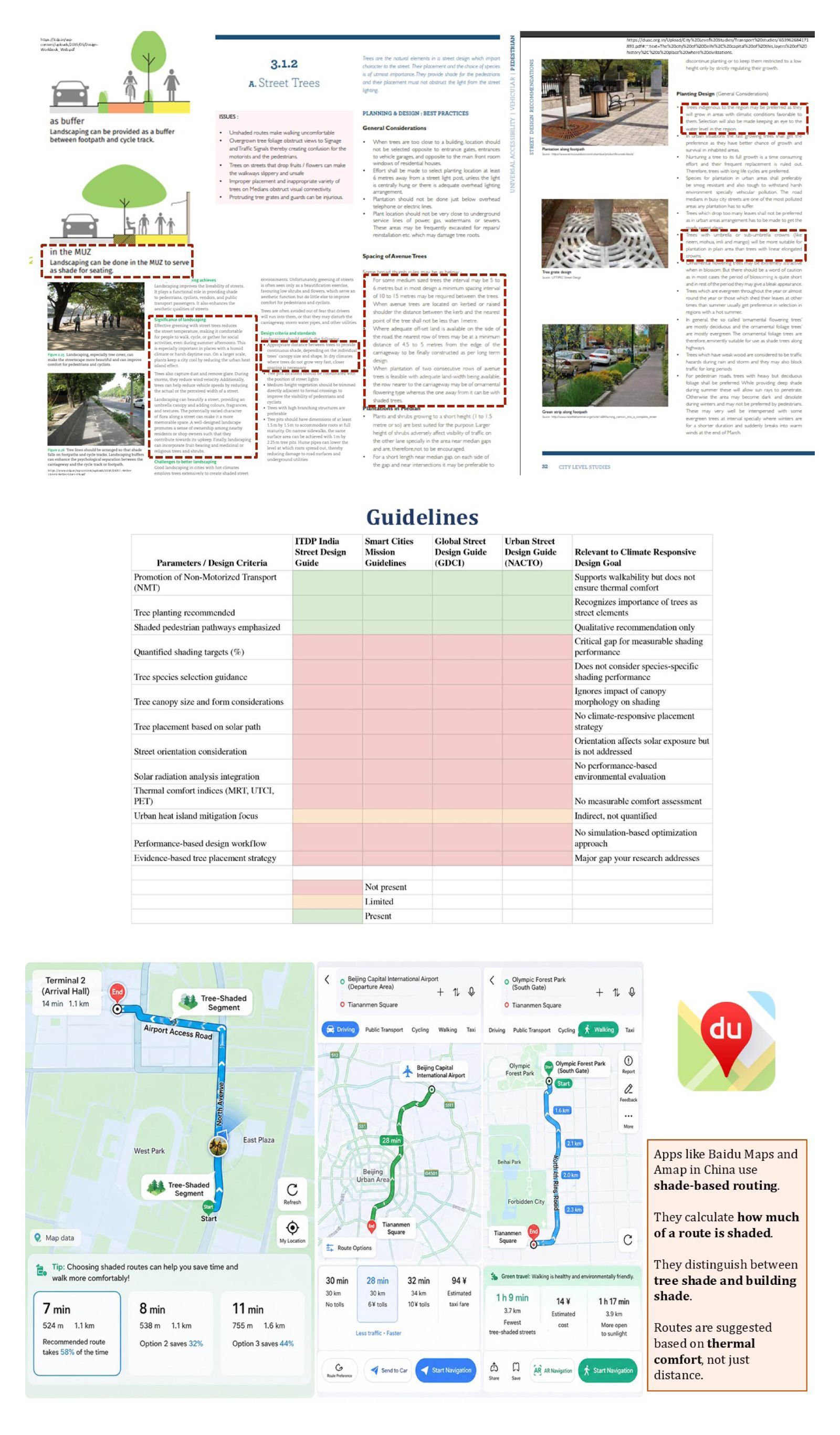
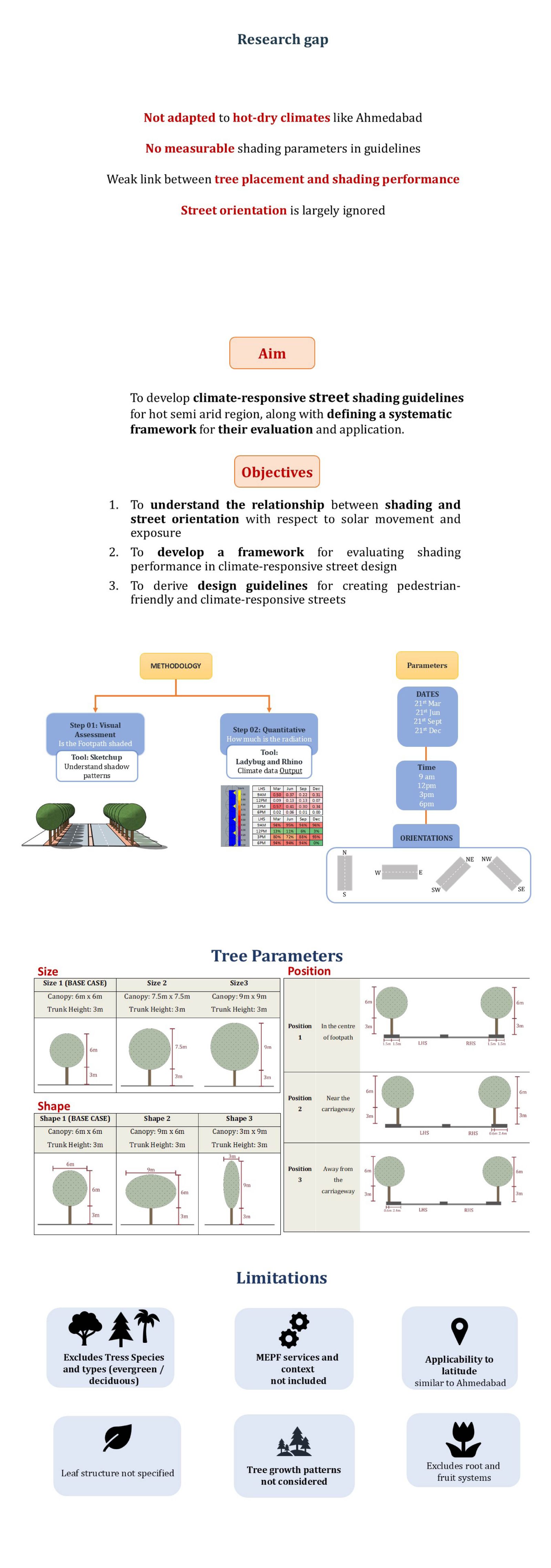
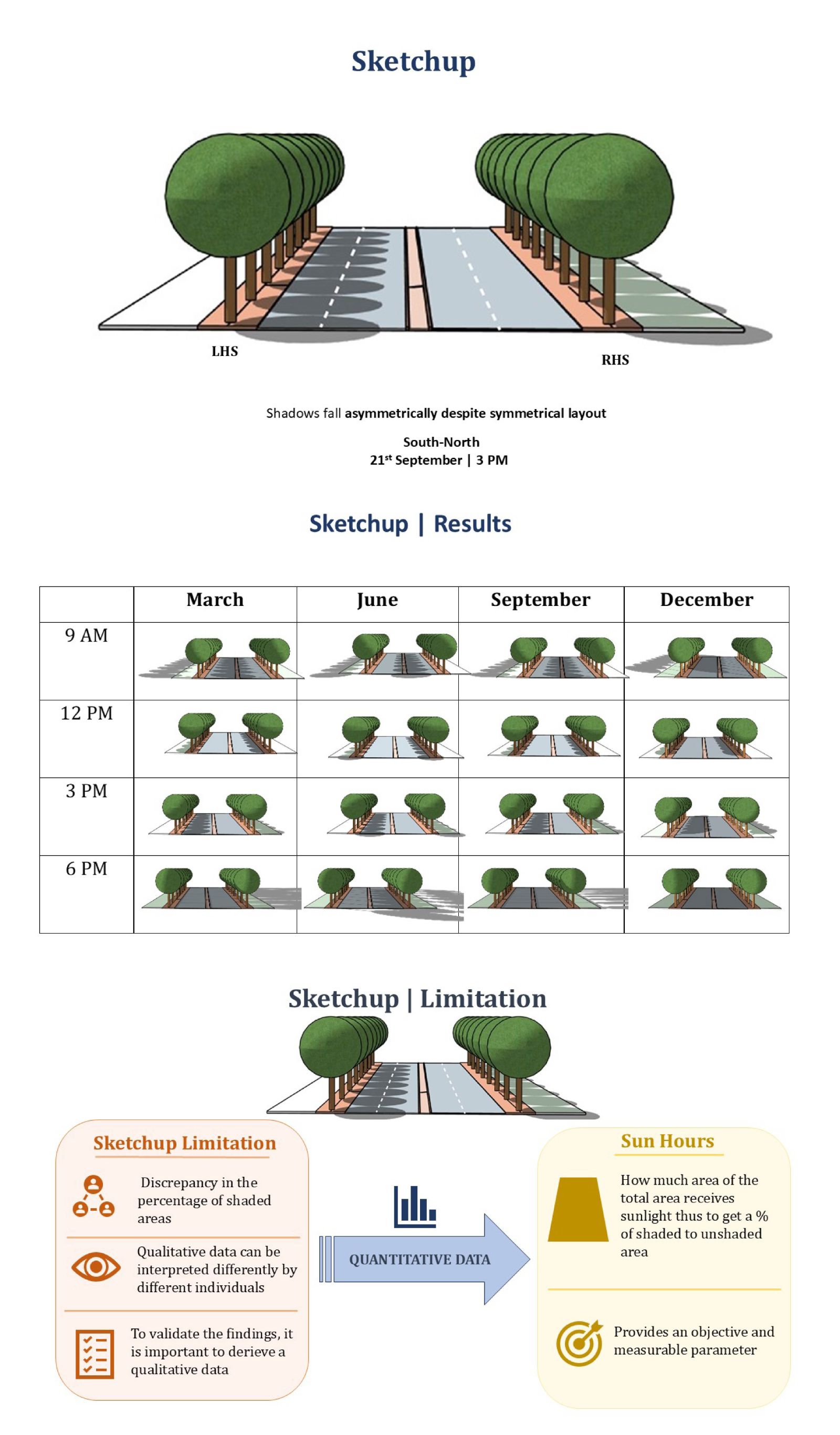
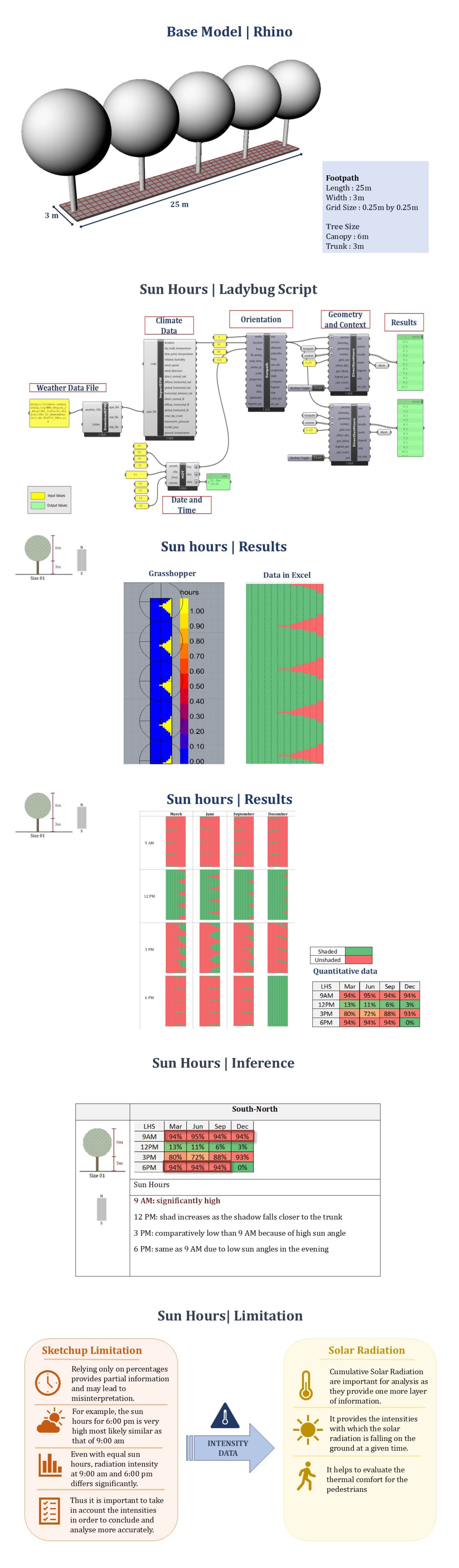
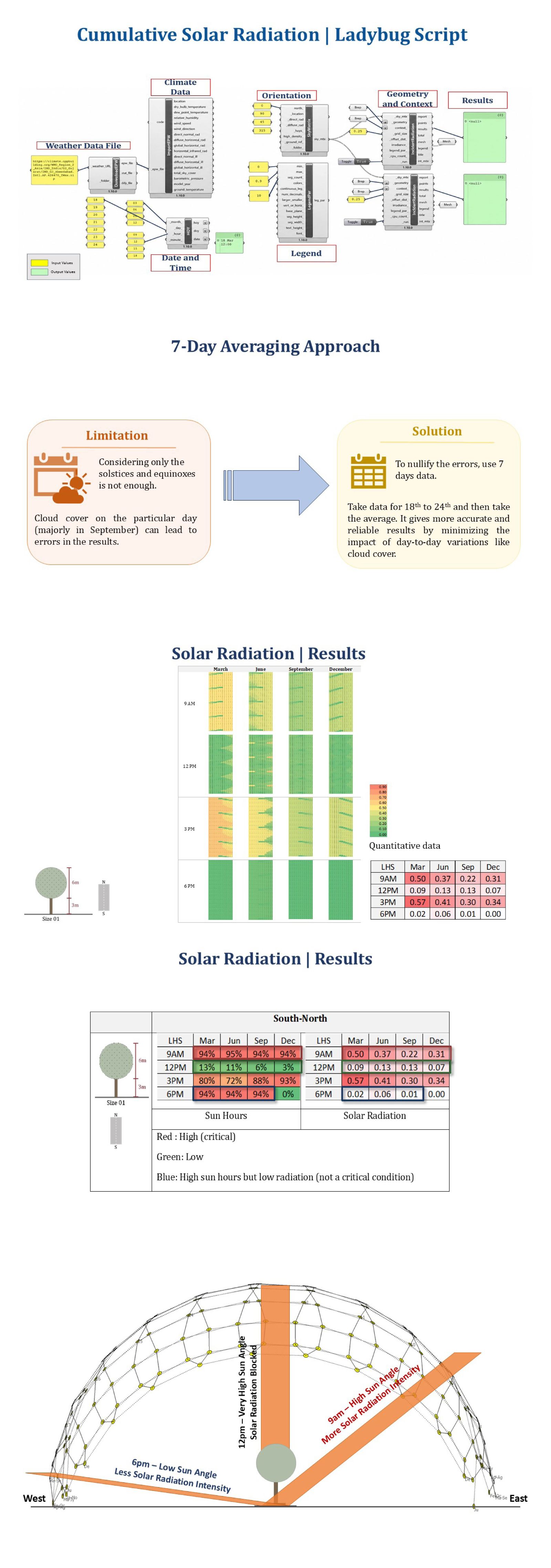
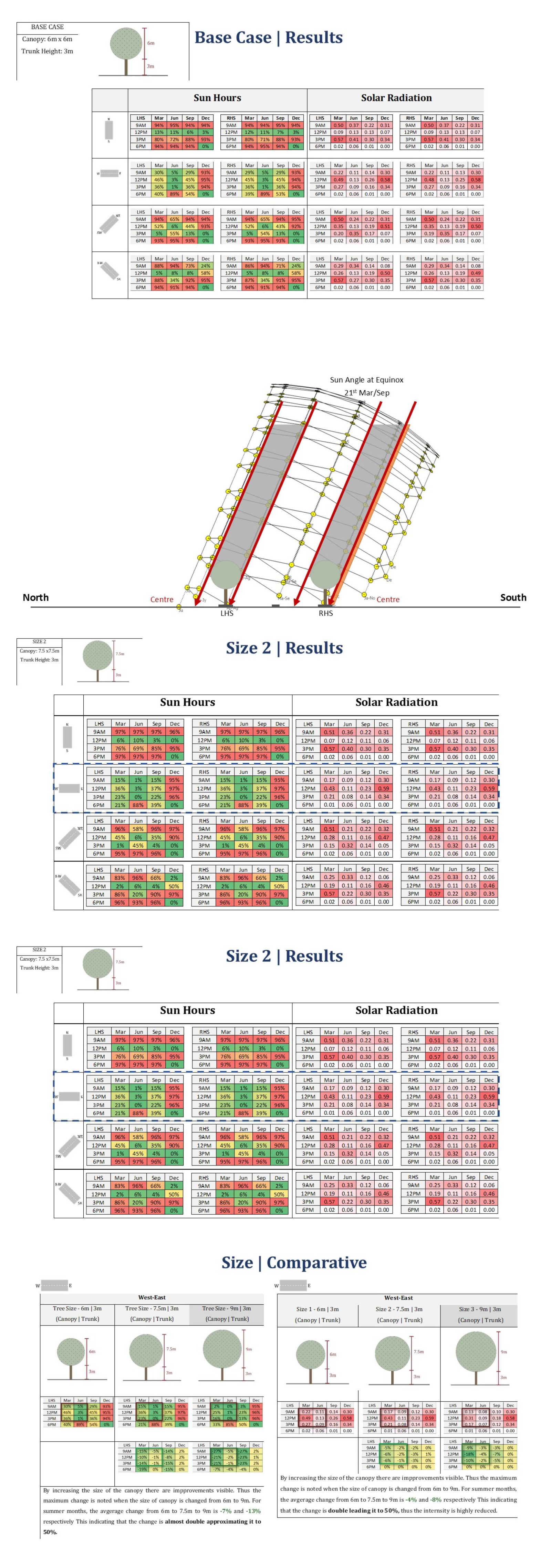
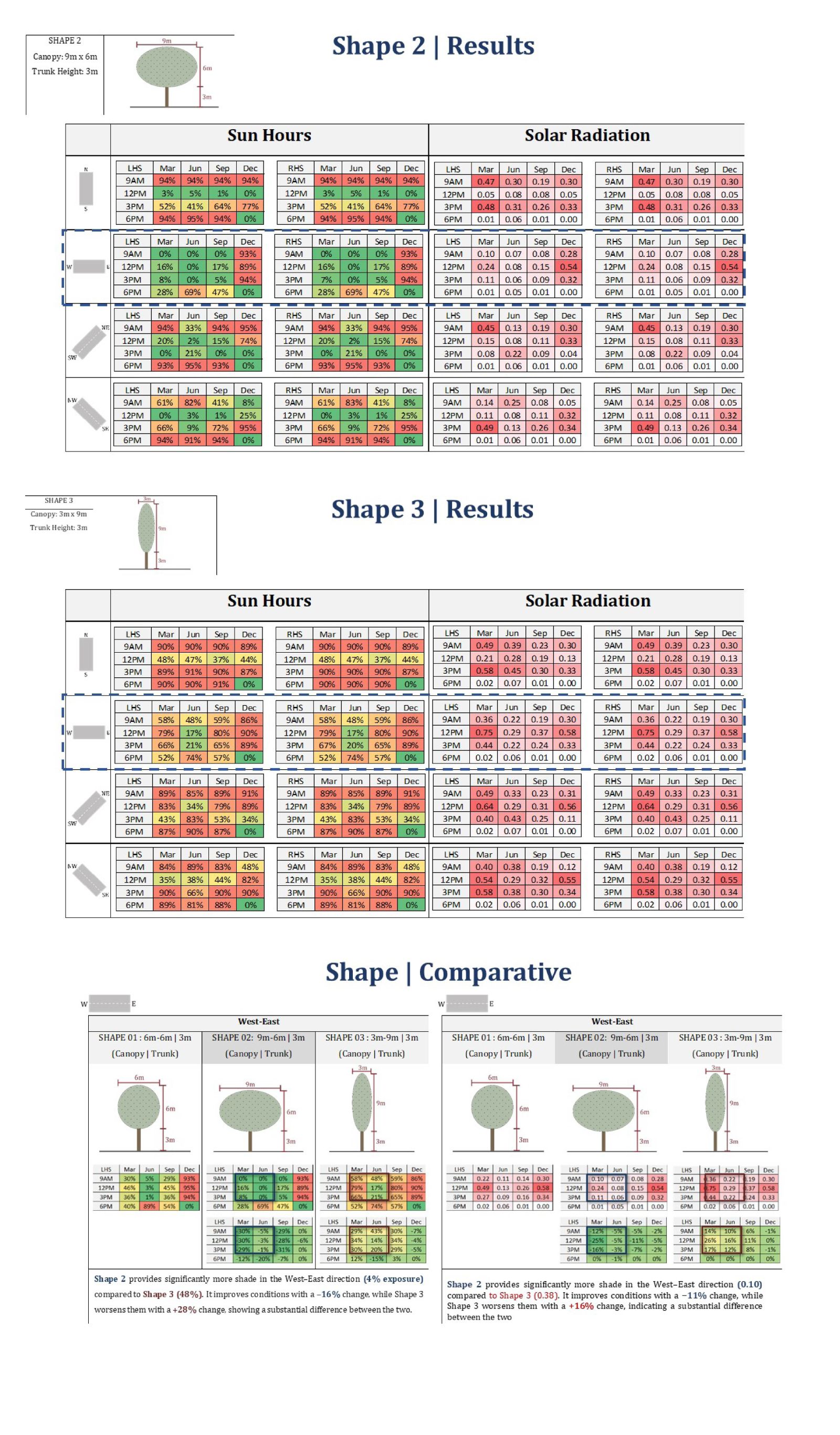
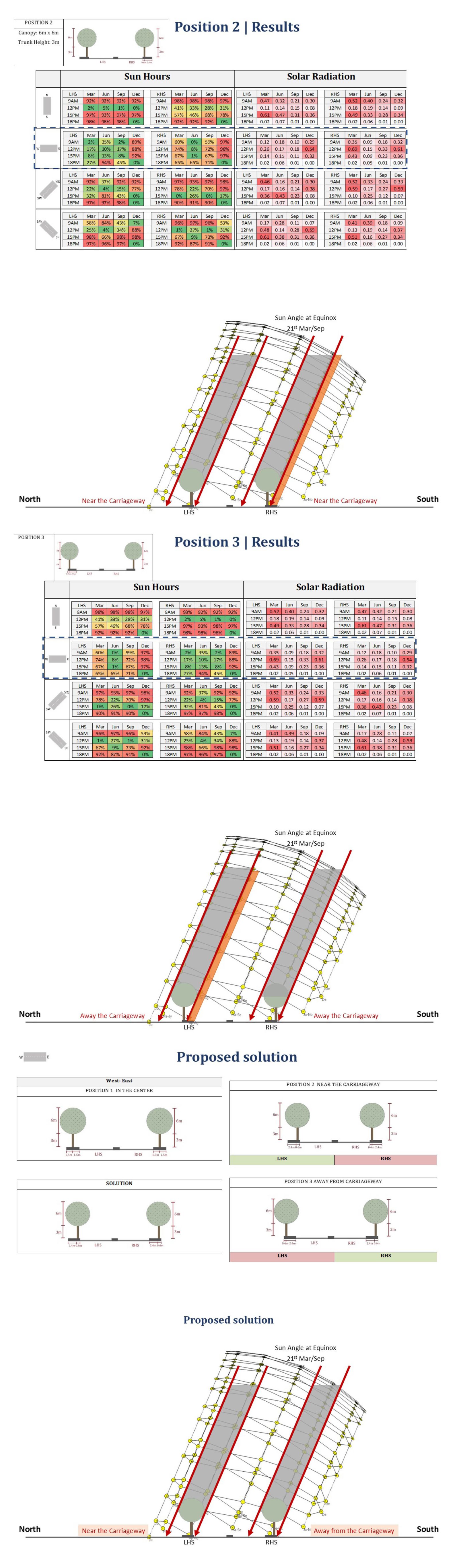
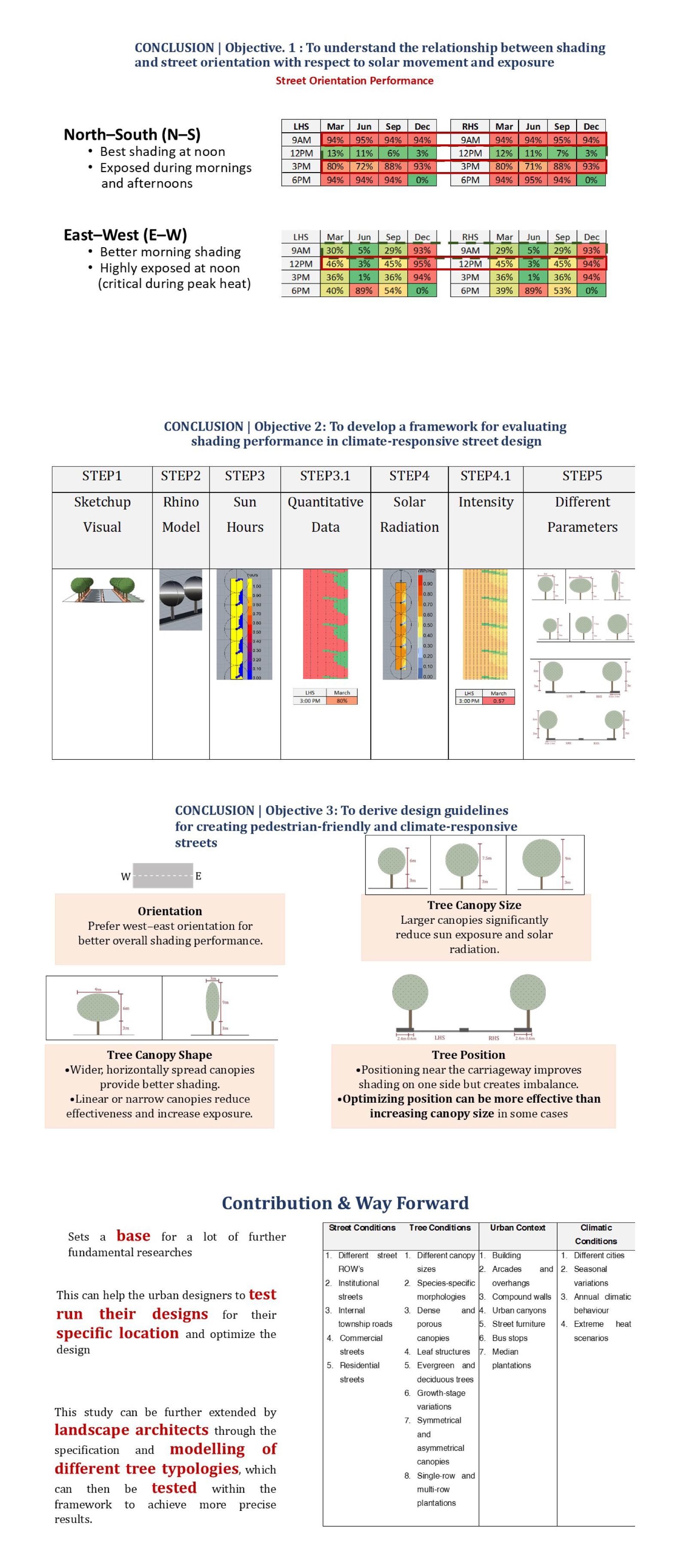
Streets in hot semi-arid cities like Ahmedabad experience high solar radiation, causing significant thermal discomfort. Although trees are effective shading elements, current street design guidelines often overlook street orientation, sun path, and tree morphology. This research develops climate-responsive street shading strategies and a simulation-based analytical framework for urban designers and landscape architects. Using Rhino, Grasshopper, and Ladybug, the study evaluates shading performance based on street orientation, tree type, canopy shape, and tree position. The findings show that shading performance varies with time, season, and spatial configuration. The study contributes a structured framework for climate-responsive street design, with future scope for incorporating species-specific tree characteristics and diverse climatic contexts.
View Additional Work