Your browser is out-of-date!
For a richer surfing experience on our website, please update your browser. Update my browser now!
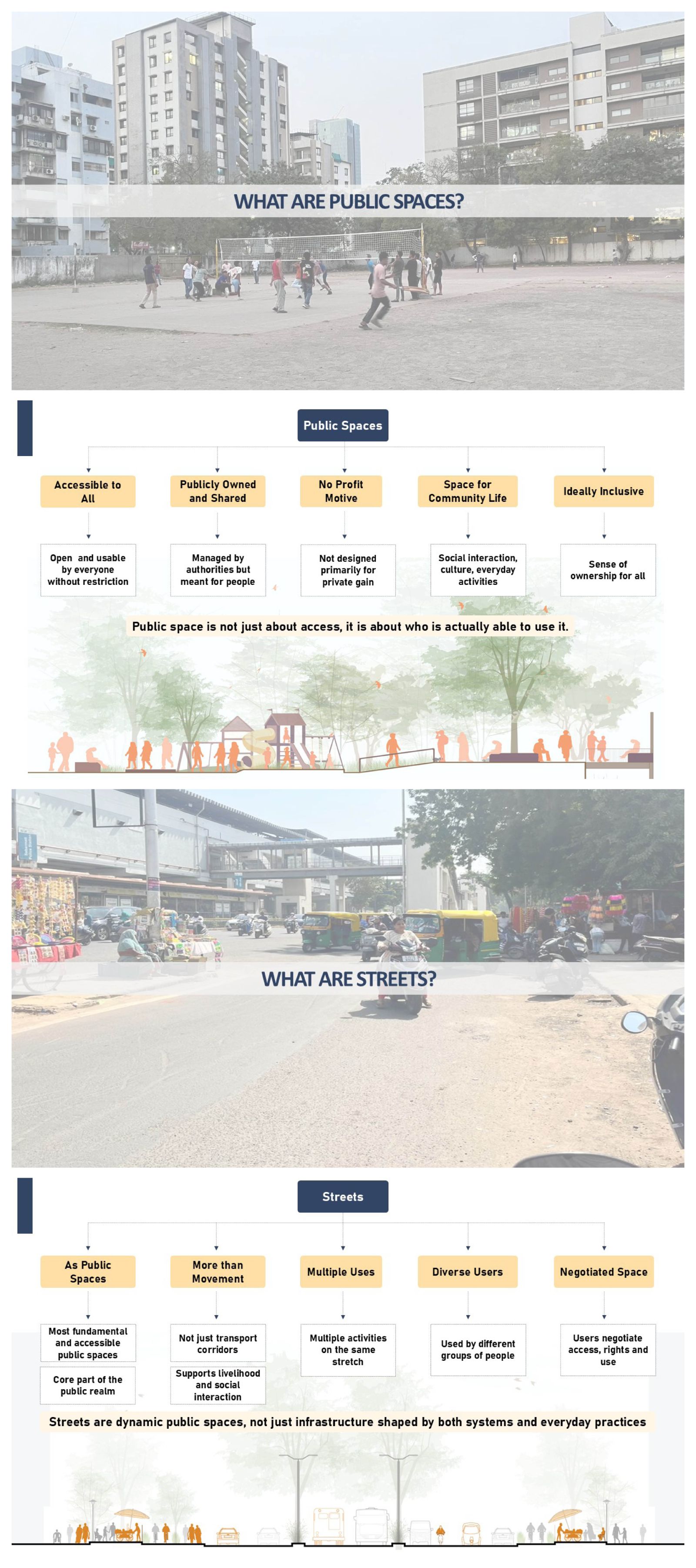
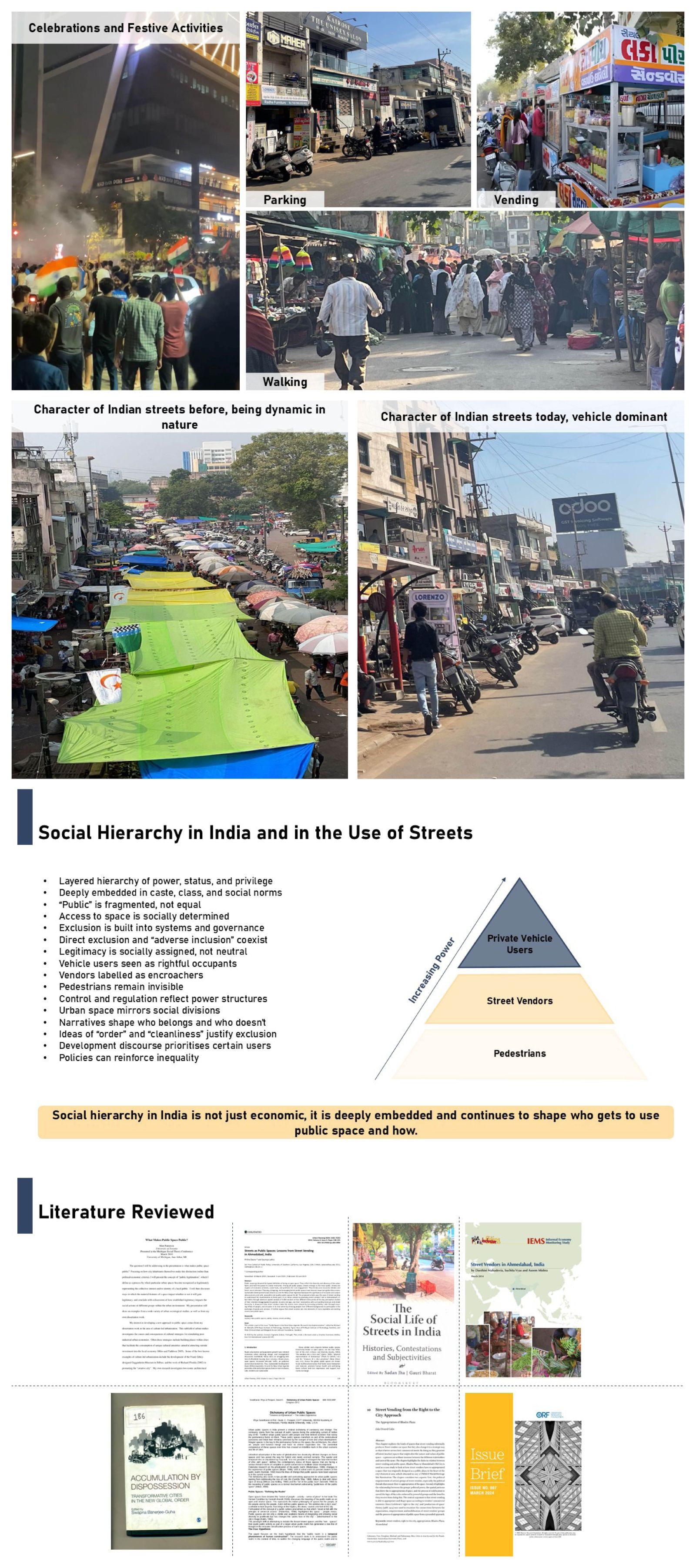
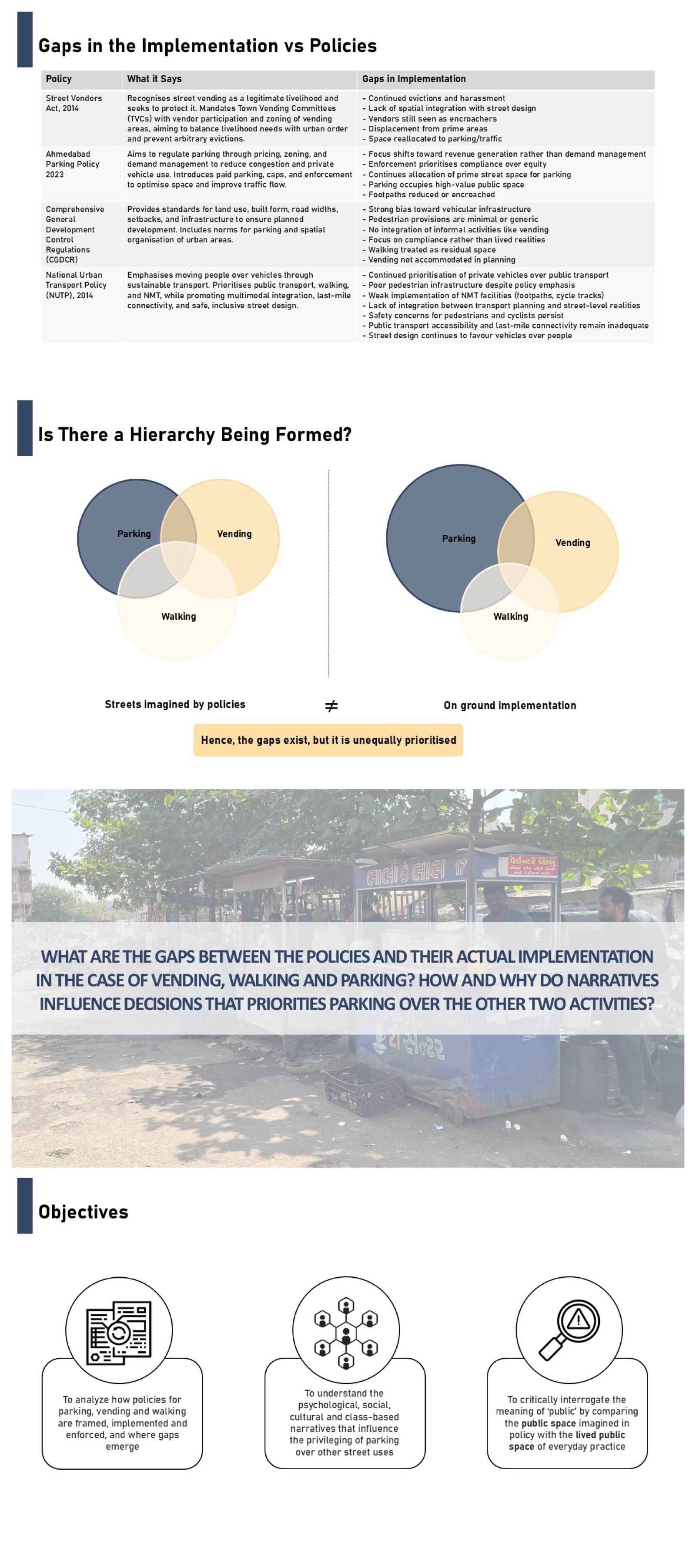
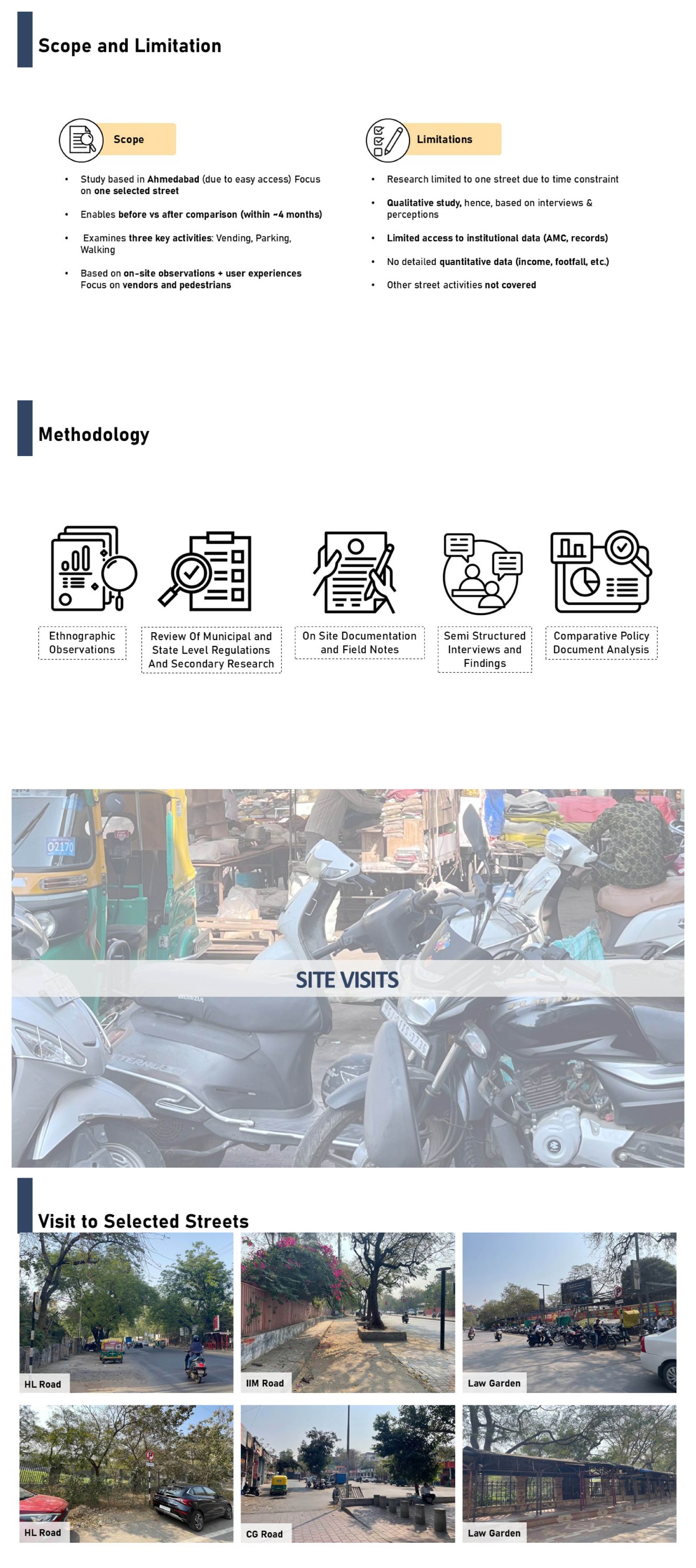
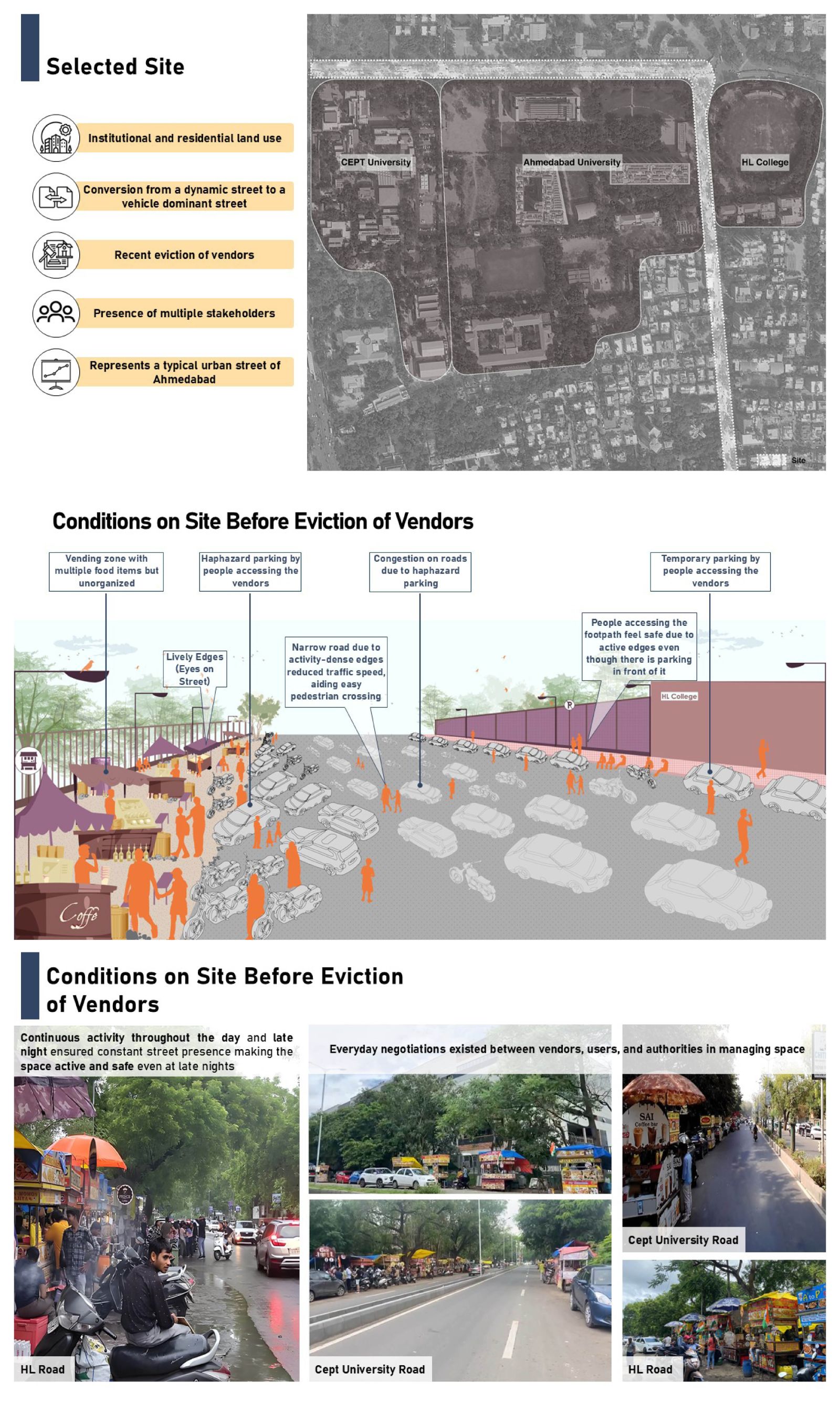
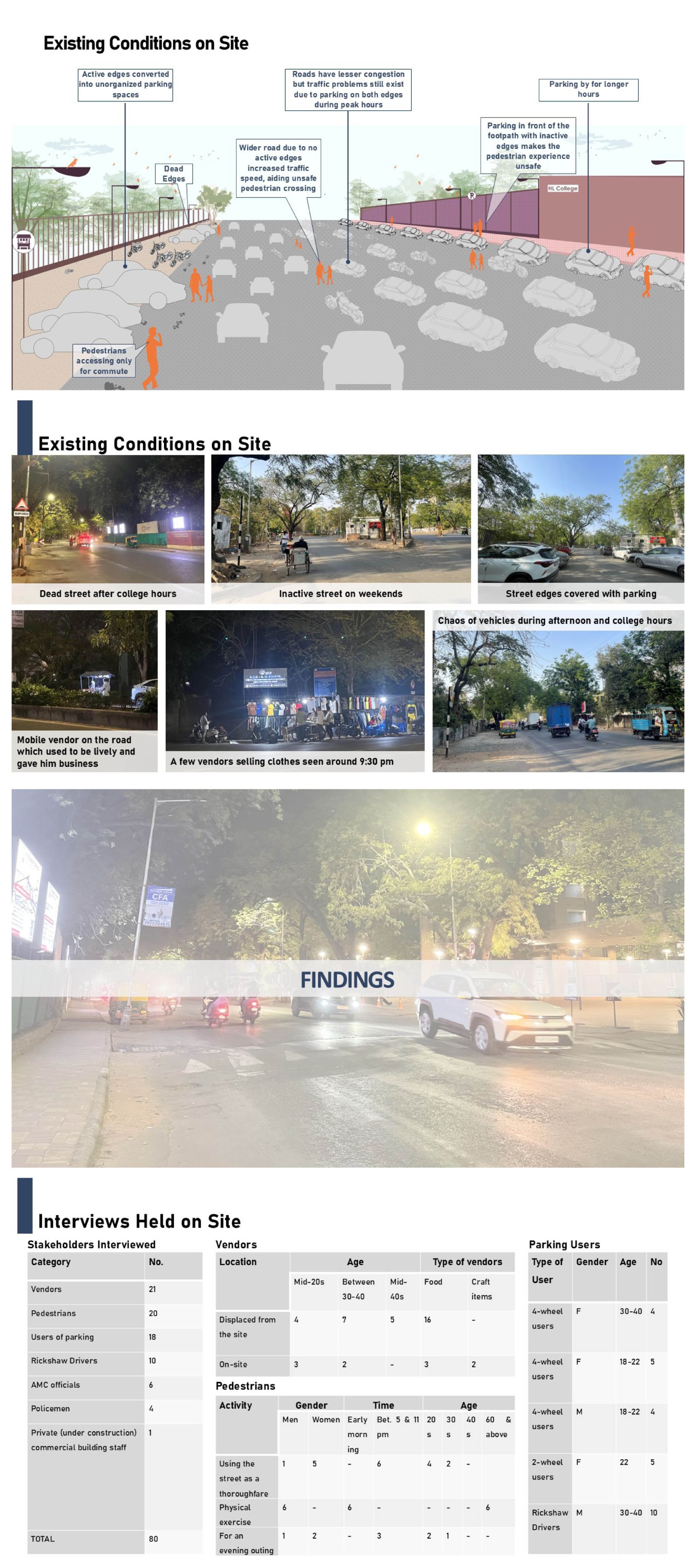
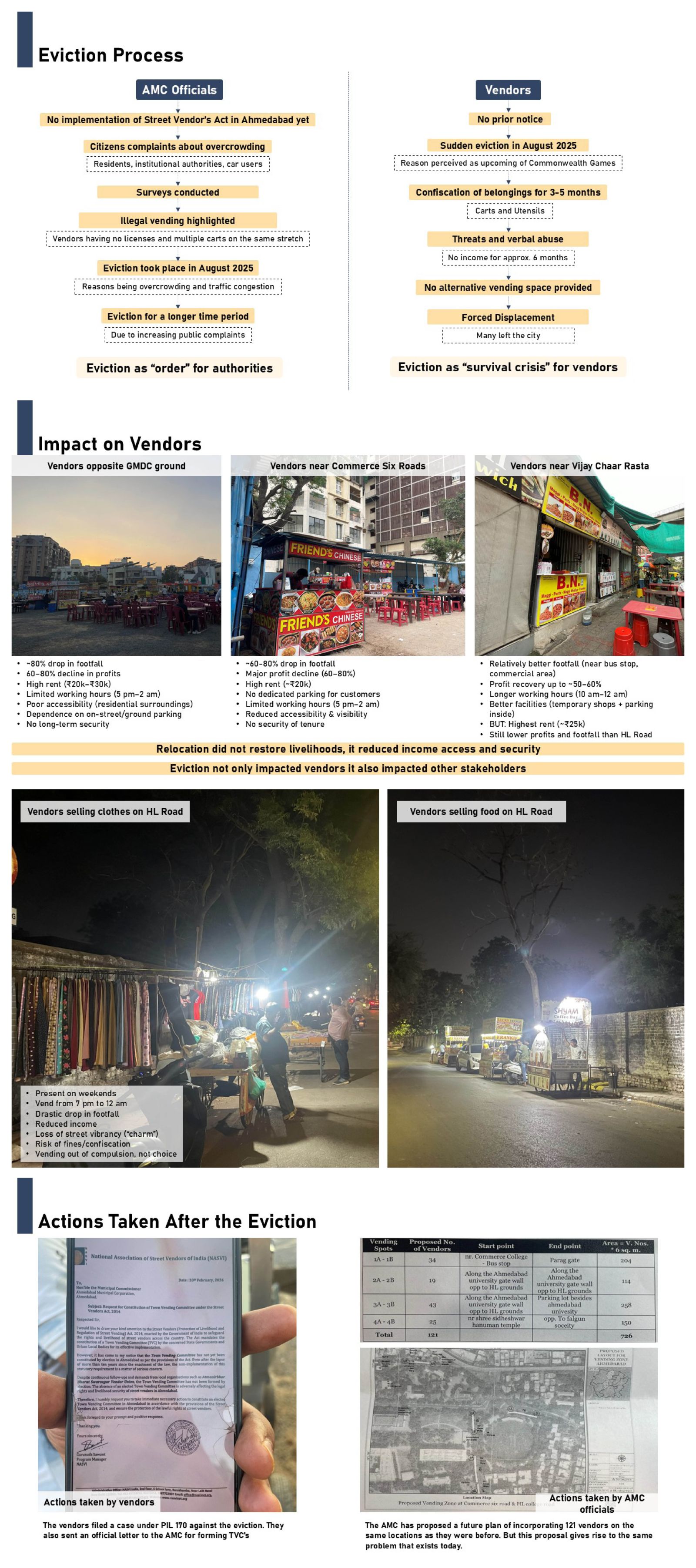
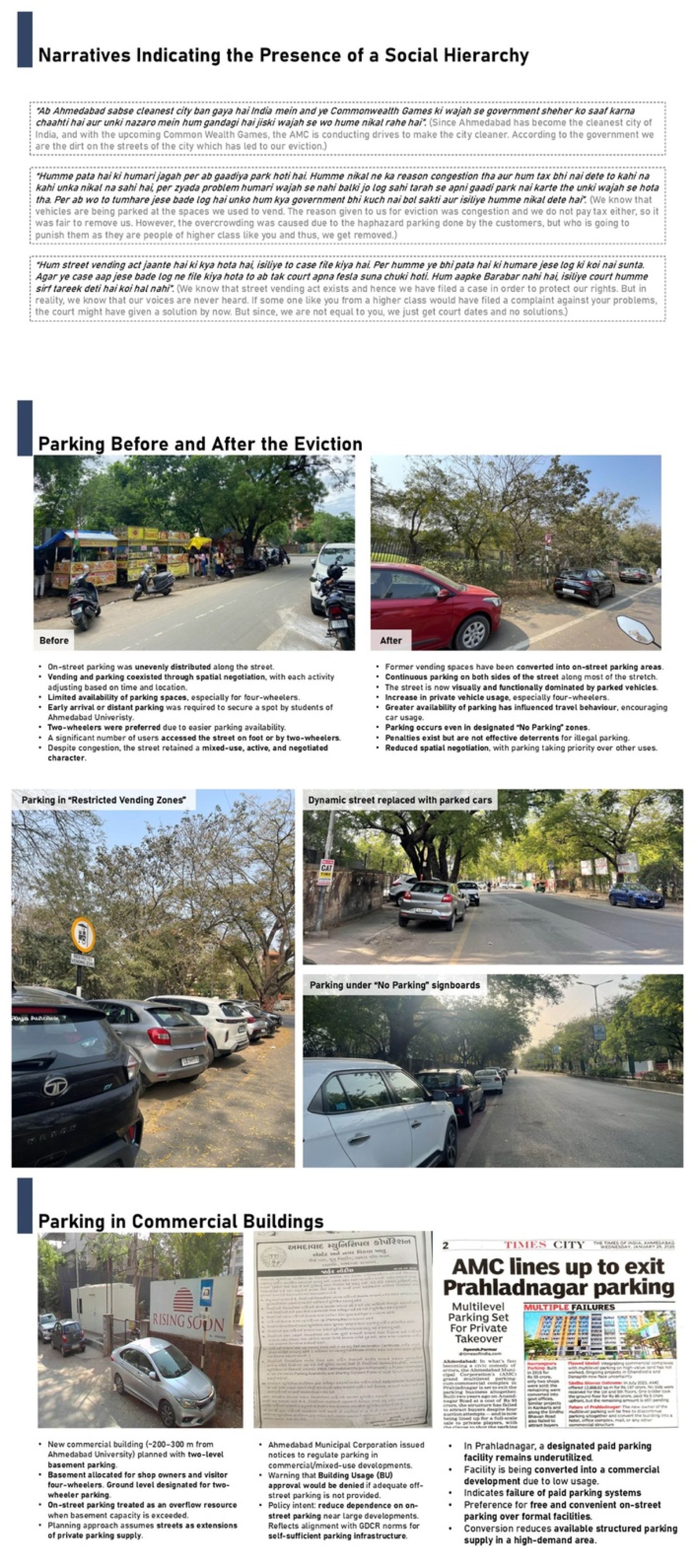
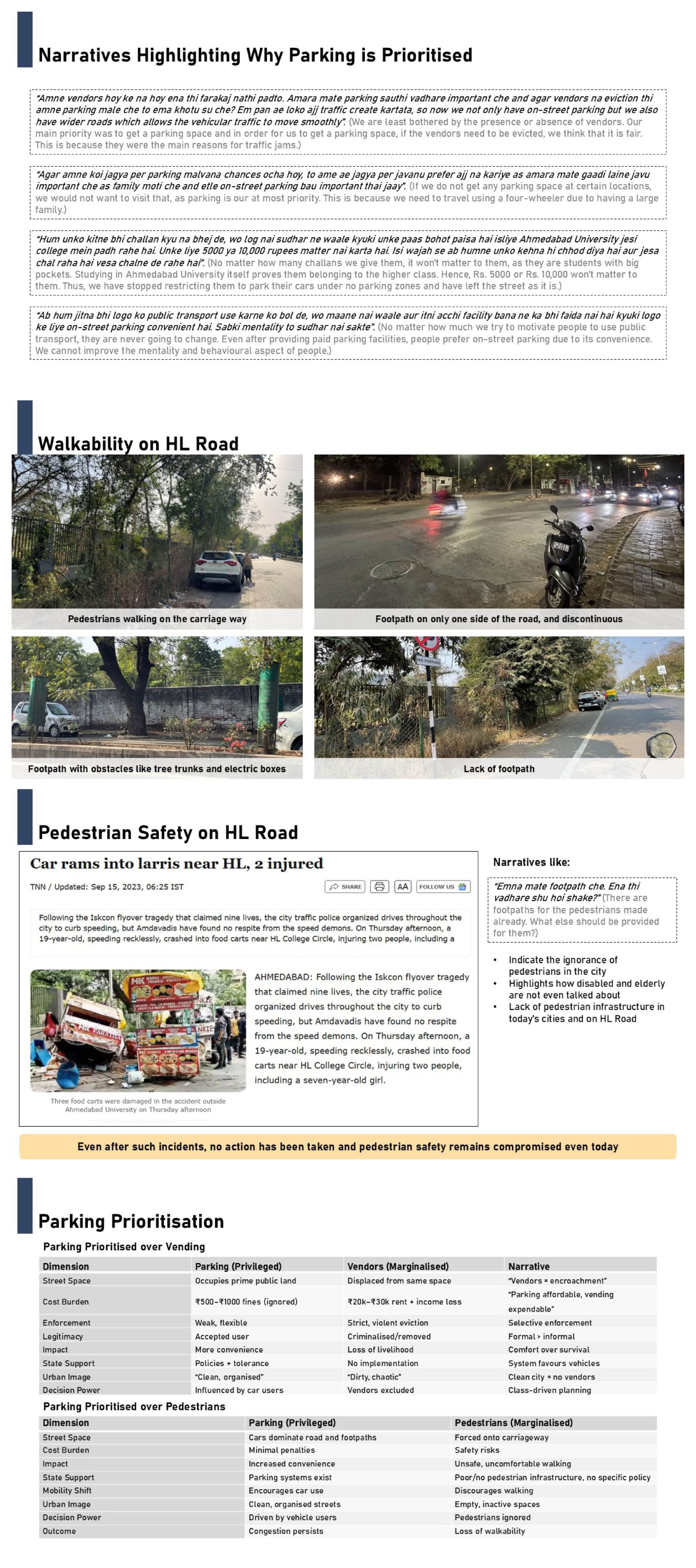
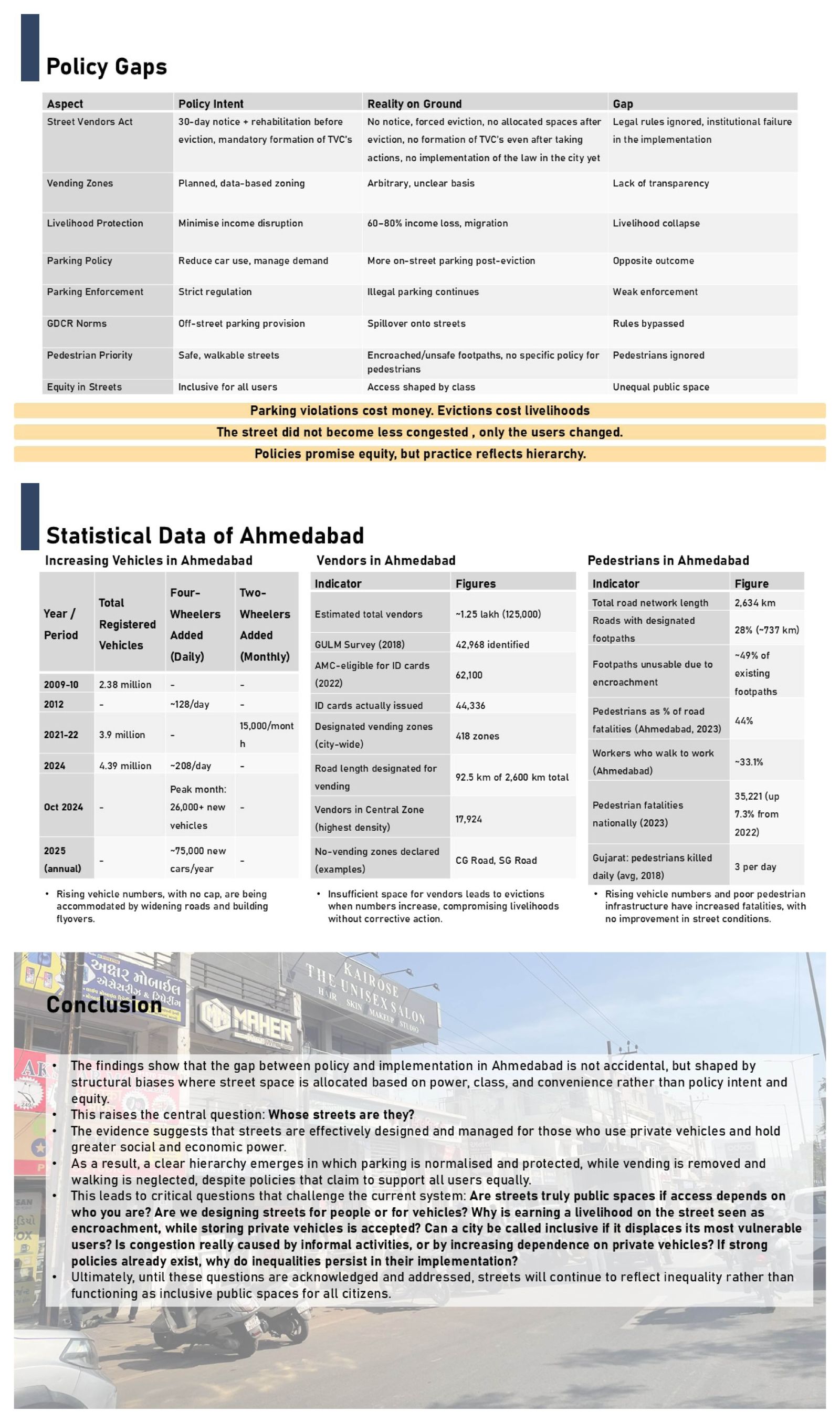
Streets are among the most important public spaces in Indian cities, supporting activities such as walking, vending, and parking. Although Ahmedabad has formal policies for these activities, a gap exists between policy intentions and ground realities, often creating a hierarchy where parking is prioritised over walking and vending. This study uses a qualitative research approach involving semi-structured interviews, ethnographic observations, on-site documentation, policy analysis, and secondary research. It examines how streets are imagined by planning authorities versus how they function in everyday life. By analysing selected streets in Ahmedabad, the research identifies implementation gaps, social hierarchies, and explores the question: “Whose Streets?”
View Additional Work