Your browser is out-of-date!
For a richer surfing experience on our website, please update your browser. Update my browser now!
WALKING THE EDGE : Understanding the Relationship Between Built Form, Pedestrian Movement and Street Life in Ahmedabad.
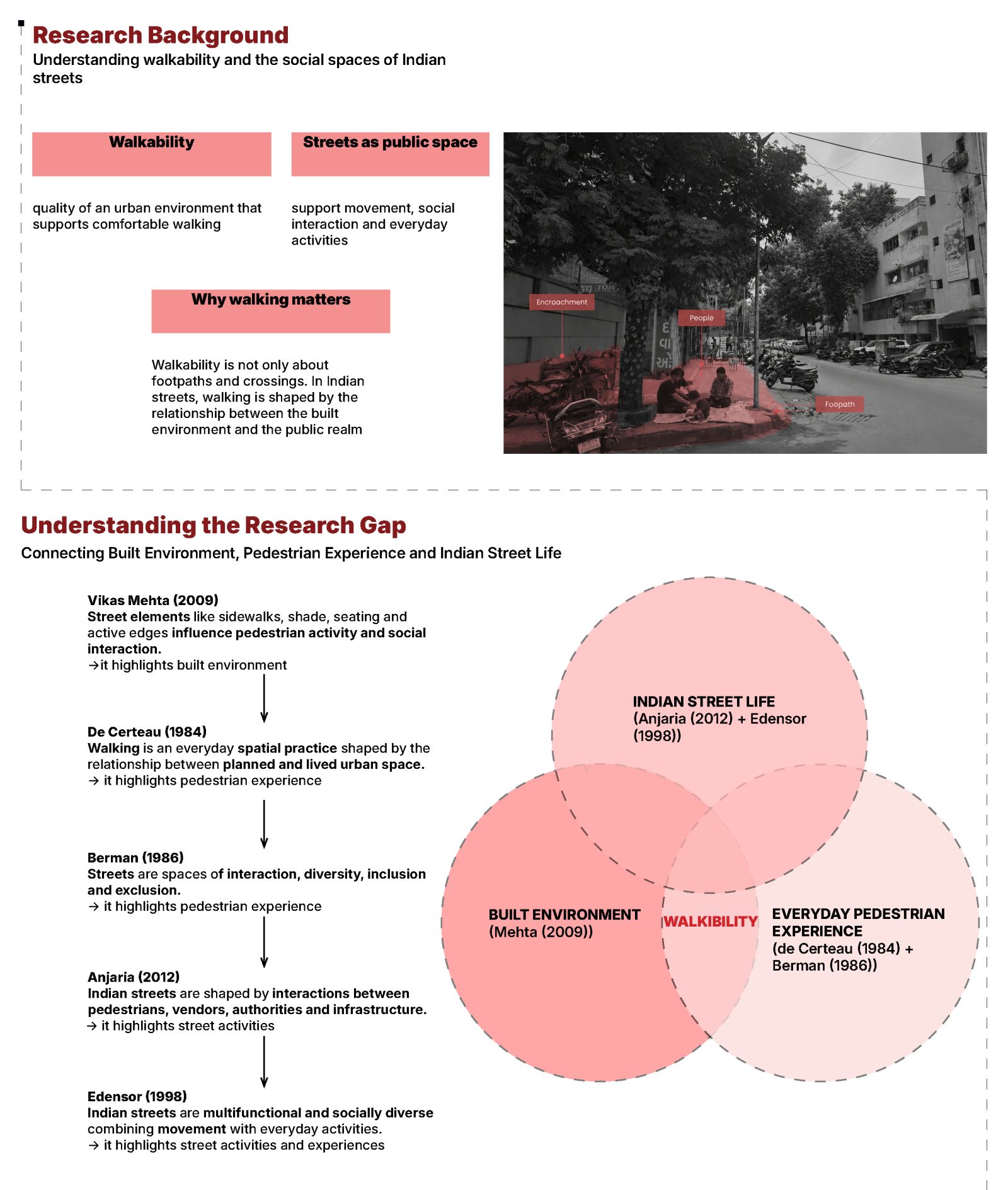
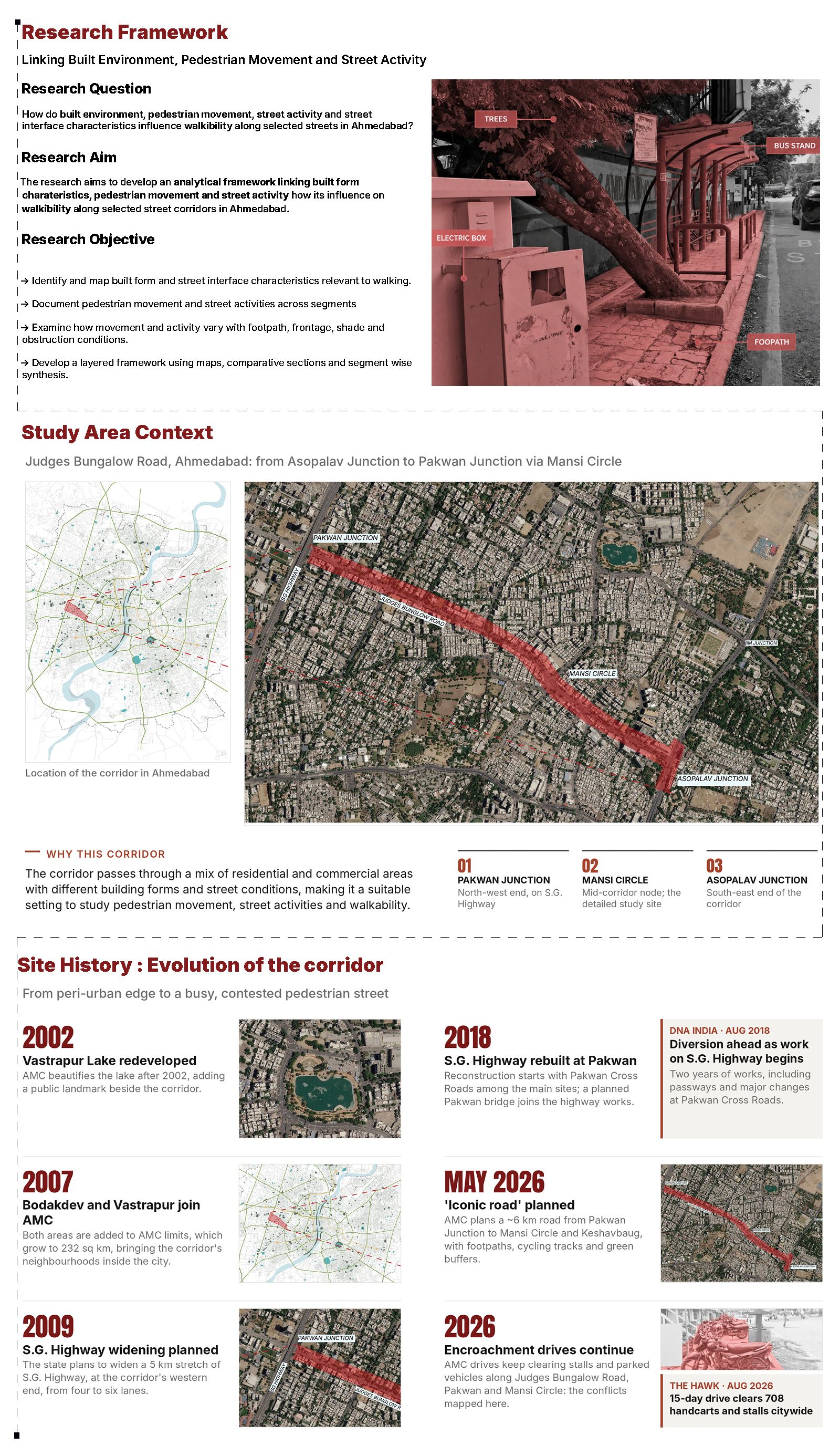
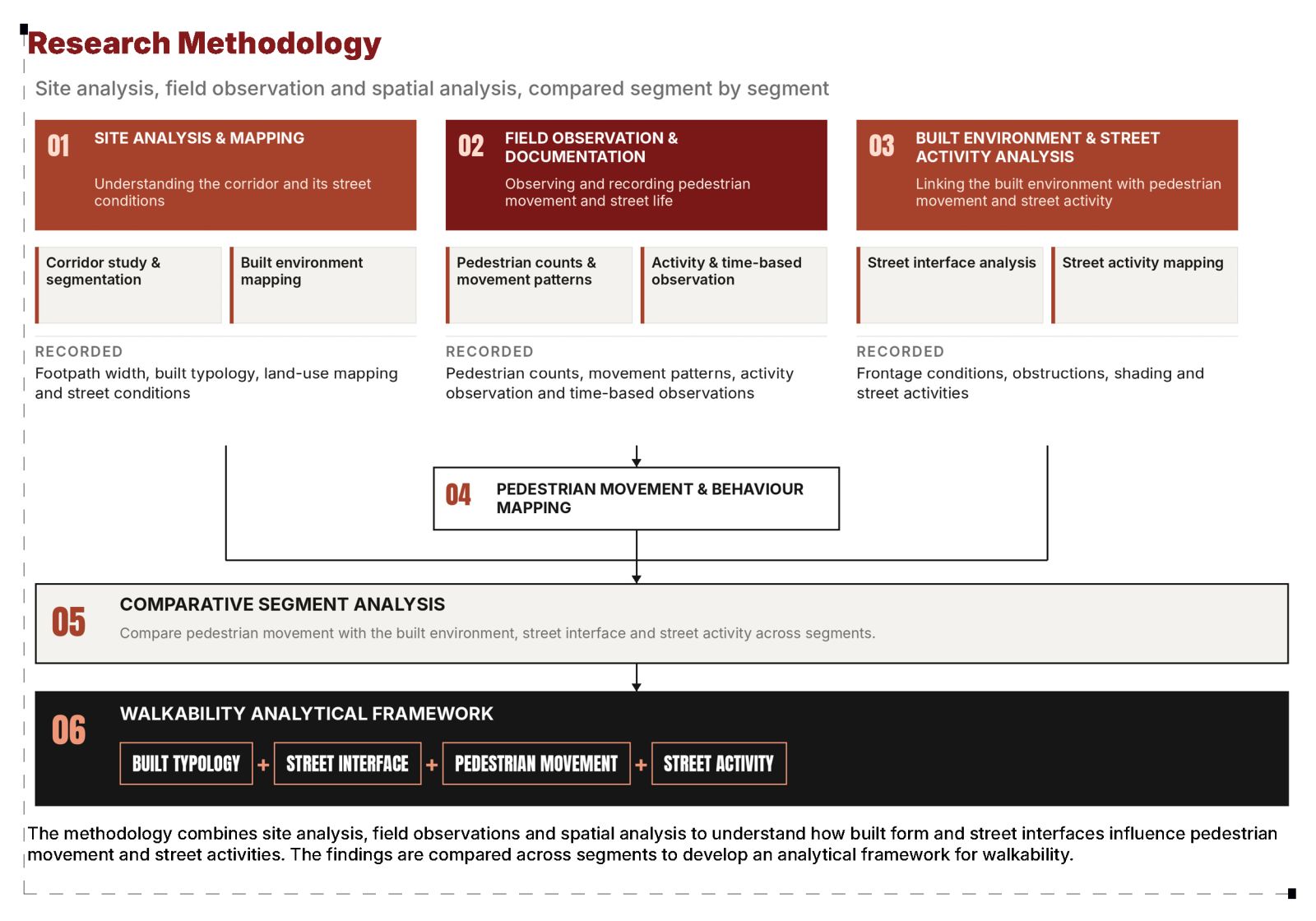
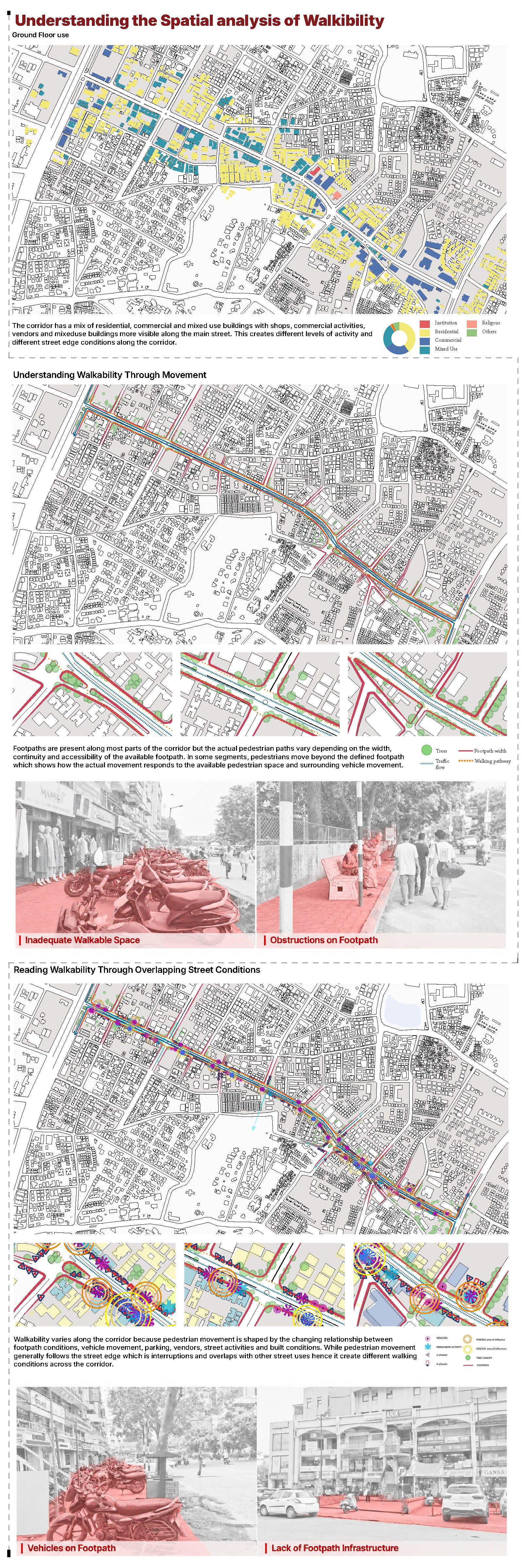
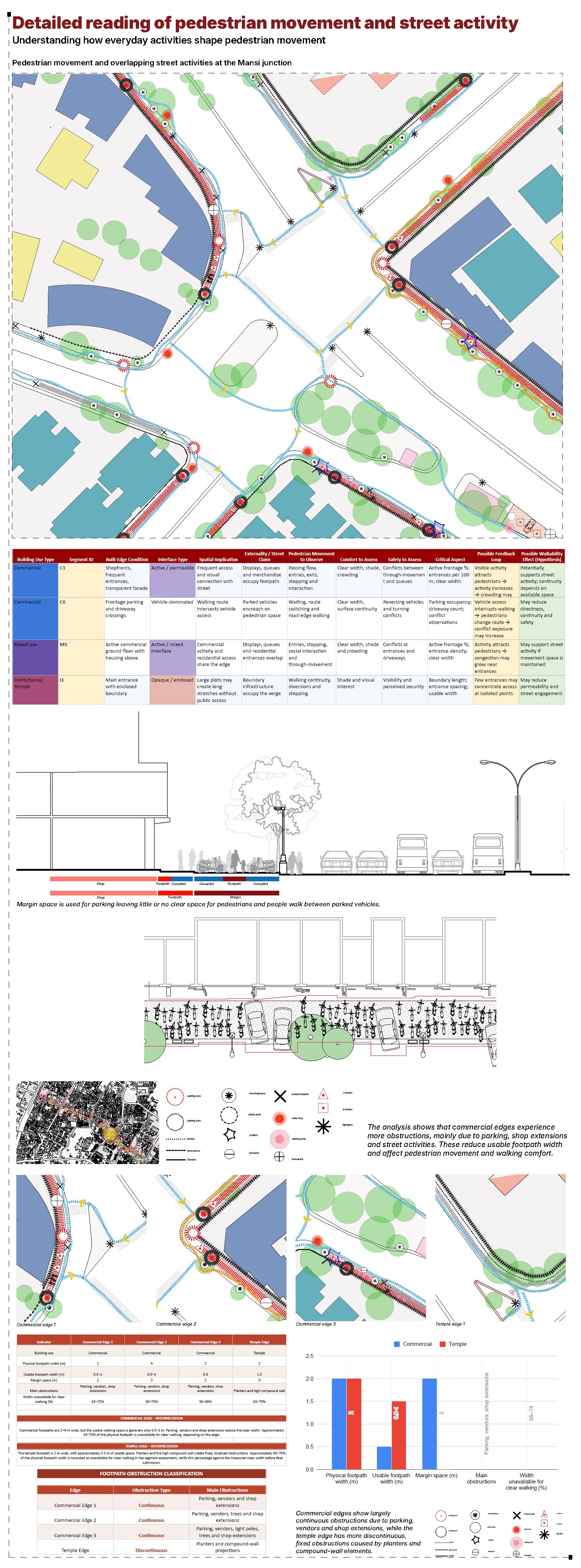
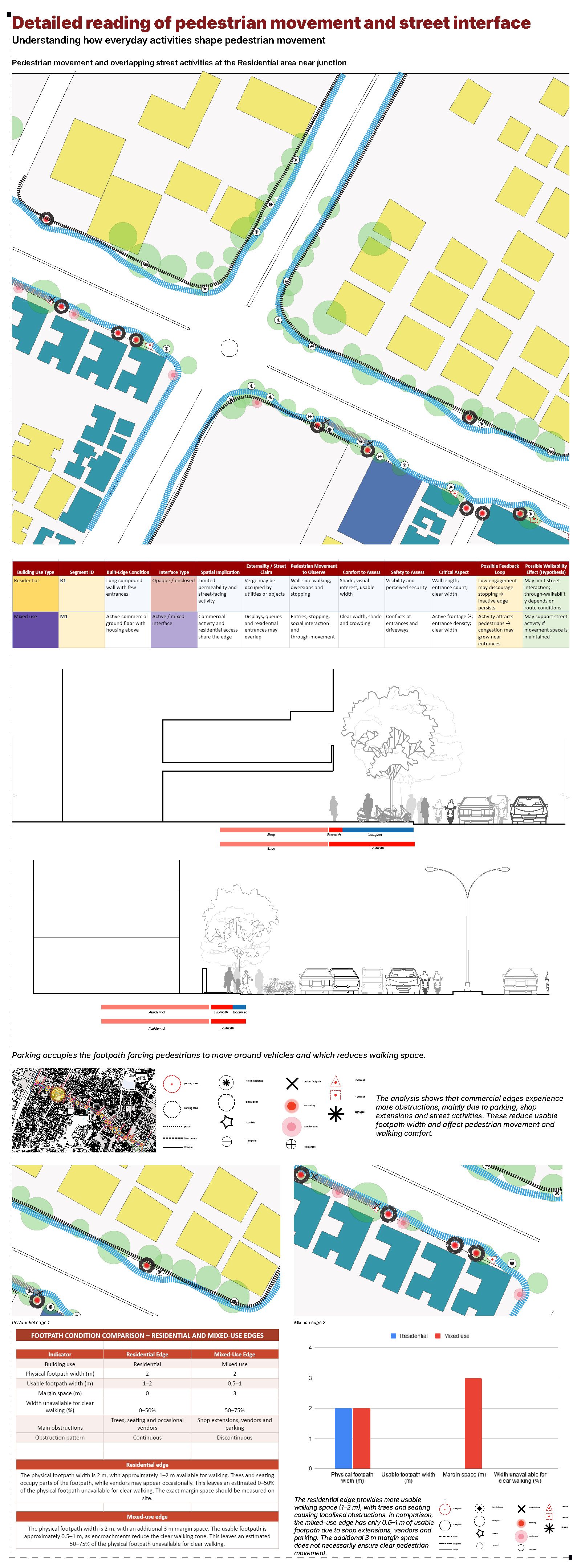
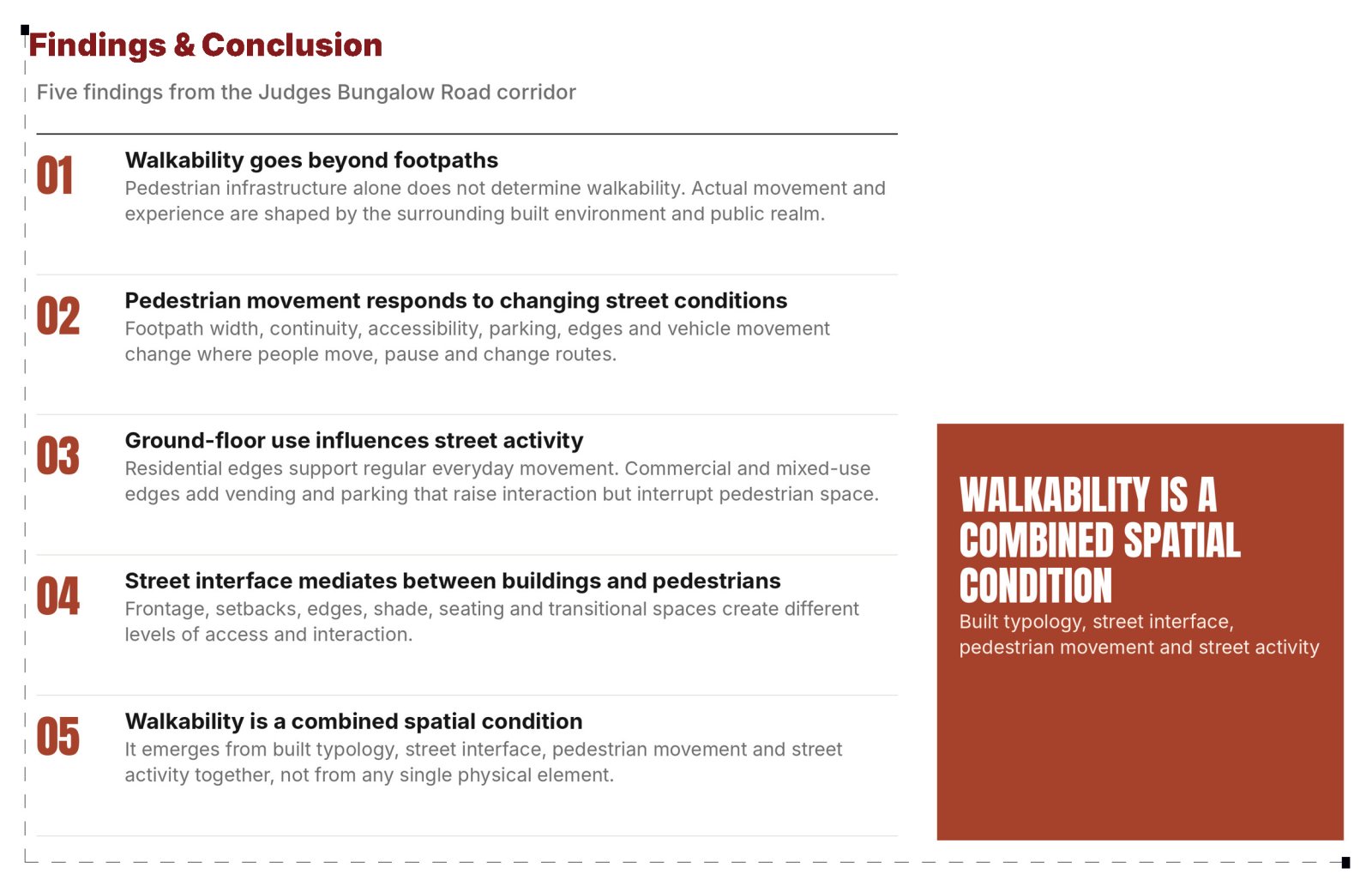
This research examines the relationship between built environment characteristics, pedestrian movement and everyday street activities along Judges Bungalow Road, Ahmedabad. Through spatial mapping, field observations, pedestrian movement analysis and comparative street-section studies. The research investigates how building typologies, frontage conditions, footpath widths, obstructions, parking and street activities influence walkability. By analysing commercial, residential and mixed-use street edges. The study identifies variations in usable pedestrian space and movement patterns. The research develops an analytical framework to understand walkability as a combined spatial condition shaped by built form, street interfaces and everyday urban activities.