Bhatt Prachi Prafulkumar

UT4051

PUT24261

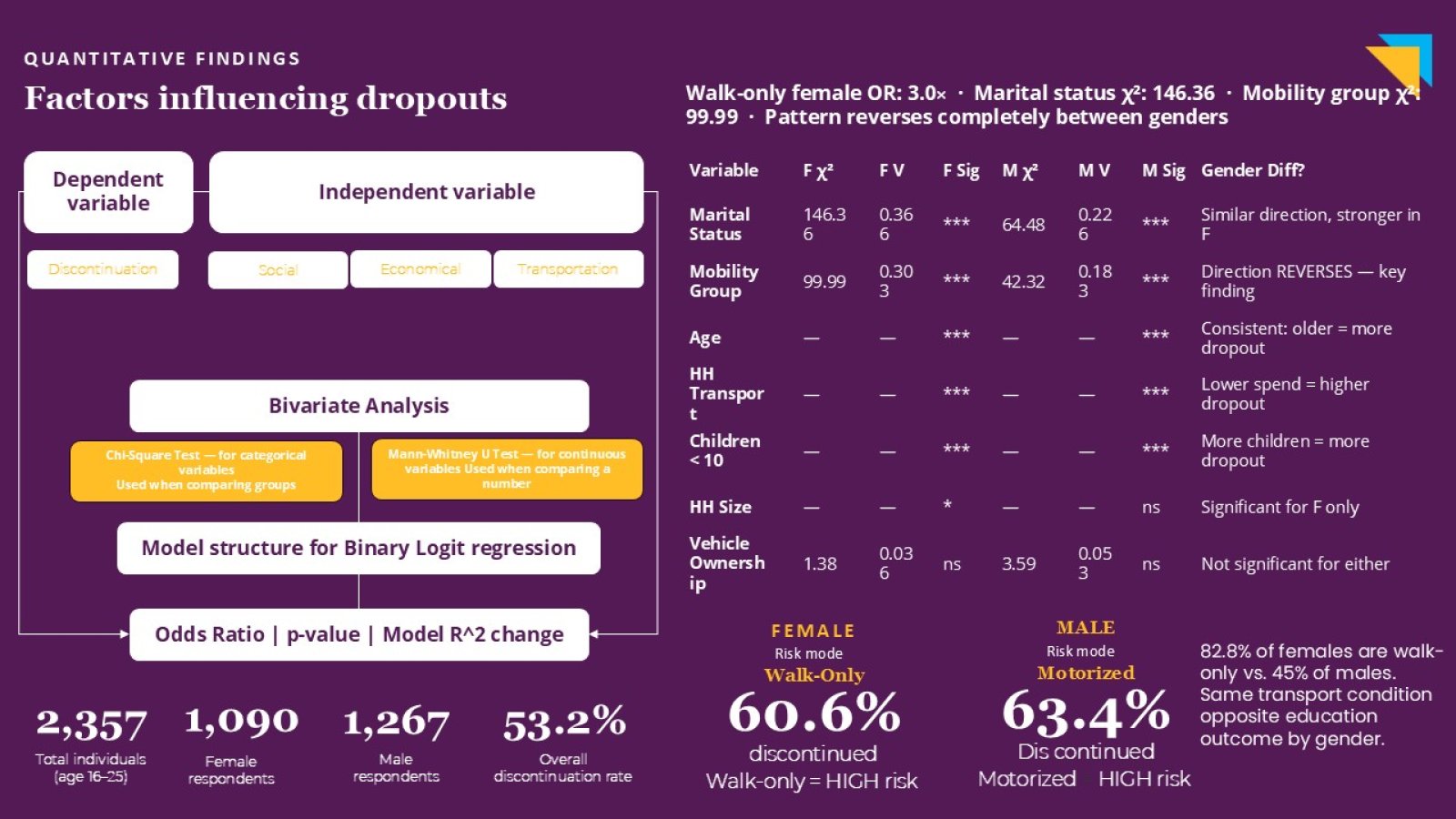
In low-income areas of Ahmedabad, girls are dropping out of school  but the story doesn't end there. Boys are dropping out too, just for the opposite reason. This research studied 13,000+ households across 16 settlements to understand how transport shapes education for both genders. The findings reveal a striking reversal: girls who can only walk are 3 times more likely to drop out due to safety fears and restricted mobility. Boys with motorised access drop out at the highest rates — pulled into the workforce the moment they can move freely. Same city, same streets, completely opposite outcomes. Transport isn't a side issue. It is the tipping point where every other barrier such as poverty, social norms, distance collapses inward. Understand the journey, and you begin to understand the dropout.
Report Content

Transport shapes who gets to learn — this research maps that invisible barrier across Ahmedabad.

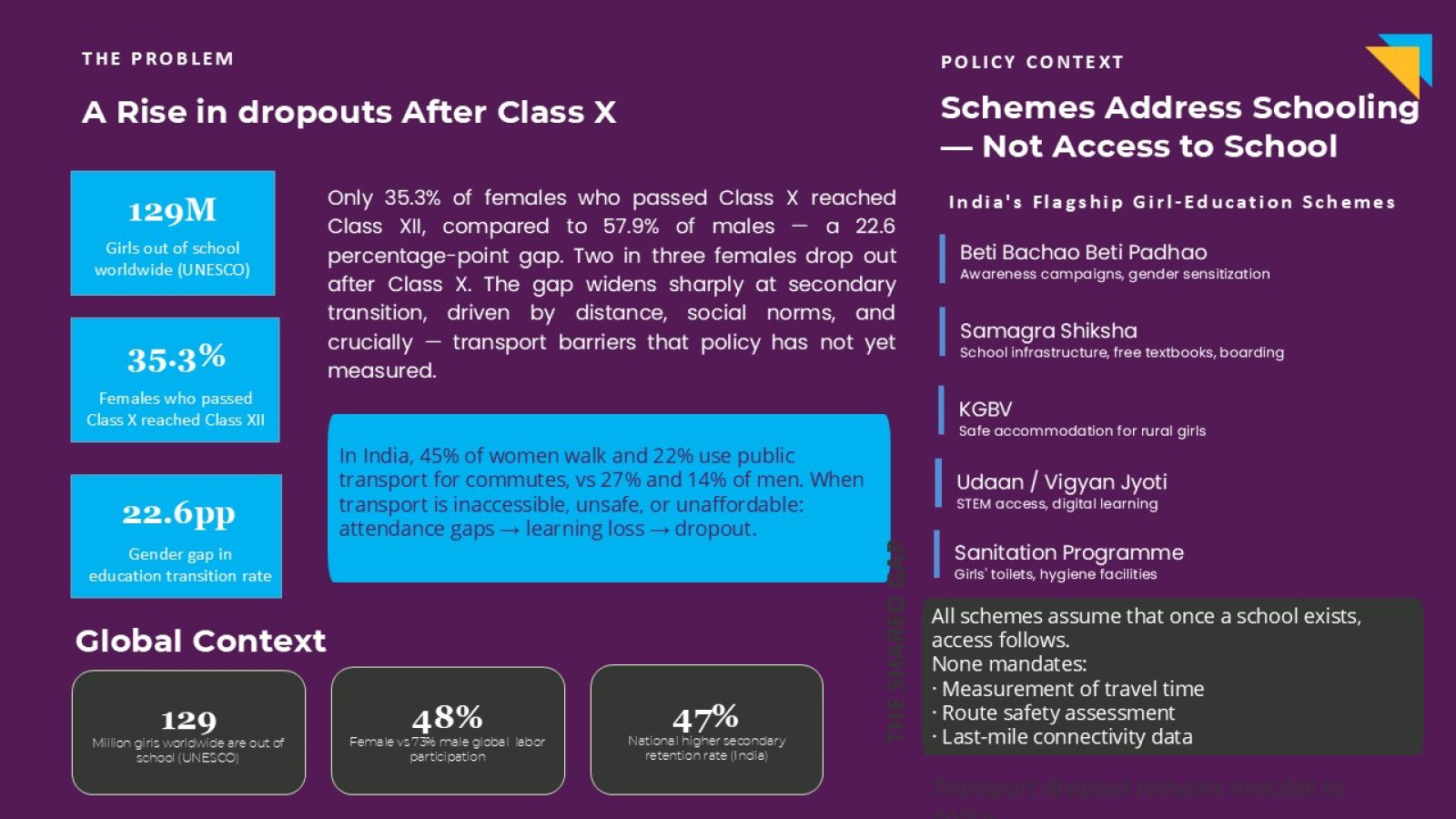
The Problem: Two in three girls drop out after Class X, while policy still hasn't measured the journey that gets them there.

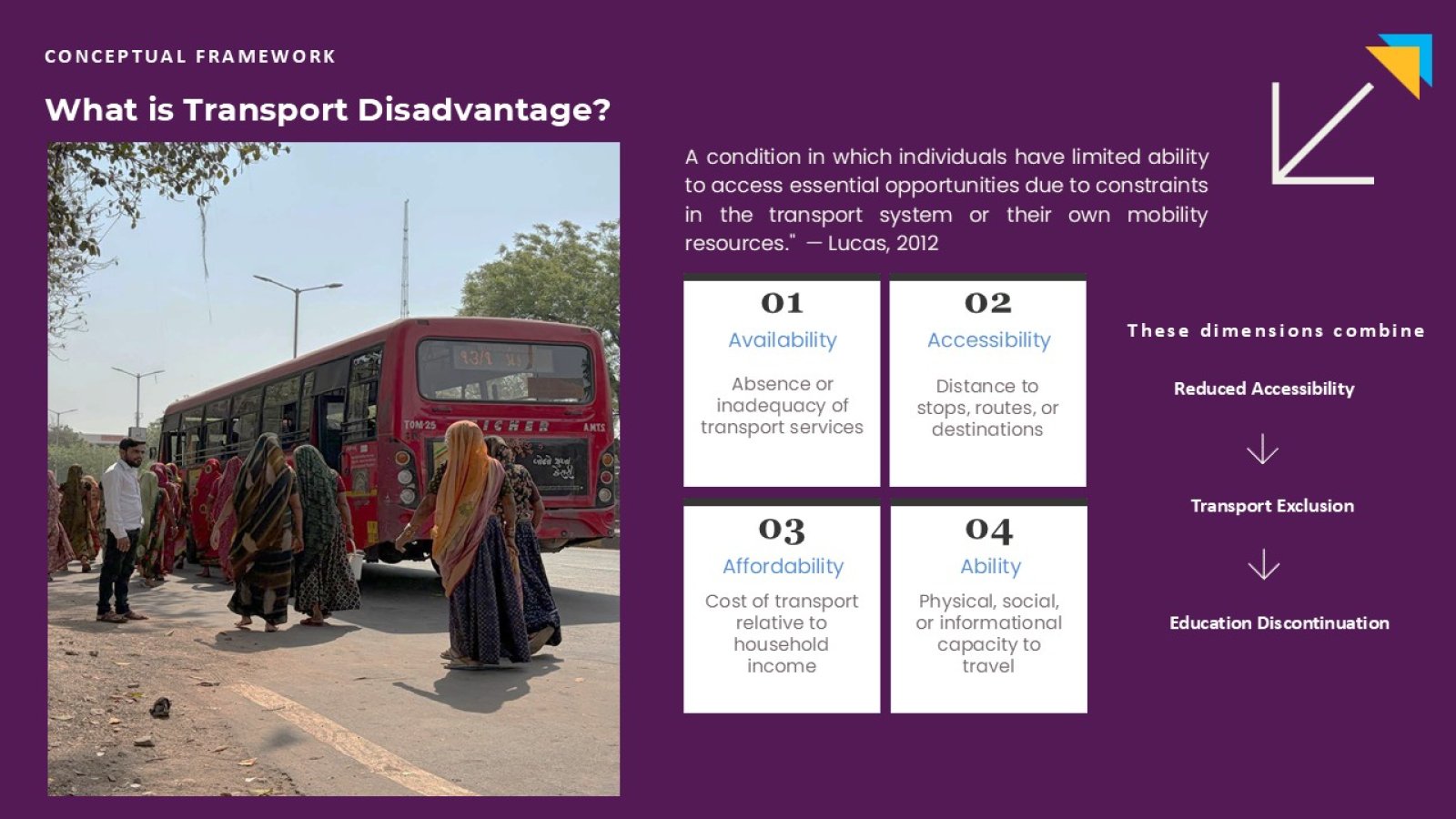
Conceptual Framework: Transport disadvantage isn't just about missing buses — it's about who is allowed to board them.

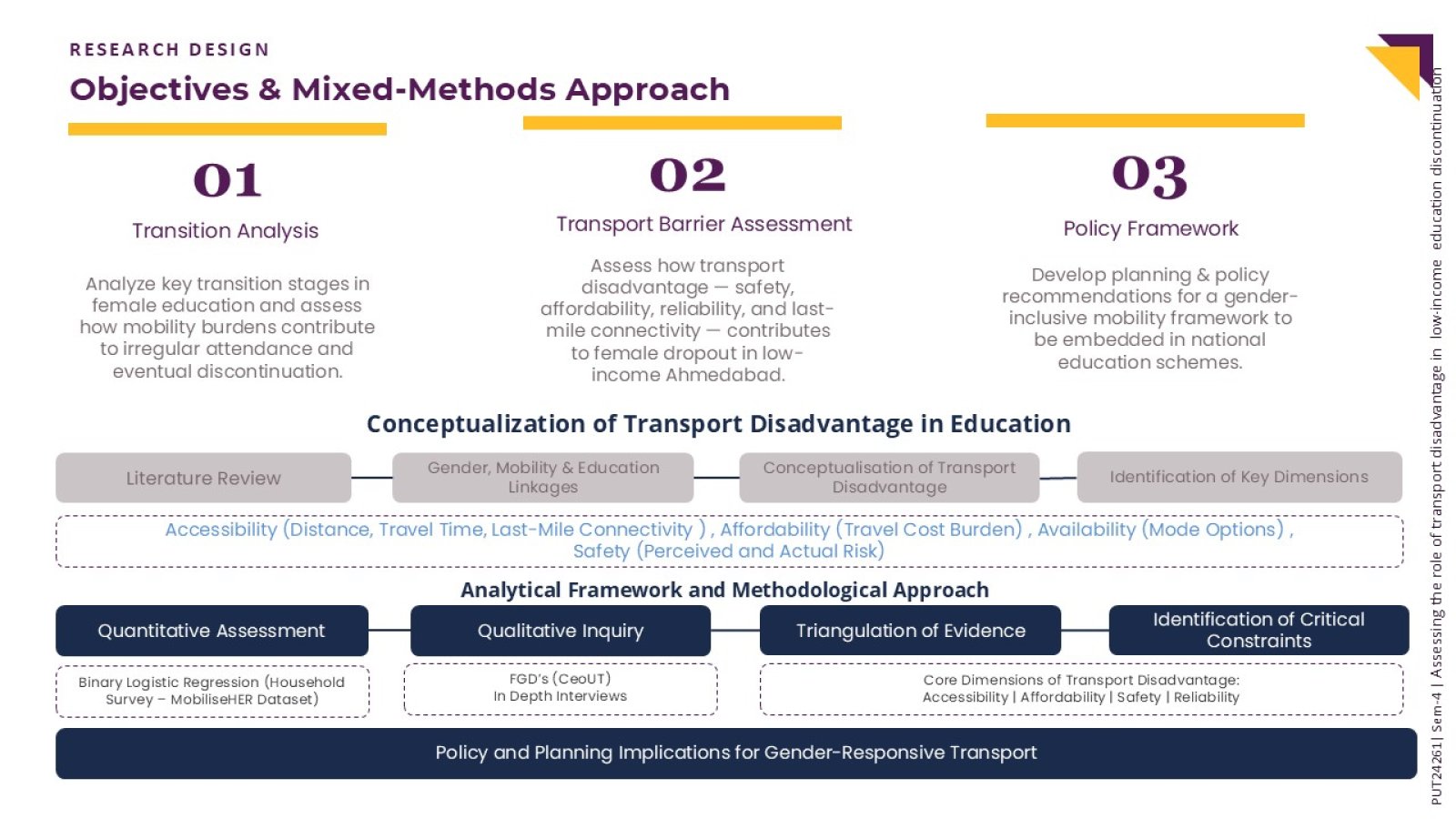
Research Design: A mixed-method lens that pairs 13,000+ survey responses with the stories numbers alone can't tell.

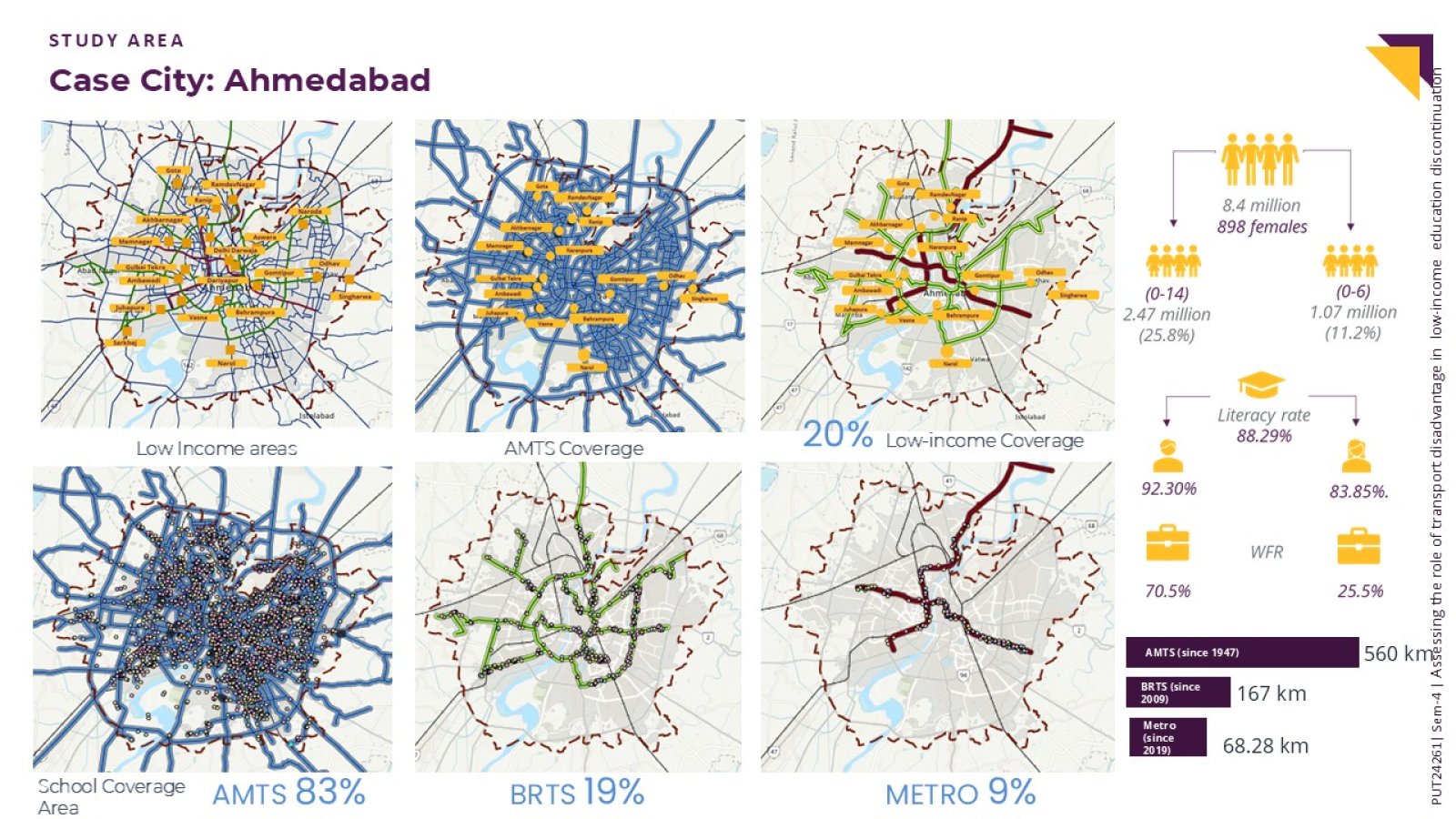
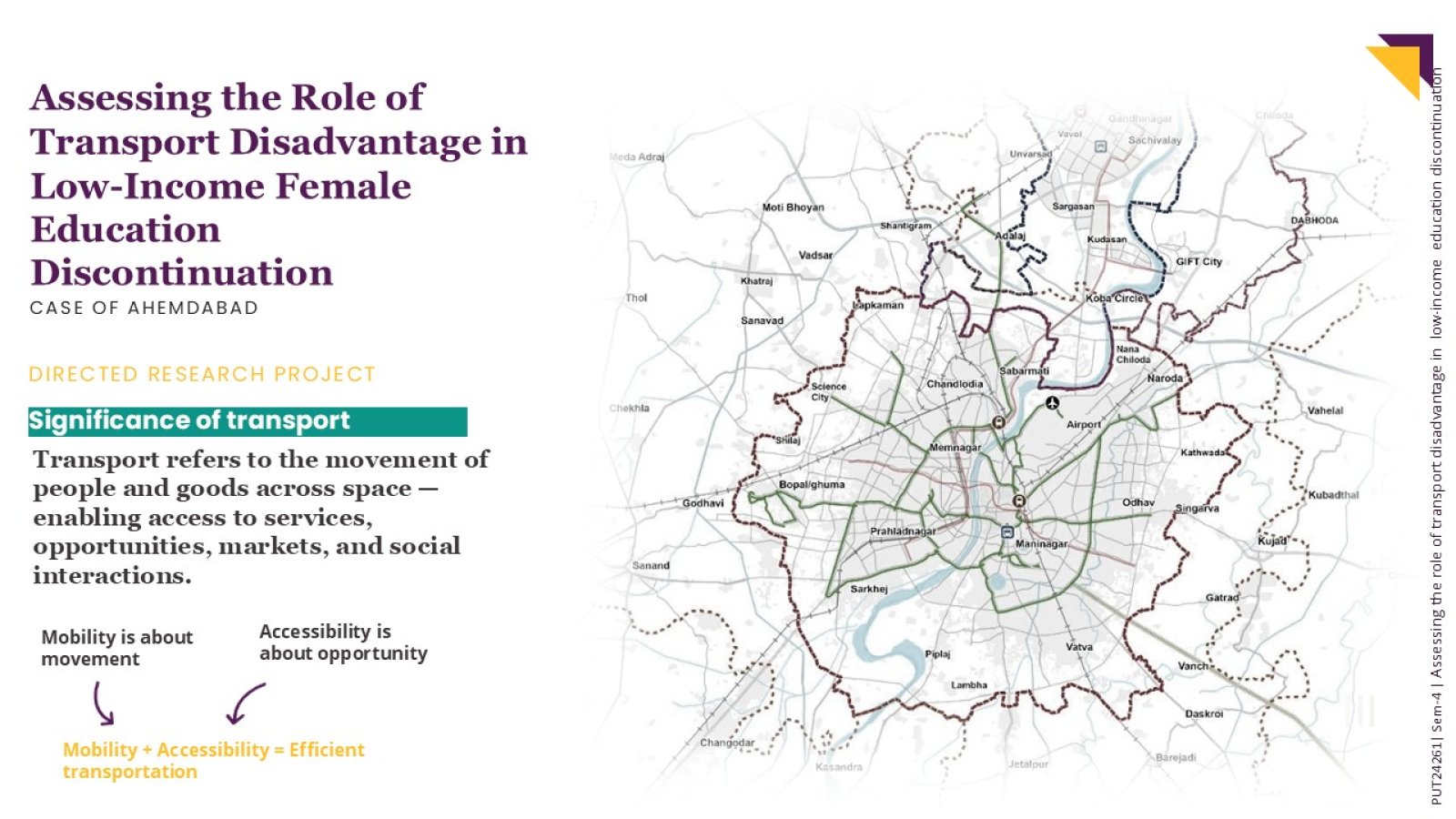
Study Area: Ahmedabad's transit network covers the city on paper — but only 20% of low-income areas in practice.

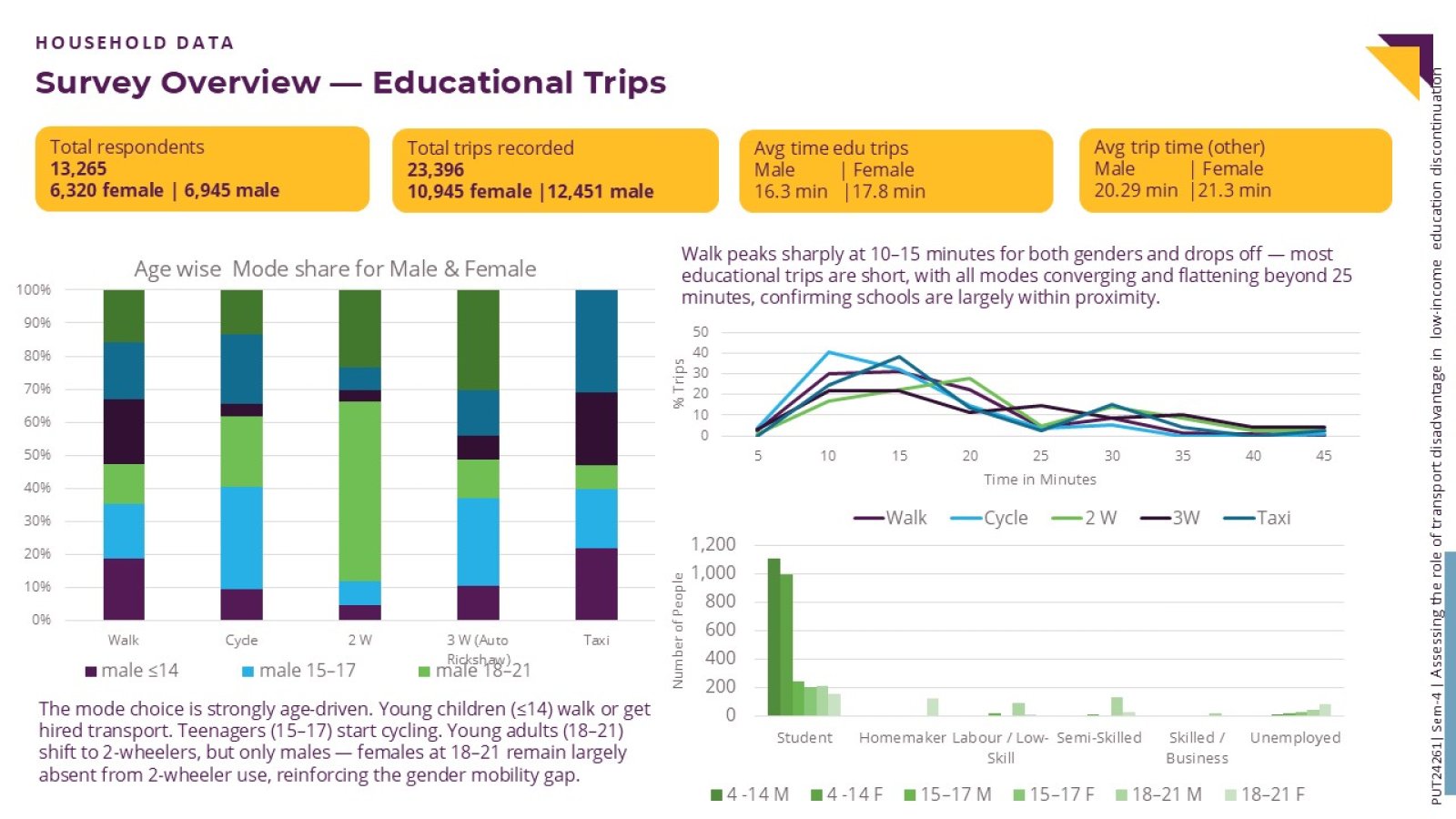
Survey Data: 83% walk, and as students grow older, boys shift to wheels while girls stay on foot.

Quantitative Findings: Walk-only girls are 3× more likely to drop out; motorised boys are 63% likely to enter the workforce instead.

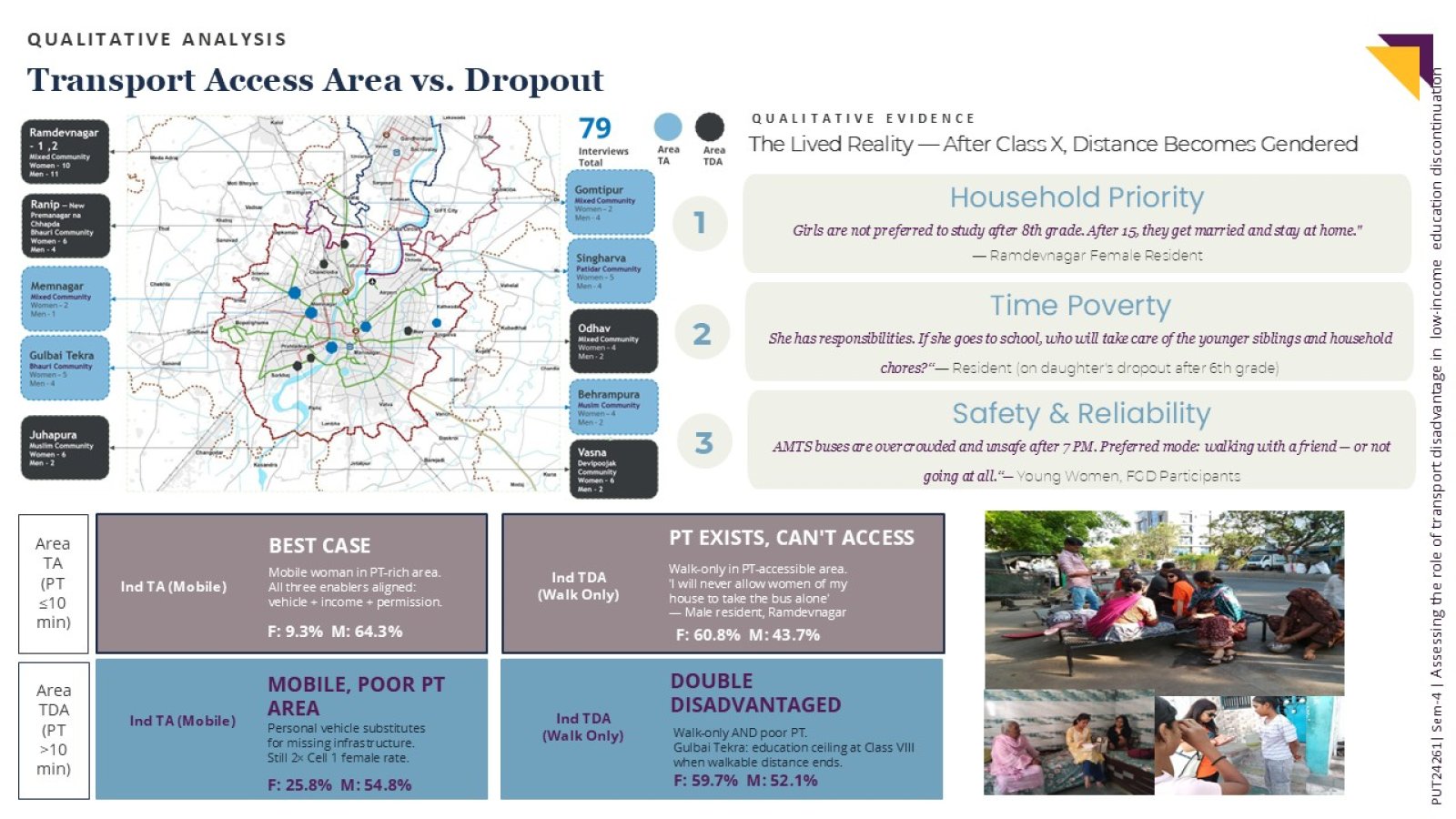
Qualitative Analysis: The bus stop exists one minute away — but "I will never allow women of my house to take the bus alone."

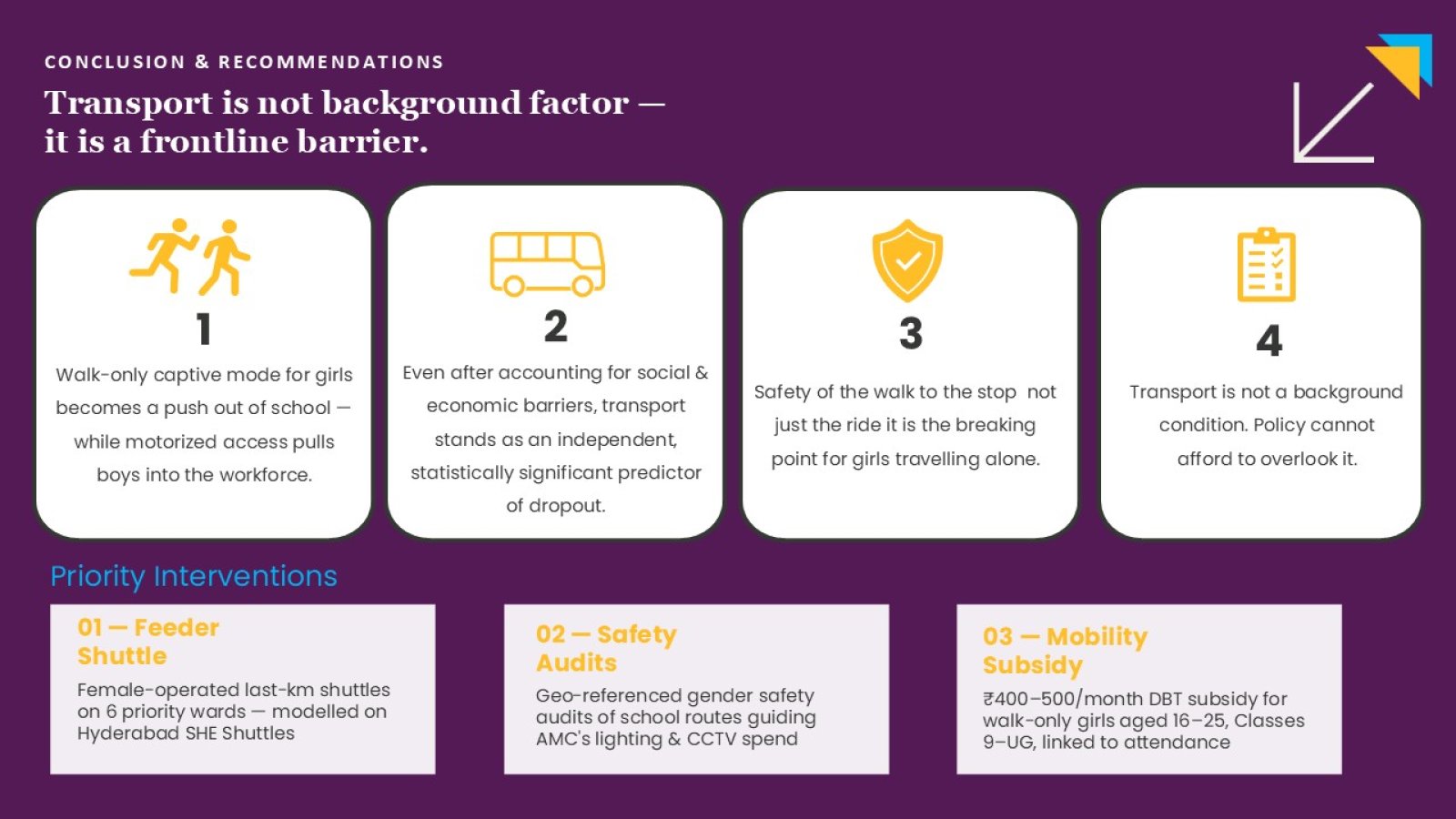
Conclusions: Fix the last kilometre, audit the route, and fund the fare — because transport is the tipping point policy keeps ignoring.