Kataria Shreyans Rajesh

UT4051

PUT24361

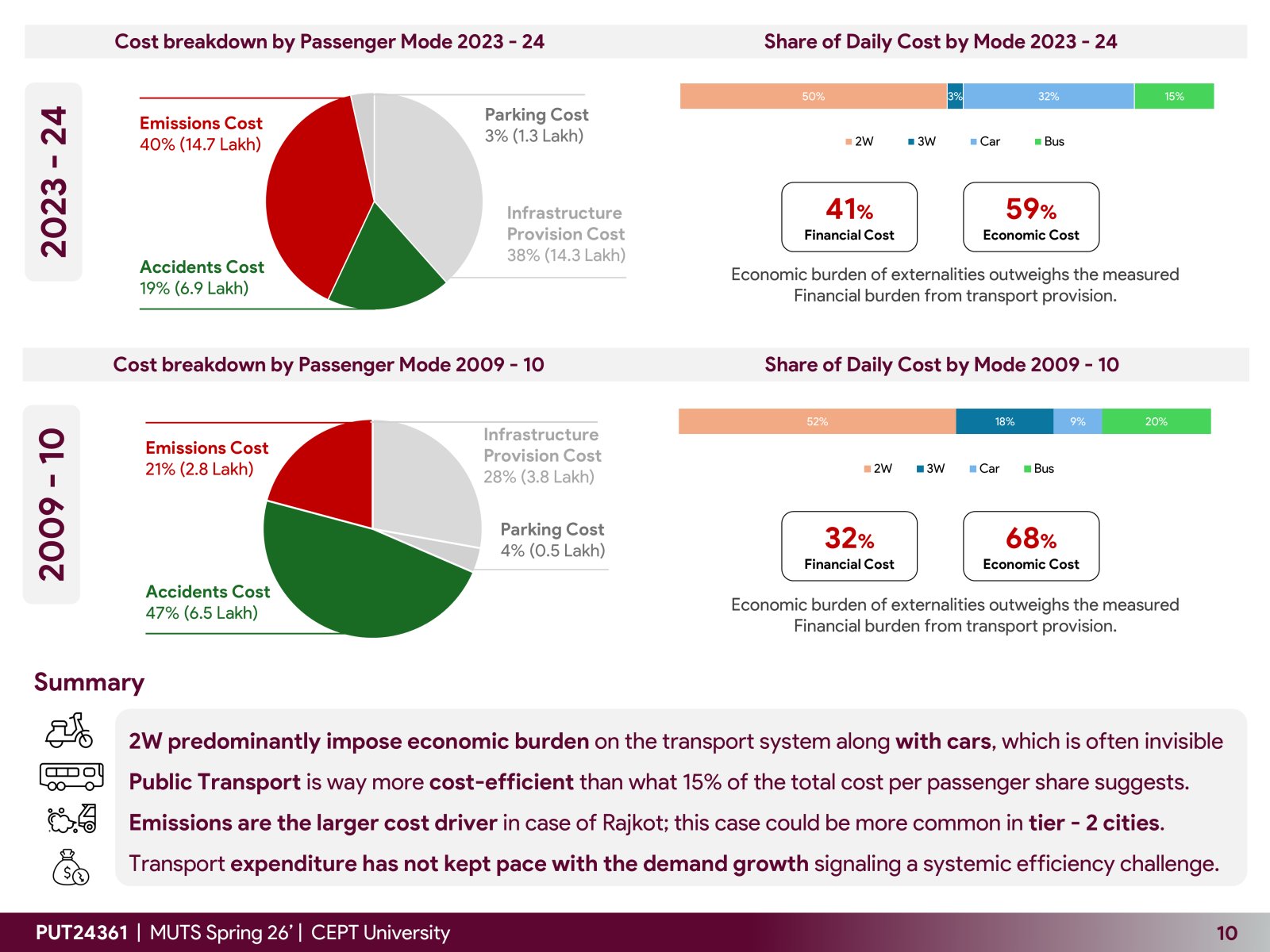
This Directed Research Project estimates the true cost of urban transport modes in Rajkot (2009 - 24) across two-wheelers, three-wheelers, cars, and buses. Using a Cost Allocation Framework, it integrates infrastructure expenditure, public transport operations, emissions, and accident costs into a unified Cost per Passenger-km metric. The study finds that externalities account for ~59 - 68% of total transport costs, with cars imposing the highest societal burden and buses being the most cost-efficient mode. The framework is designed to support more accountable, equitable transport investment decisions in Indian cities.
Report Content

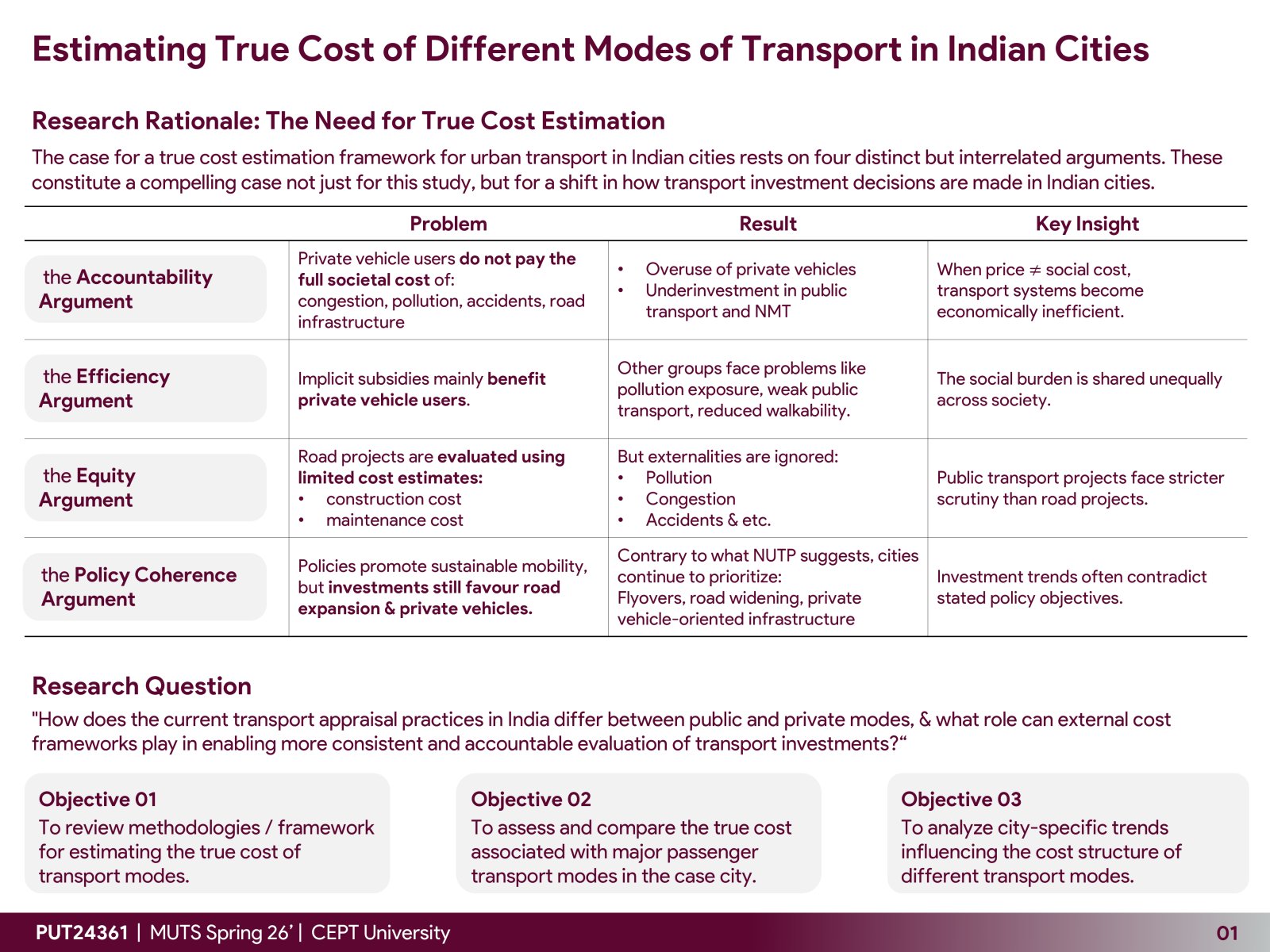
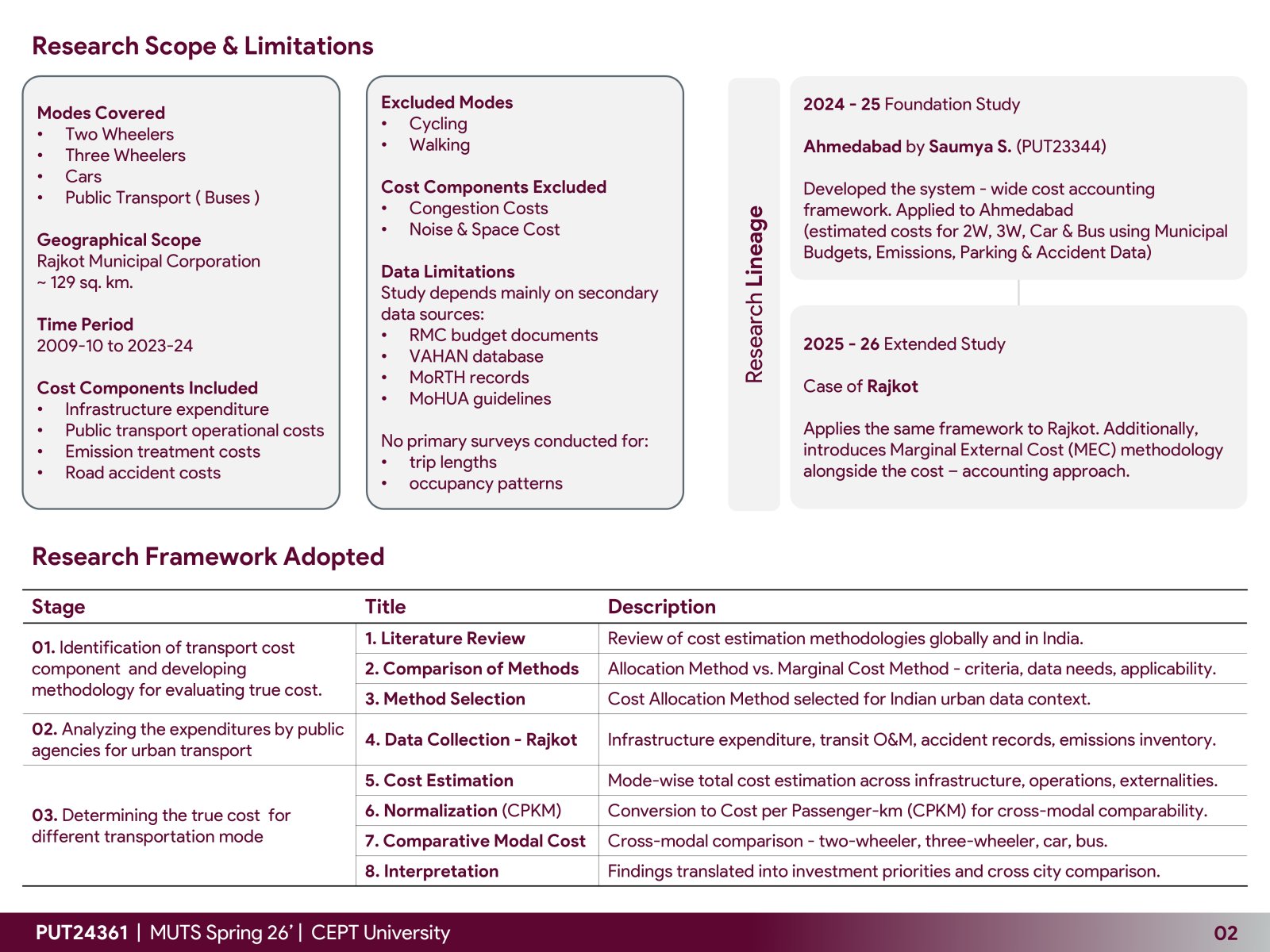
Research Rationale & Objectives - Establishes why true cost estimation matters: hidden subsidies, policy-investment contradictions, and the four core arguments driving the study.

Research Scope & Framework - Defines the study boundaries (Rajkot, 2009 - 24, four modes), acknowledges data limitations, and outlines the 8-step research methodology.

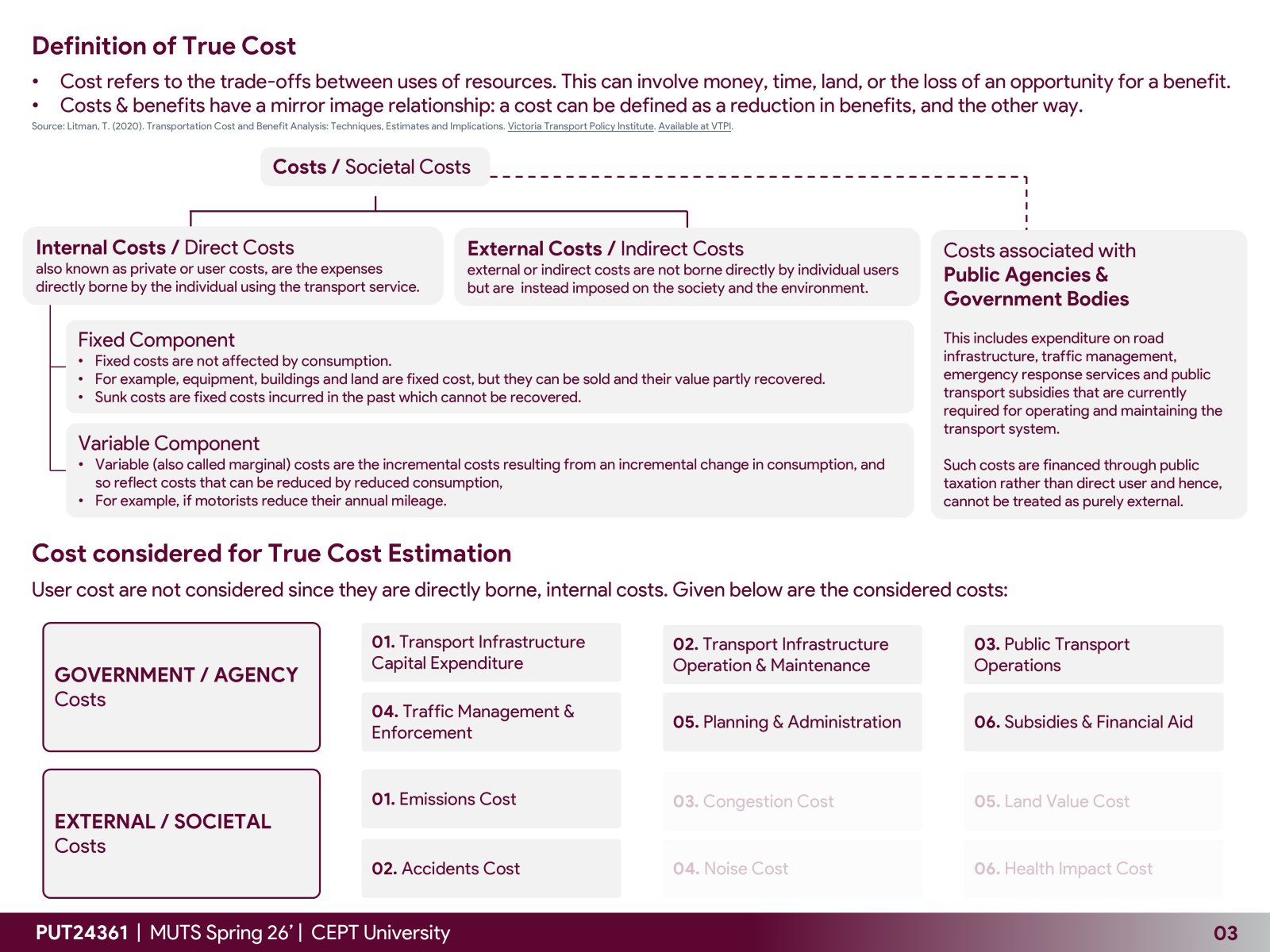
Conceptual Framework: What is True Cost? Breaks down societal costs into internal vs. external and fixed vs. variable components, and lists the government and externality cost categories considered.

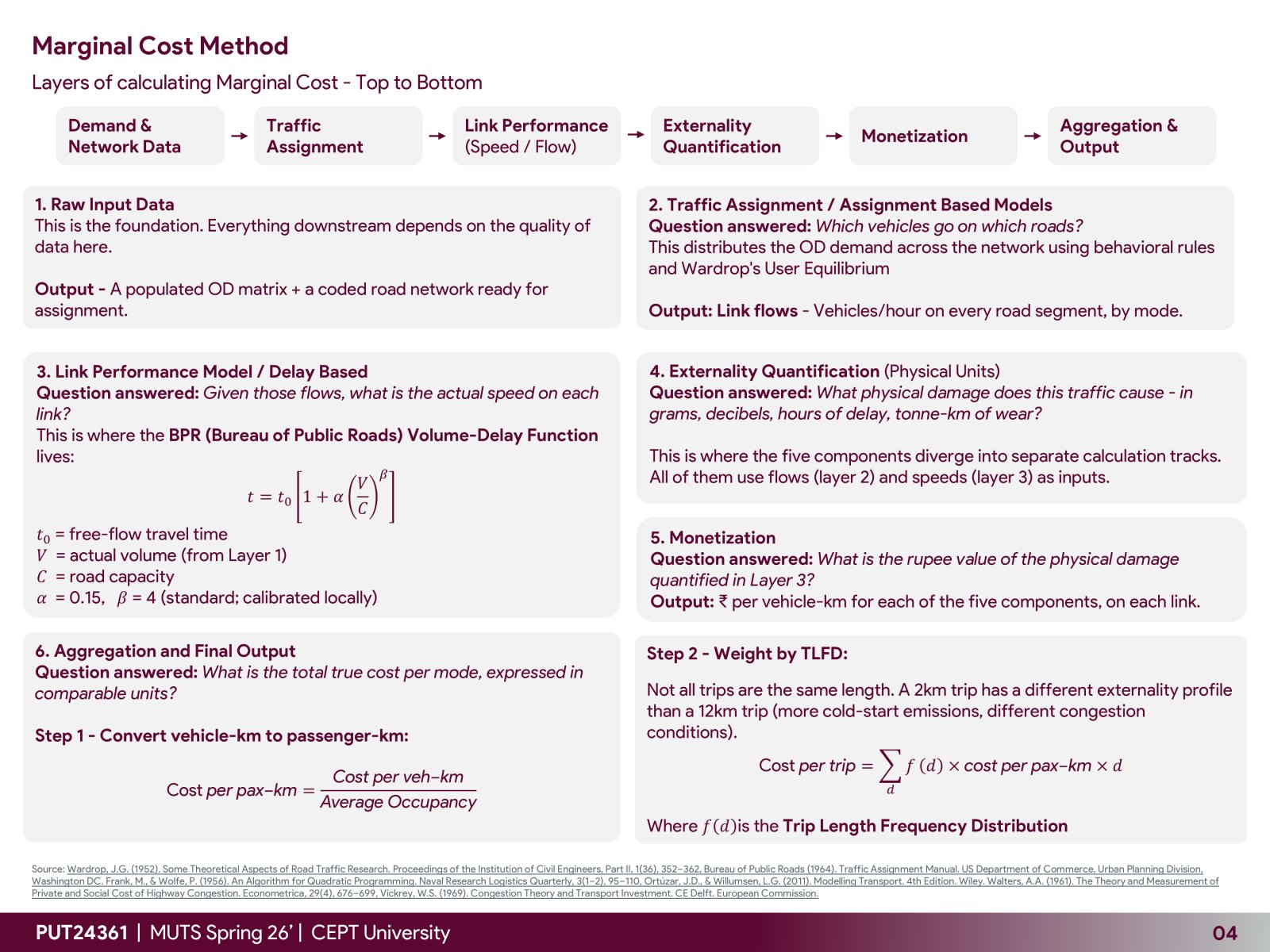
Marginal Cost Method Explained - Details the bottom-up, layer-by-layer Marginal Cost approach: from OD matrices and traffic assignment through to monetized externalities.

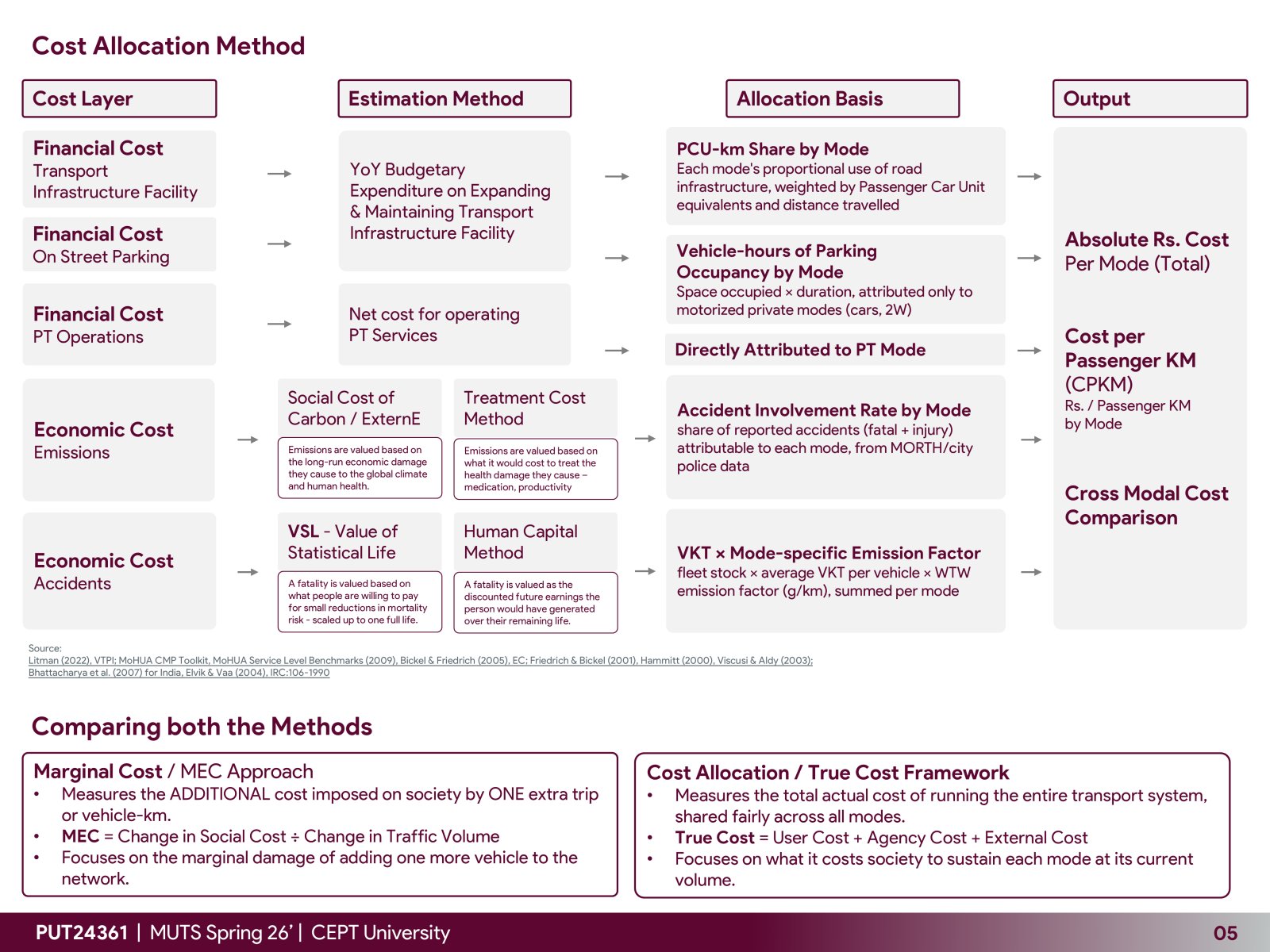
Cost Allocation Method Explained - Presents the Cost Allocation framework - allocation bases, estimation methods, and how it compares to the Marginal Cost approach.

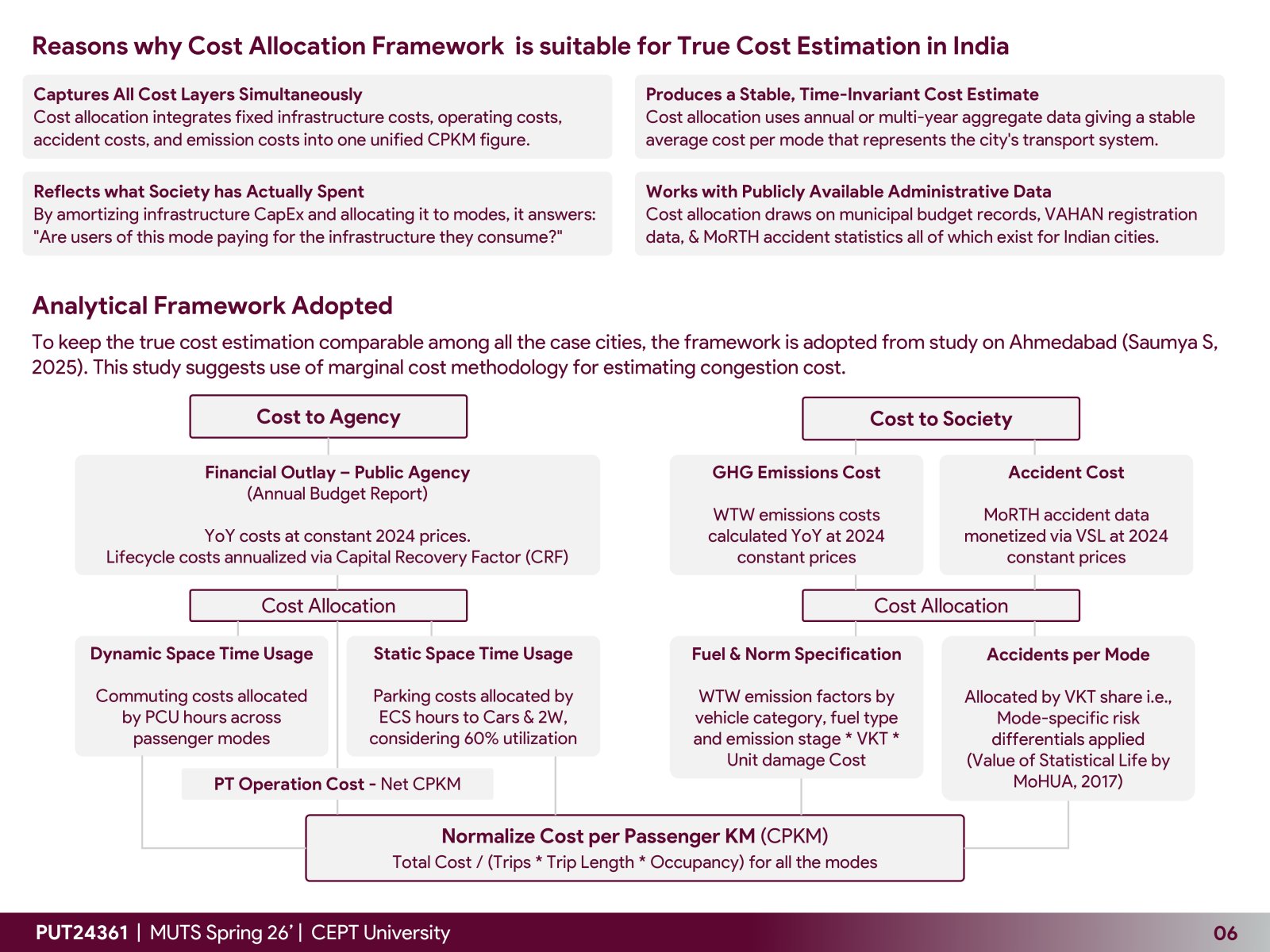
Why Cost Allocation Suits Indian Cities - Justifies the chosen method: it works with available data, captures all cost layers, and produces stable, society-reflecting estimates.

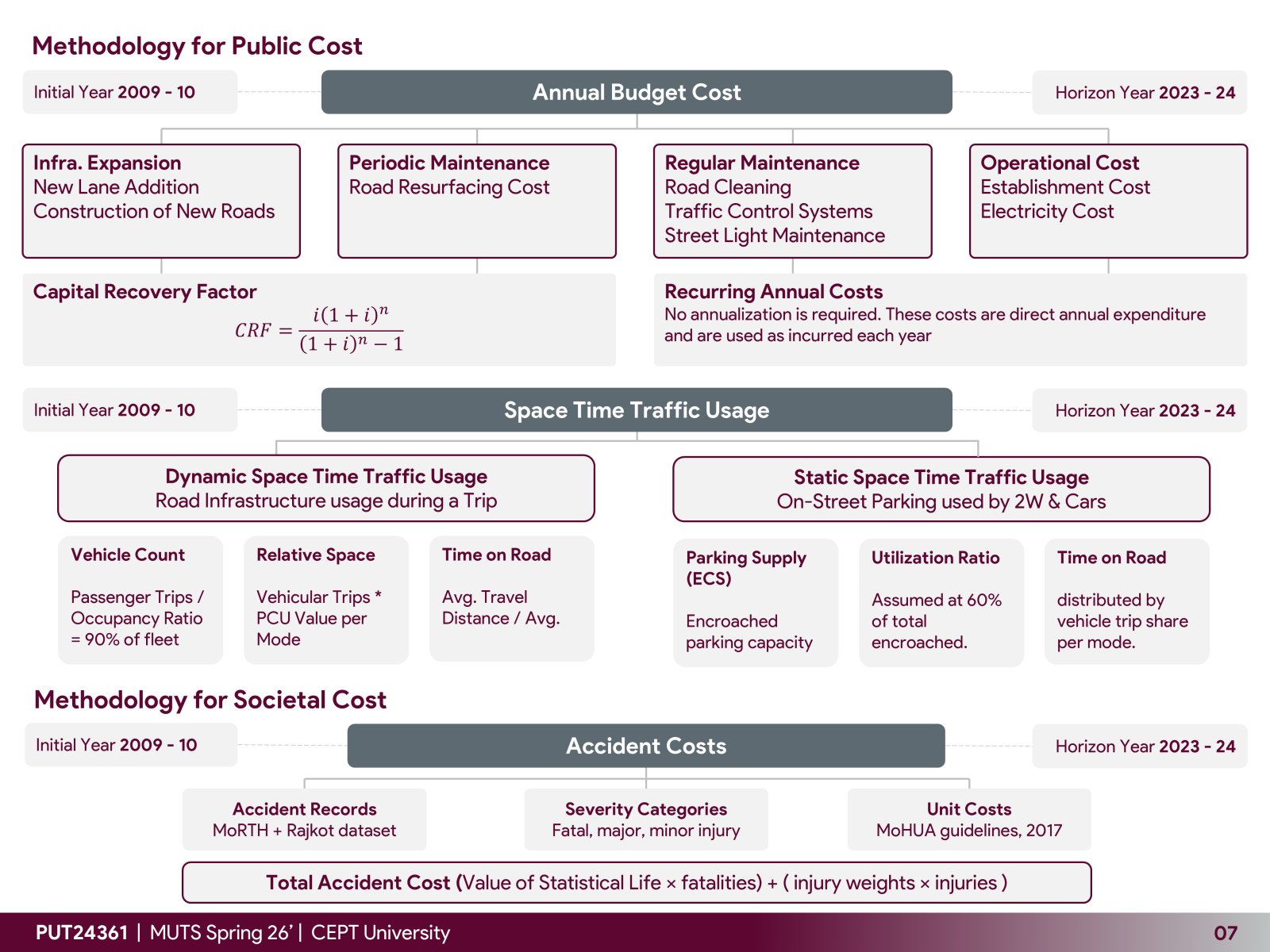
Methodology for Public & Societal Costs - Details how infrastructure, parking, and accident costs are operationalized, including annualization, space-time usage, and VSL - based accident valuation.

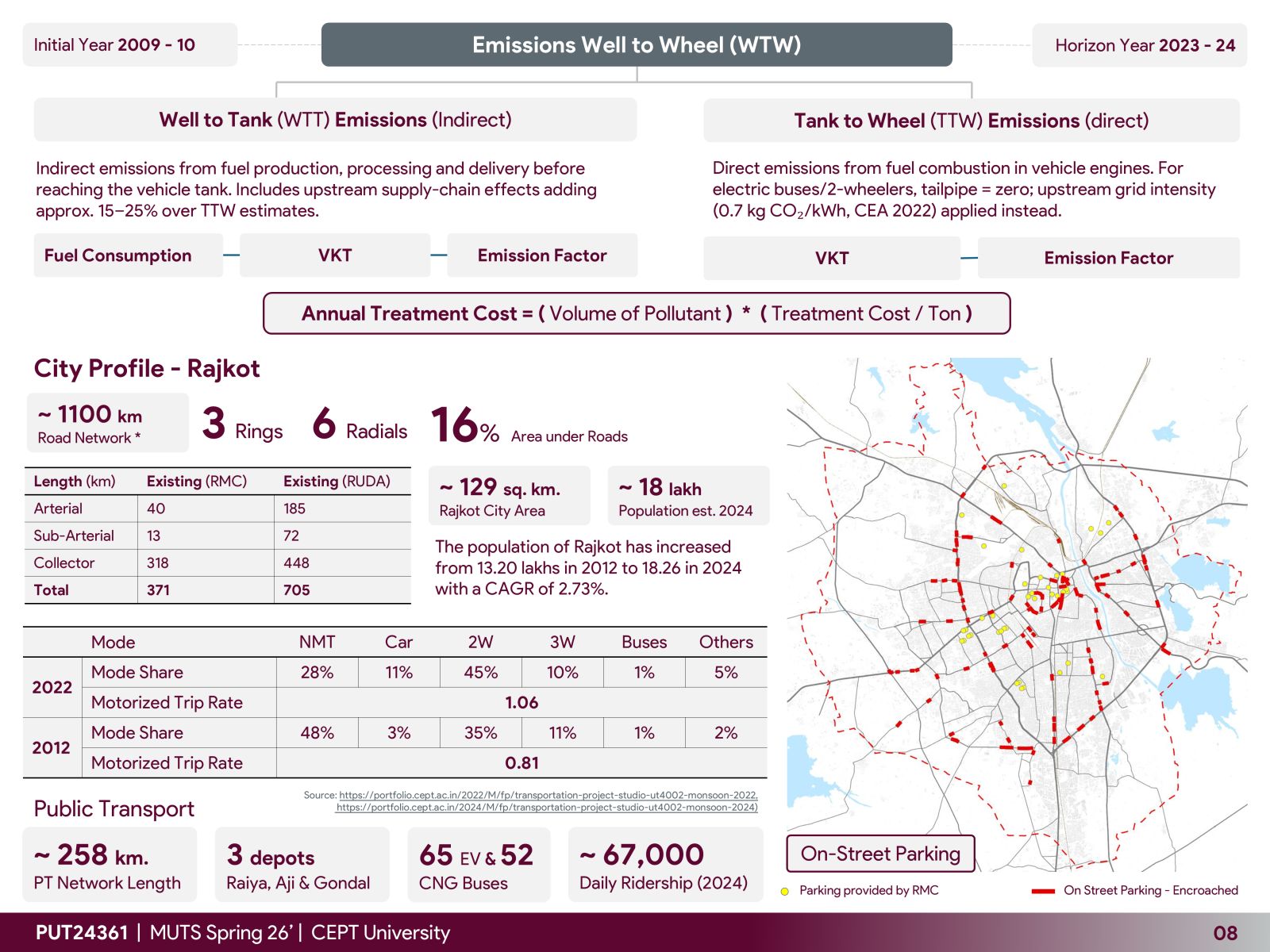
Emissions Methodology & Rajkot City Profile - Explains the Well-to-Wheel emissions calculation and provides key statistics on Rajkot's area, population, road network, and mode share.

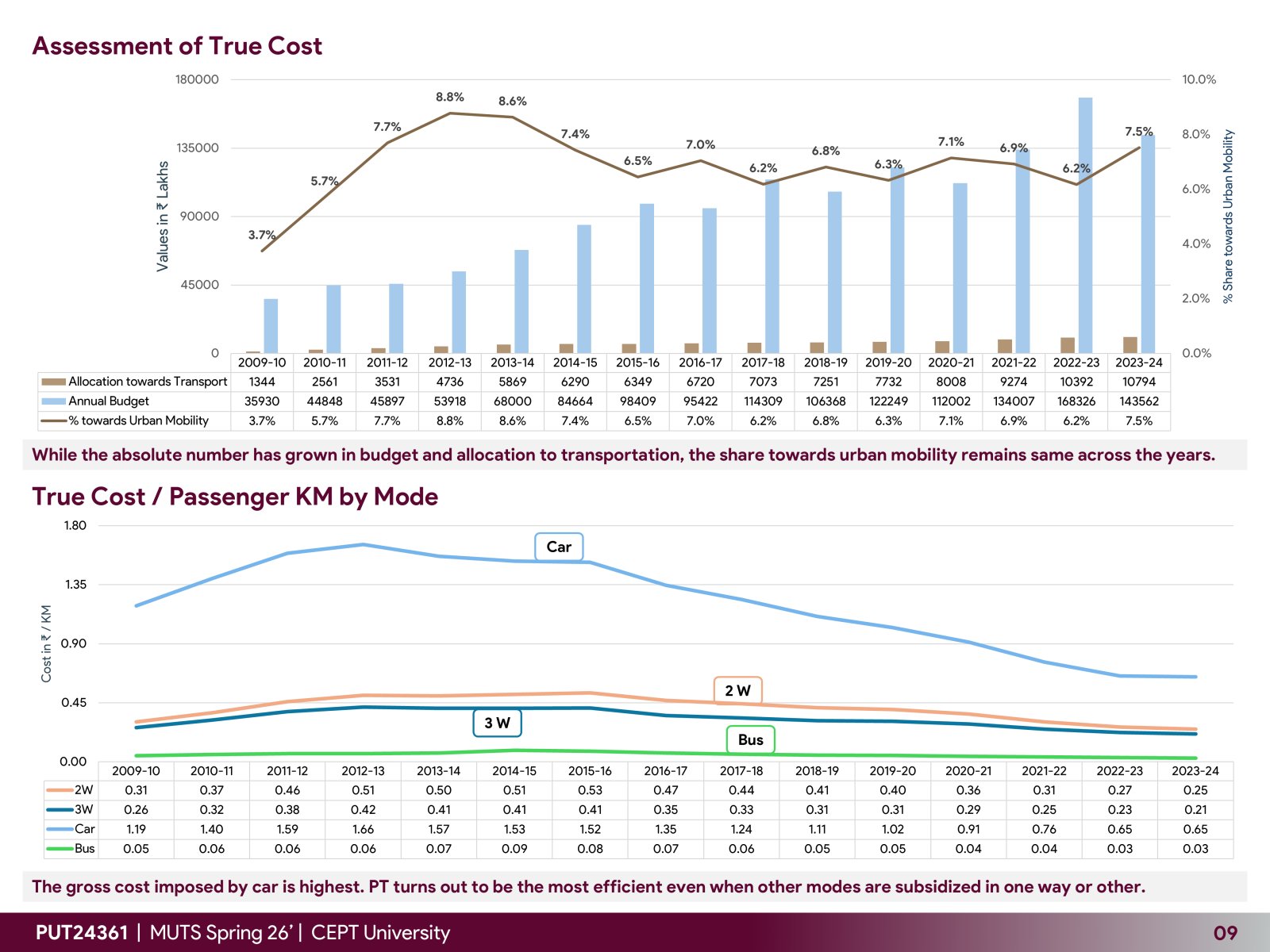
True Cost Results by Mode - Presents the core finding: cars impose the highest gross cost while public transport is the most cost-efficient mode per passenger-km.

Key Findings & Cost Breakdown - Summarizes cost breakdowns for 2009 - 10 and 2023 - 24, showing that economic externalities (59 - 68%) outweigh financial costs, with emissions as the dominant driver.