Your browser is out-of-date!
For a richer surfing experience on our website, please update your browser. Update my browser now!
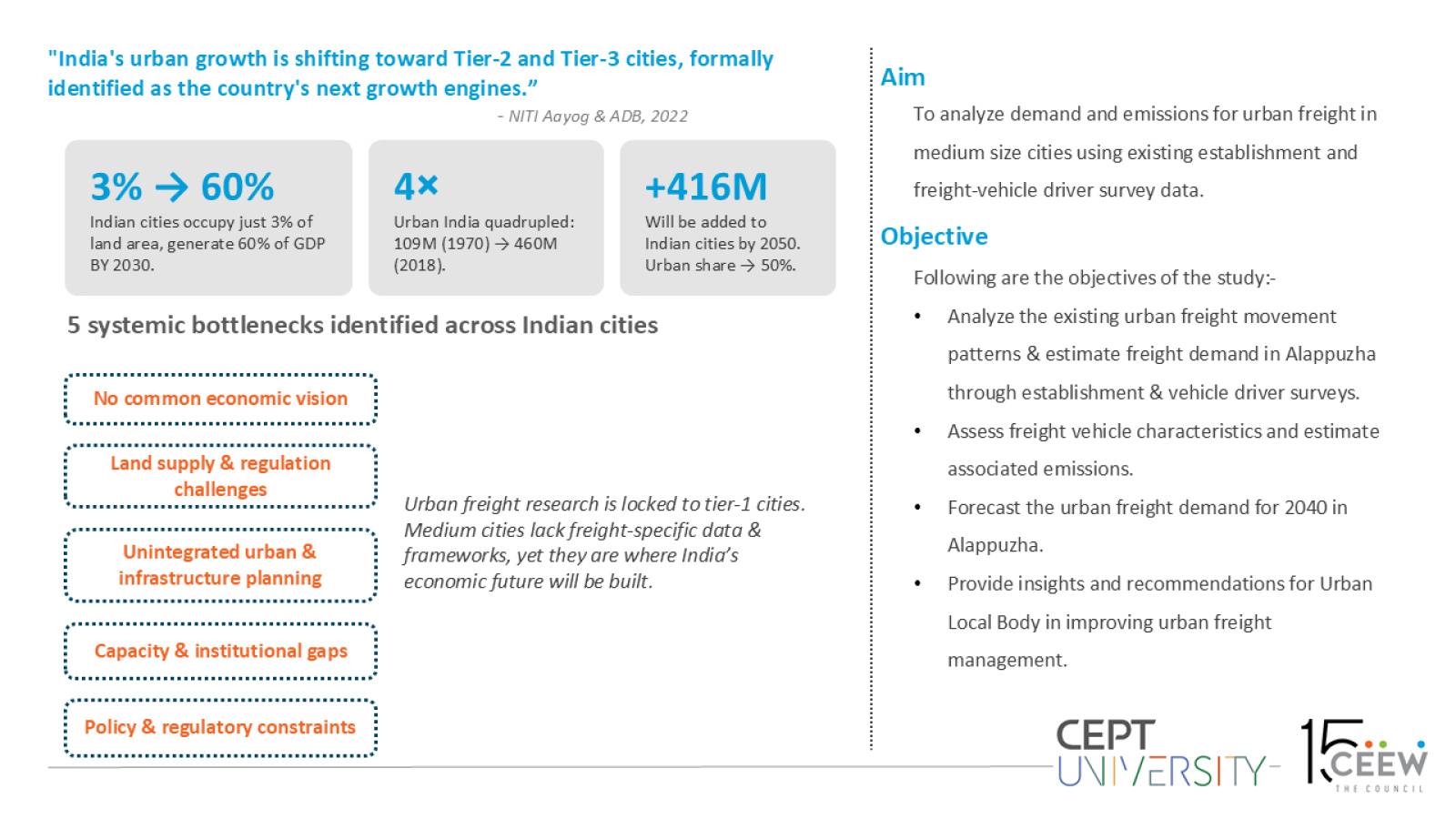
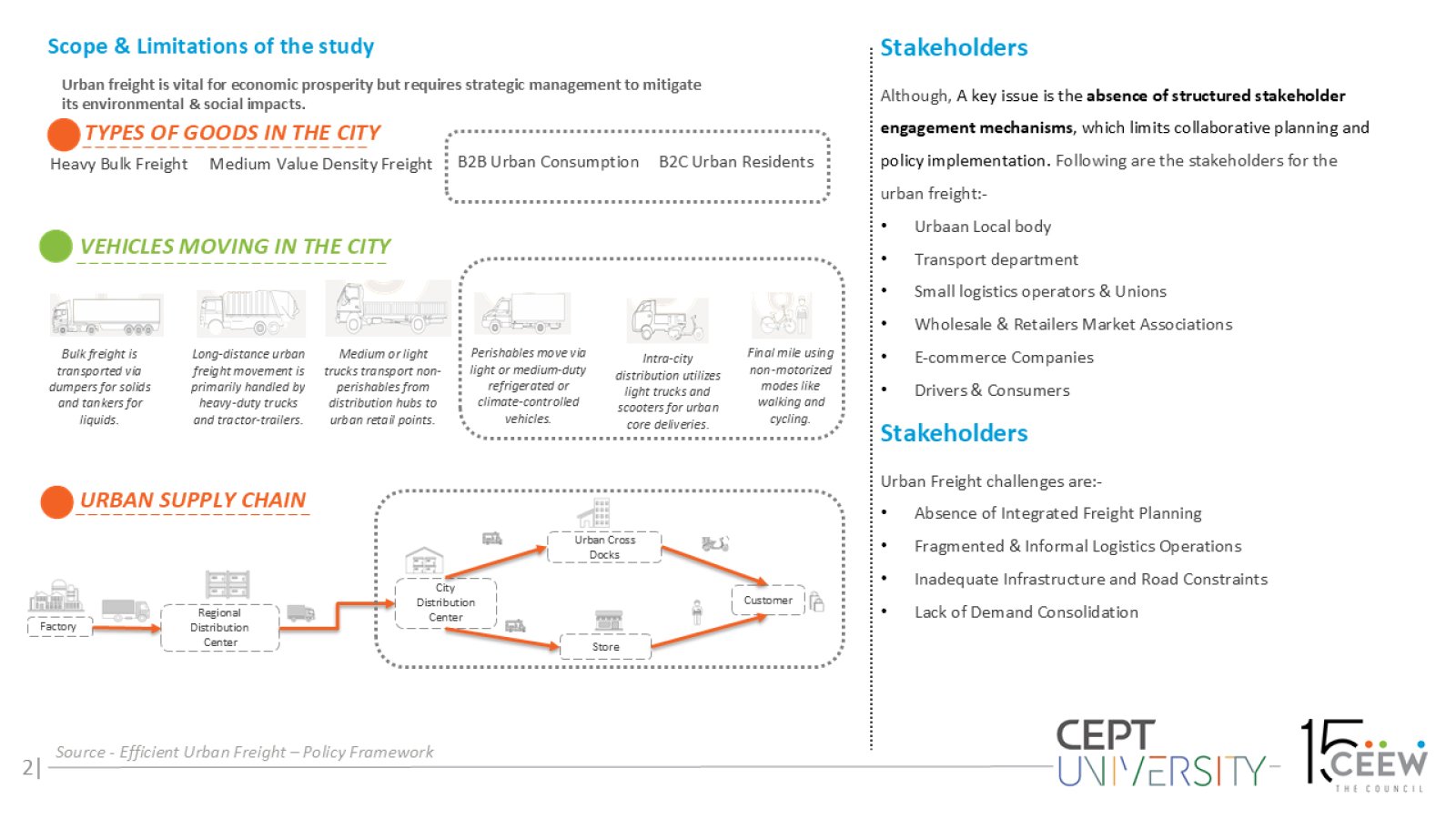
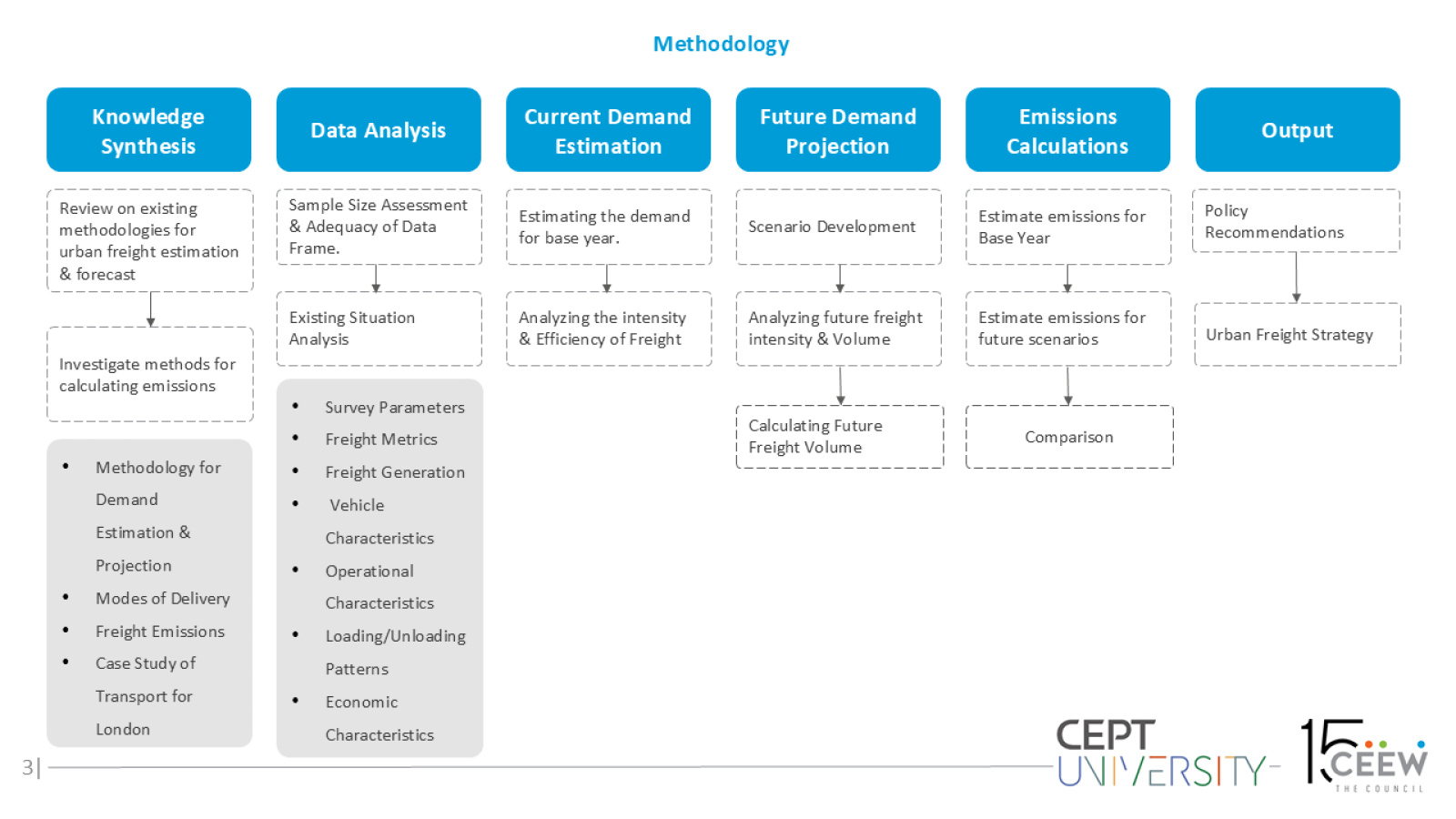
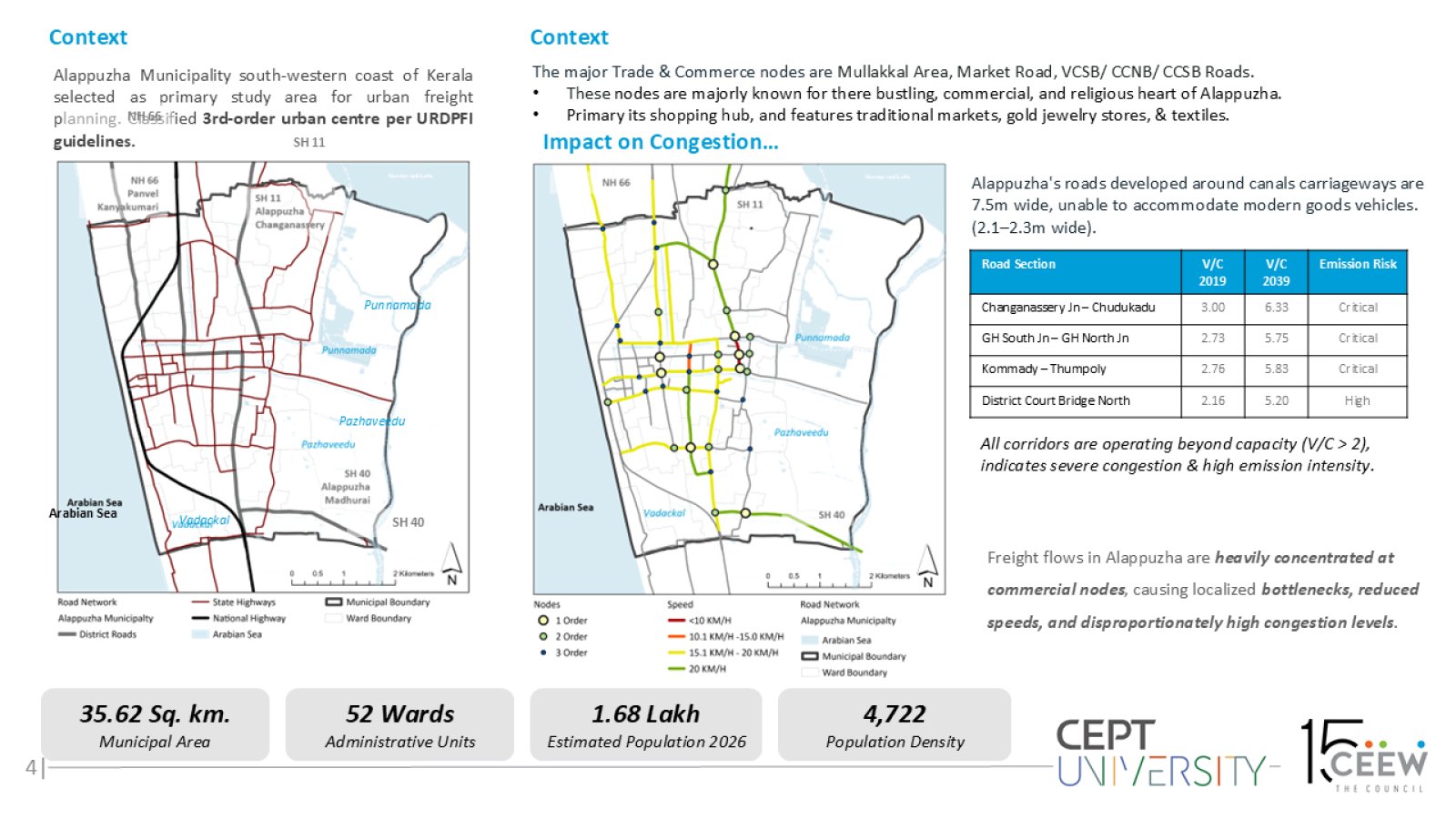
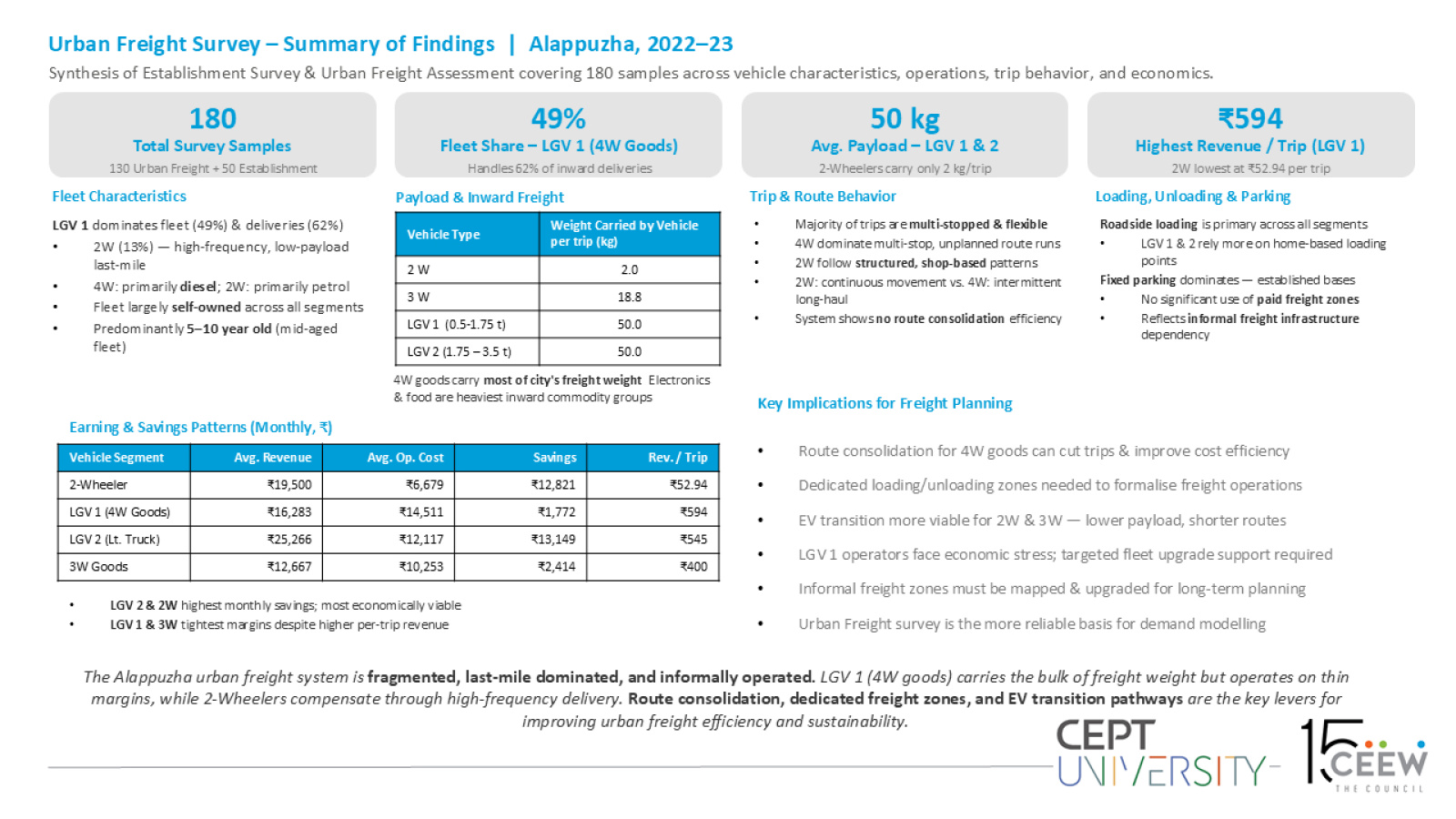
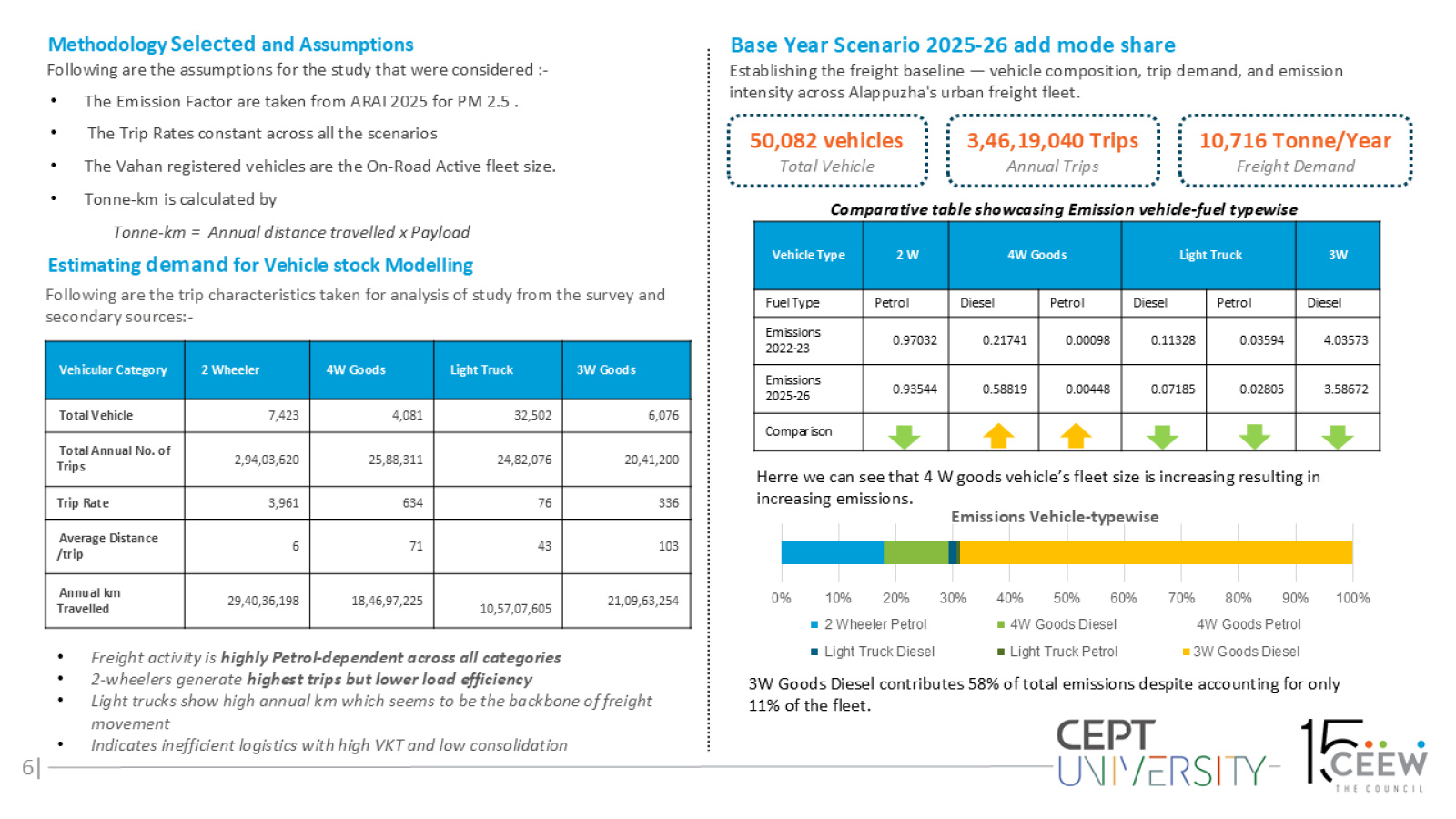
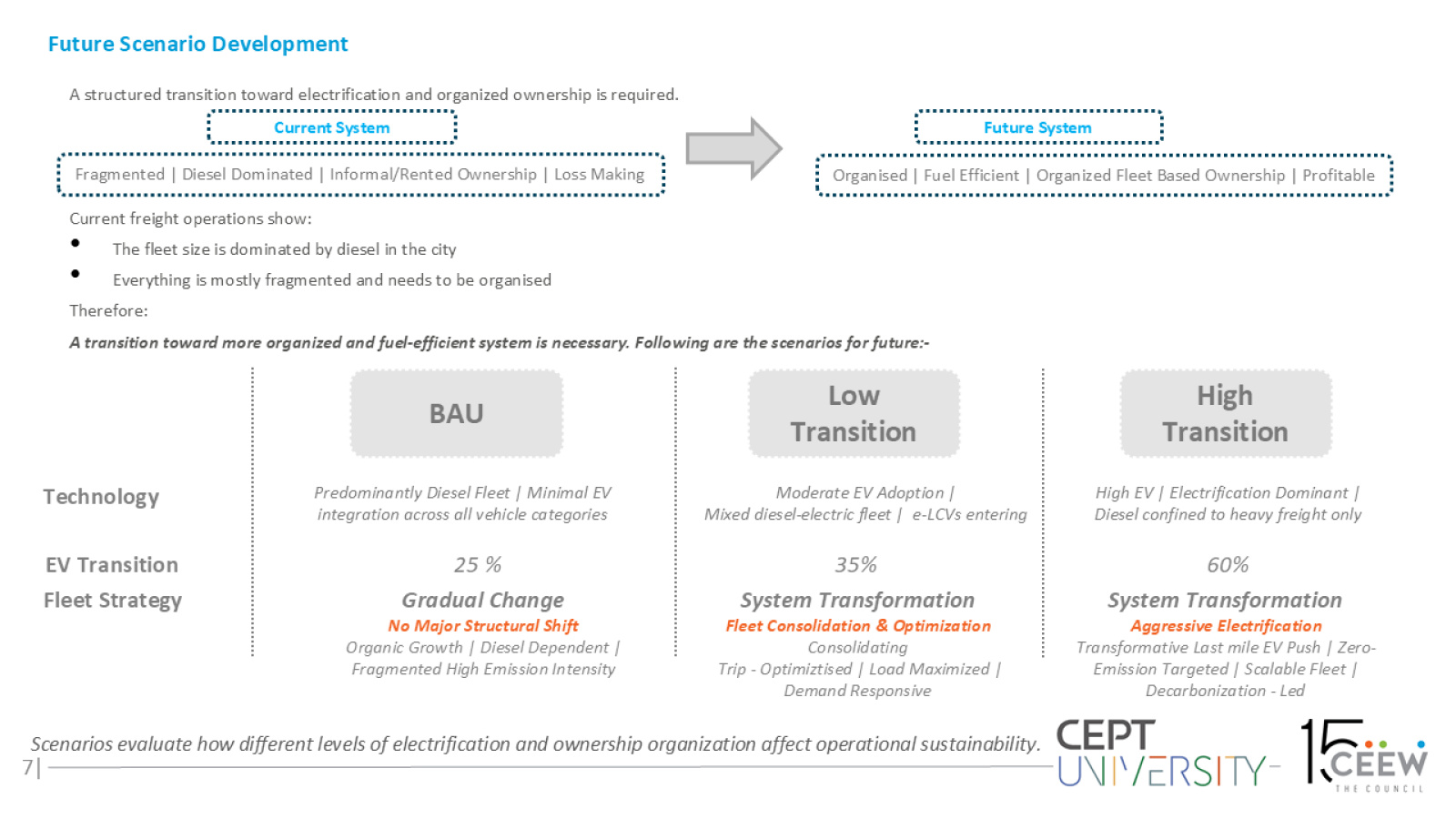
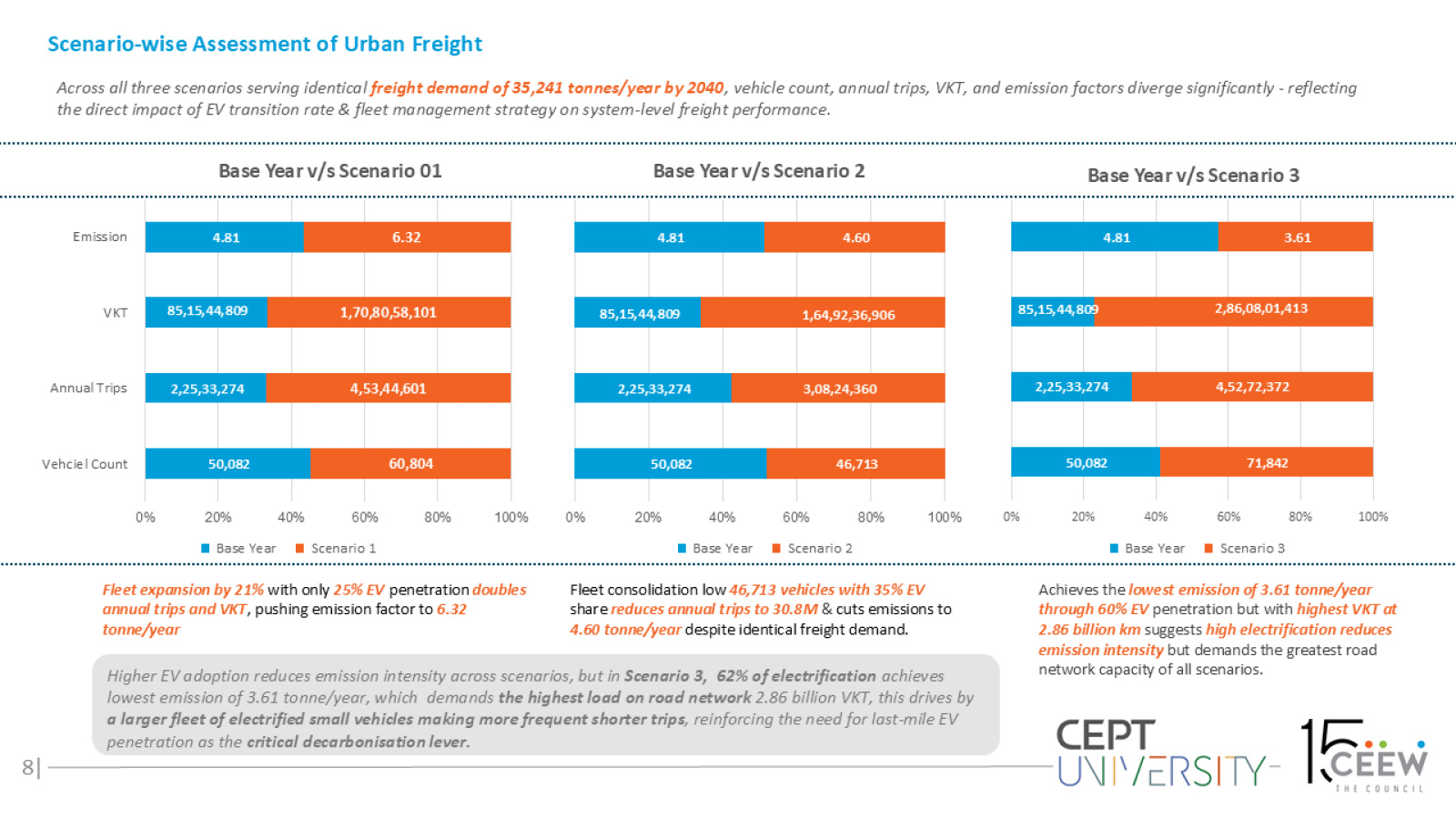
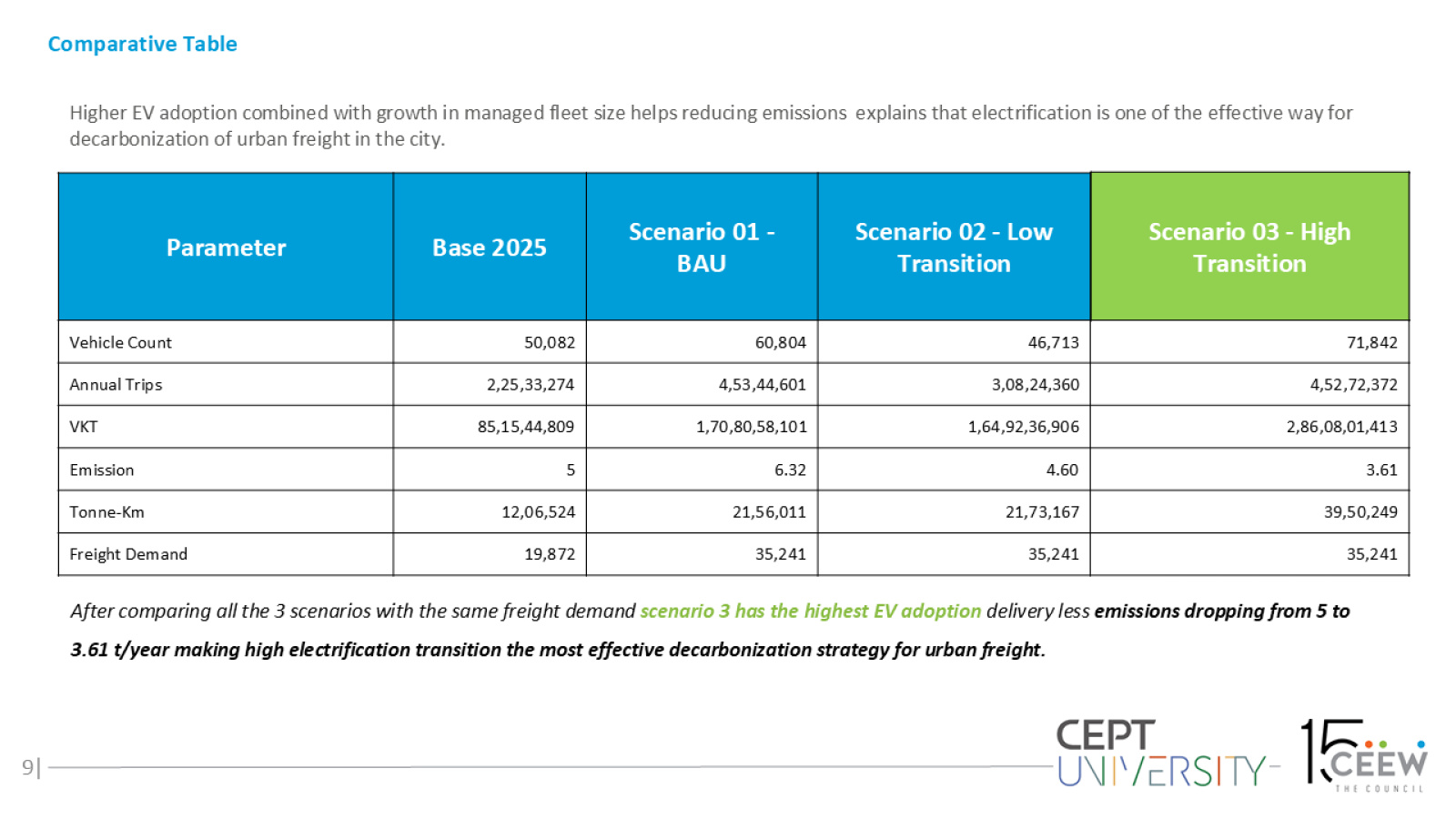
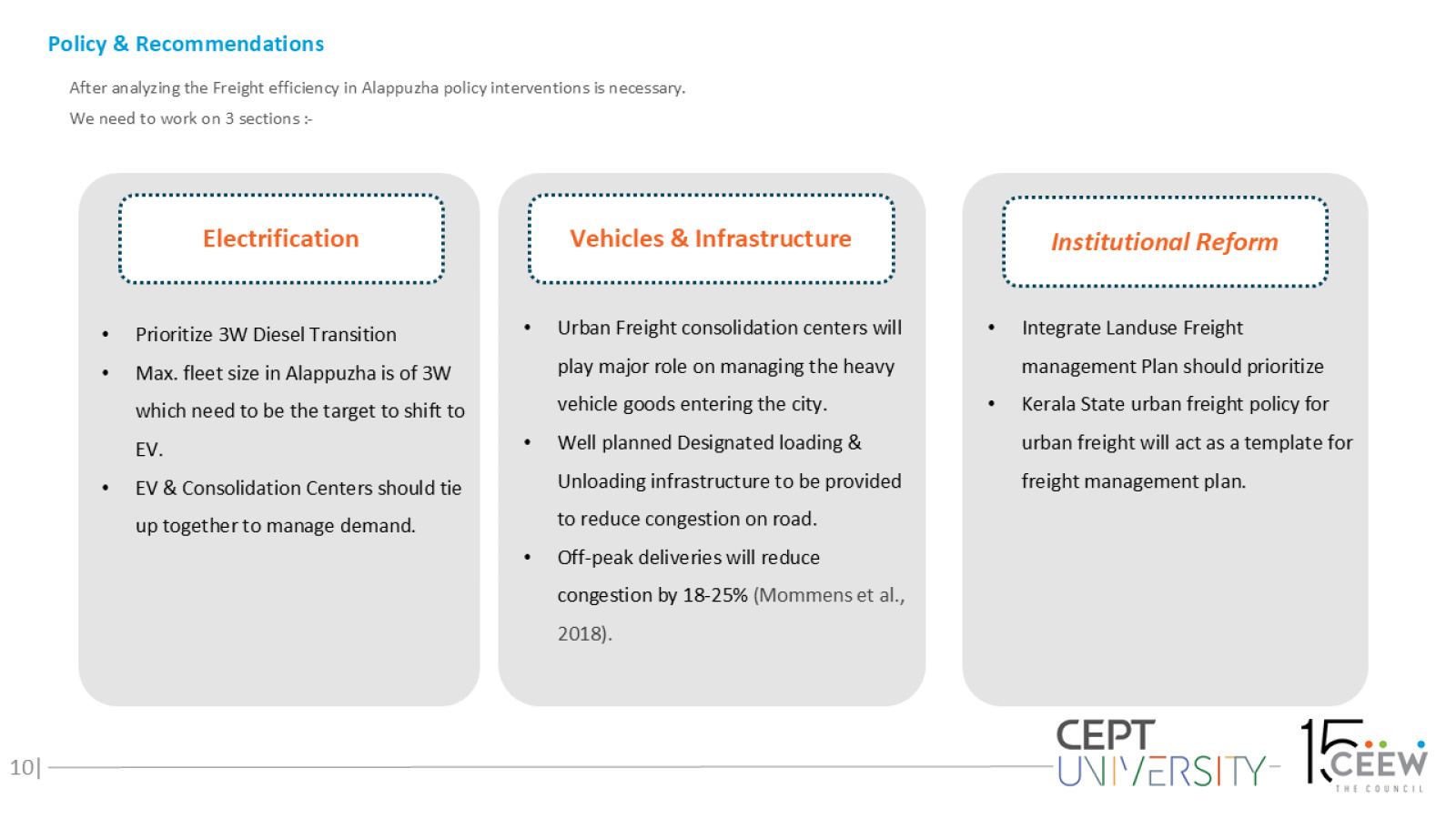
Alappuzha's urban freight system is fragmented, last-mile dominated, and informally operated. This study, conducted by CEPT University and CEEW, surveyed 180 freight operators across vehicle characteristics, trip behaviour, and economics to estimate current demand and project freight emissions through 2040. With vehicle demand generating more annual trips, the city's freight network operates under severe congestion and thin margins. Three electrification scenarios were modelled - a 60% EV transition delivers the lowest emissions at 3.61 tonnes/year. The study recommends fleet electrification, dedicated freight consolidation centres, and institutional reform to build a sustainable urban freight future.