Varshitha D R

UT4051

PUT24441

Safe Routes to School in India exists as a series of well-intentioned projects, never a programme. This research maps ten Indian cities across three distinct implementation approaches: neighbourhood integration, evidence-based tactical, and community-led co-design and examines one city from each approach in depth: Bhubaneswar, Bengaluru, and Delhi. Read through the 5E framework, the study identifies a consistent structural gap across all three: design exists, evidence exists, intent exists but no regulatory mandate, institutional ownership, or recurring funding holds any of it in place. The research proposes an institutional framework and a conflict-typology-based design framework to make SRTS a permanent feature of Indian city planning.

View Additional Work
Report Content

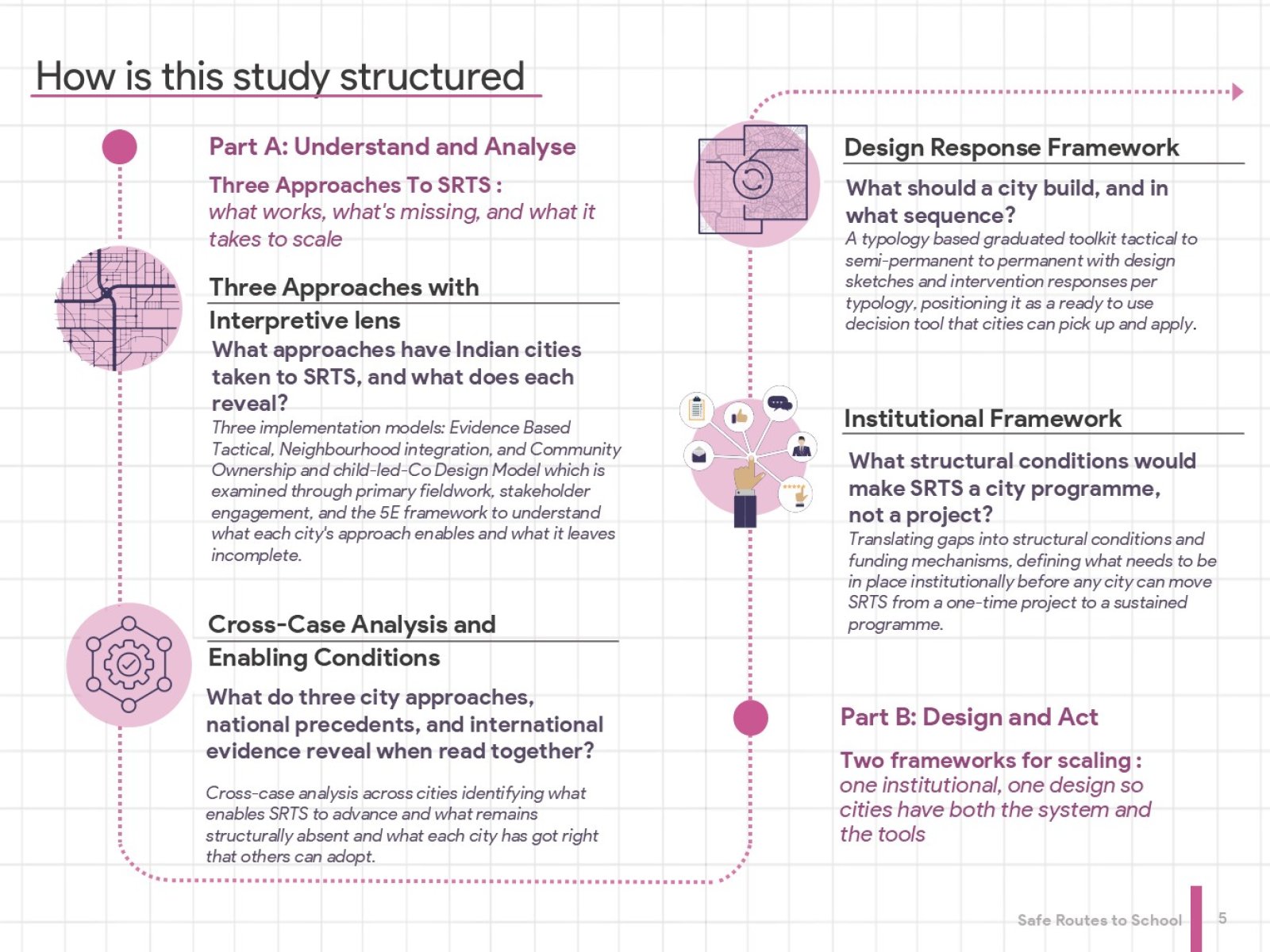
Objective: How is this Compendium Studied!

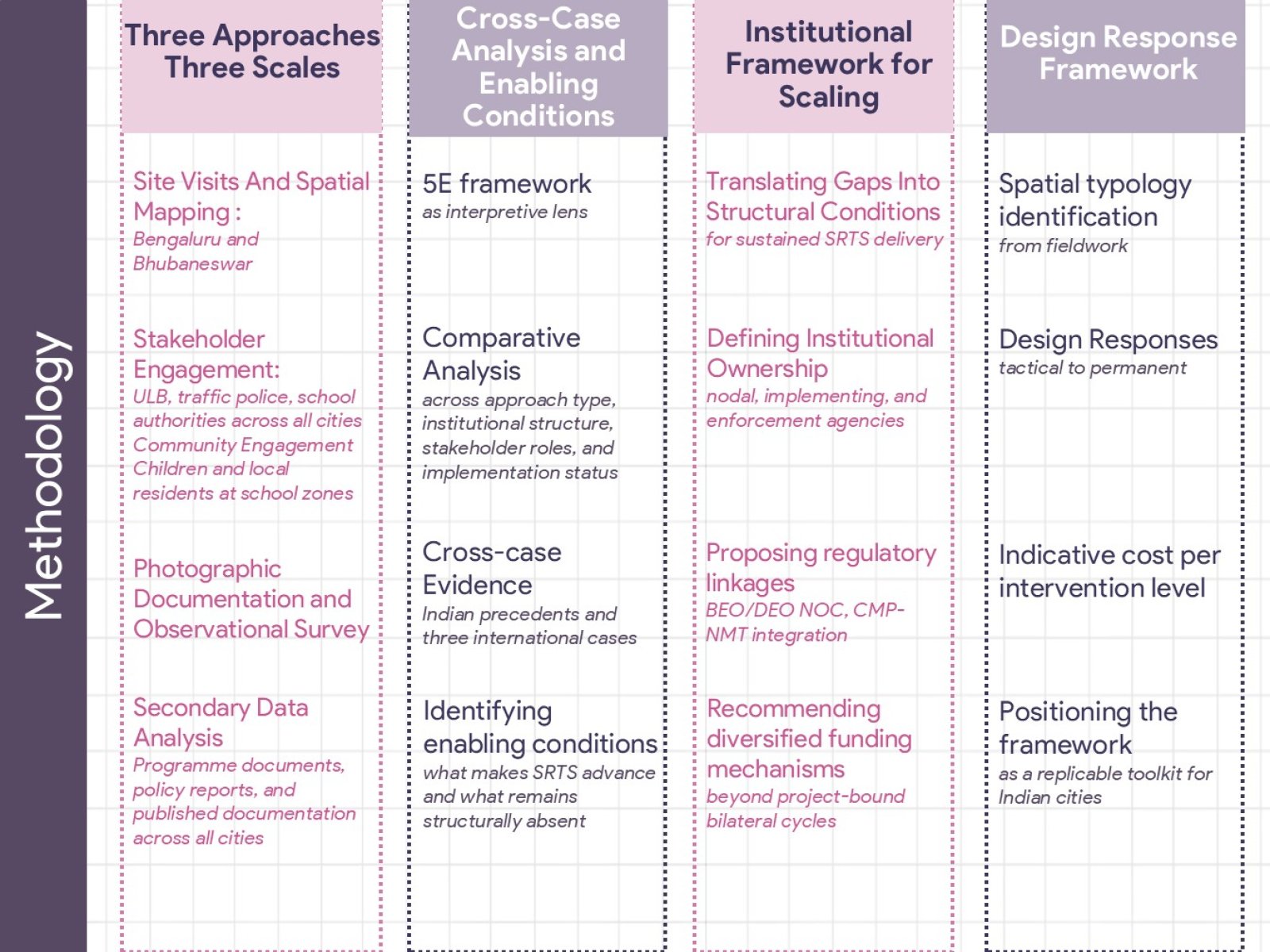
Methodology: Combining fieldwork, stakeholder engagement, comparative analysis, and framework-based interpretation

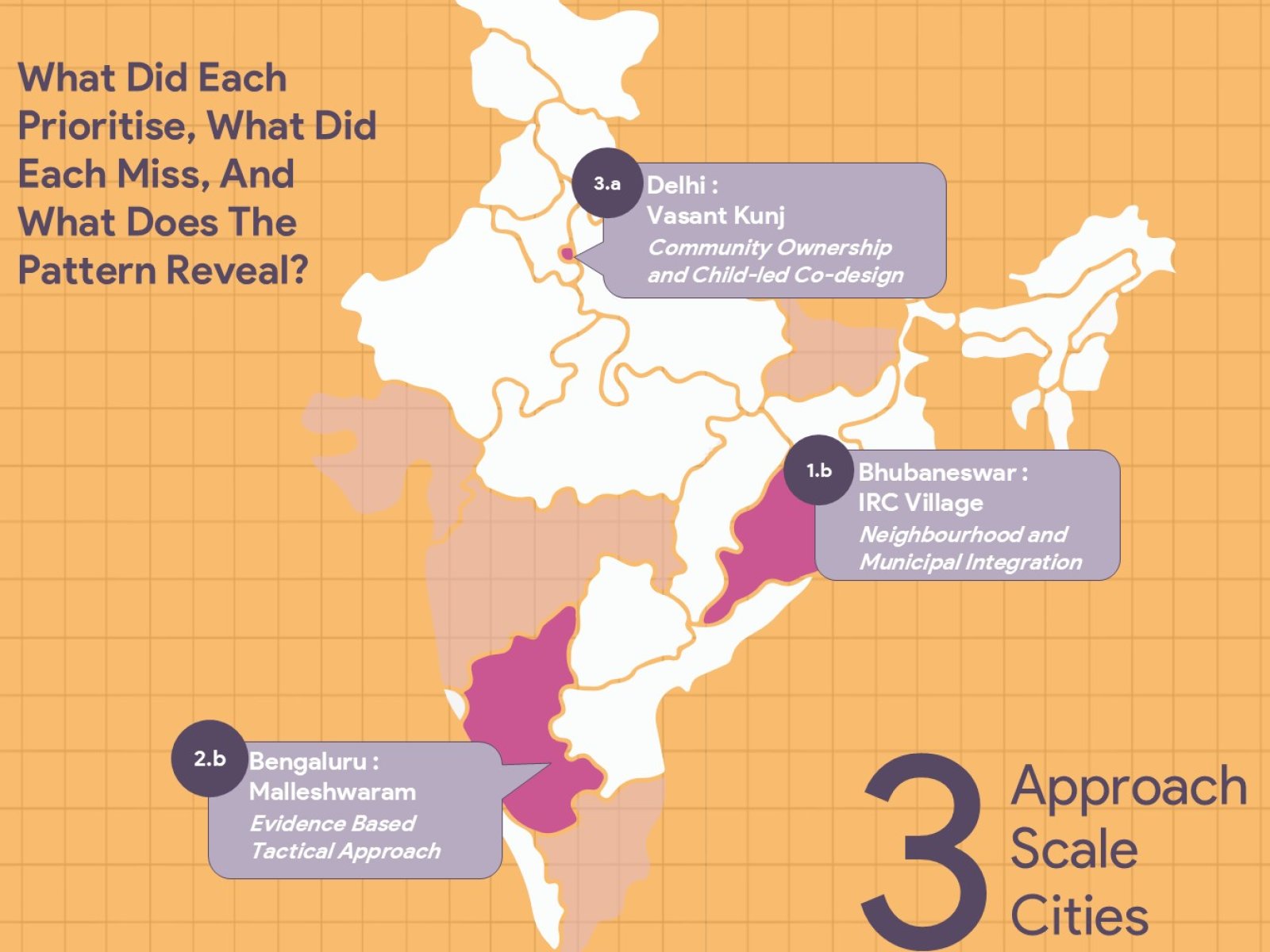
Introduction Map: Three Indian cities representing distinct approaches, scales, and implementation pathways

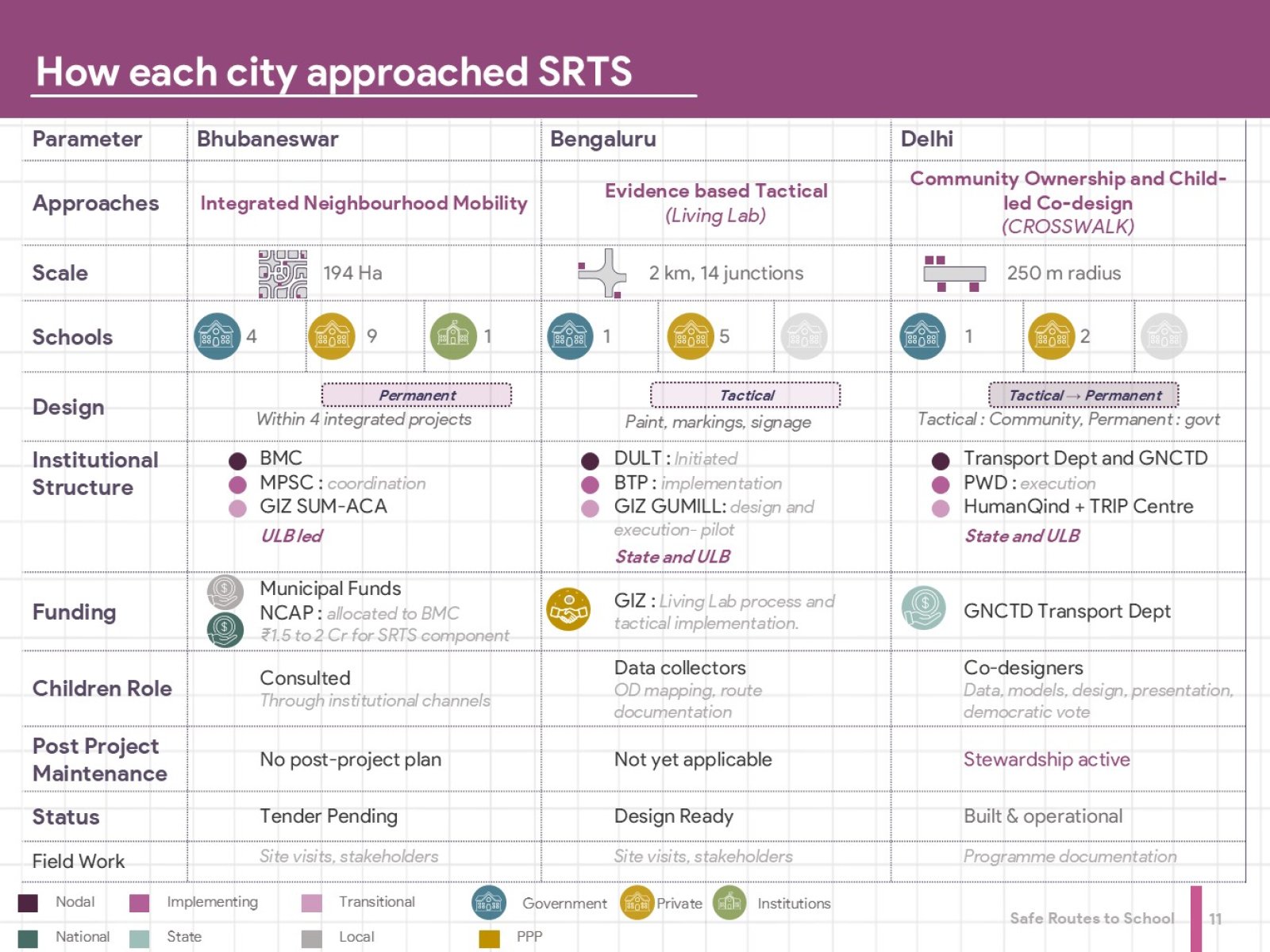
How each city approached SRTS: Comparing neighbourhood, tactical, and child-led models across three Indian cities

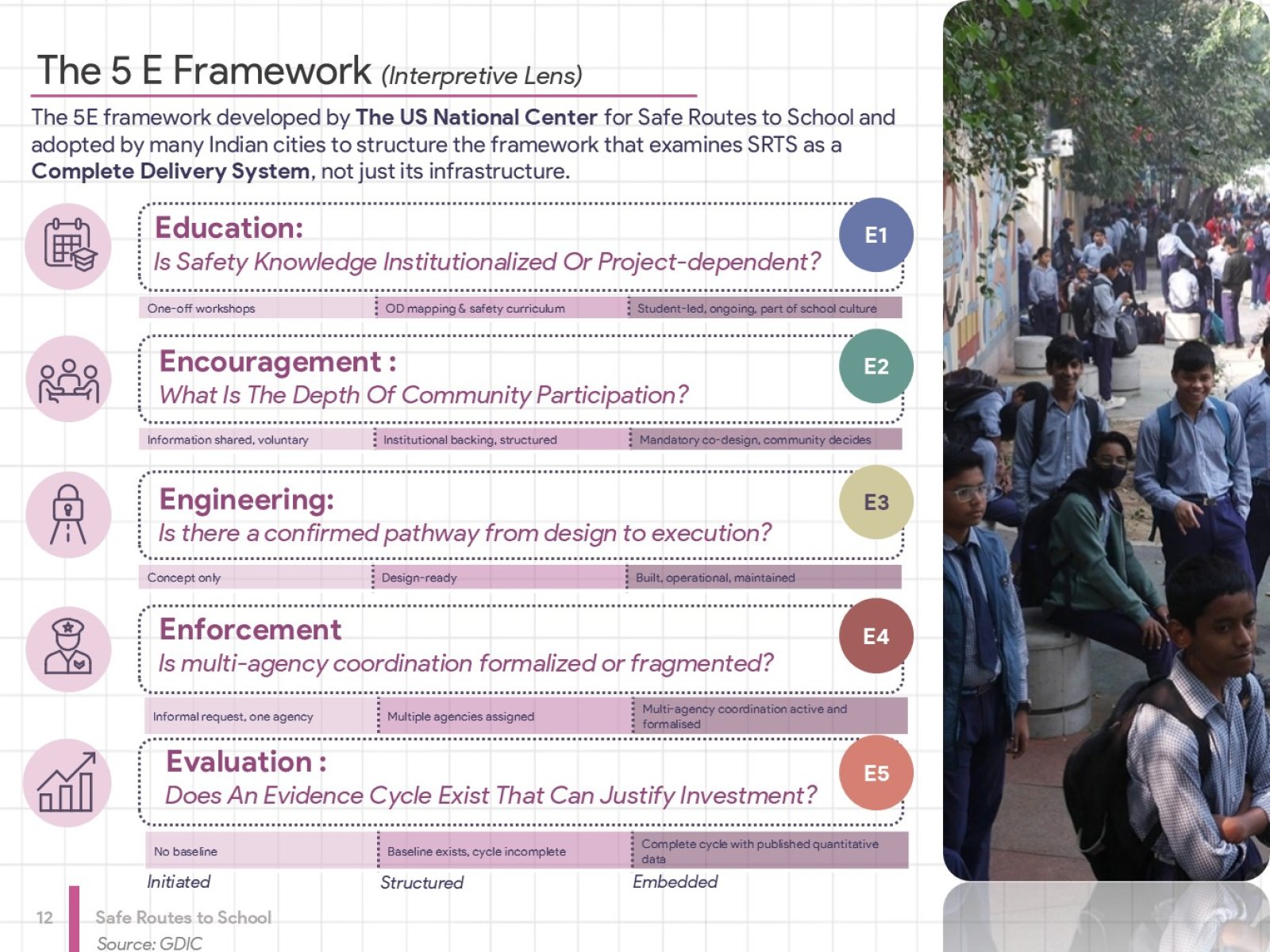
5E Framework: Using the 5Es as a Interpretive lens through SRTS as complete delivery systems

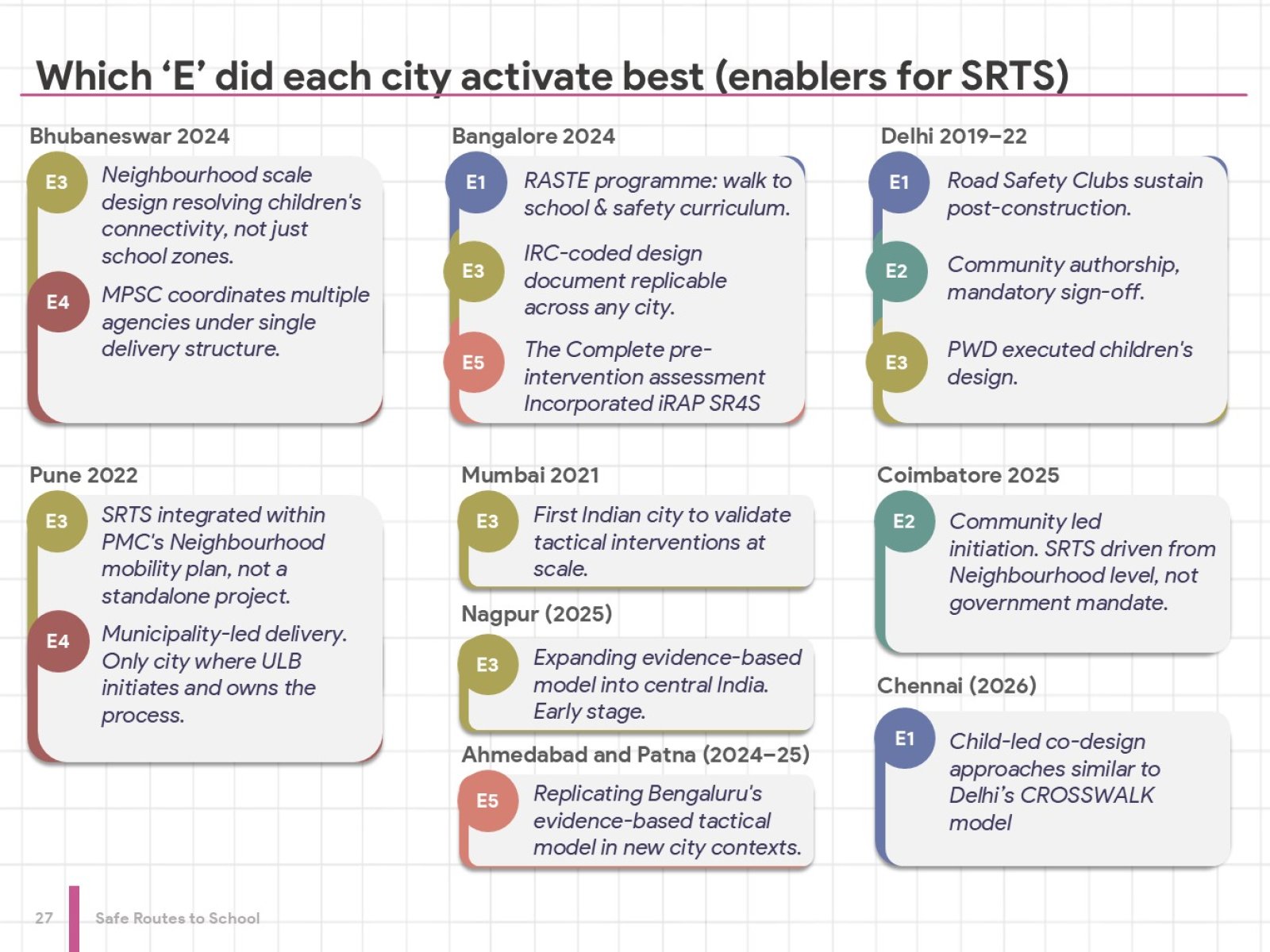
Which ‘E’ did each city activate best: Enablers, Each city strengthens different components required for scalable SRTS implementation

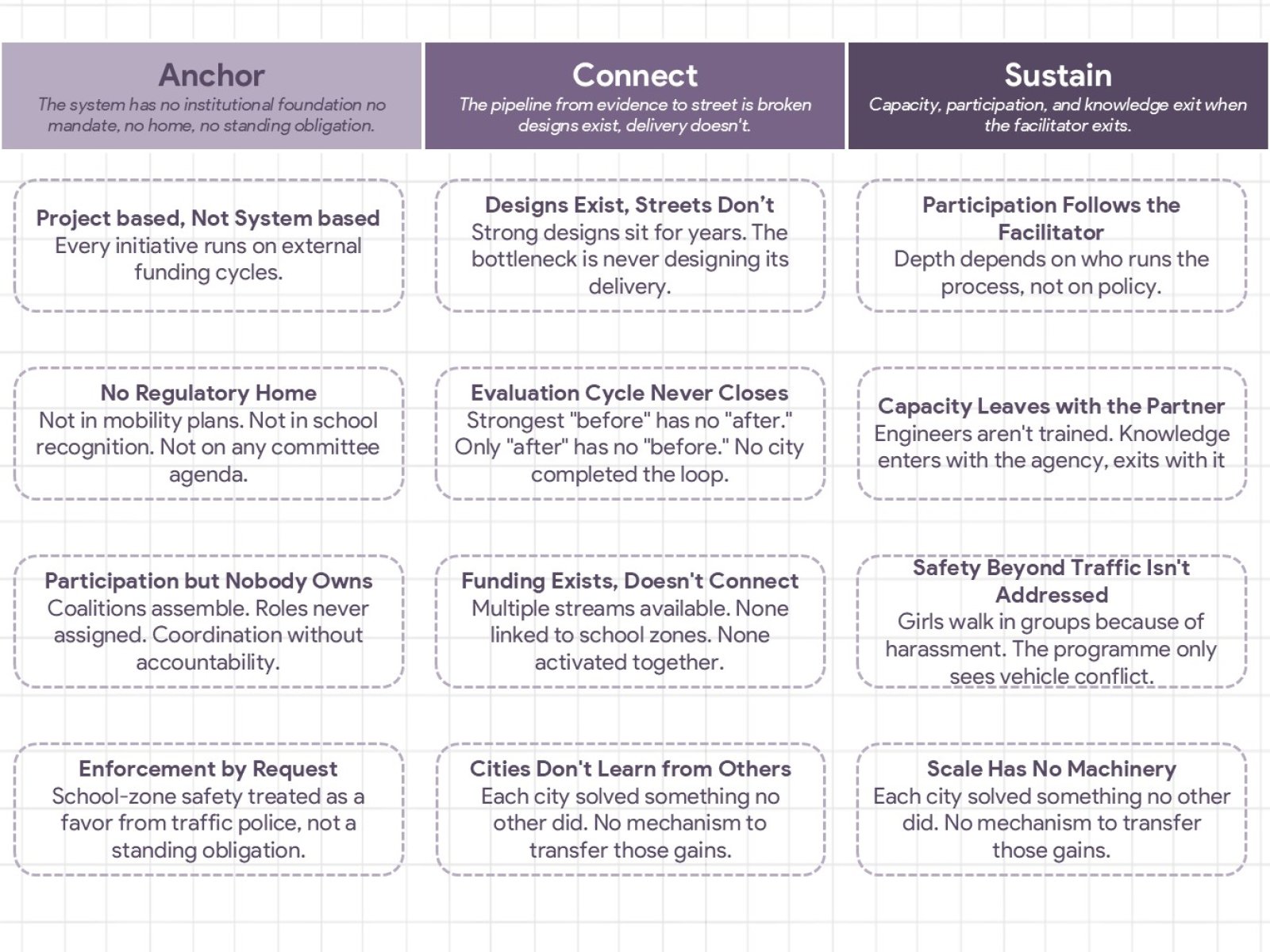
Gaps: Systemic gaps preventing Indian SRTS pilots from becoming sustained city programmes

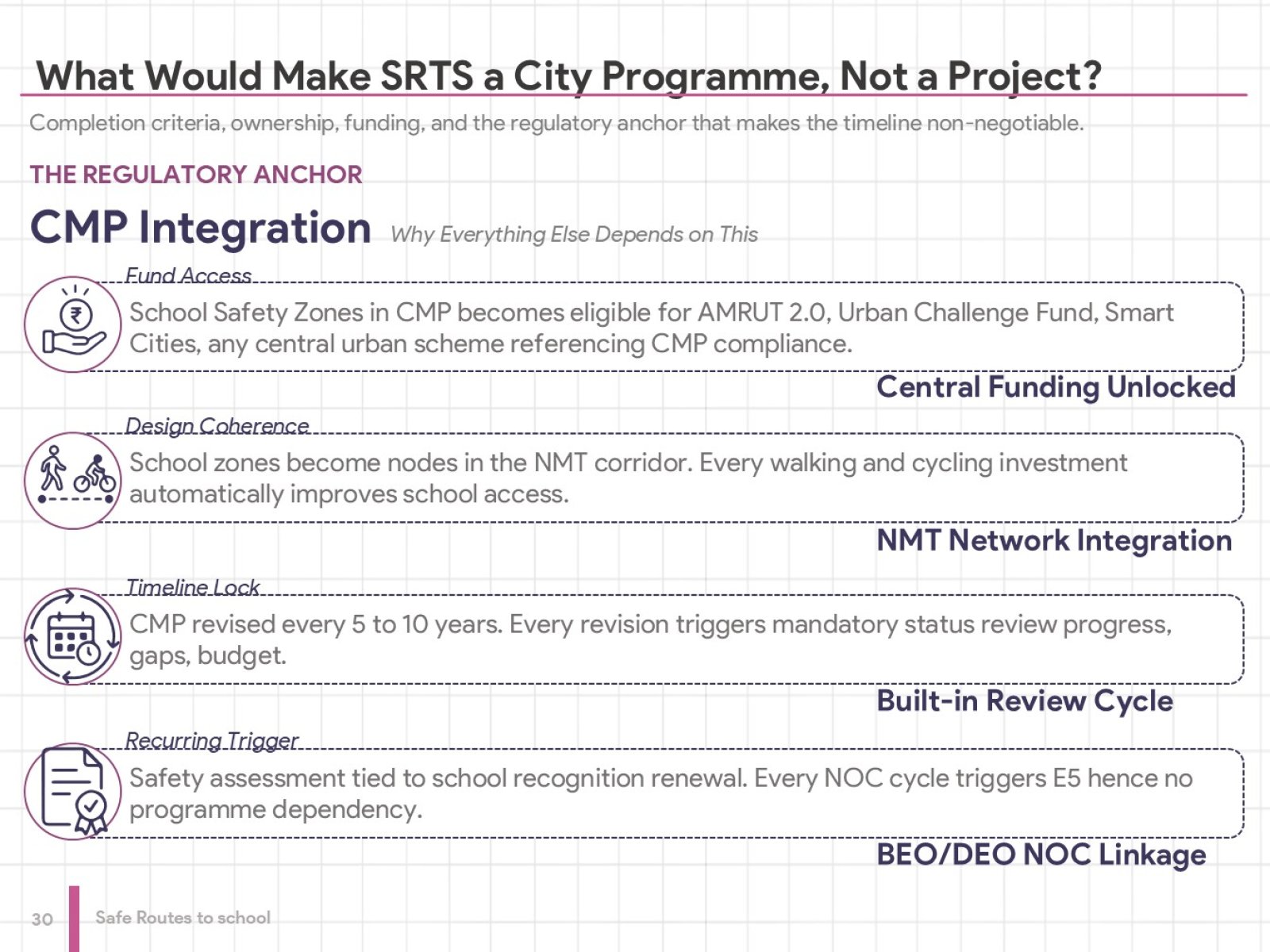
Institutional Framework: Regulatory anchoring through CMP integration enables continuity, funding, and accountability

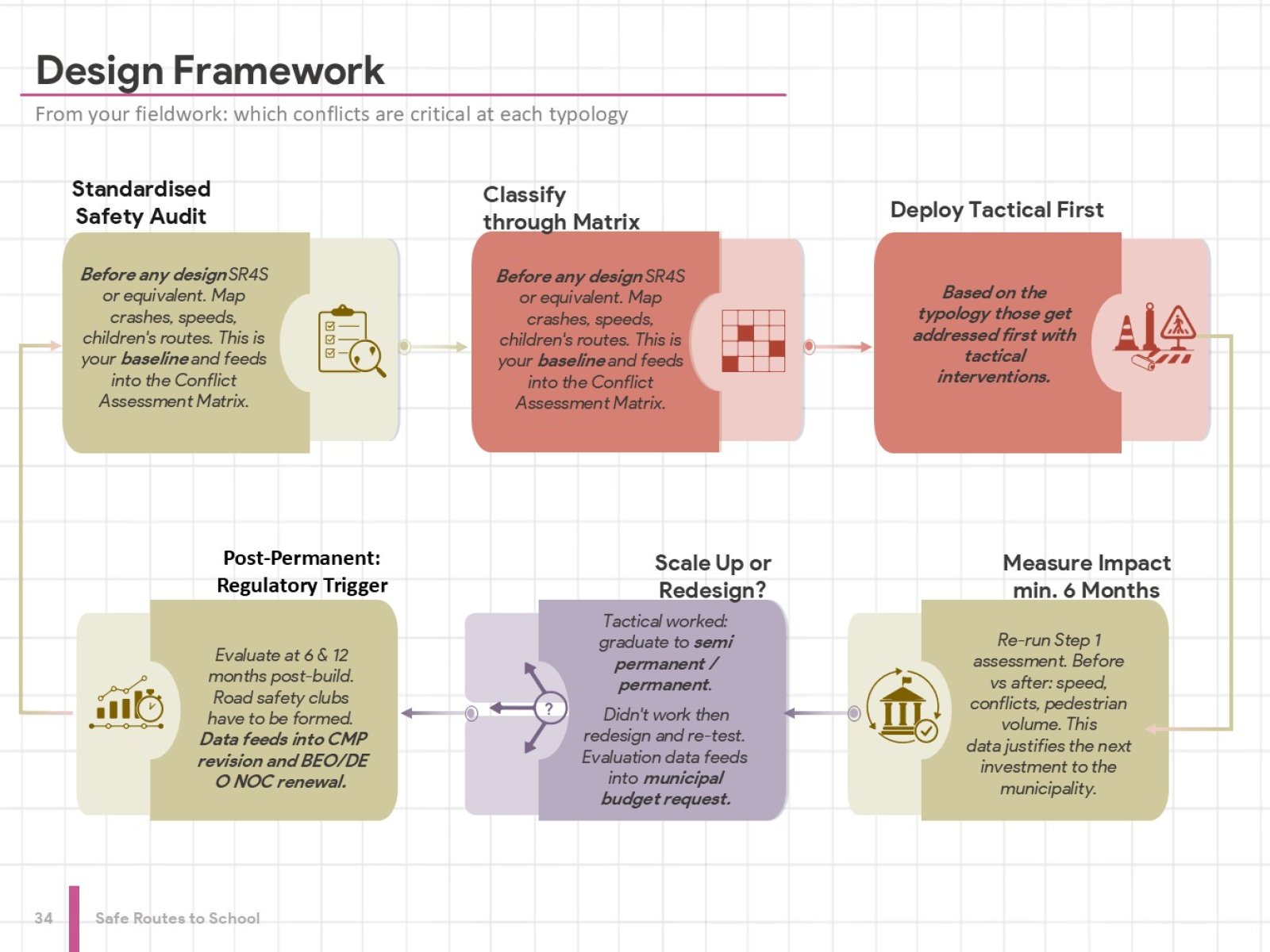
Design Framework: Typology-based phased implementation framework guiding tactical-to-permanent school street transformations

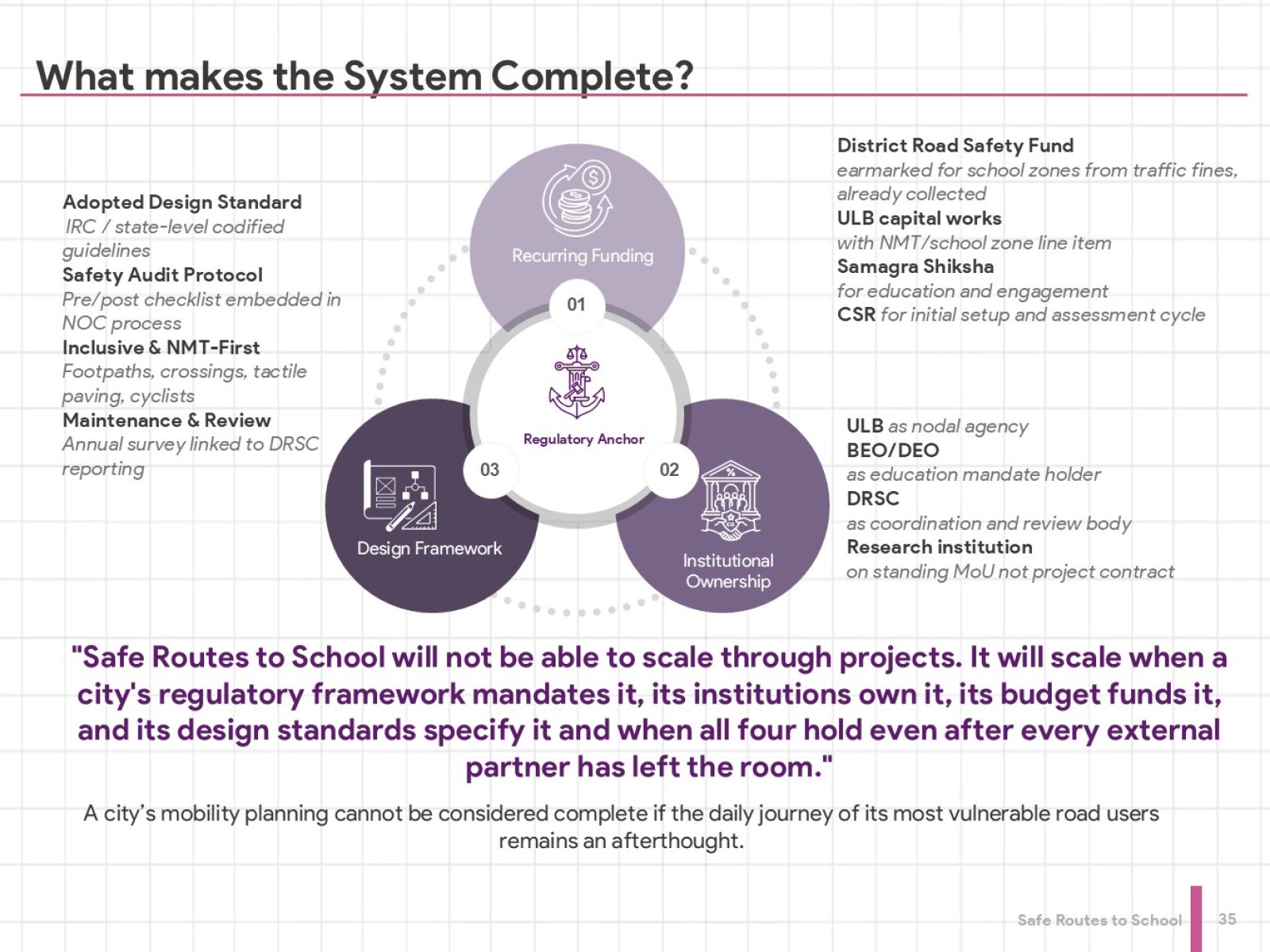
What makes the system complete: SRTS scales when regulation, ownership, funding, and design align institutionally