Your browser is out-of-date!
For a richer surfing experience on our website, please update your browser. Update my browser now!
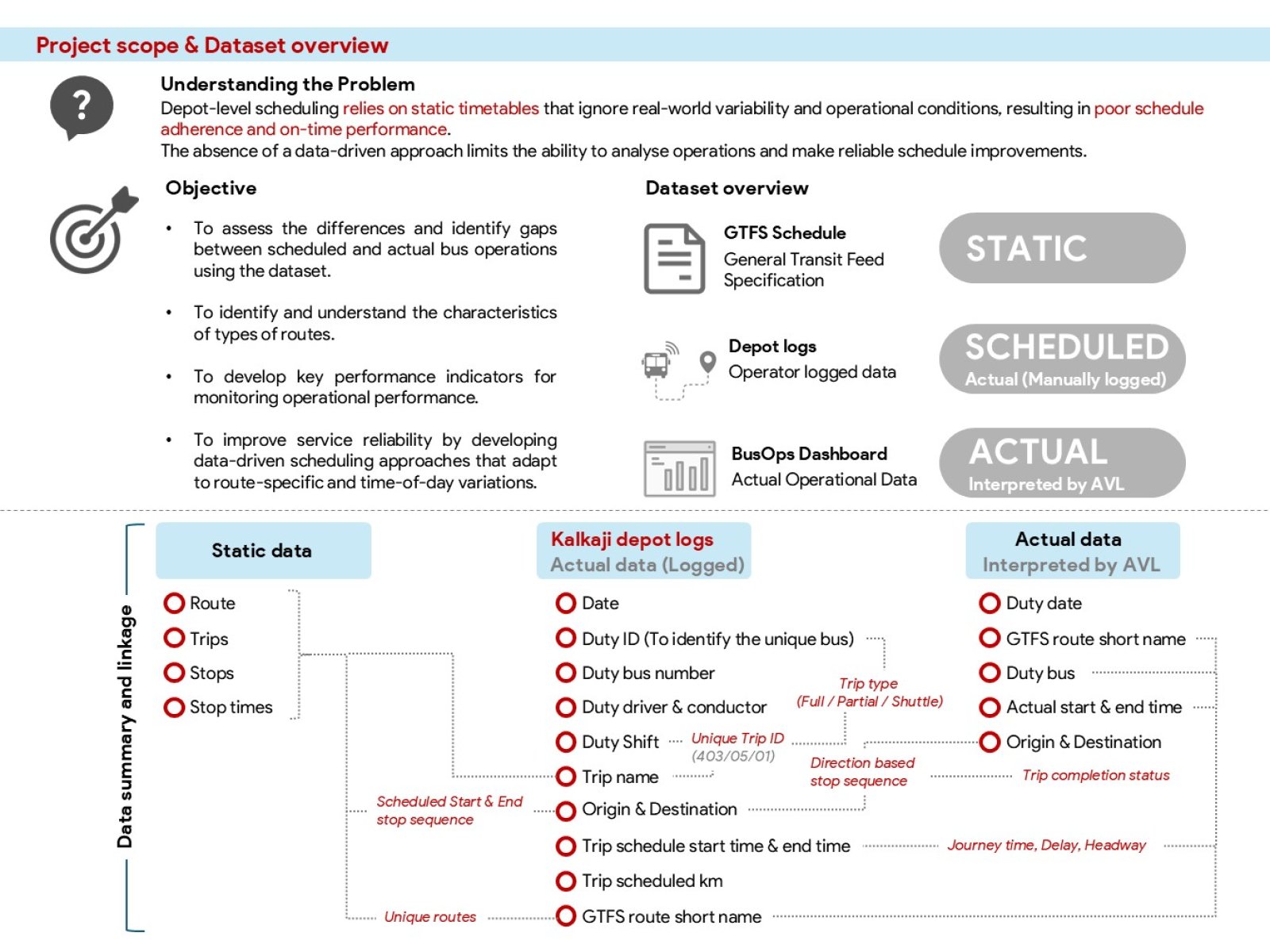
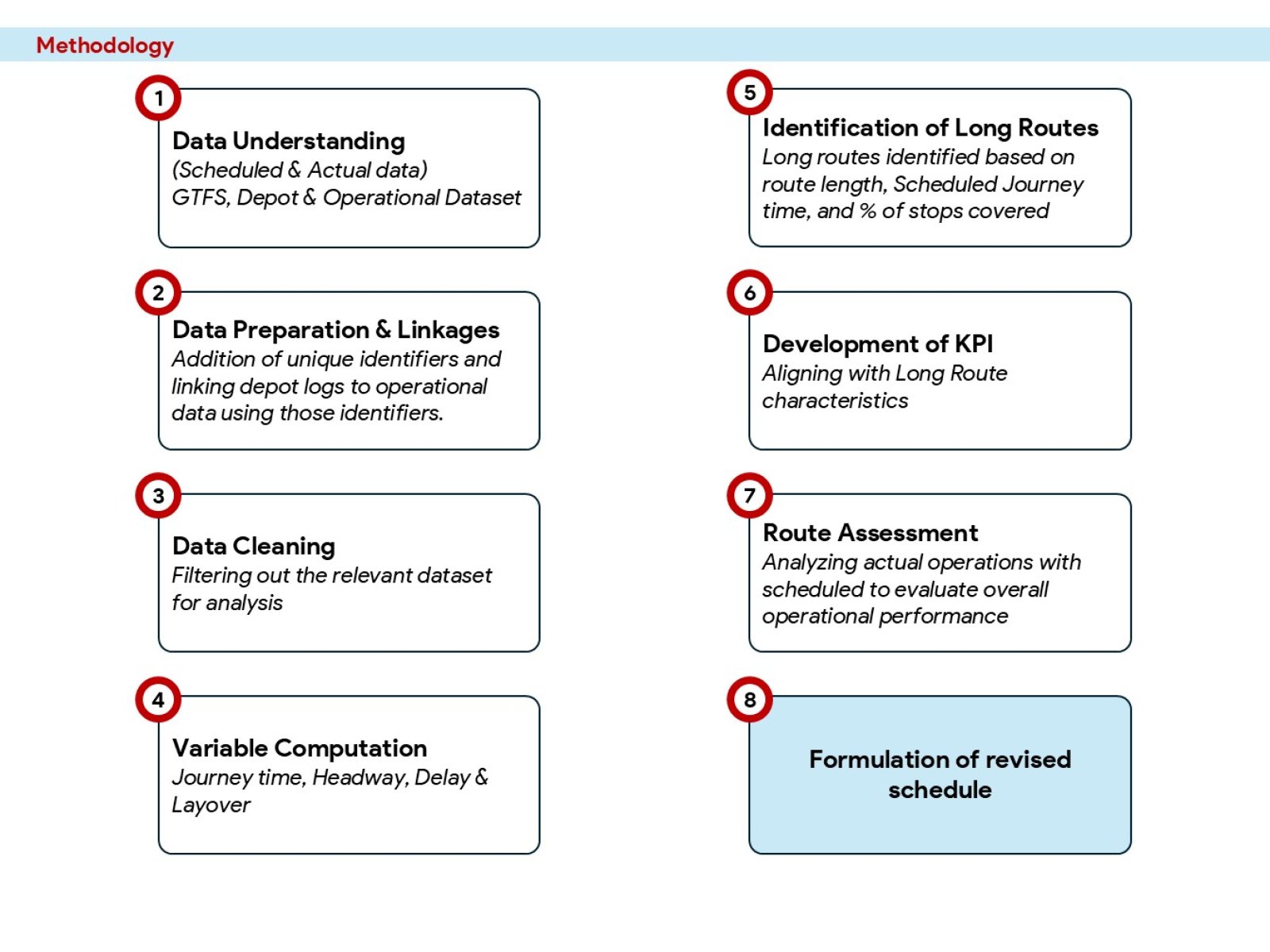
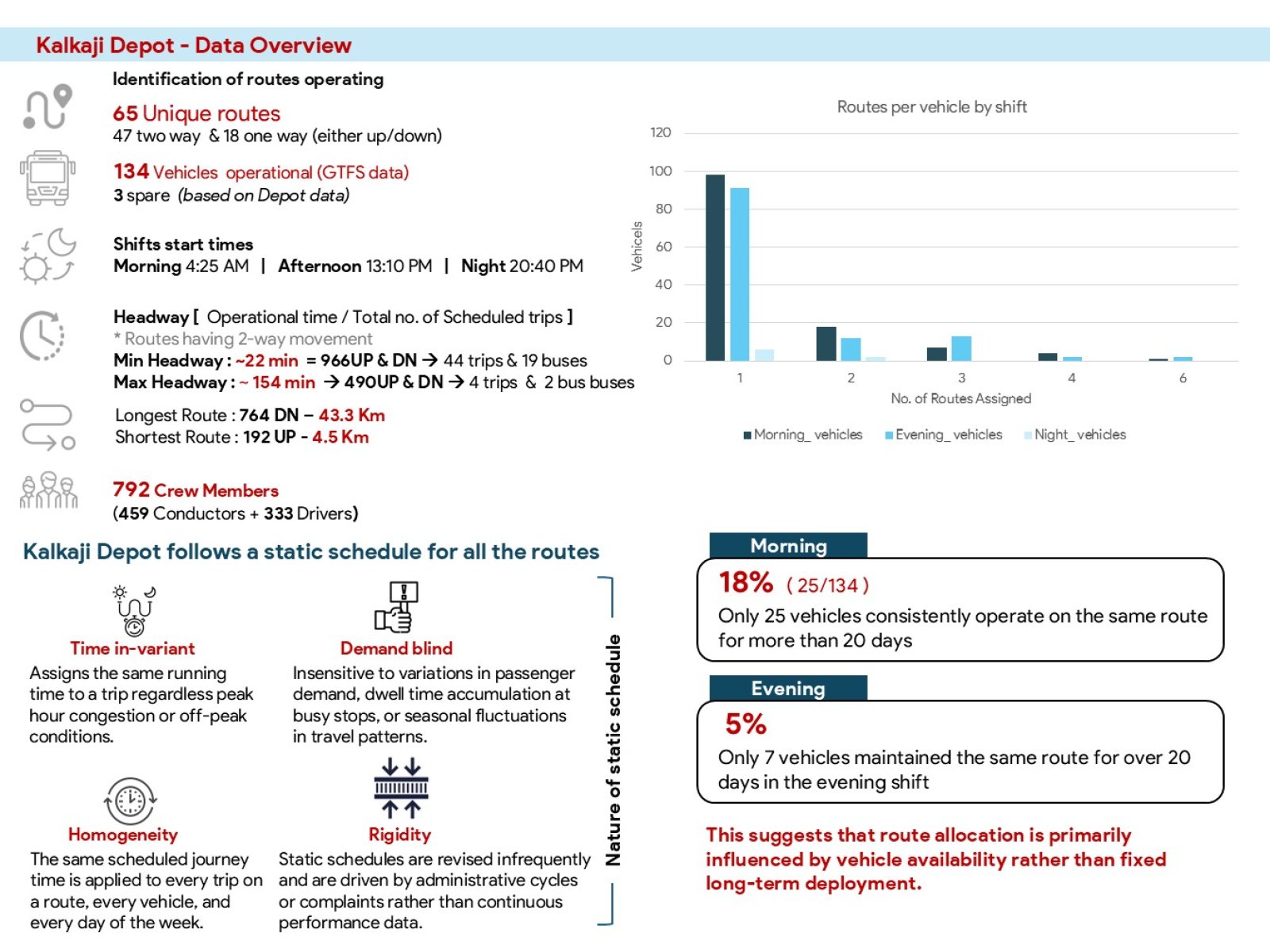
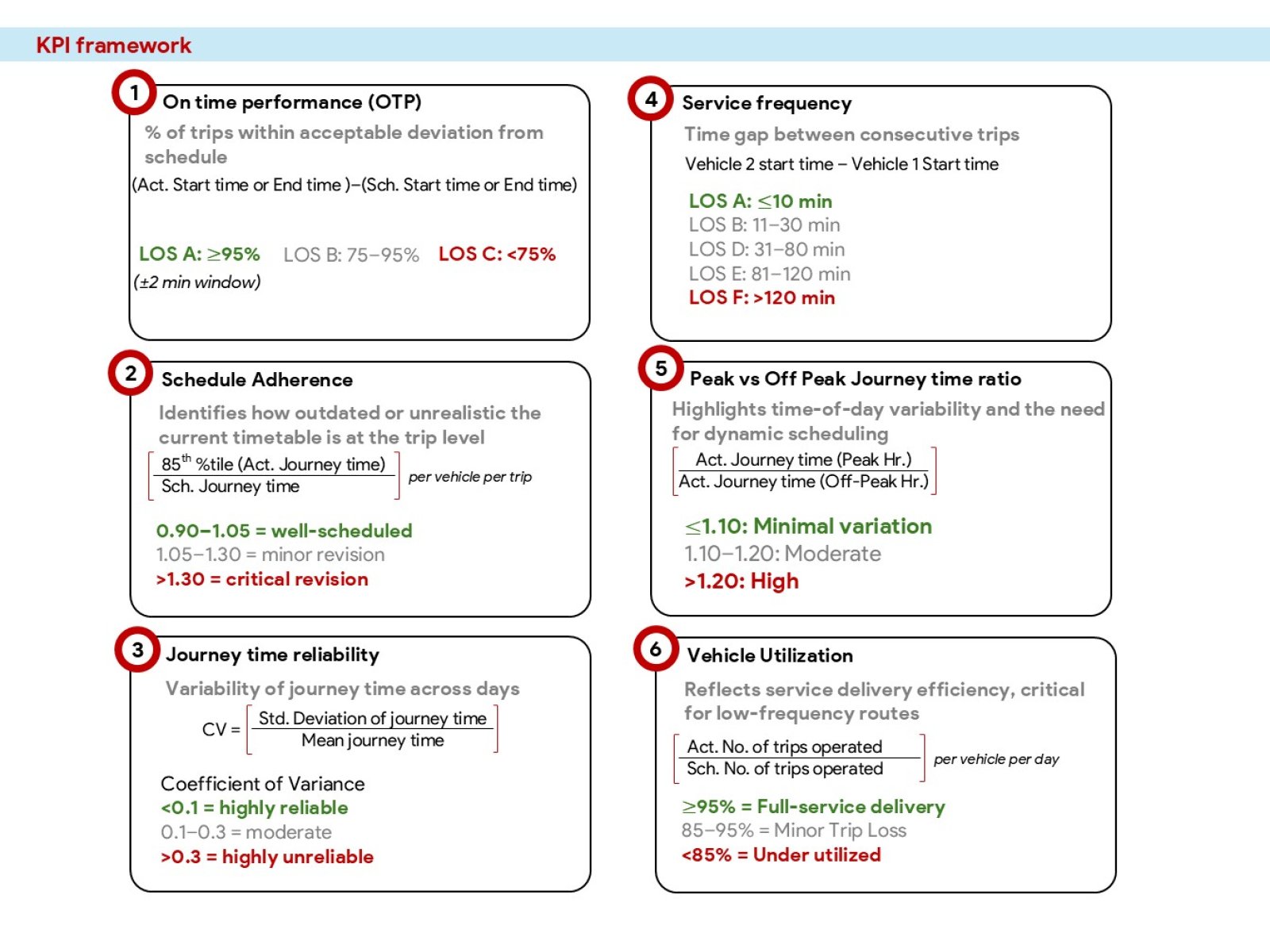
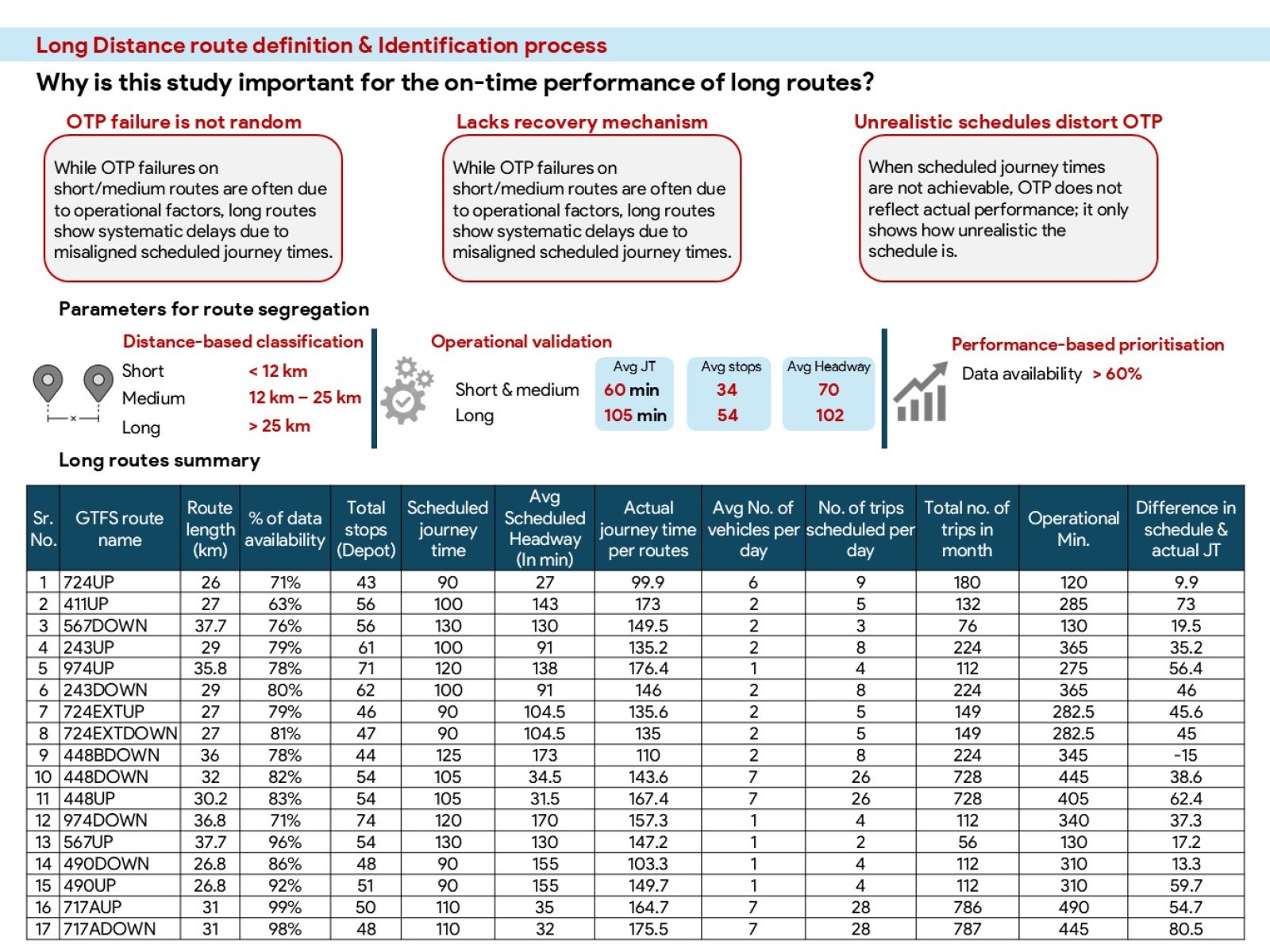
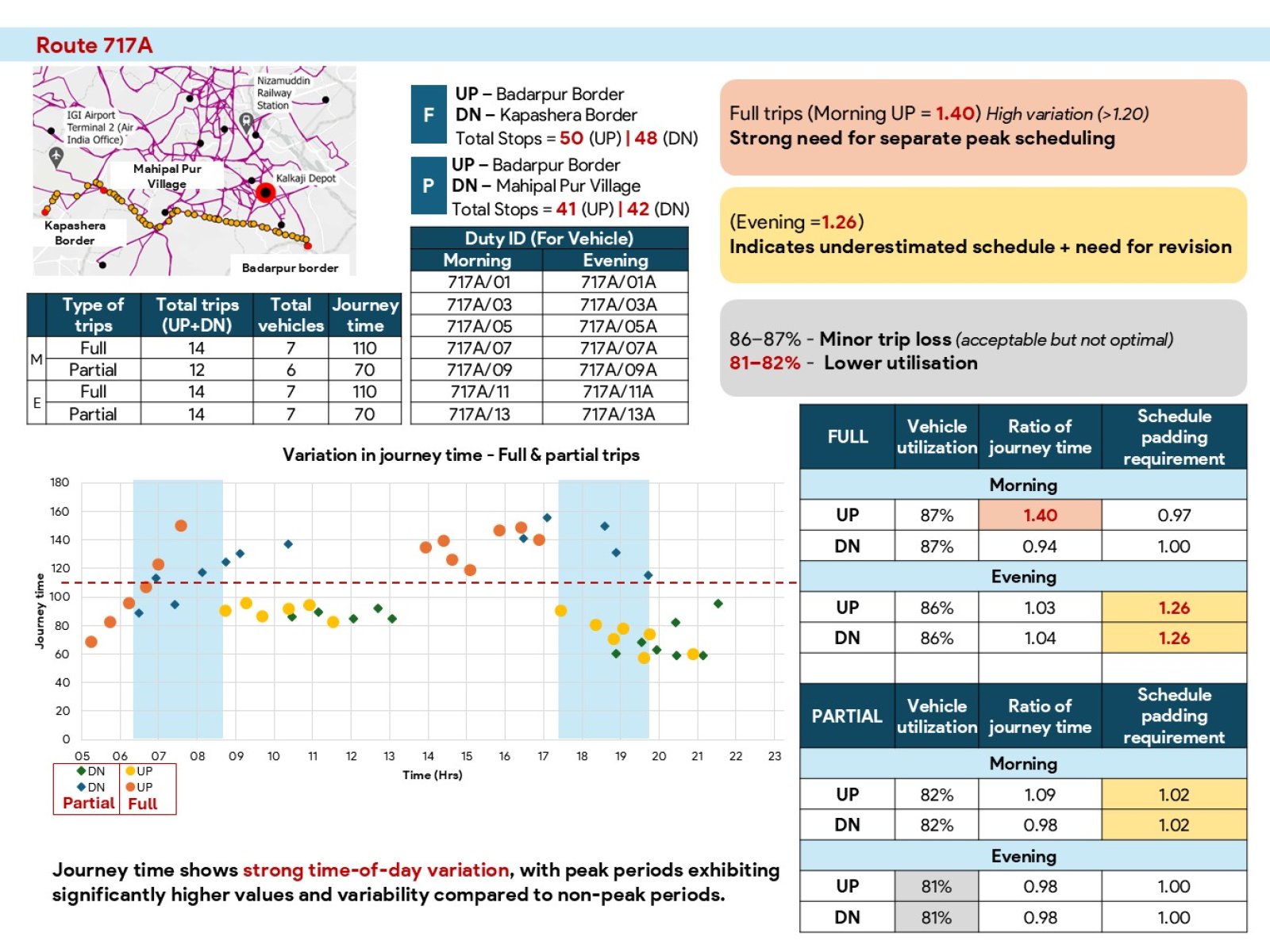
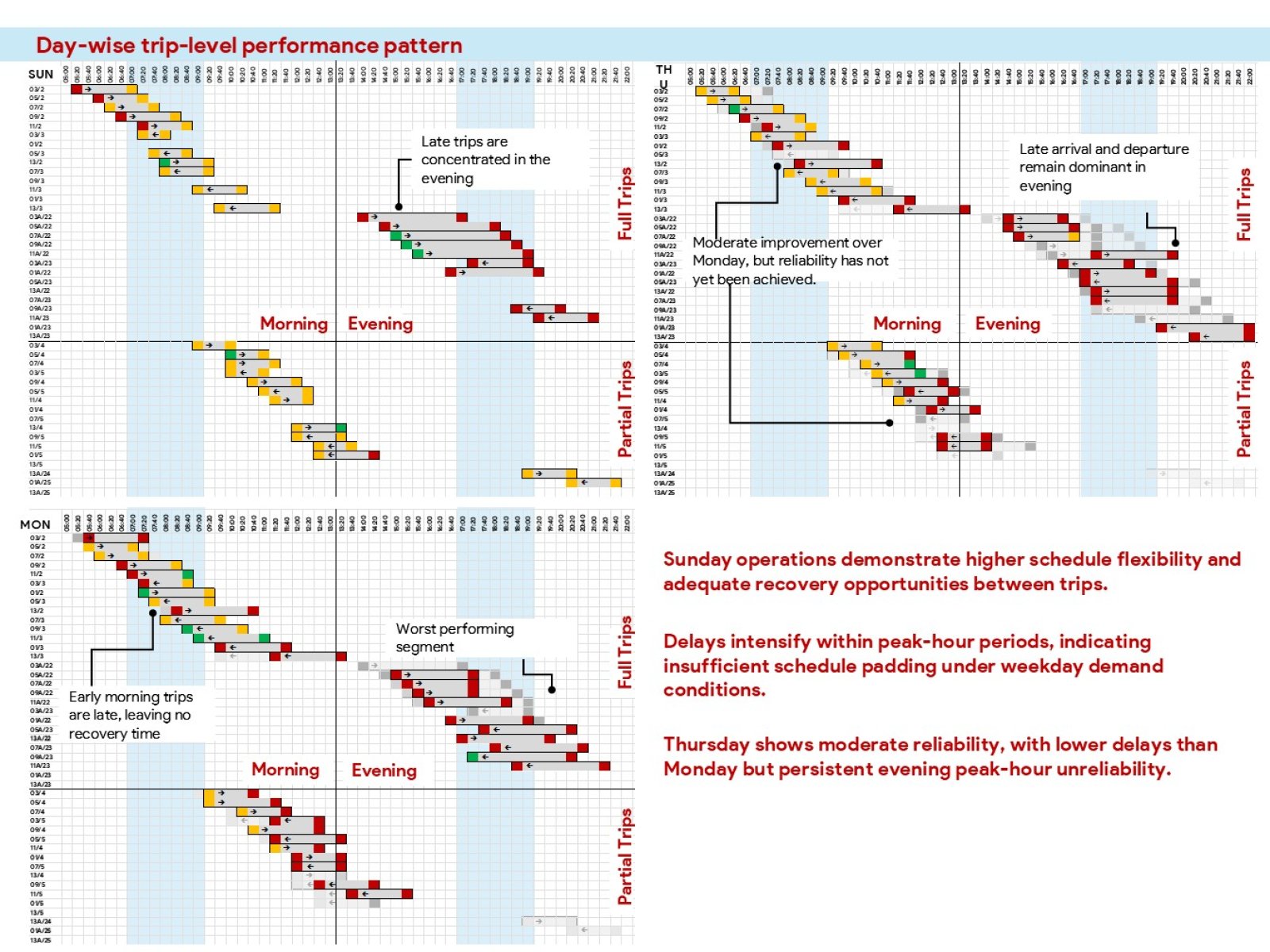
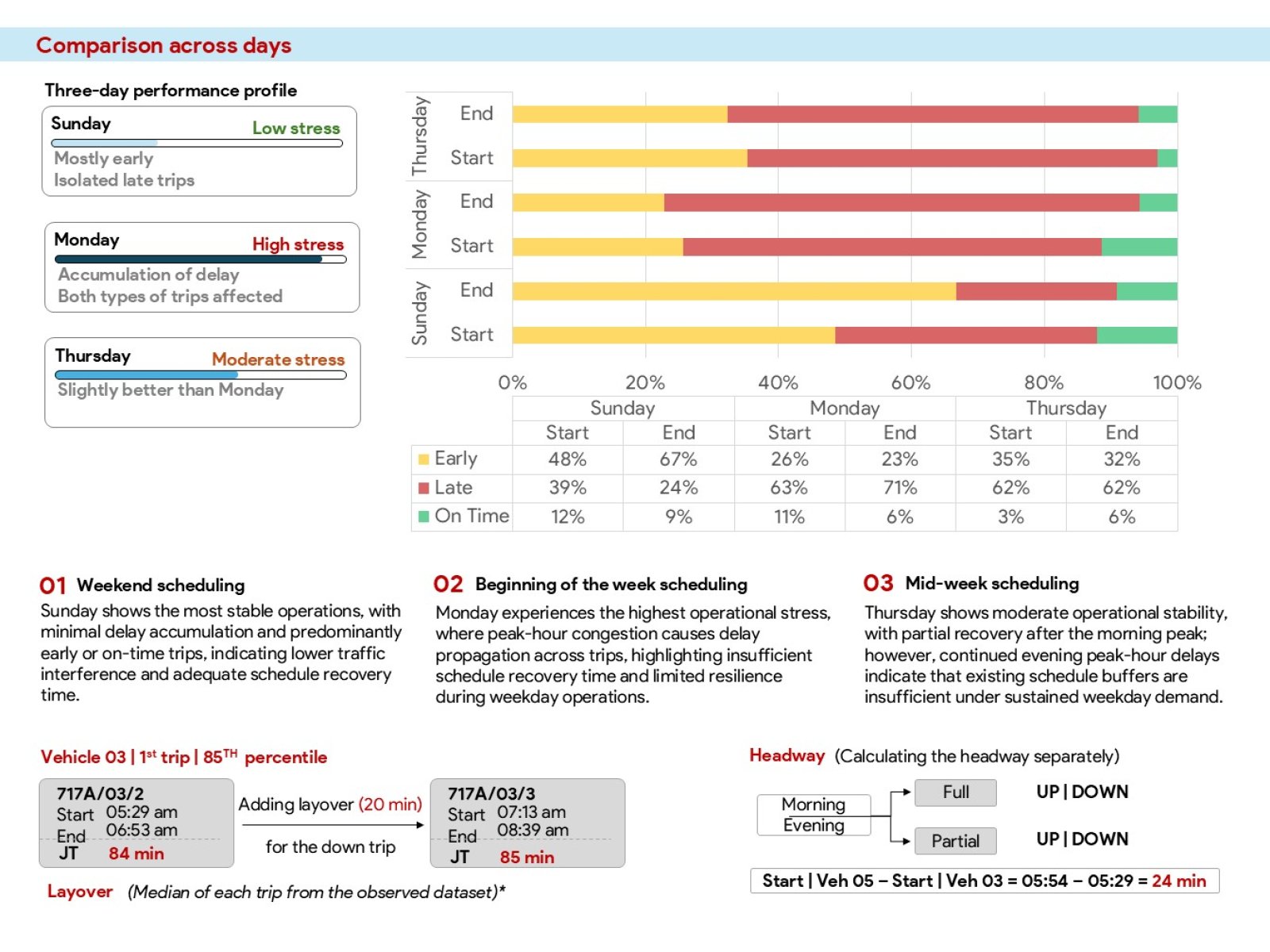
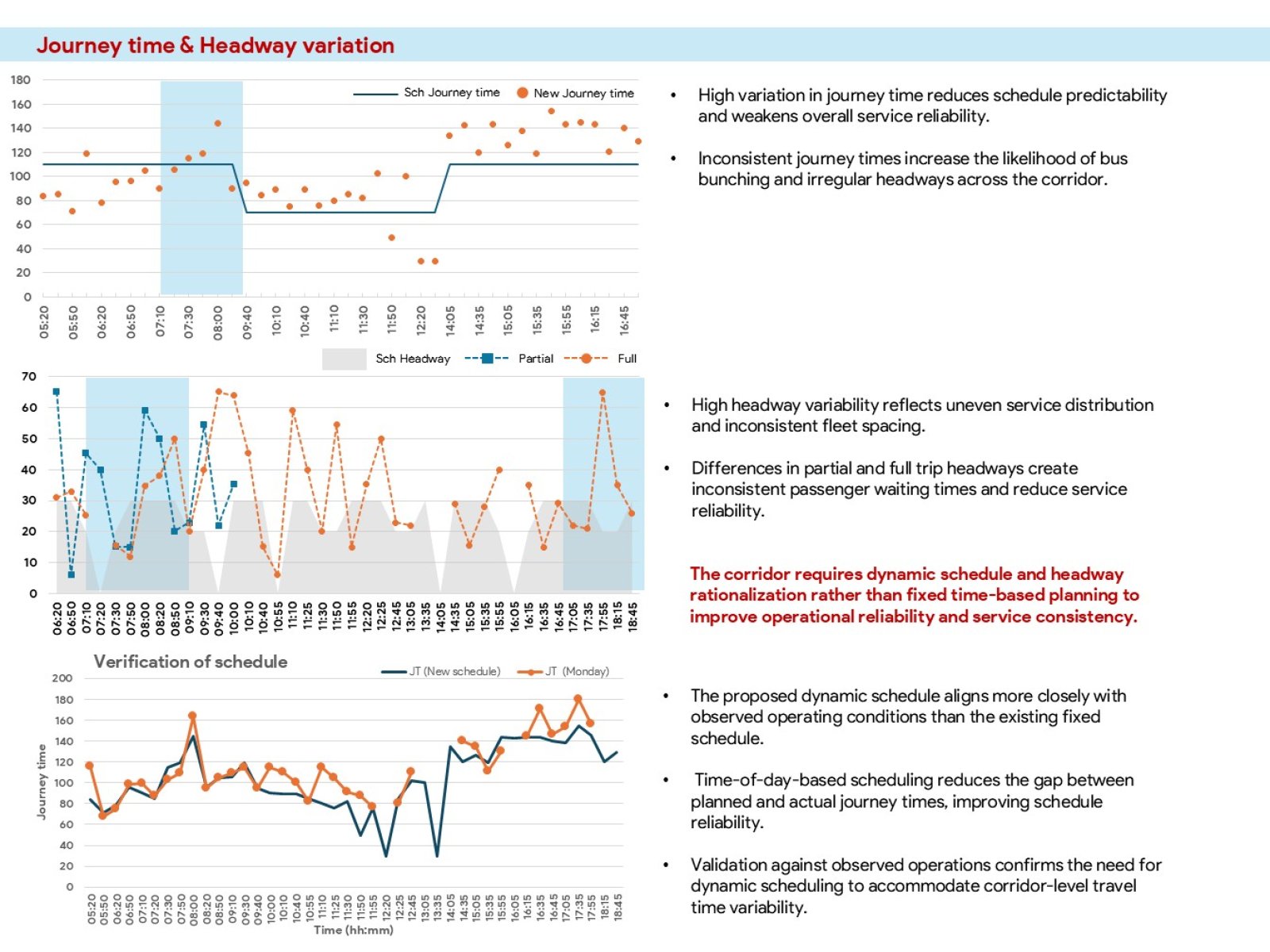
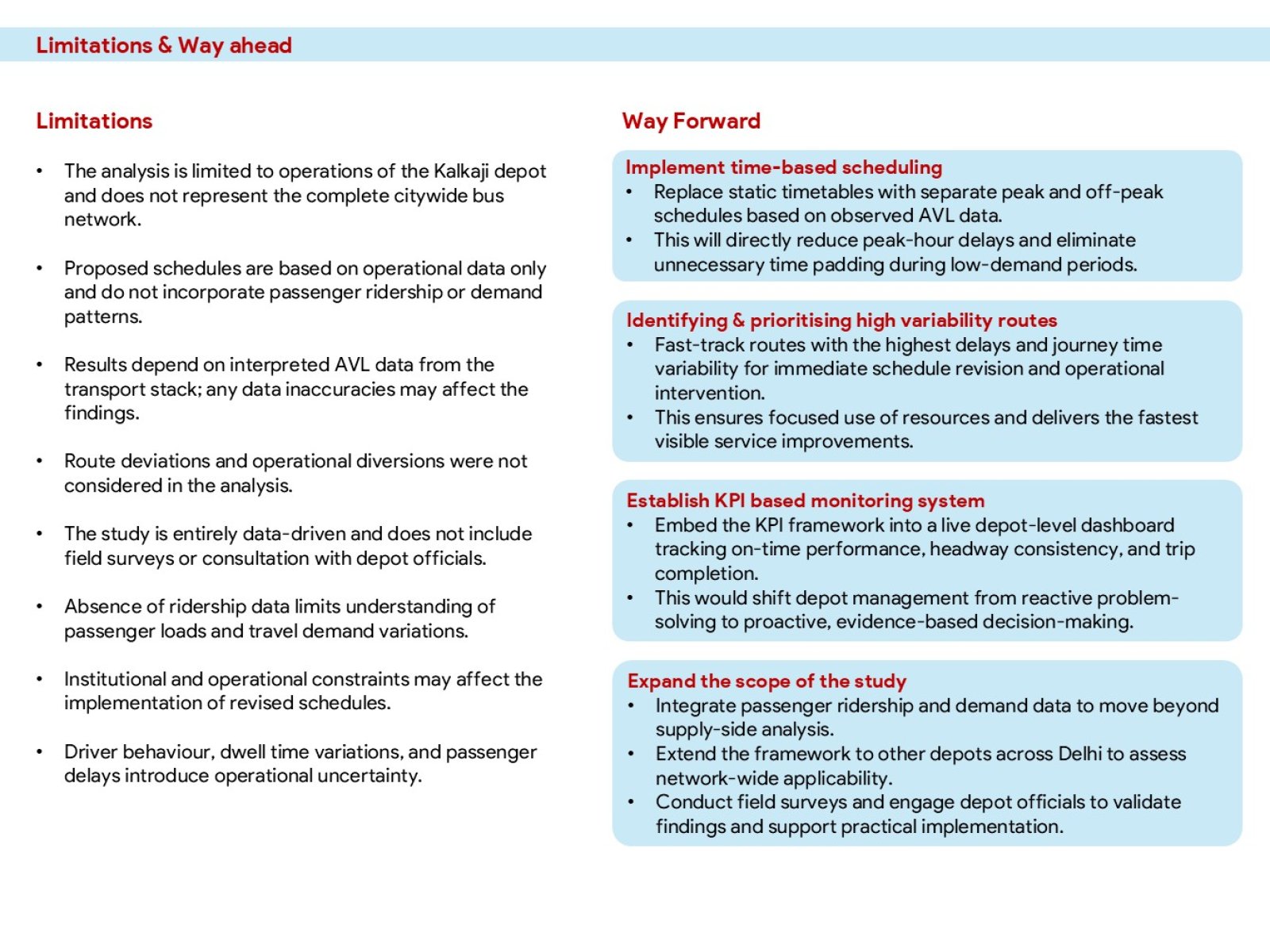
This thesis explores the reliability of urban bus operations through a data-driven analysis of city bus services in Delhi. The study examines how static scheduling systems fail to respond to real-world traffic variability, resulting in poor on-time performance and inconsistent service reliability. Using operational and schedule-based datasets, a KPI framework was developed to evaluate journey time behavior, schedule adherence, and operational efficiency across long-distance routes. The research proposes a dynamic scheduling approach based on observed operating conditions, highlighting the potential of real-time data analytics to support more adaptive, reliable, and evidence-based public transport planning.