Darshna Cheraan Sengutuvan

LA4015-1

THE UNSEEN SPECTRUM

The project explores the forest through the perception of its fauna, understanding how different species experience colours in their everyday struggle for survival, from camouflage and mating to pollination. Focusing on bees as key pollinators, the study investigates their unique colour vision, including ultraviolet perception, floral nectar guides and navigation mechanisms such as the waggle dance. By understanding how bees perceive and interact with flowering species, the project aims to identify colour preferences that influence foraging and pollination, ultimately supporting biodiversity, ecological balance and the continuity of plant reproduction.
"The forest through the spectrum, never known to the human eye."
View Additional Work

Report Content

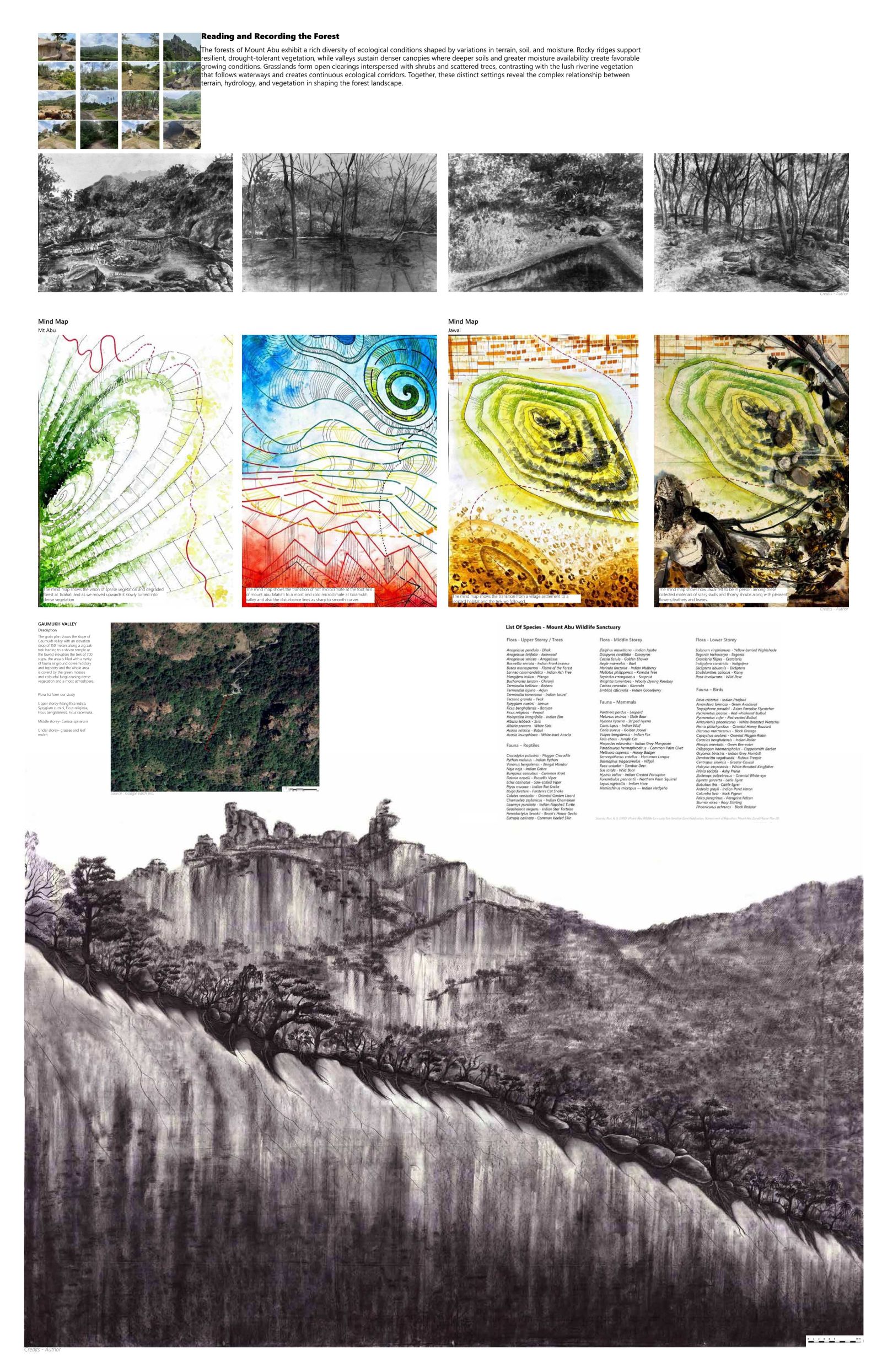
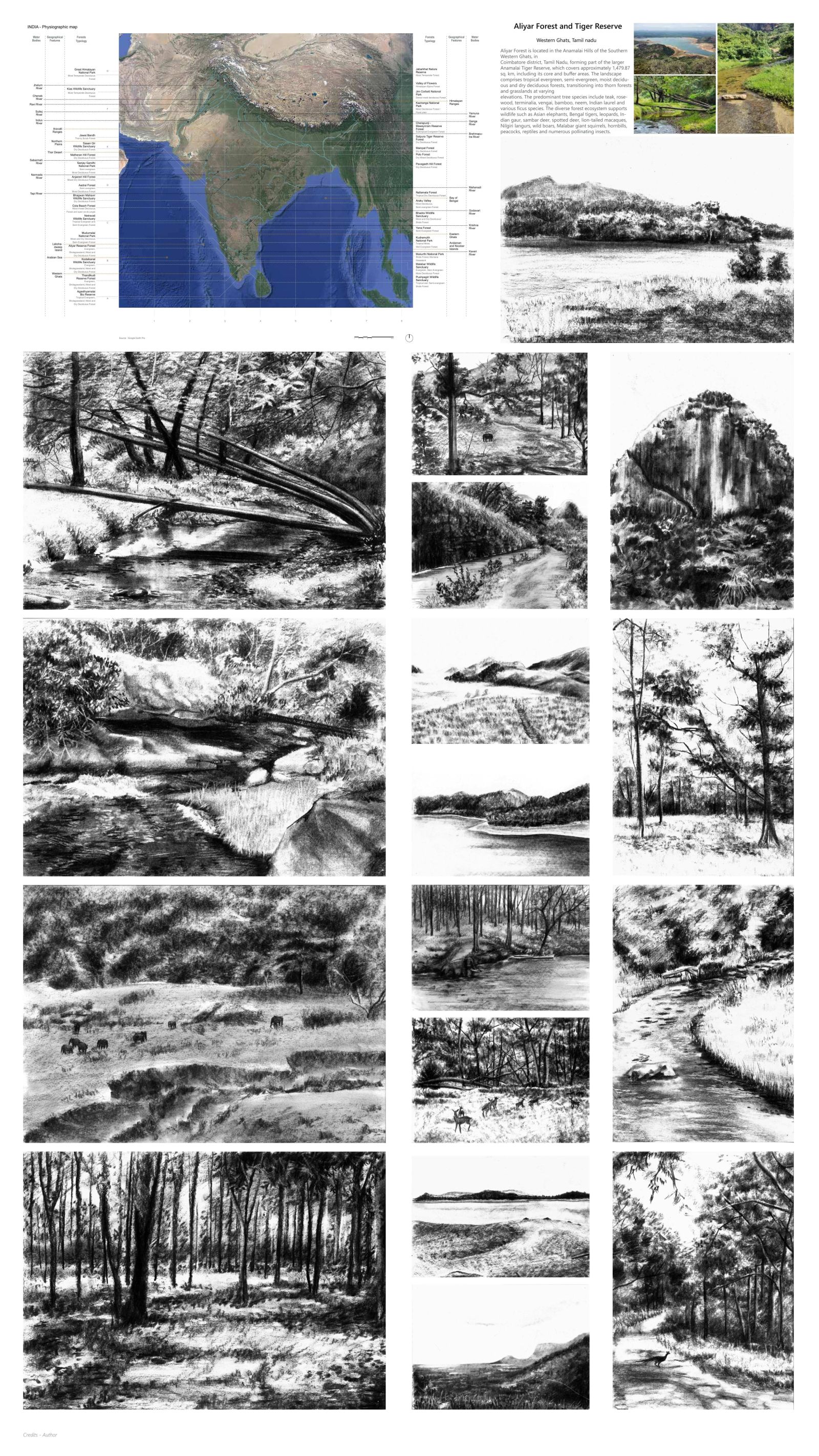
Reading the forest from memory through a drawing exercise to understand the textures, density, etc. through the medium of charcoal

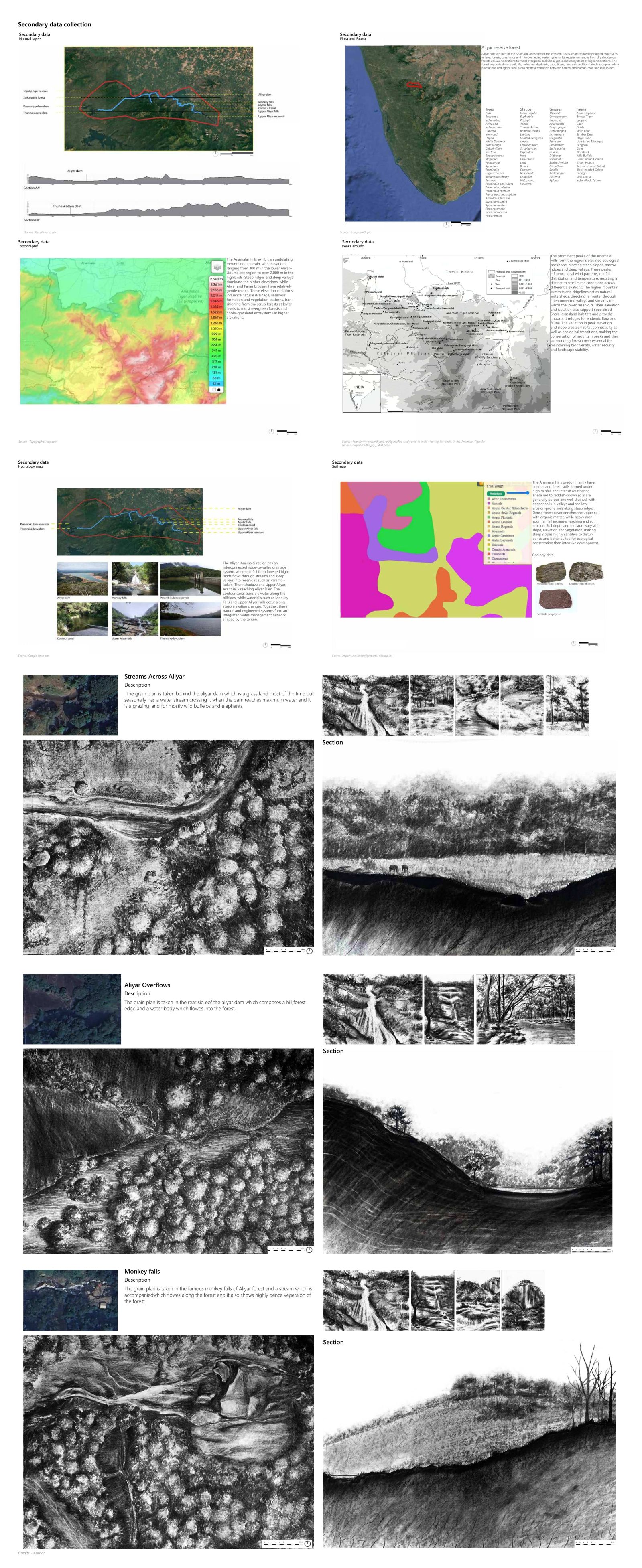
Reading the forest from the memory through the secondary study with the sources available in the internet and studying them through the grain plans and their sections to understand both horizontal and vertical landscapes

Reading and understanding the forests of Mount Abu and Jawai through charcoal sketches , mind maps and a 8 ft section

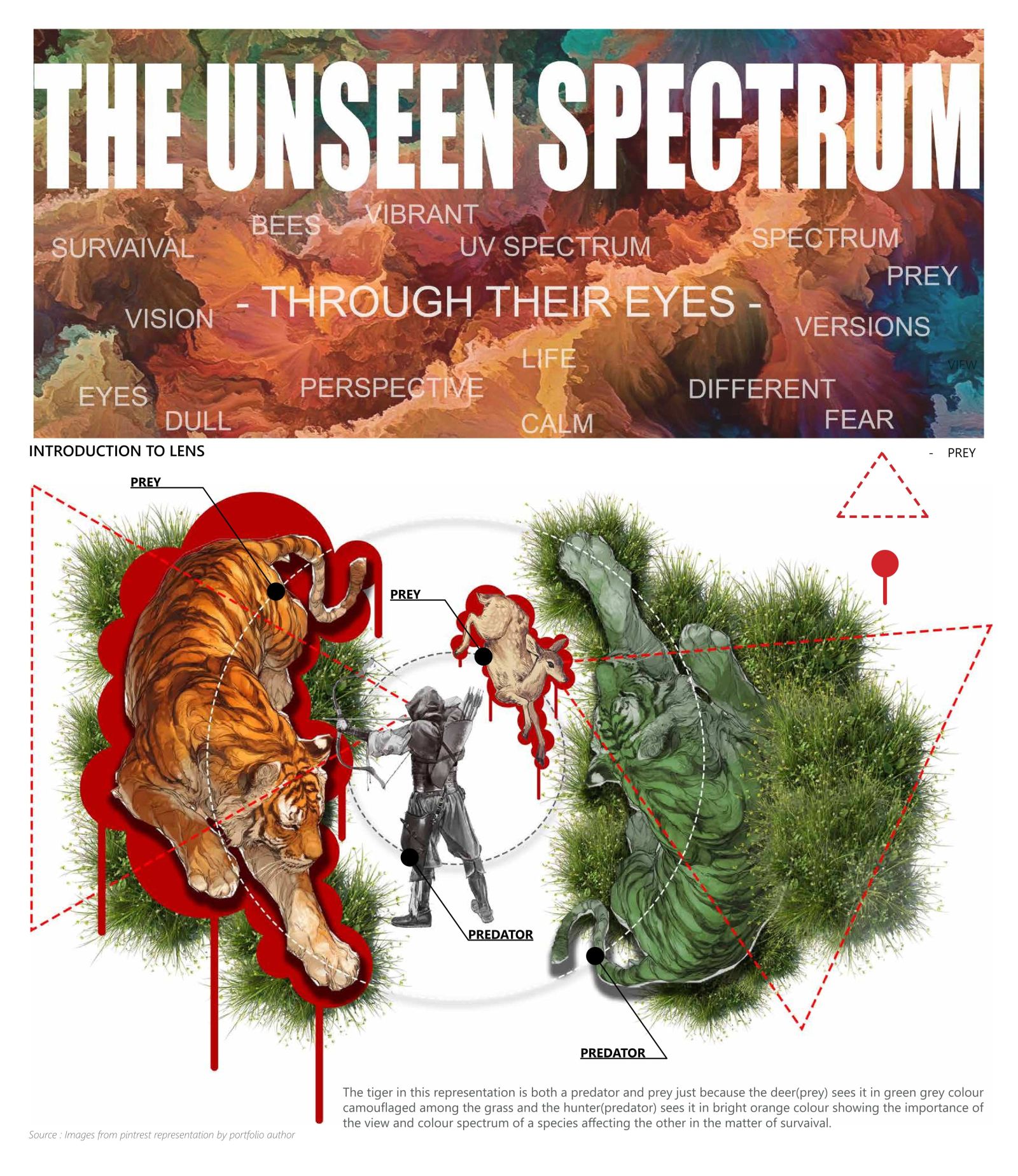
Introduction and the ideology of the lens

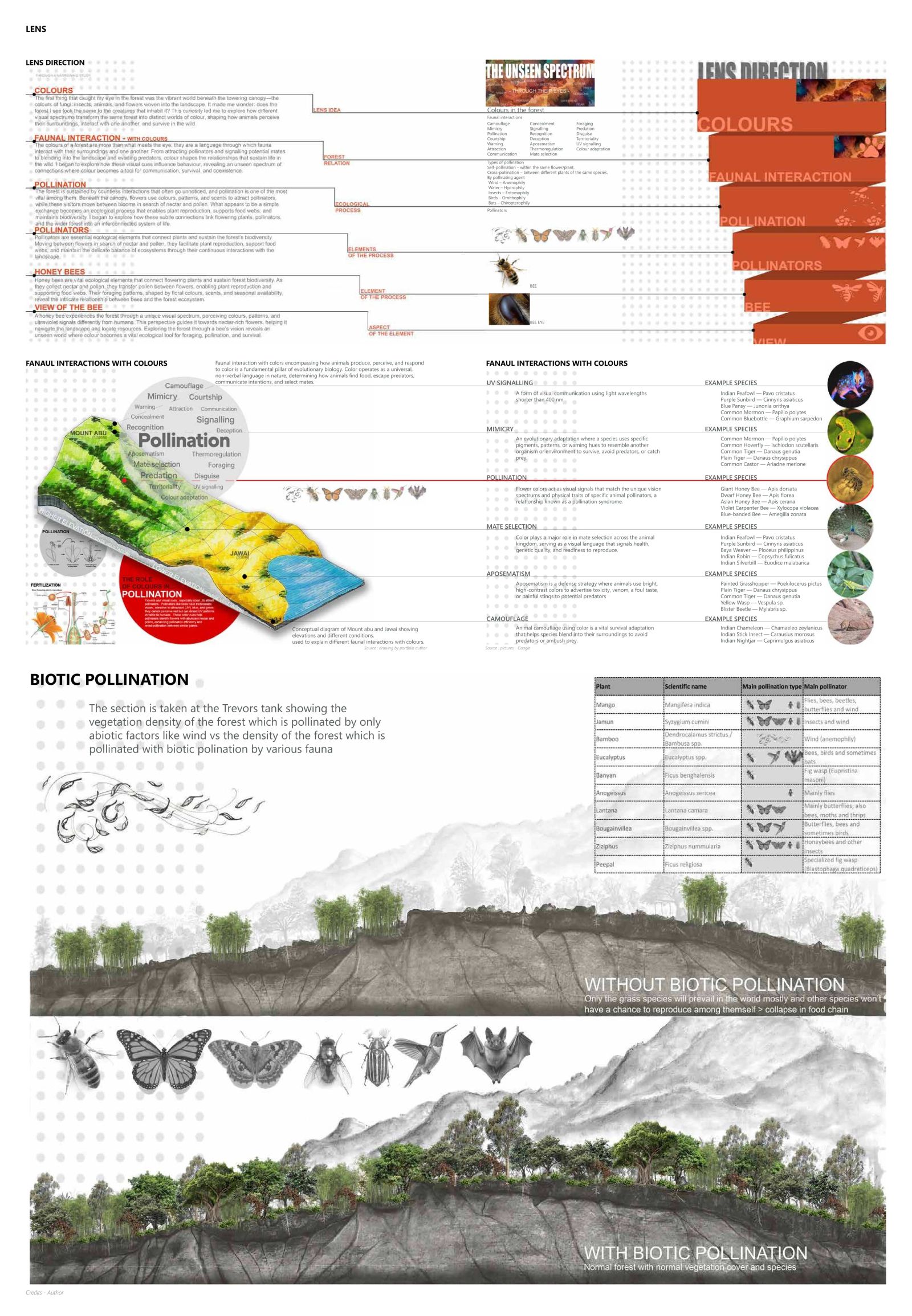
The direction and narrowing of lens from colours to view of a fauna species

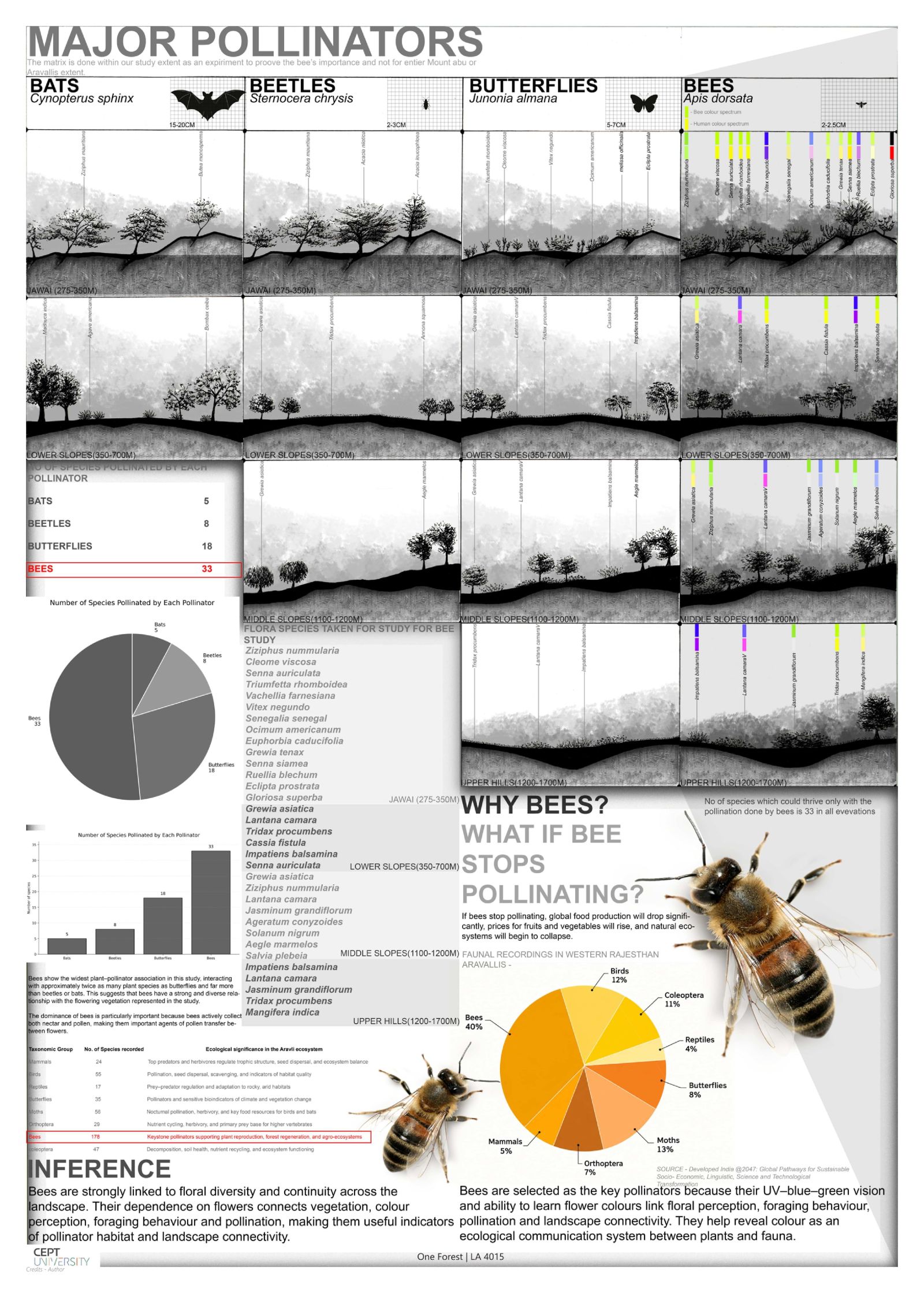
matrix study for pollinators across different elevations of Mount Abu and Jawai

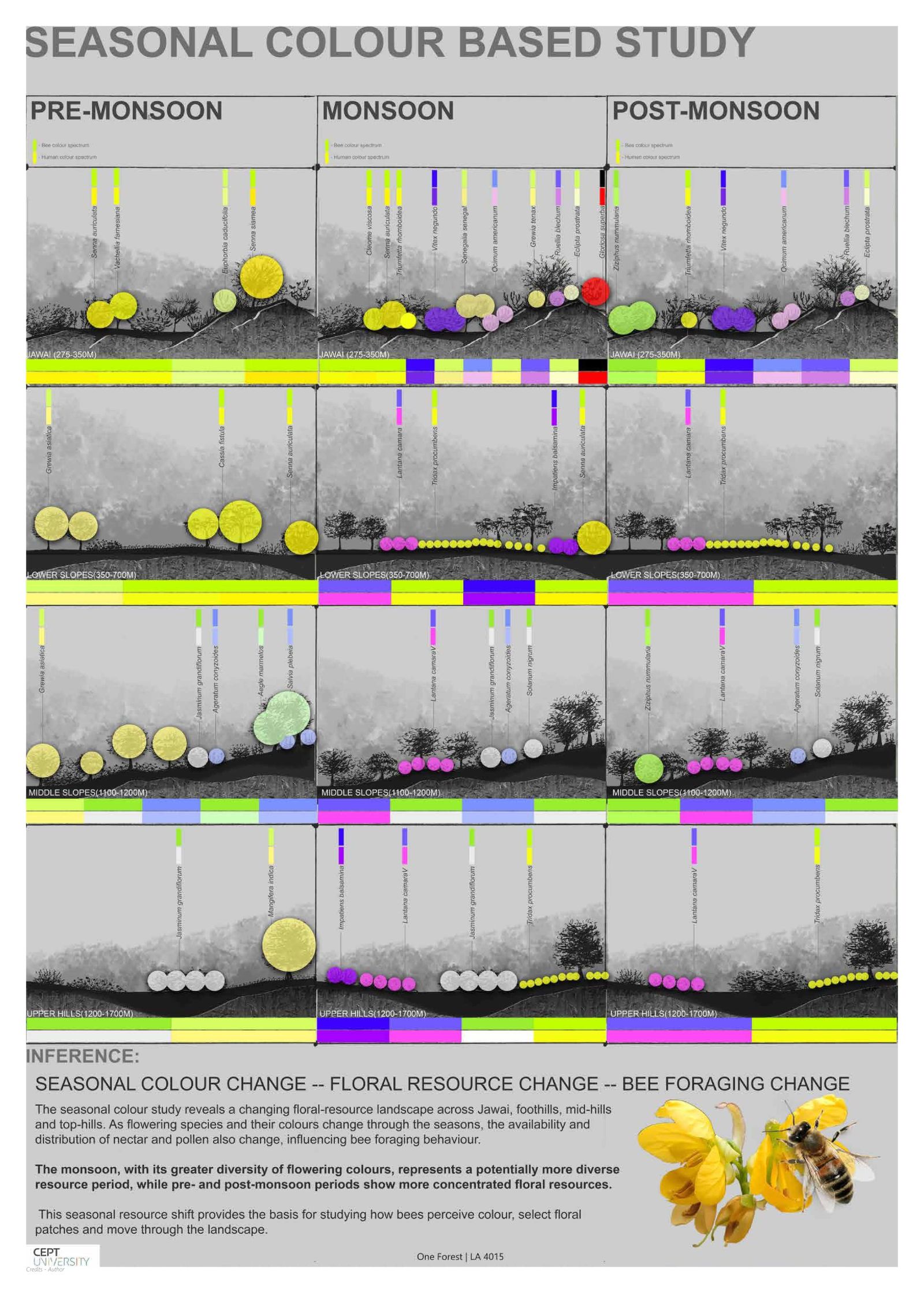
matrix study for monsoonal data for bee pollinated species of flora across different elevations of Mount abu and Jawai

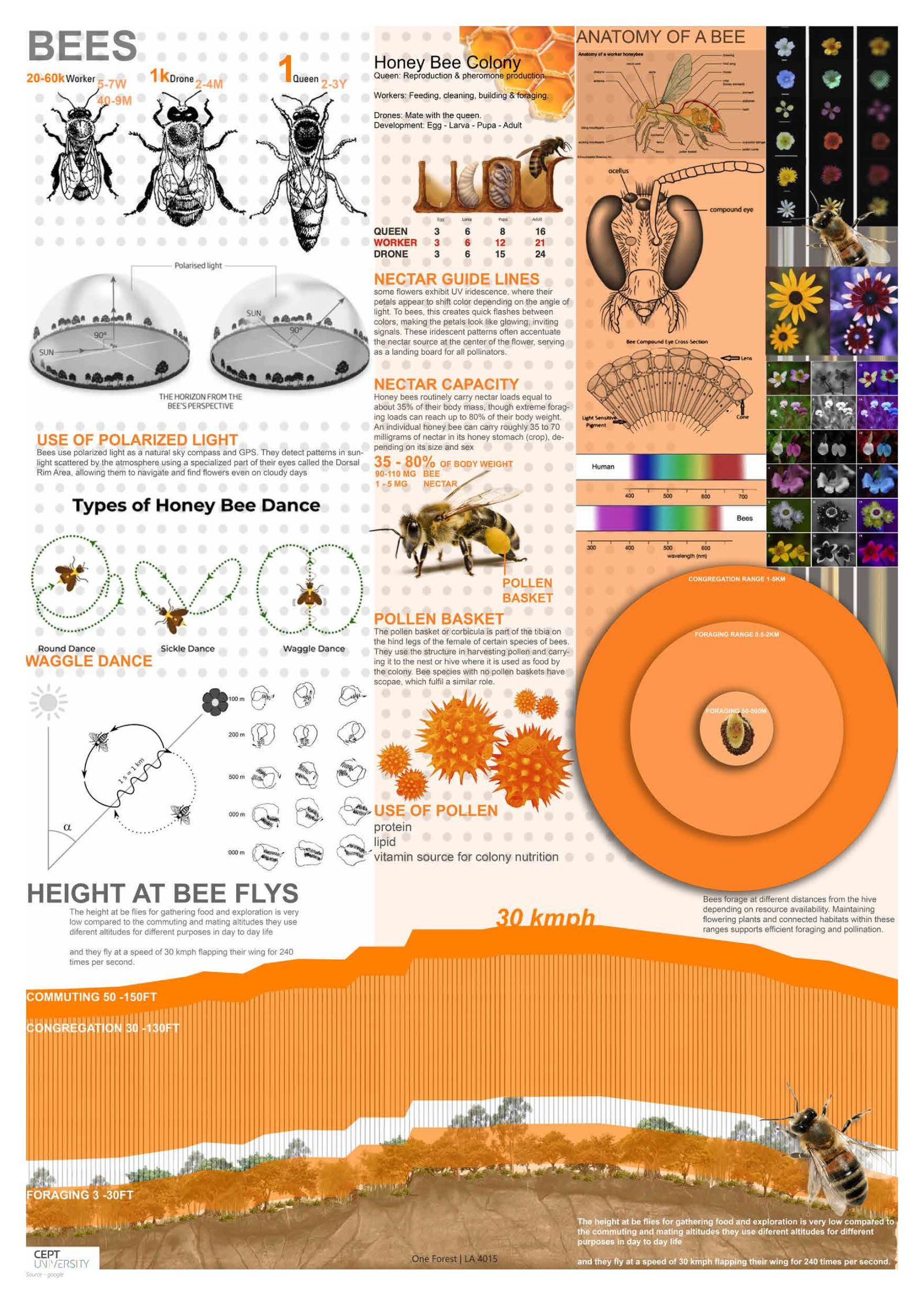
Research on bees and eye sight factors of bees

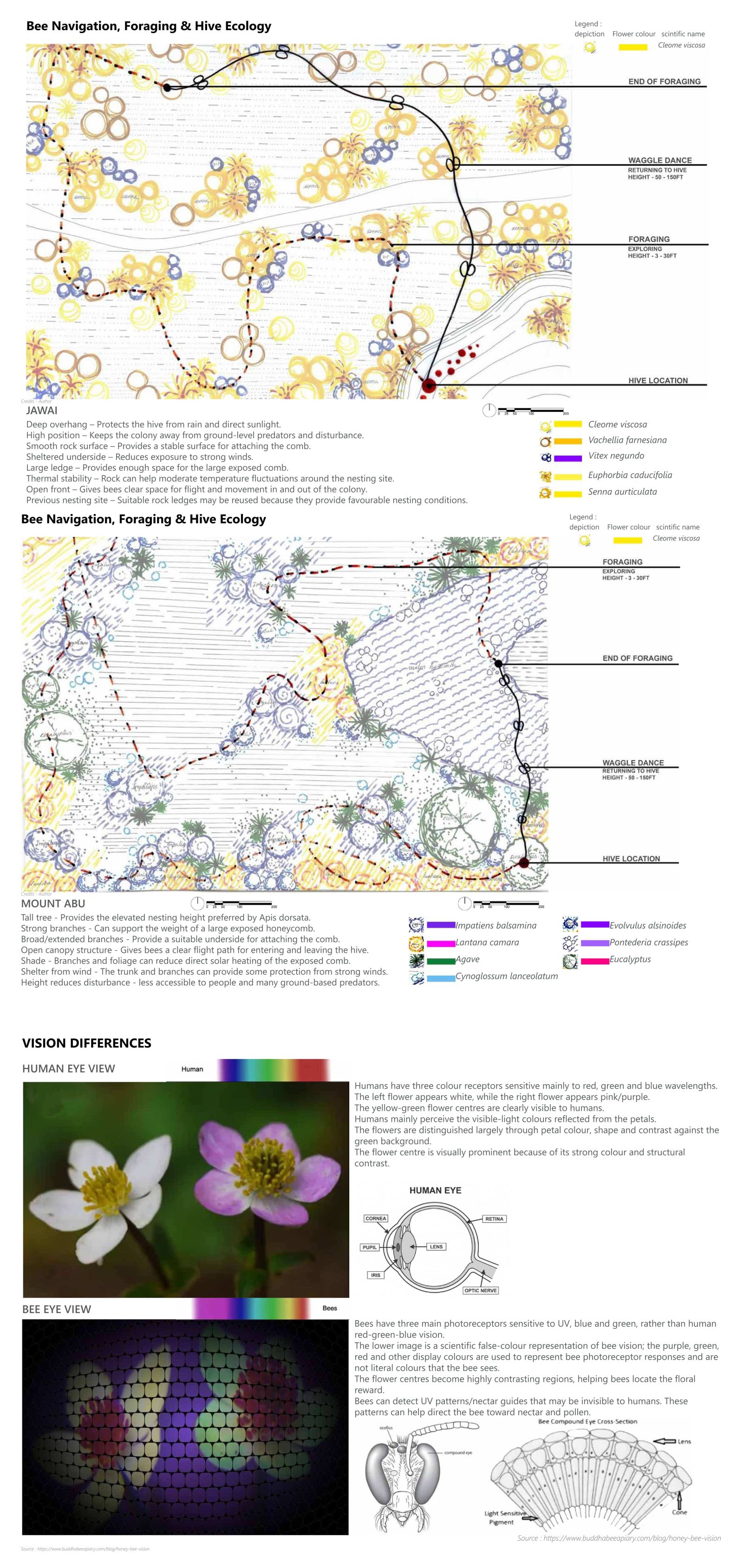
Study of bee behavior through research and conclusion

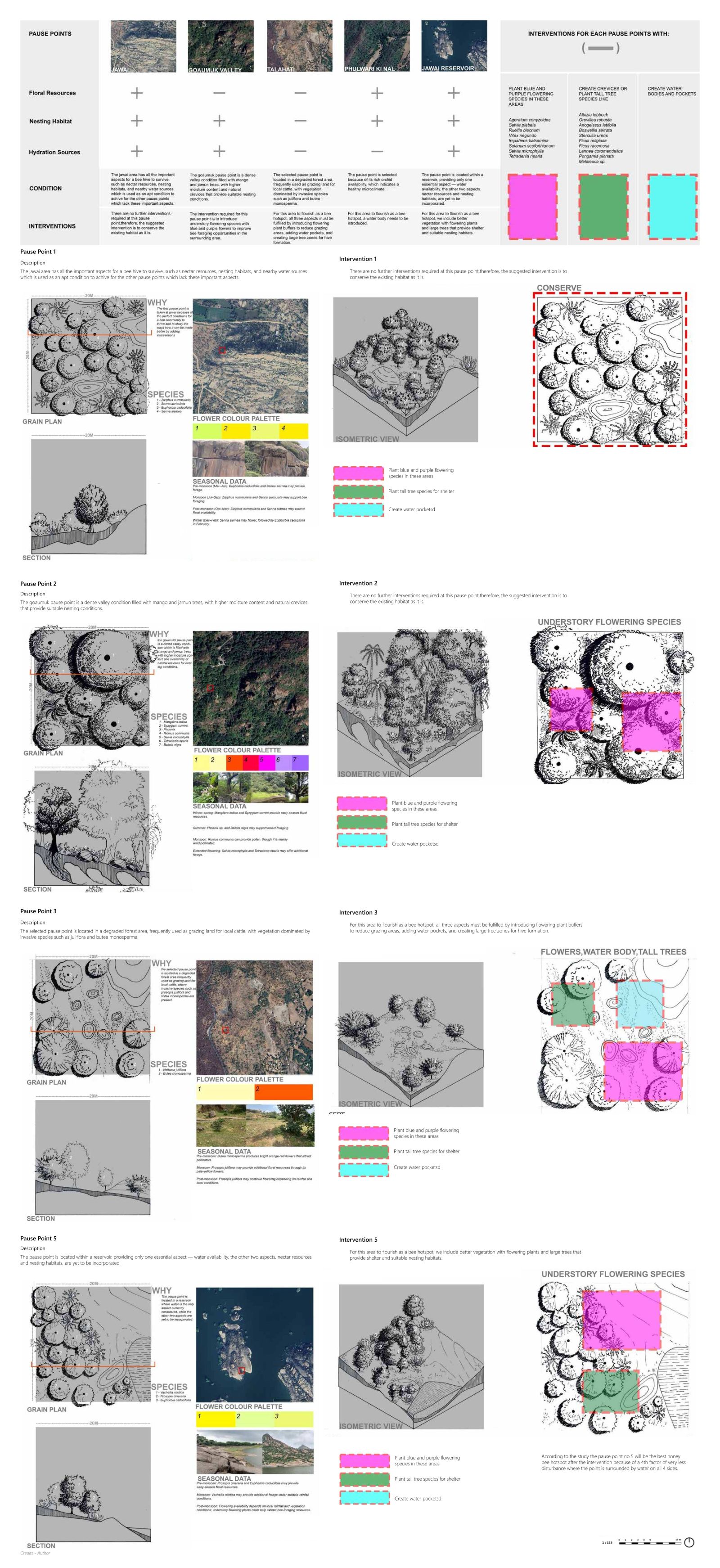
pause points and interventions to improve the honey bee hotspots