Your browser is out-of-date!
For a richer surfing experience on our website, please update your browser. Update my browser now!
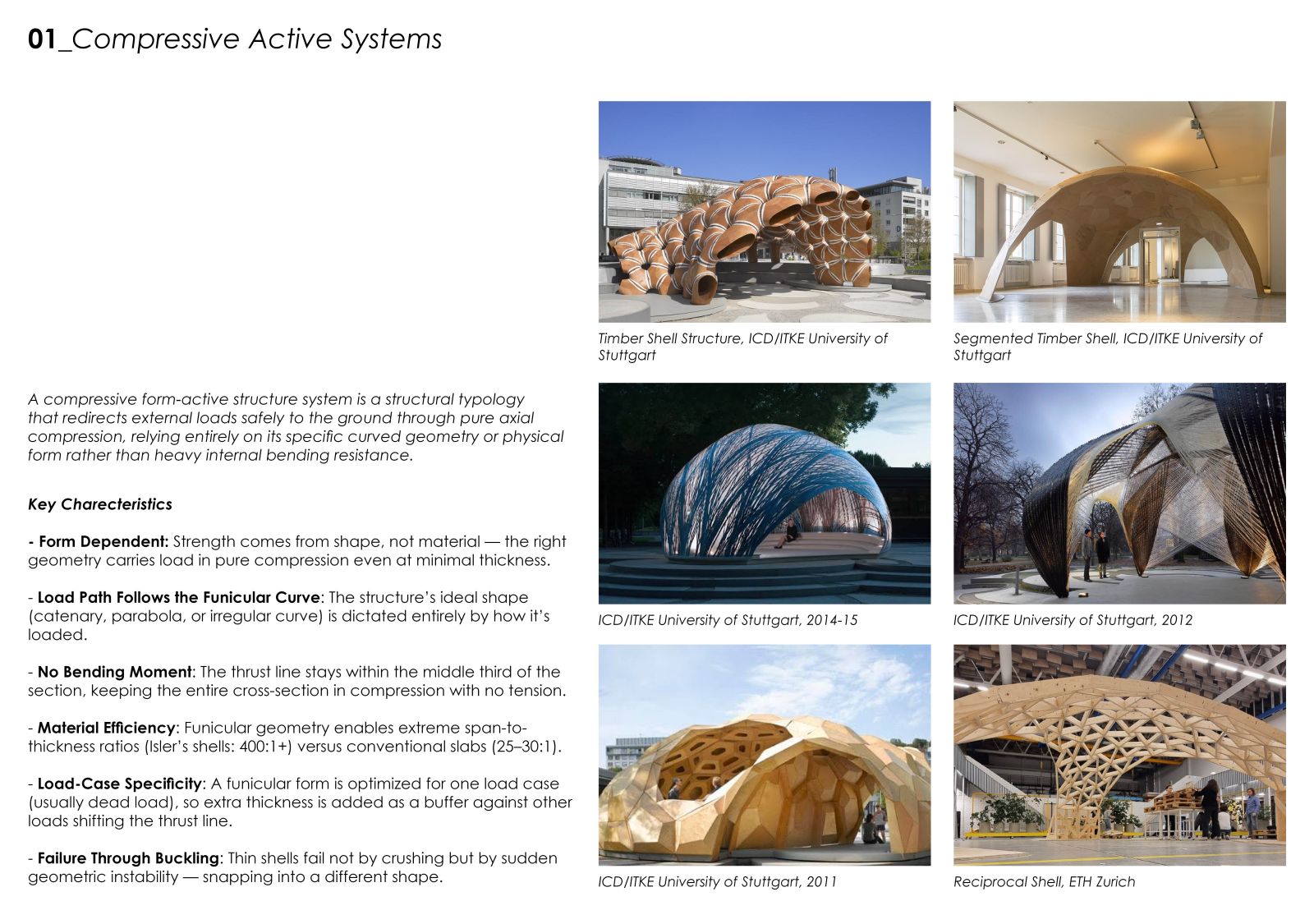
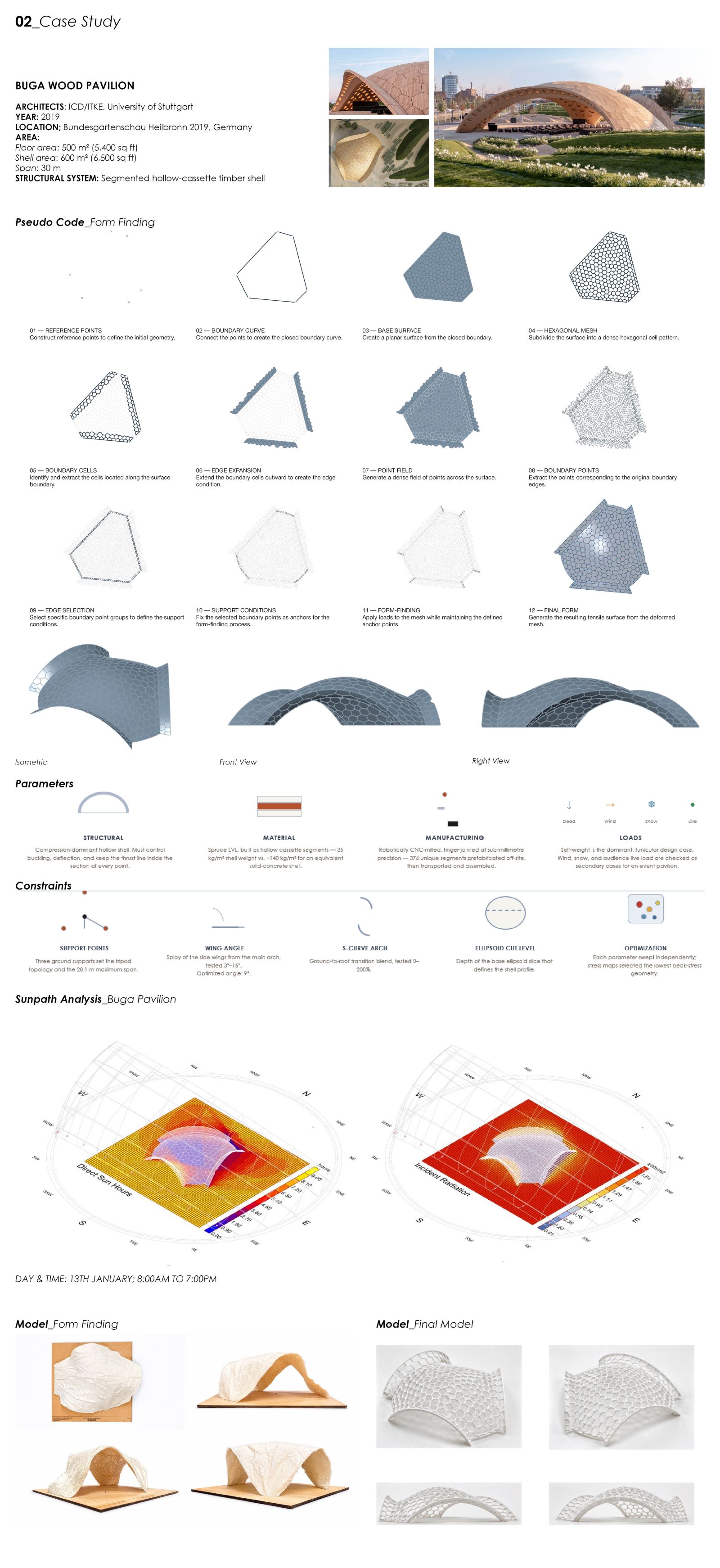
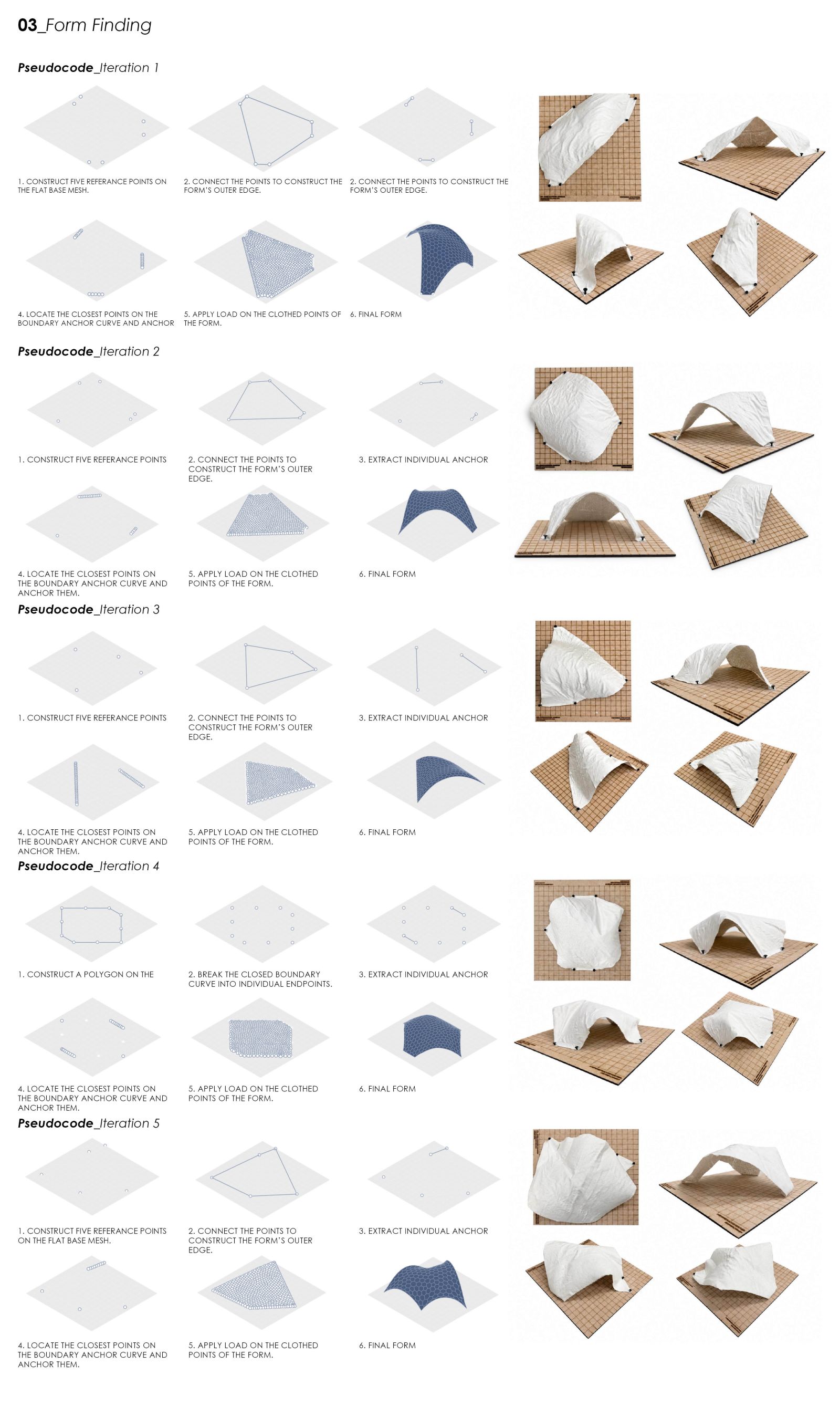
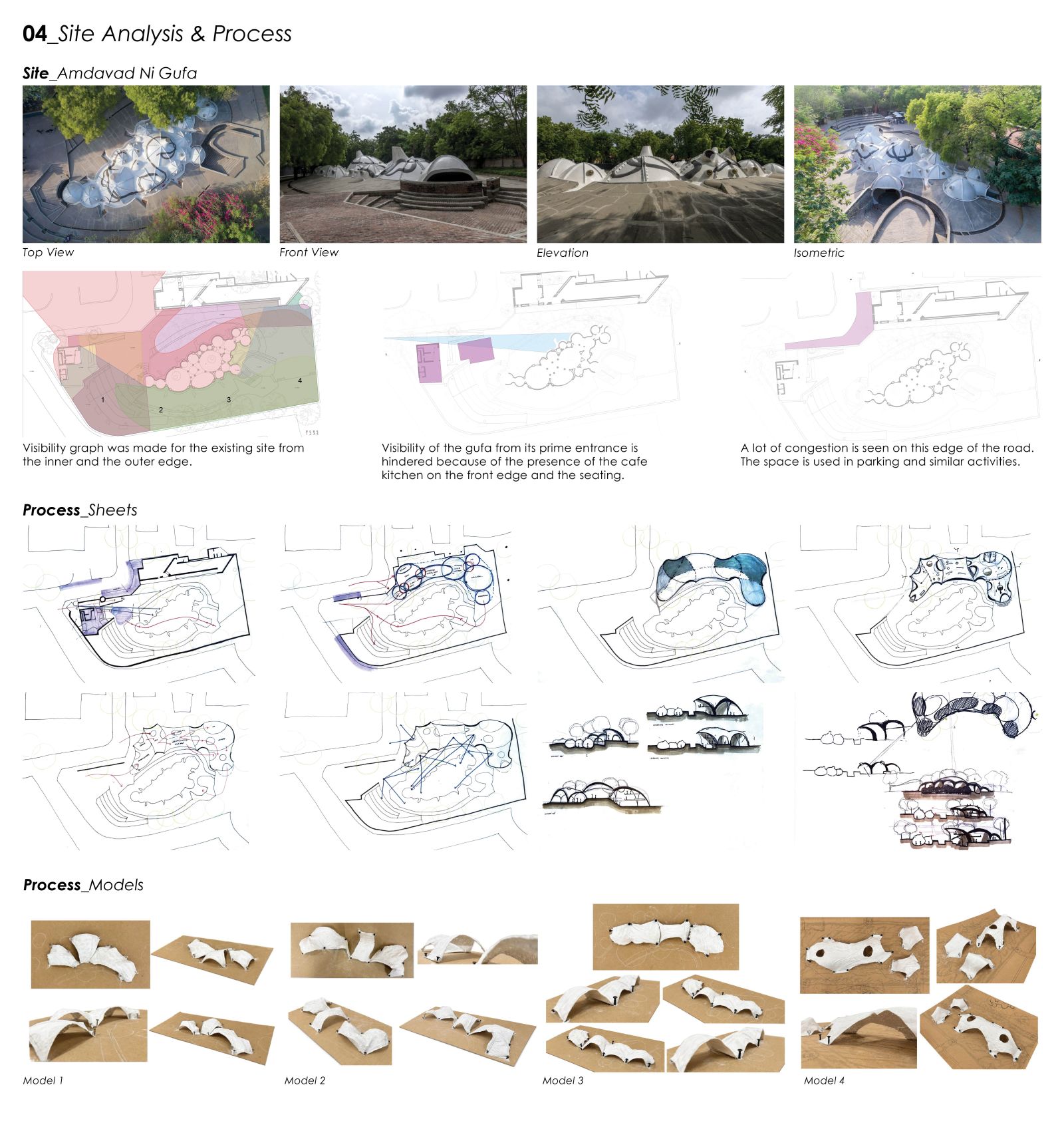
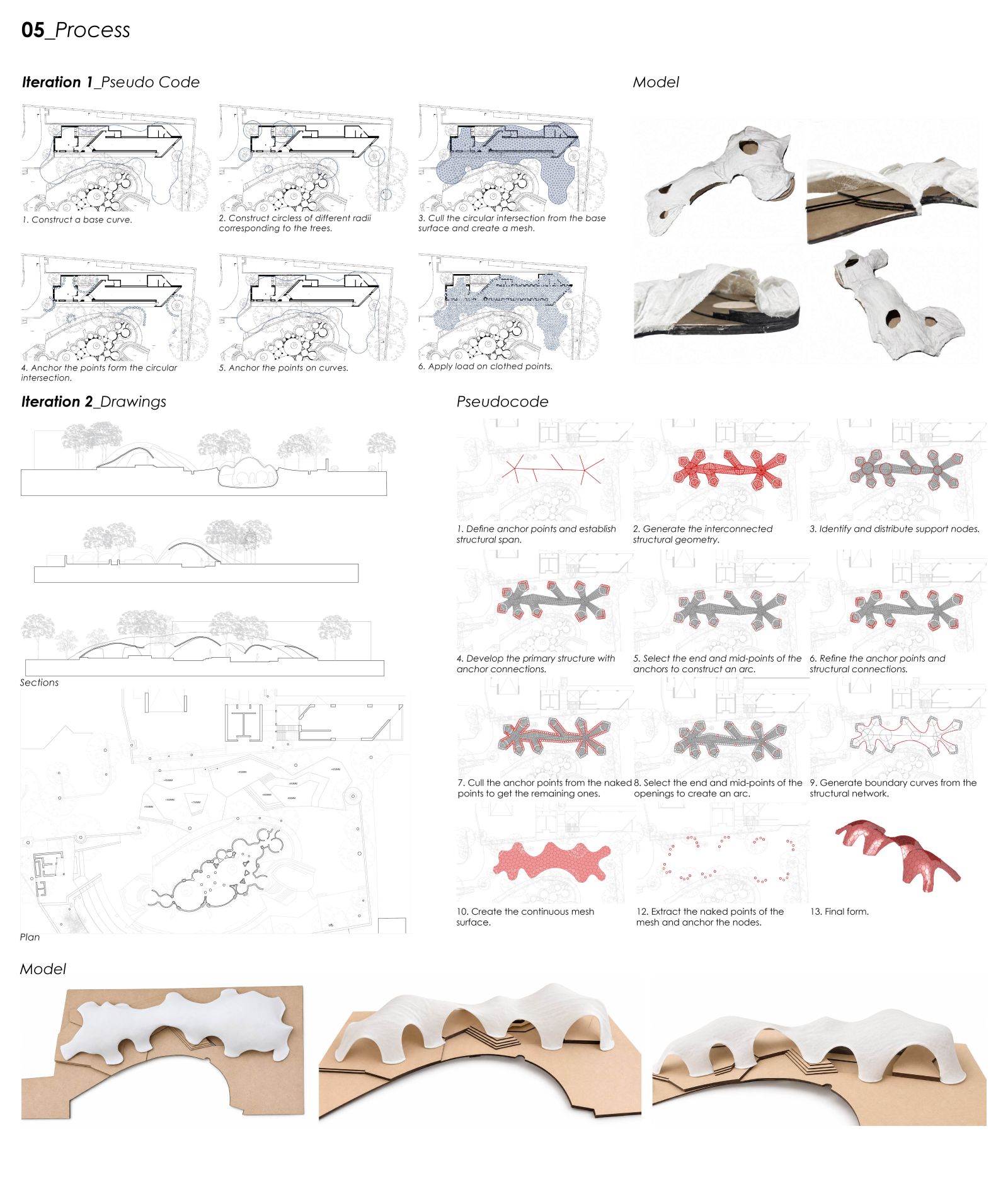
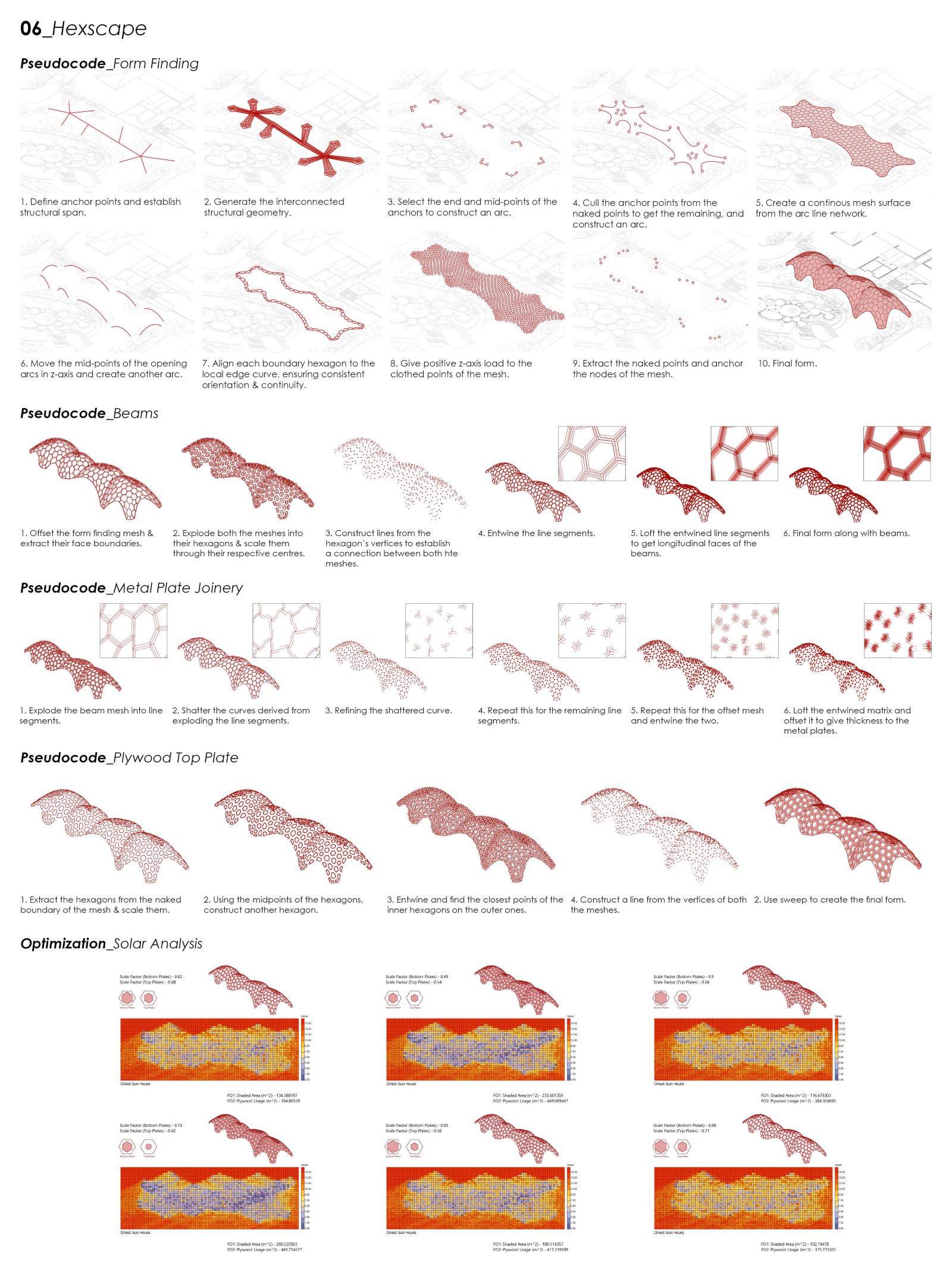
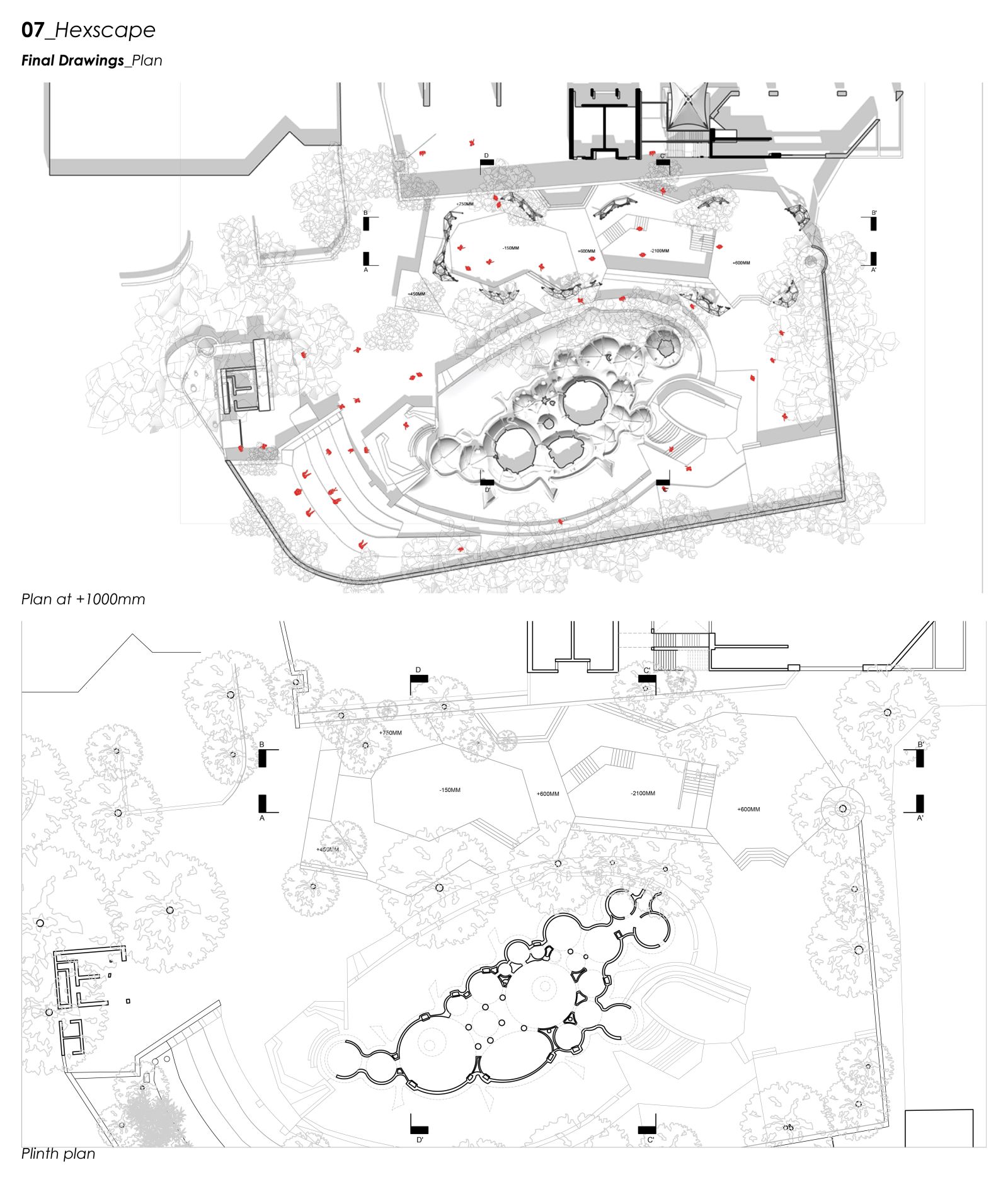
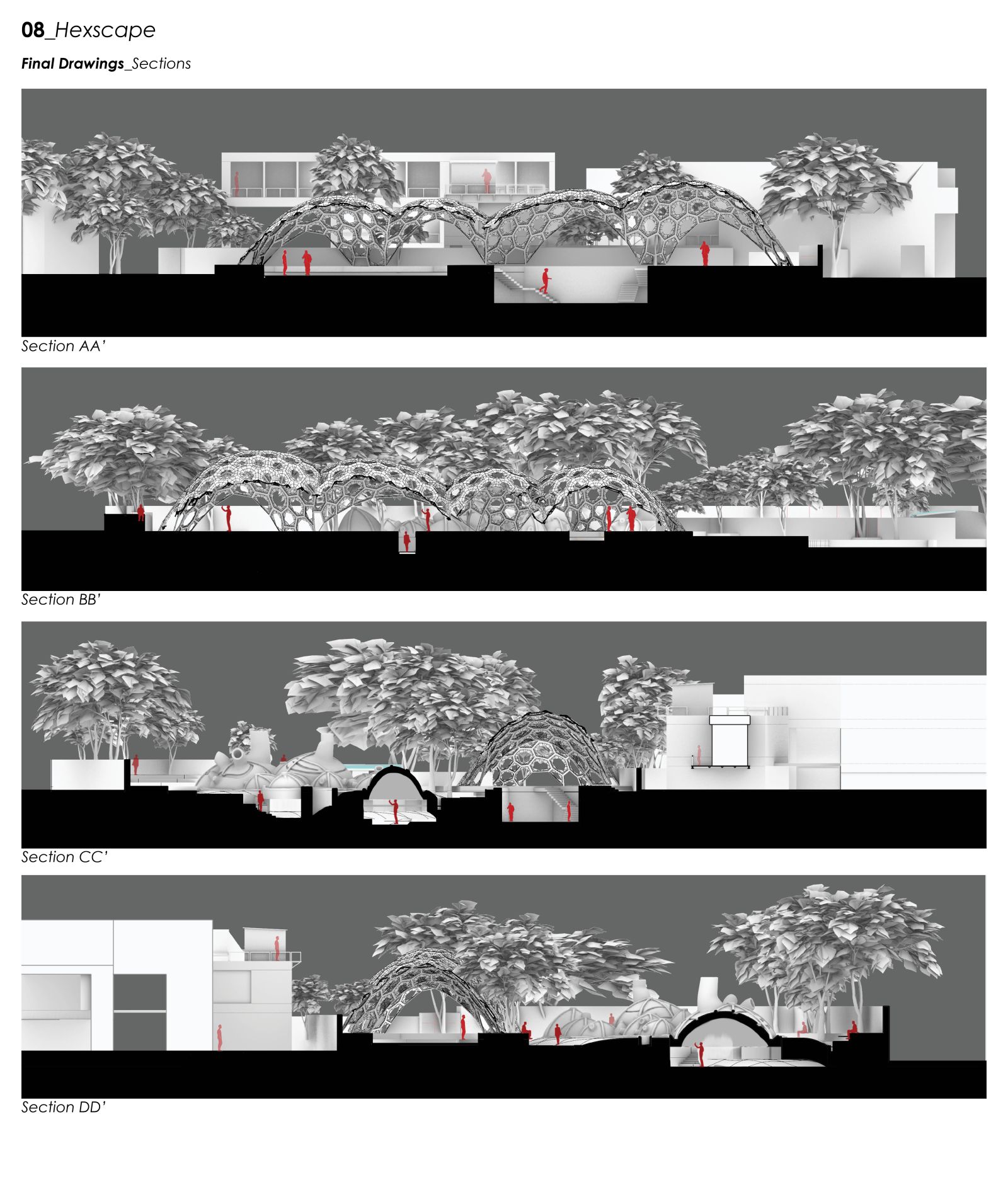
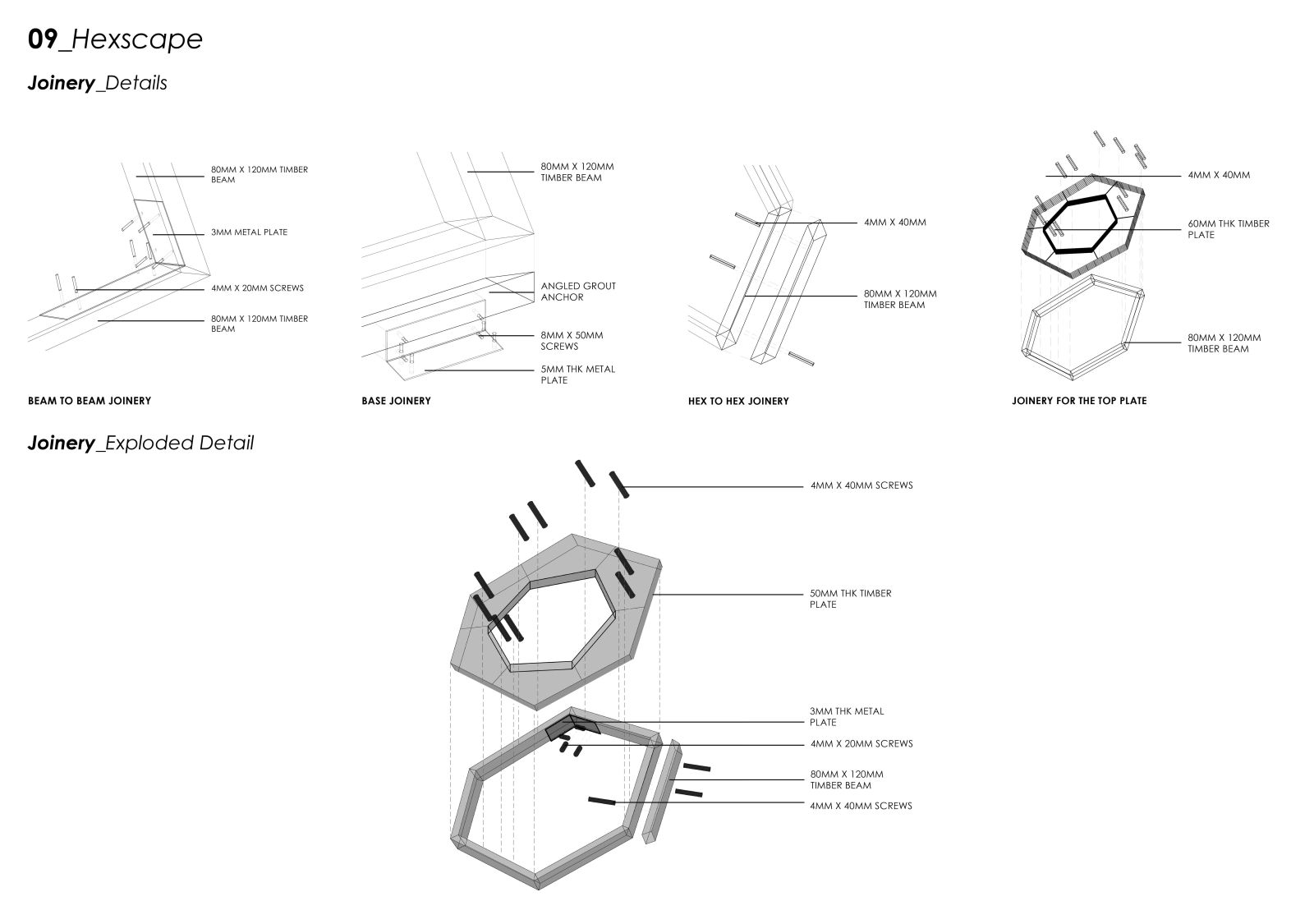
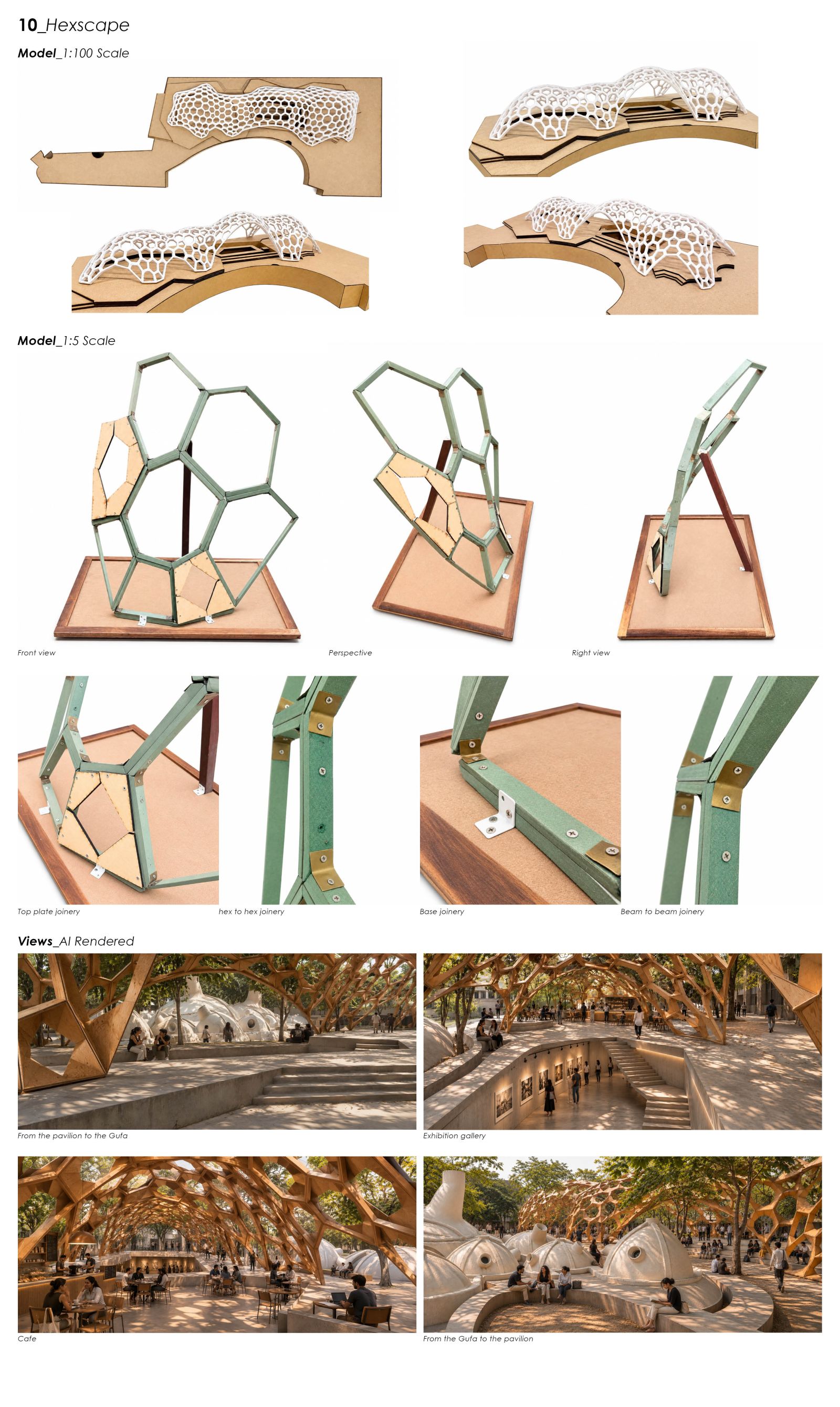
The project explores the potential of algorithmic assemblies to create a lightweight architectural intervention within the existing landscape of Amdavad Ni Gufa. Responding to the site’s circulation patterns, visibility constraints and spatial relationships, the intervention seeks to establish a dialogue between the existing organic architecture and a new structural language. Developed through parametric form-finding, the structure emerges from a network of interconnected anchor points and curved geometries, gradually forming a continuous, tessellated timber shell. Its geometry is informed by structural spans, boundary conditions and spatial requirements, allowing form and structure to evolve together. The assembly employs timber beams, metal plates and mechanical fasteners, translating the digital geometry into a system of constructible connections. Structural performance is further evaluated through Karamba, analysing stress distribution, material utilisation and displacement. Through solar analysis using Ladybug, shaded area optimization is also run. Ultimately, the project investigates how computation, material logic and structural articulation can come together to create an architectural intervention that is both spatially expressive and structurally informed.
View Additional Work