Your browser is out-of-date!
For a richer surfing experience on our website, please update your browser. Update my browser now!
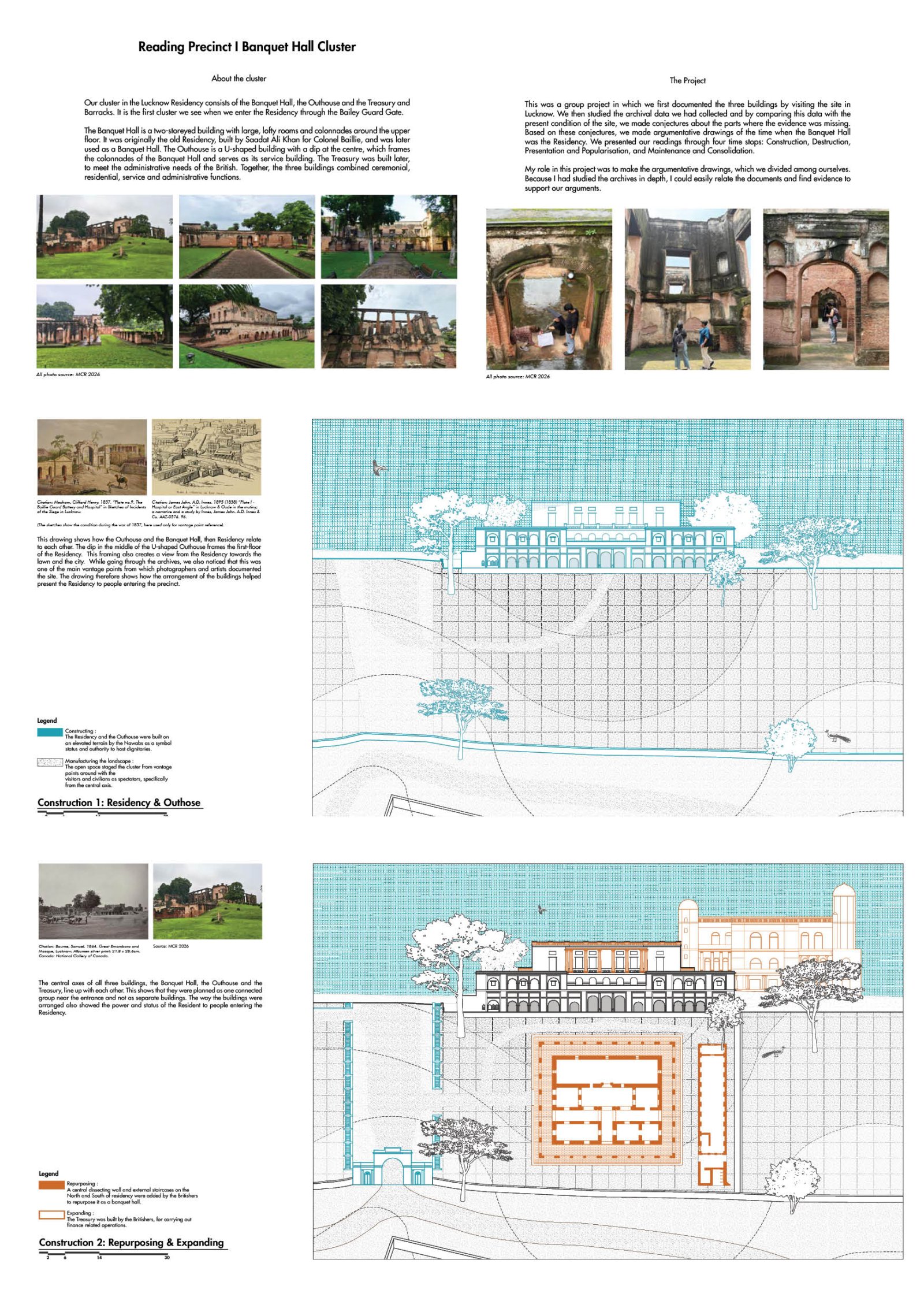
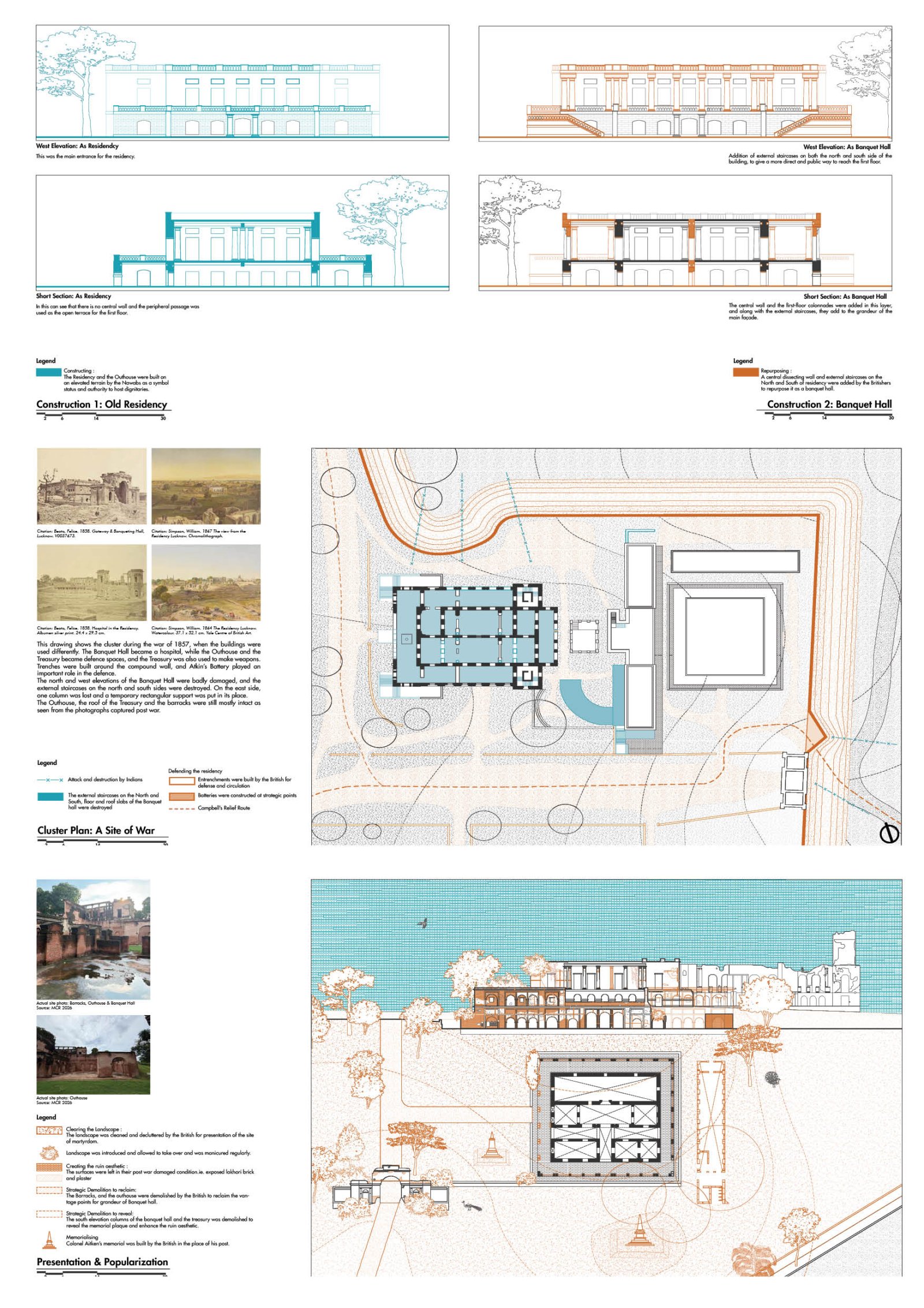
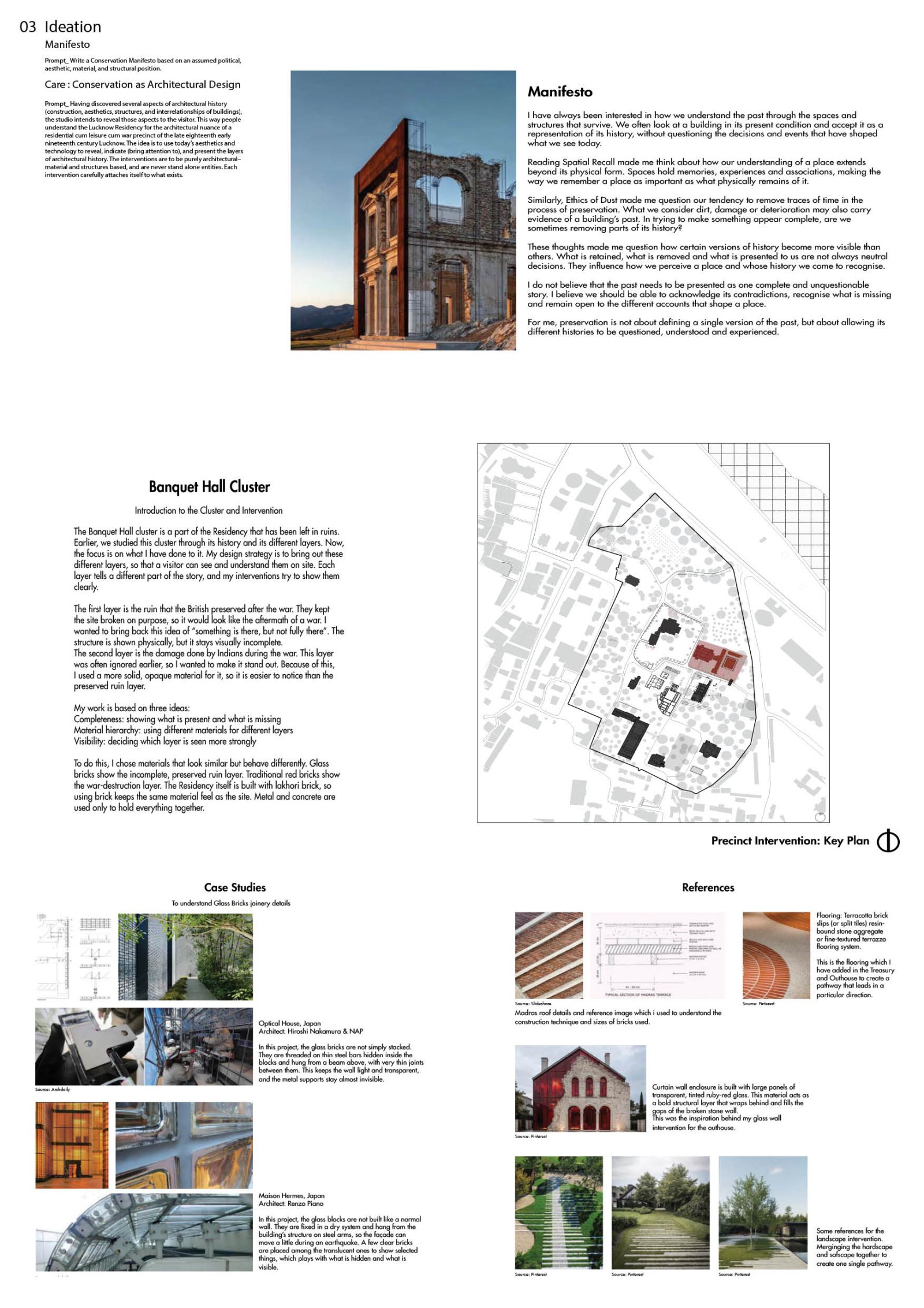
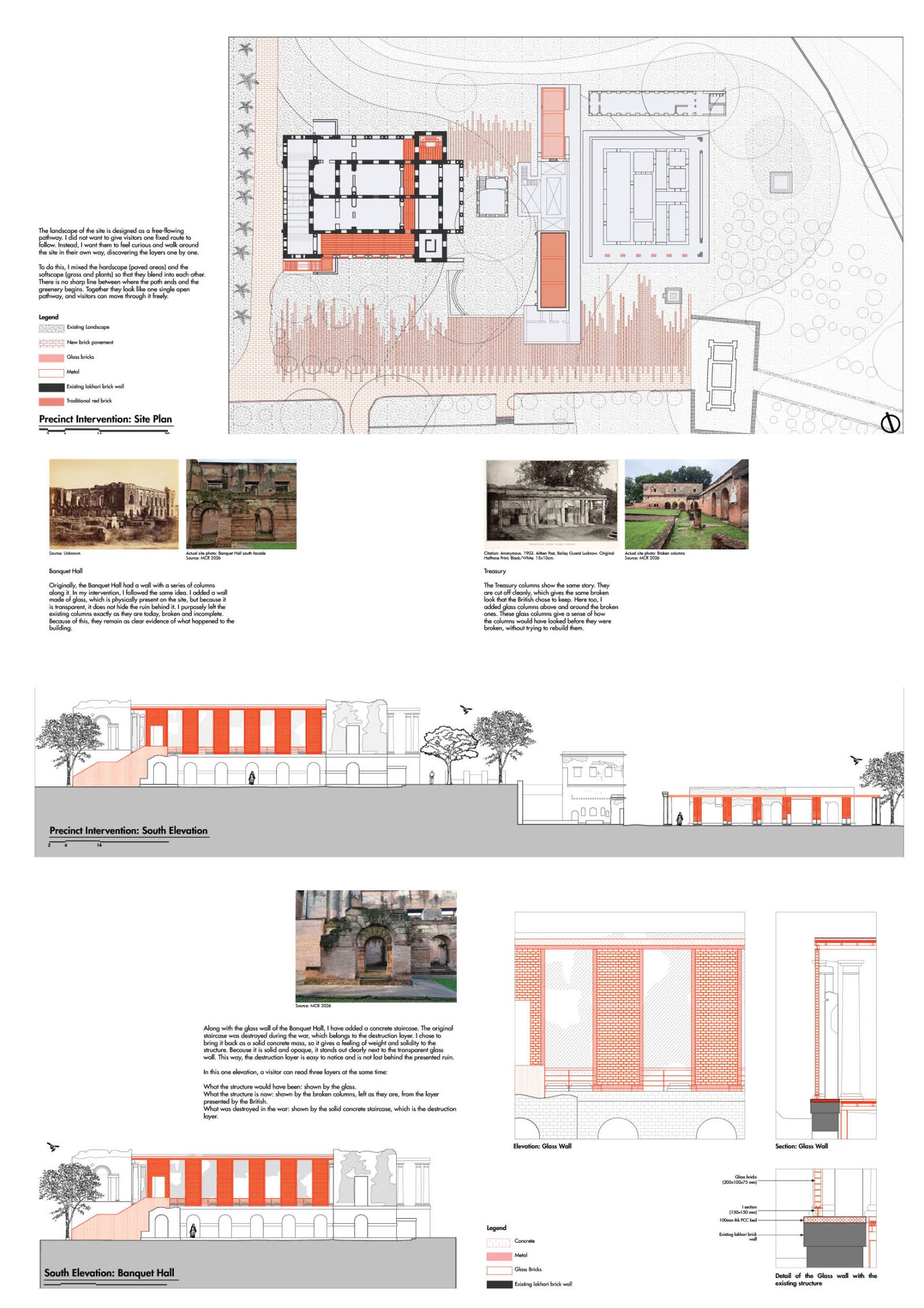
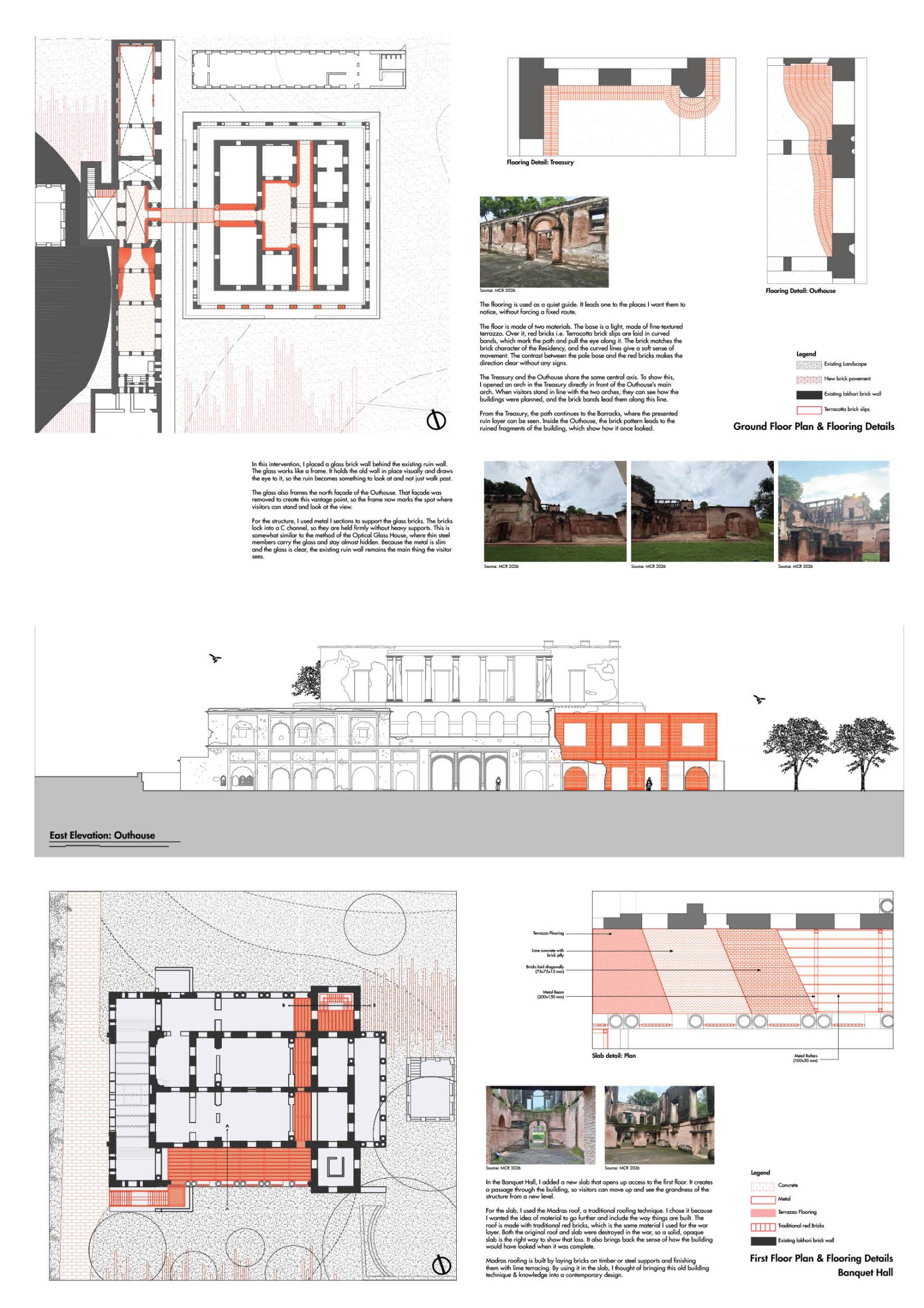
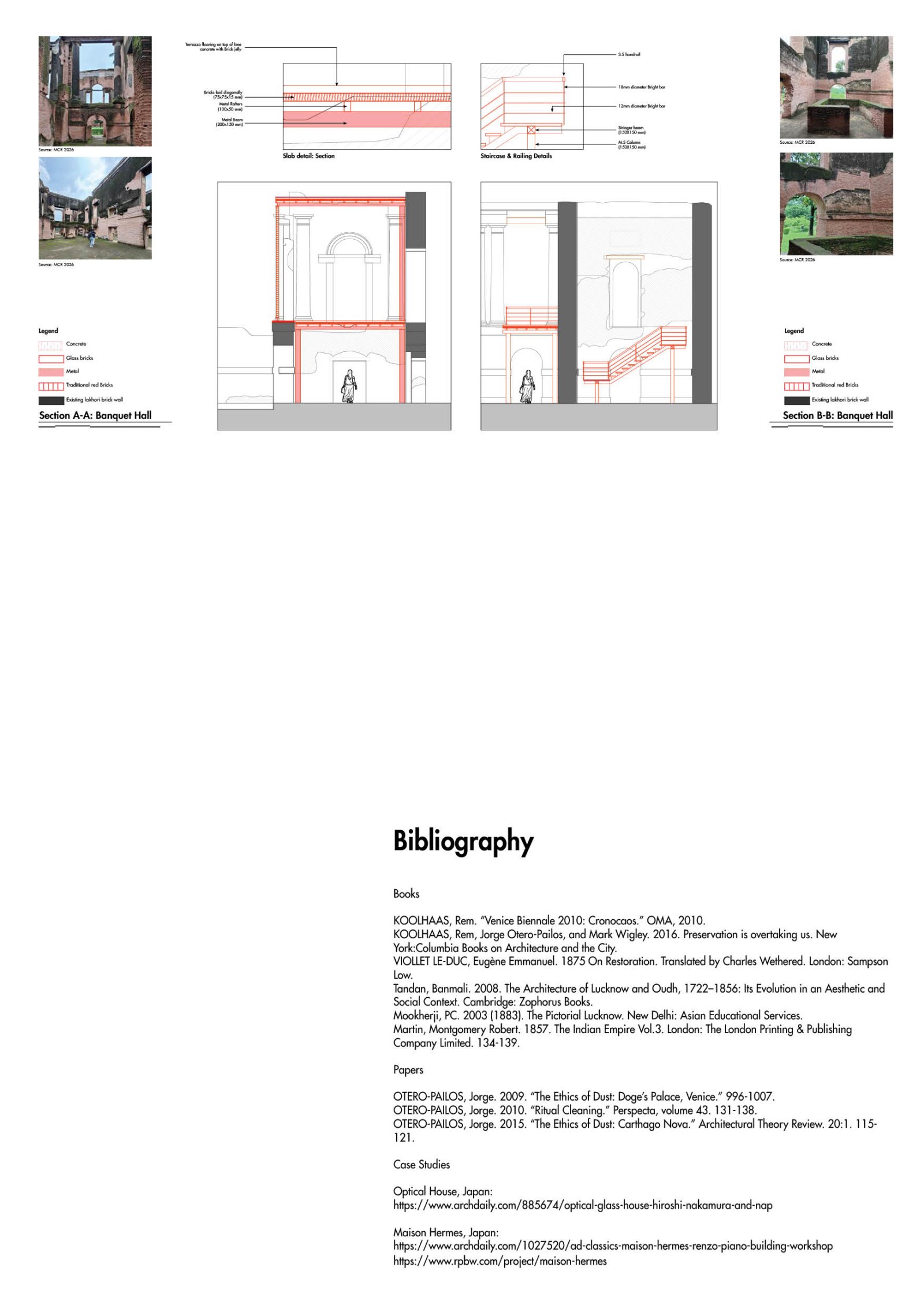
The Banquet Hall cluster is a part of the Residency that has been left in ruins. Earlier, we studied this cluster through its history and its different layers. Now, the focus is on what I have done to it. My design strategy is to bring out these different layers, so that a visitor can see and understand them on site. Each layer tells a different part of the story, and my interventions try to show them clearly. The first layer is the ruin that the British preserved after the war. They kept the site broken on purpose, so it would look like the aftermath of a war. I wanted to bring back this idea of “something is there, but not fully there”. The structure is shown physically, but it stays visually incomplete. The second layer is the damage done by Indians during the war. This layer was often ignored earlier, so I wanted to make it stand out. Because of this, I used a more solid, opaque material for it, so it is easier to notice than the preserved ruin layer. My work is based on three ideas: Completeness: showing what is present and what is missing Material hierarchy: using different materials for different layers Visibility: deciding which layer is seen more strongly To do this, I chose materials that look similar but behave differently. Glass bricks show the incomplete, preserved ruin layer. Traditional red bricks show the war-destruction layer. The Residency itself is built with lakhori brick, so using brick keeps the same material feel as the site. Metal and concrete are used only to hold everything together.