Your browser is out-of-date!
For a richer surfing experience on our website, please update your browser. Update my browser now!
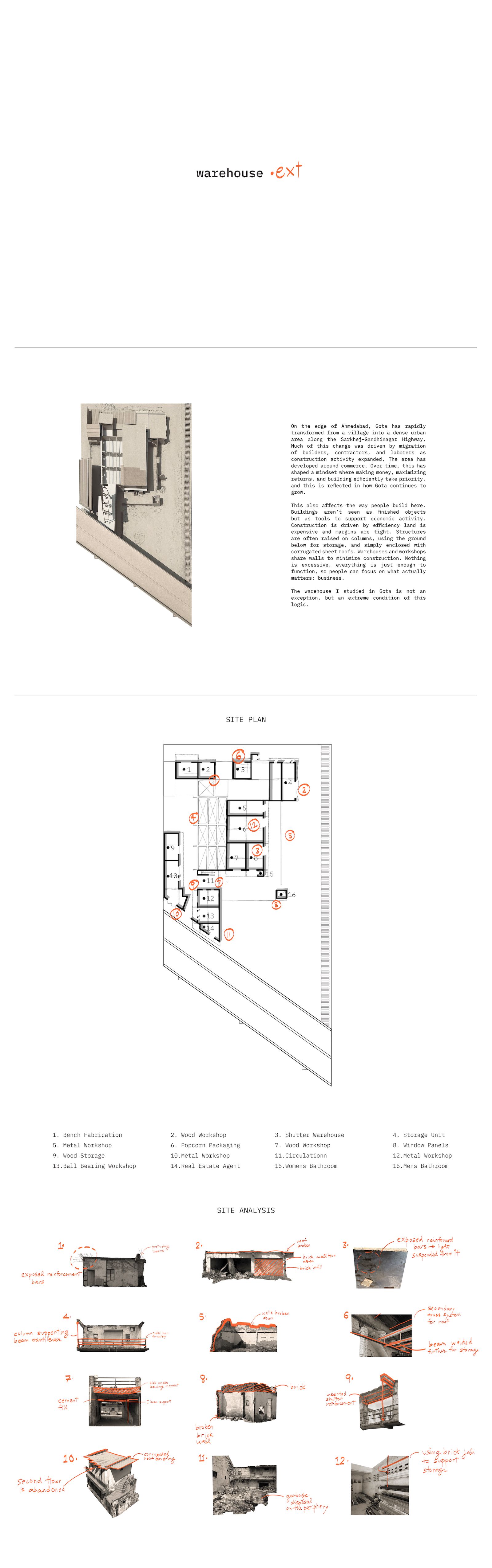
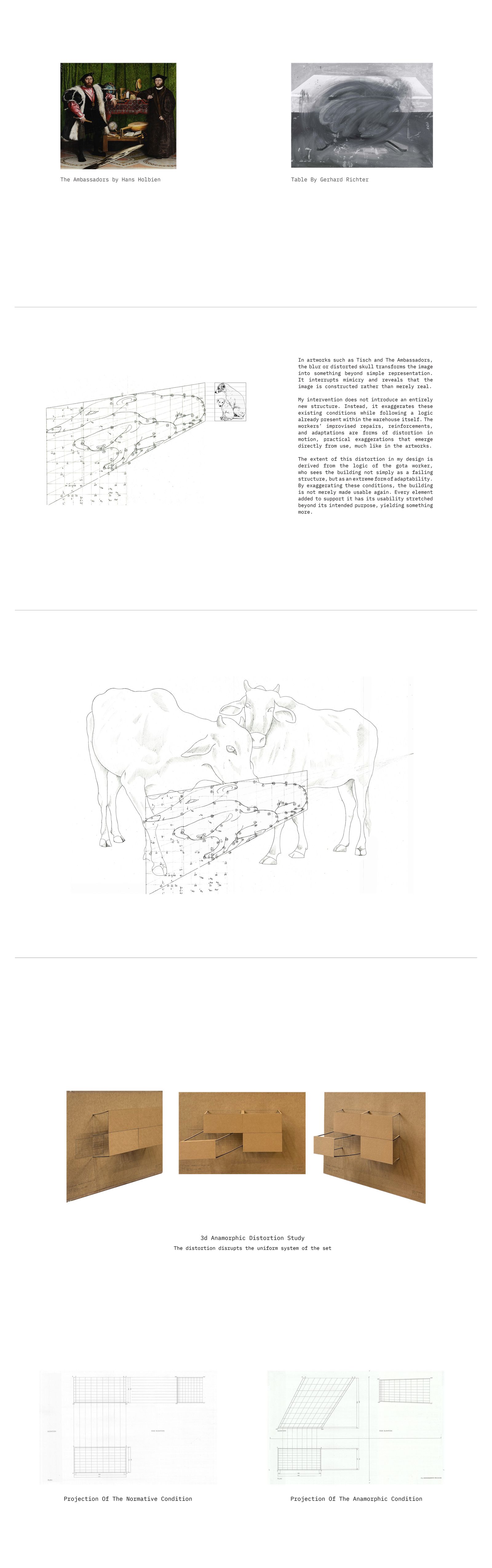
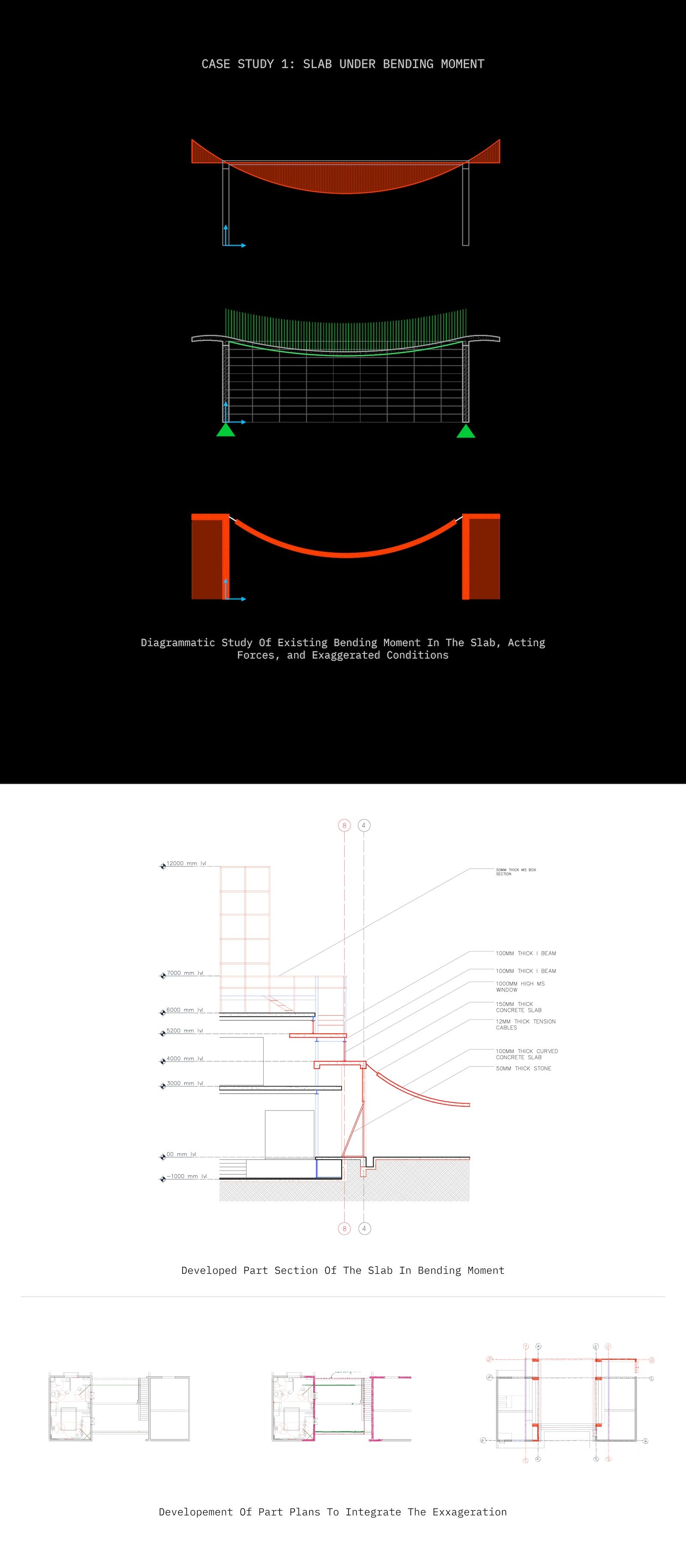
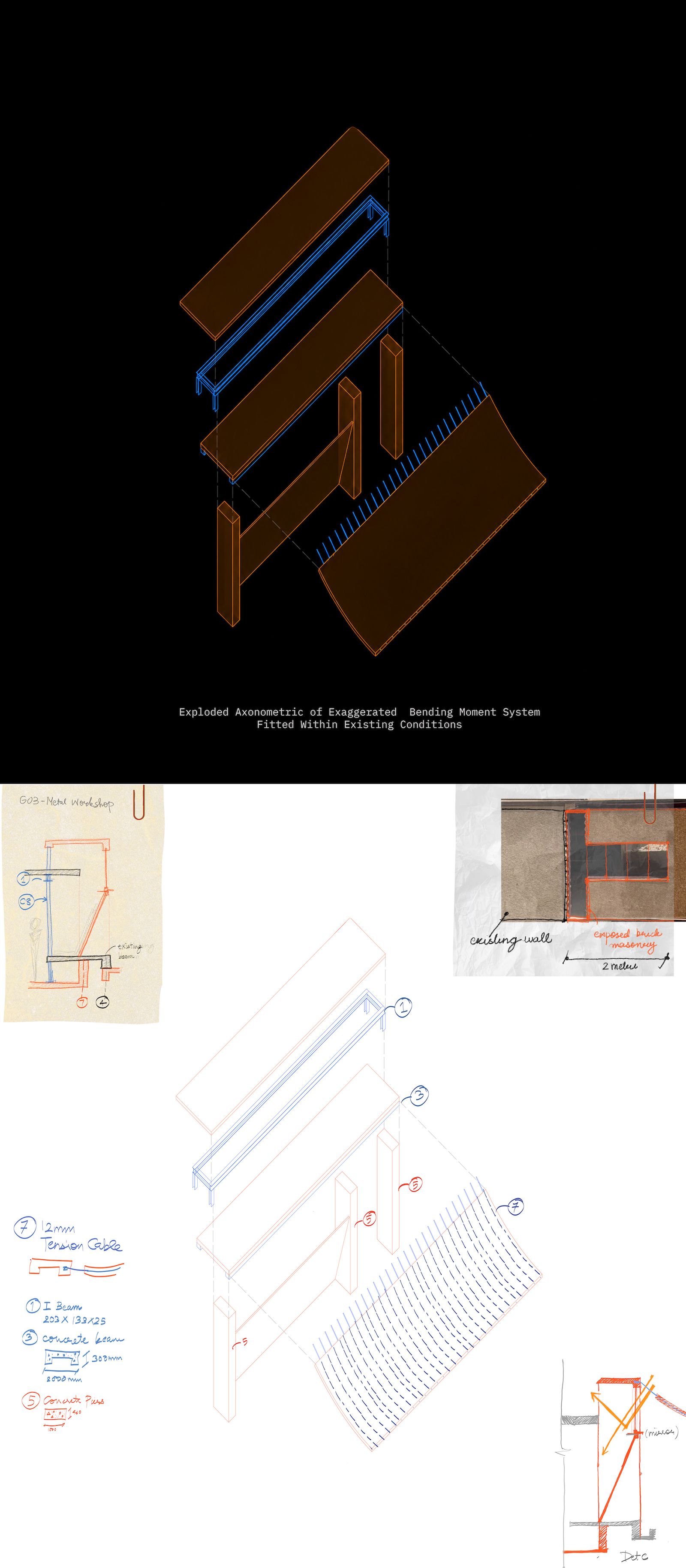
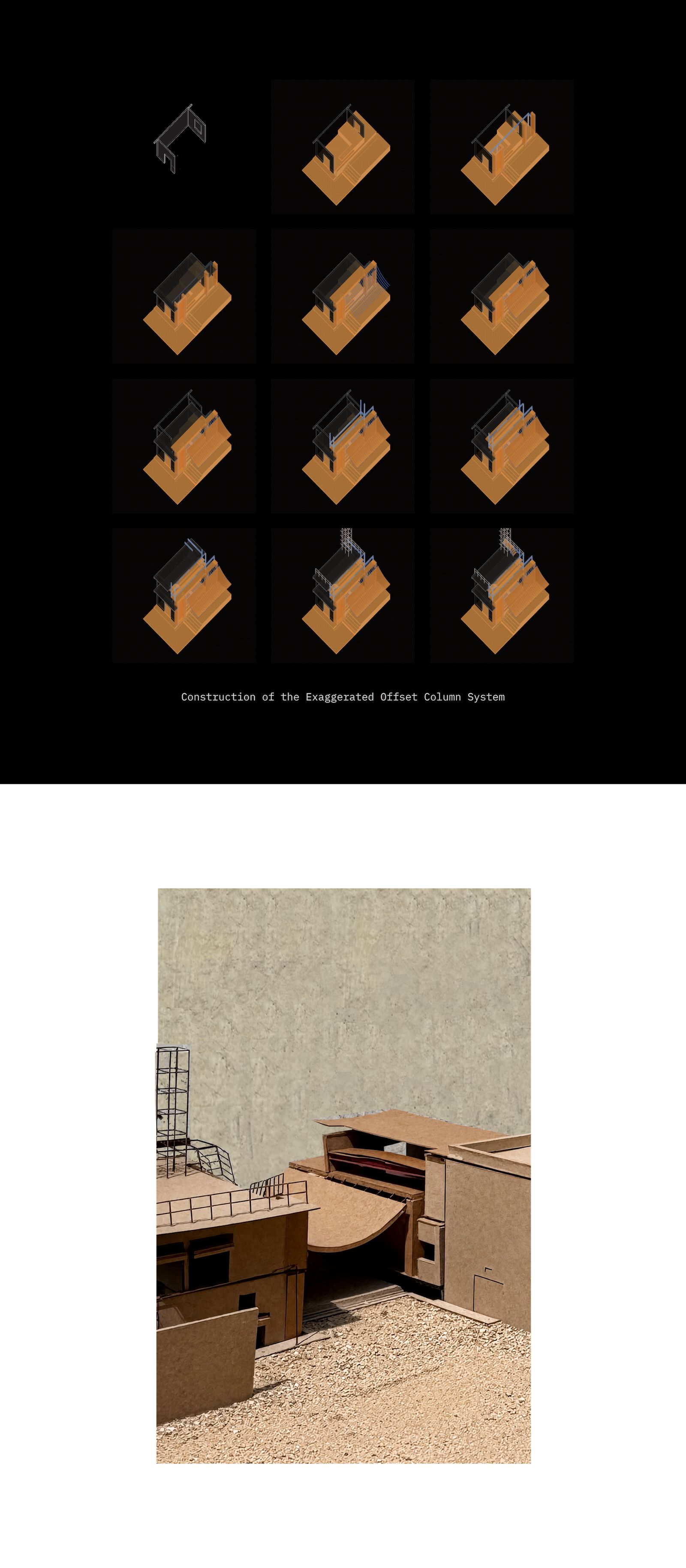
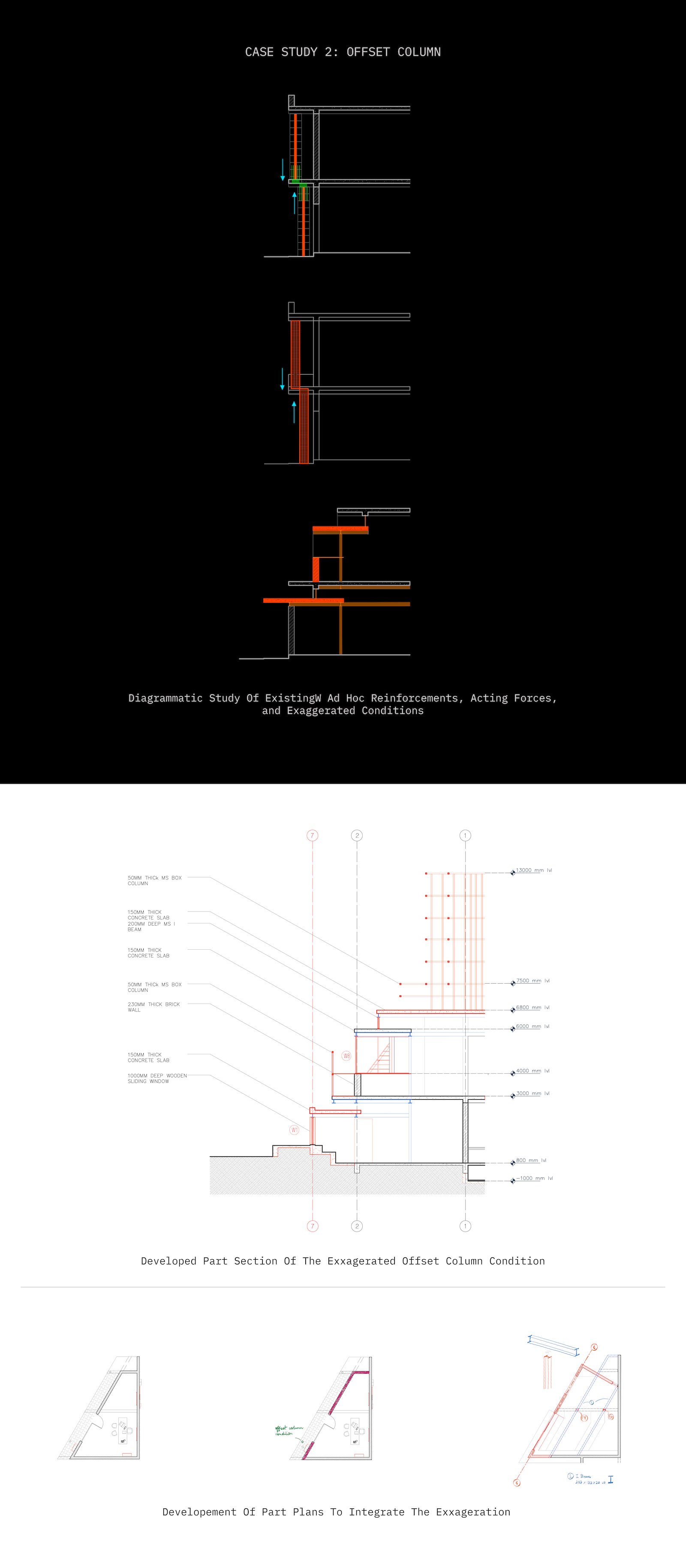
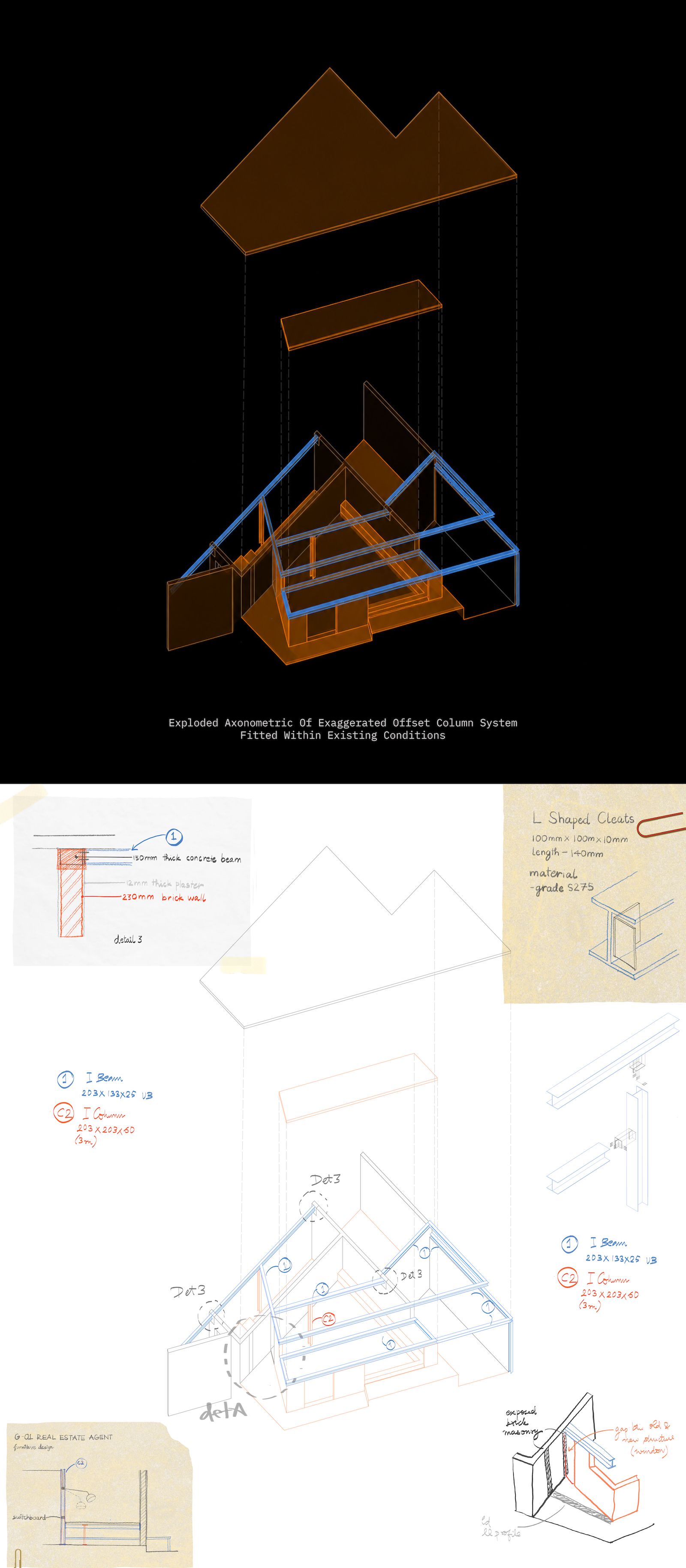
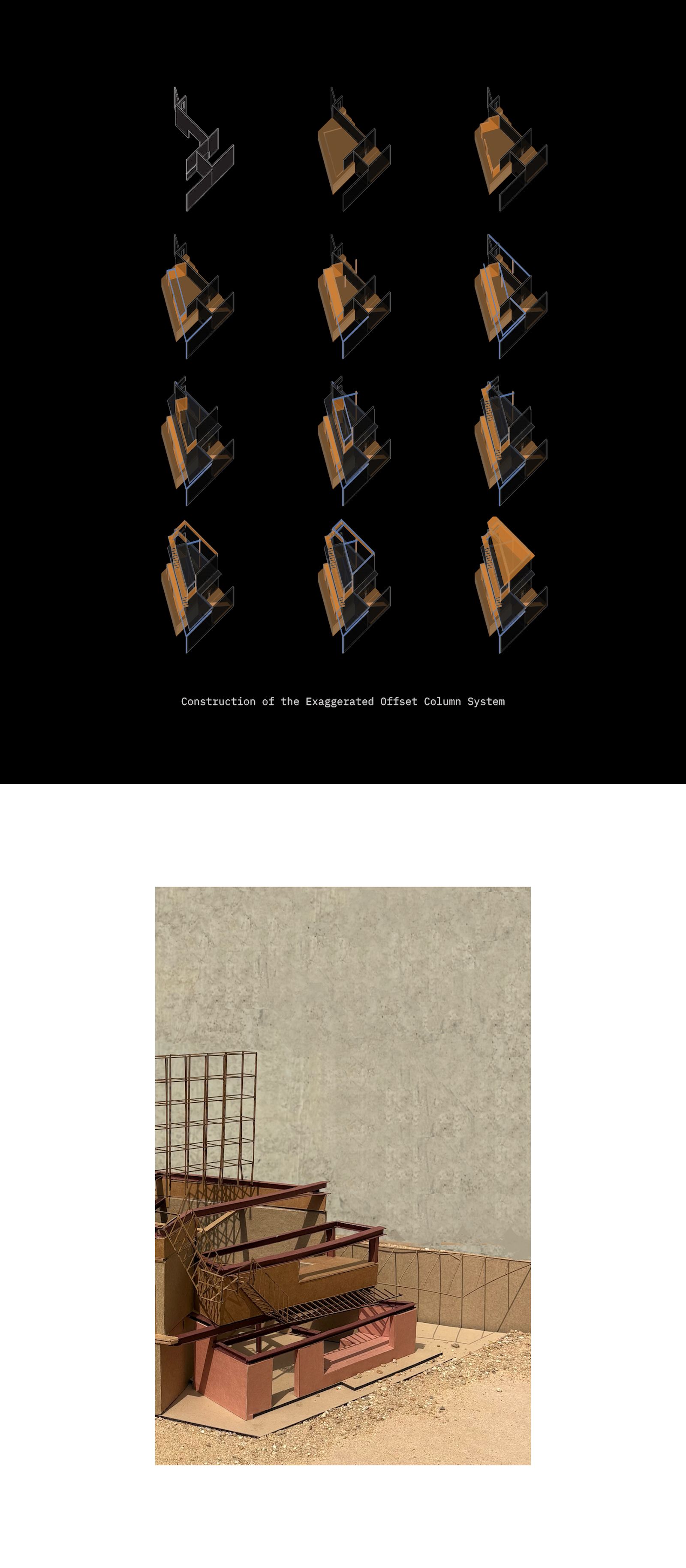
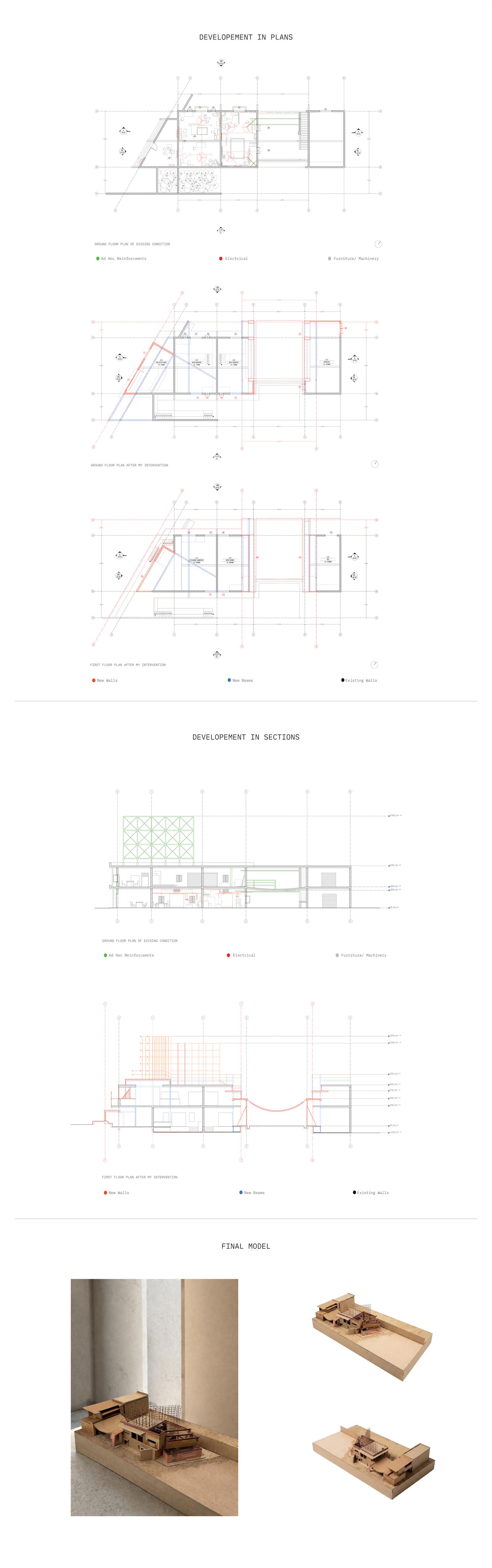
In the rapid urbanization of Gota, architecture is not a finished product but a tool to assist economic activity. Driven by the construction industry’s relentless demand for efficiency, the built environment here operates on a logic of "just enough to function." This project investigates a warehouse in Gota, an extreme case of this condition where structural failure is actively worked with. The intervention rejects the conventional impulse to "repair" or "restore." Instead, it adopts the mindset of the local worker, identifying points of deterioration and exaggerates them. By pushing these failures to their logical extremes, the project derives a new structural language from the reinforcement itself. No longer limited to carrying loads, these additions begin to support everyday functions, organize space, and accommodate new forms of use. What begins as necessity becomes infrastructure, extending the role of structure beyond stability alone.Ultimately, the building becomes a live record of its own survival. It is an architecture where structural necessity, spatial utility, and economic assets are inseparable, creating a system that remains perpetually open to change.