Your browser is out-of-date!
For a richer surfing experience on our website, please update your browser. Update my browser now!
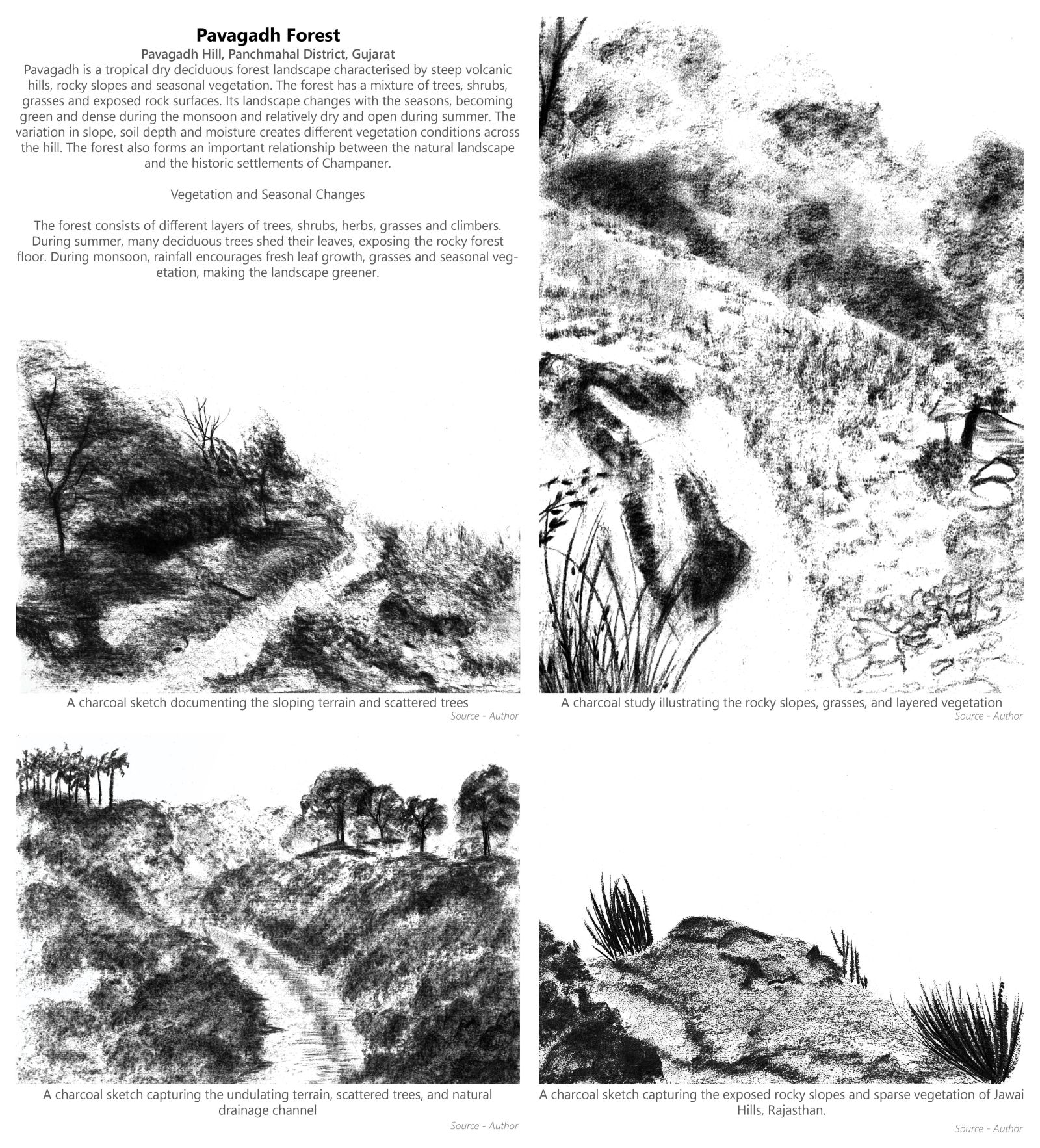
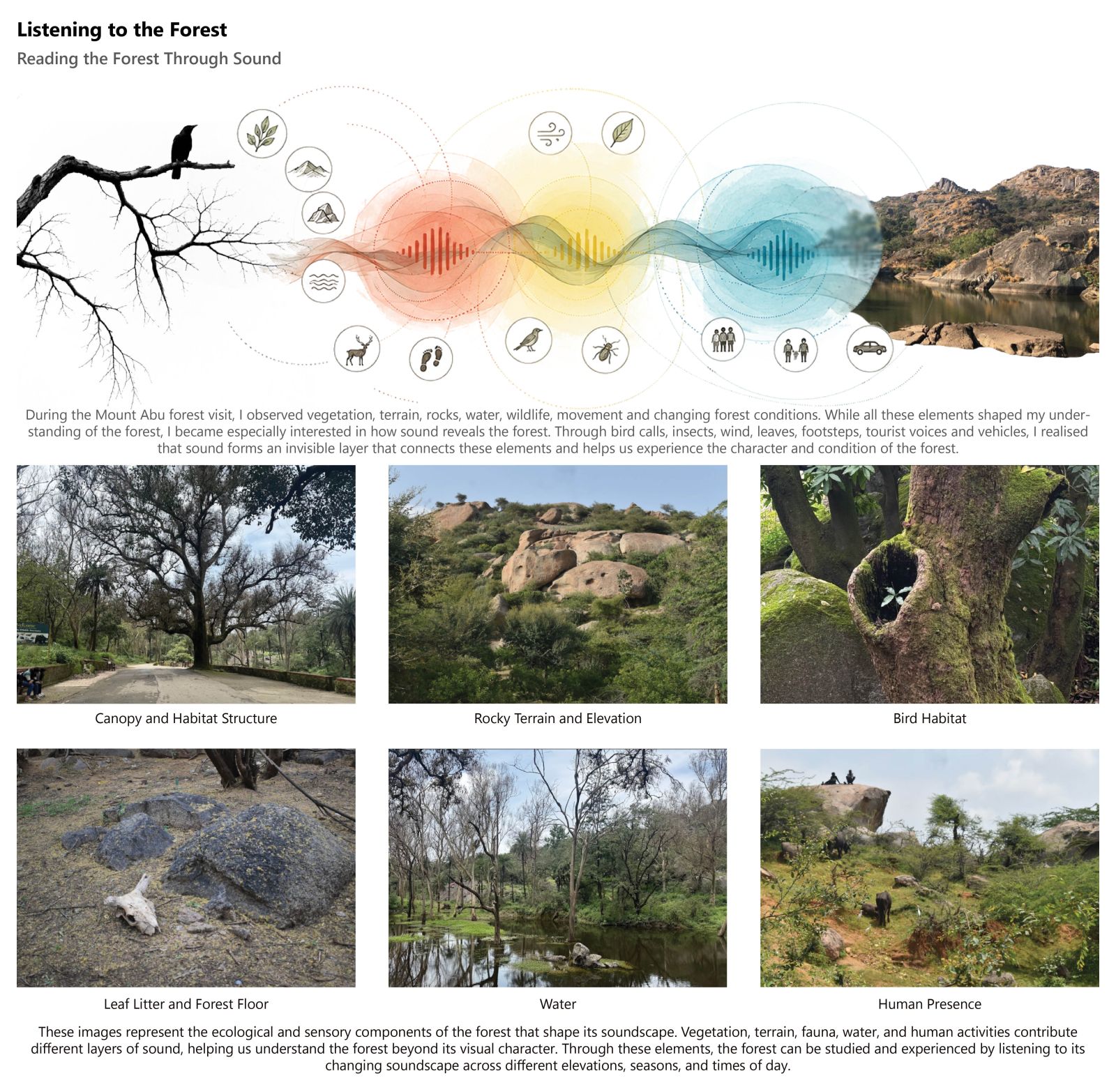
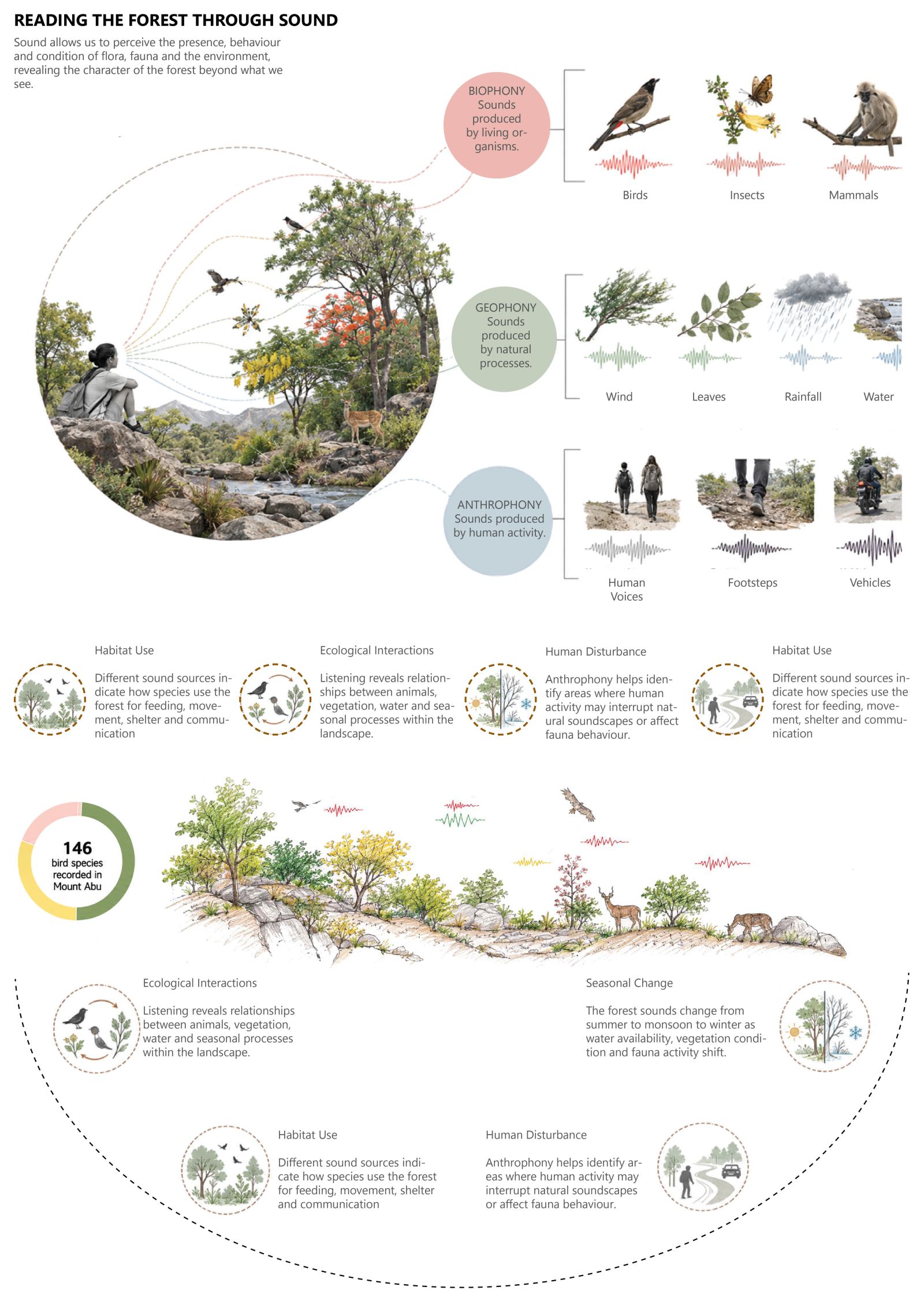
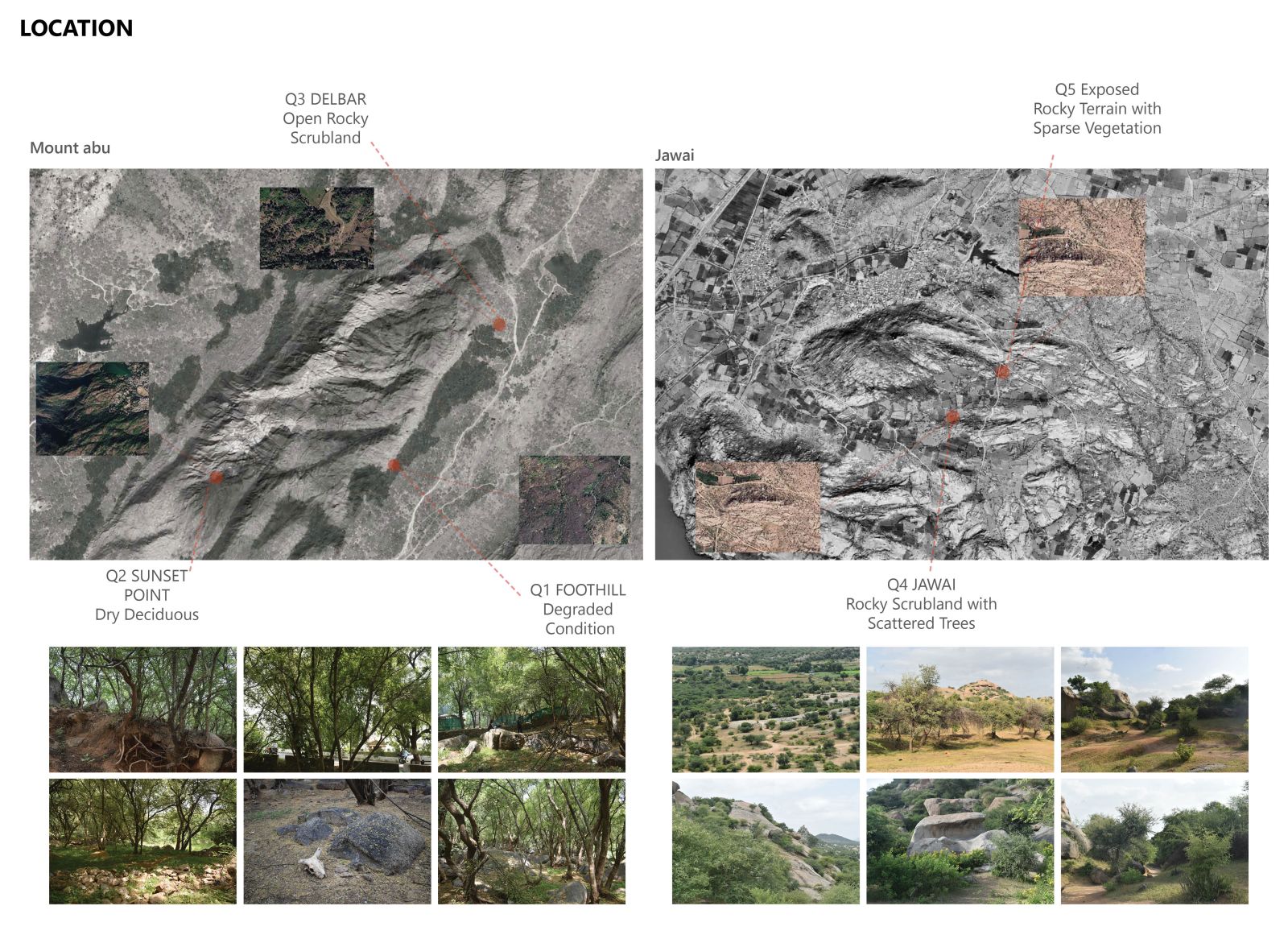
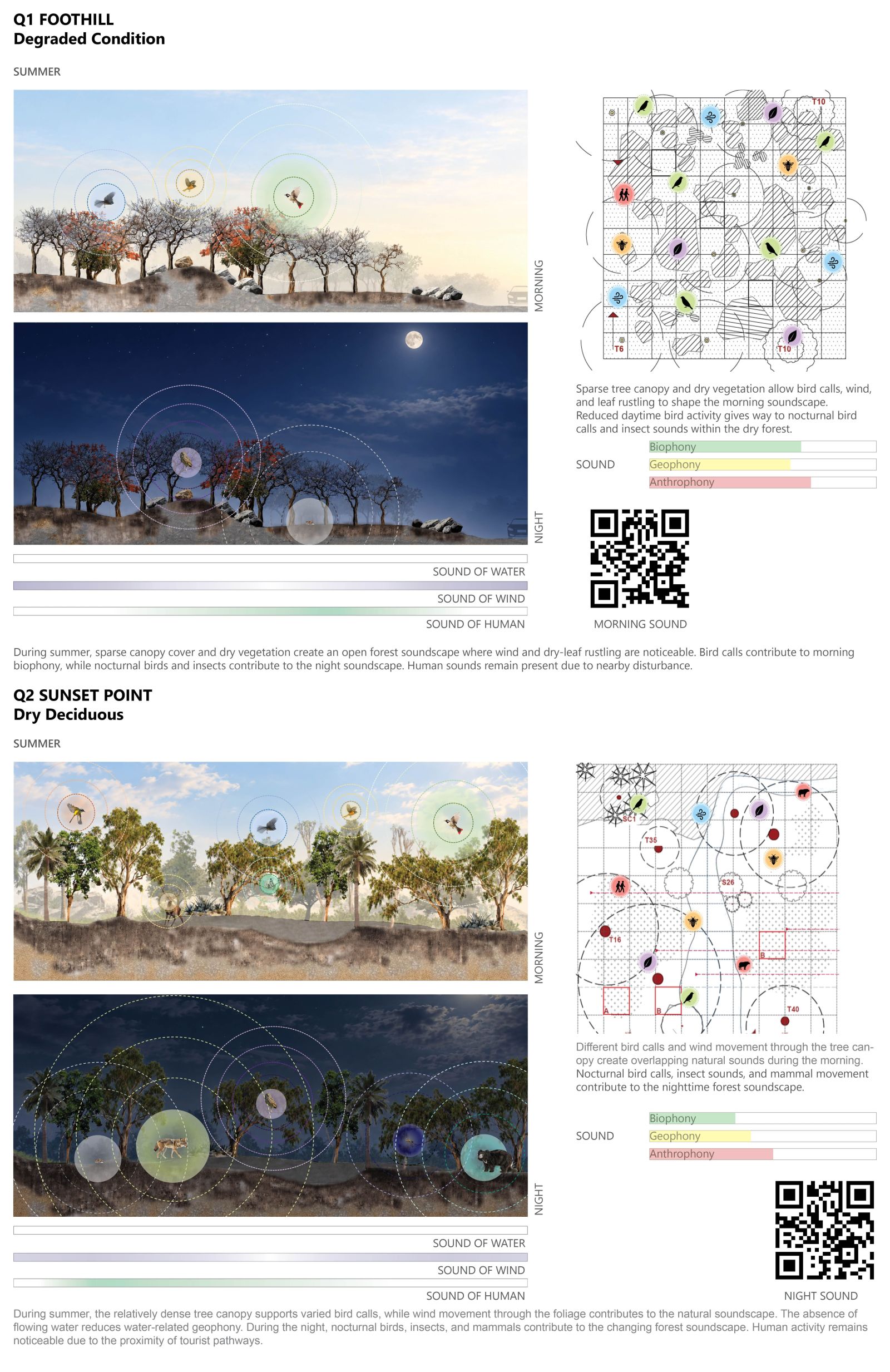
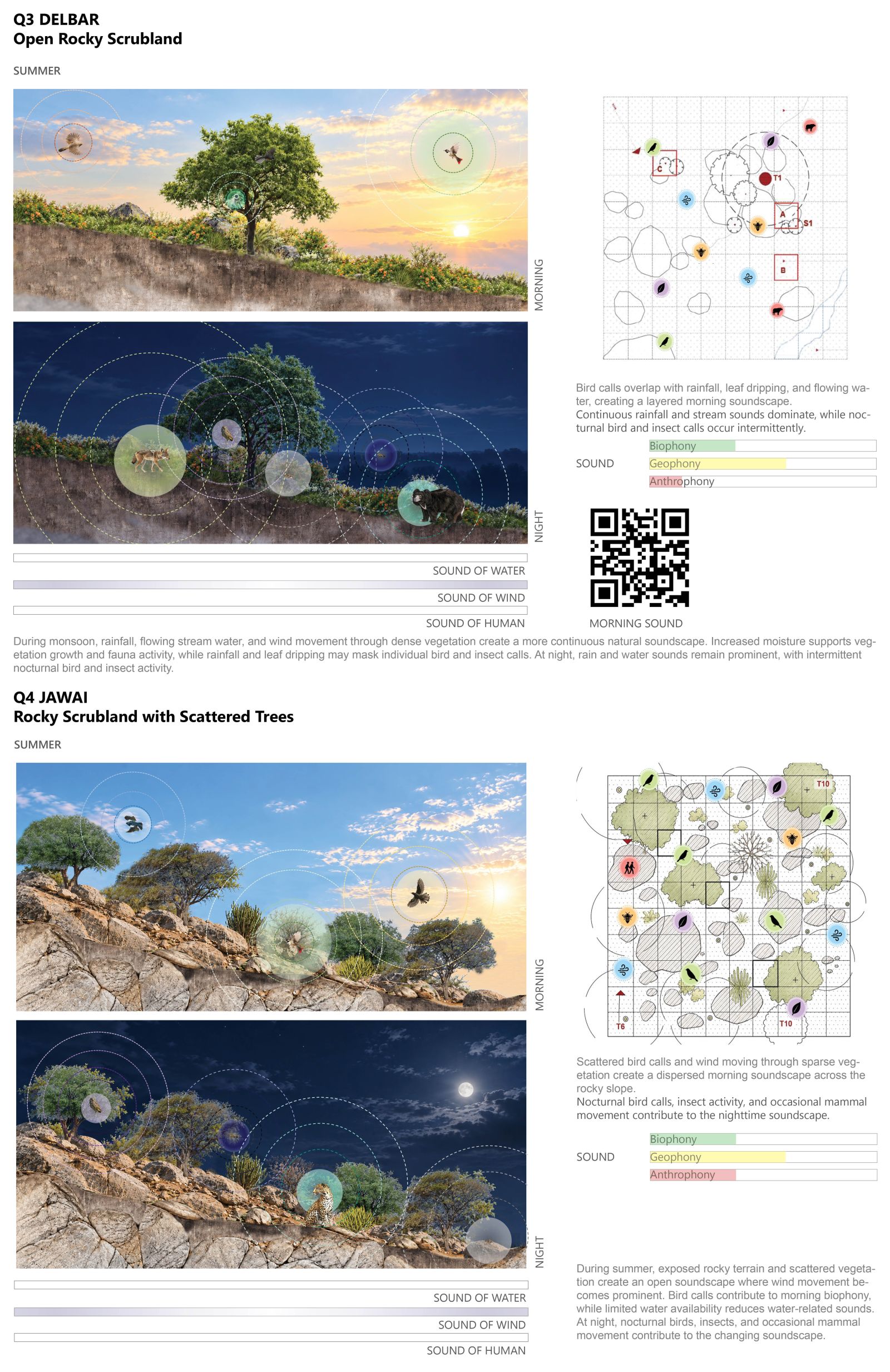
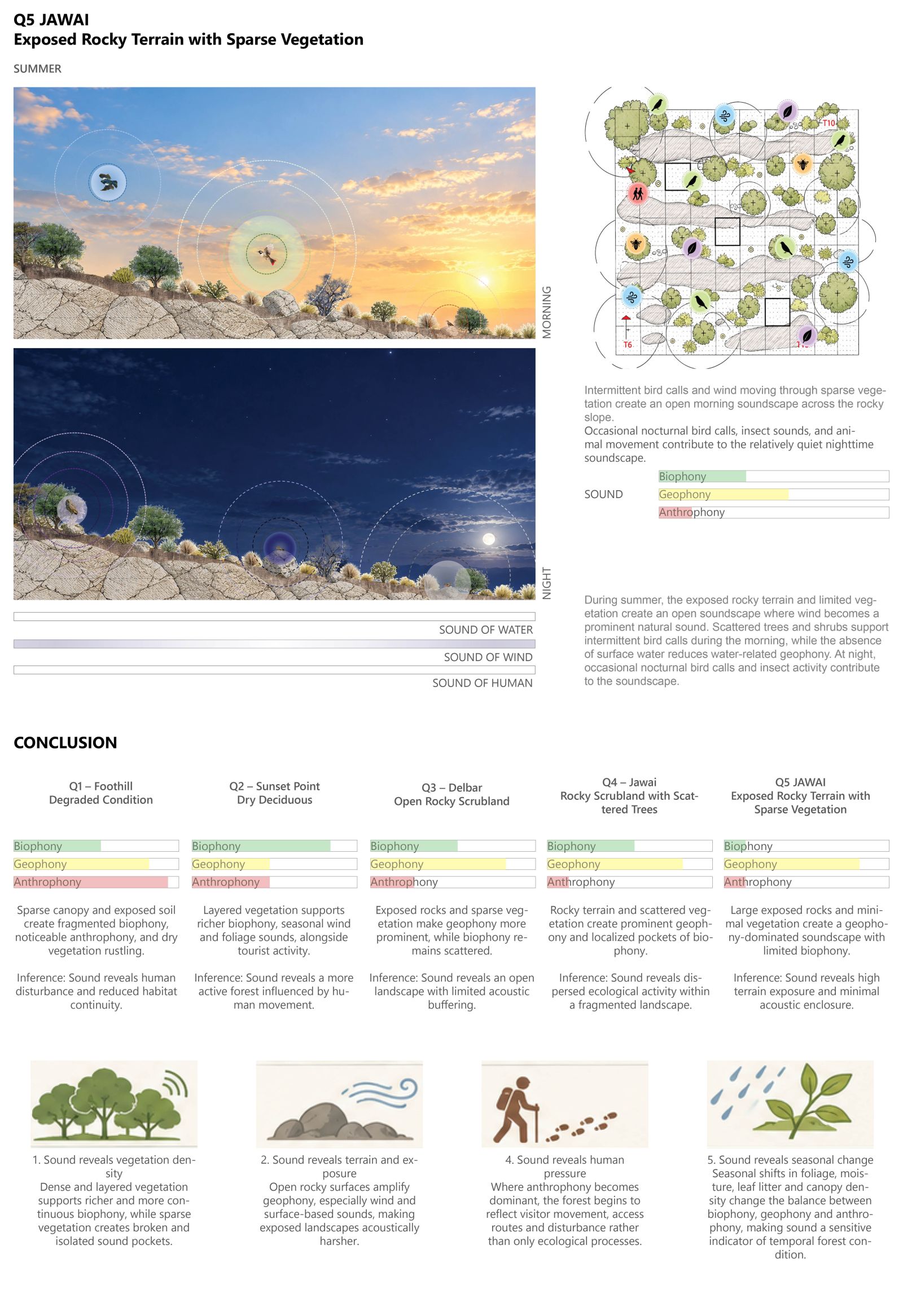
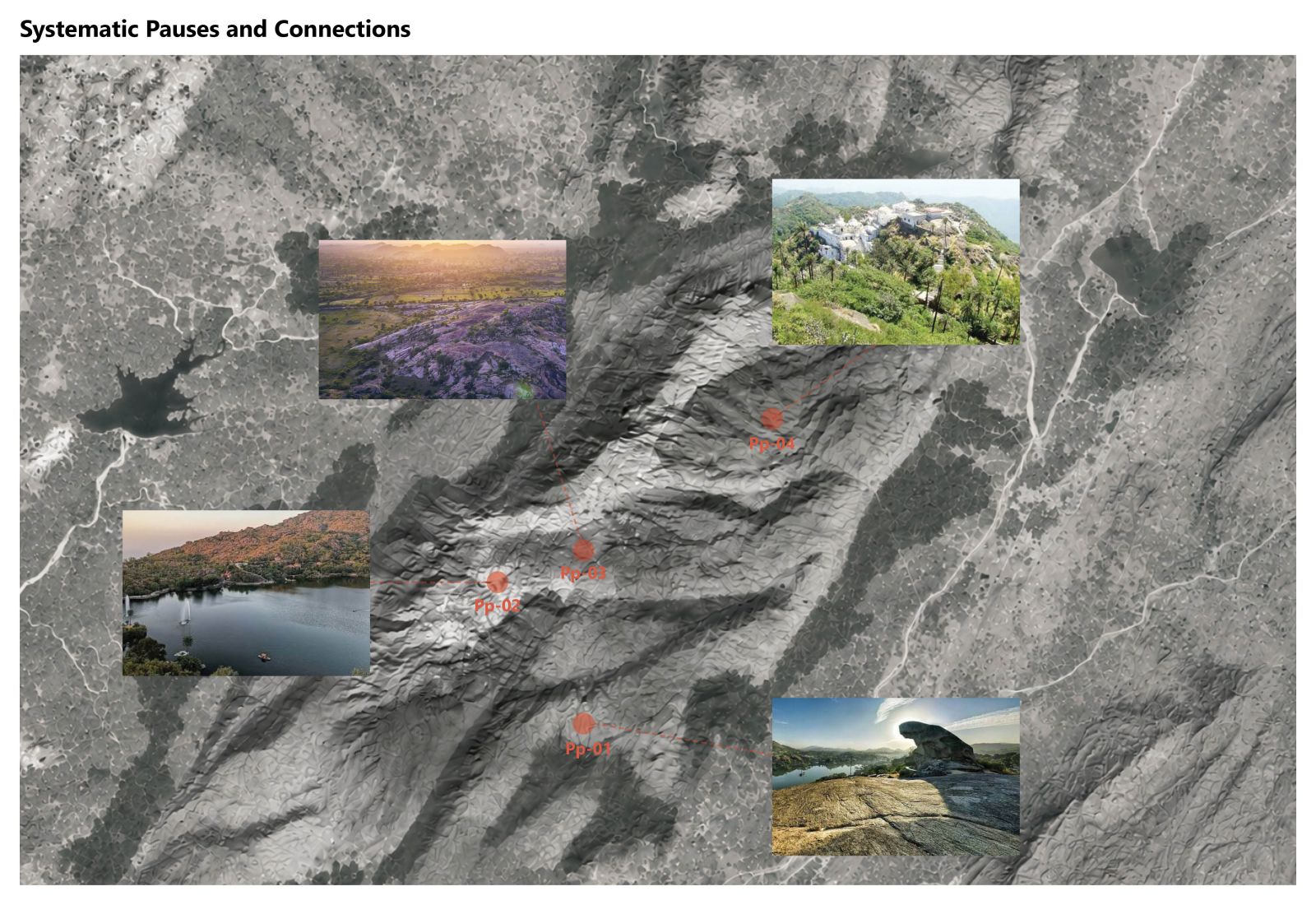
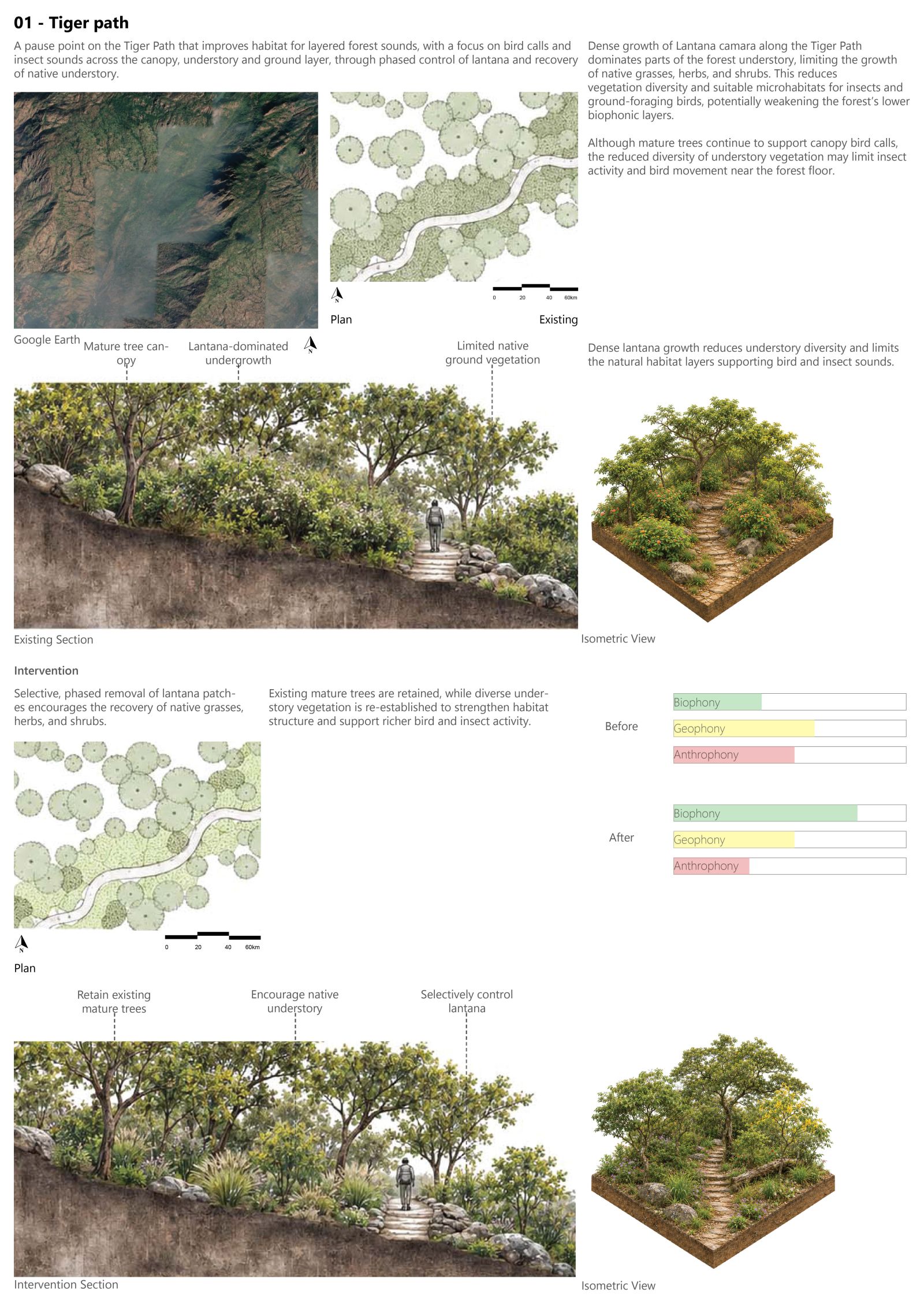
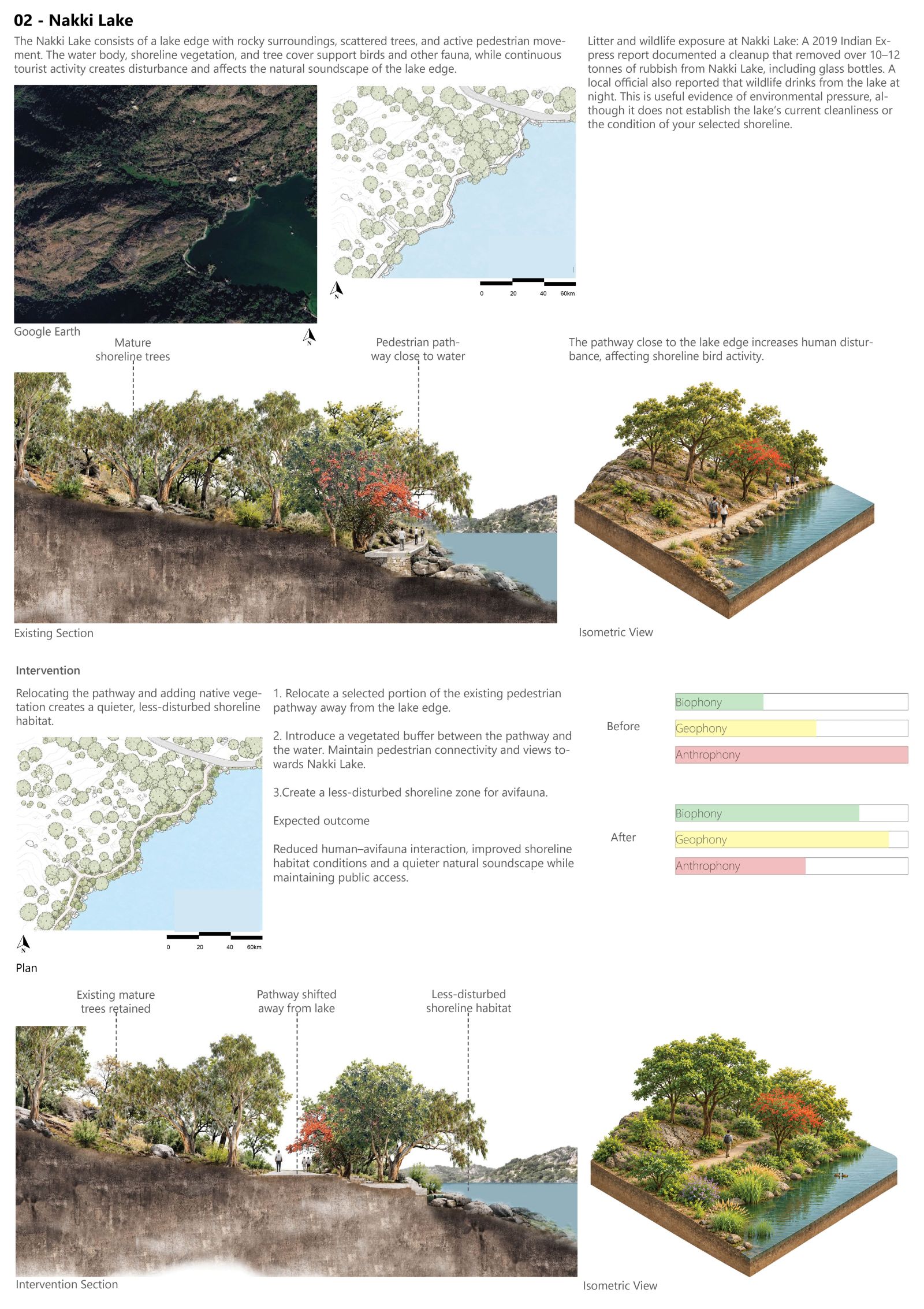
The forests of Mount Abu and Jawai reveal how sound becomes an invisible expression of landscape and ecological conditions. Through five quadrats across different vegetation and terrain conditions, the study explores biophony, geophony and anthrophony across seasons and times of day. Sound mapping, landscape sections and fauna observations help understand how vegetation structure, environmental processes and human disturbances shape the forest's acoustic character. Comparing these soundscapes reveals patterns of habitat activity, ecological relationships and disturbance. These observations inform landscape interventions at selected pause points, aiming to strengthen natural soundscapes, restore habitat conditions and create opportunities to experience the forest through listening.
View Additional Work