Shah Maitri Premal

LA4004

LONAR- A Living Crater

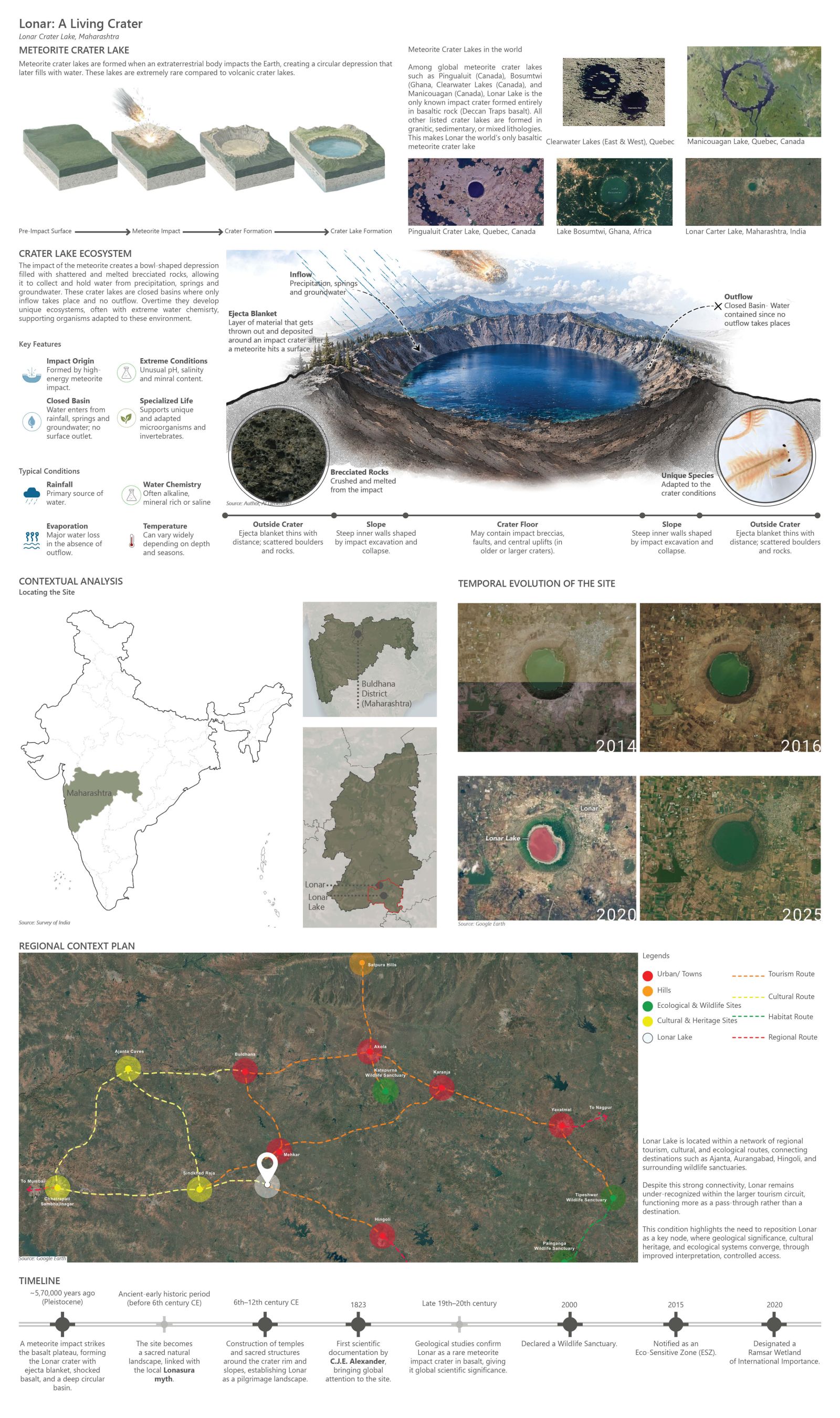
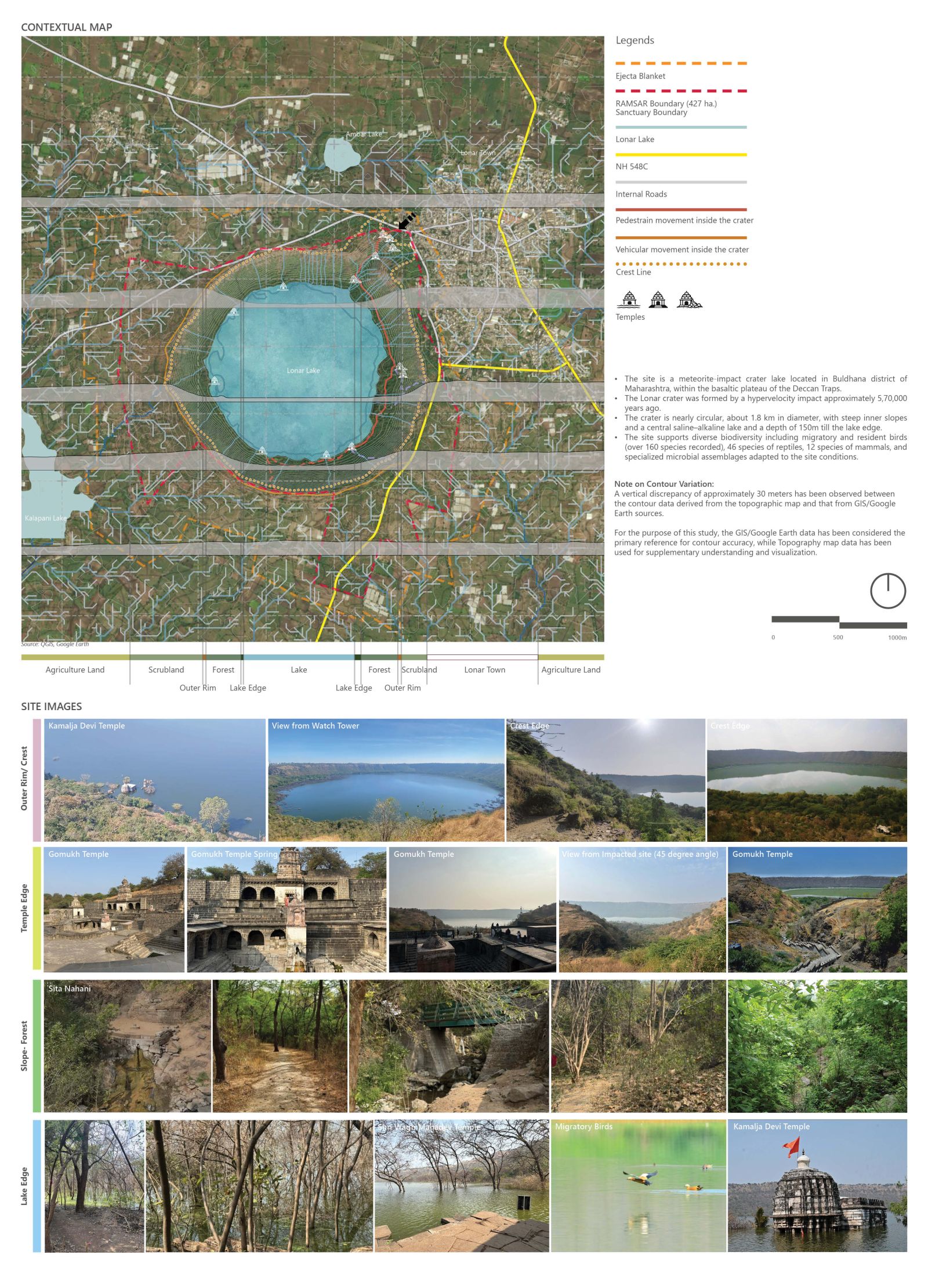
Lonar Lake is a rare basaltic meteorite crater lake within the Deccan Plateau, forming a fragile closed-basin saline ecosystem shaped by steep forested slopes, inward-draining hydrology, and sacred temple landscapes. Despite its geological and ecological significance, it remains under-recognized, while increasing tourism risks ecological degradation through unregulated access and infrastructural pressure. The north-eastern crest, affected by erosion, STP inflow, and informal pathways, has become a critical zone of disturbance. This project seeks to balance visibility with protection through ecological restoration, slope stabilization, hydrological management, and controlled access, ensuring Lonar evolves as a carefully revealed yet ecologically resilient landscape.

View Additional Work
Report Content

Understanding the geological origin, ecological uniqueness, and regional significance of Lonar Crater Lake.

Mapping the spatial context, movement networks, land uses, and experiential qualities of the crater landscape.

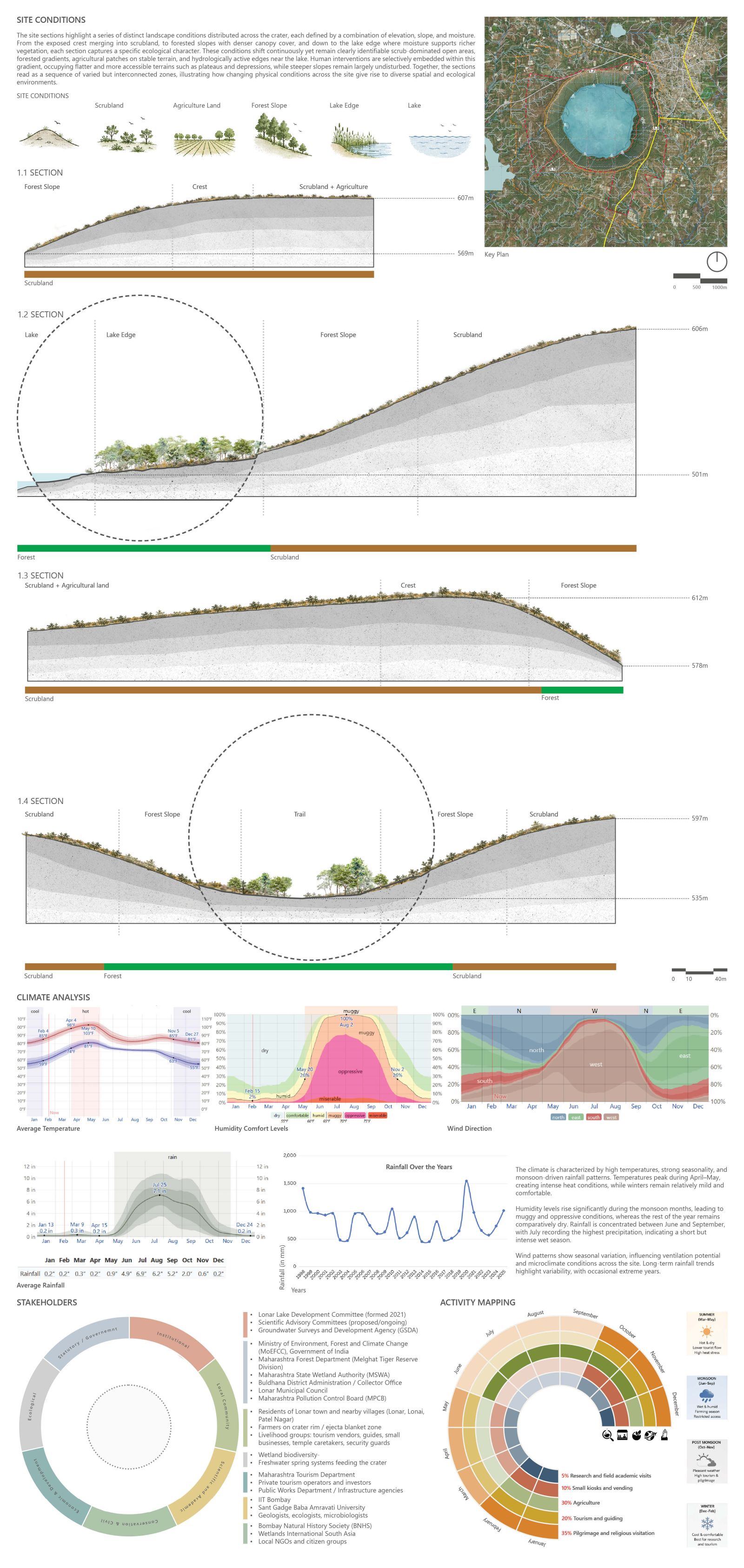
Reading the crater’s terrain, ecological gradients, climate patterns, and stakeholder relationships.

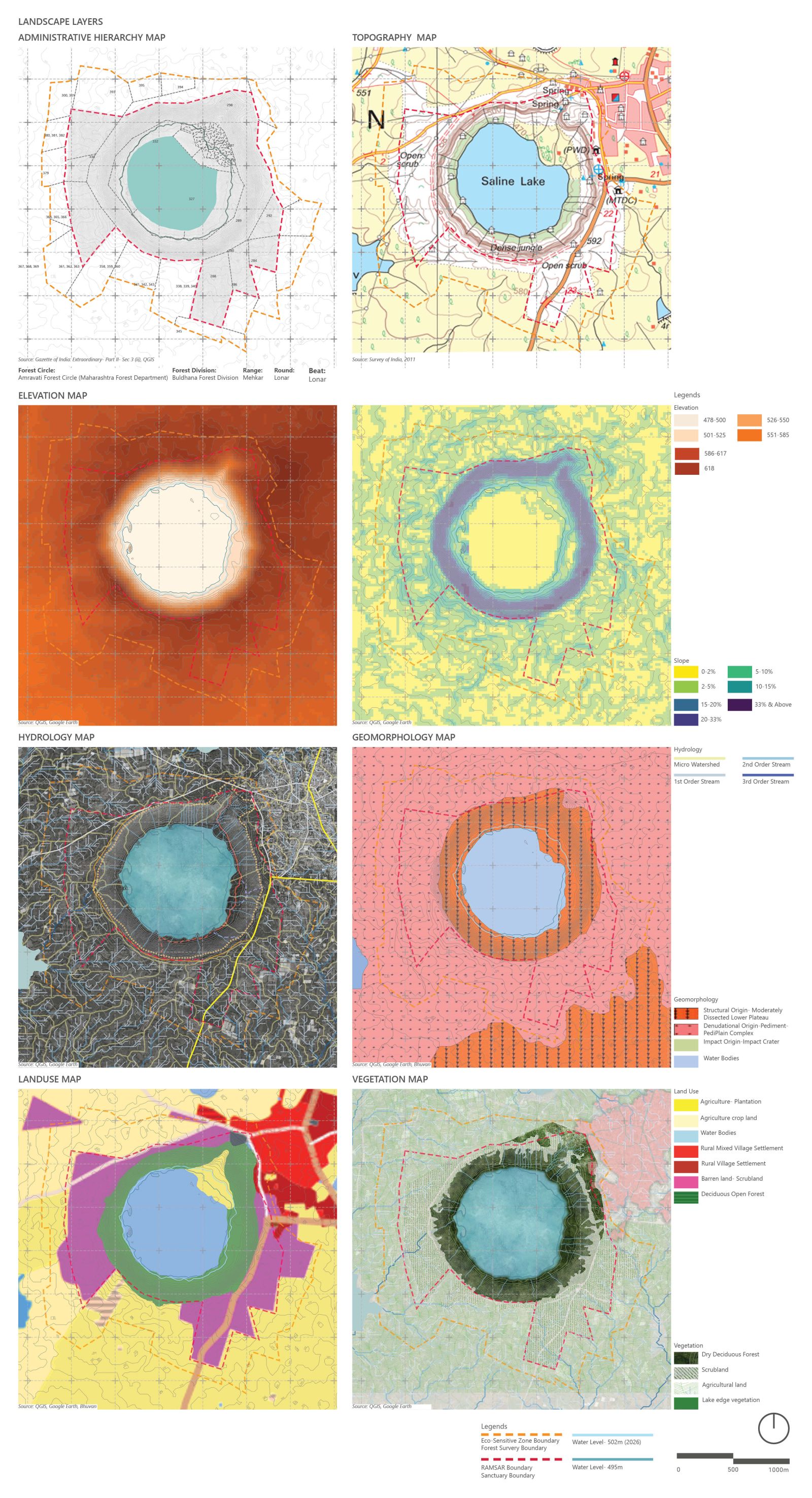
Decoding topography, hydrology, vegetation, geomorphology, and land-use systems shaping the site.

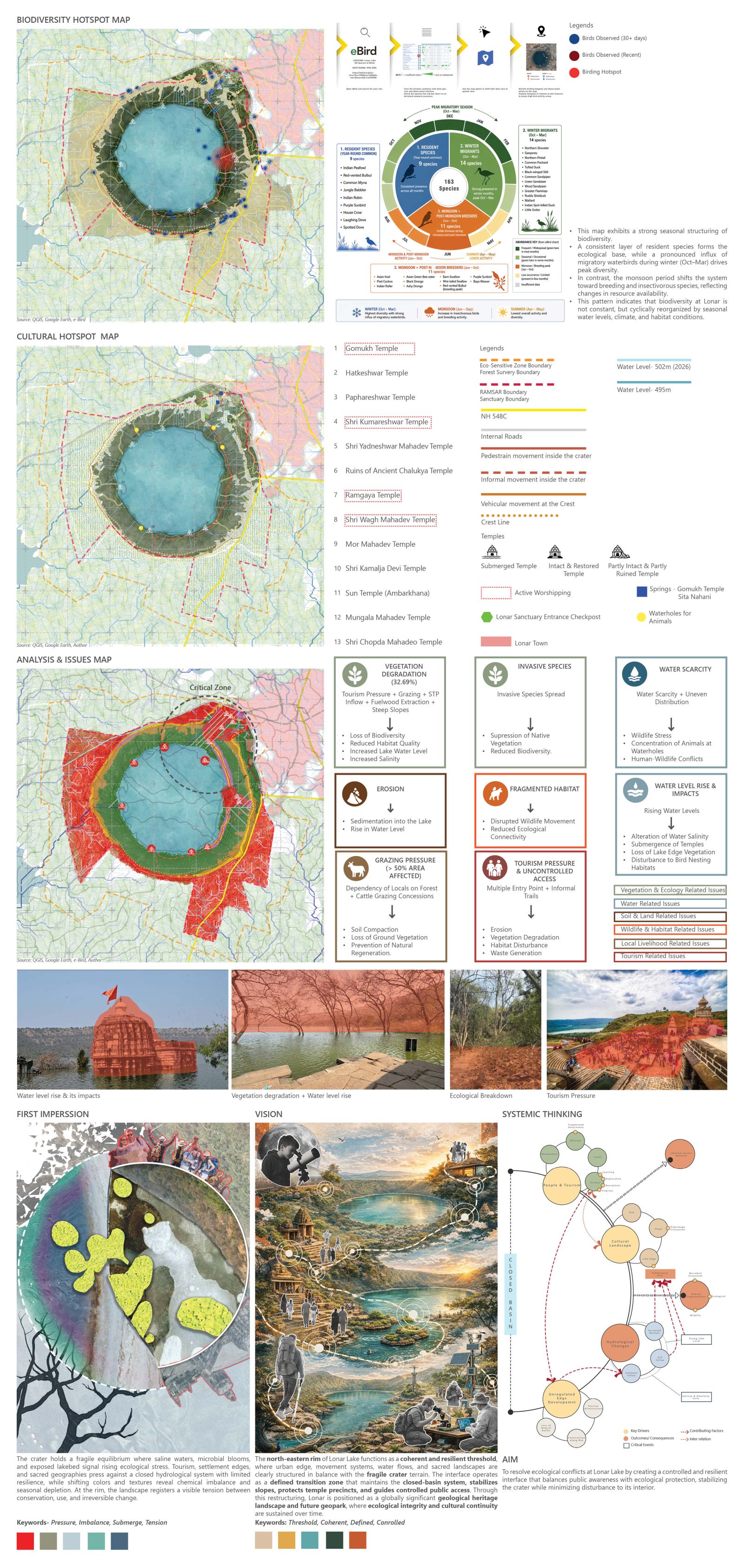
Identifying ecological and cultural hotspots, key site pressures, and the larger vision for restoration.

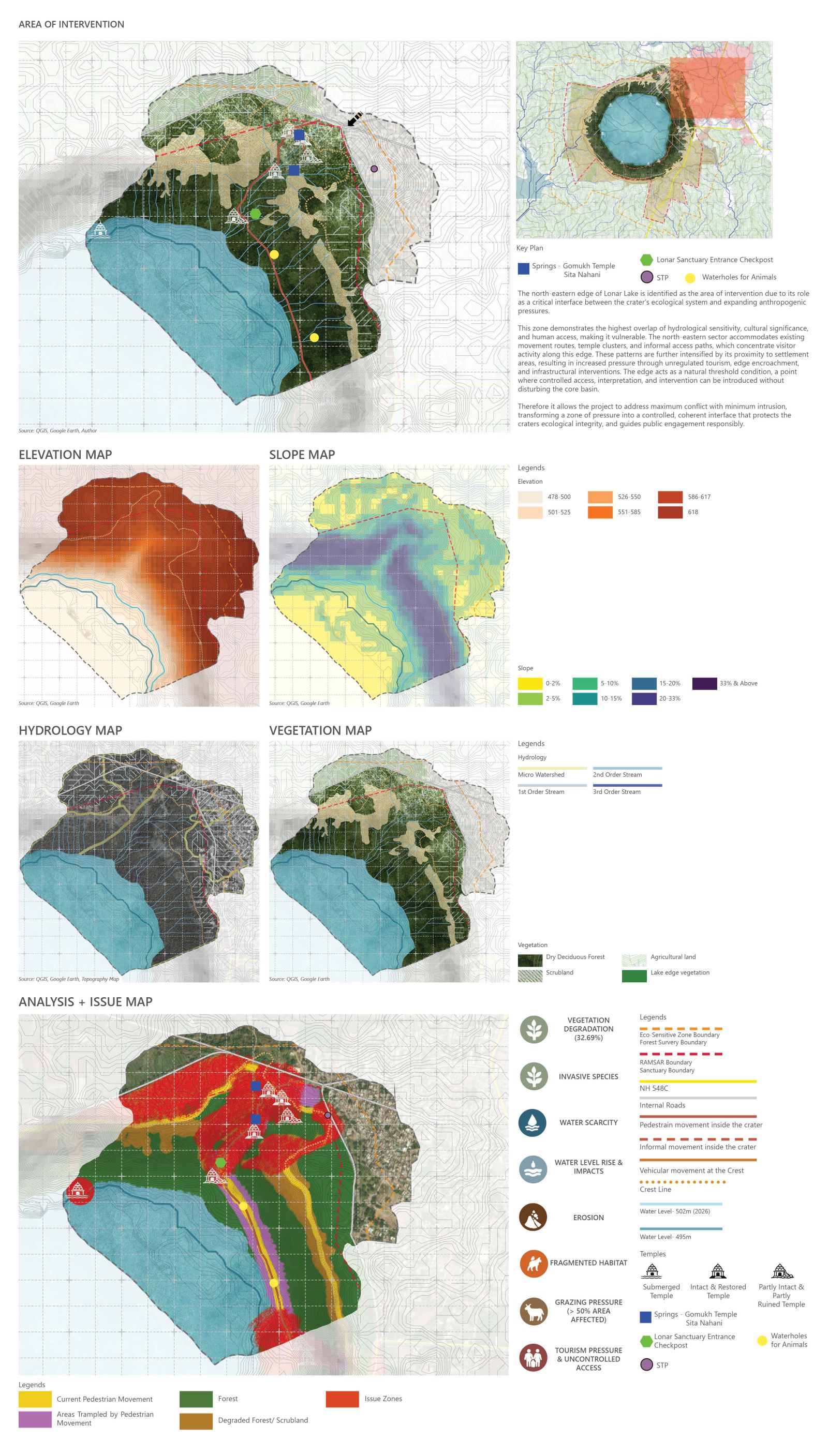
Focusing on the eastern crater edge as a critical interface between ecology, tourism, and cultural activity.

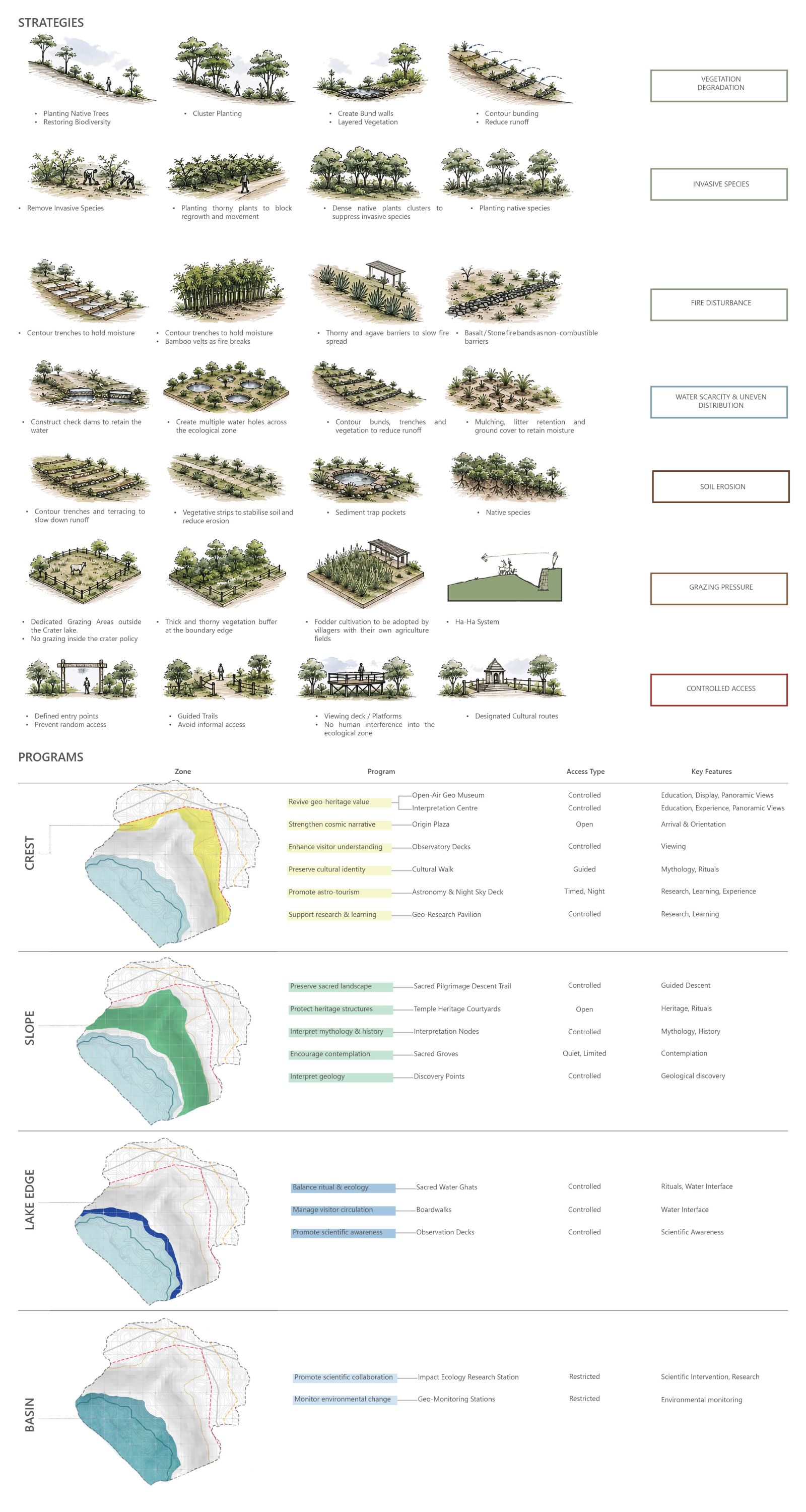
Developing ecological restoration strategies and programmatic interventions for controlled public engagement.

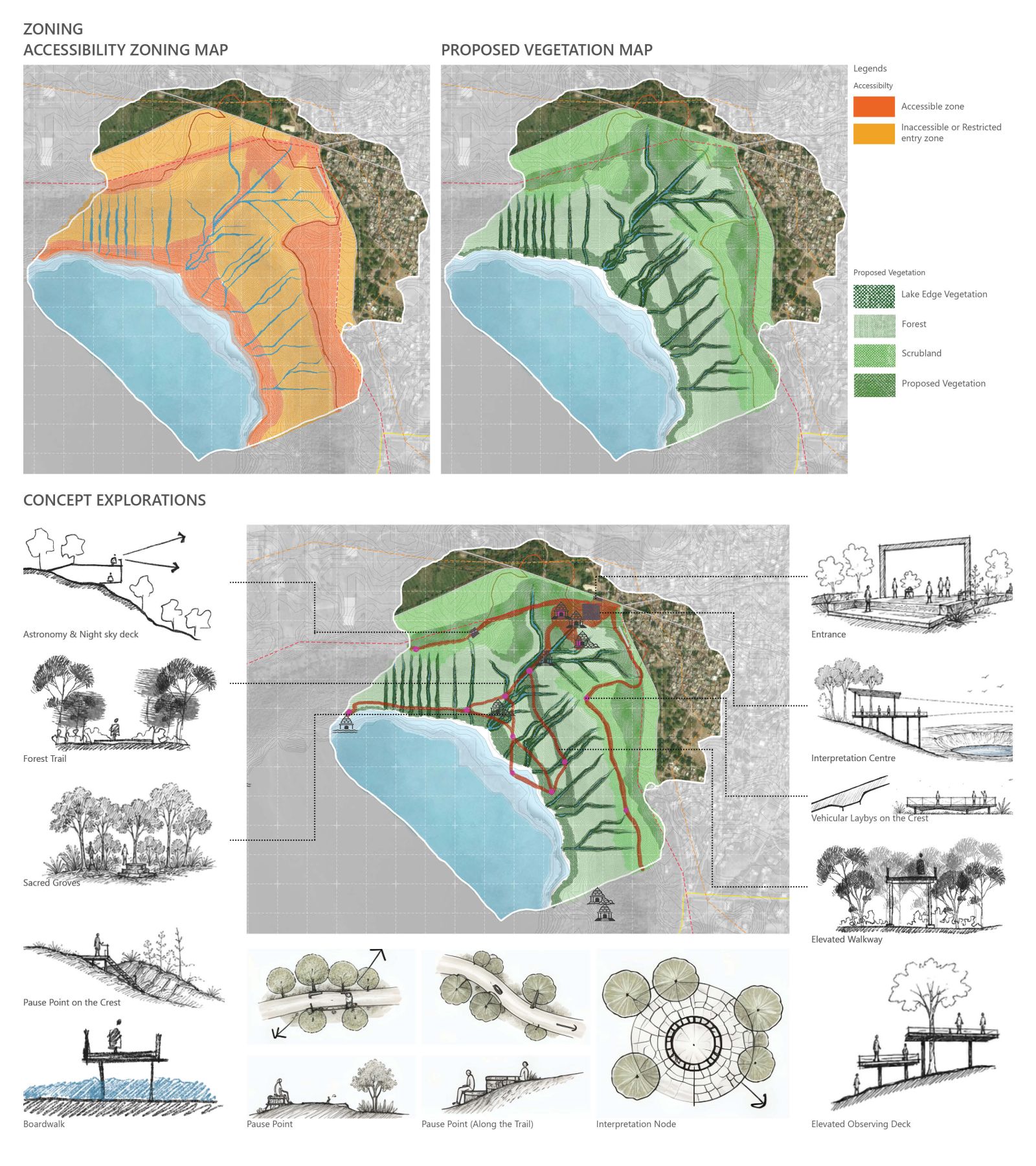
Structuring accessibility, vegetation regeneration, and experiential pathways through layered zoning concepts.

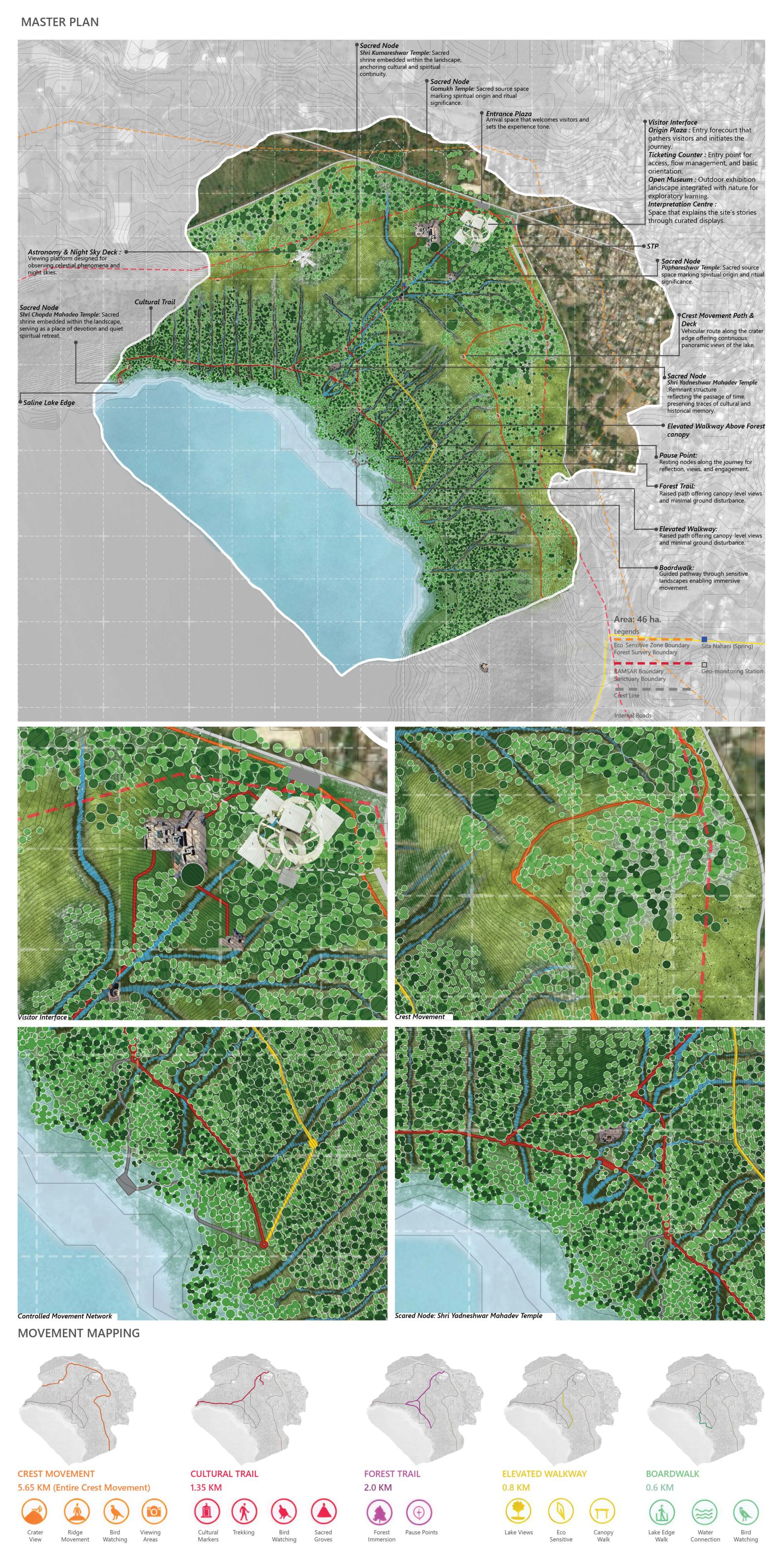
Integrating ecology, culture, movement, and interpretation into a resilient landscape framework.

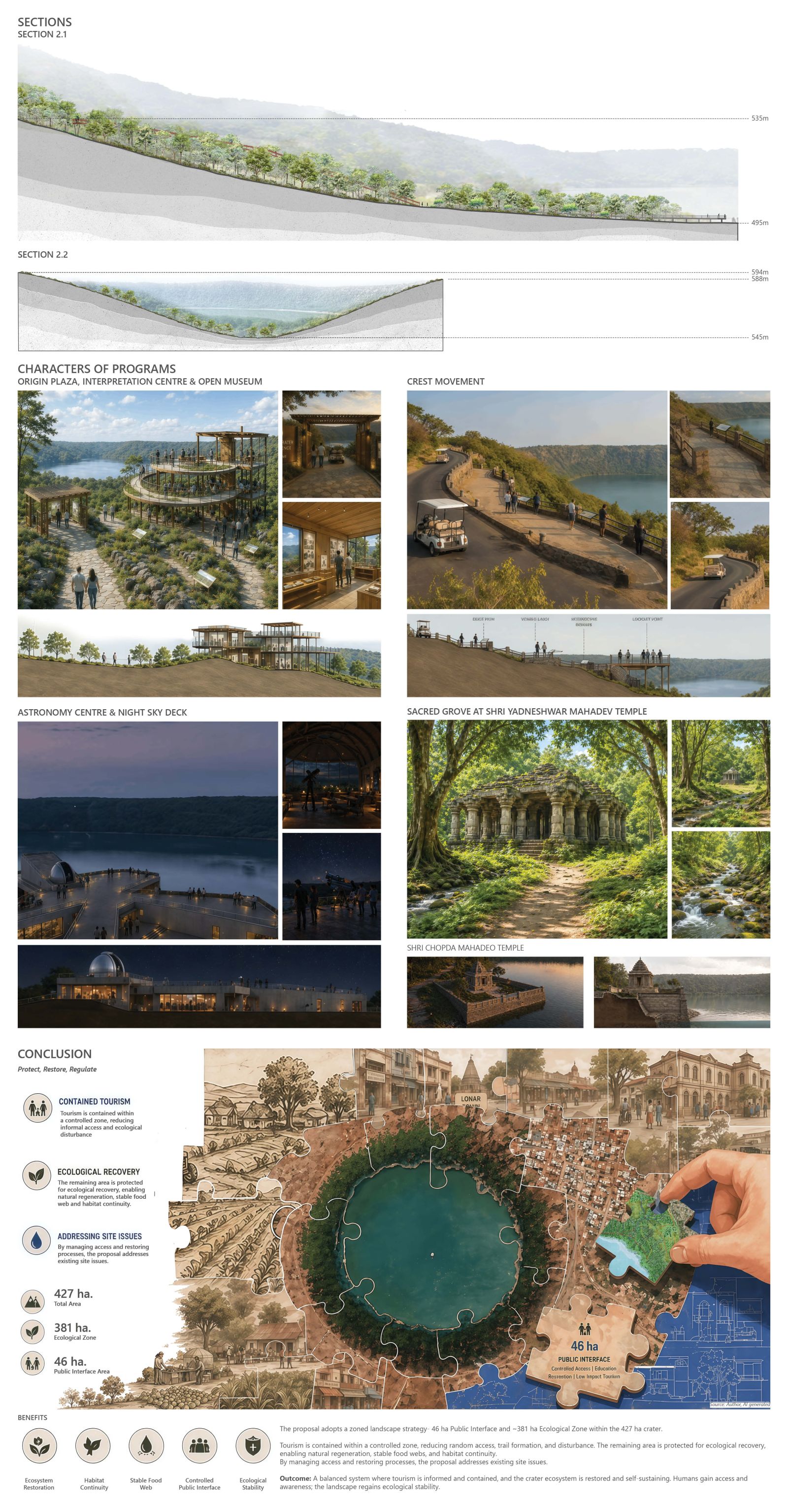
Visualizing experiential qualities, architectural inserts, and immersive landscape interventions across the crater.