Your browser is out-of-date!
For a richer surfing experience on our website, please update your browser. Update my browser now!
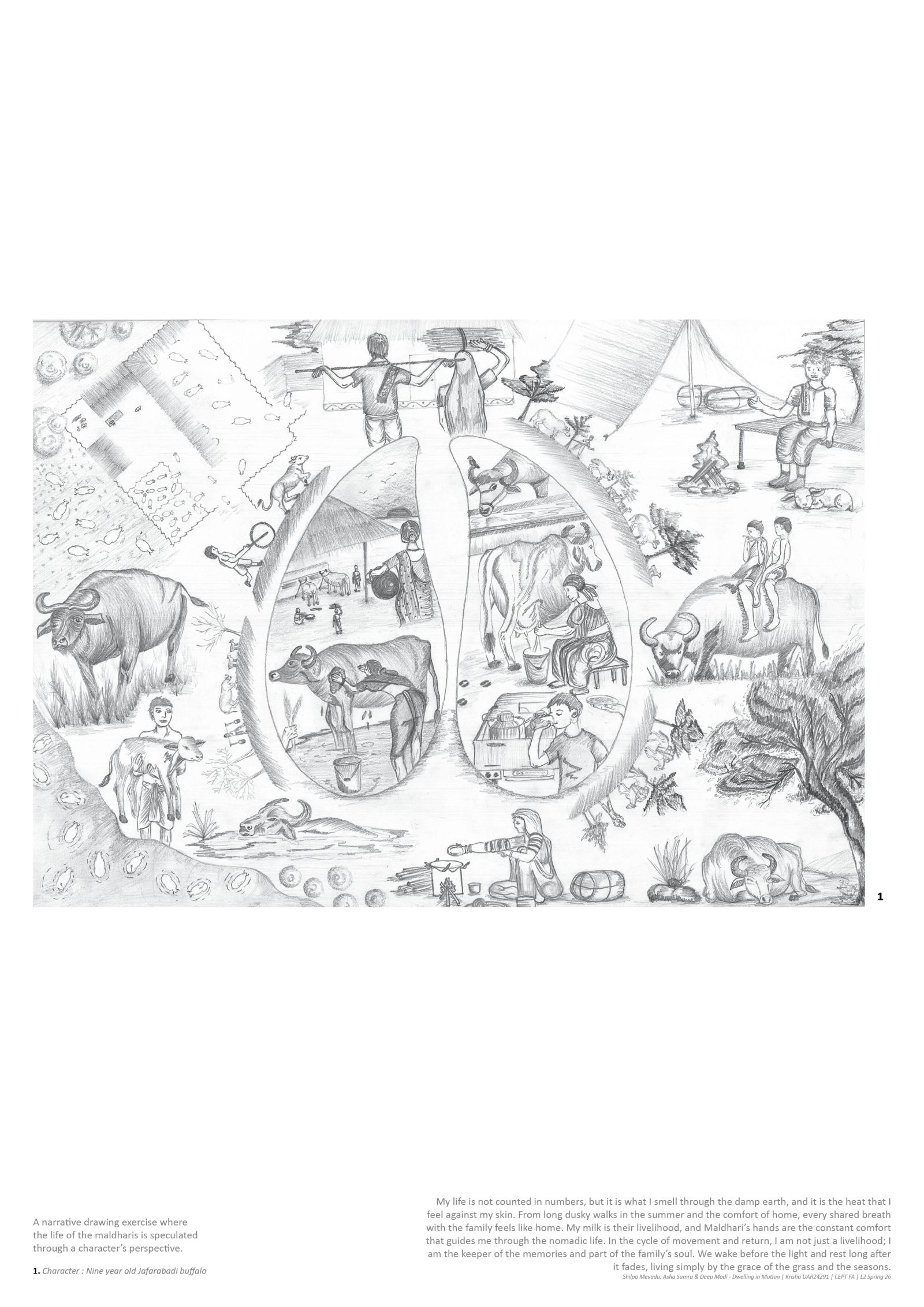
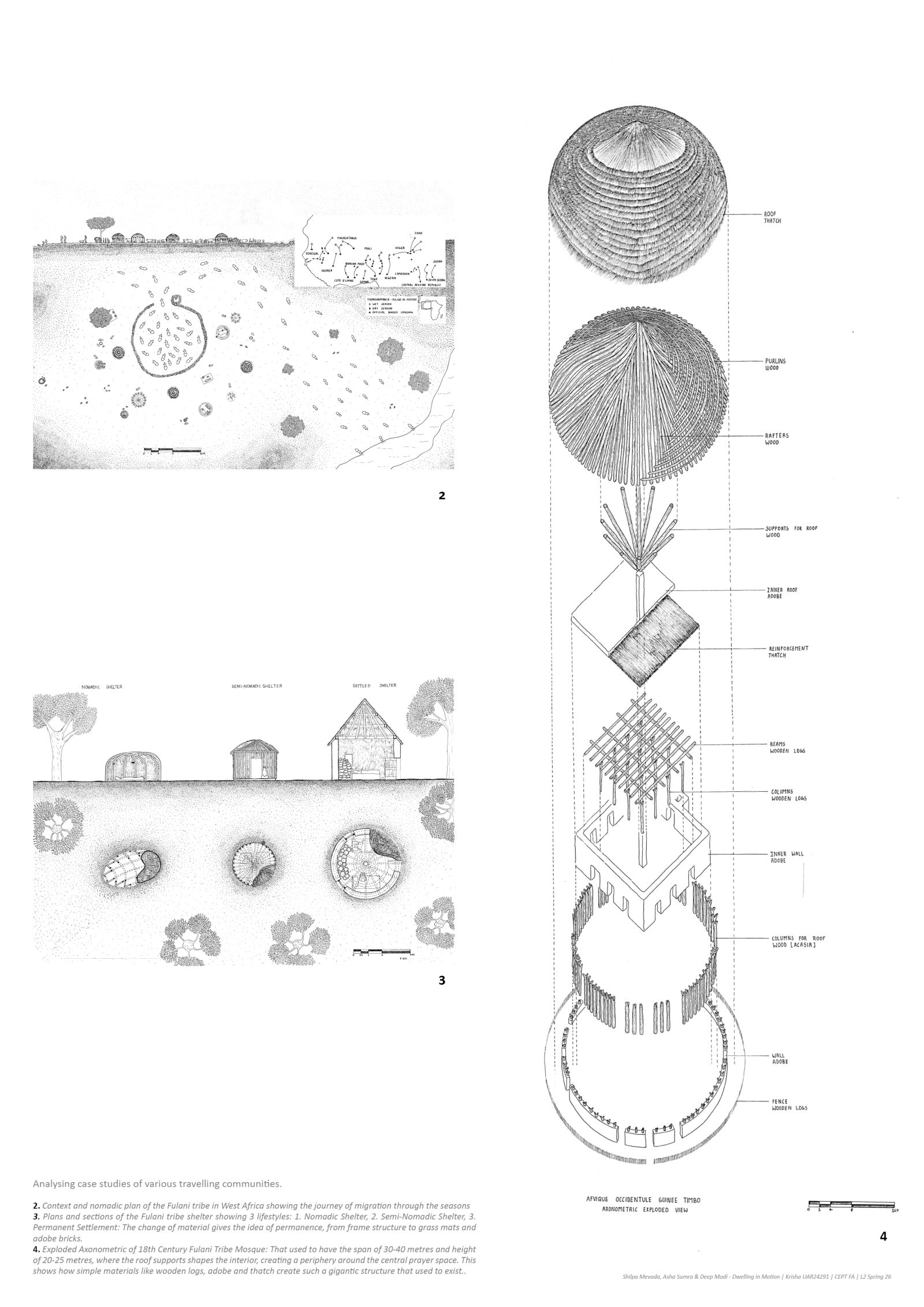
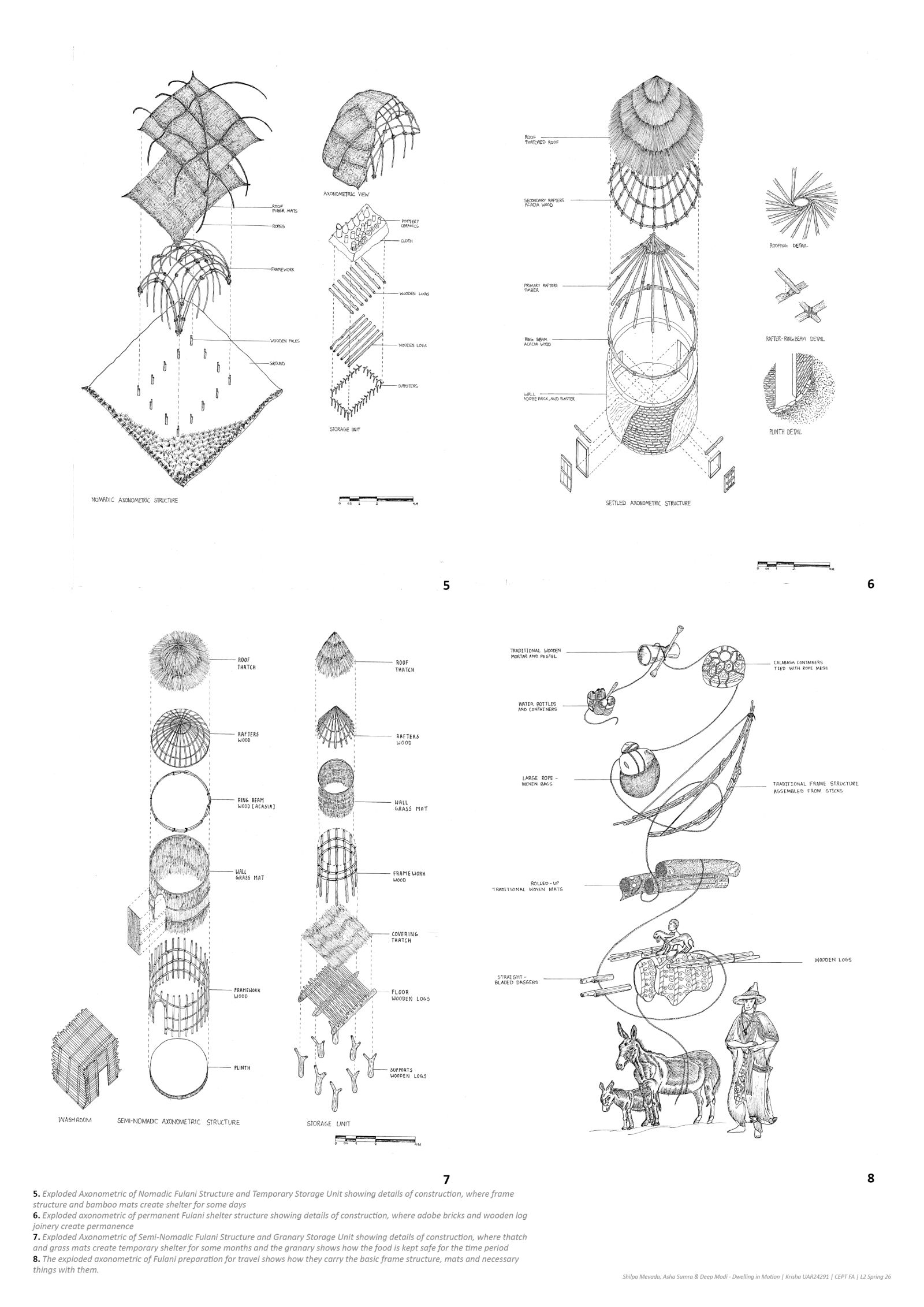
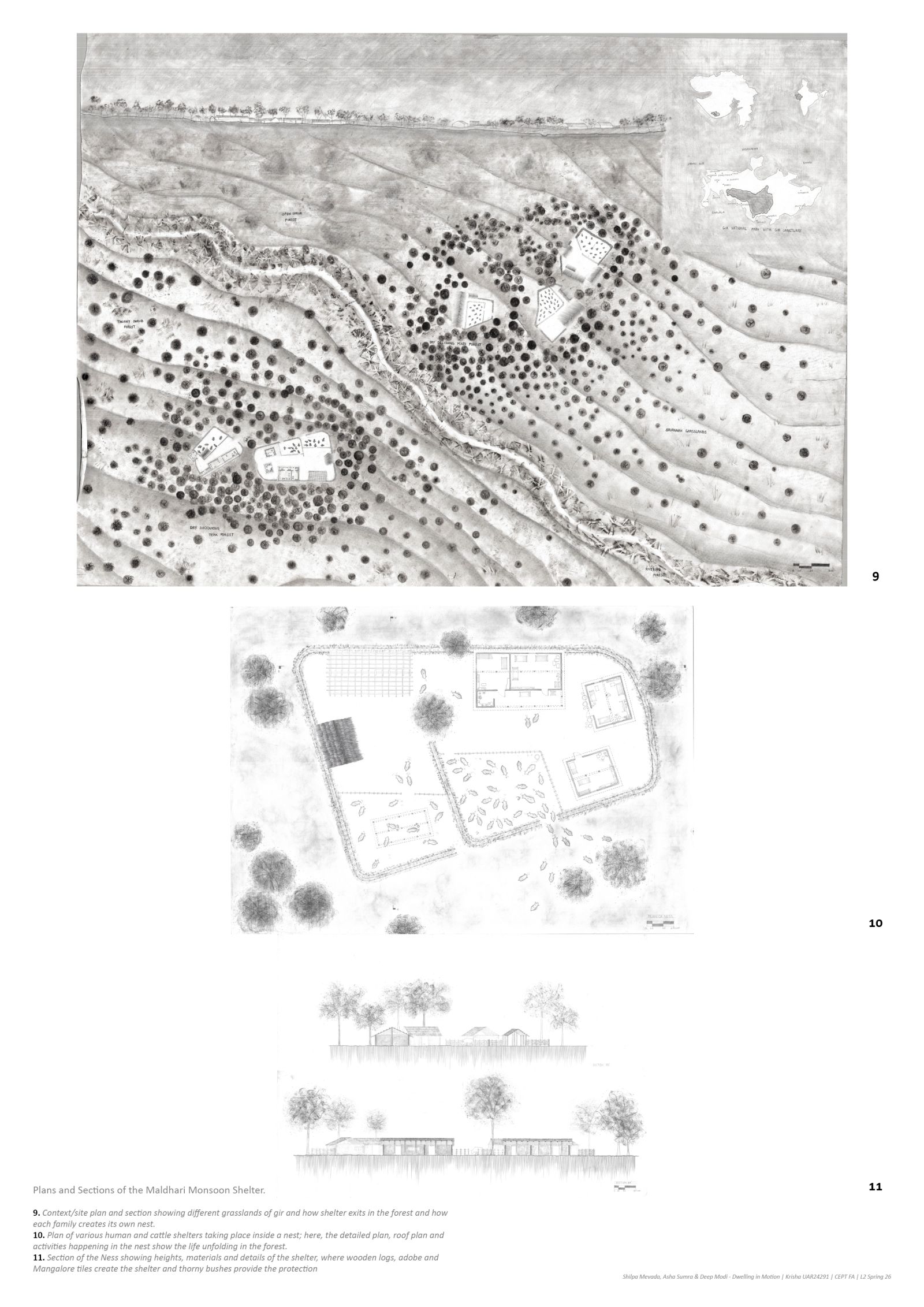
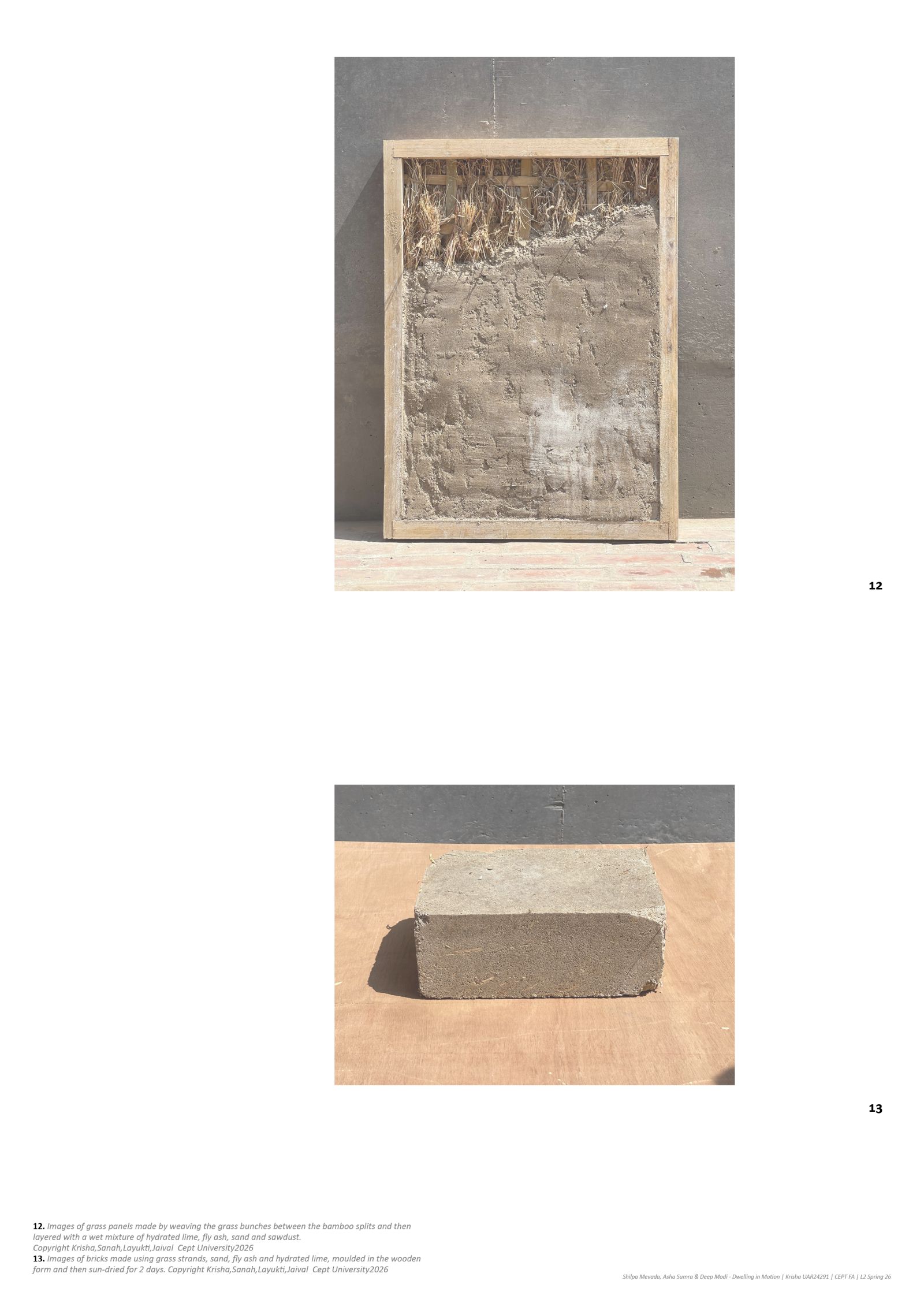
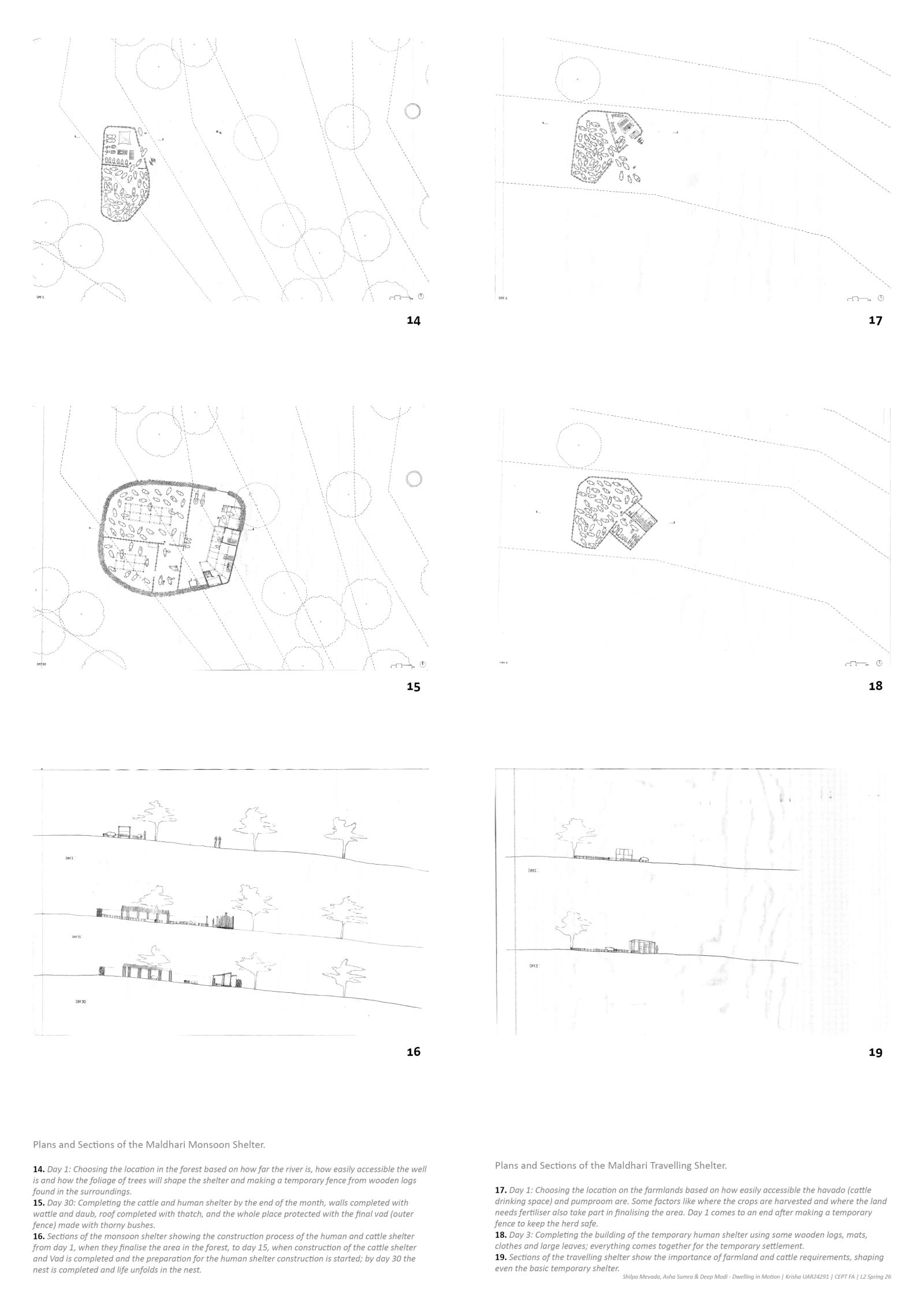
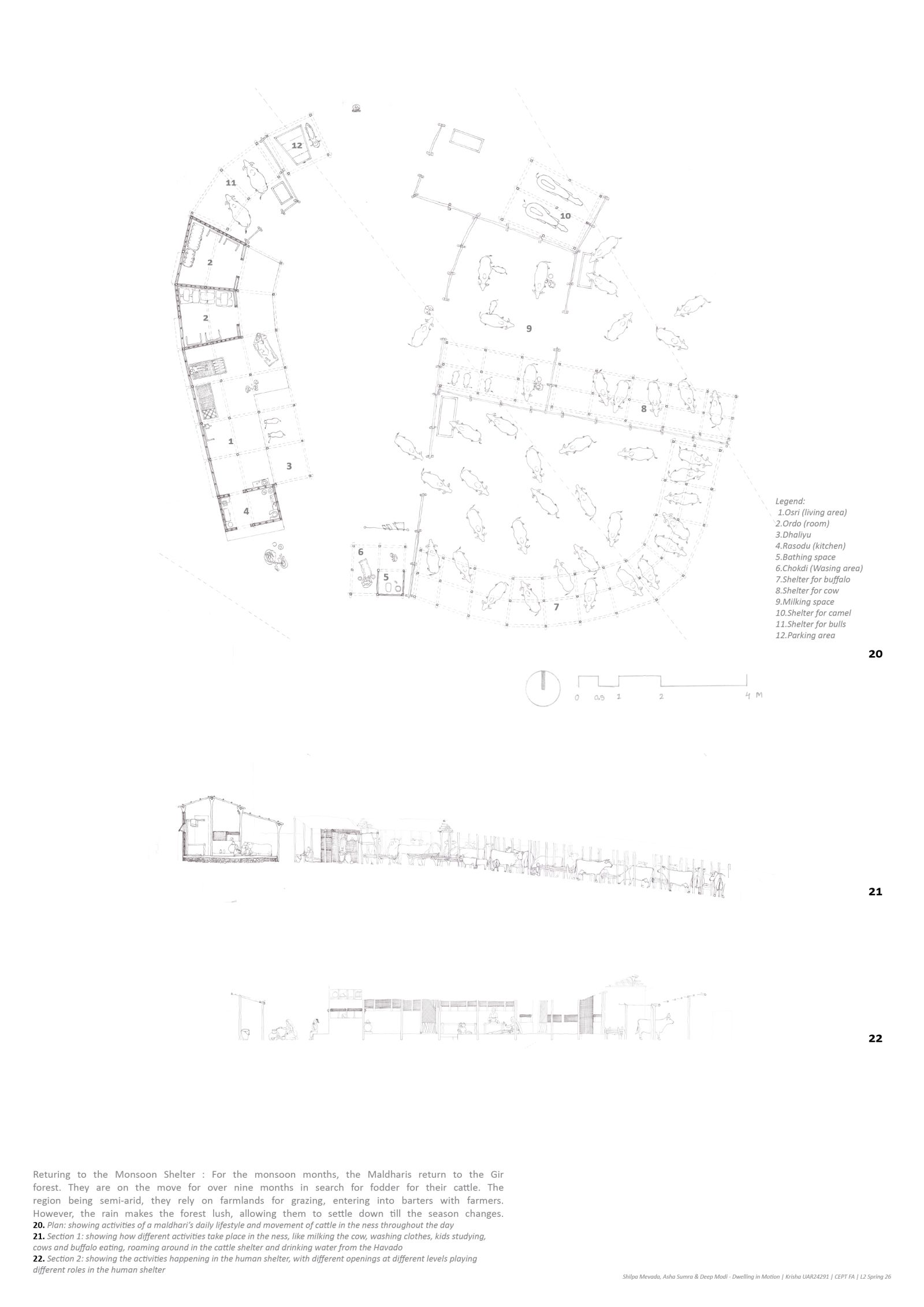
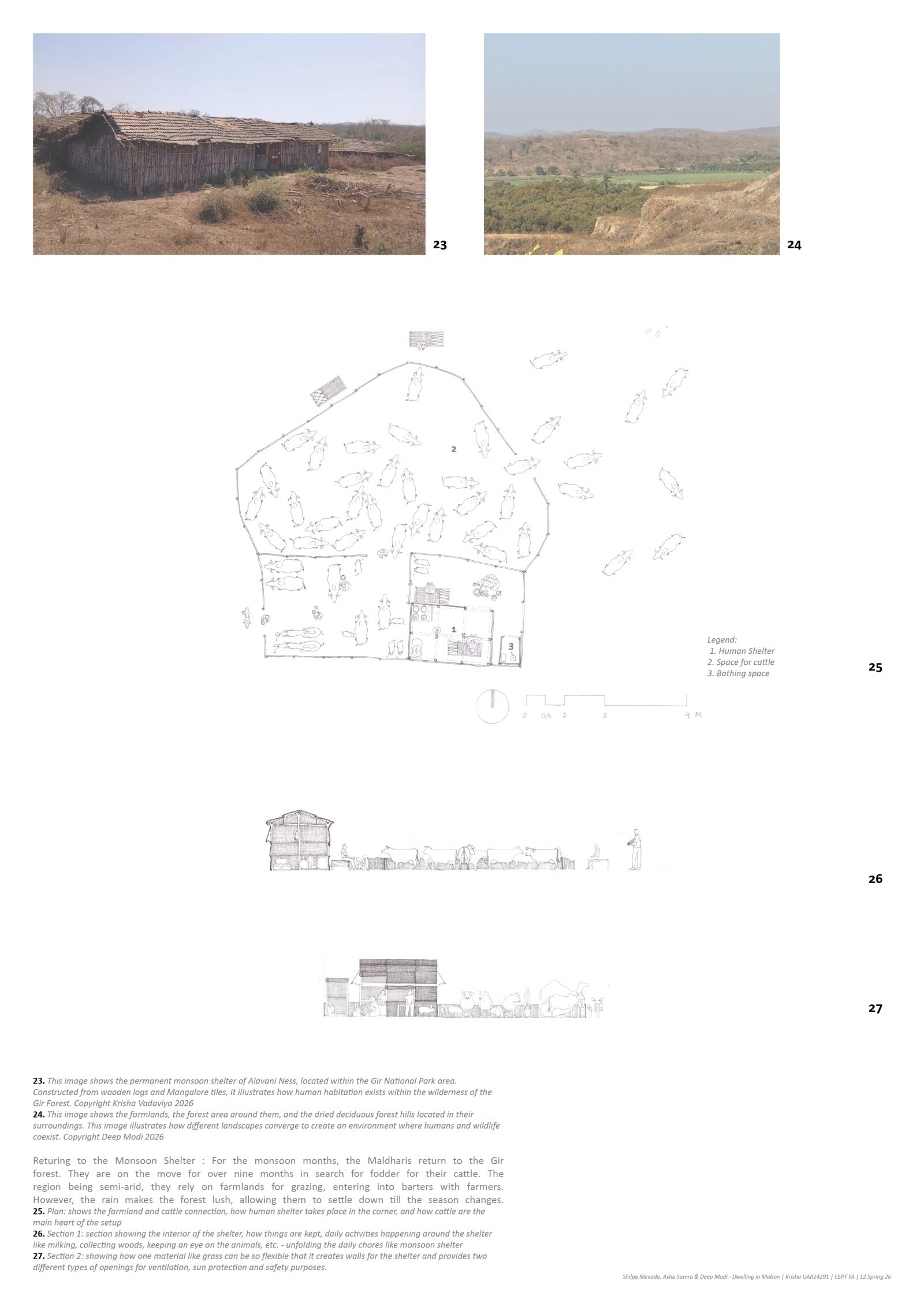
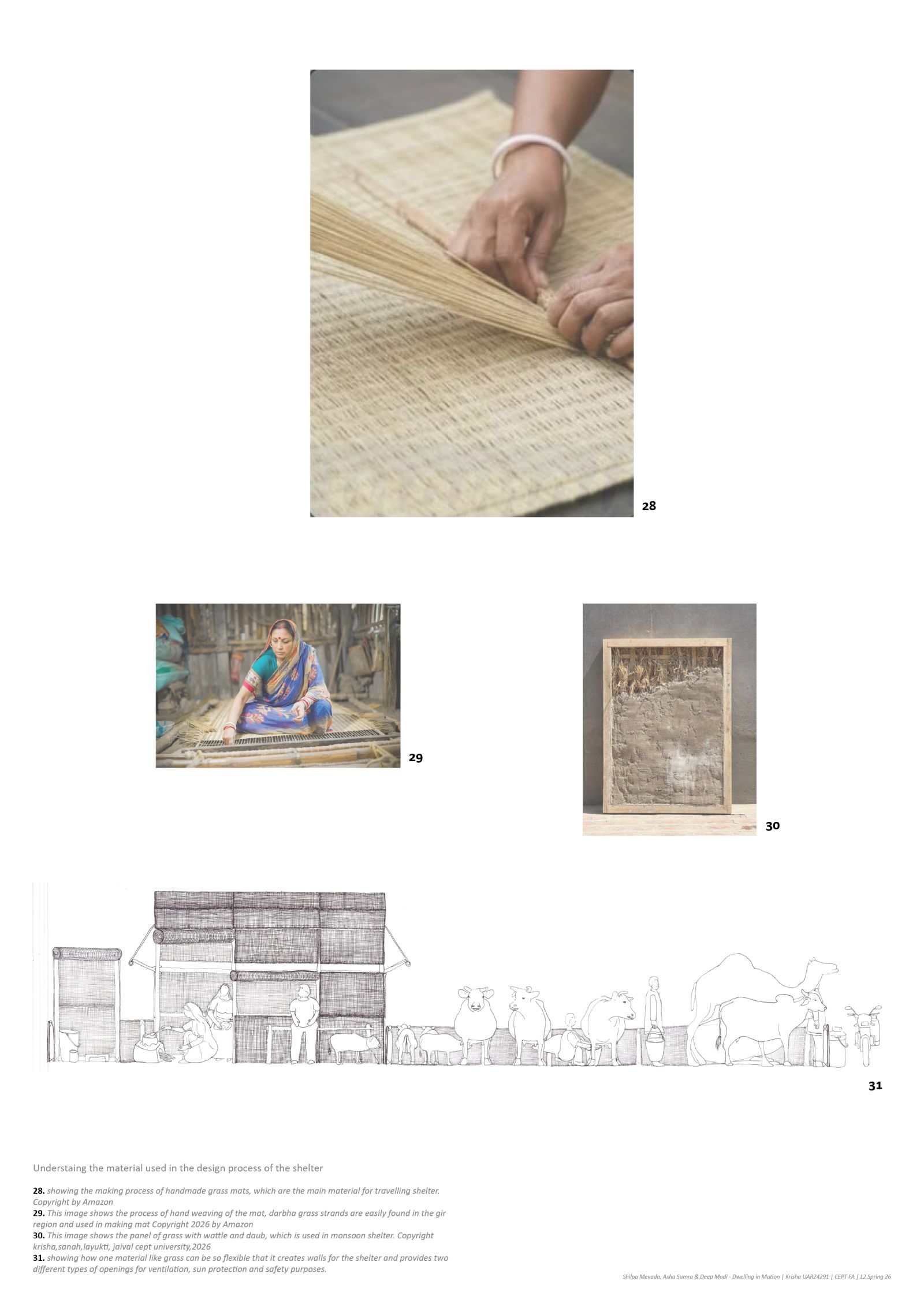
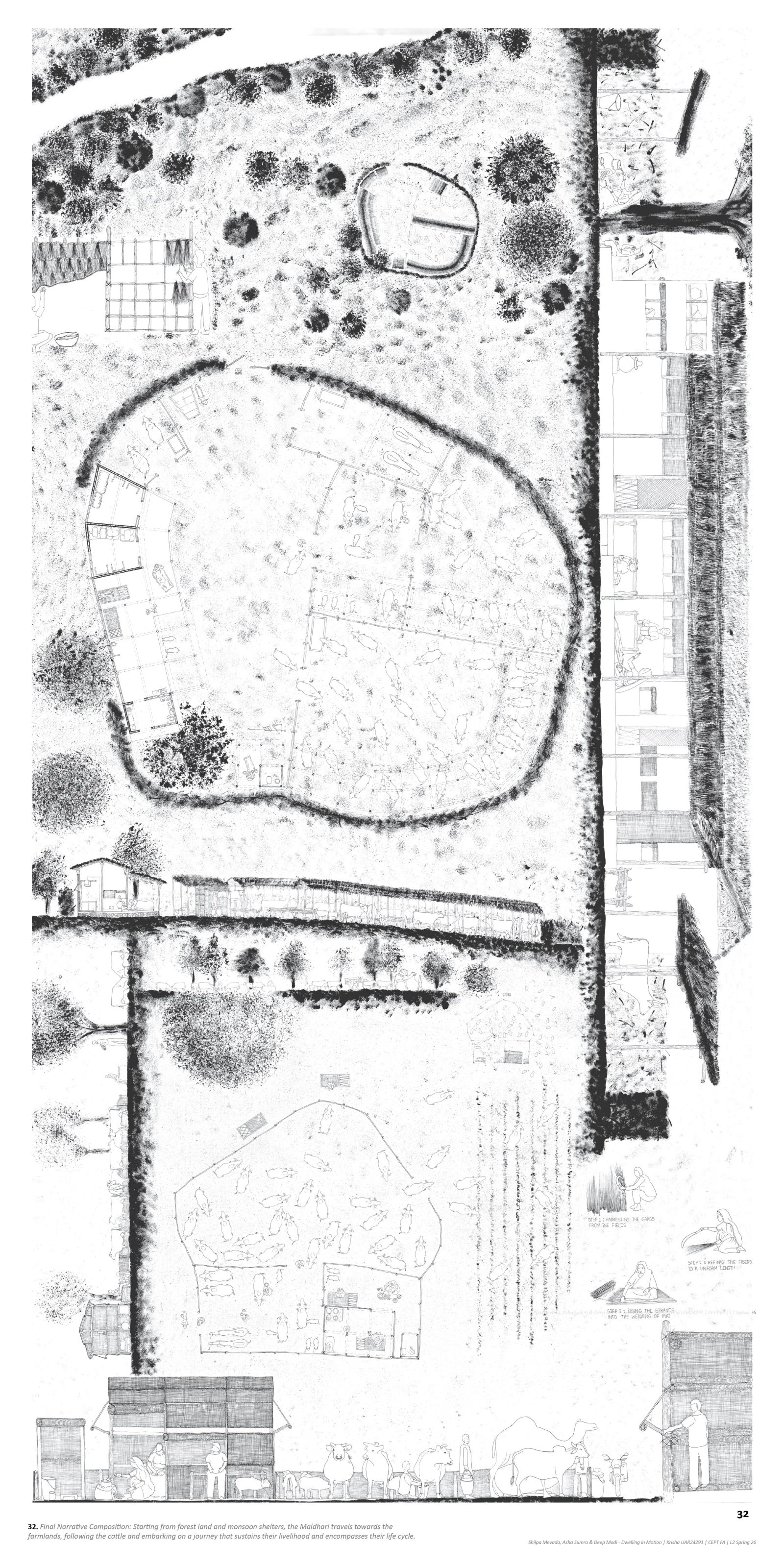
The Maldharis- nomadic pastoralists who travel for 8 months in search of fodder for their cattle and return to the Gir forest by the monsoon. They are inhibited in arid and semi-arid lands, so most of the time they are on the move to find grazing lands for their cattle. The shelter is designed for a Maldhari family with 3 children, 1 mother, 2 brothers, and their wives, along with 35 buffaloes, 15 cows, 2 bulls, 2 camels, and one dog. My project aimed to show how a single material easily found in the Gir grasslands can provide the permanence of monsoon shelter, and on the other hand, be easily portable and temporary for their travelling shelter. Monsoon shelter (Alavani ness) is located in the Gir National Park, a travelling shelter takes space in the diverse land and environment of Kotda Mota village, located near Junagadh district. In the monsoon shelter, the material shows the permanence, the thorny vad provides the protection, and the land shapes the shelter. In the travelling shelter, the material provides a portable unfolding, the protection is the cattle’s strength itself, and the land changes every 20 days, with the same shelter in diverse landscapes.
View Additional Work