Your browser is out-of-date!
For a richer surfing experience on our website, please update your browser. Update my browser now!
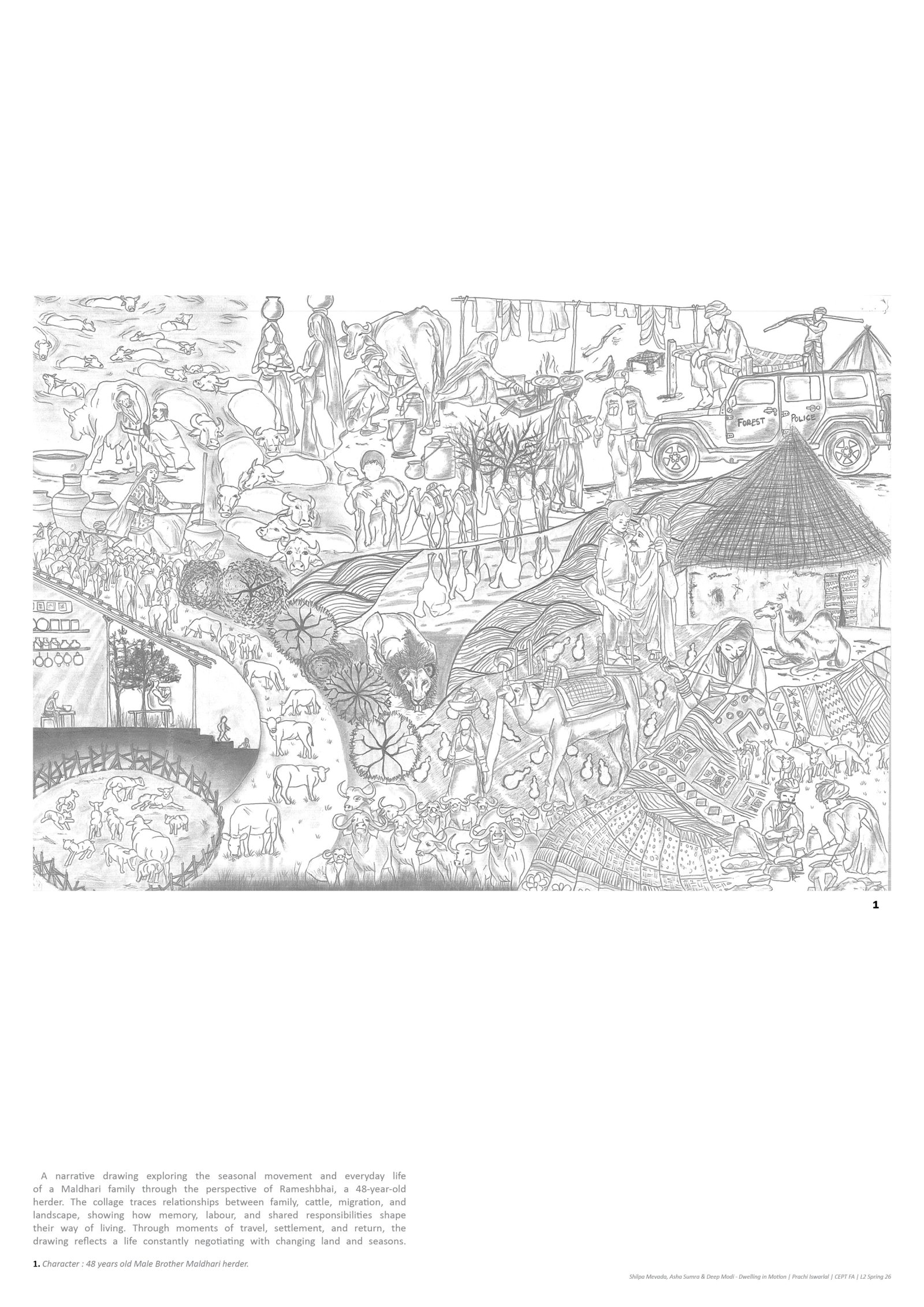
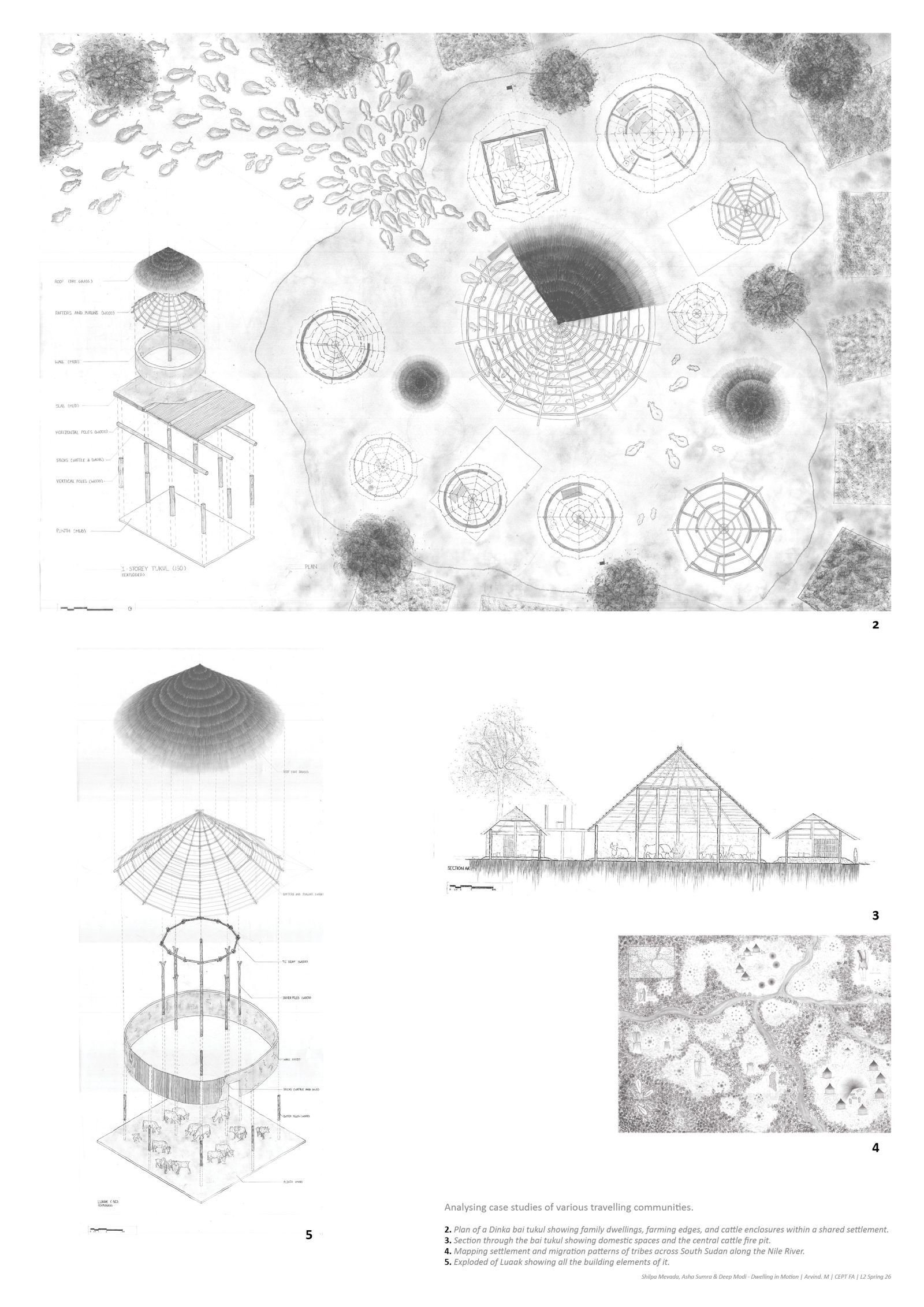
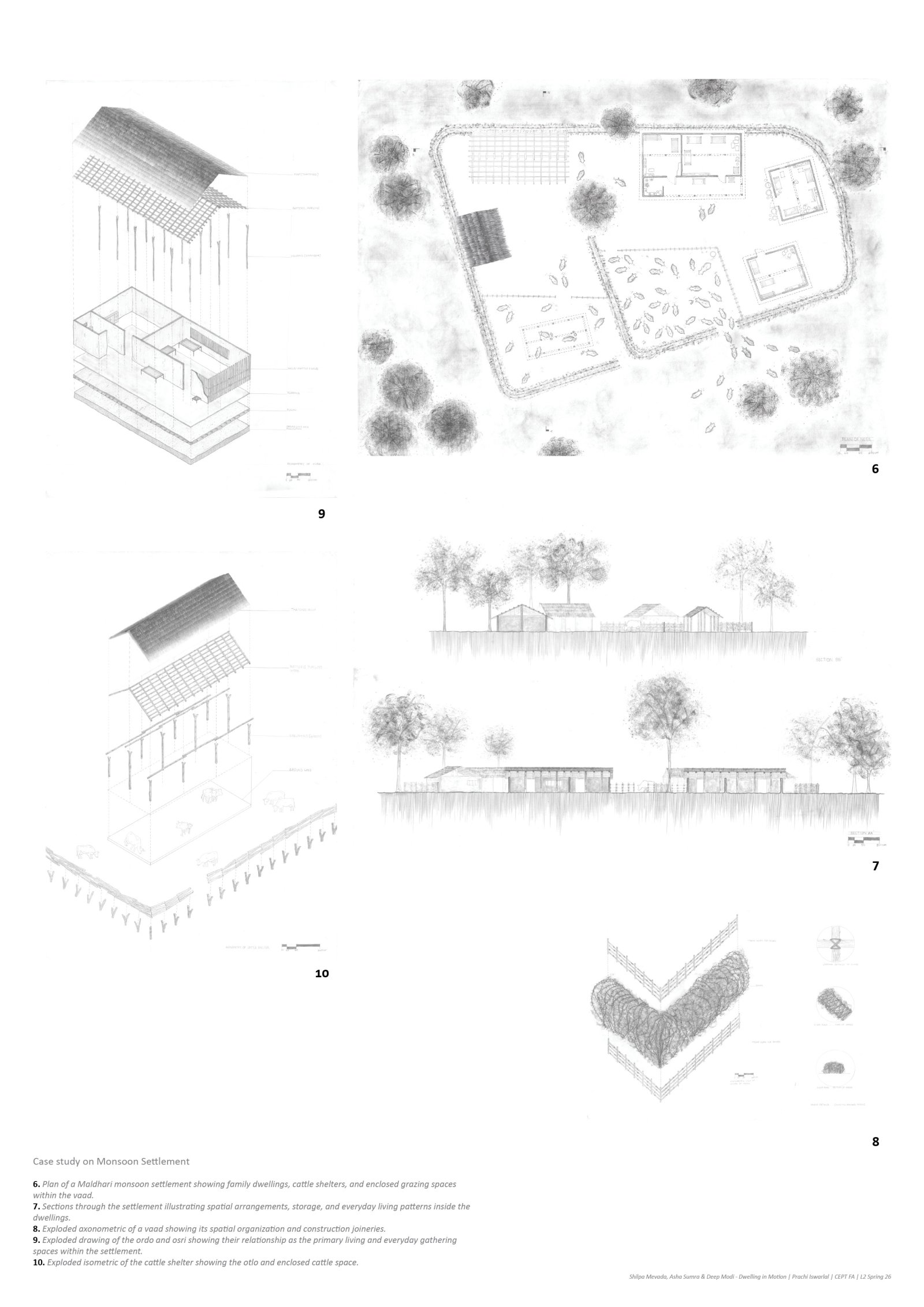
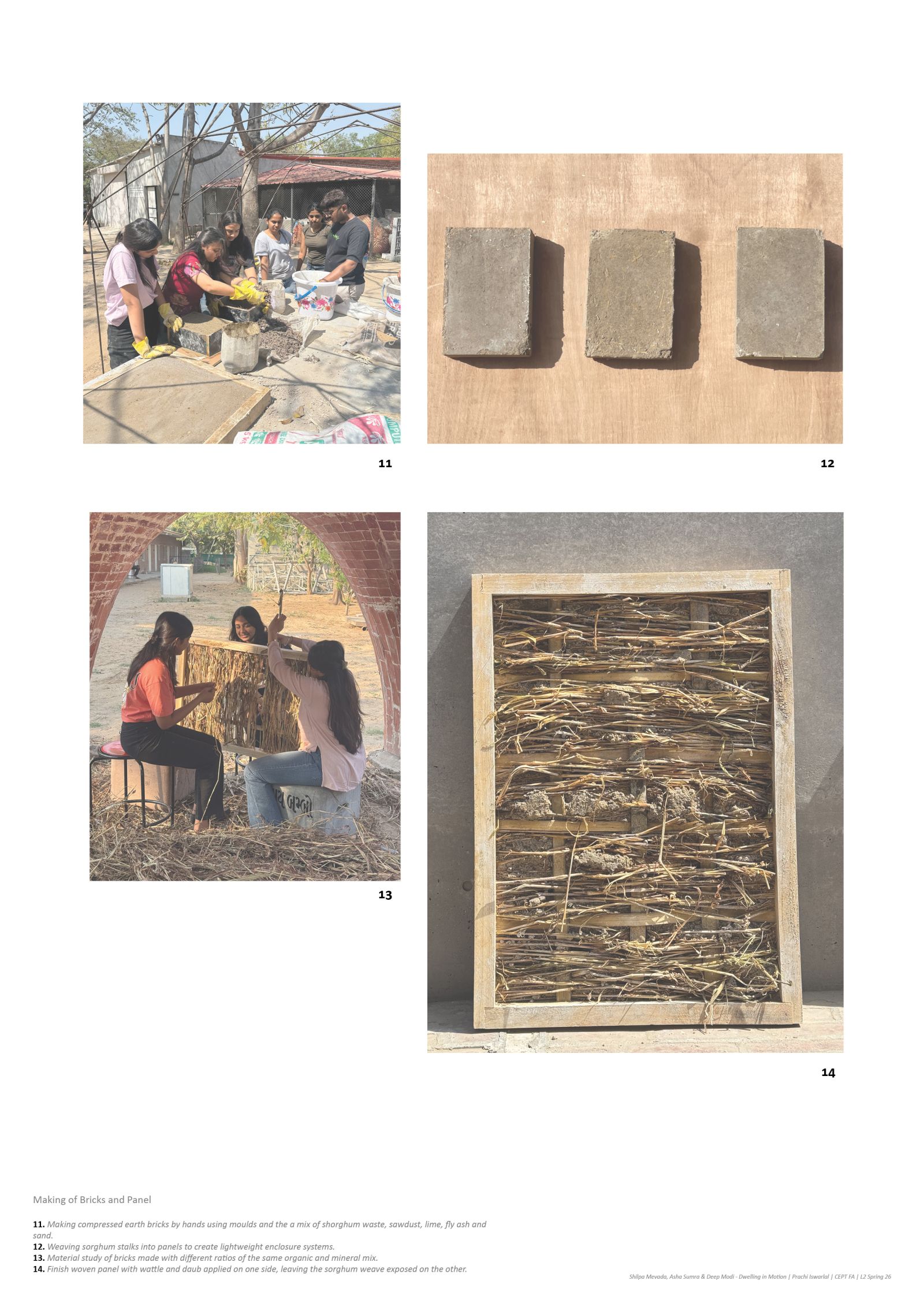
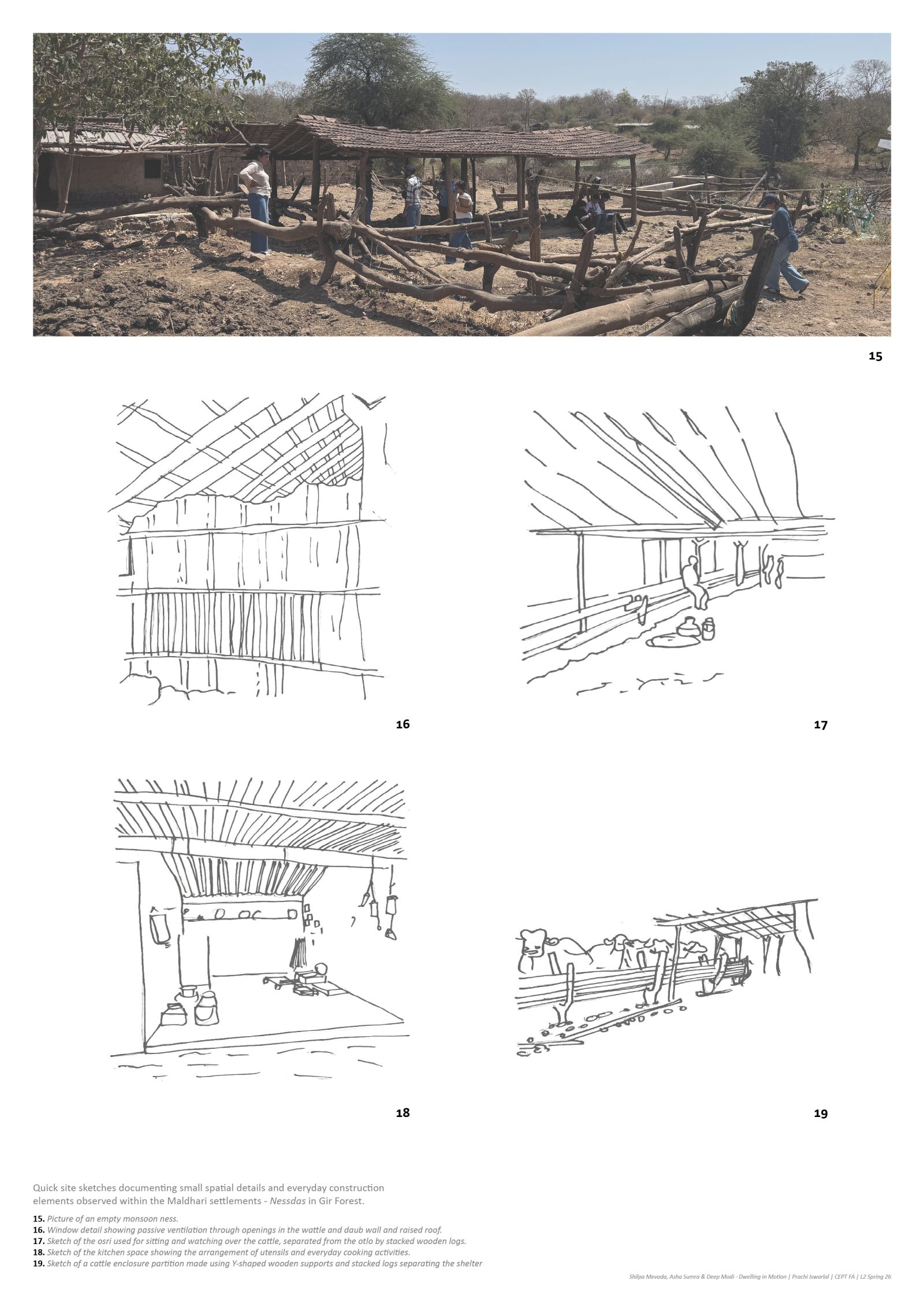
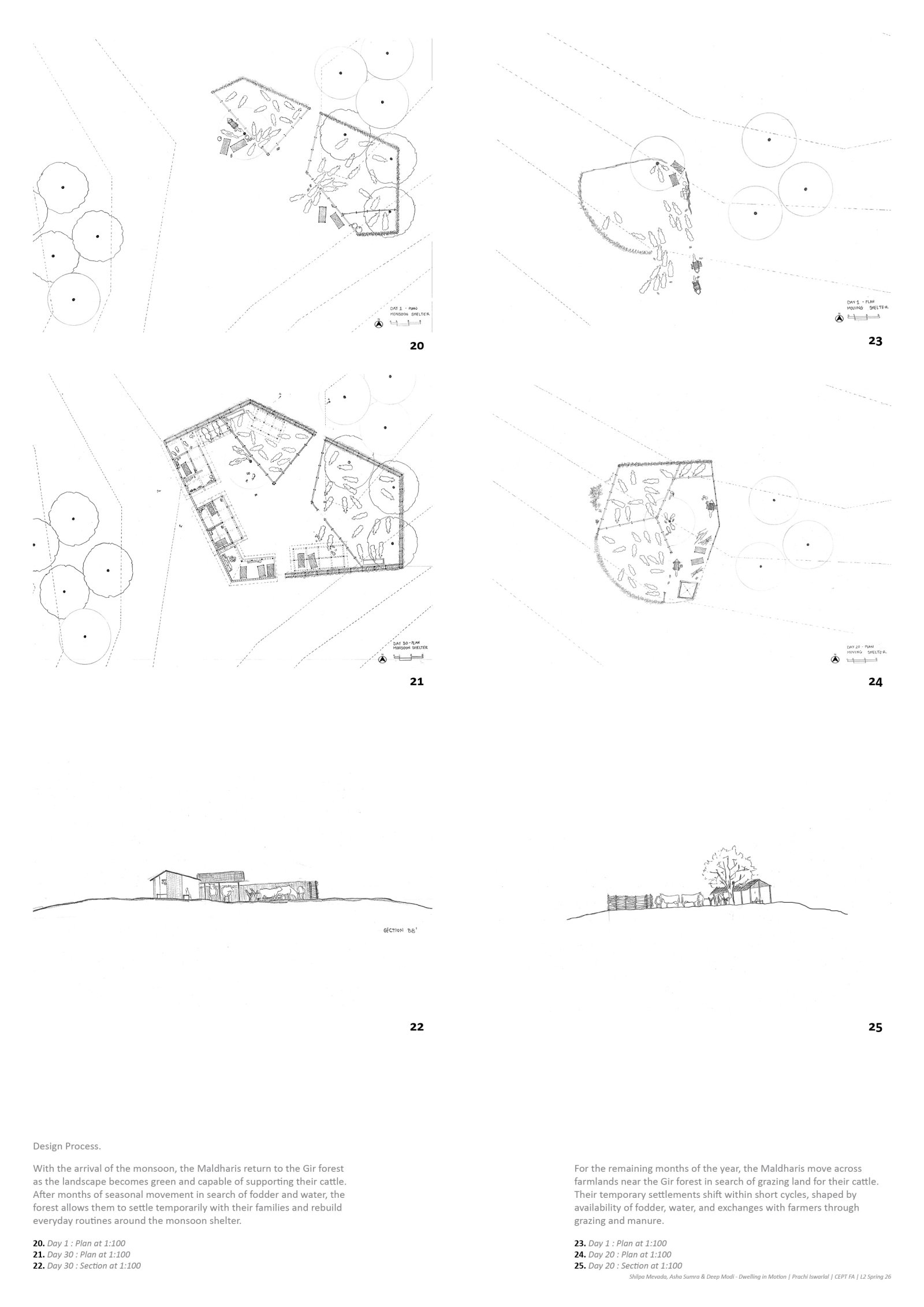
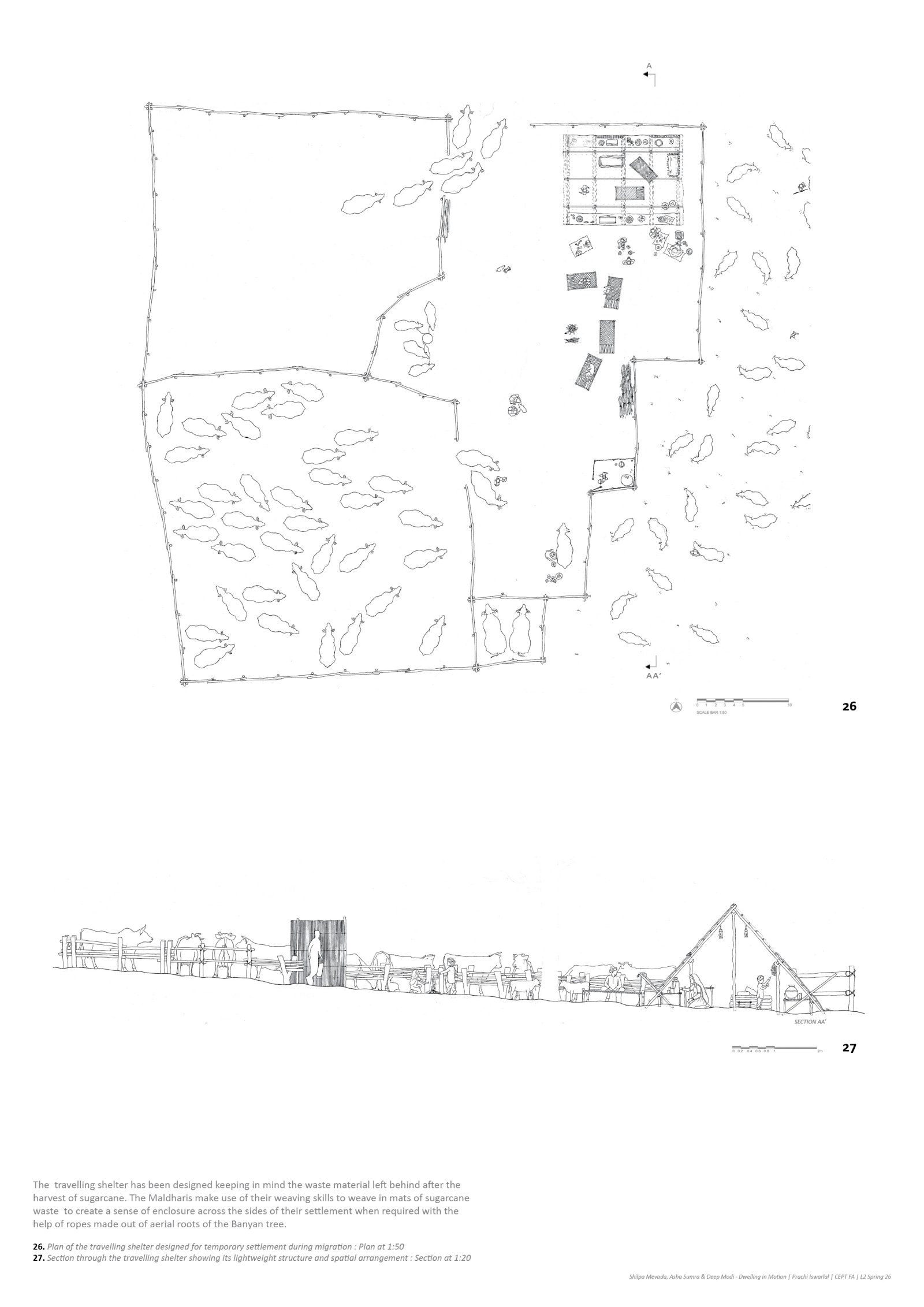
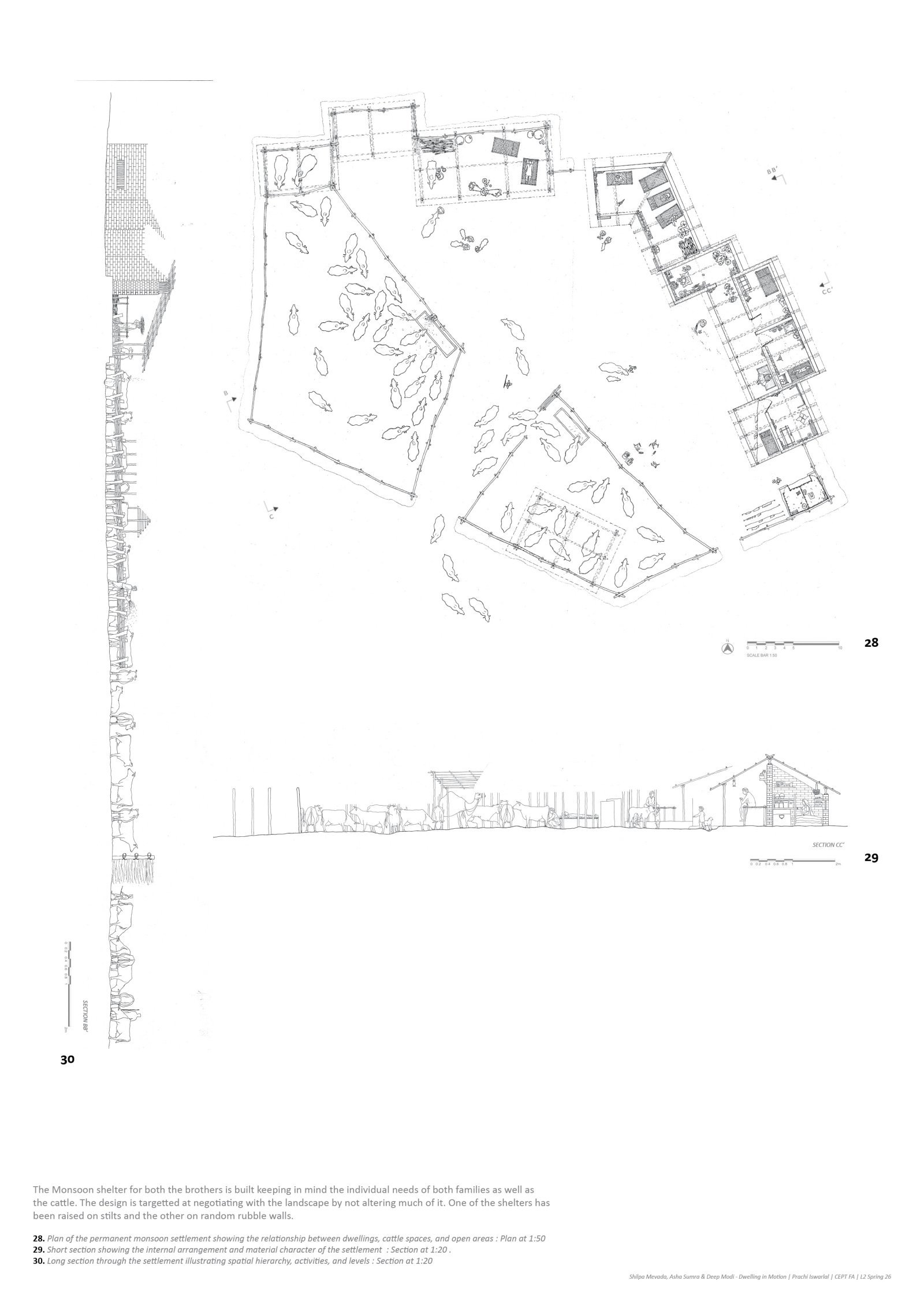
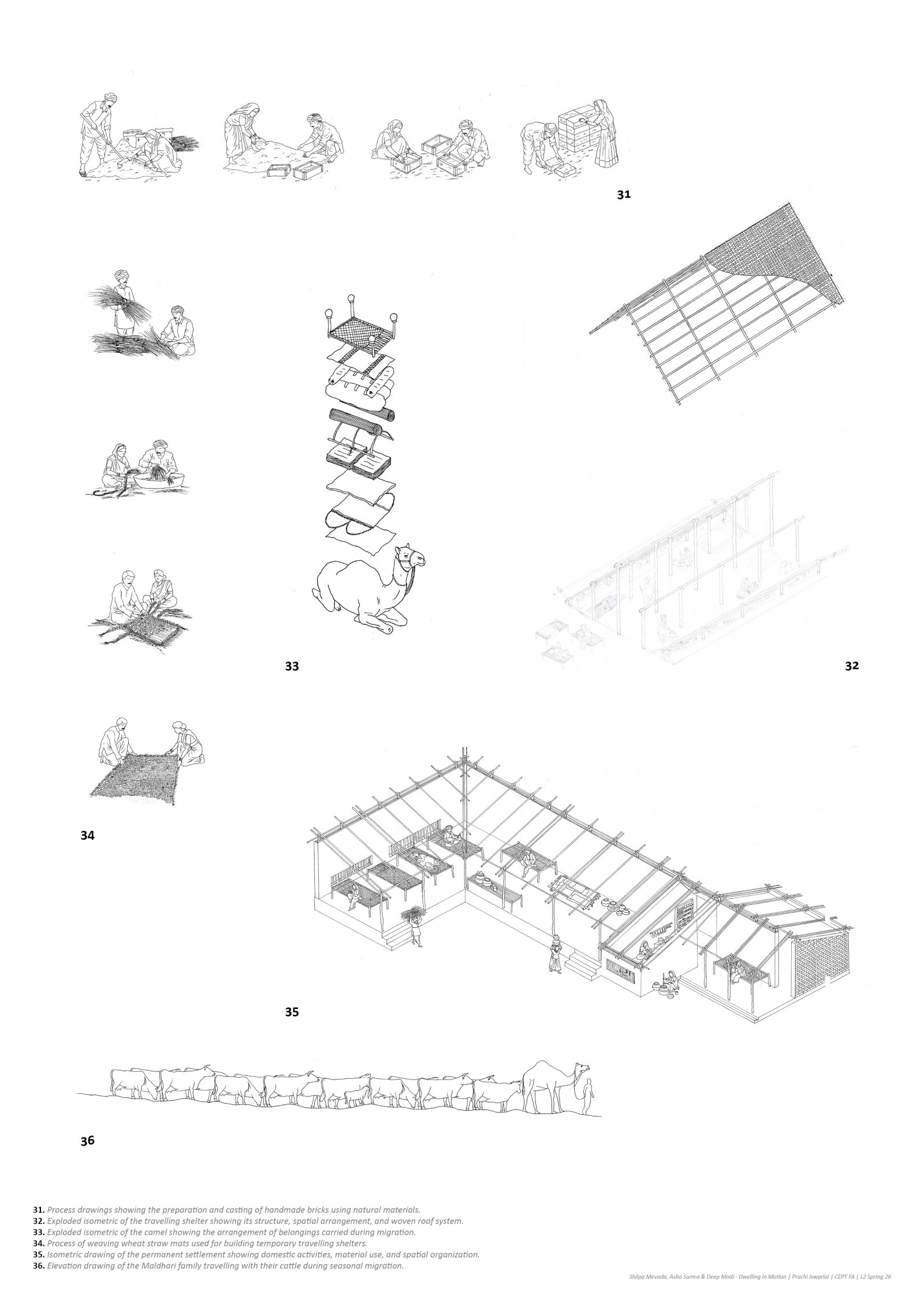
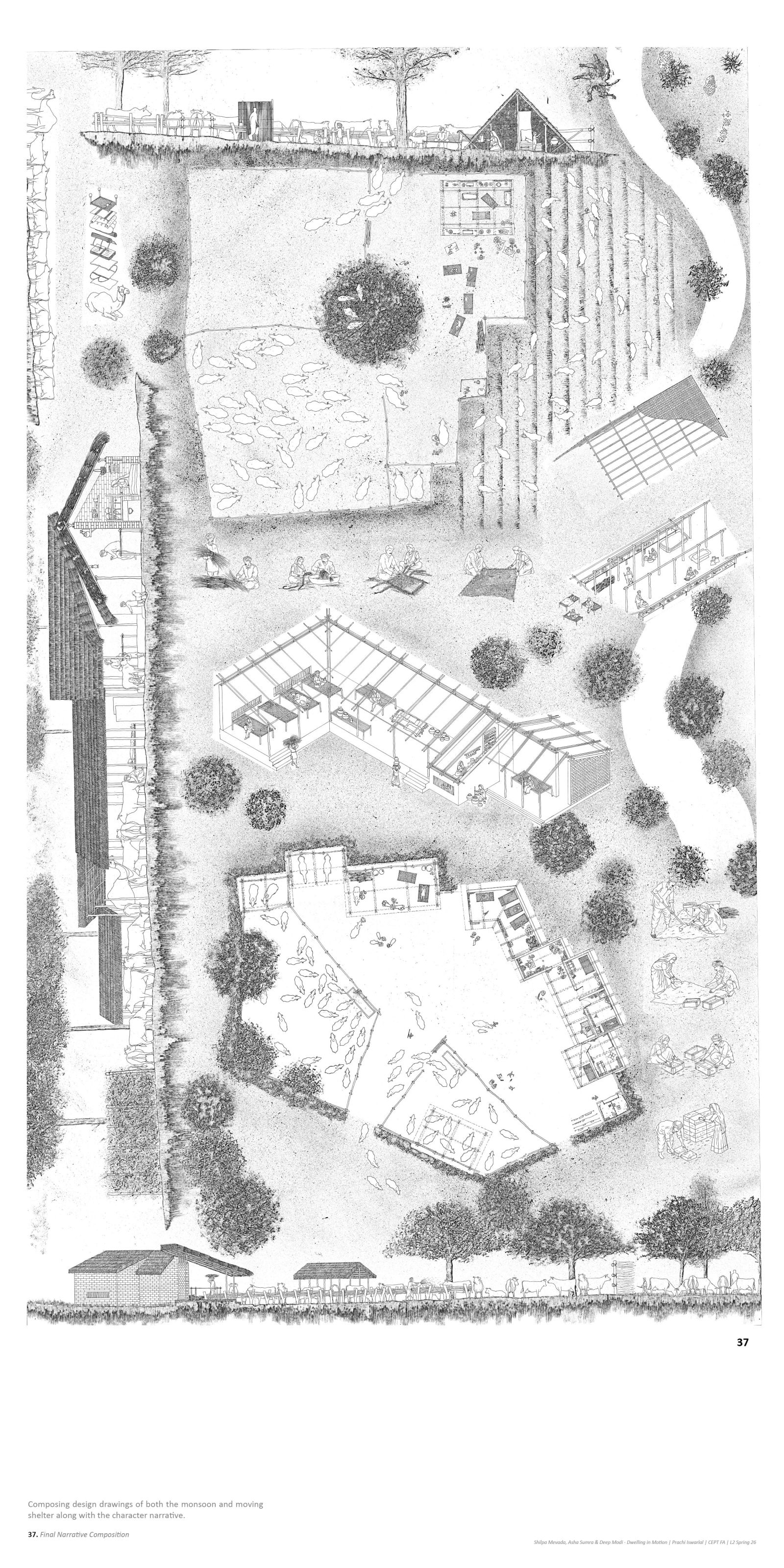
This project explores the seasonal lifestyle of the Maldhari community through the design of a monsoon settlement and a travelling shelter system. Rooted in the migratory patterns of the Maldharis in and around the Gir forest, the proposal responds to the constant shift between movement and settlement throughout the year. The project studies how architecture can adapt to changing seasonal conditions while negotiating the everyday relationship between family, cattle, climate, landscape, and available resources. Spaces are designed around routines of grazing, resting, cooking, storage, gathering, and caring for animals, allowing the settlement to respond closely to the community’s way of living. The project explores different roof forms as adaptive systems that respond to climate, methods of construction, and varying durations of occupation. The monsoon settlement creates a more stable condition during the rainy season, where the shelters are positioned with minimal intervention to the landscape and raised according to the terrain and water conditions. The walls are built using handmade natural material bricks developed through experiments with sorghum waste, sawdust, lime, fly ash, and sand, reducing weight while using locally available and waste materials. The travelling shelters, on the other hand, use lightweight woven systems made from wheat straw and sorghum, allowing them to be assembled, dismantled, repaired, and carried during migration. These woven panels act as temporary enclosures that can adapt to different settlement conditions across the journey. Through material exploration, narrative studies, and spatial investigations, the project explores how architecture can emerge from seasonal movement, local craftsmanship, and the everyday practices of the Maldhari community. Rather than creating a fixed architectural solution, the proposal investigates adaptable systems of living that evolve with changing landscapes, seasons, and patterns of movement.
View Additional Work