Your browser is out-of-date!
For a richer surfing experience on our website, please update your browser. Update my browser now!
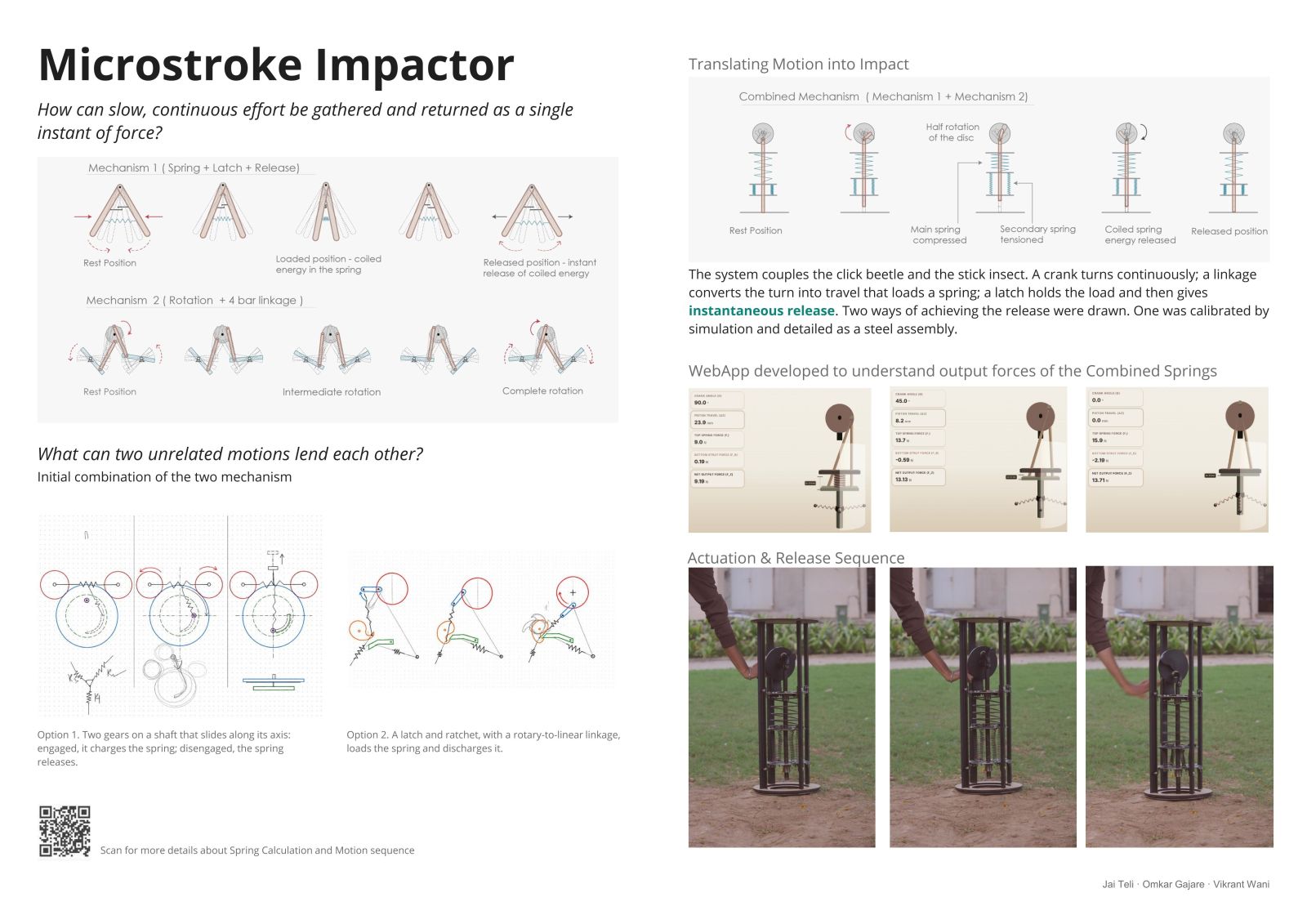
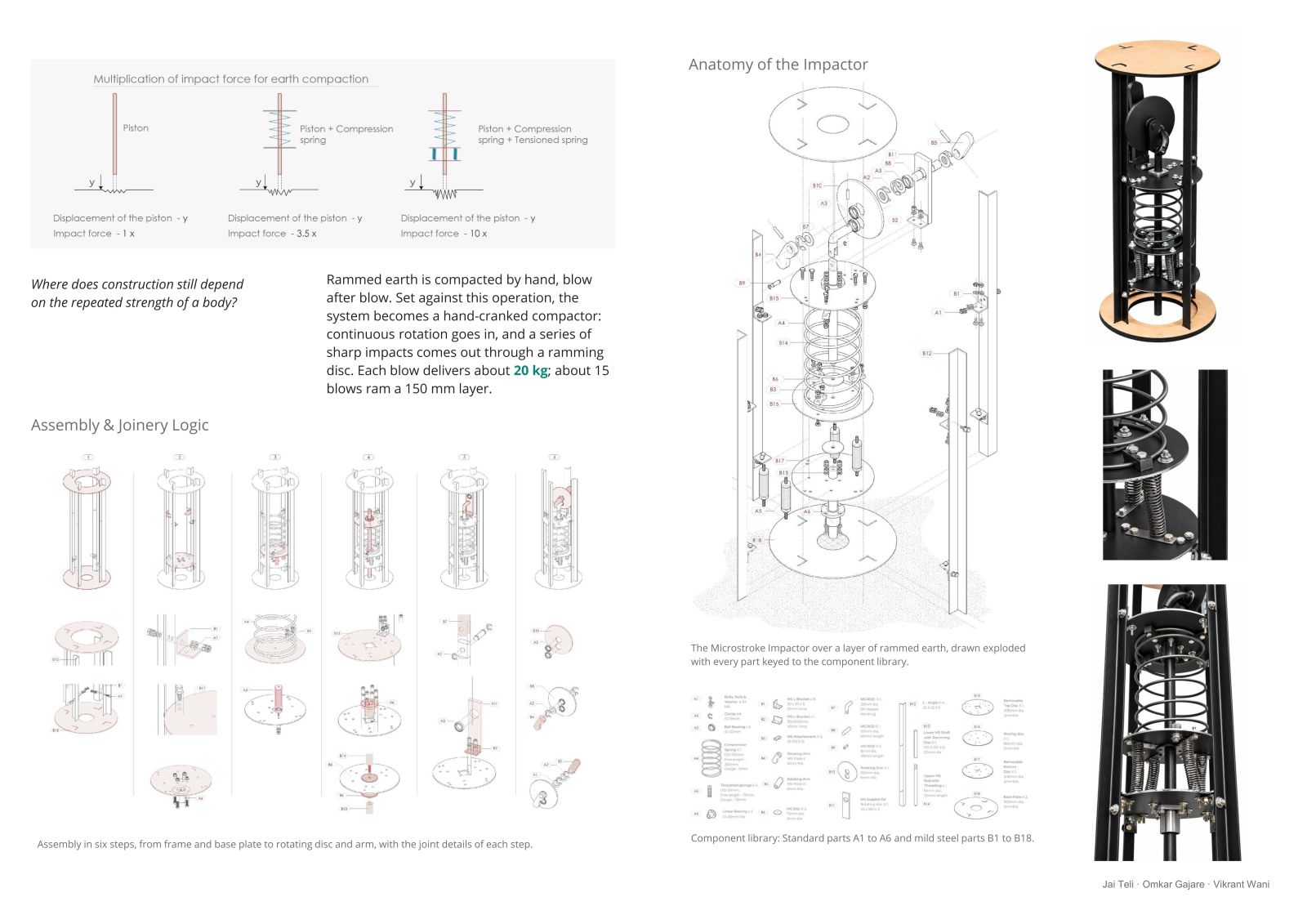
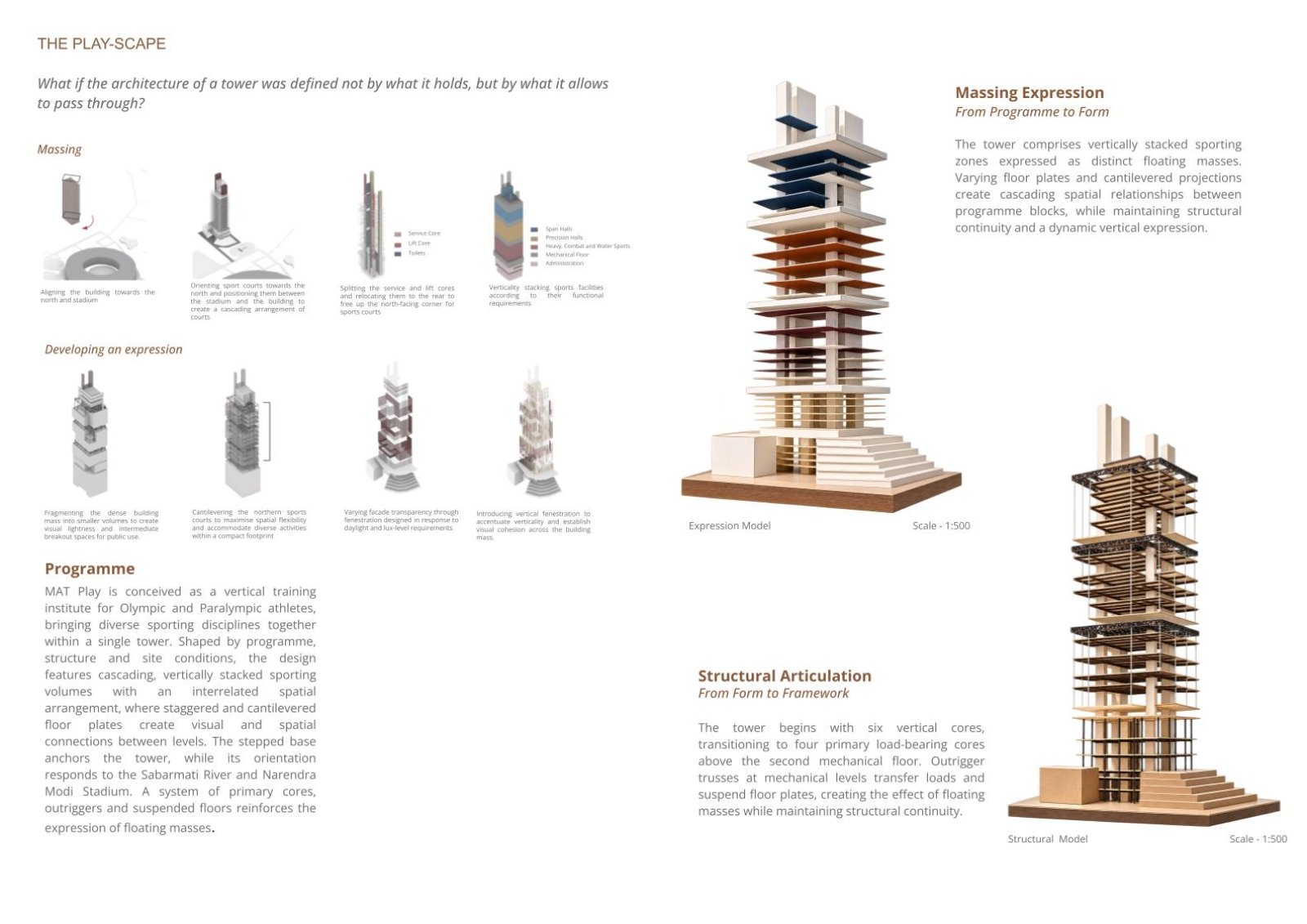
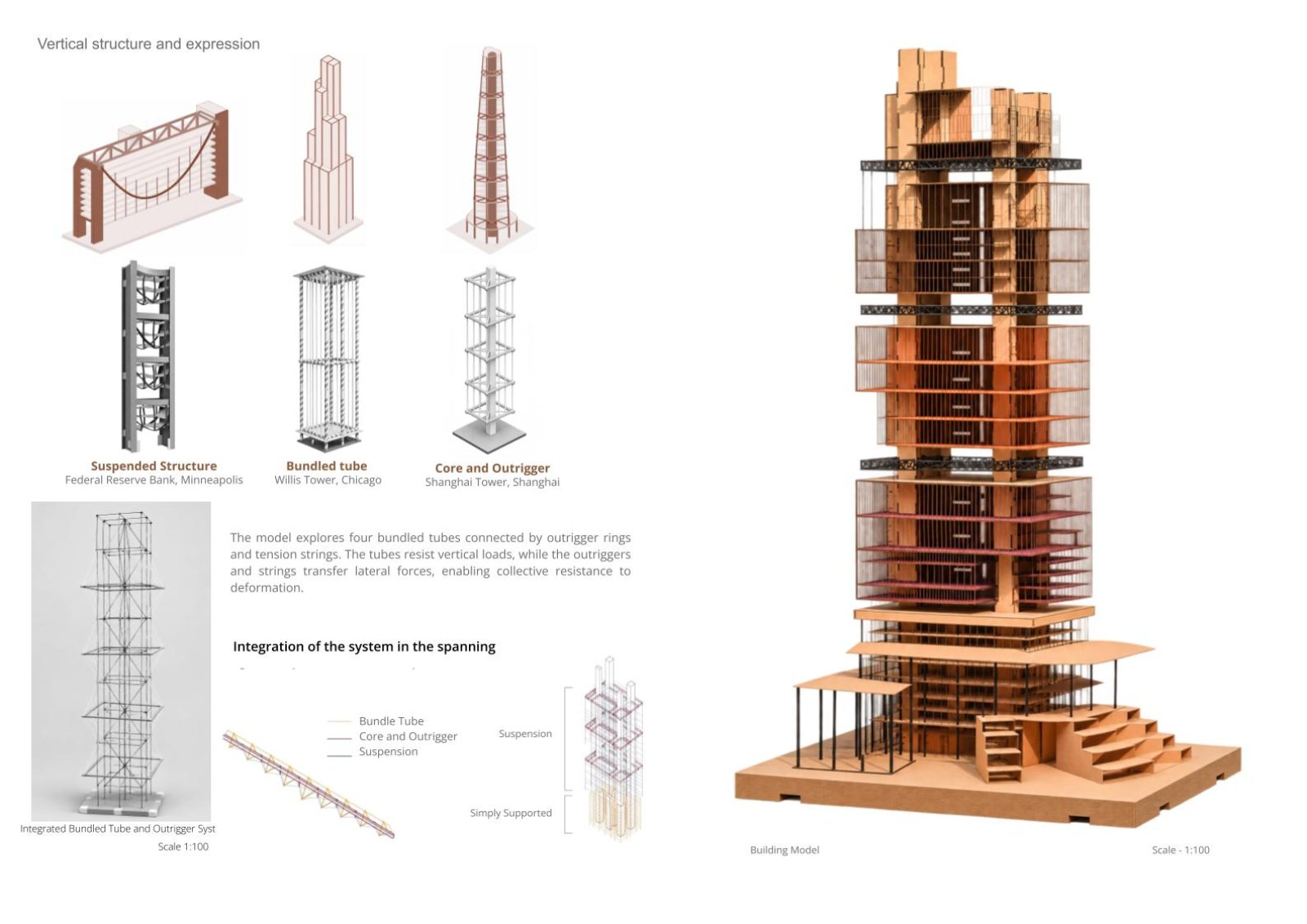
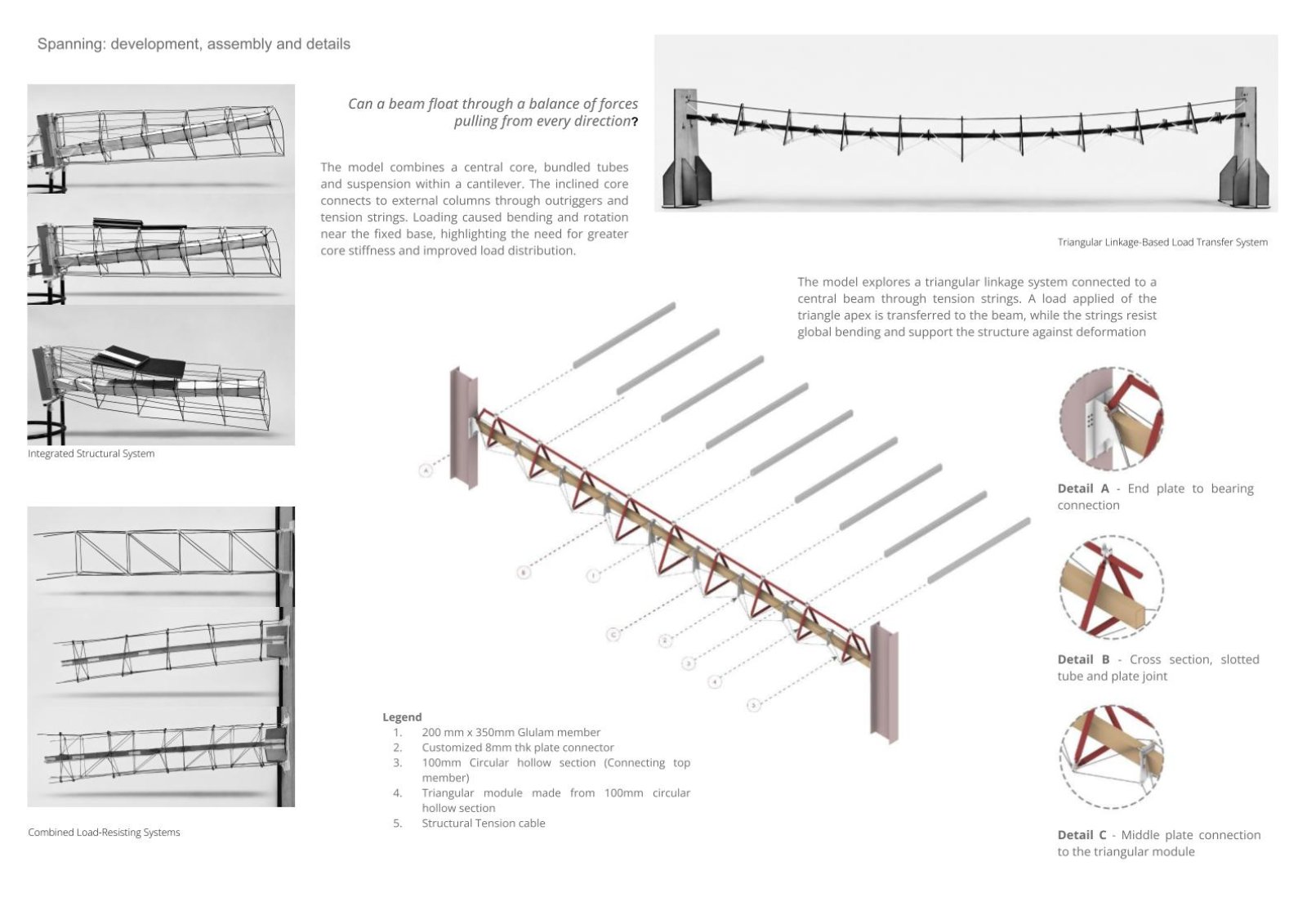
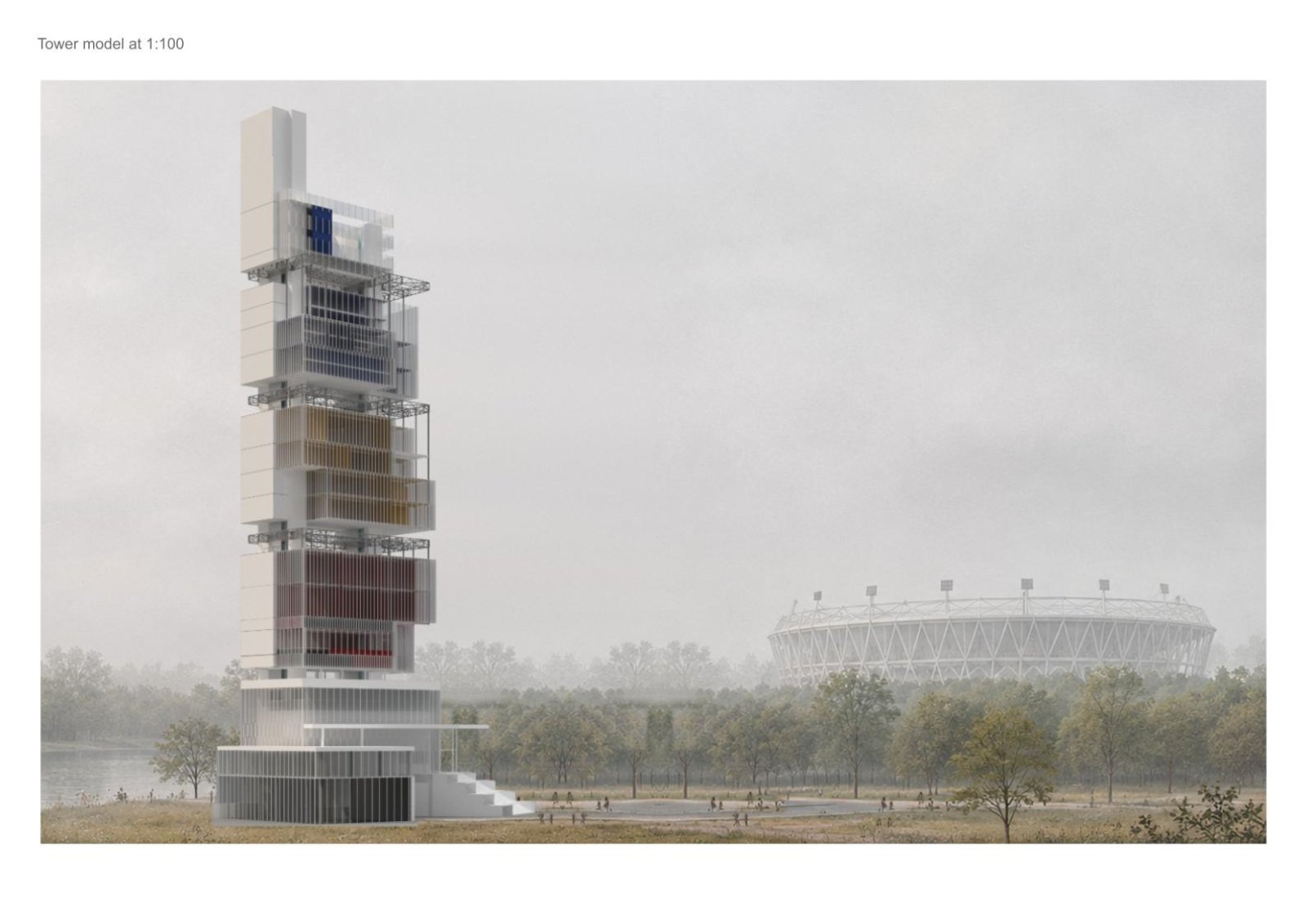
This semester's work explored structure and mechanics through learning by making. Instead of relying on drawings and calculations alone, the team built large-scale working models to test how forces behave in practice. A hand-operated mechanism was developed to store spring energy and release it as a single sharp impact, while a series of tower models examined how bundled tubes, outriggers and tension strings share loads. Physical testing revealed weaknesses such as bending and rotation near a fixed base, and guided refinements in stiffness and load distribution. Each model became a feedback loop, where building, observing and responding deepened the team's understanding of how structure and mechanism work together.