Your browser is out-of-date!
For a richer surfing experience on our website, please update your browser. Update my browser now!
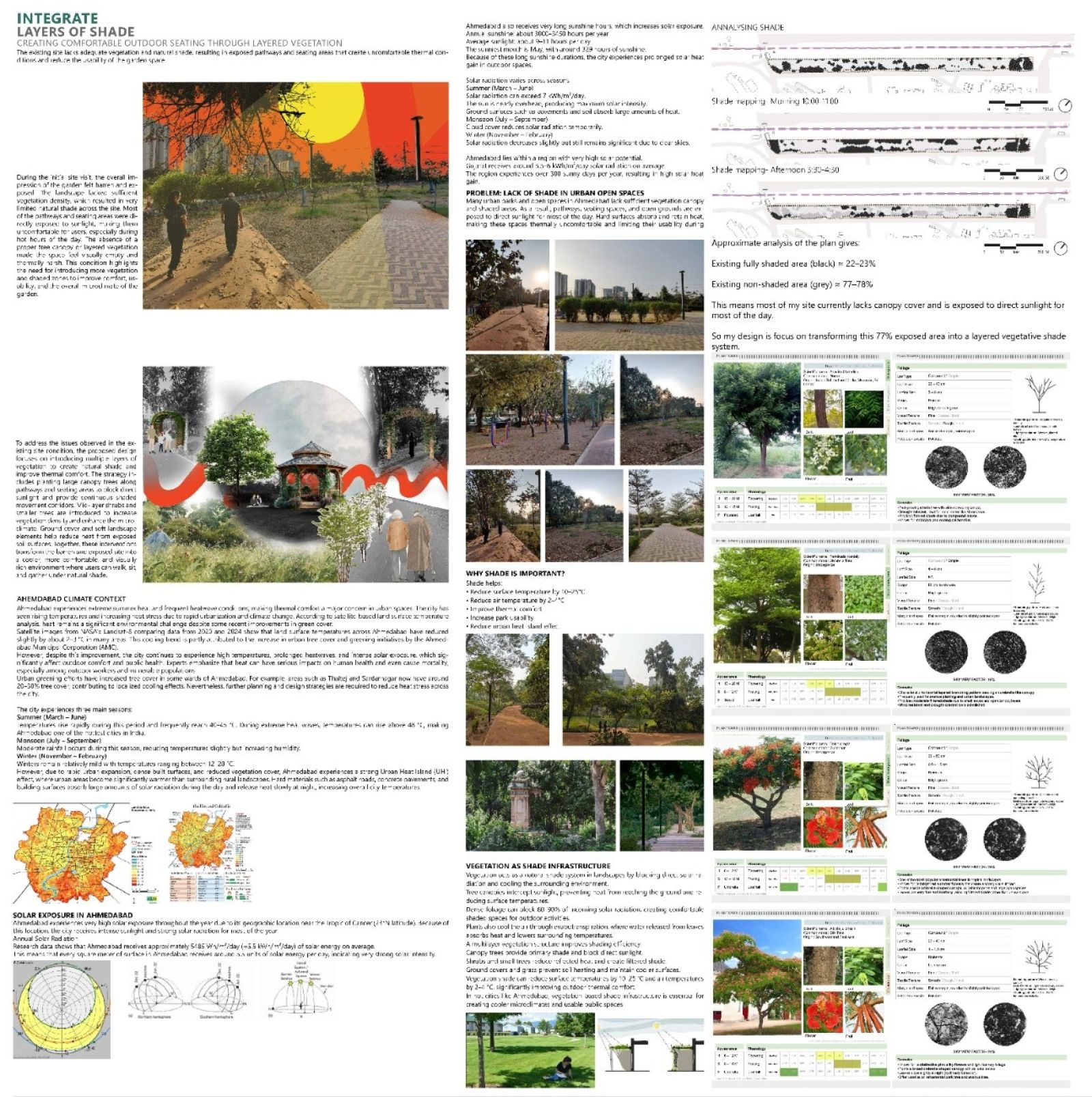
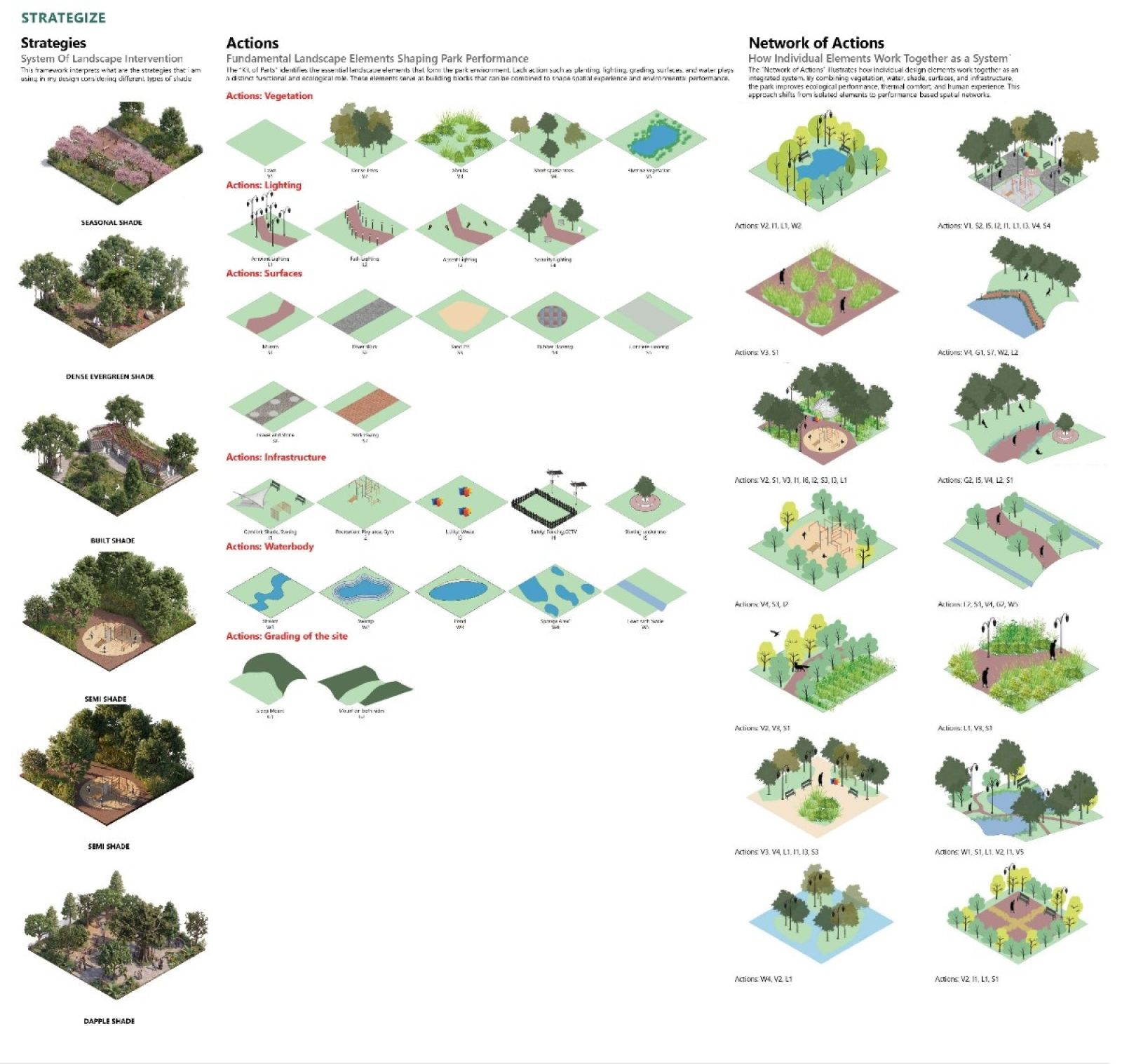
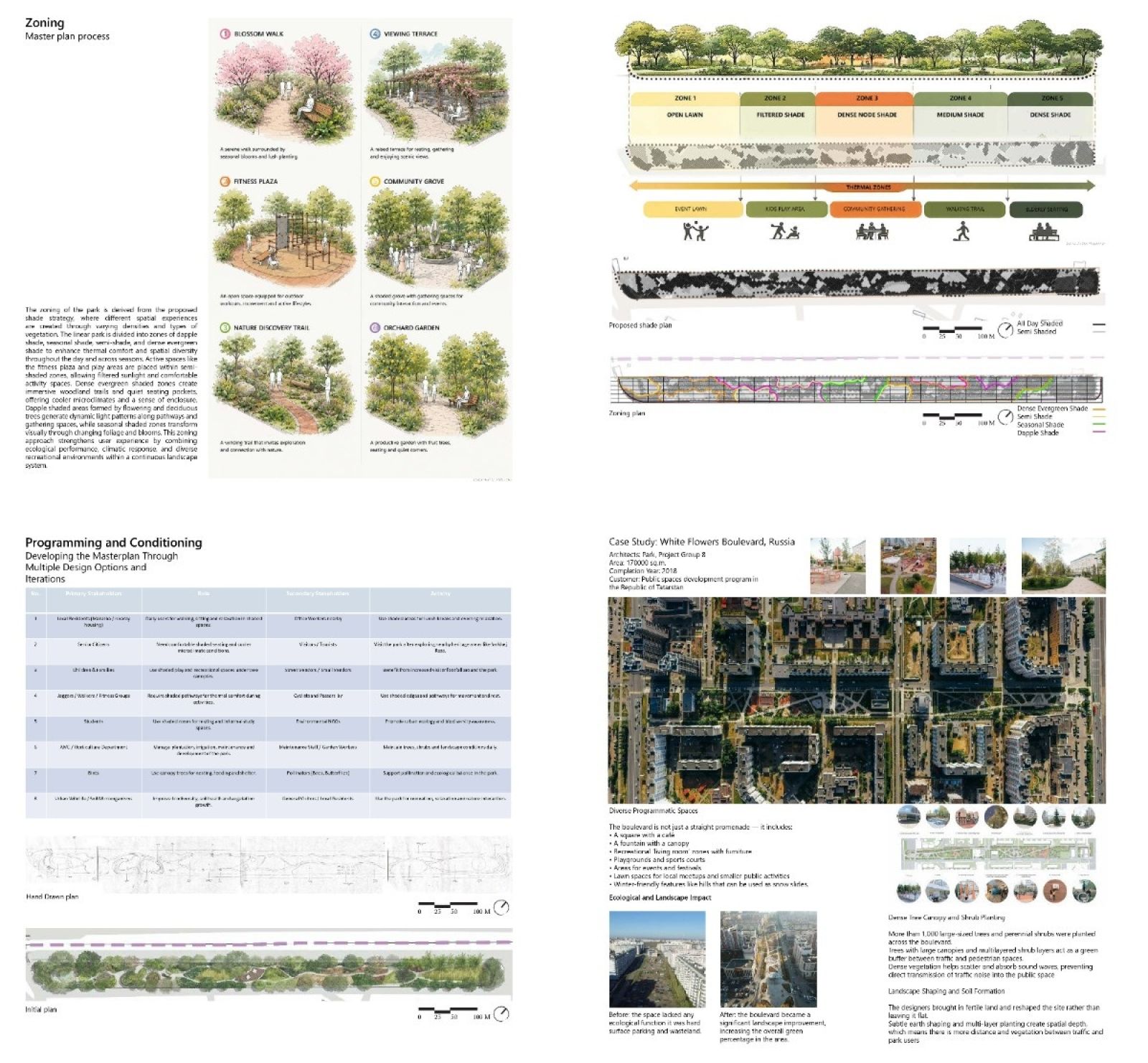
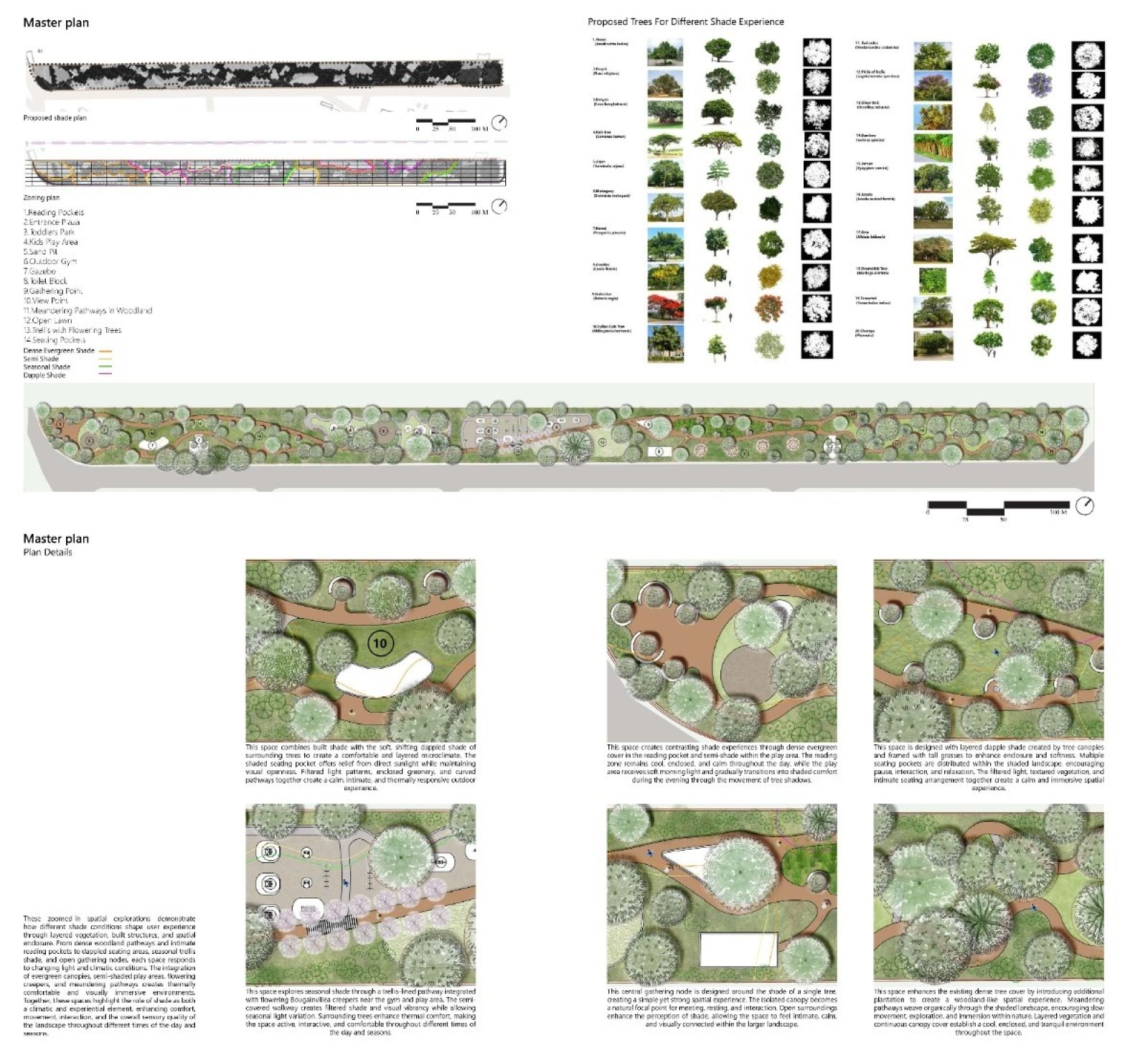
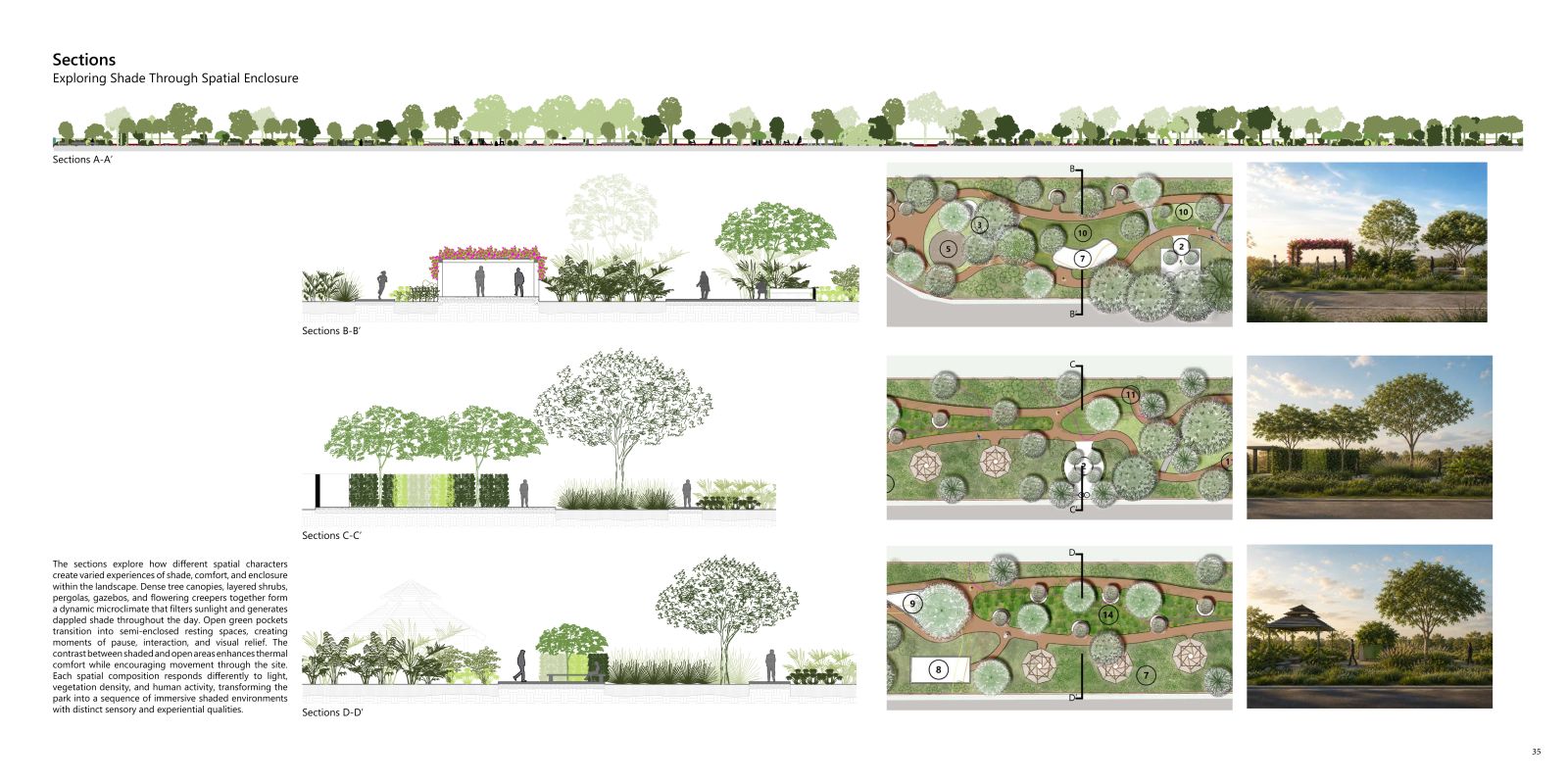
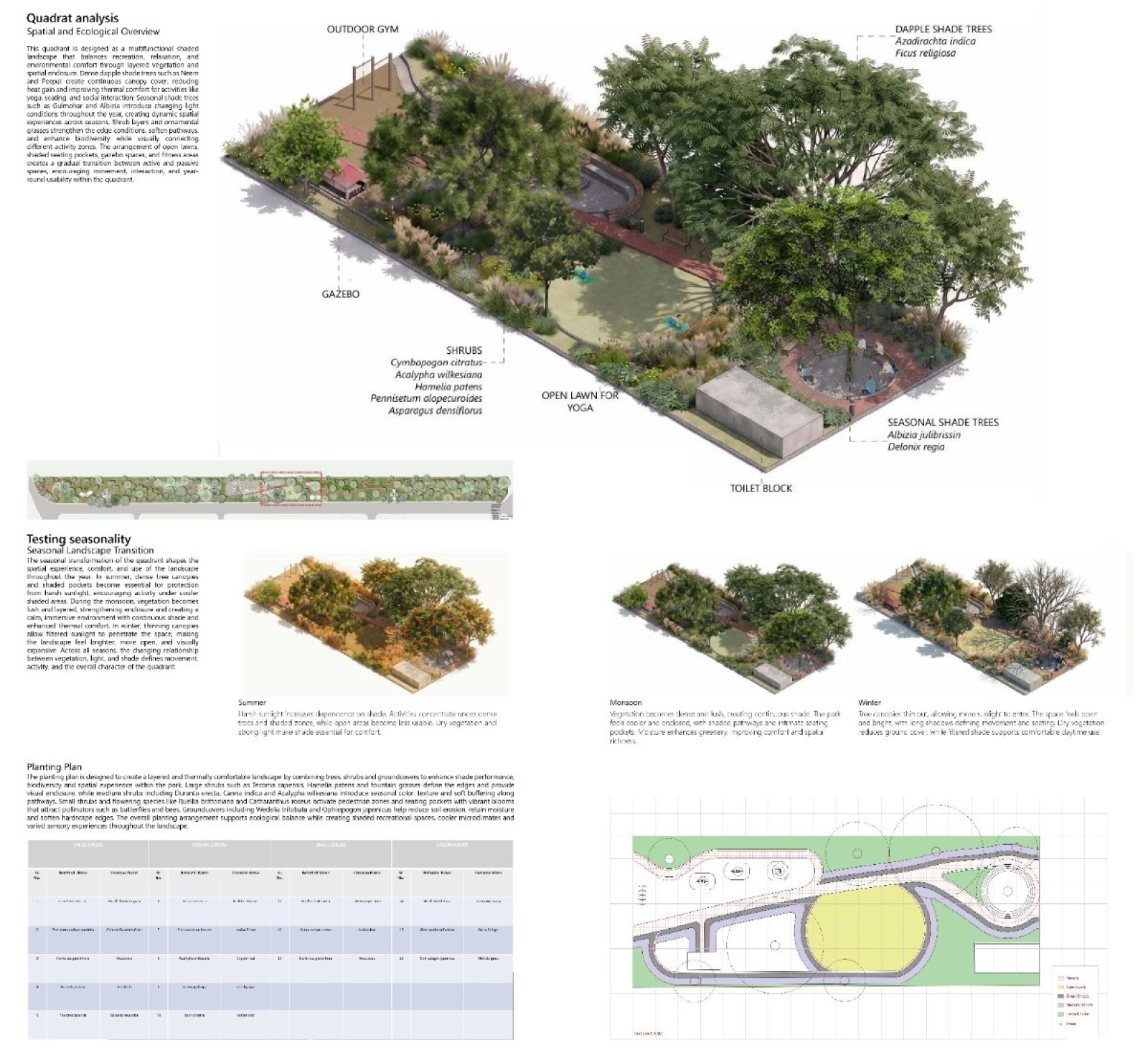
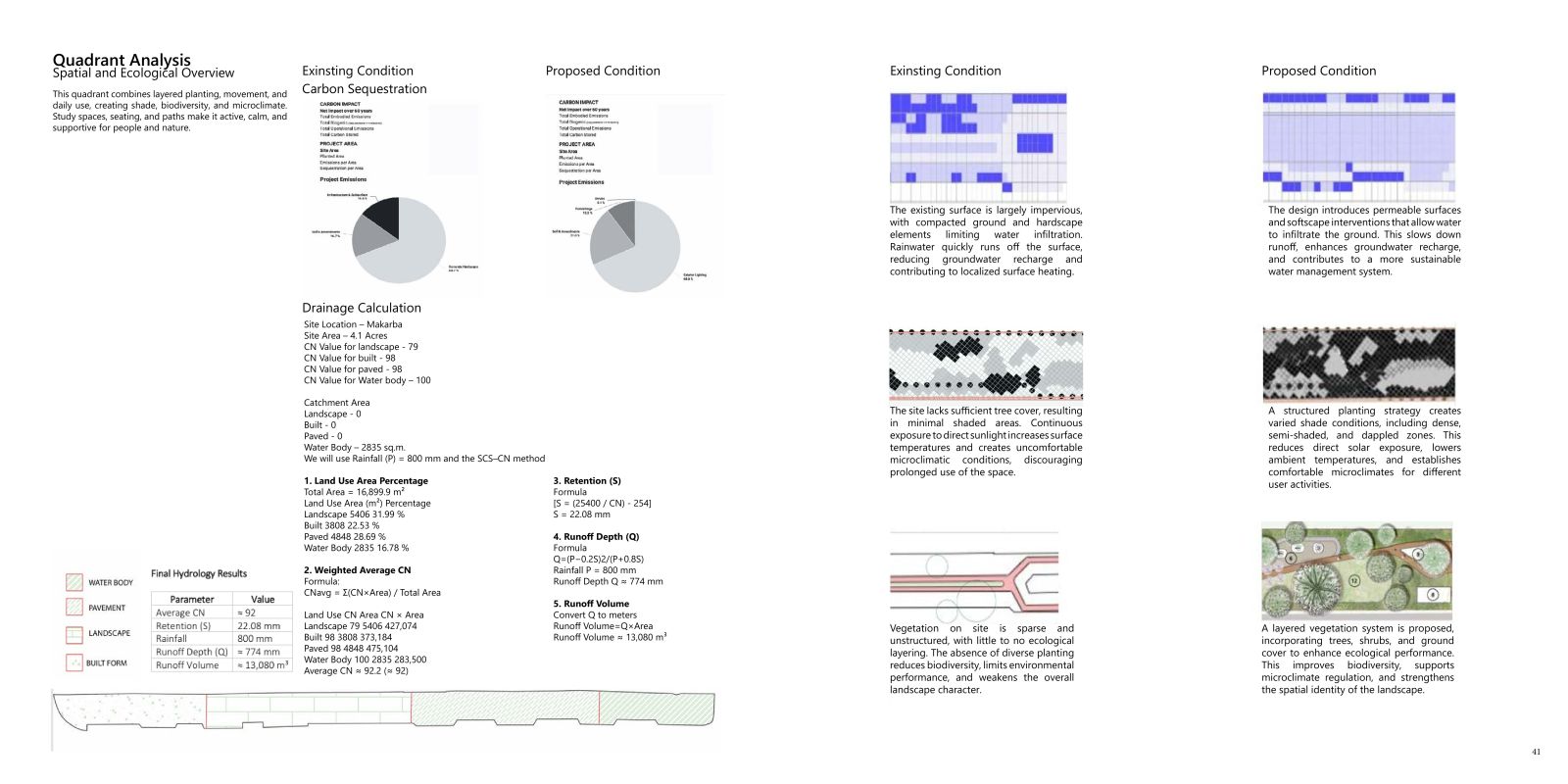
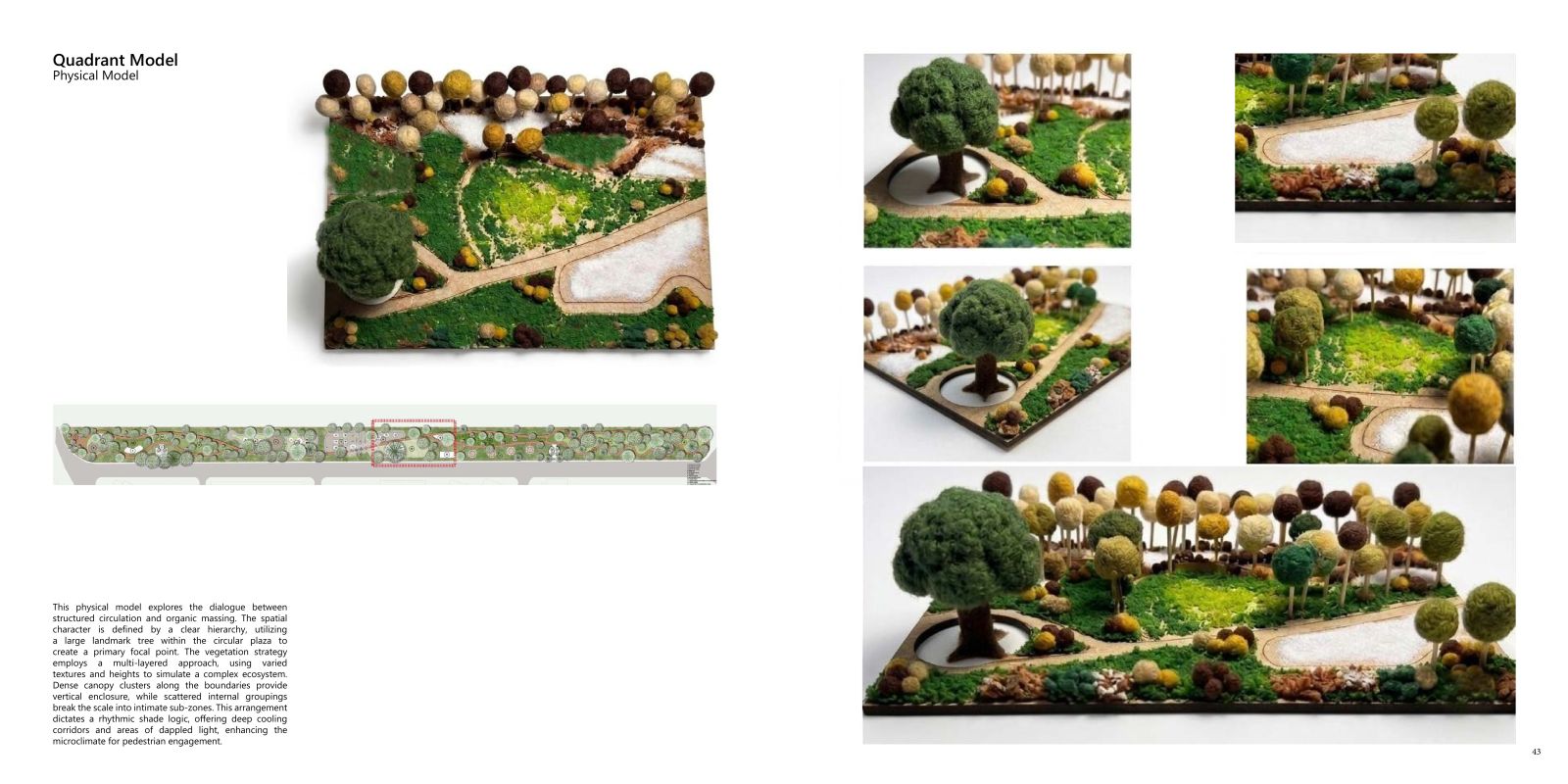
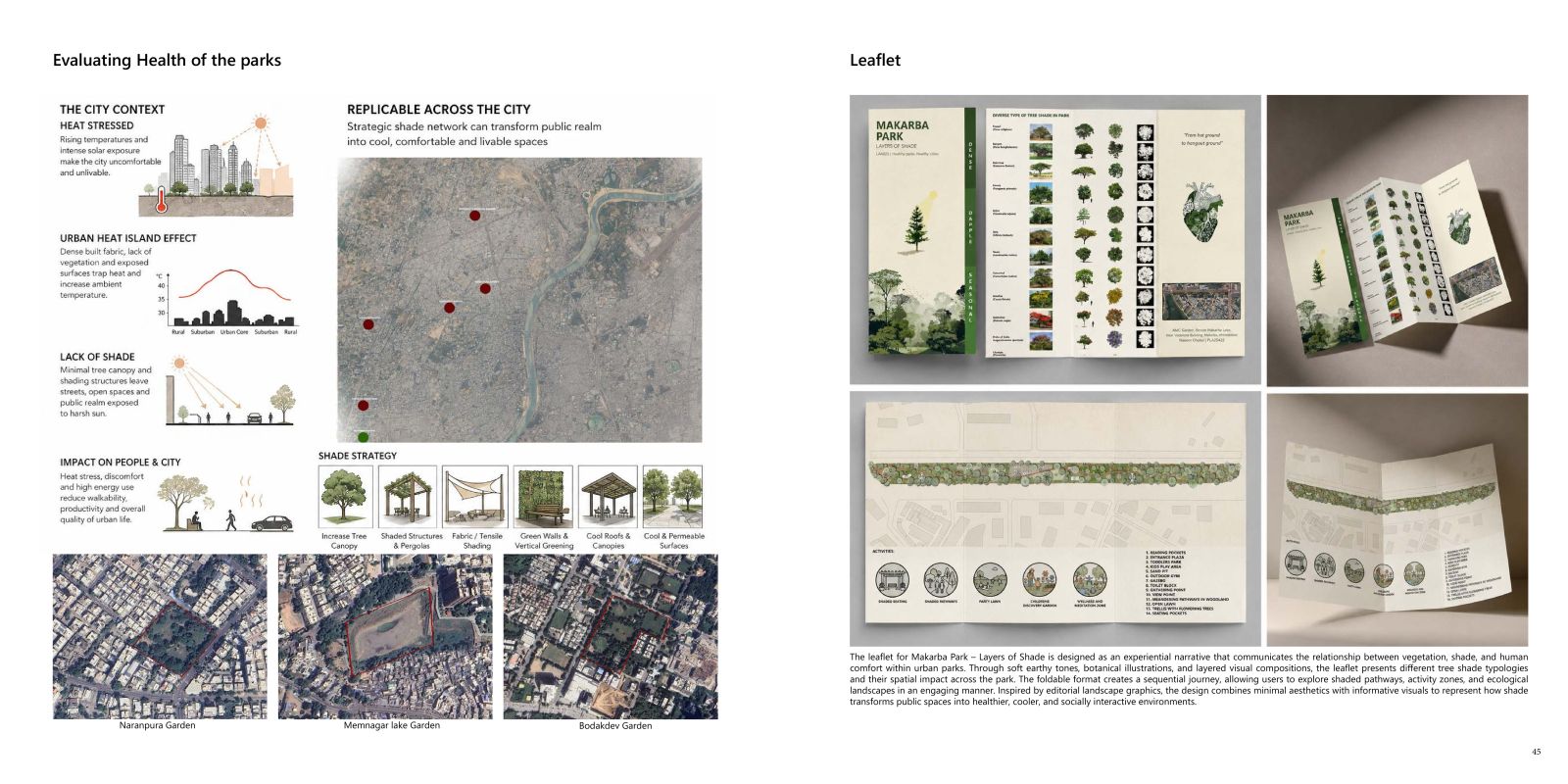
This project explores shade as a climate-responsive design strategy to improve thermal comfort and usability within urban public spaces. The process began with site analysis, studying solar exposure, existing vegetation, movement patterns, and microclimatic conditions. Different shade typologies such as dense, dapple, seasonal, and semi-shade were identified to guide zoning and spatial planning. Through layered plantation, shaded seating, permeable surfaces, and ecological interventions, the design transforms exposed areas into comfortable and interactive environments. The proposal enhances biodiversity, reduces heat gain, strengthens environmental performance, and creates healthier, cooler, and more resilient public landscapes.
View Additional Work