Your browser is out-of-date!
For a richer surfing experience on our website, please update your browser. Update my browser now!
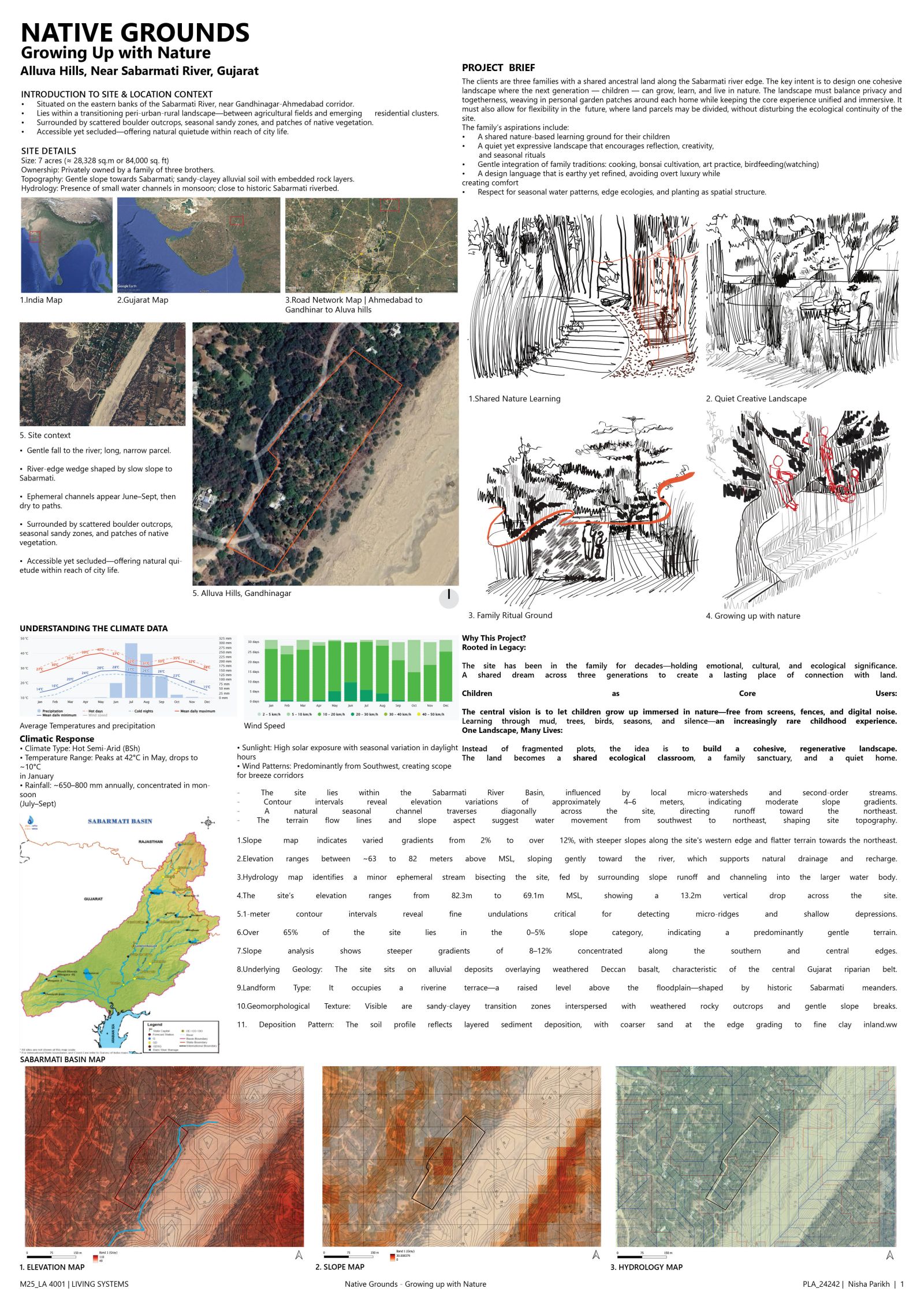
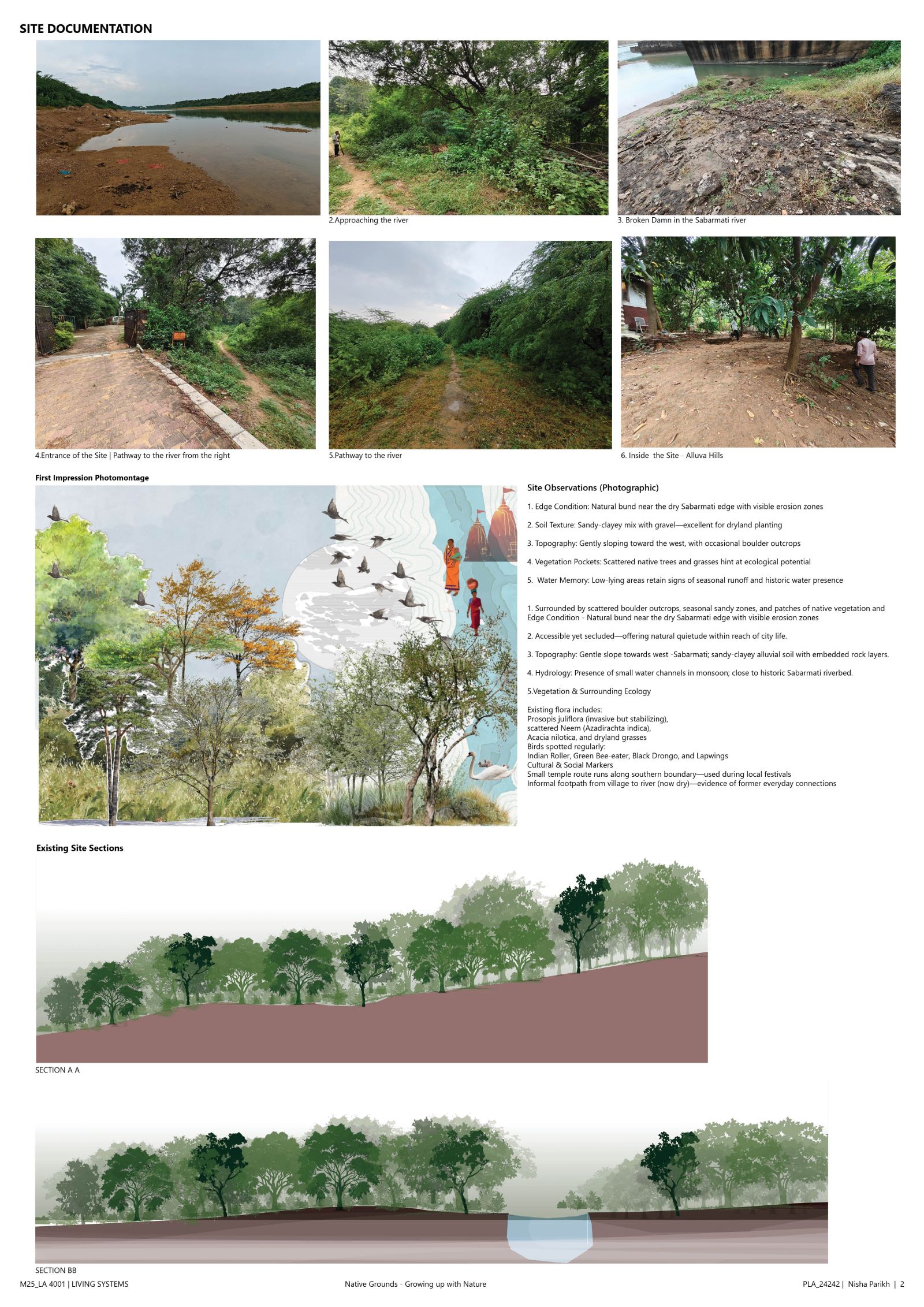
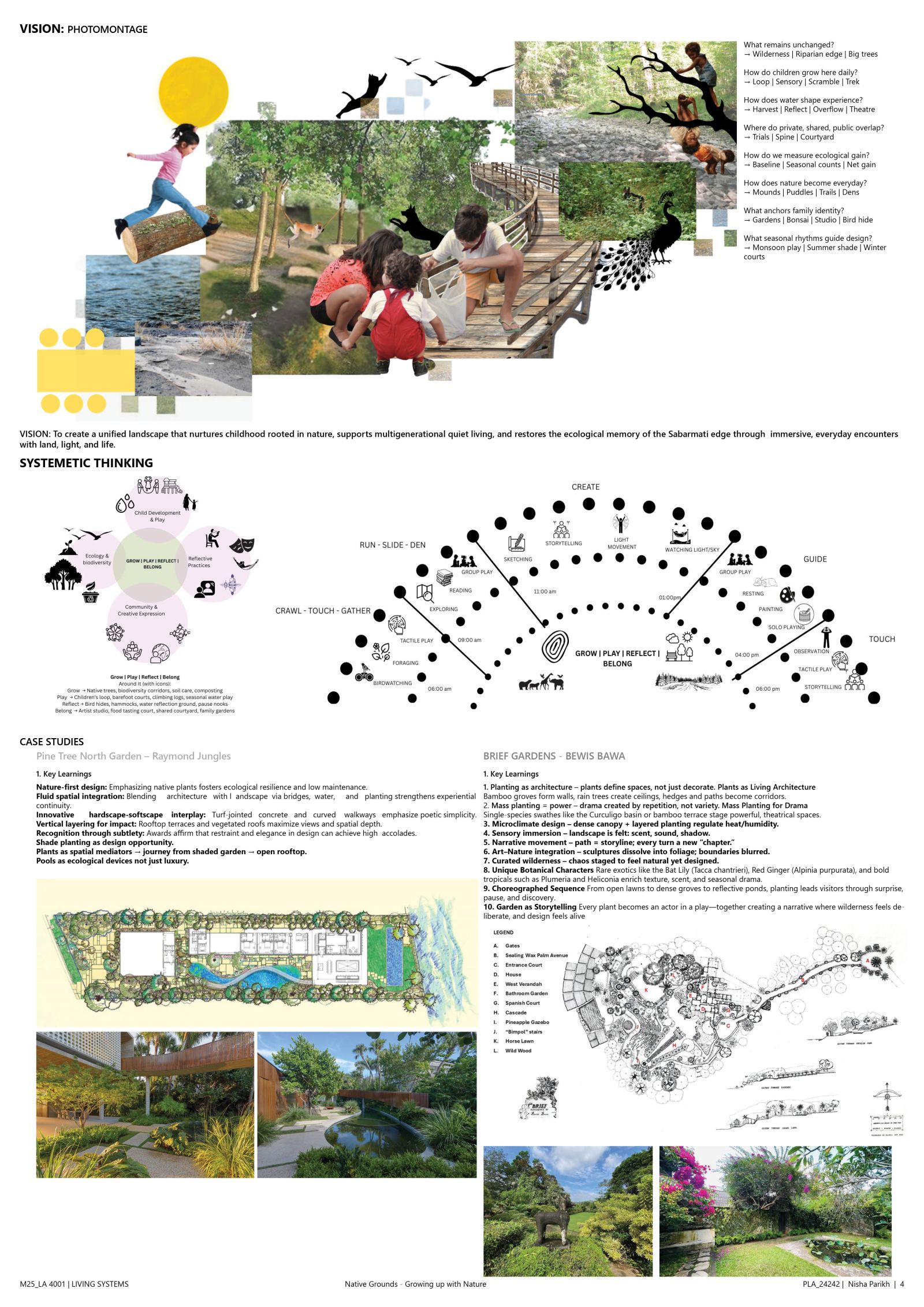
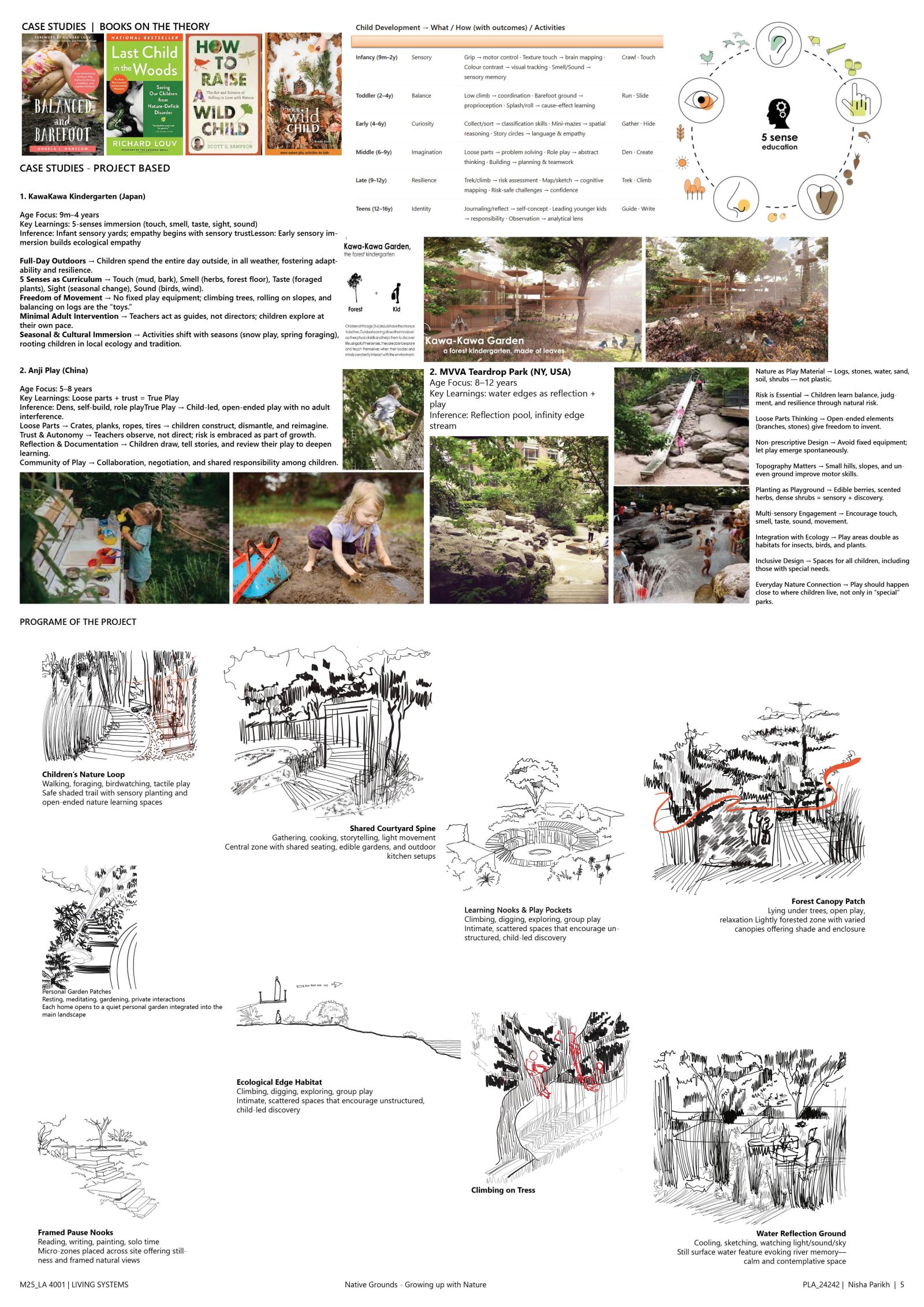
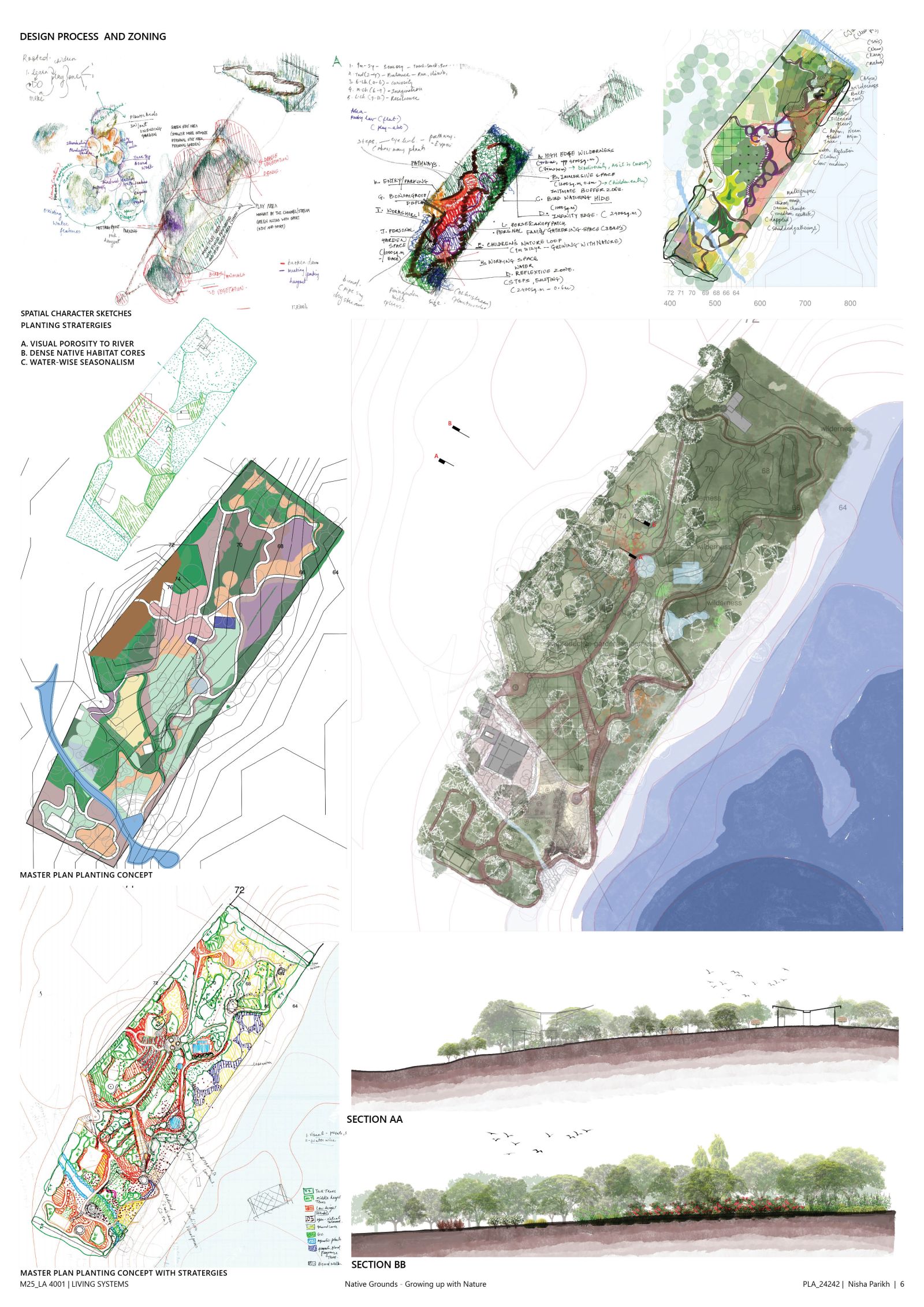
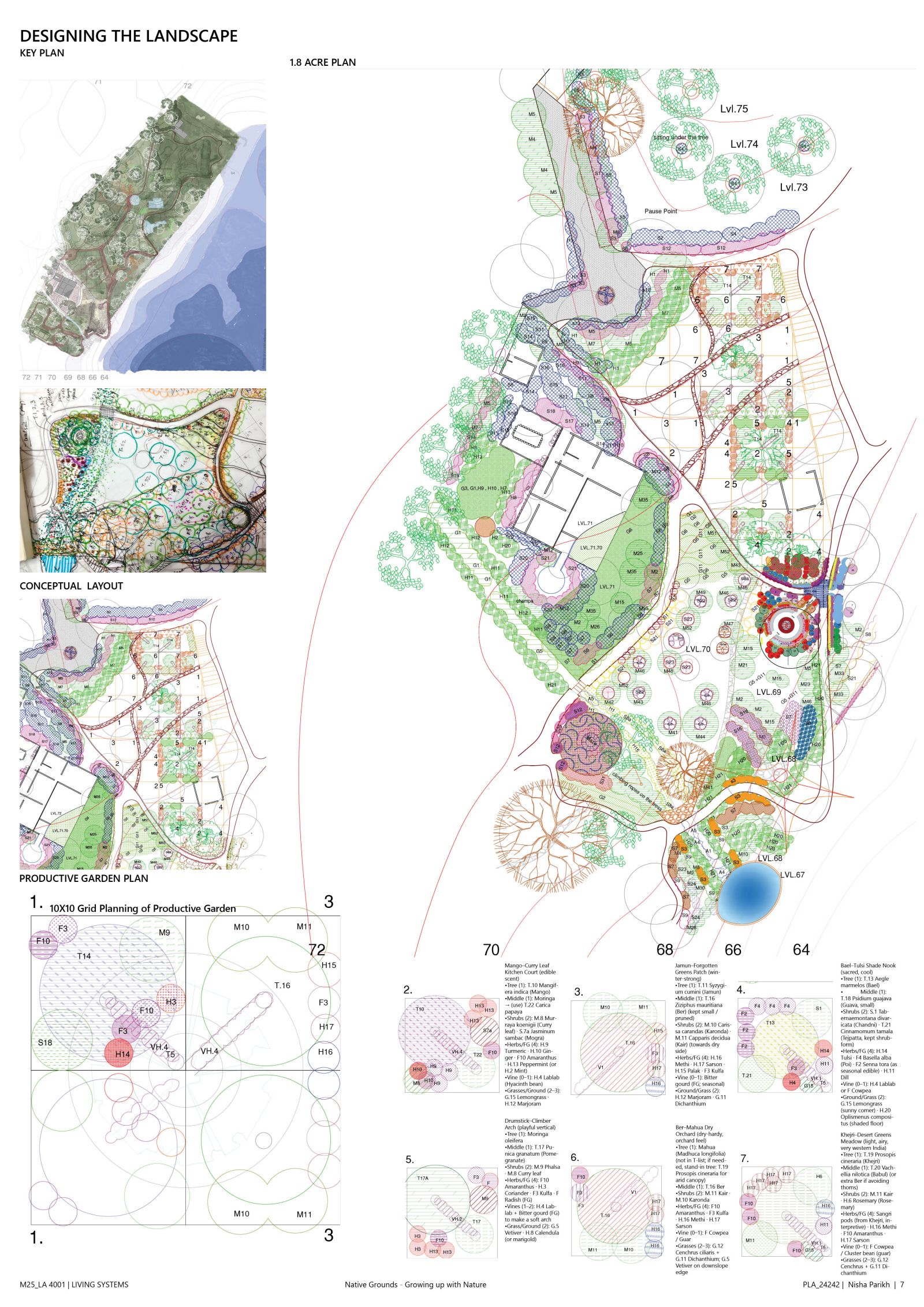
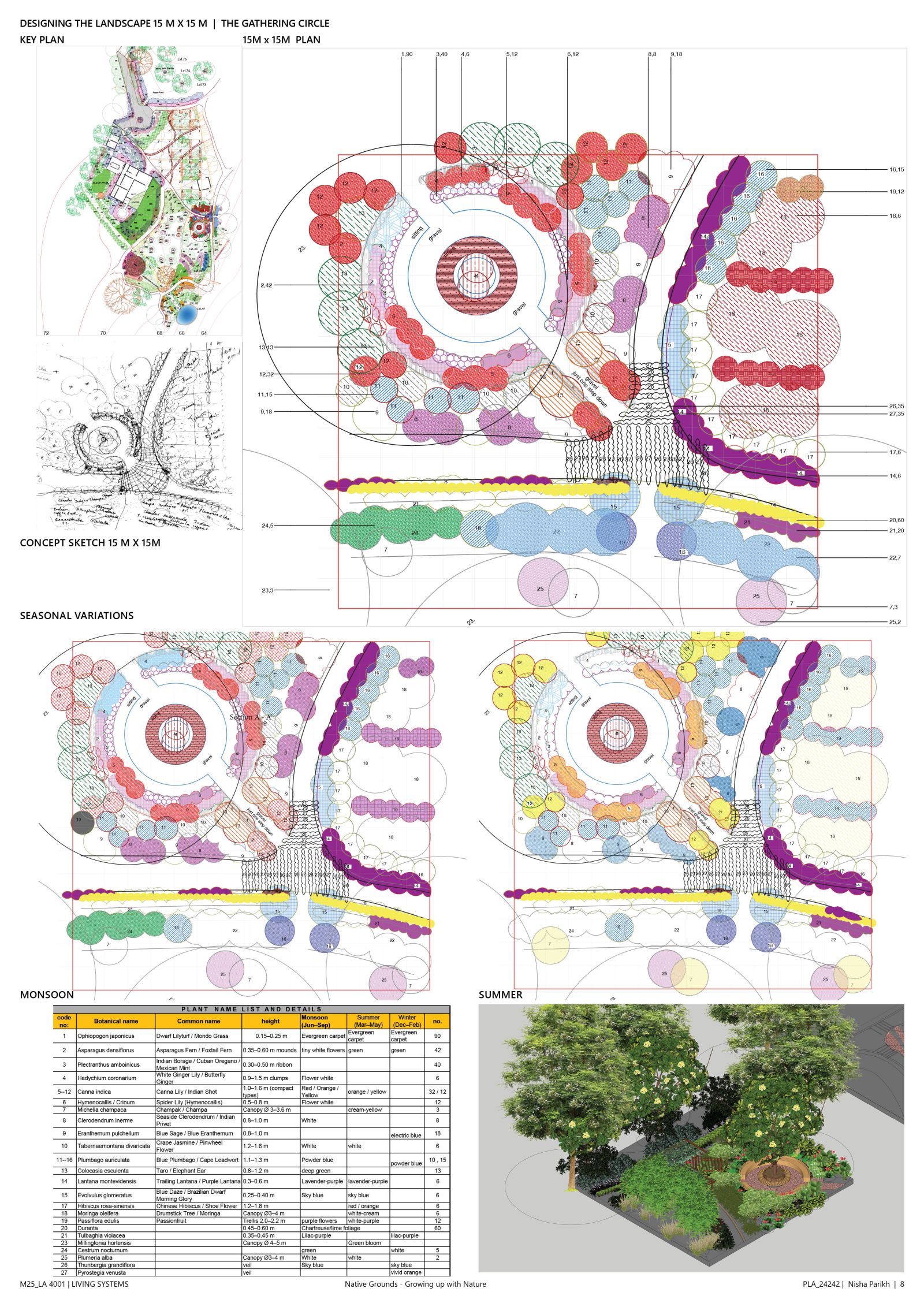
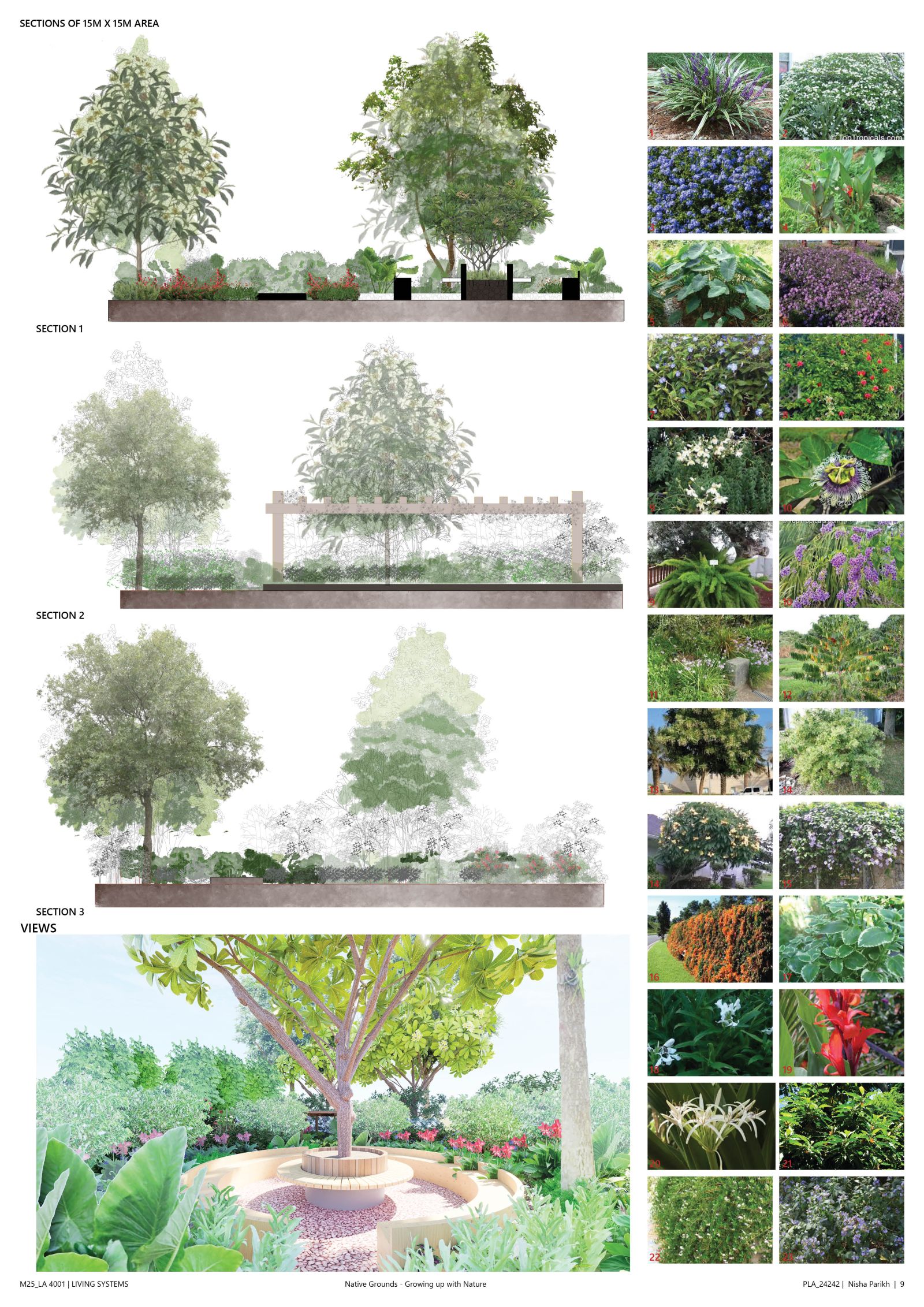
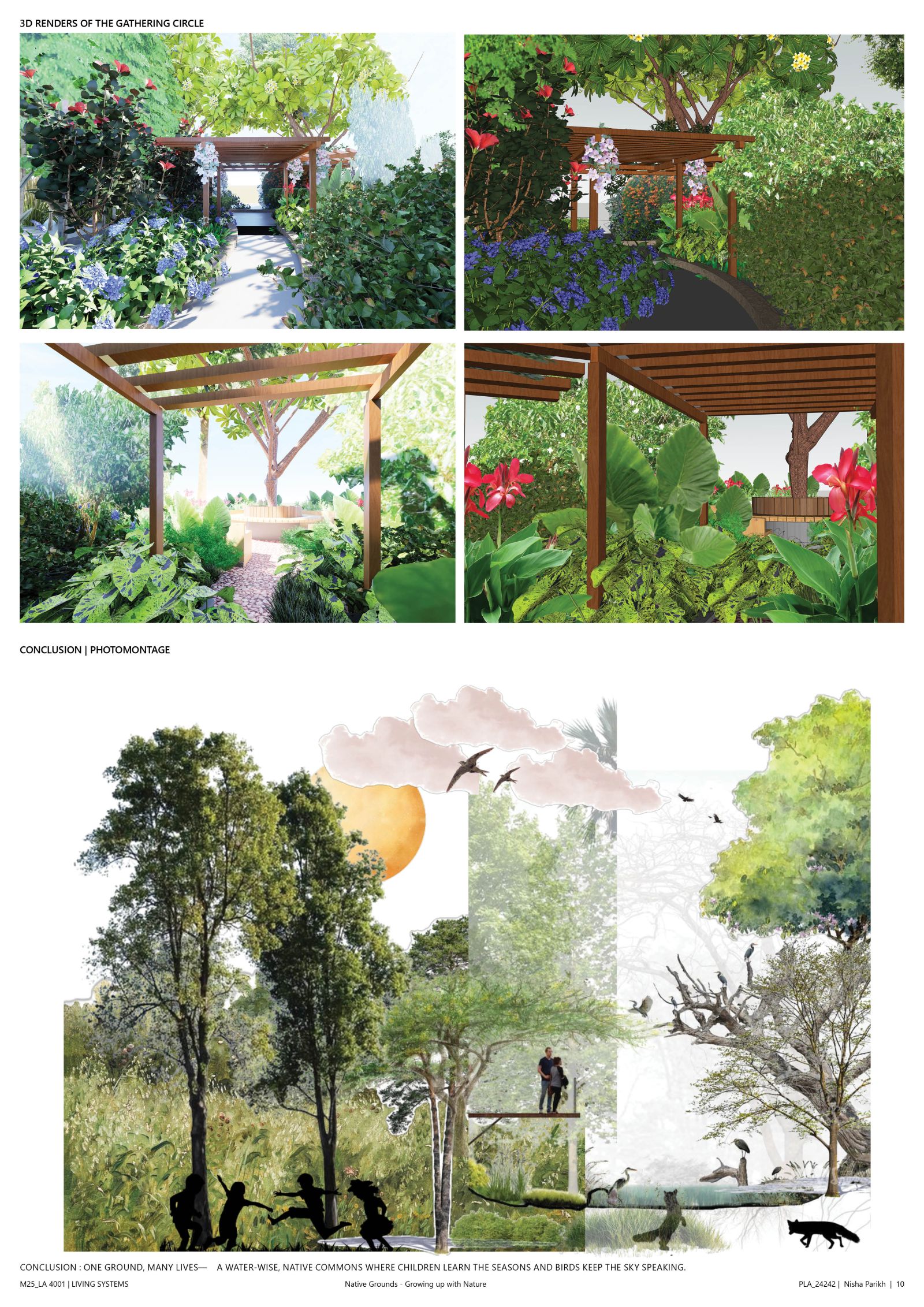
Along the Sabarmati’s edge, three families are shaping a single, living landscape where the next generation can grow, learn, and live in nature. The ground is planned as one cohesive experience—quiet, earthy, and refined—yet it gently holds the privacy of each home with its own garden patch. Shared spaces become a nature-based learning ground for children and a place for reflection, creativity, and seasonal rituals. Family traditions are folded in with care: a productive garden for cooking and tastings, a bonsai promenade for teaching, spaces for art-making, and bird-watching hides along habitat edges. The design respects seasonal water and river-edge ecologies, using planting as the primary spatial structure. And because life evolves, the masterplan allows the land to be subdivided in the future without breaking ecological continuity—so the landscape remains one, even as family needs change
View Additional Work