Your browser is out-of-date!
For a richer surfing experience on our website, please update your browser. Update my browser now!
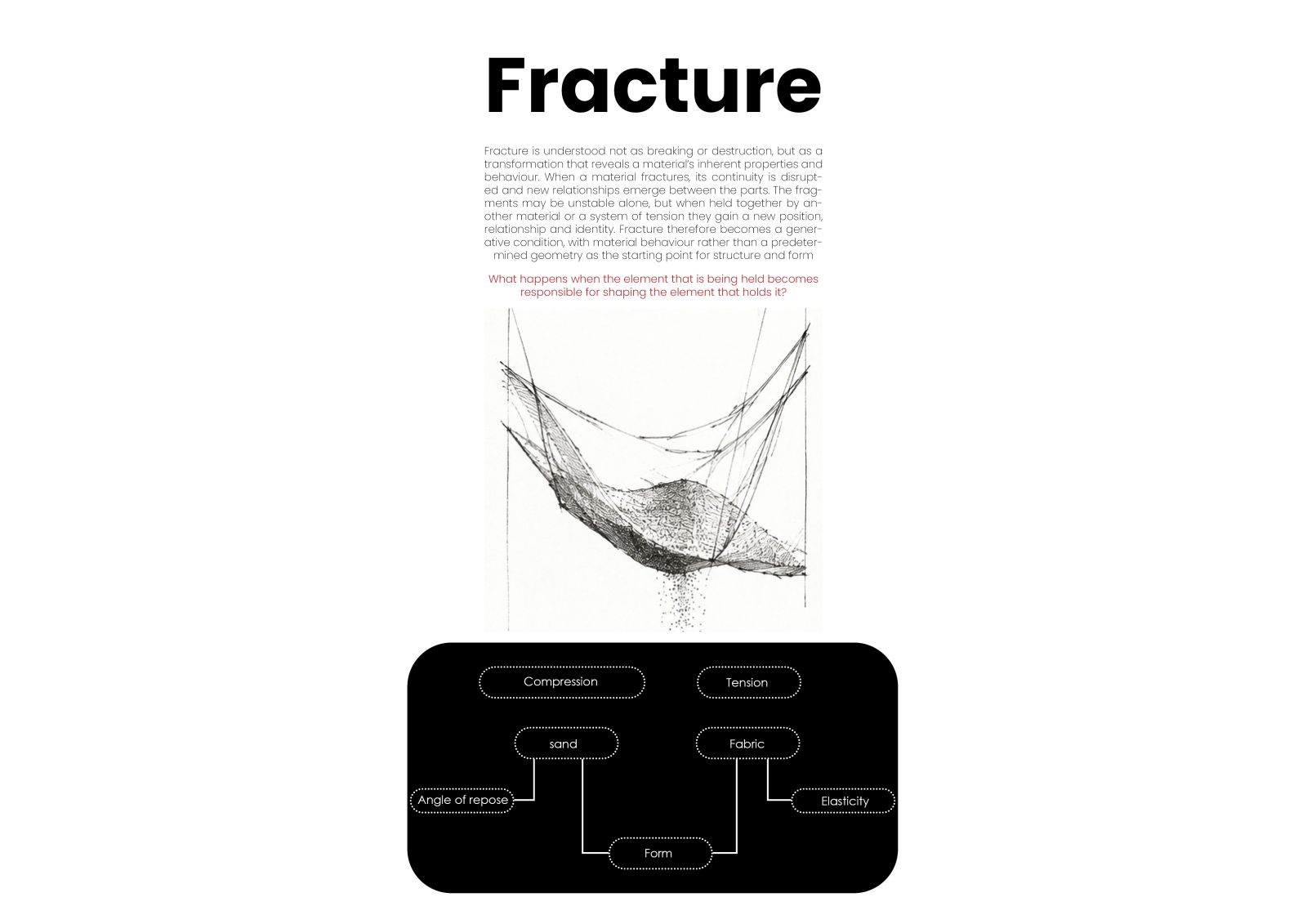
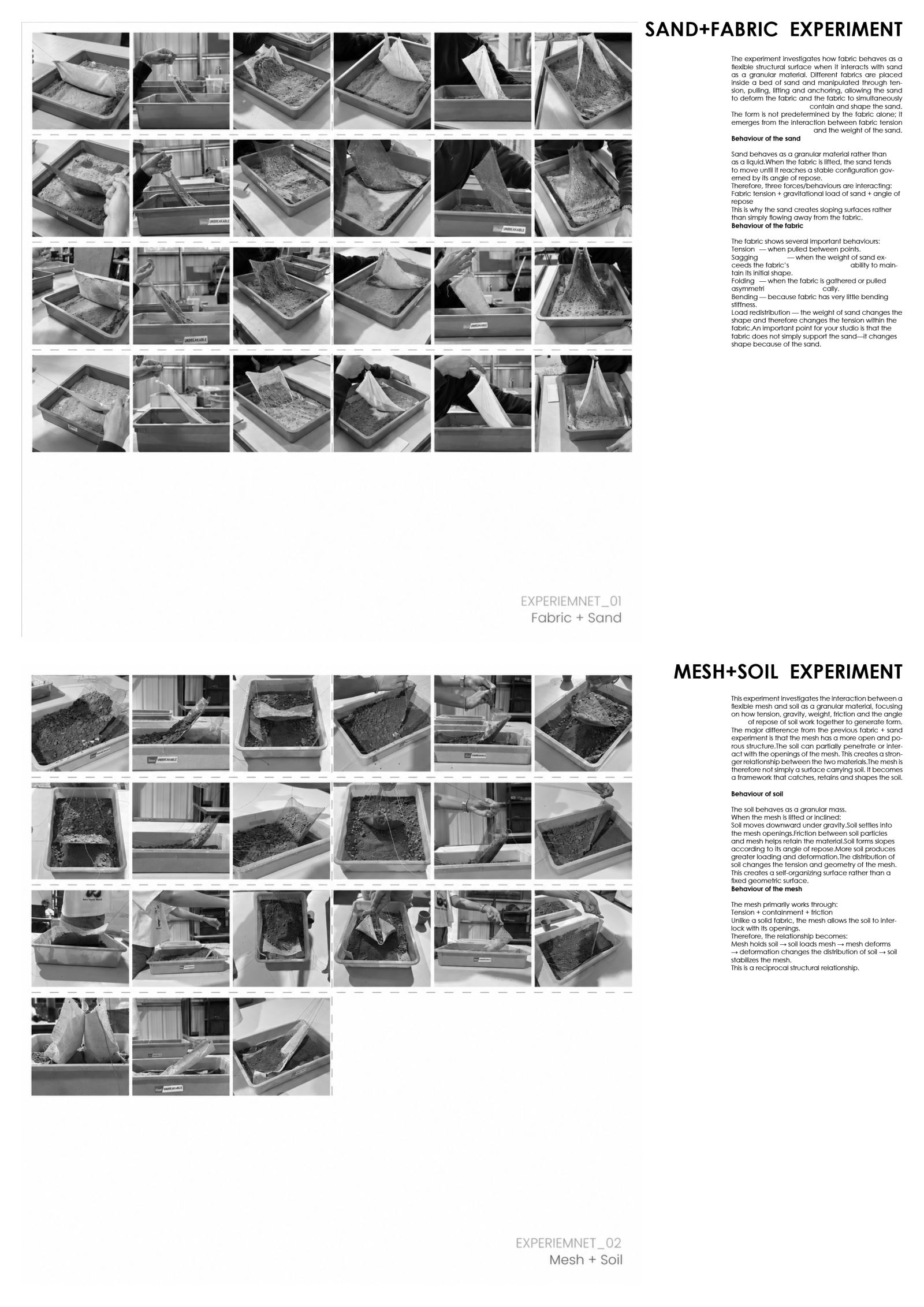
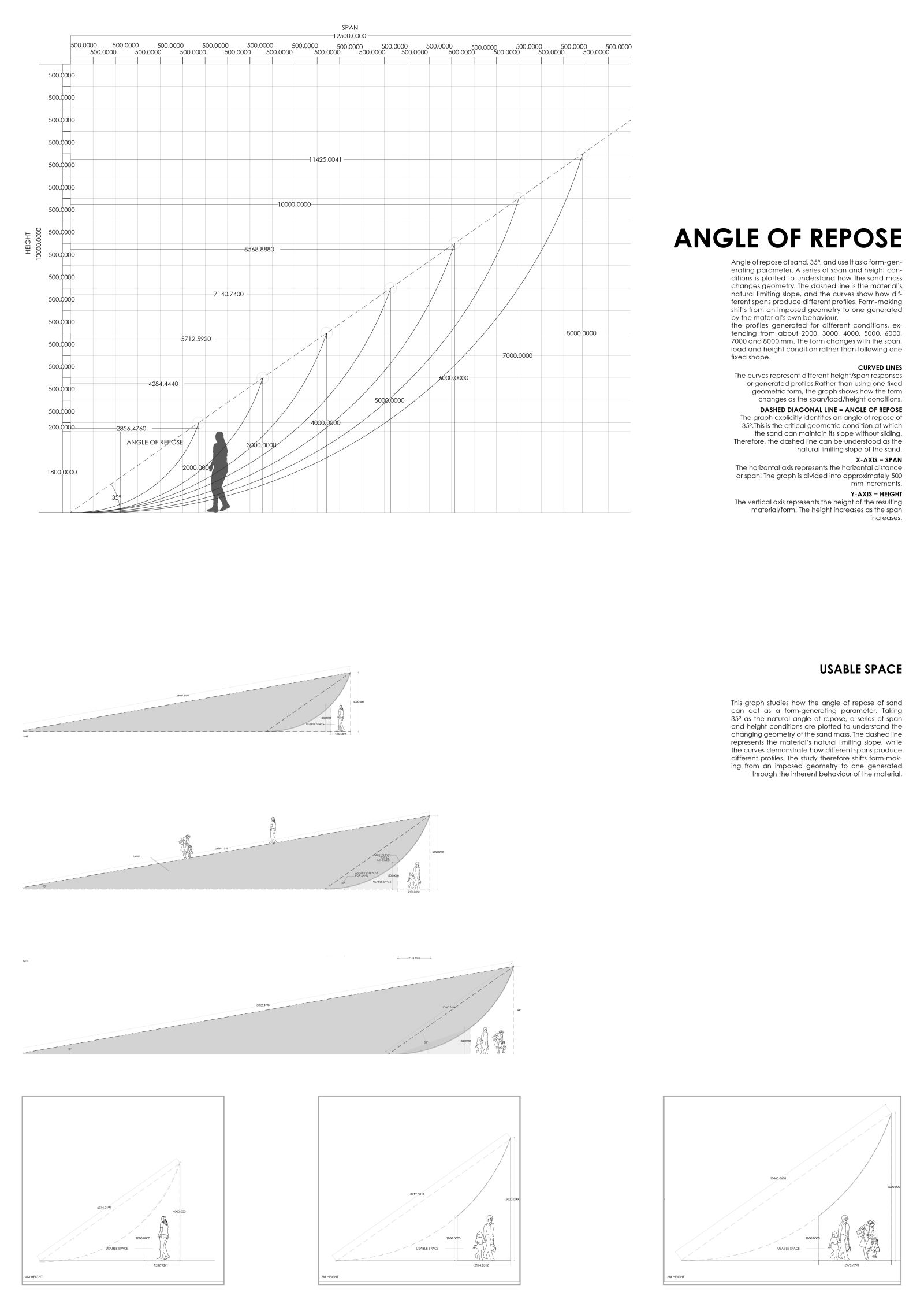
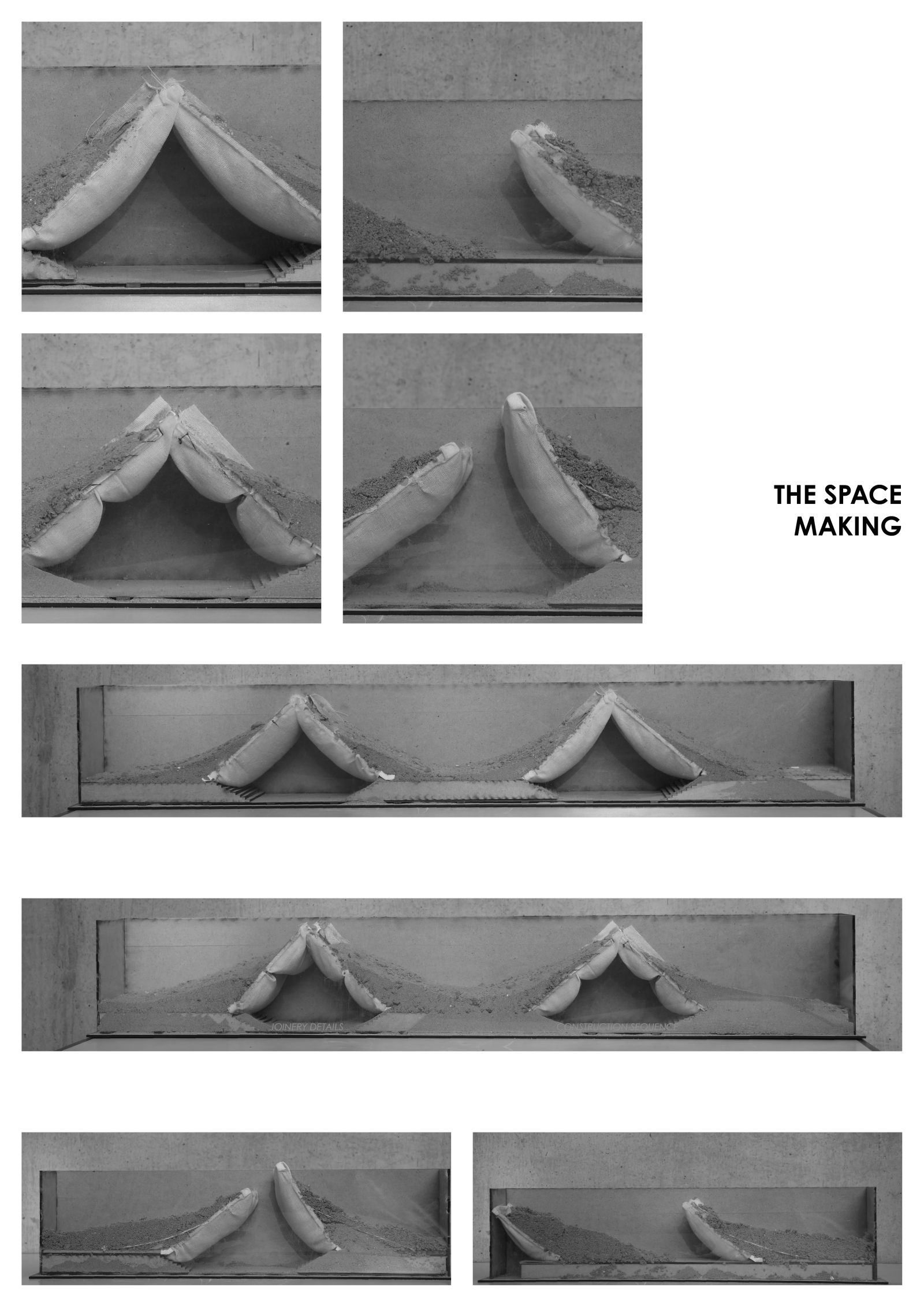
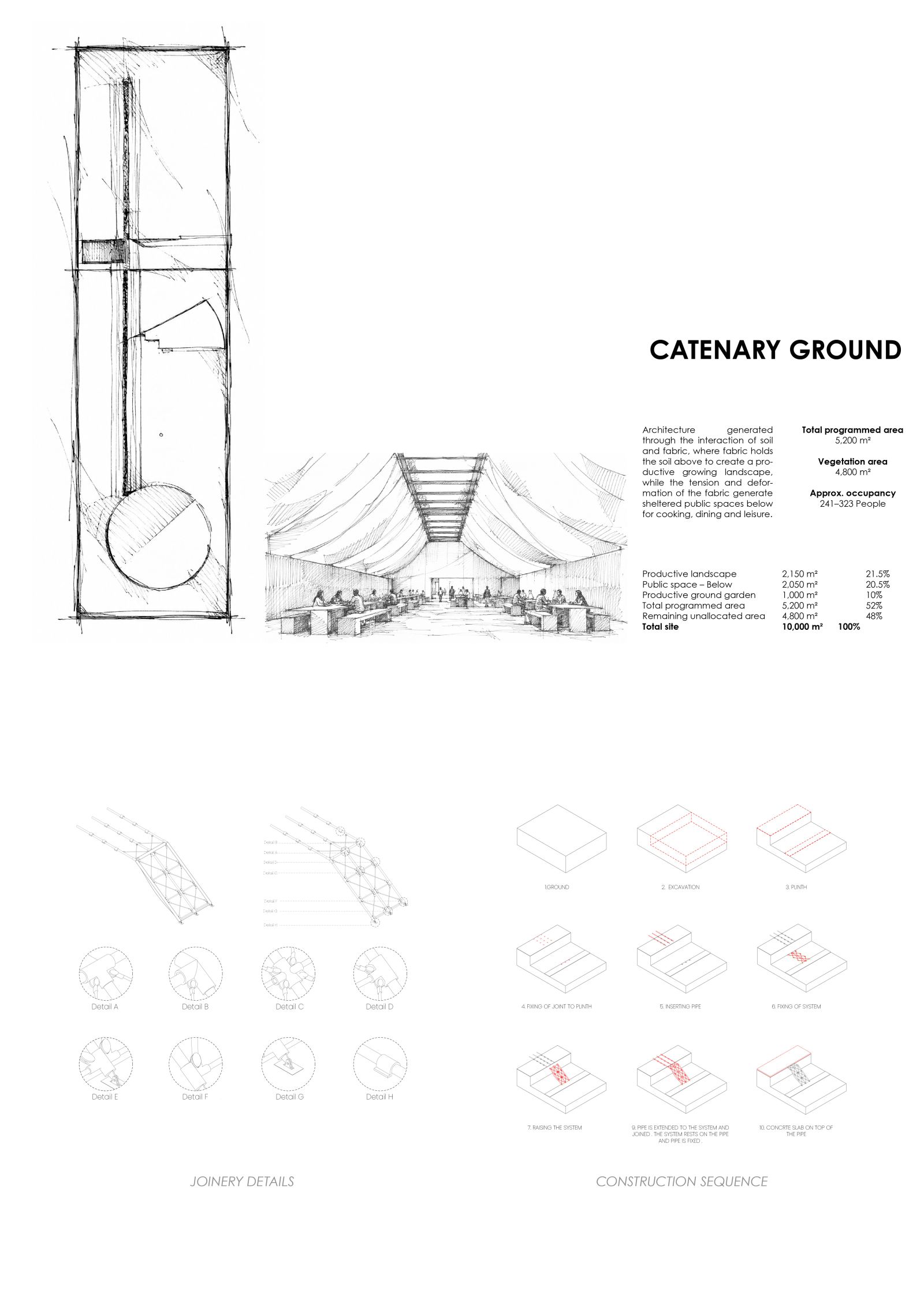
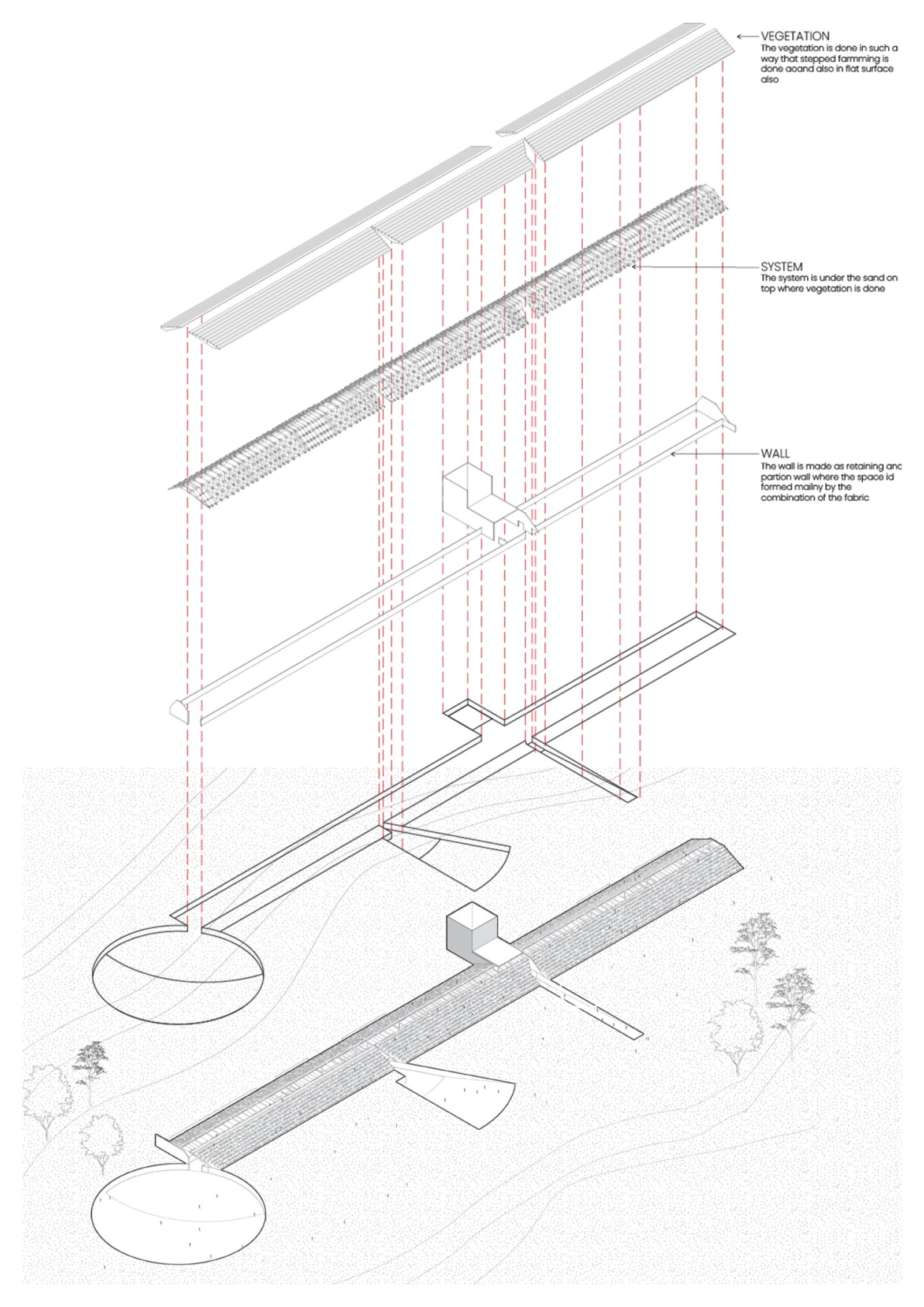
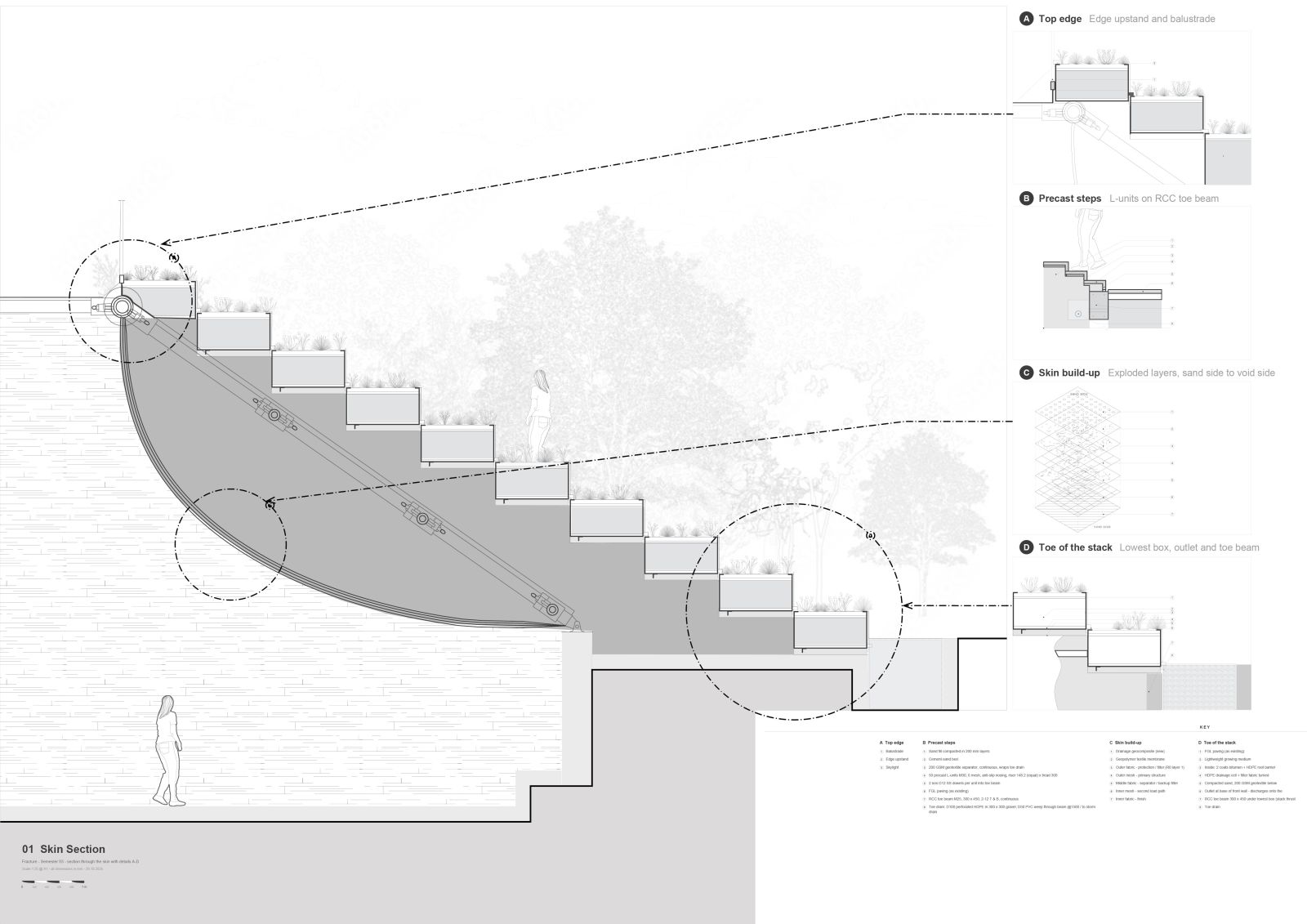
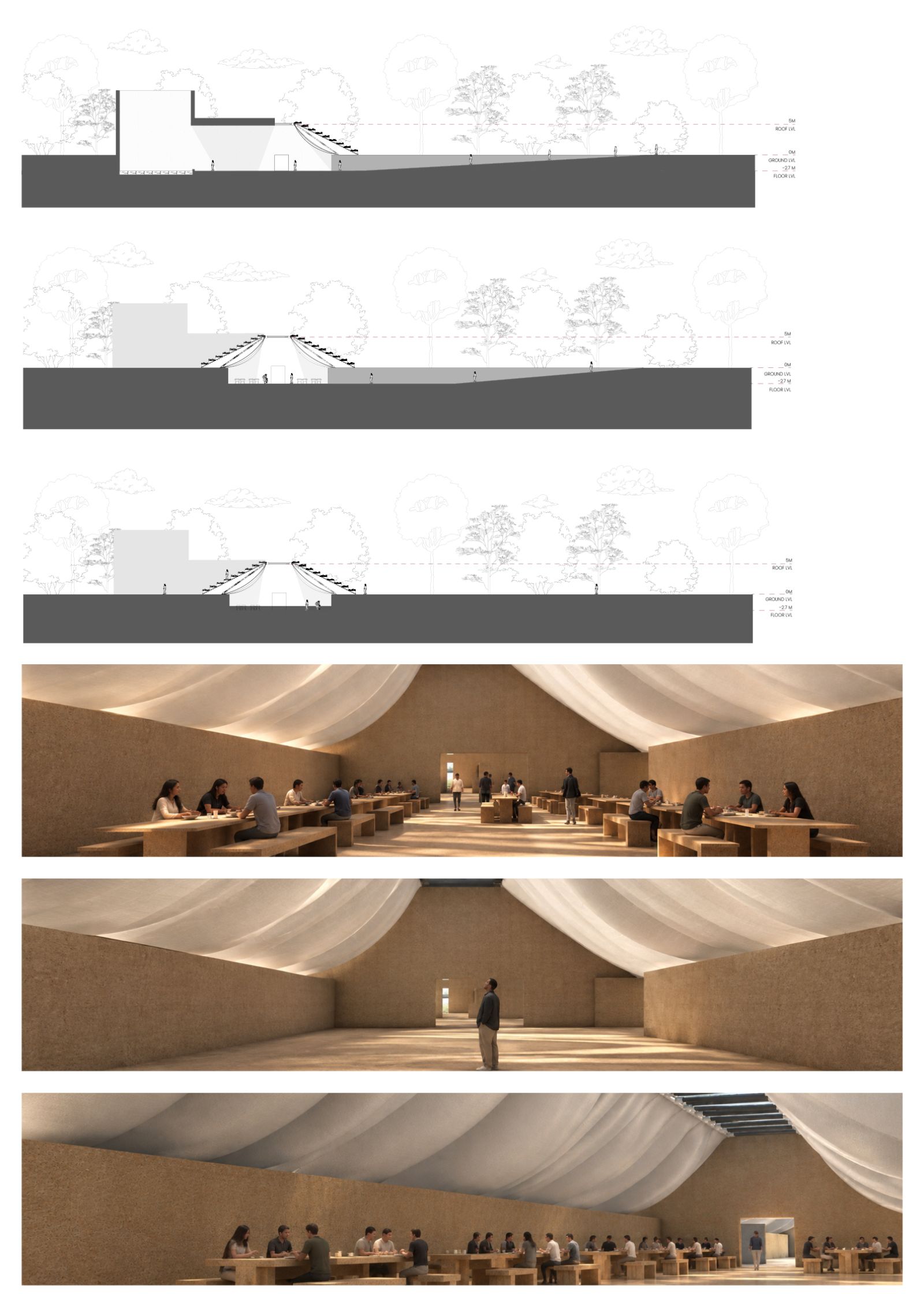
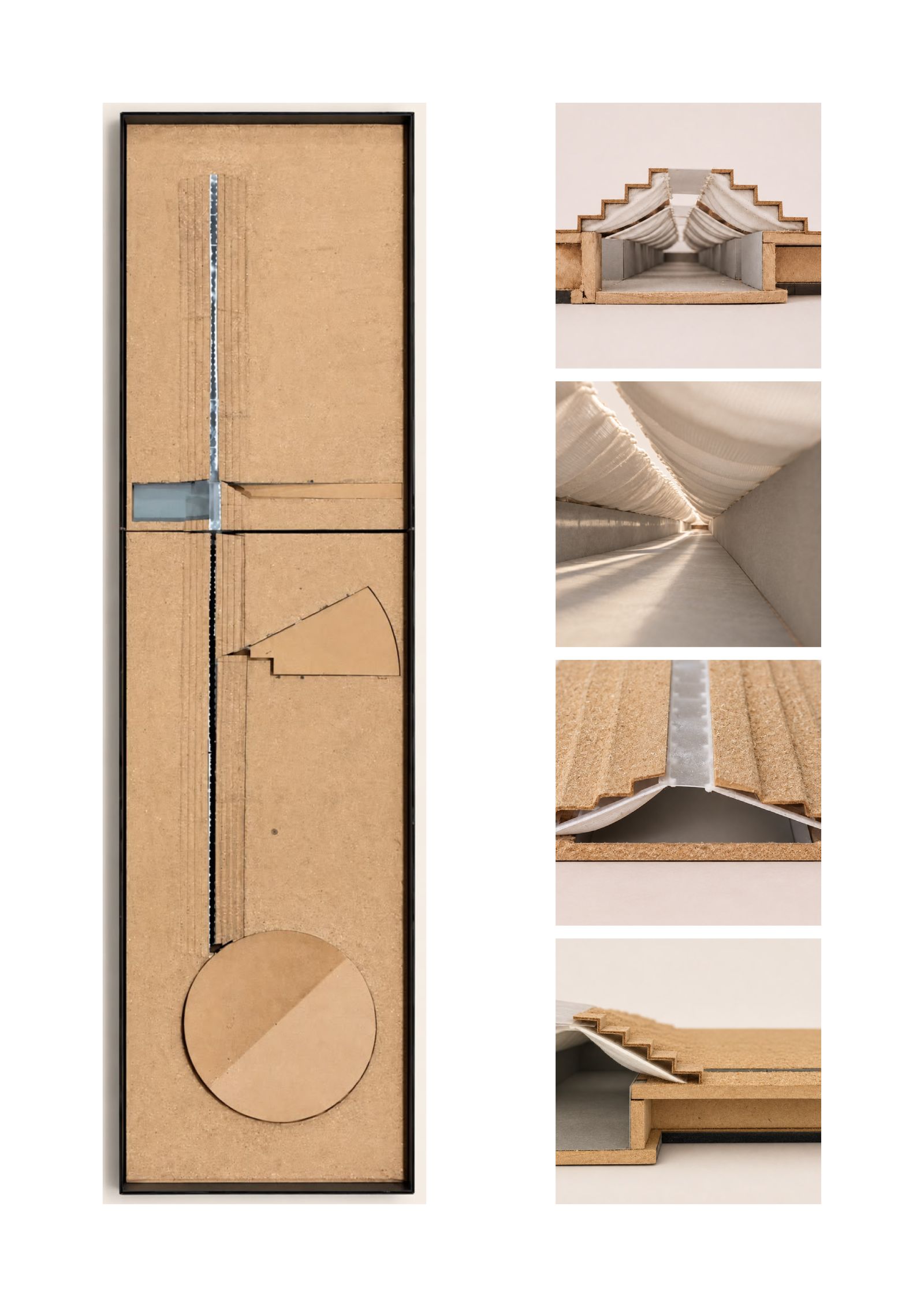
The project investigates how sand can generate architectural form when held by fabric. It began with studies of the angle of repose of sand, followed by experiments placing sand on different fabrics and soil on different meshes. These explorations helped identify the relationship between granular behavior, gravity, tension and deformation, leading to sand and fabric as the primary material system. The fabric acts as a flexible holding element, receiving the weight of the sand and deforming under its load. Its tension, stiffness and method of support influence the resulting geometry, while the sand’s natural behaviour determines how it settles and distributes itself. Rather than imposing a predetermined shape, the experiment explores how form can emerge from the interaction between material properties and forces. The investigation then moves towards architectural application, translating the material system into a structural framework using steel members, edge connections and supporting elements. Digital simulations using Rhino, Grasshopper and Kangaroo further explore fabric deformation under distributed loads and the influence of boundary conditions. The project ultimately proposes an architecture in which material behaviour becomes the generator of form. By bringing together gravity, tension, containment and structural support, it explores the potential of a simple relationship between sand and fabric to create spatial experiences that connect people with material, landscape and one another.