Your browser is out-of-date!
For a richer surfing experience on our website, please update your browser. Update my browser now!
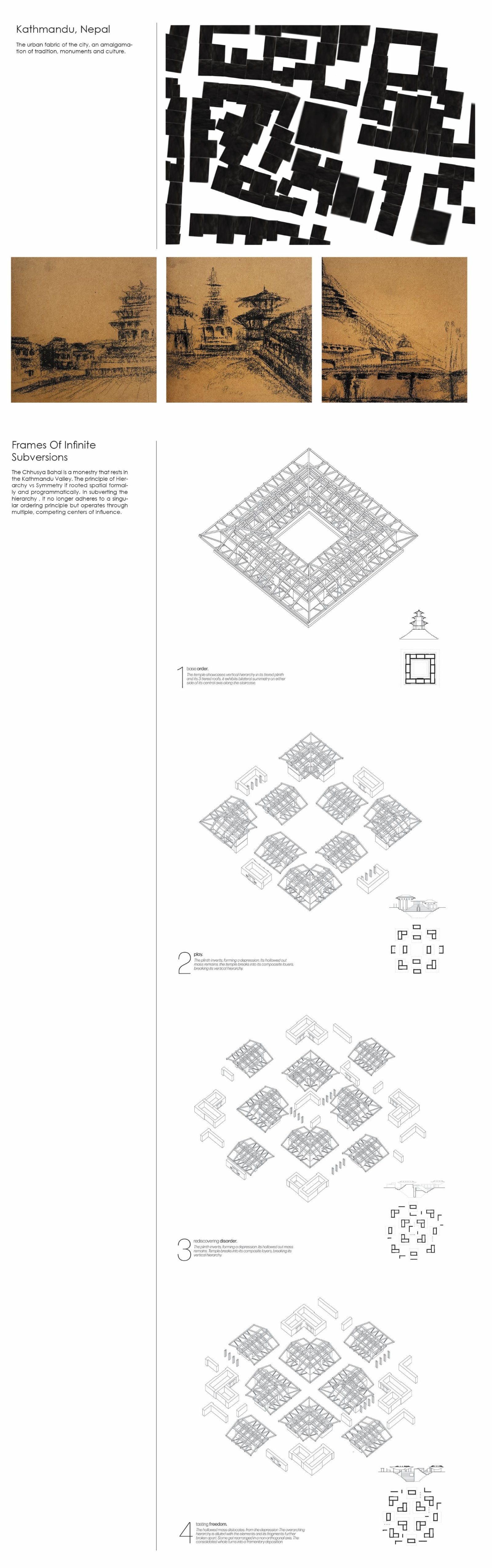
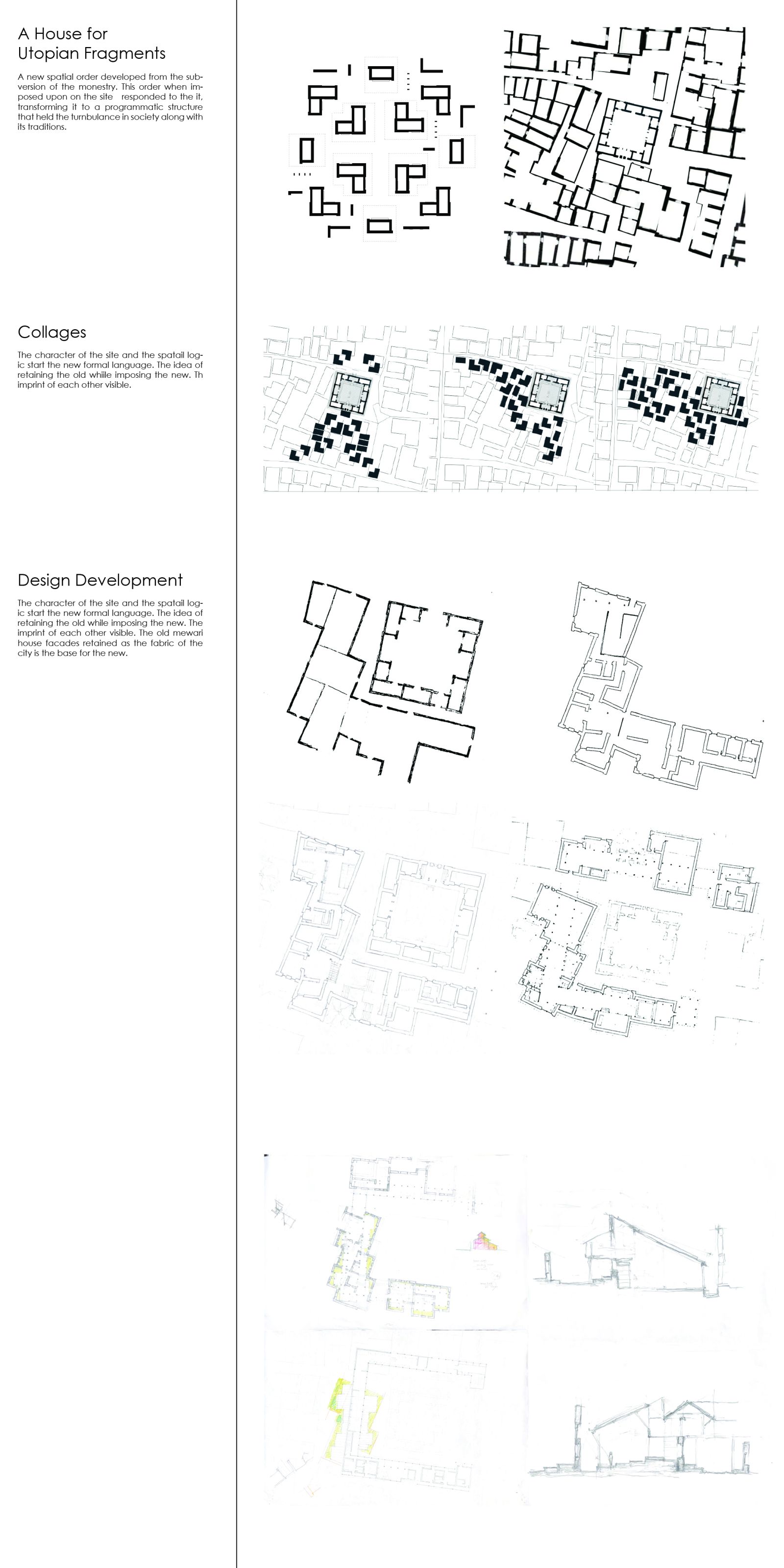
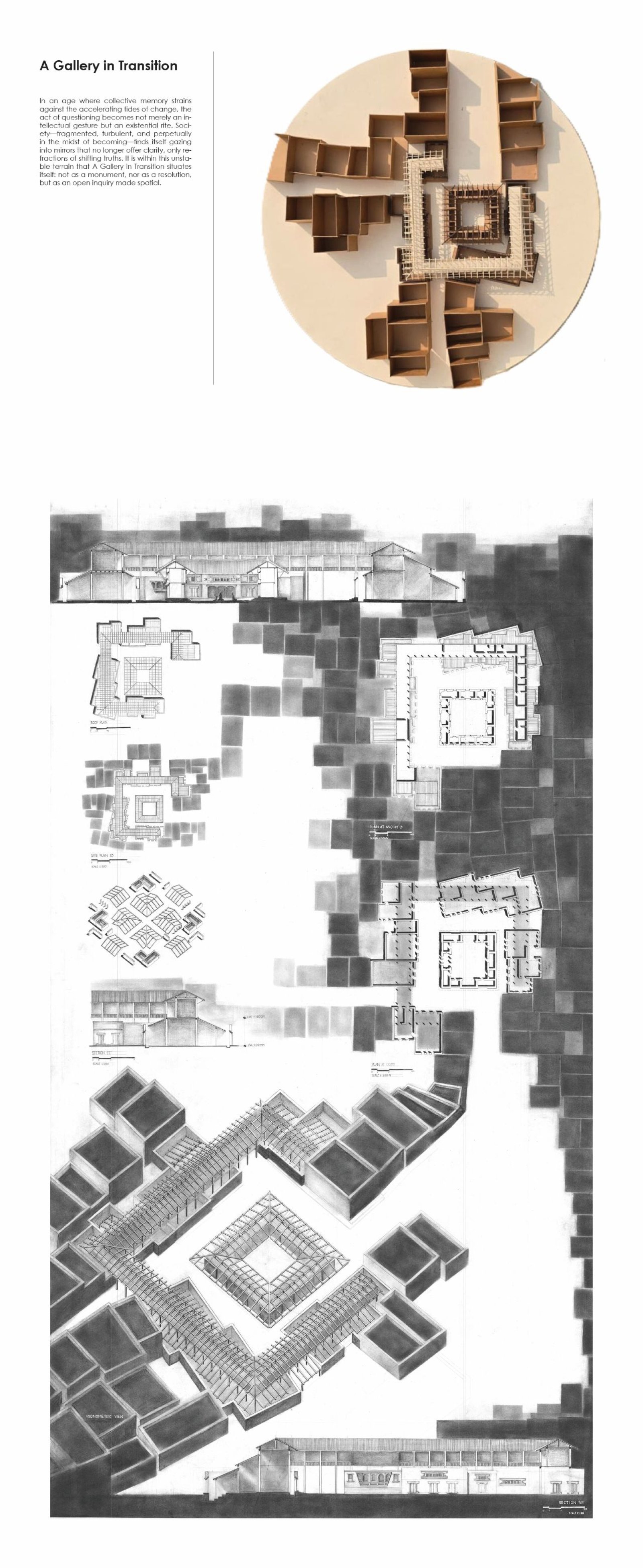
In an era in which collective memory is increasingly pressured by change, the act of questioning extends beyond mere intellectual exercise. Society, peers into mirrors that no longer promise clarity. It is within this uncertainty that this project positions itself: as a spatial inquiry into what it means to inhabit a world in continual becoming. Set within the Kathmandu Valley, the project anchors itself beside Chhusya Bahal, a monastery whose stillness holds centuries of ritual, gravity, and order. Around it, a dense weave of old Mewari houses—disordered, intimate, and perennially alive—presses against its edges. Their chaos seems to tug at the monastery’s symmetry, as though yearning for release; their proximity reveals a latent dissonance between inherited formality and the unbounded restlessness of urban life. It is from this friction between order and disorder—that the project emerges. A Gallery in Transition becomes a stage where these opposing forces confront one another: the monastic and the mundane, the still and the unsettled, the old and the becoming. Conceived as a living cultural engine for youth and community, the project refuses the idea of a singular, fixed centre. Instead, it offers a framework in which the city’s memories may be curated, its present tensions witnessed, and its societal turbulence metabolized into reflection. The architecture unfolds in two intertwined strata. On the ground, held within the thick adobe walls of the Mewari houses, the programme absorbs the pulse of the city. Here lie the collective spaces: rooms for discourse, shared workshops, gathering halls. The bookstore, a pull inward-a meandering path unfolds as a living gallery, echoing the city’s own rhythms of compression and release. The mandapa at the edge of the streets highlights the contrast between the choas of the outside vs the interiority felt by the layered roofs. These spaces retain the gravity of the old fabric; they hold the city’s restlessness close, Above this, a new architecture ascends—light and porous,. Rising from the old walls, the structures hover over the urban grain, offering points from which to look back at the city that shaped them. These elevated rooms become places of rest and reflection. Guesthouses and cafeterias. The chaos below becomes legible; the city is not escaped but understood. What is heavy on the ground becomes lighter above, a spatial hierarchy that mirrors the human one—a movement from collective urgency to individual reflection. Together, these layers form a field of reflective episodes—spaces that question the narratives they inherit and the futures they anticipate. Chance is permitted to intervene, allowing the architecture to remain partially unbound, shaped as much by interruption as by intention. The project becomes an open choreography of transitions: between levels, between states of mind, between past and possibility.