Your browser is out-of-date!
For a richer surfing experience on our website, please update your browser. Update my browser now!
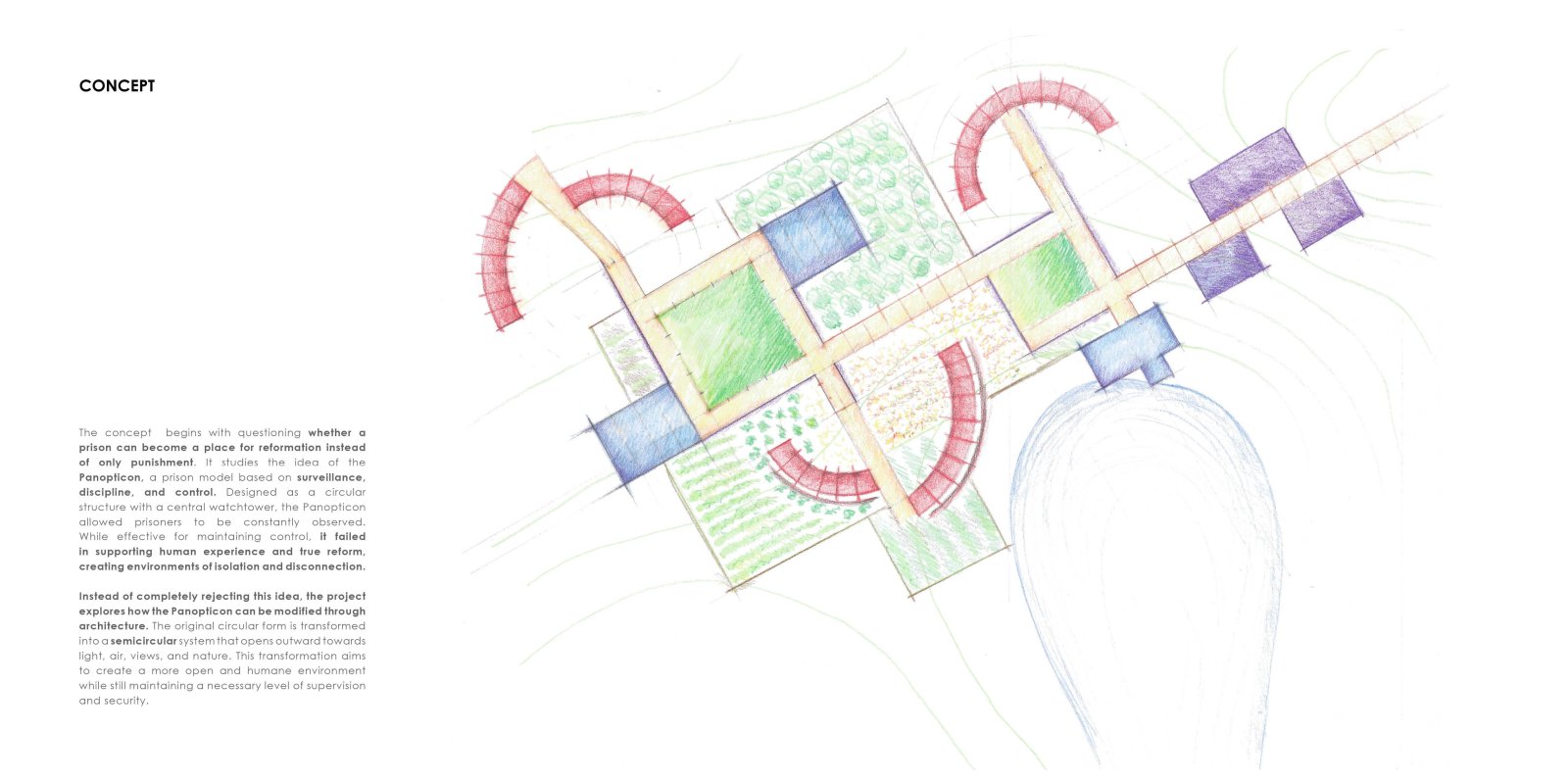
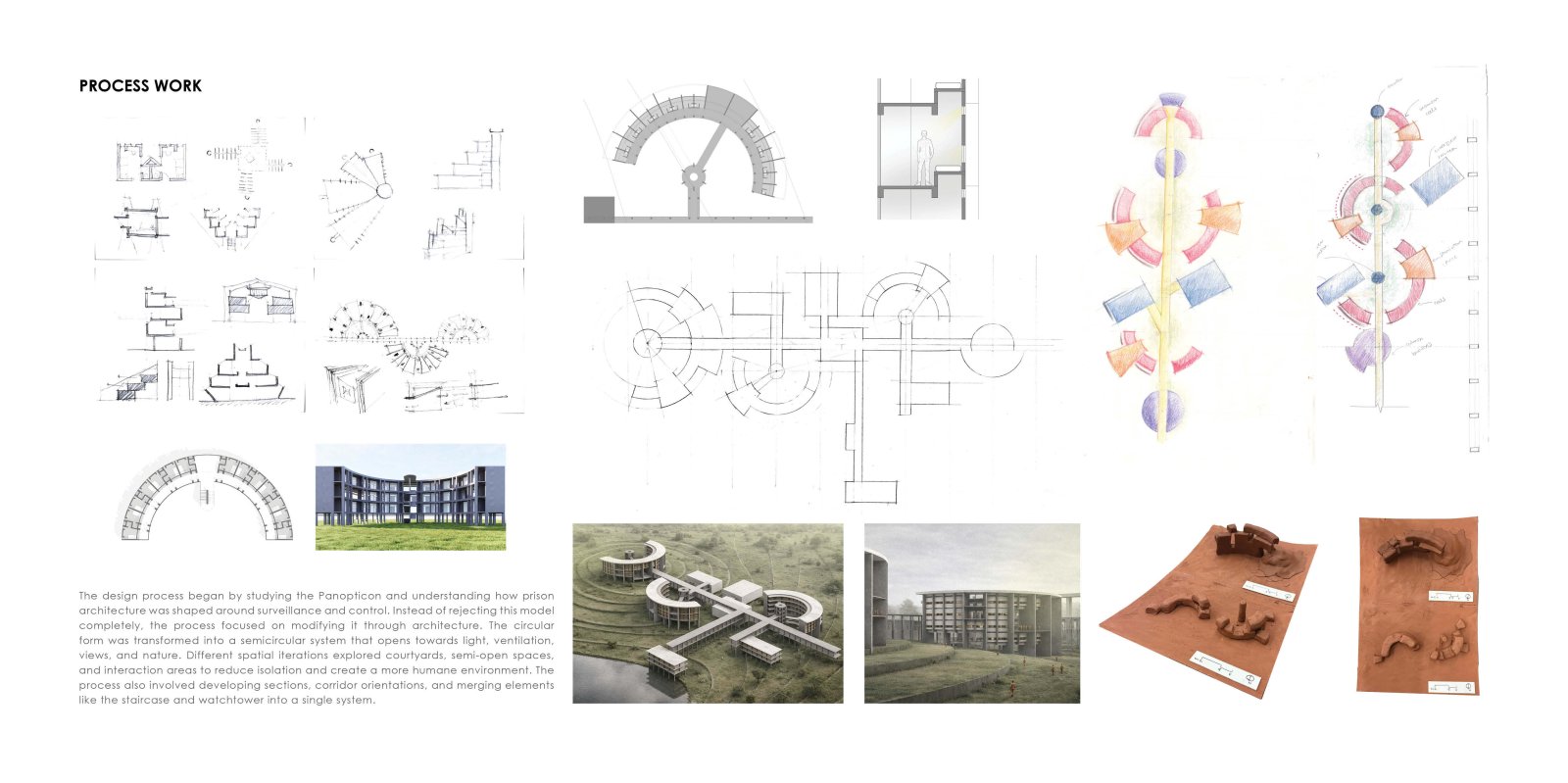
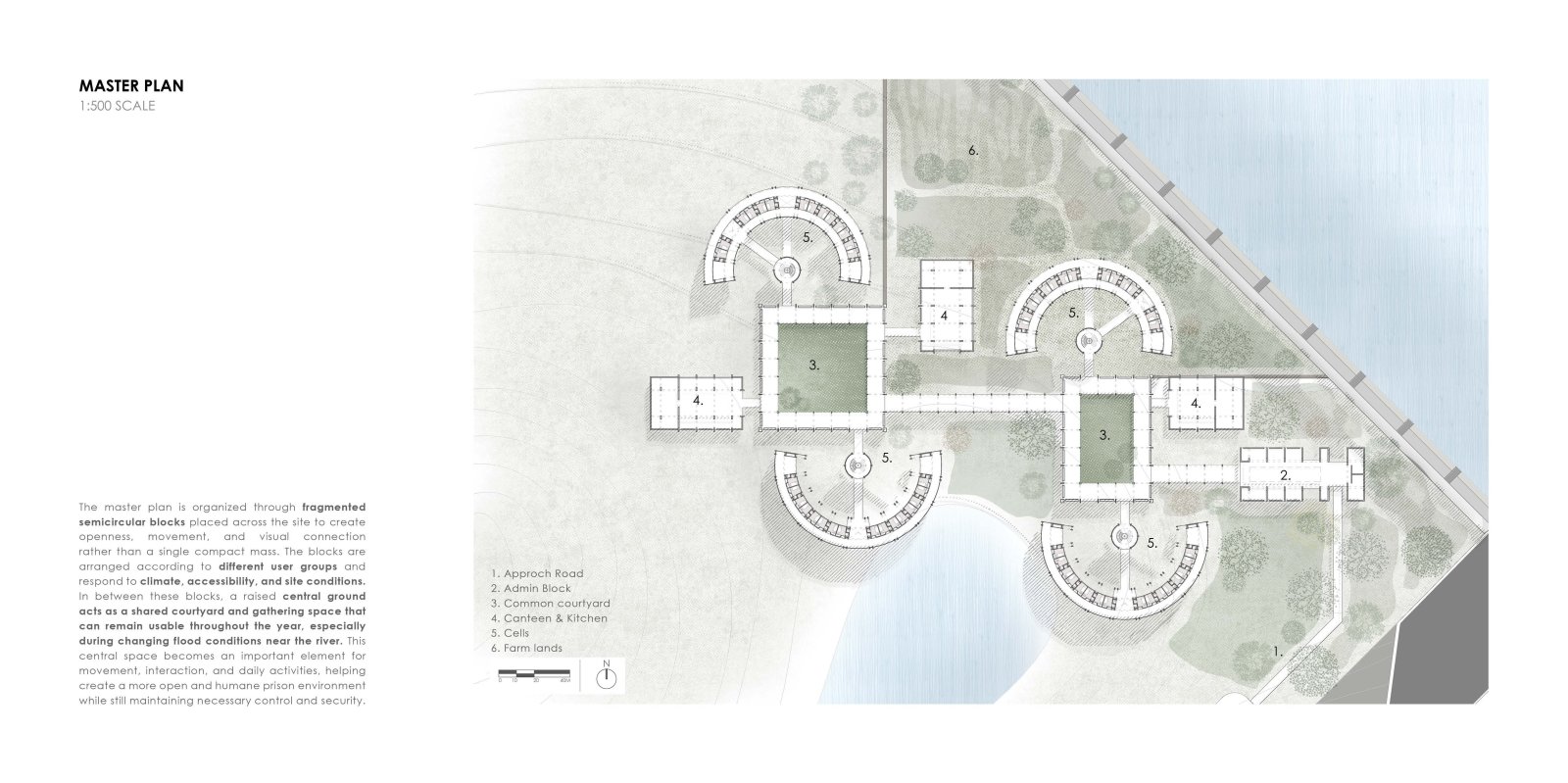
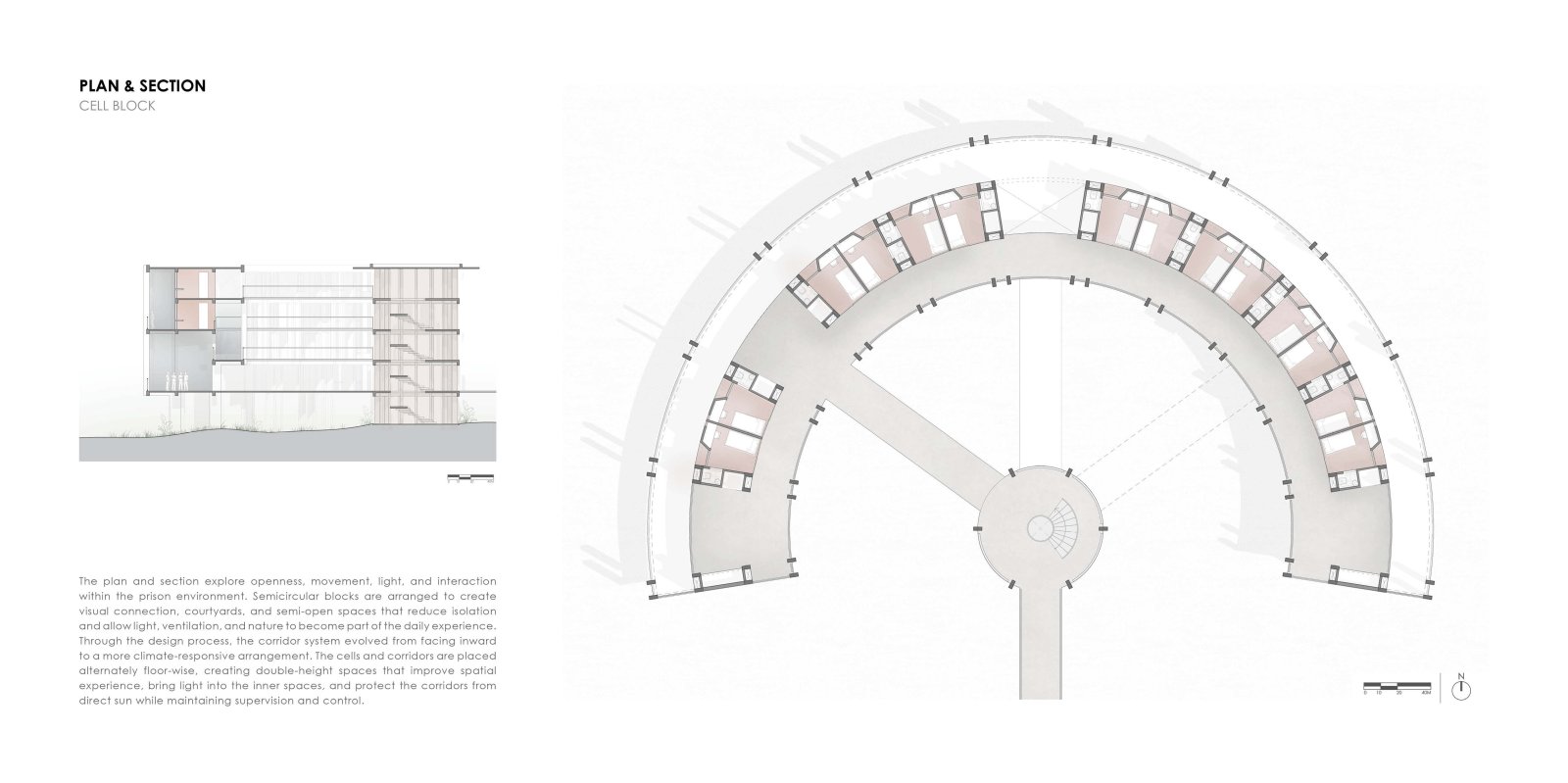
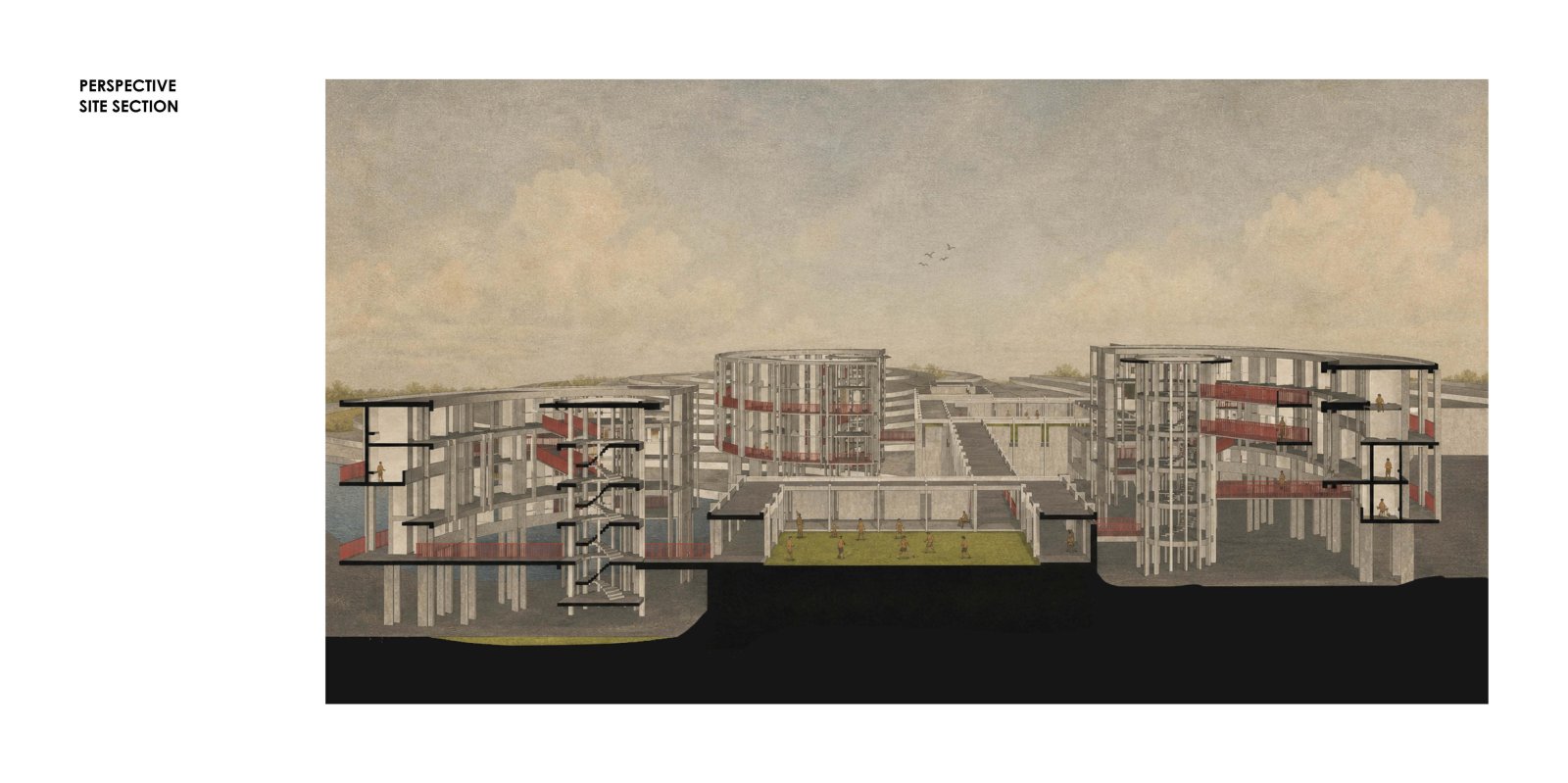
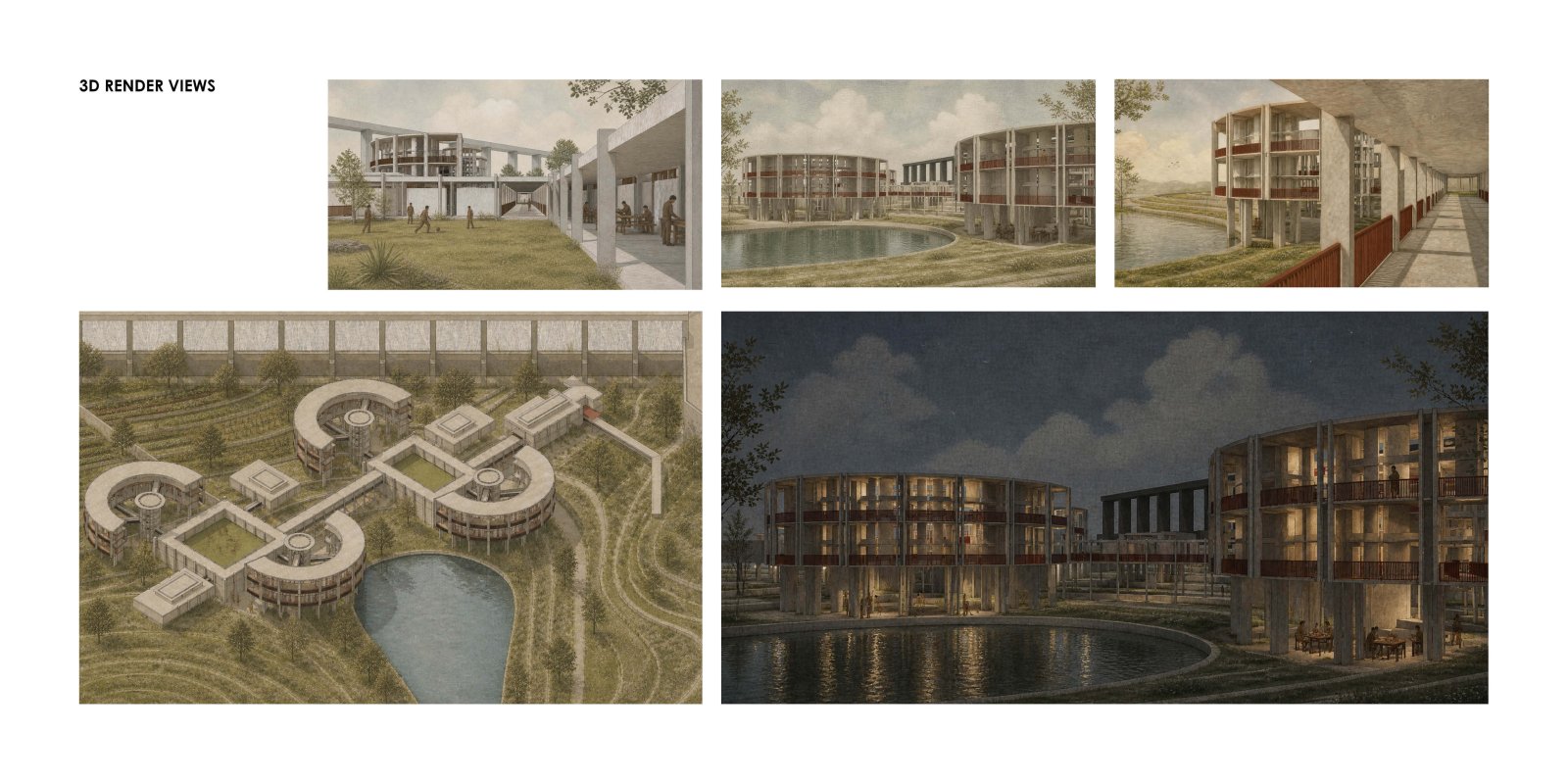
The project explores the question of whether a prison can become a place for reformation rather than only punishment. It begins by studying the idea of the Panopticon, a prison model developed around surveillance, discipline, and control. Designed as a circular structure with a central watchtower, the Panopticon allowed guards to constantly observe prisoners. For a long time, this model influenced the way prison architecture was imagined and designed. However, while it was successful in maintaining control, it failed in terms of human experience and its ability to support true reform. The system created isolation, lack of communication, constant psychological pressure, and disconnection from nature and everyday social life. The project responds to these issues by rethinking and modifying the Panopticon rather than completely rejecting it. The original circular form is transformed into a semicircular configuration that opens outward towards the landscape. This shift allows natural light, ventilation, views, and a stronger connection to the environment to become part of the daily experience within the prison. The design introduces courtyards, semi-open spaces, workshops, and shared activity areas that encourage interaction, routine, and engagement. These in-between spaces create moments of pause and reduce the feeling of isolation within the system. The project also explores a balance between supervision and openness, maintaining necessary levels of security while creating a more humane environment. Through spatial experience, climate response, and social interaction, the project investigates how architecture can contribute to the process of reformation and rehabilitation.