Jayesh Chetan Rajebhosale

LA4008

BARRIERS TO BRIDGES

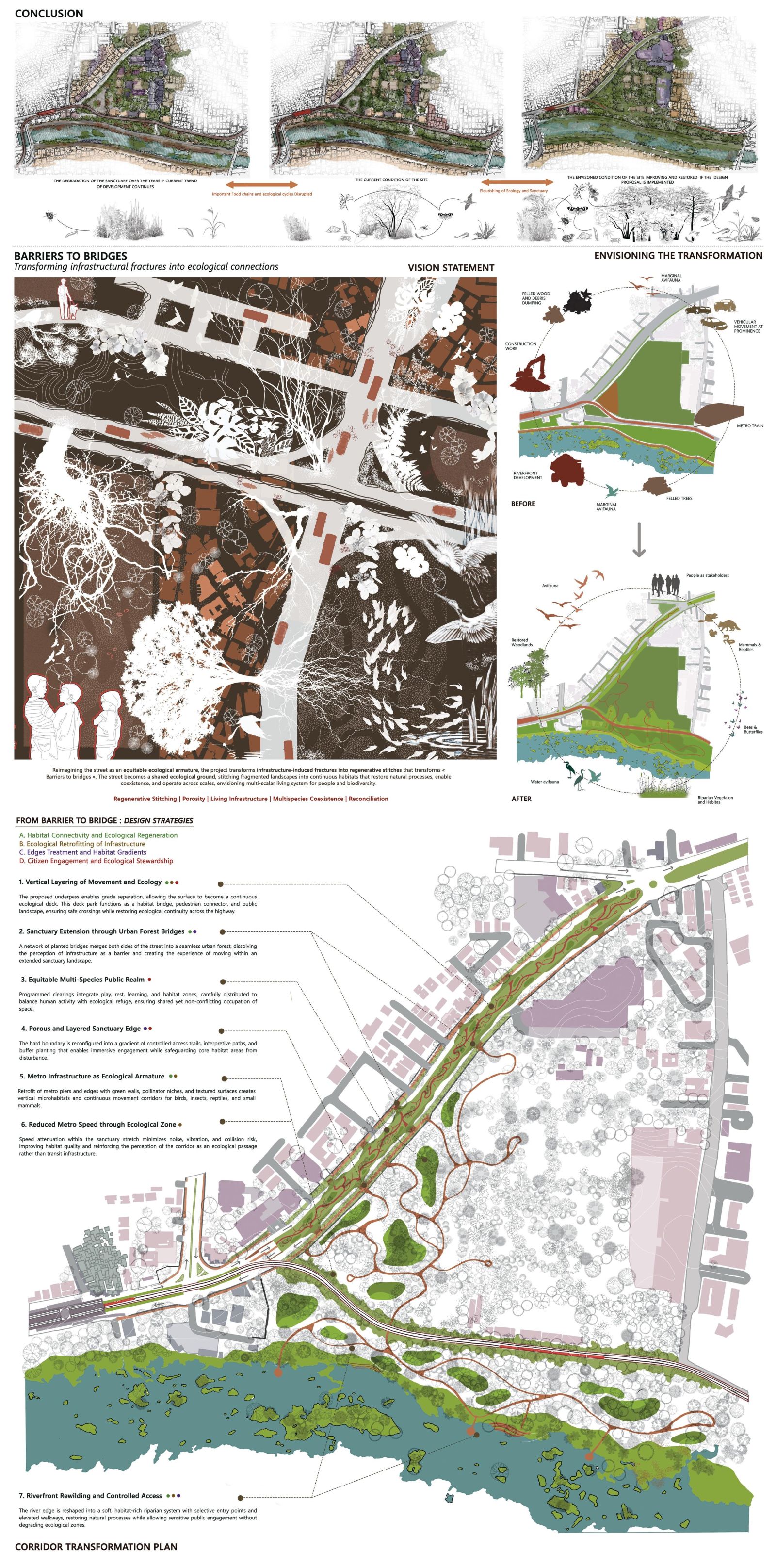
In cities fractured by roads, infrastructure and rapid urban growth, the project imagines landscape as a living stitch; one that heals divides between people, ecology and place. Emerging from the edges of the Dr. Salim Ali Bird Sanctuary, it transforms  urban fragments into a continuous corridor of movement, habitat and experience. Through reclamation and landscape interventions the proposal reclaims infrastructure not as a barrier, but as an opportunity for coexistence. Acting as a “stitch to the divide,” the proposal transforms hard infrastructural edges into resilient, habitat-rich public landscapes that support biodiversity, water resilience, cultural engagement and future climate-responsive urban development.

View Additional Work
Report Content

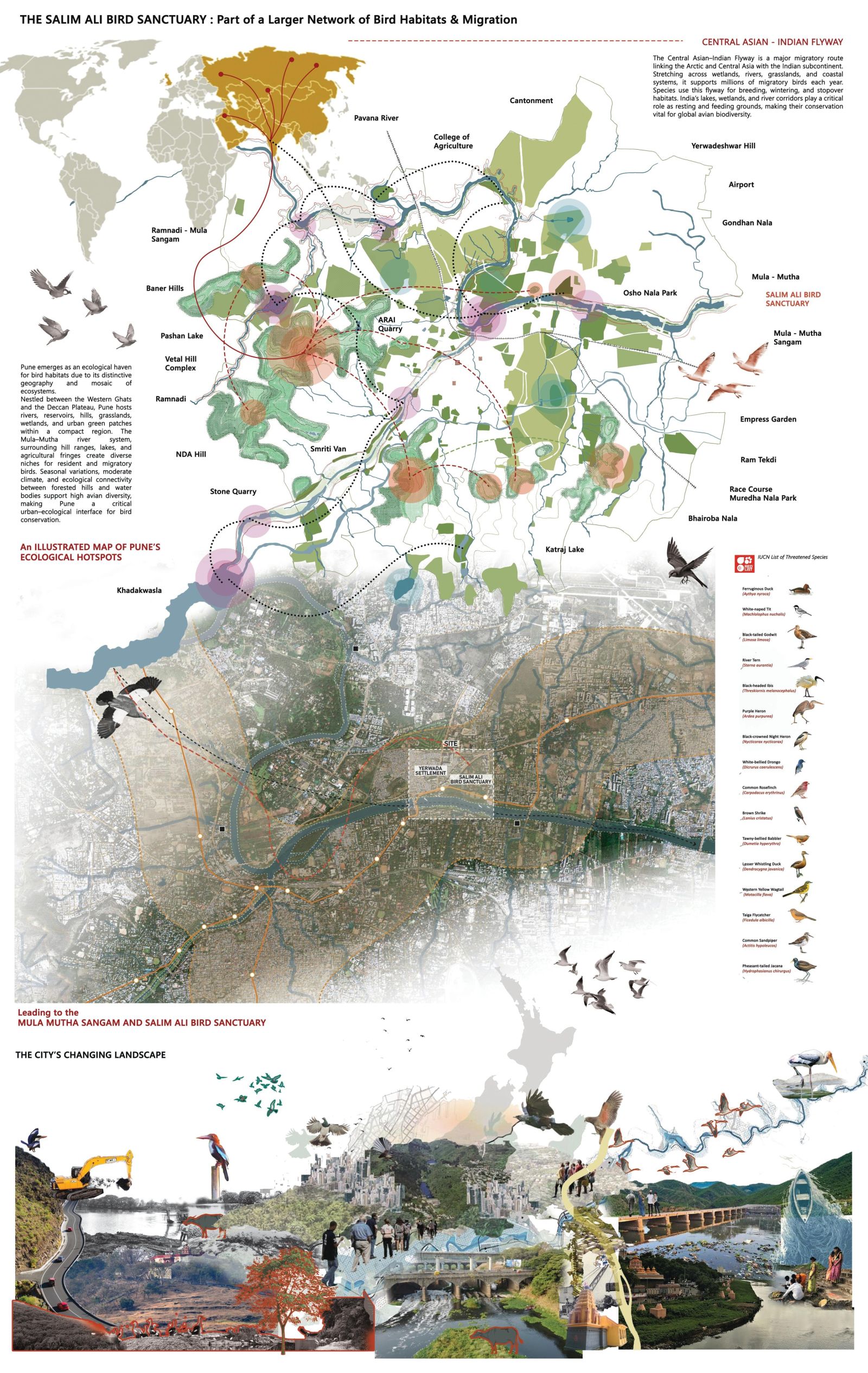
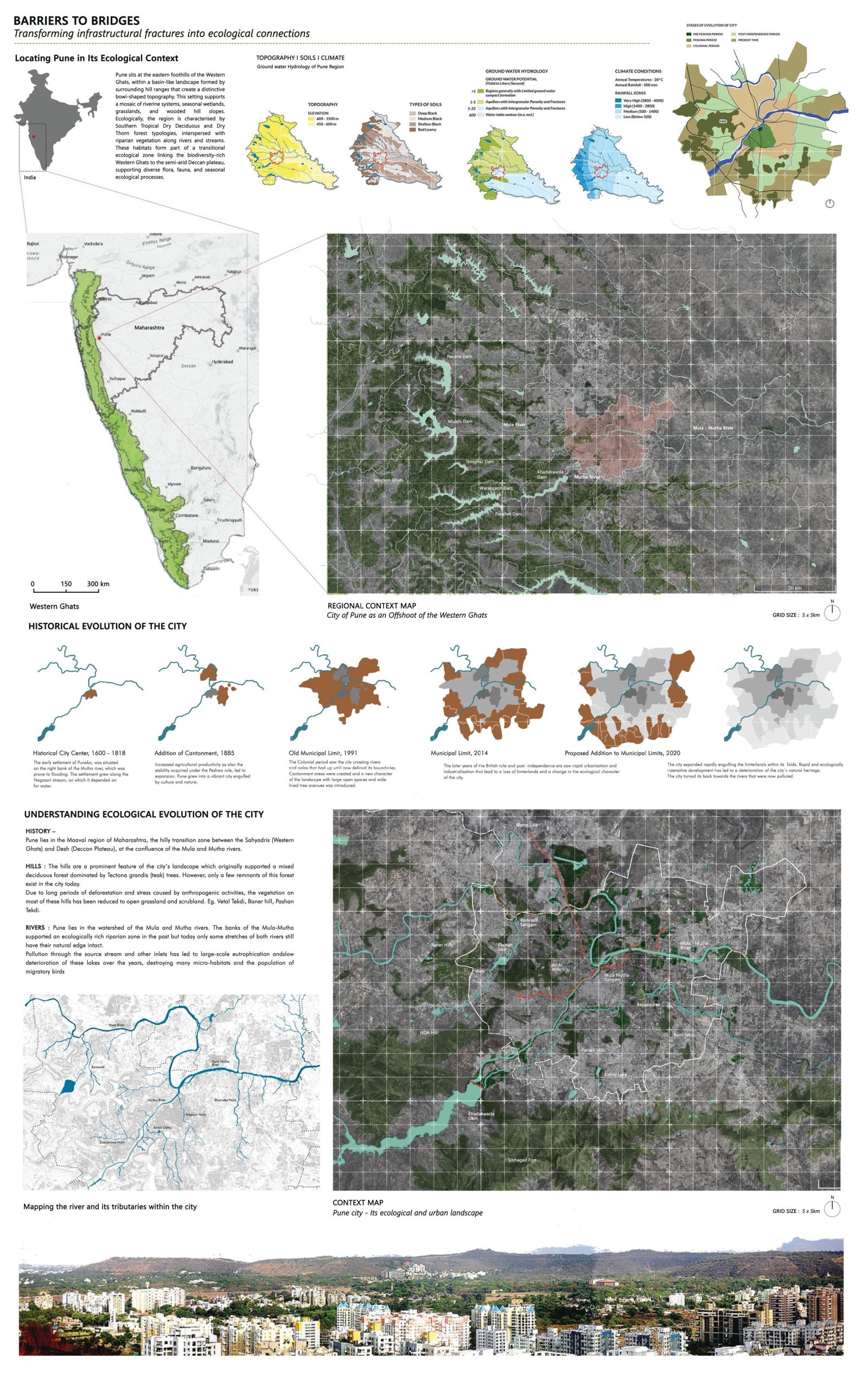
INTRODUCTION TO CONTEXT I Situating Pune within its larger ecological landscape, revealing the relationships between terrain, water systems and urban growth

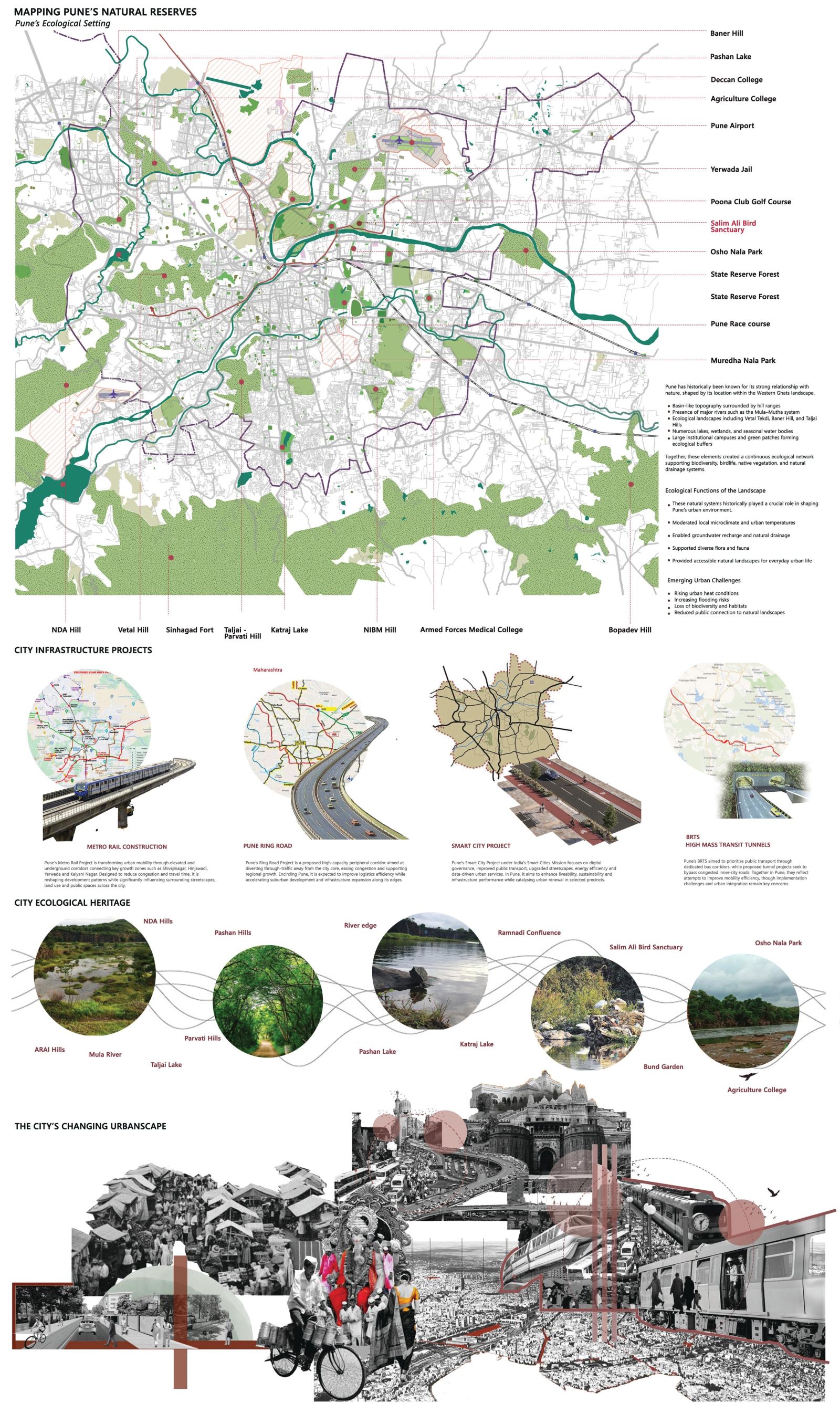
MAPPING PUNE’S URBAN & ECOLOGICAL FABRIC I Tracing the layered coexistence of built form, biodiversity and the evolving ecological identity of Pune

PUNE — A BIRD HAVEN I Understanding Pune as part of a larger migratory network and an important refuge within regional ecological systems

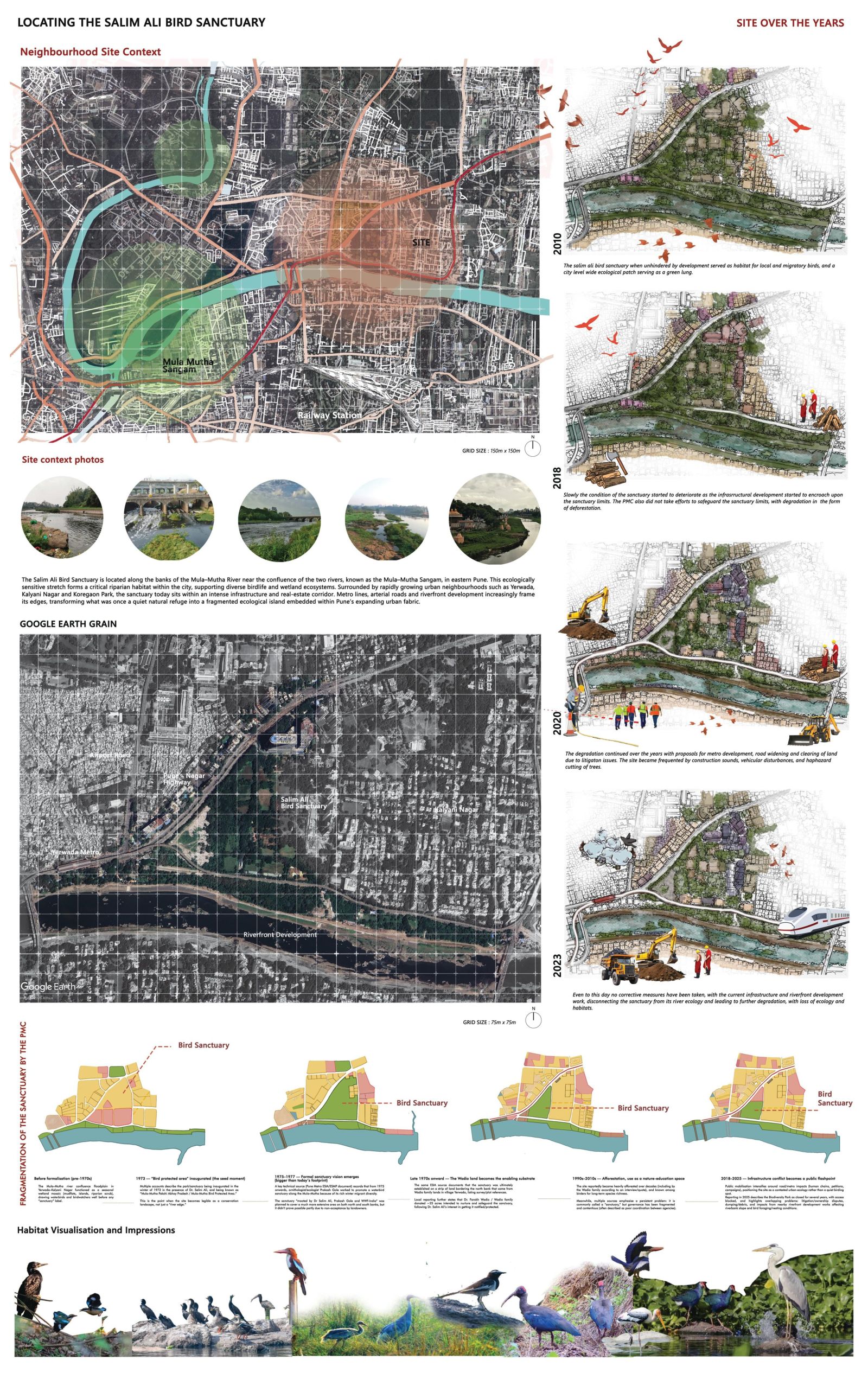
LOCATING DR. SALIM ALI BIRD SANCTUARY I Reading the sanctuary through its surrounding urban context, histories, transformations and ecological significance

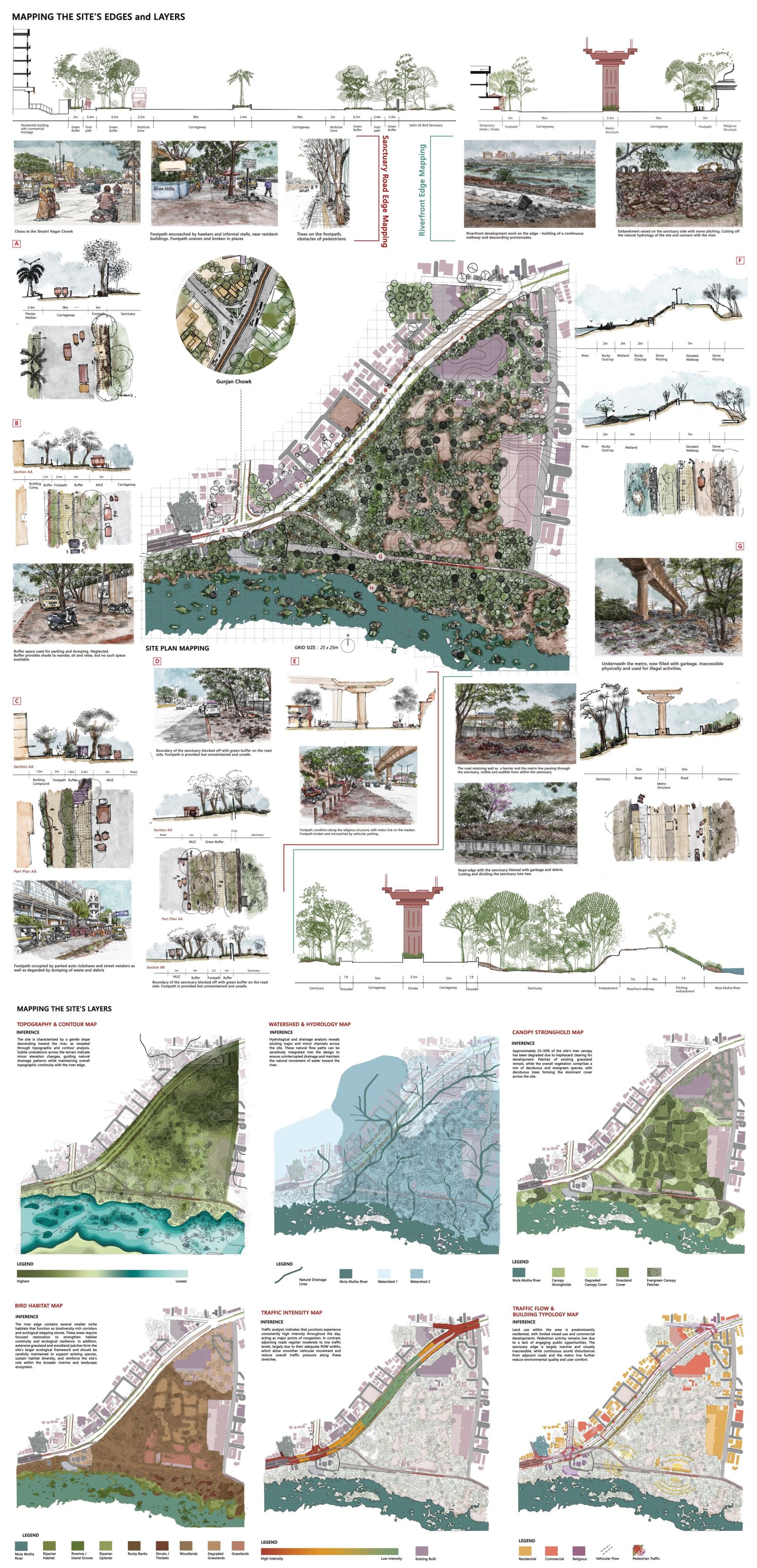
SITE MAPPING & ANALYSIS I Observing the site through sketches, sections and mappings to uncover hidden relationships between ecology and infrastructure

VISION & DESIGN STRATEGIES I Establishing a framework of ecological repair, resilience and coexistence to guide the project vision

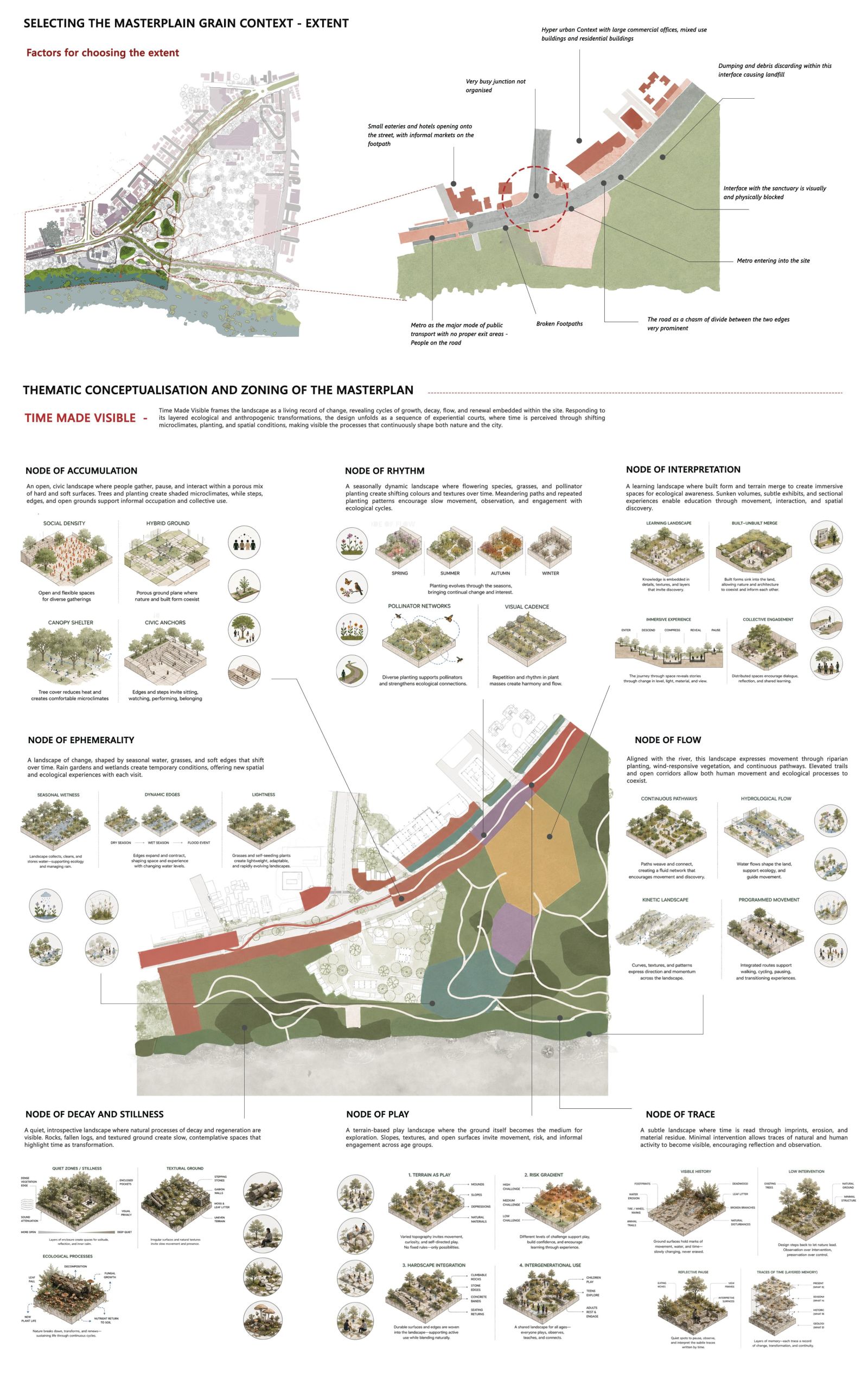
APPROACH & THEMATIC DEVELOPMENT I Developing the idea and theme of 'Time Made Visible' as a spatial and experiential thread weaving people, movement and ecology

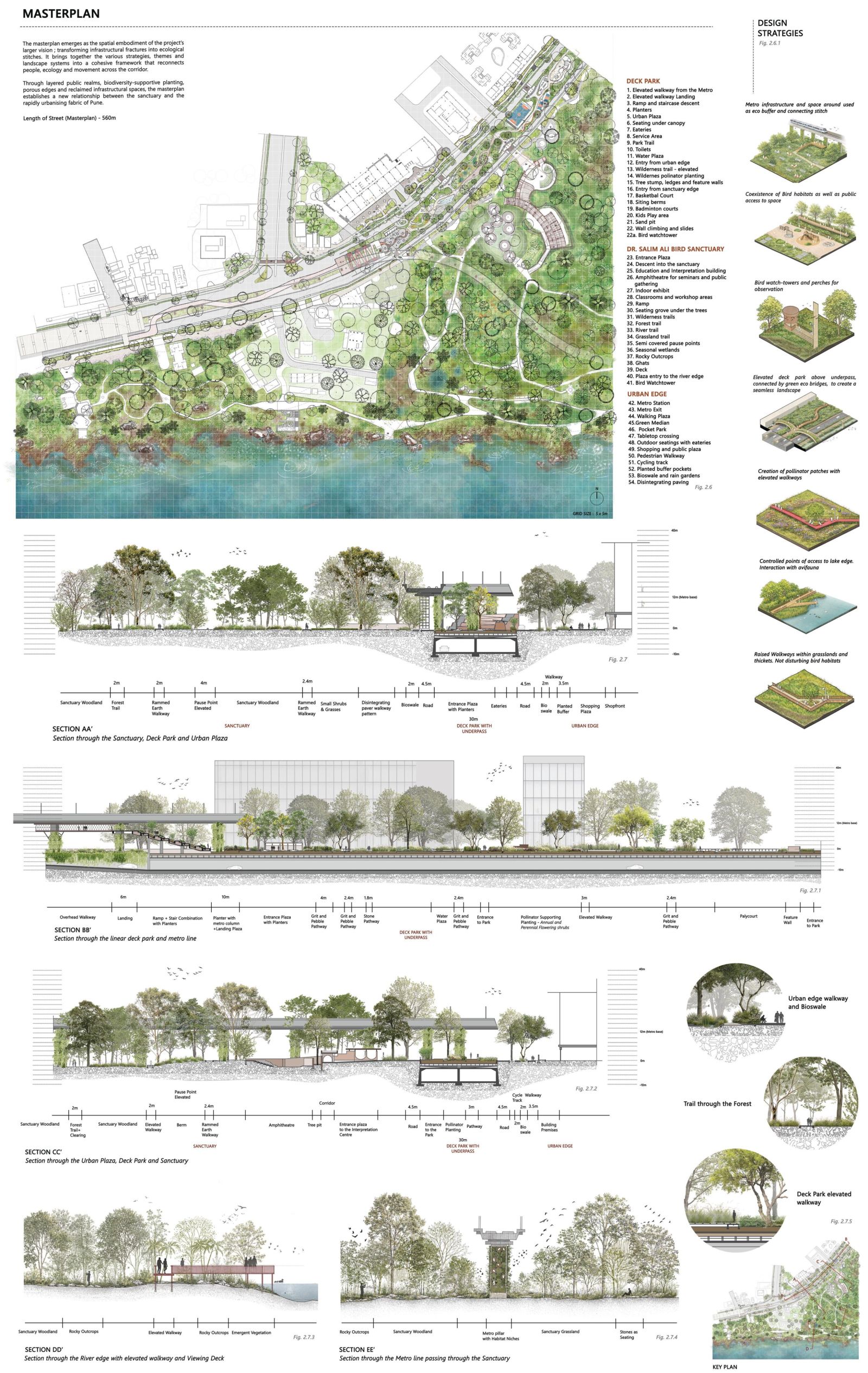
MASTERPLAN & SECTIONS I Translating strategies into spatial form through the design of interconnected landscapes, edges and transitions

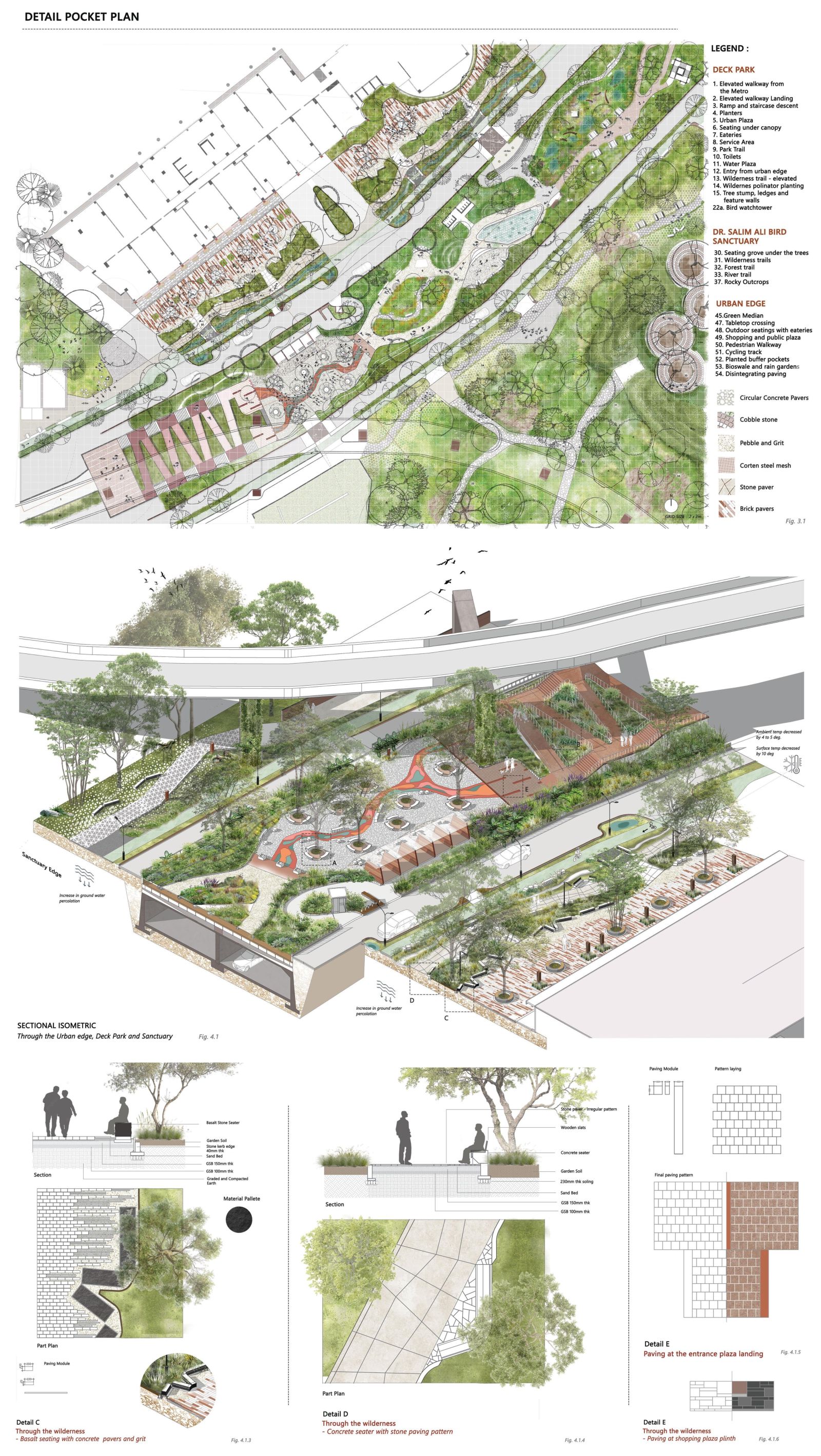
POCKET PLAN, ISOMETRIC & DETAILS I Exploring finer layers of planting, materiality and human experience through detailed spatial articulations

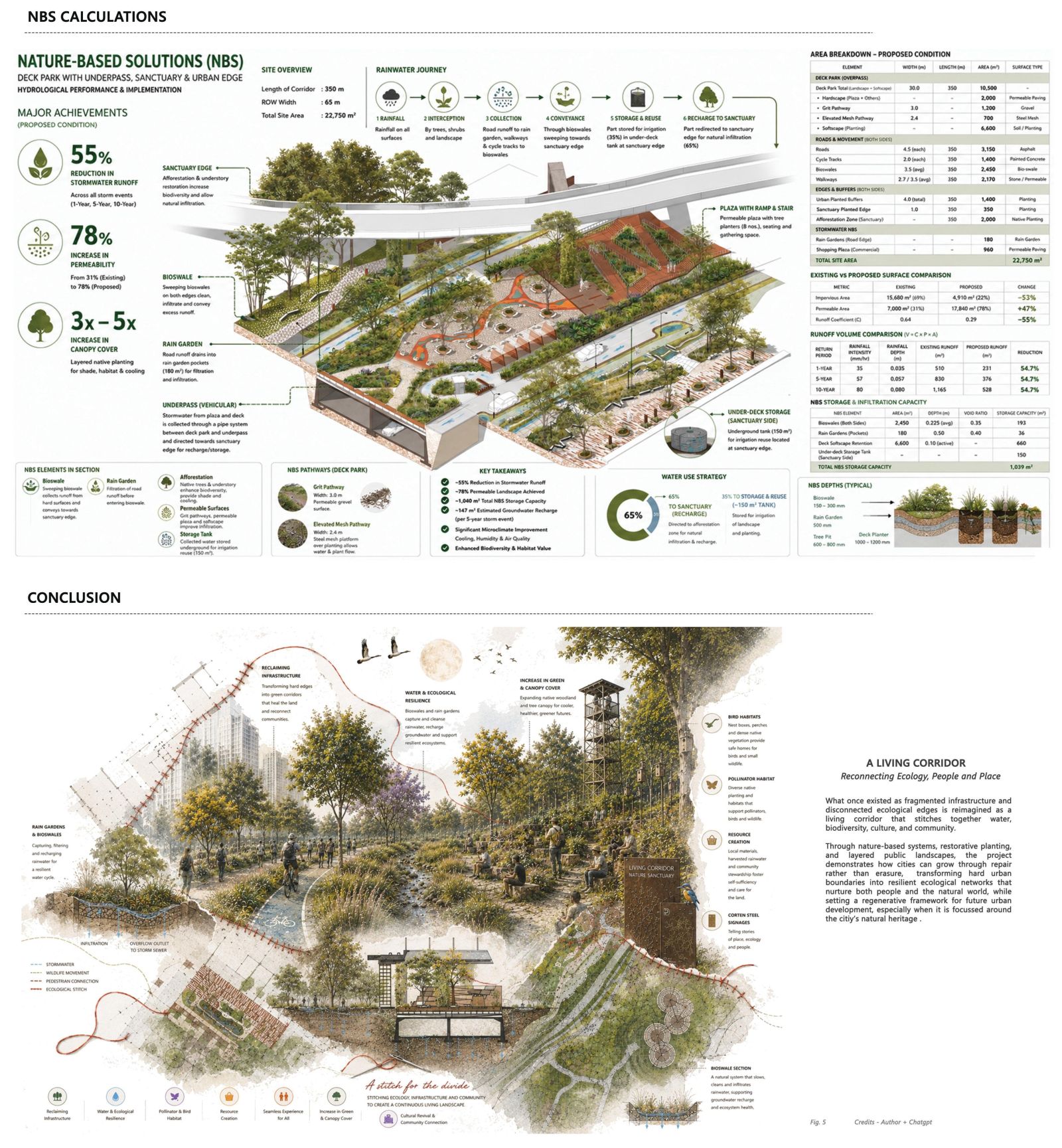
NBS CALCULATIONS & CONCLUSION I Evaluating the ecological impact of the proposal through nature-based systems, while envisioning a resilient urban future