Kabaria Kareena Shailesh Prafula

LA4008

KOLIWADA: STREETS AS SHARED GROUND

This project studies Mahim Koliwada through the everyday spaces between the sea, street, and house. These informal in-between spaces support daily activities like working, storing, sitting, and social interaction, forming an important part of community life. The proposal shifts activities such as the seafood festival from the coastal edge into the internal streets, creating stronger engagement with the settlement while respecting residents’ routines. Different spatial conditions - coastal edges, internal streets, and domestic thresholds, are addressed through strategies of retain, enhance, and modify to improve accessibility and connections. Overall, the project makes these spaces more usable, adaptable, and connected while retaining their informal character.

View Additional Work
Report Content

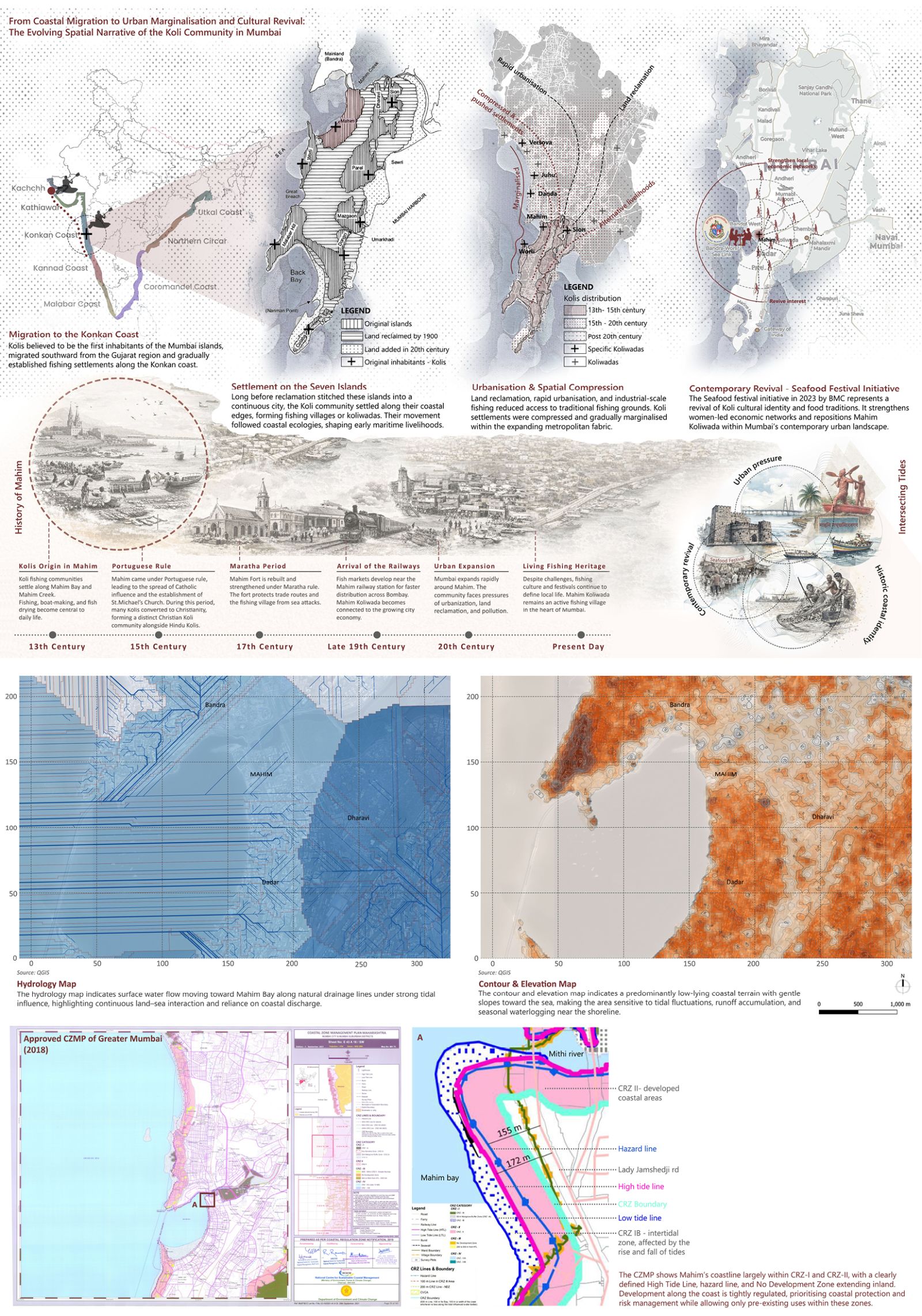
Historical evolution & ecological context | Tracing the transformation of Mahim Koliwada through migration, reclamation, hydrology, and coastal change.

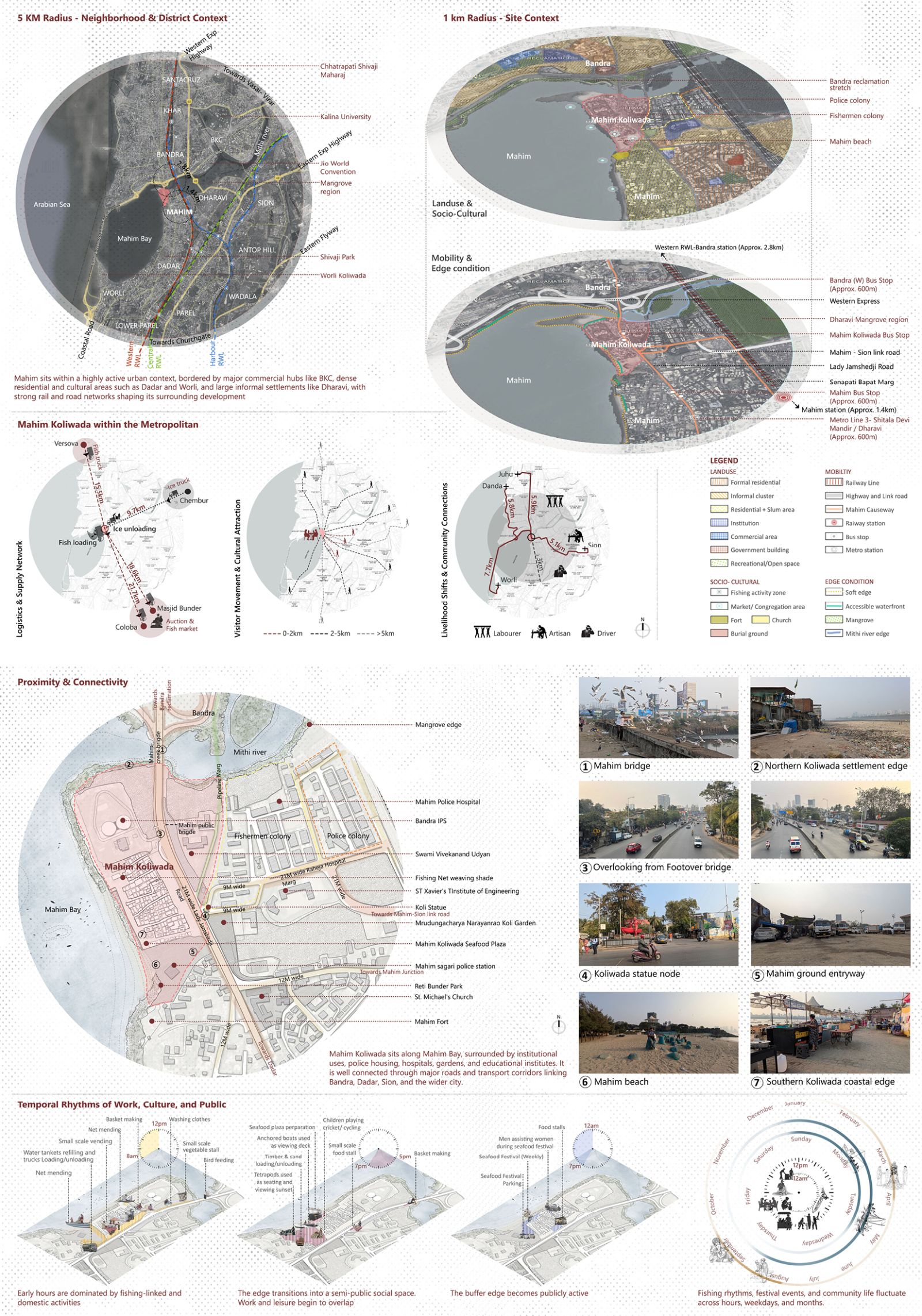
Site context & temporal rhythms | Understanding the site through mobility, livelihoods, public life, and changing everyday activities.

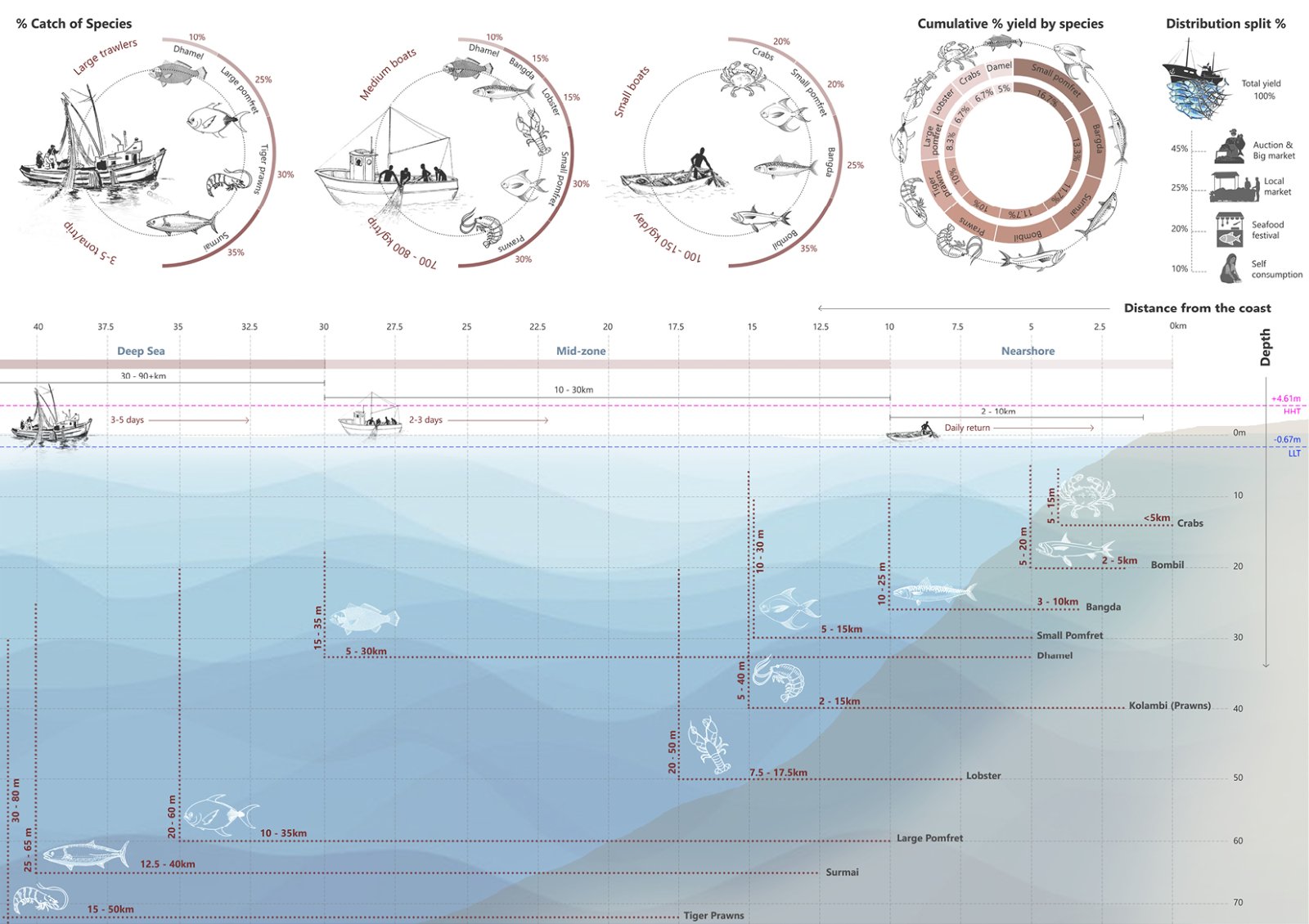
Fishing systems & marine ecology | Mapping fishing practices, species distribution, and coastal livelihood networks.

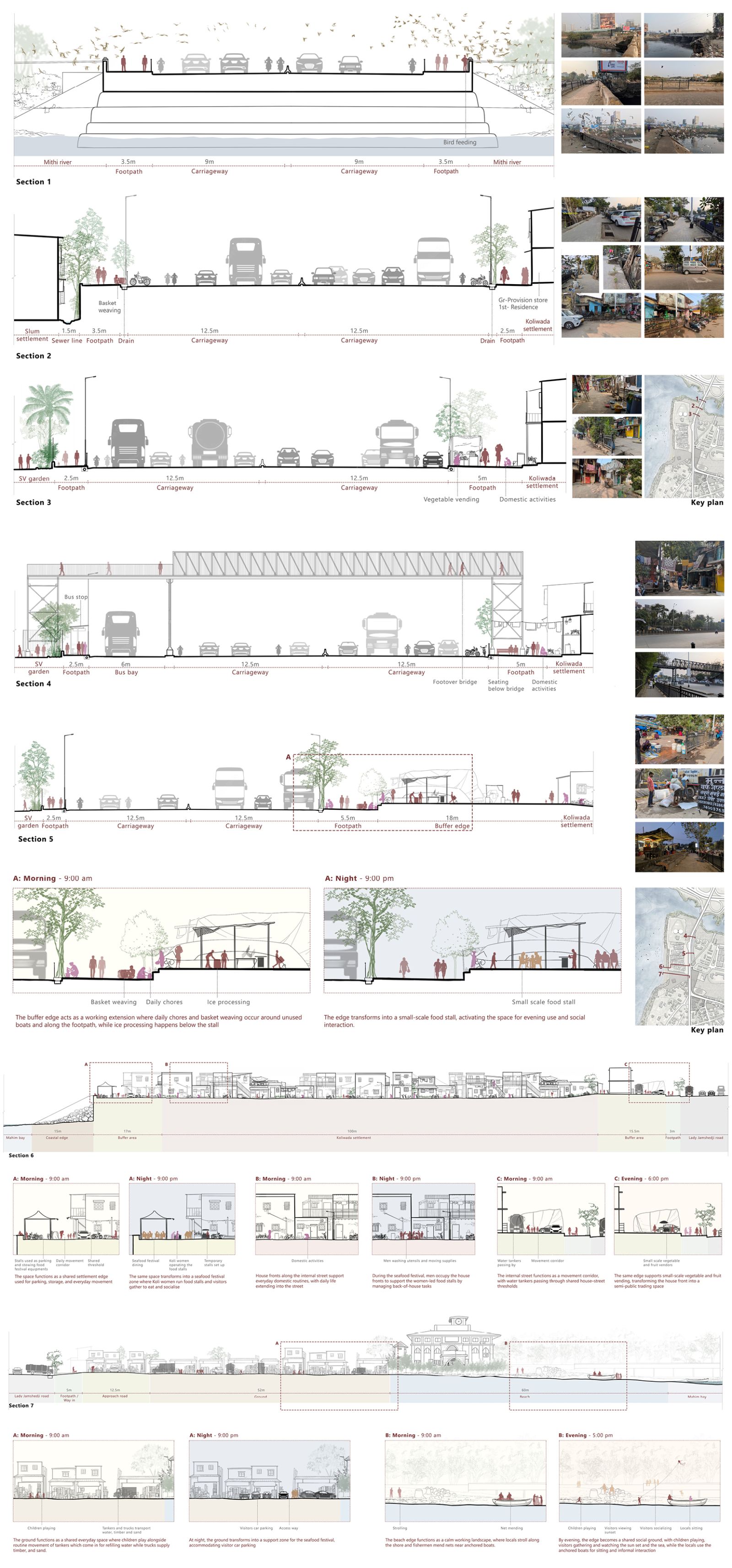
Existing sections & edge conditions | Documenting the relationship between streets, settlement edges, and coastal activities.

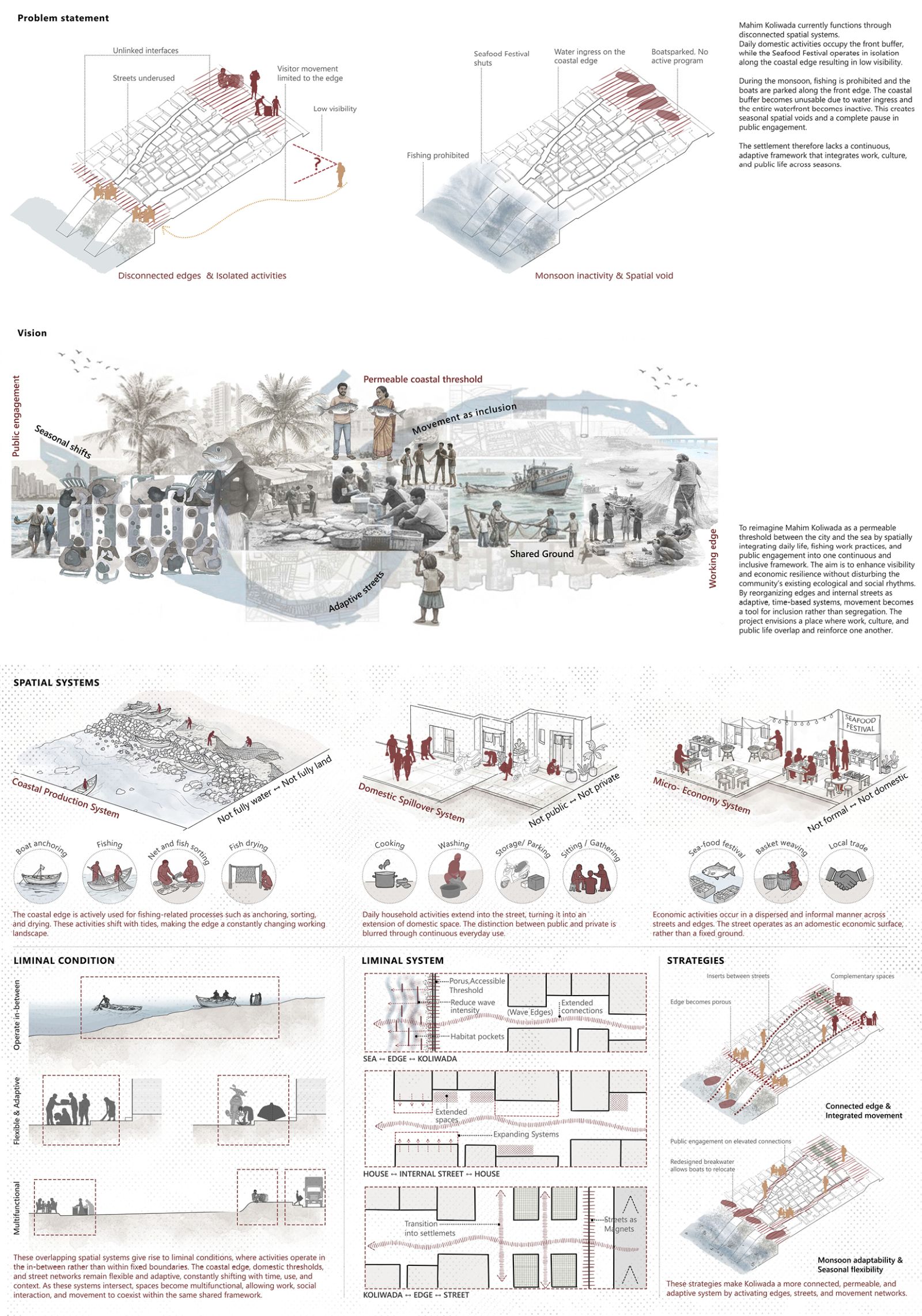
Vision & spatial systems | Reimagining Koliwada as an adaptive and interconnected coastal settlement.

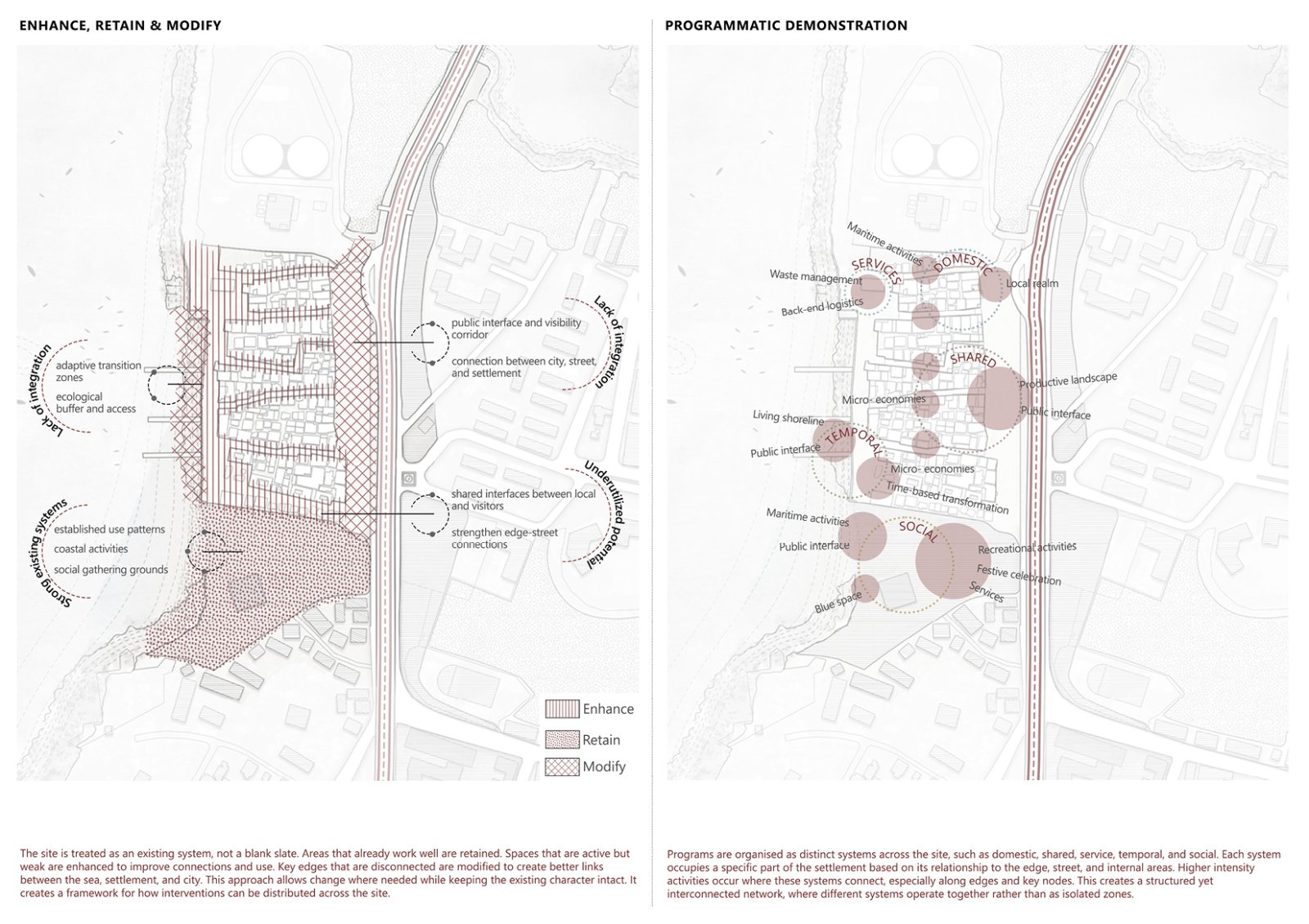
Strategic framework & programmatic systems | Organising interventions through enhance, retain, and modify strategies.

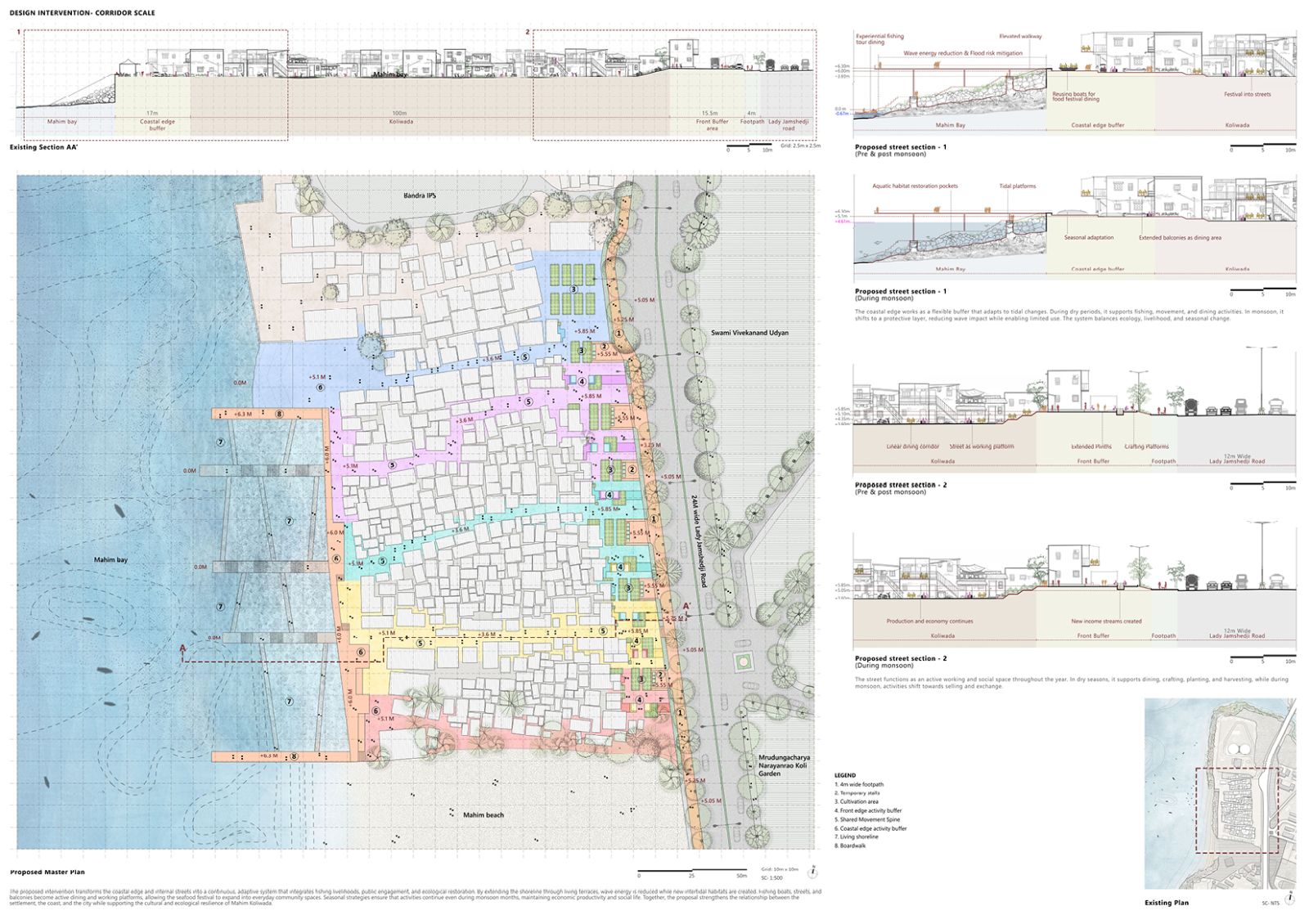
Master plan & corridor intervention | Transforming the coastal edge and internal streets into a resilient public landscape.

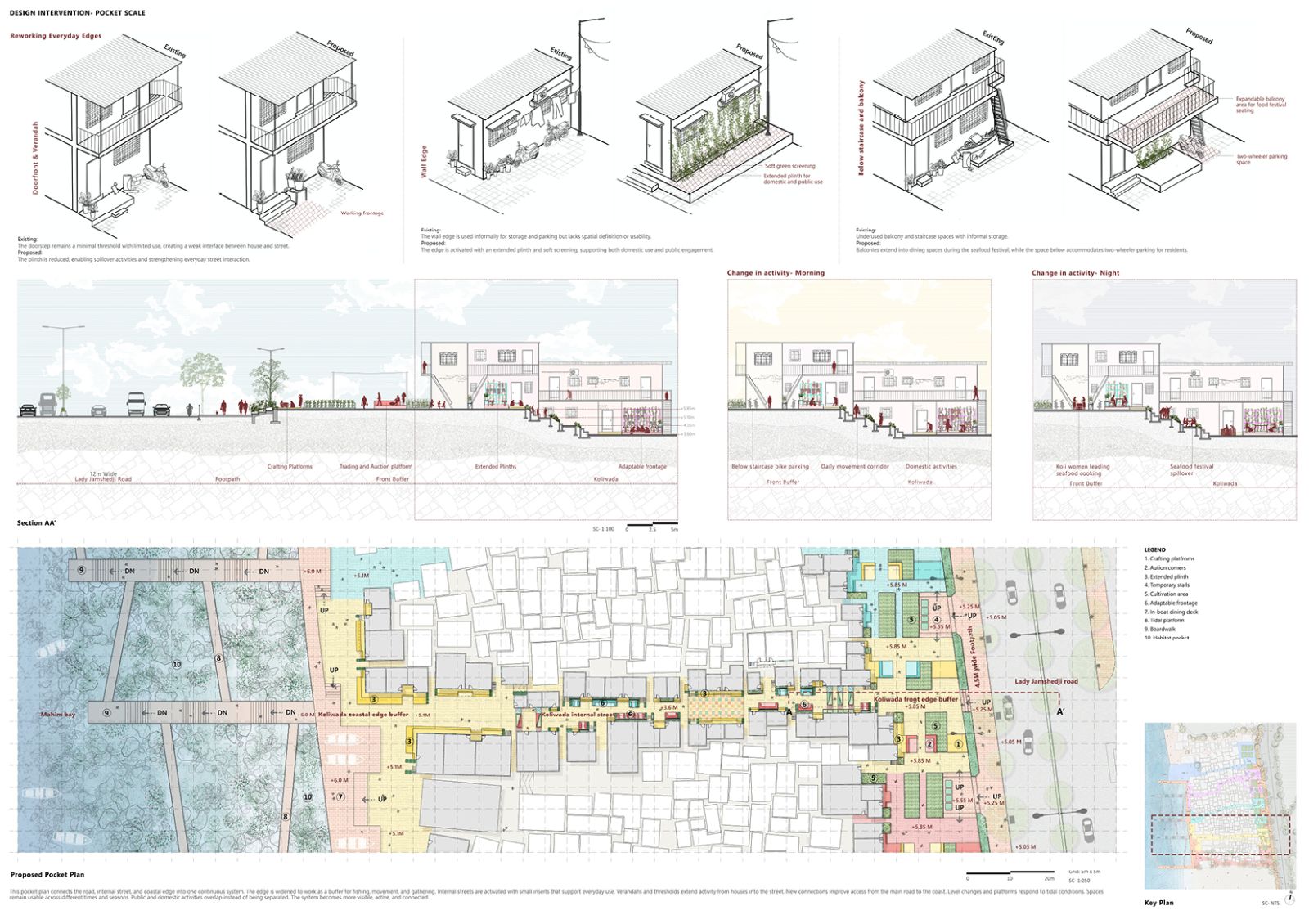
Pocket-scale intervention | Activating everyday thresholds through adaptive frontages and shared spaces.

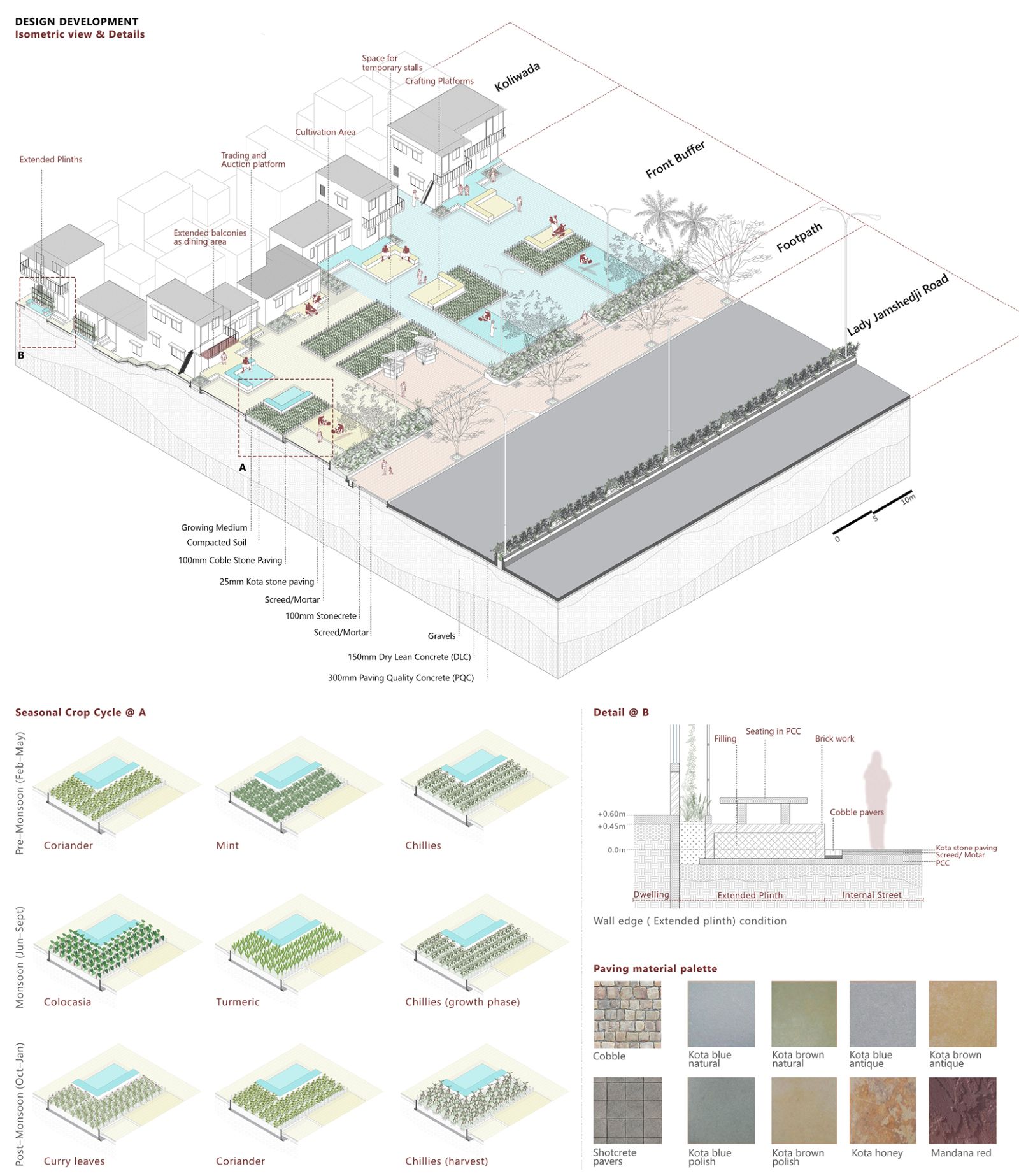
Design development & material systems | Developing seasonal landscapes, edge details, and ecological material strategies.

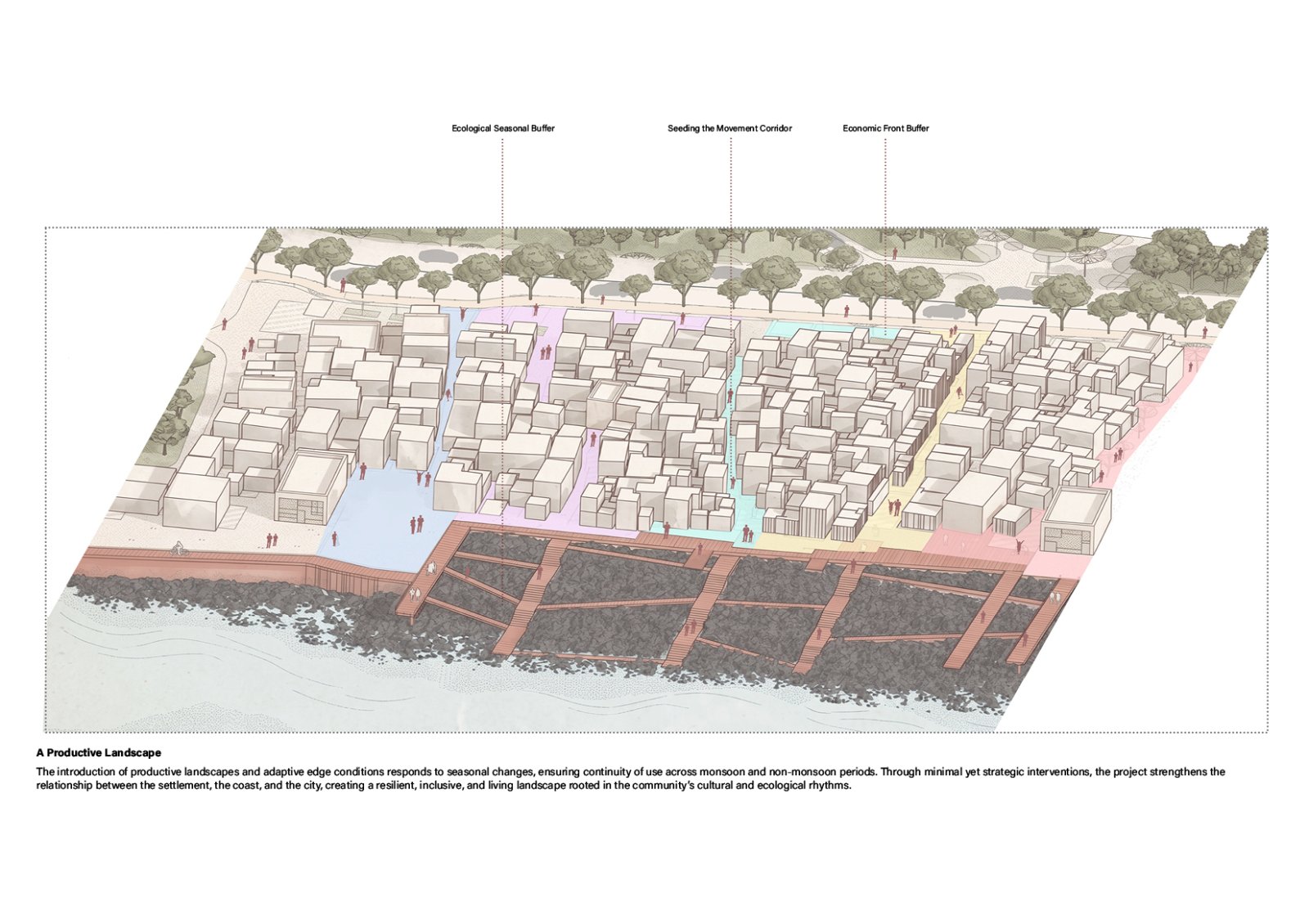
Proposal summary | Summarising the intervention through productive landscapes, adaptive edges, ecological buffers, and connected public systems.