Your browser is out-of-date!
For a richer surfing experience on our website, please update your browser. Update my browser now!
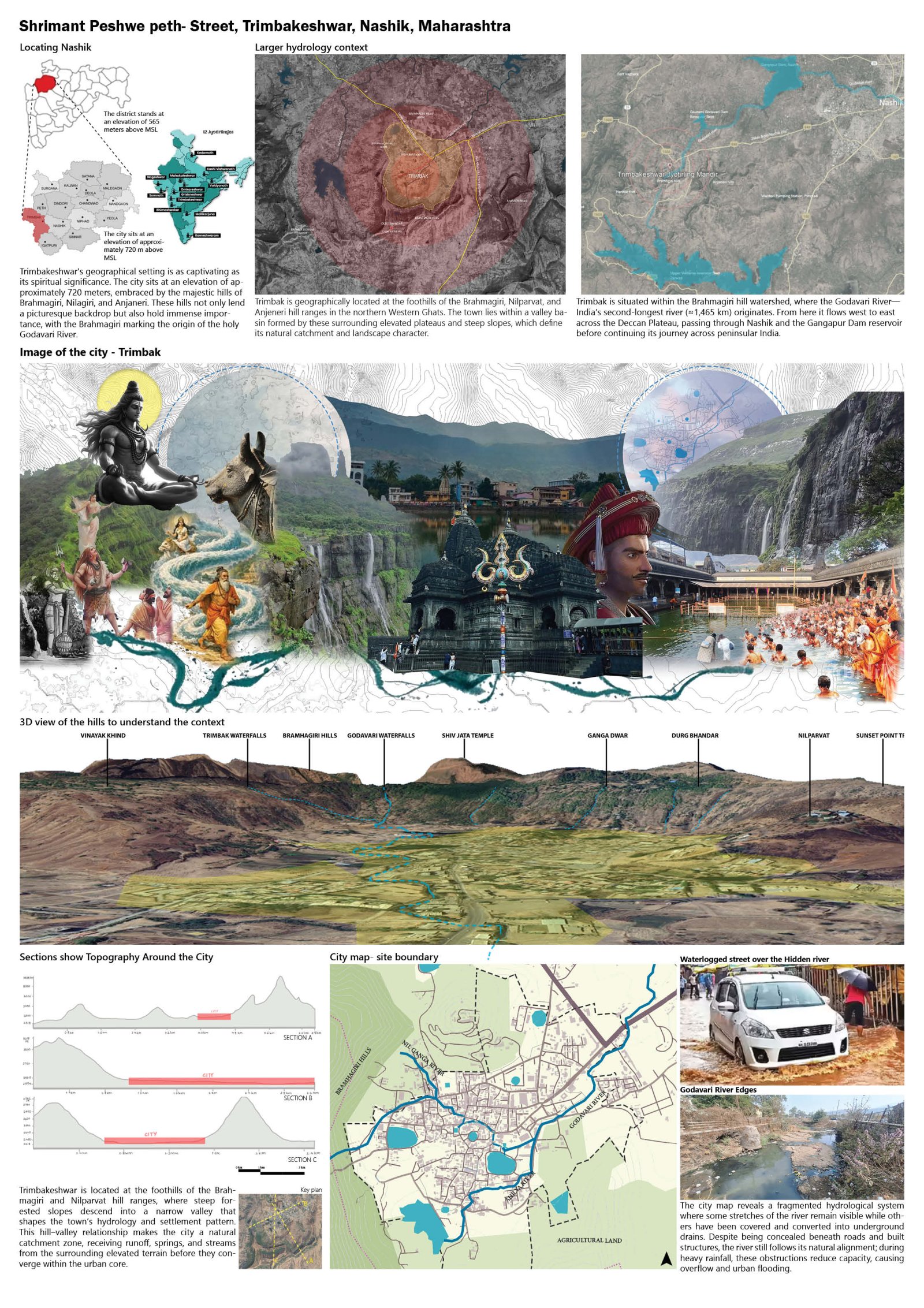
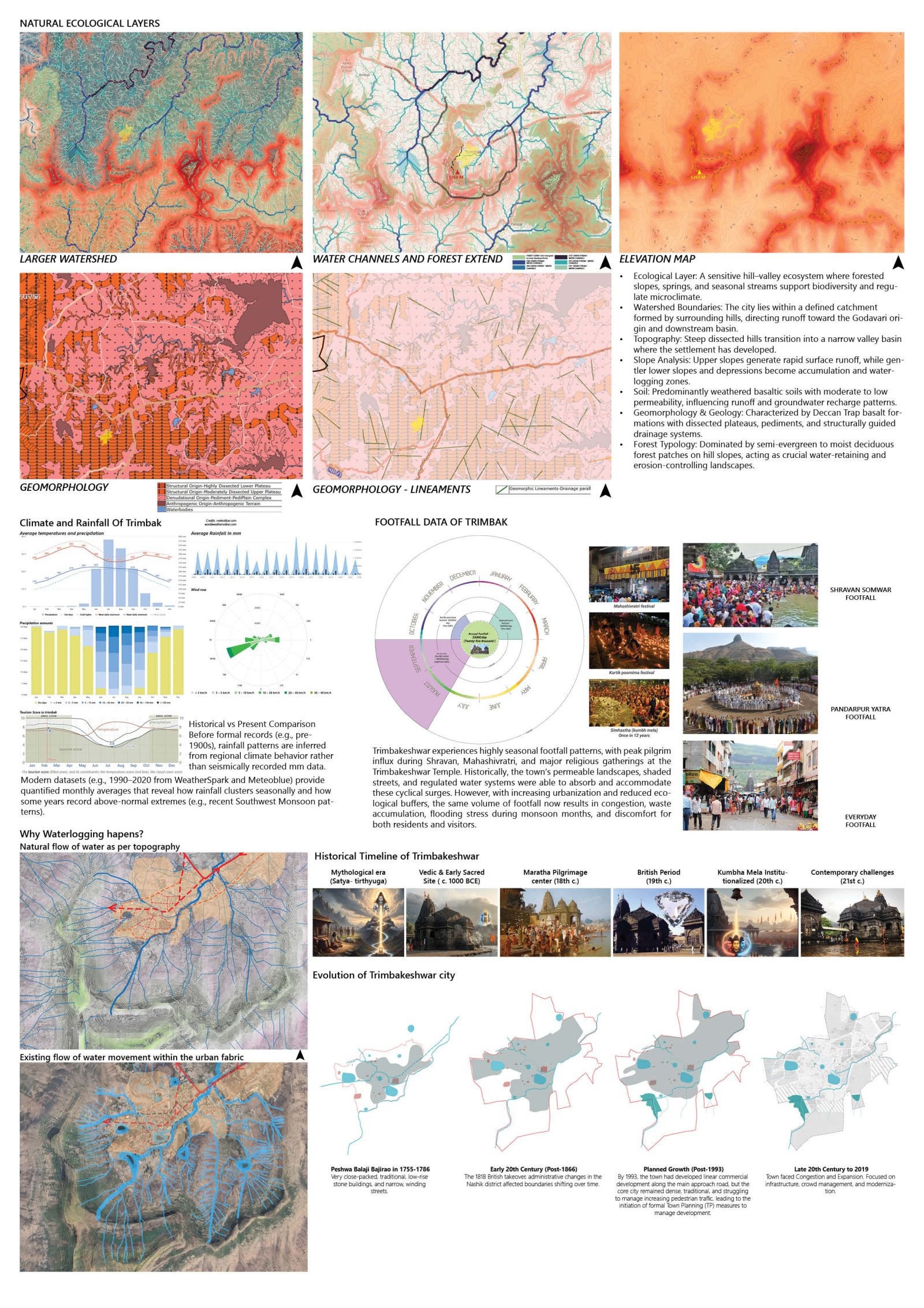
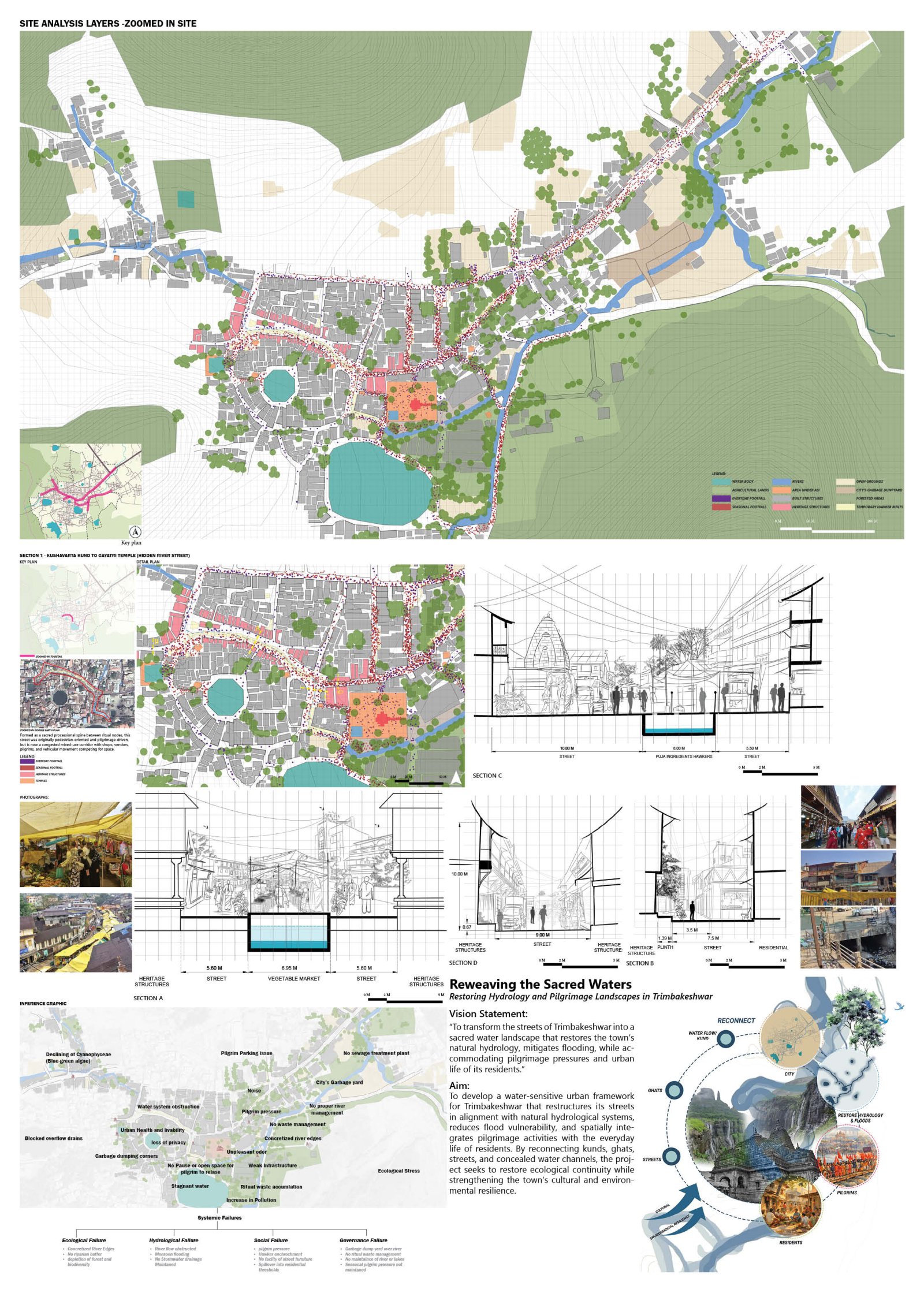
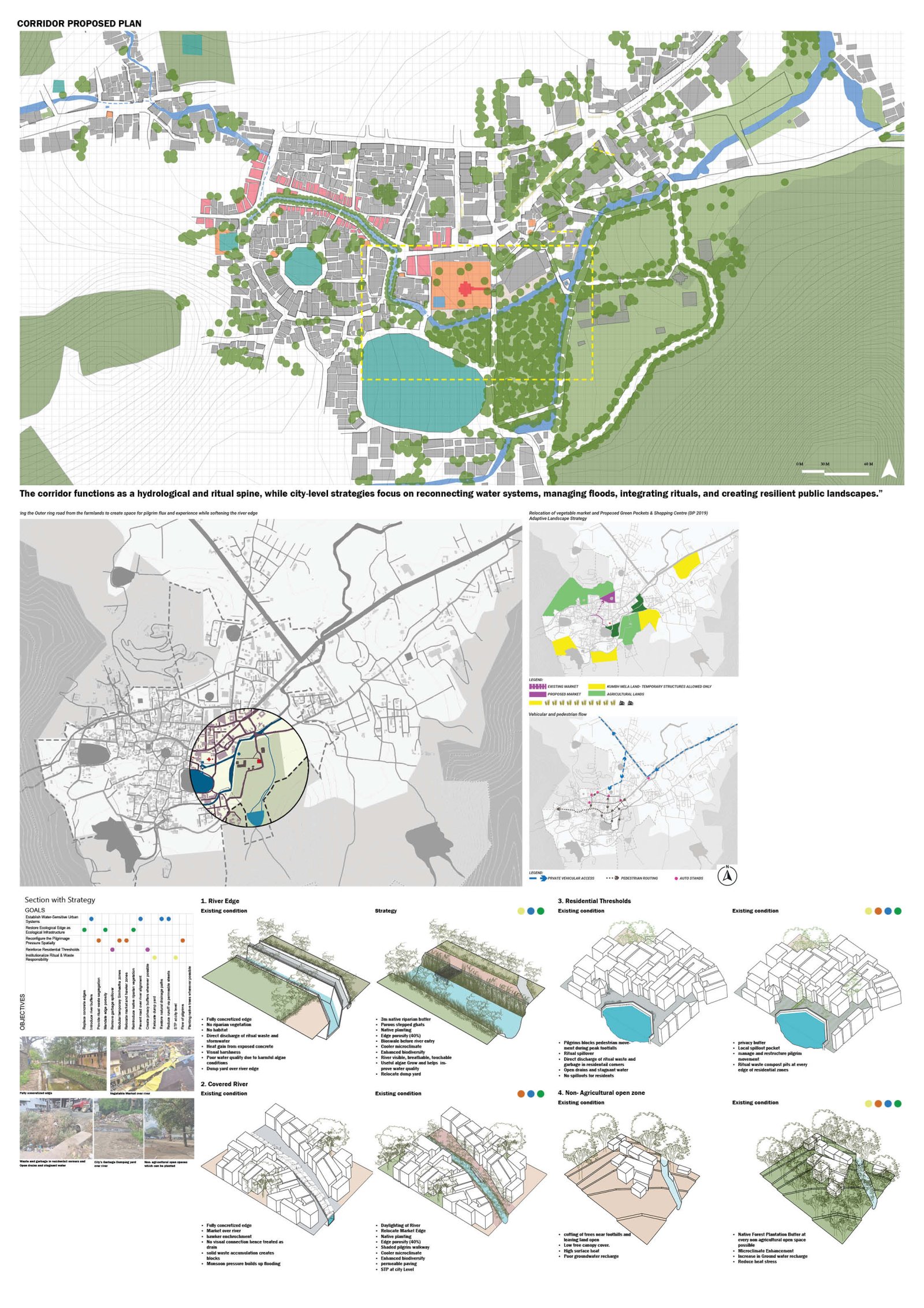
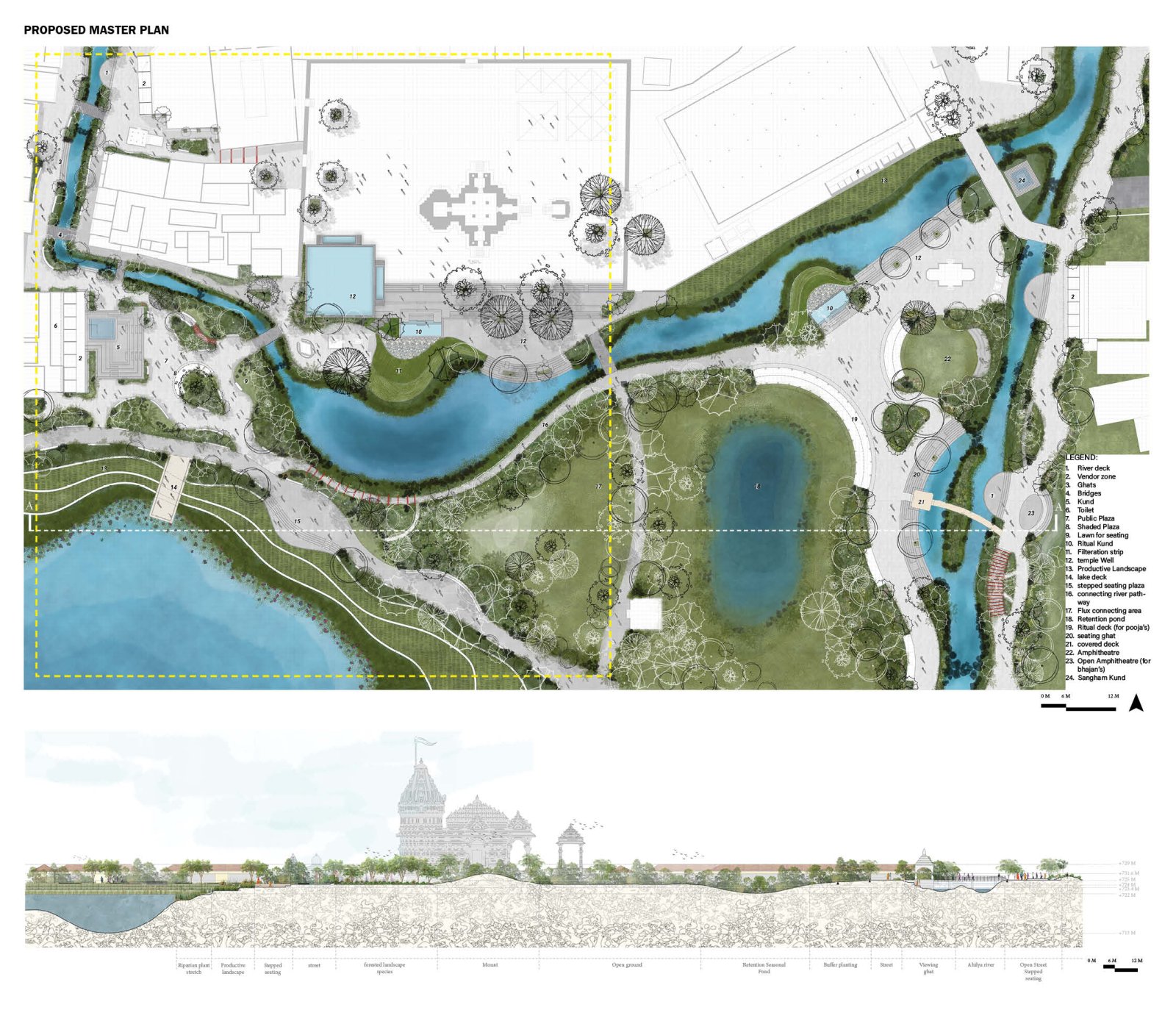
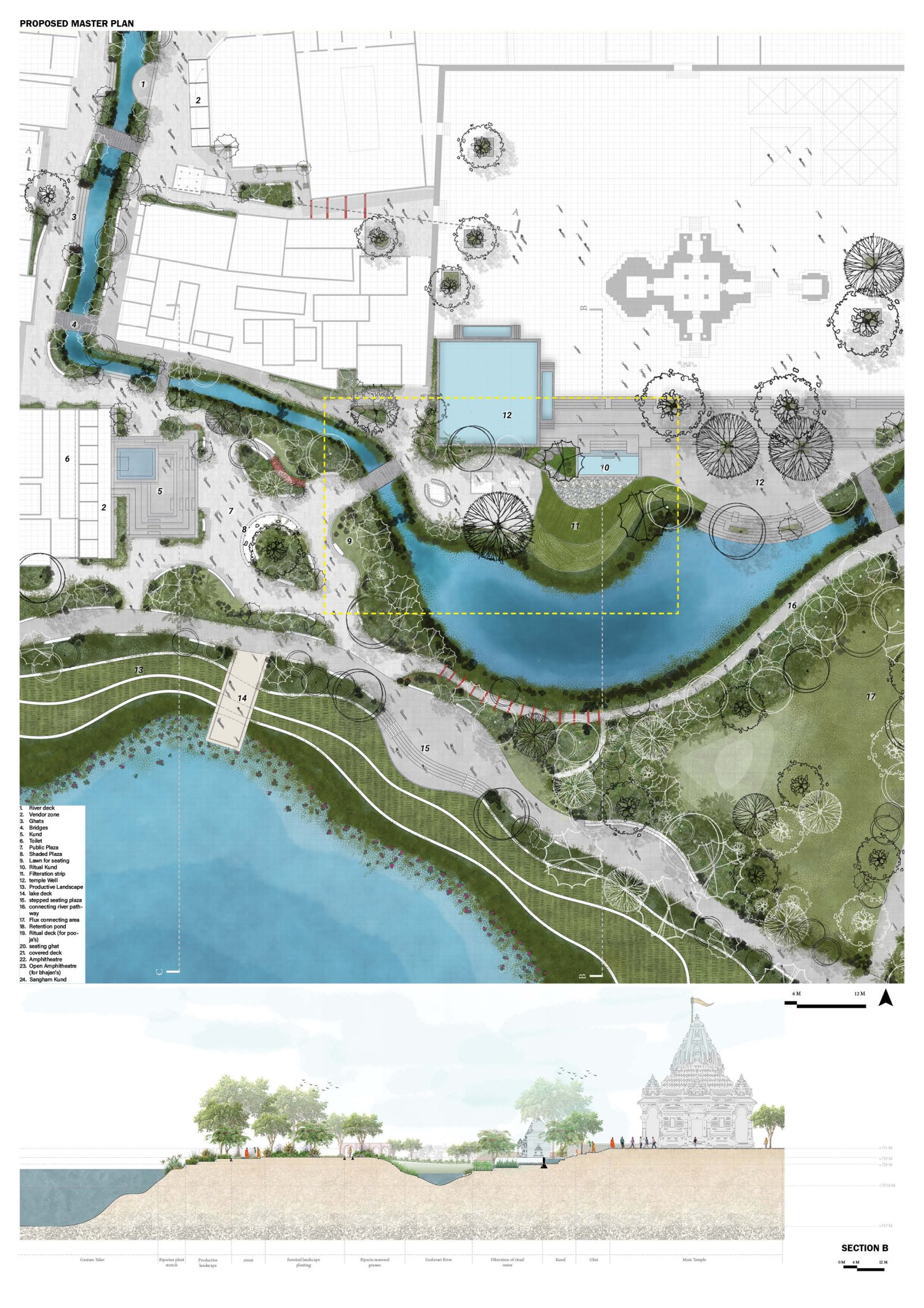
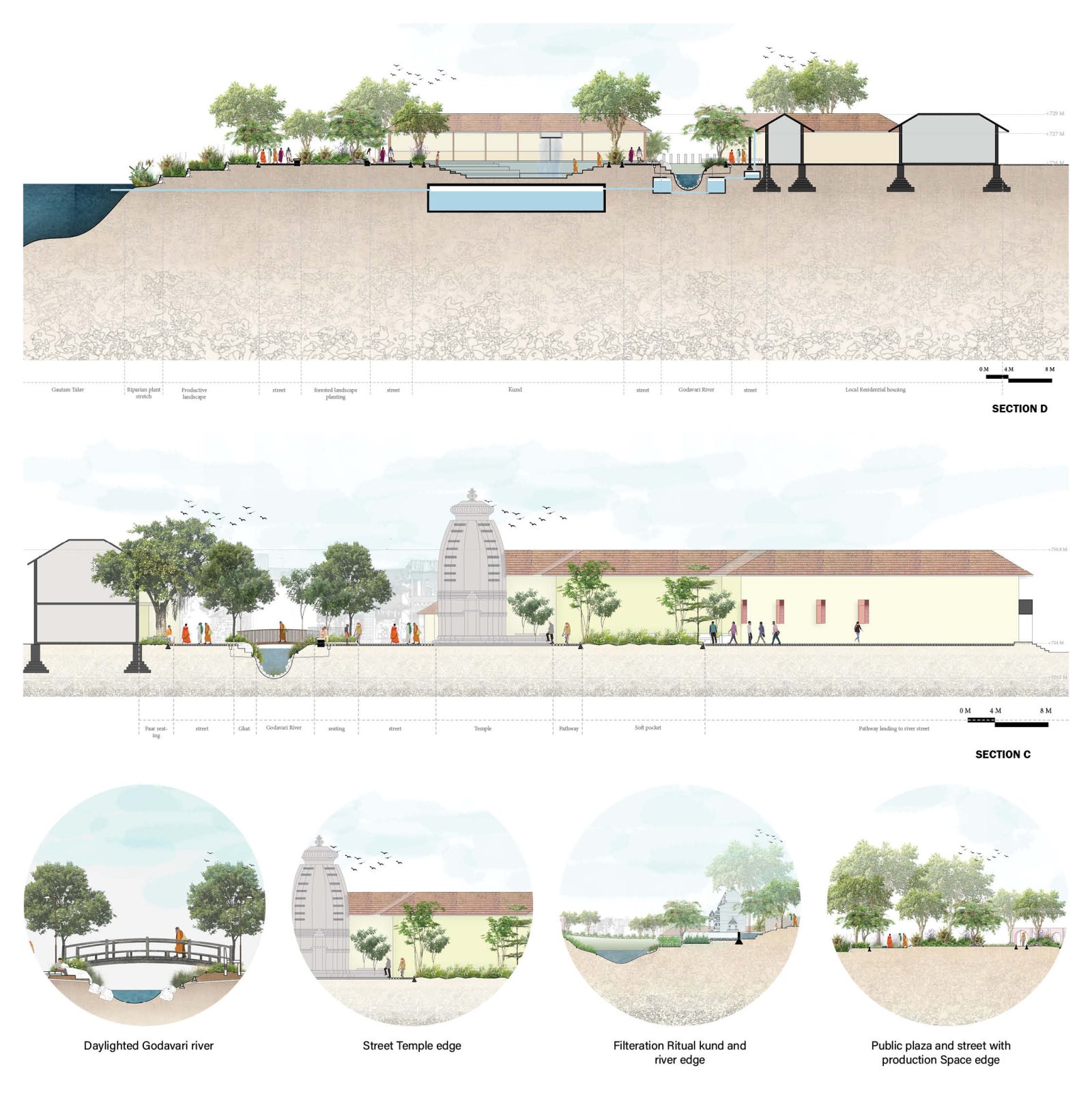
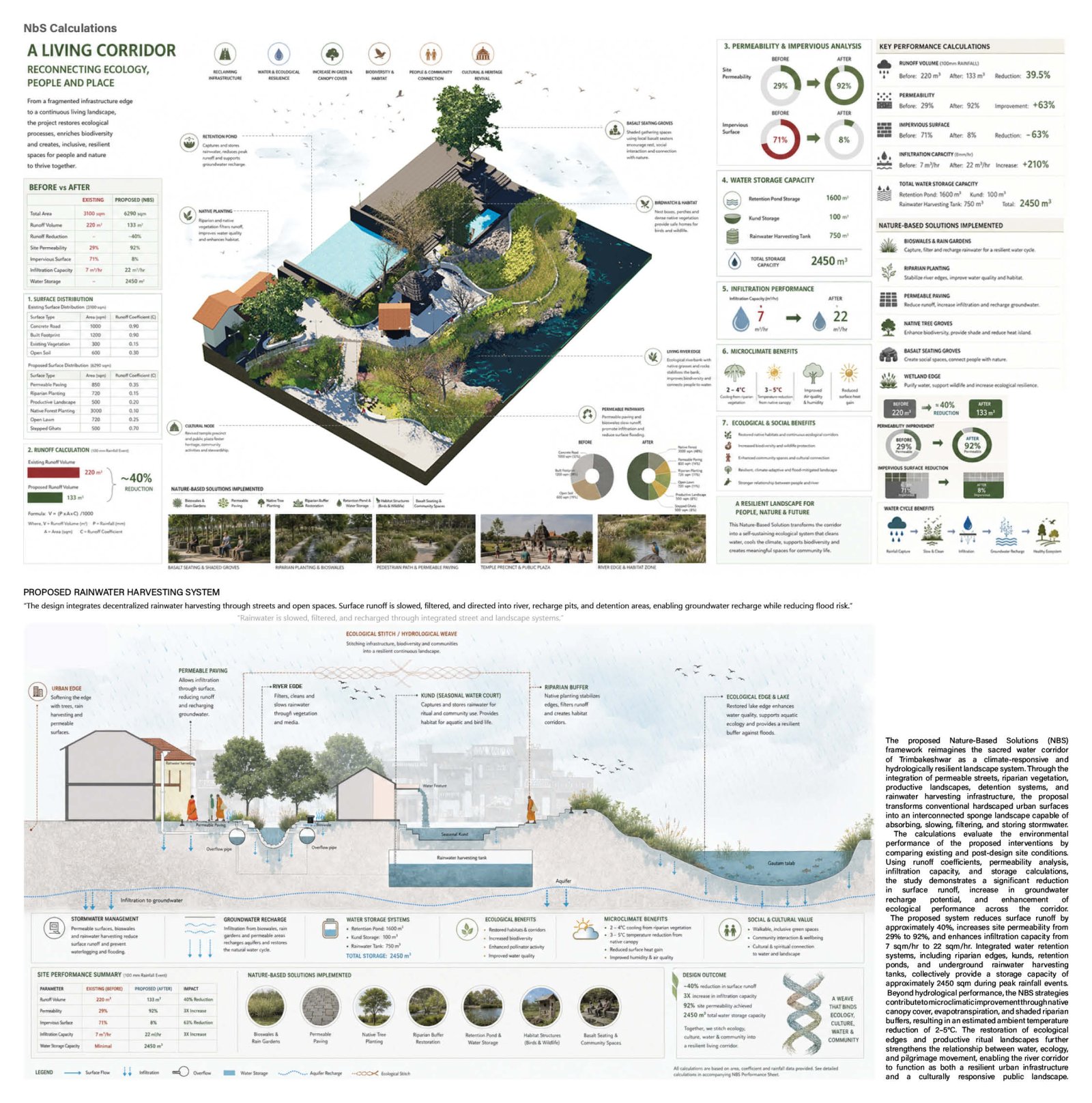
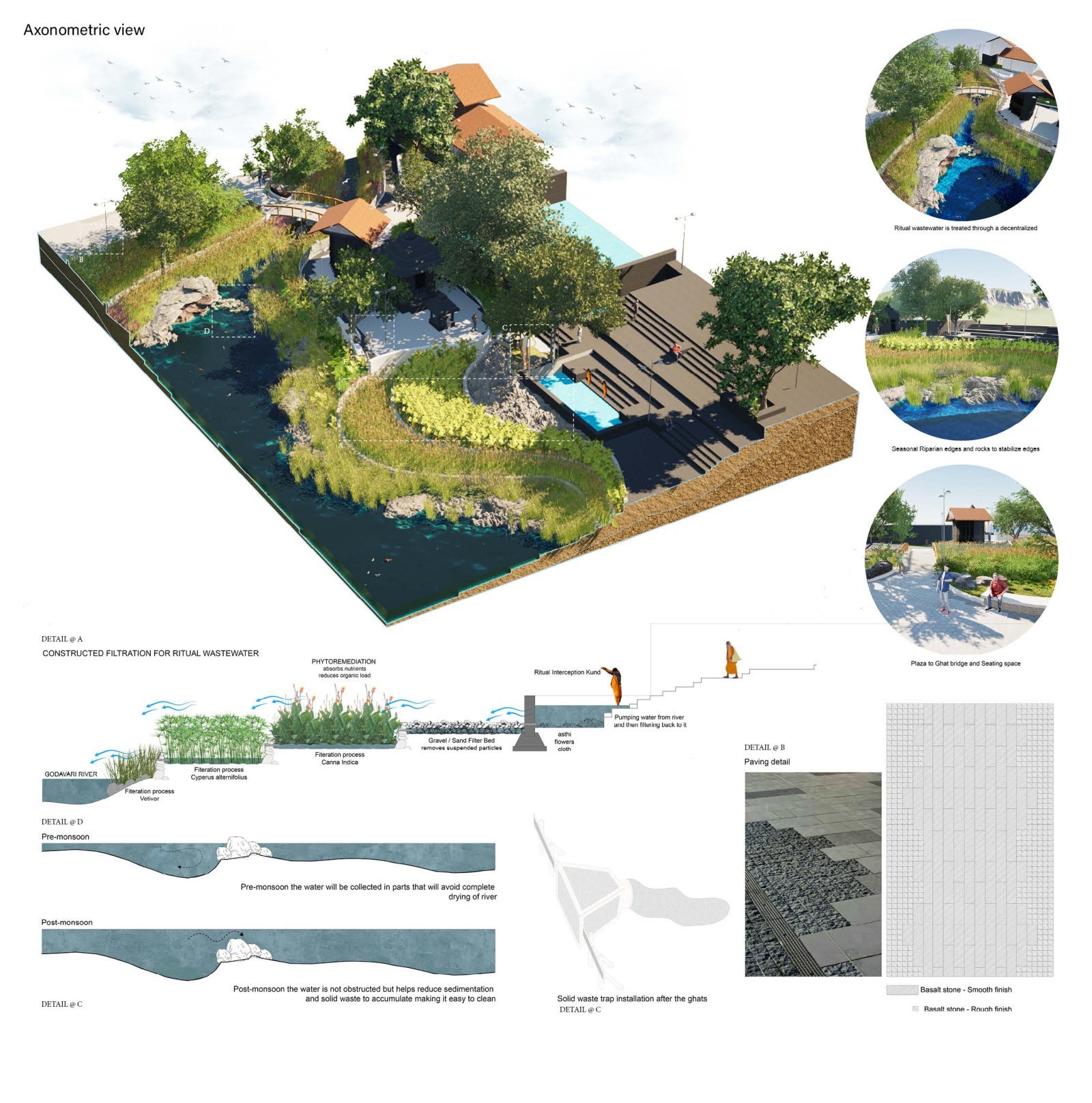
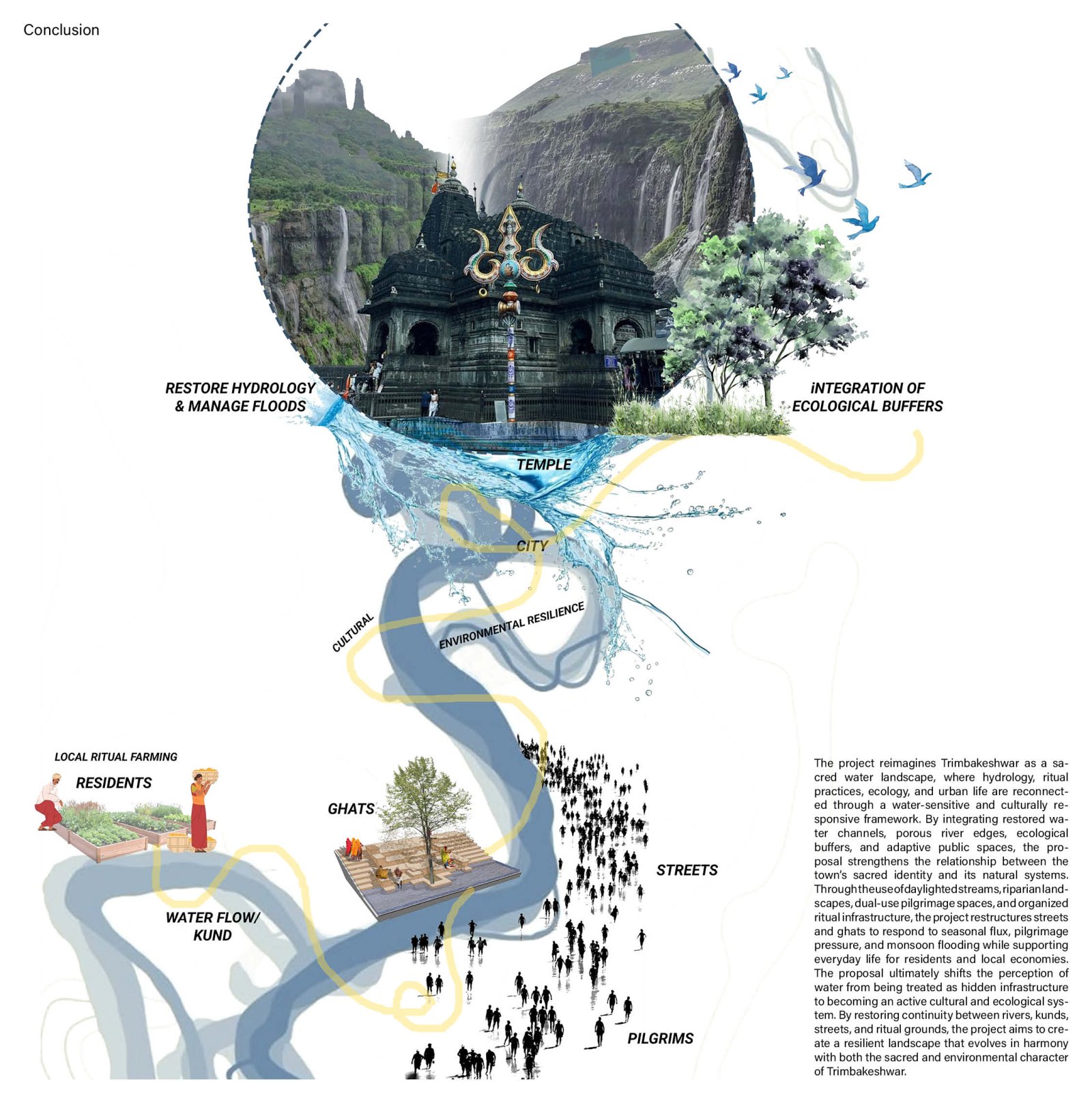
Trimbakeshwar, a sacred town at the origin of the Godavari River, is shaped by the intersection of ritual practices, seasonal pilgrimage, and fragile hydrological systems. However, rapid urbanization, street hardening, and increasing pilgrimage pressure have disrupted natural drainage patterns, leading to flooding, pollution, and fragmented ecological edges. This project reimagines the town’s streets as water-sensitive infrastructures that reweave the relationship between water, ritual, and everyday life. Instead of treating streets as mere conduits of movement, they are designed as hydrological spines that collect, slow, filter, and recharge water through permeable paving, and productive planting edges. These systems extend into the riverfront through a series of ritual interception kunds, which mediate the entry of ritual offerings such as ashes and organic materials allowing for settling and ecological filtration before reaching the river. The landscape integrates productive ritual planting, cultivating species offered to Lord Shiva, thereby supporting local livelihoods while reinforcing the town’s sacred identity. Public plazas and street nodes act as flux–pause spaces, accommodating both everyday use and peak pilgrimage events, including the Kumbh Mela. By reconnecting streets, kunds, and ecological edges, the project proposes a resilient urban framework where water is not hidden but celebrated transforming Trimbakeshwar into a living sacred landscape that sustains both its cultural practices and environmental systems.
View Additional Work