Your browser is out-of-date!
For a richer surfing experience on our website, please update your browser. Update my browser now!
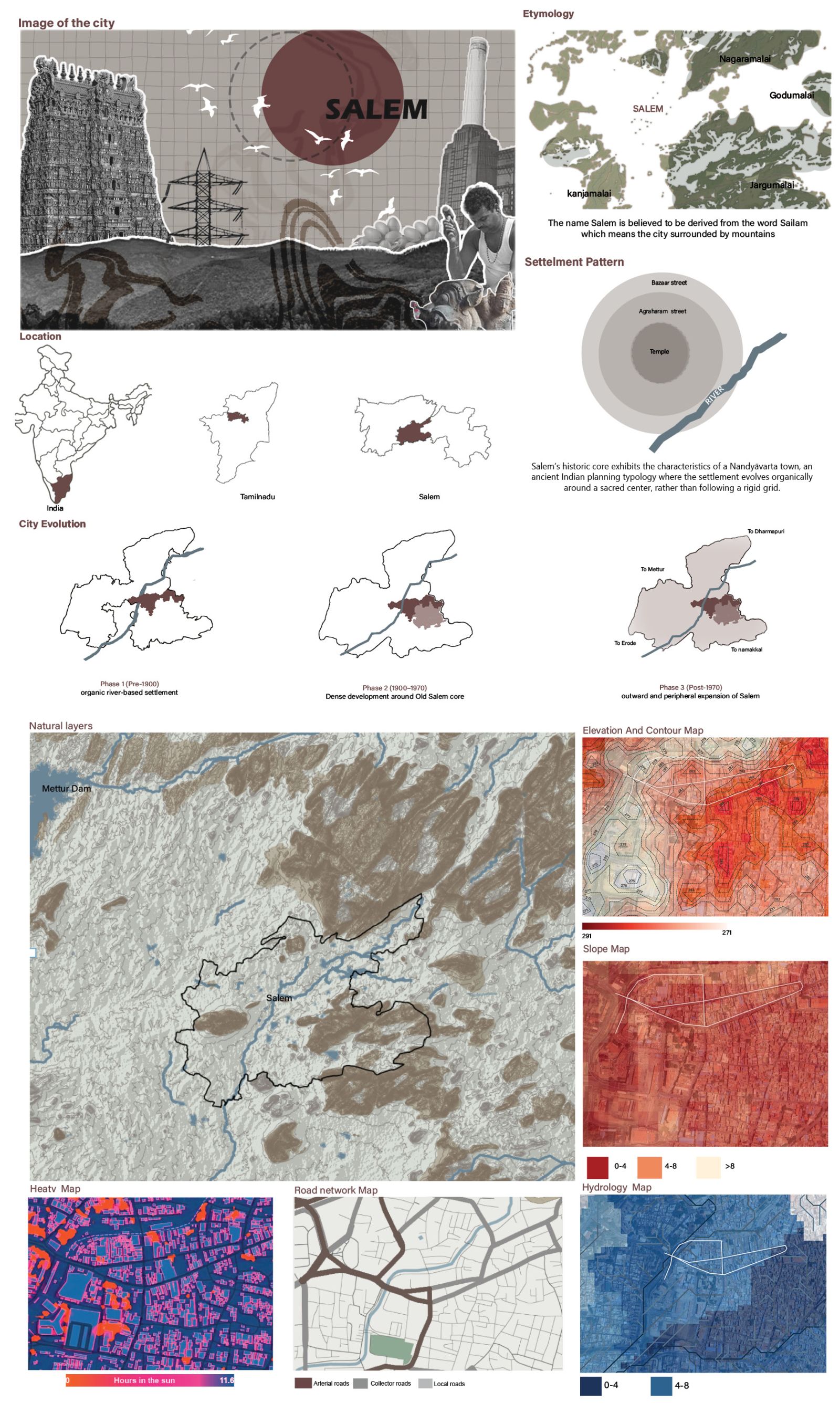
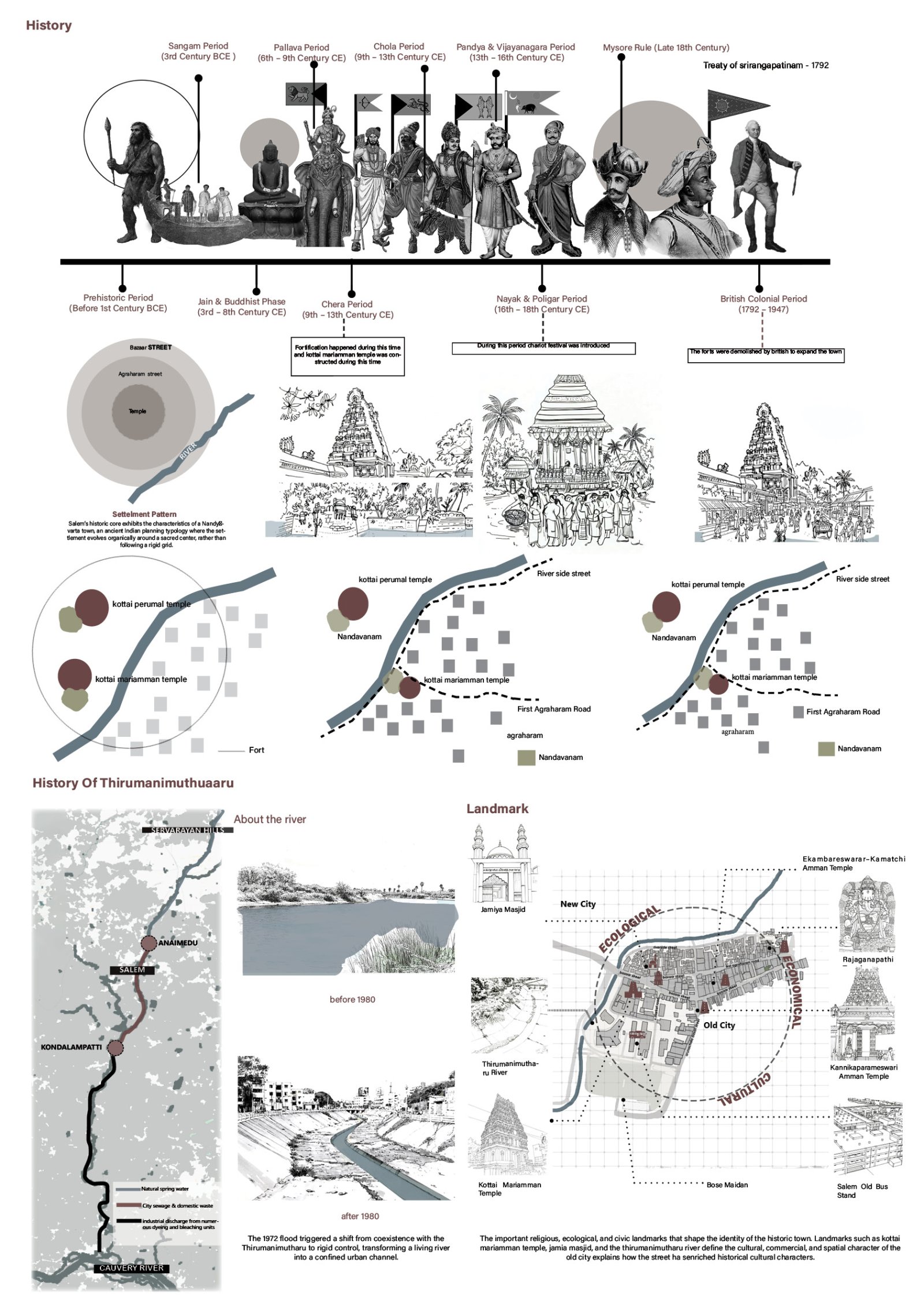
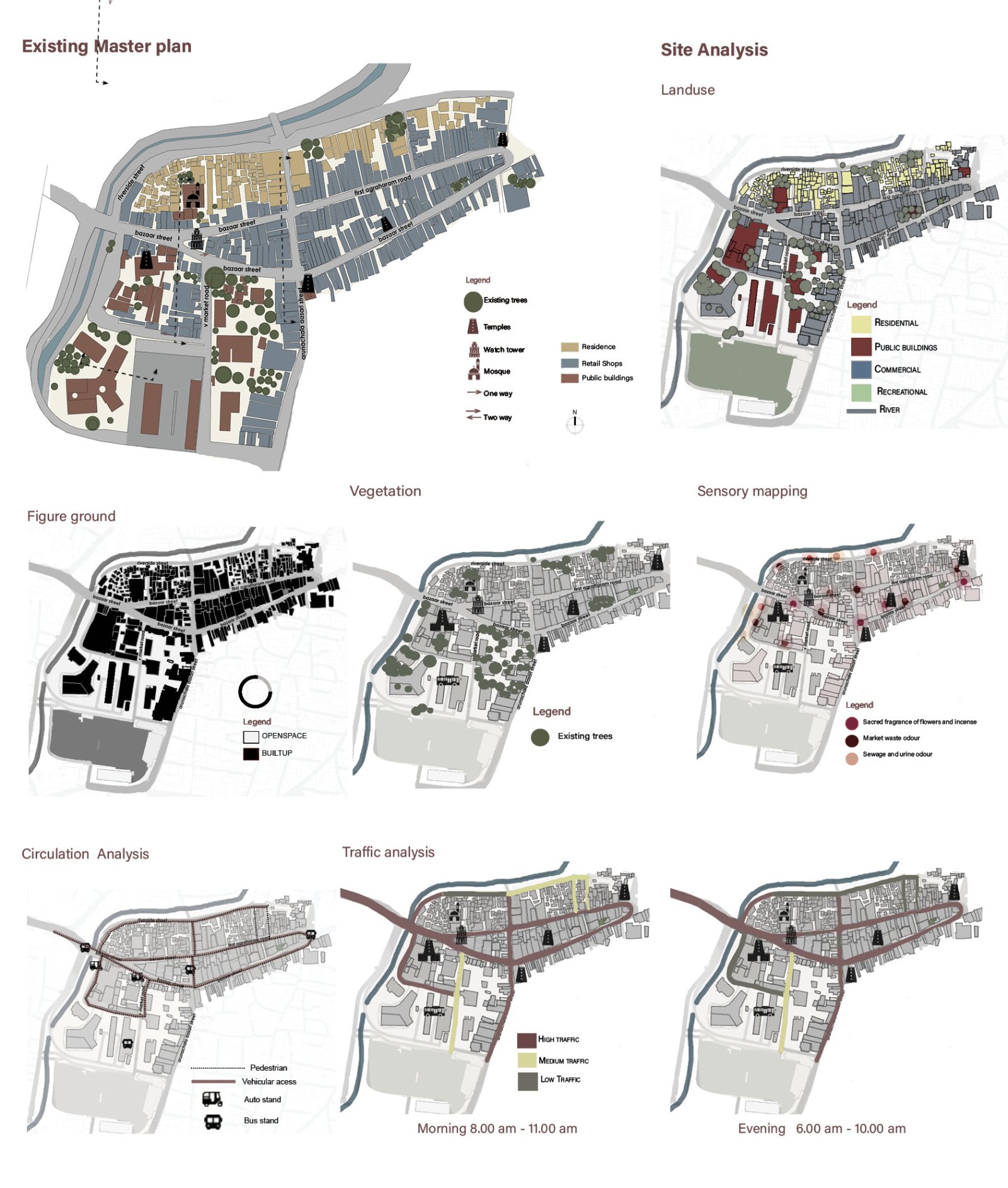
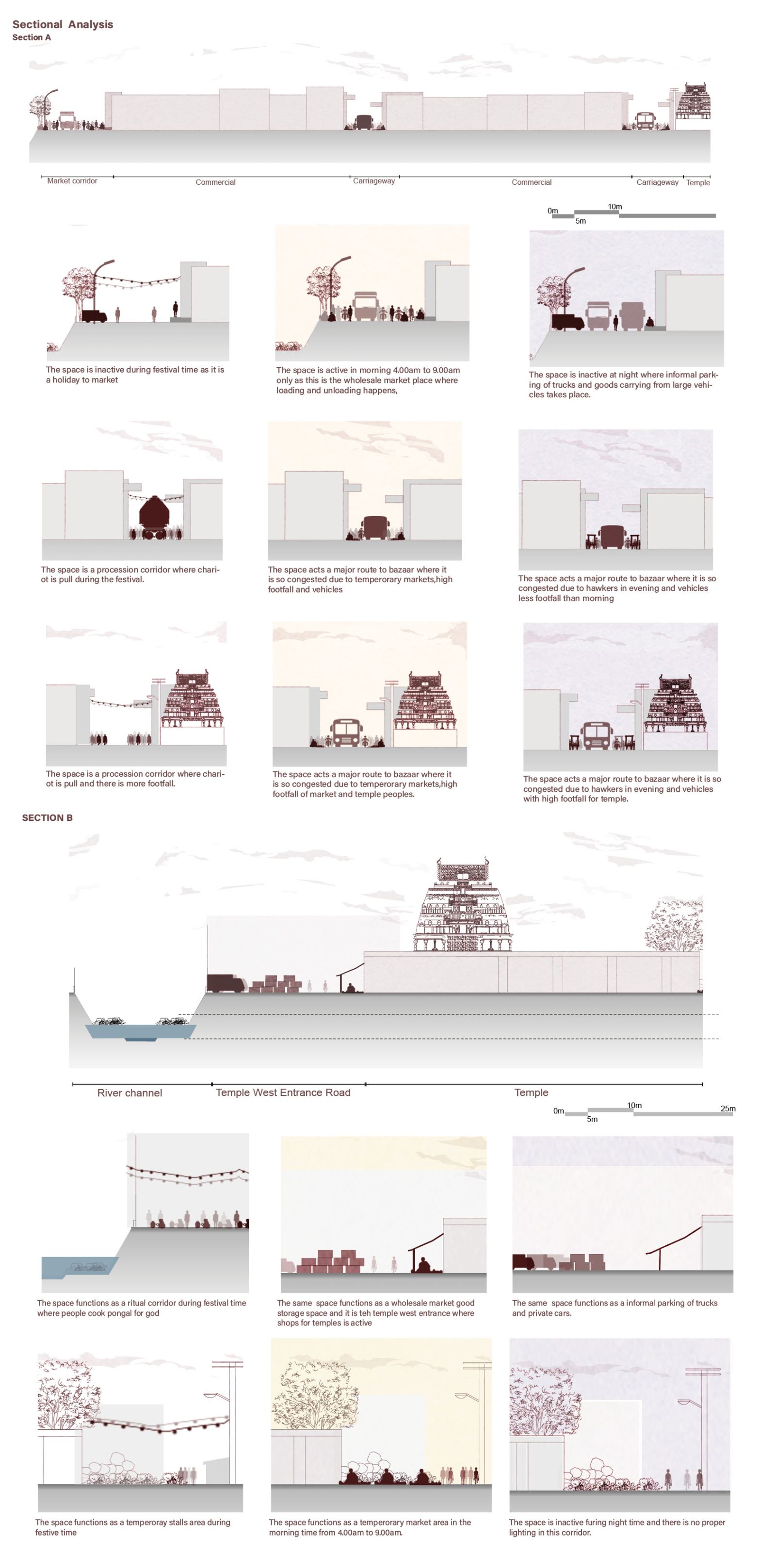
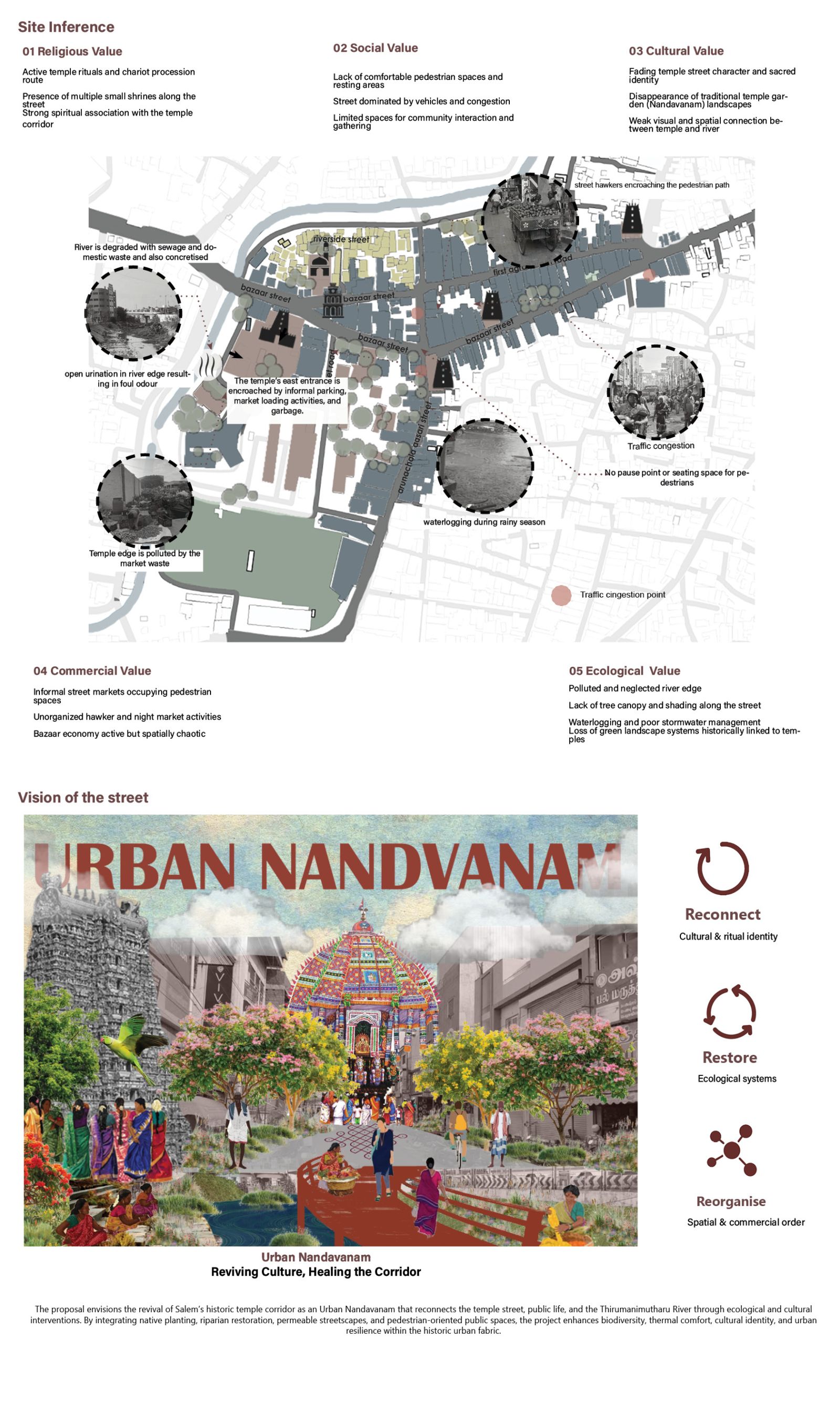
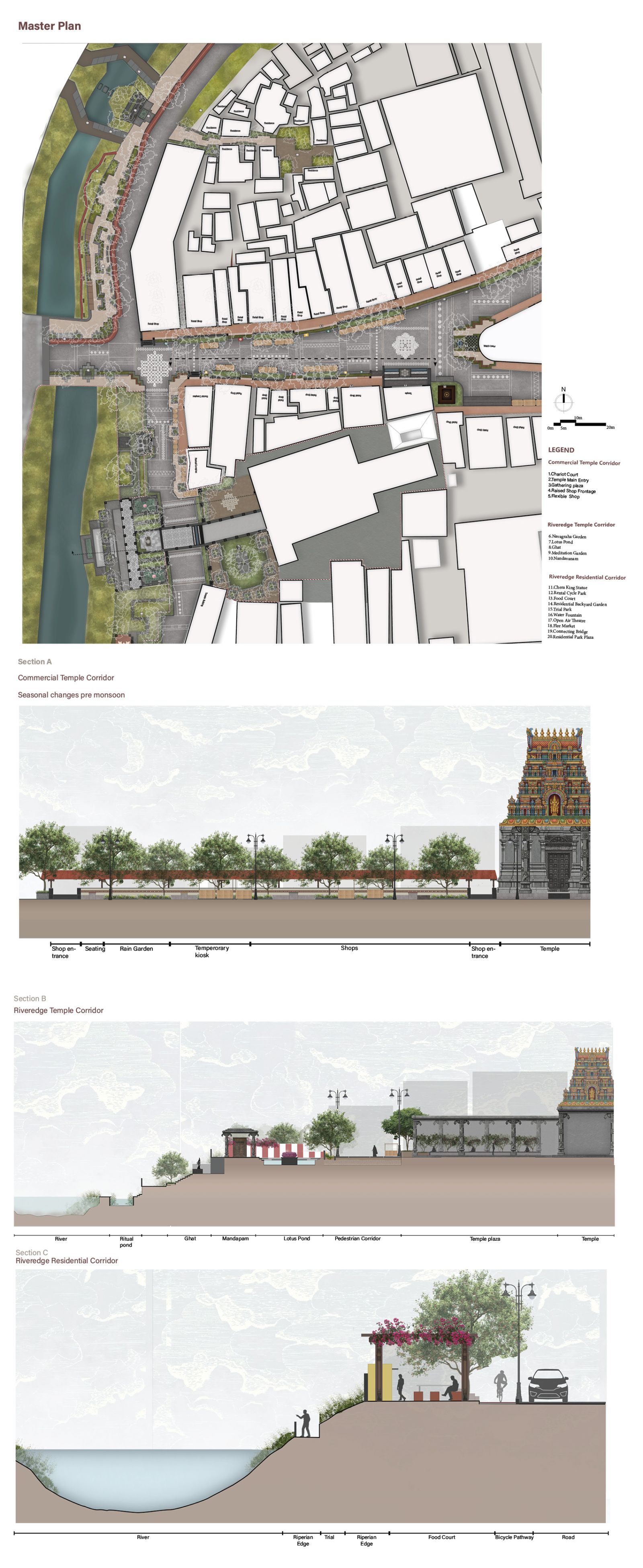
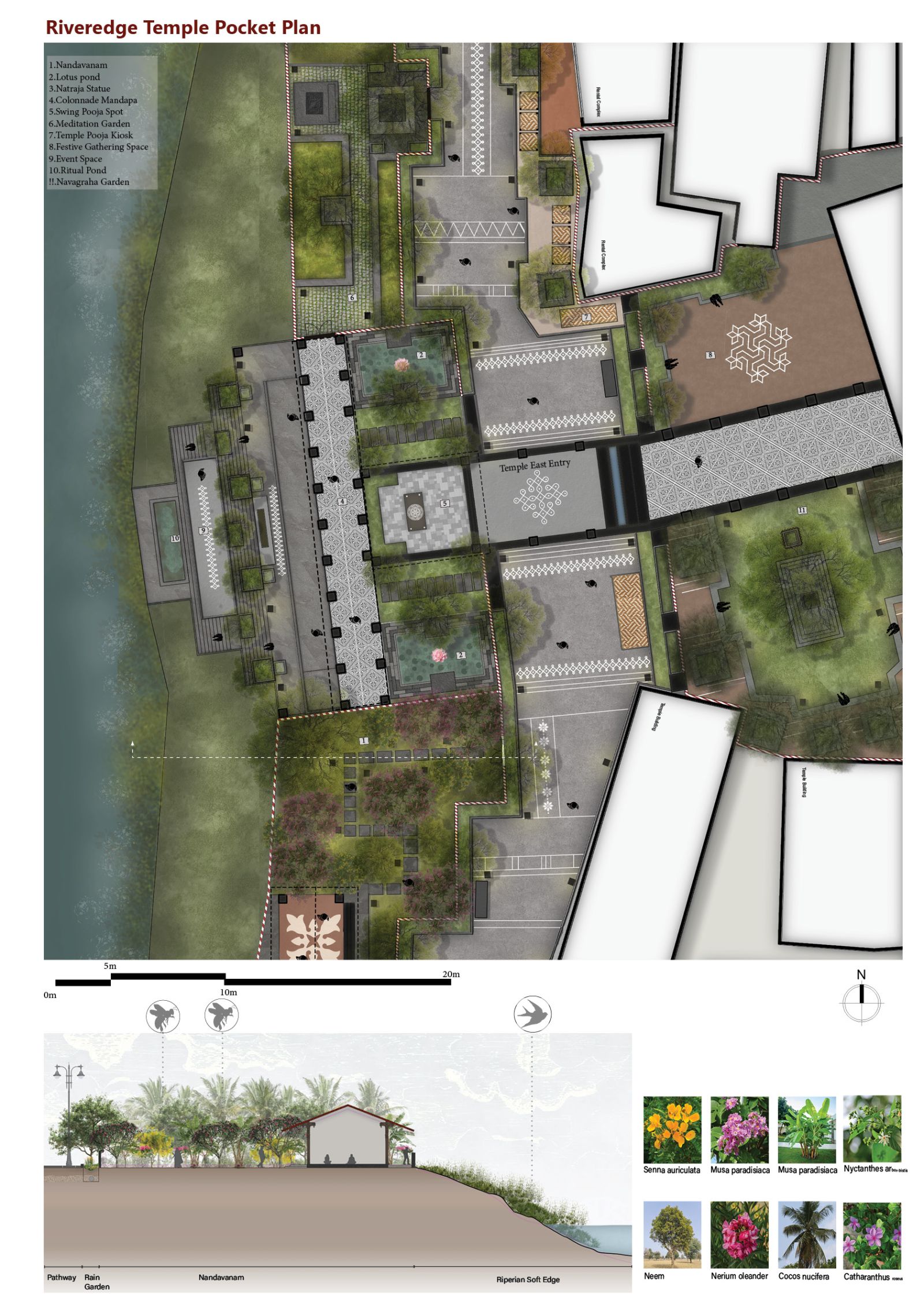
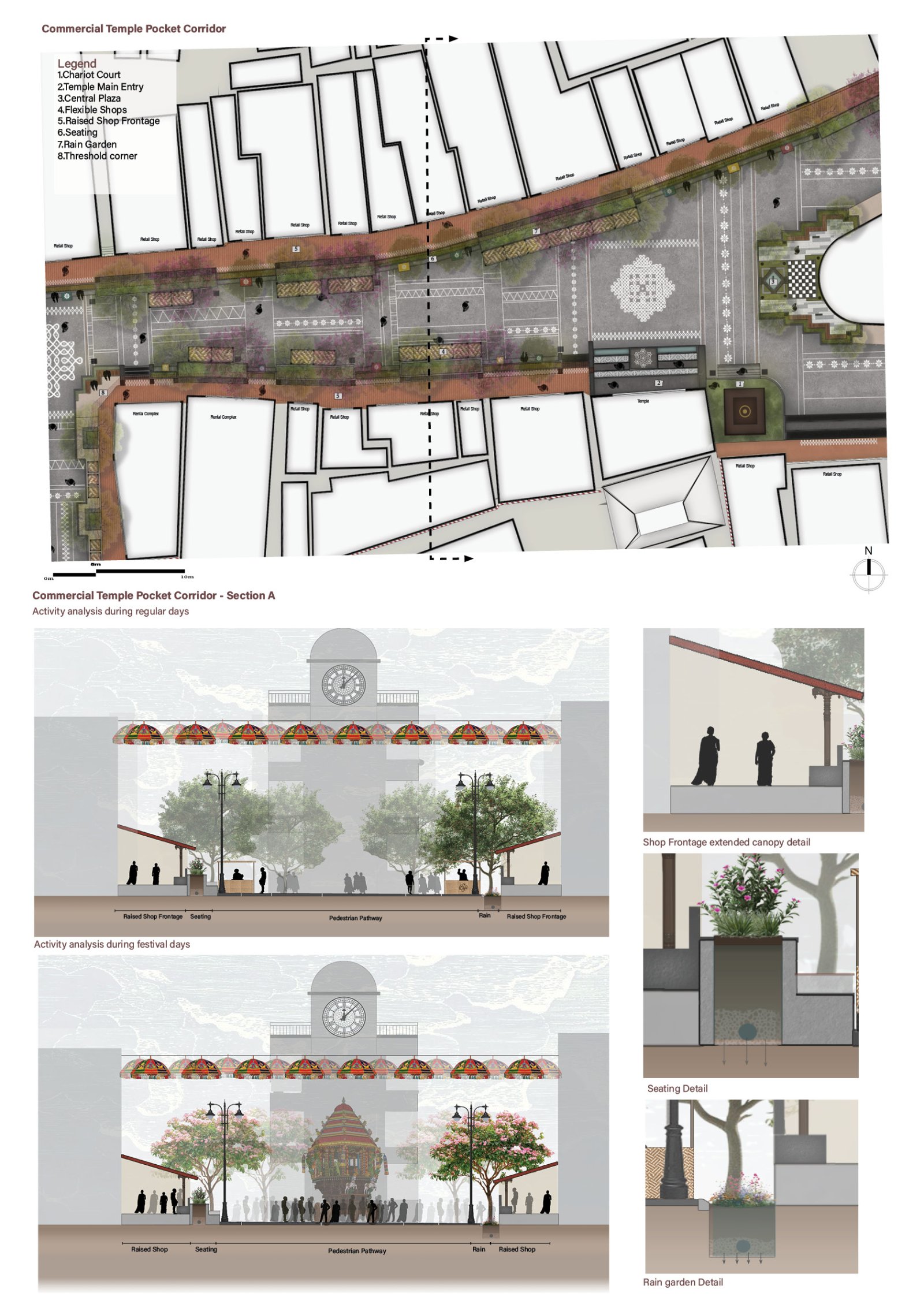
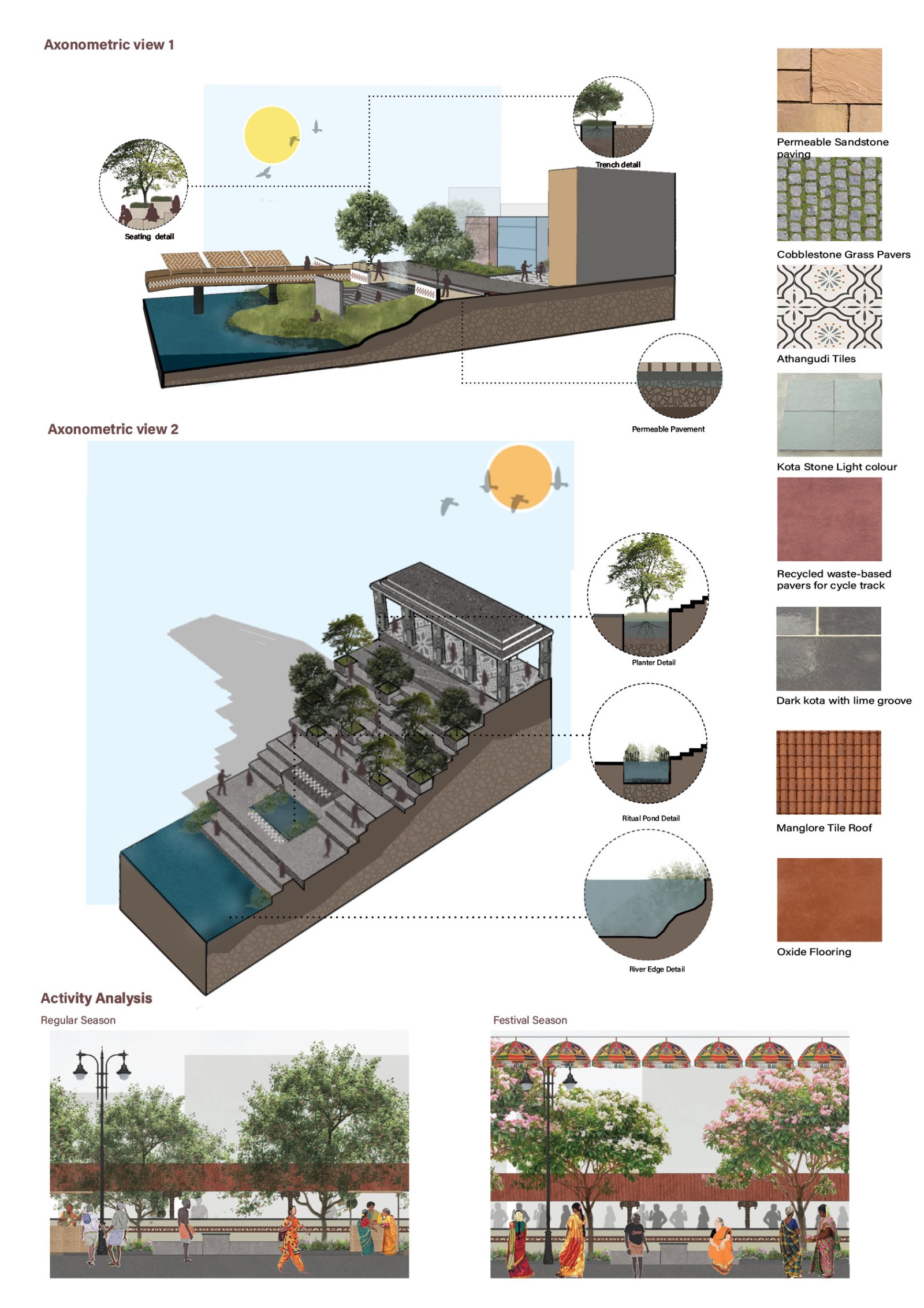
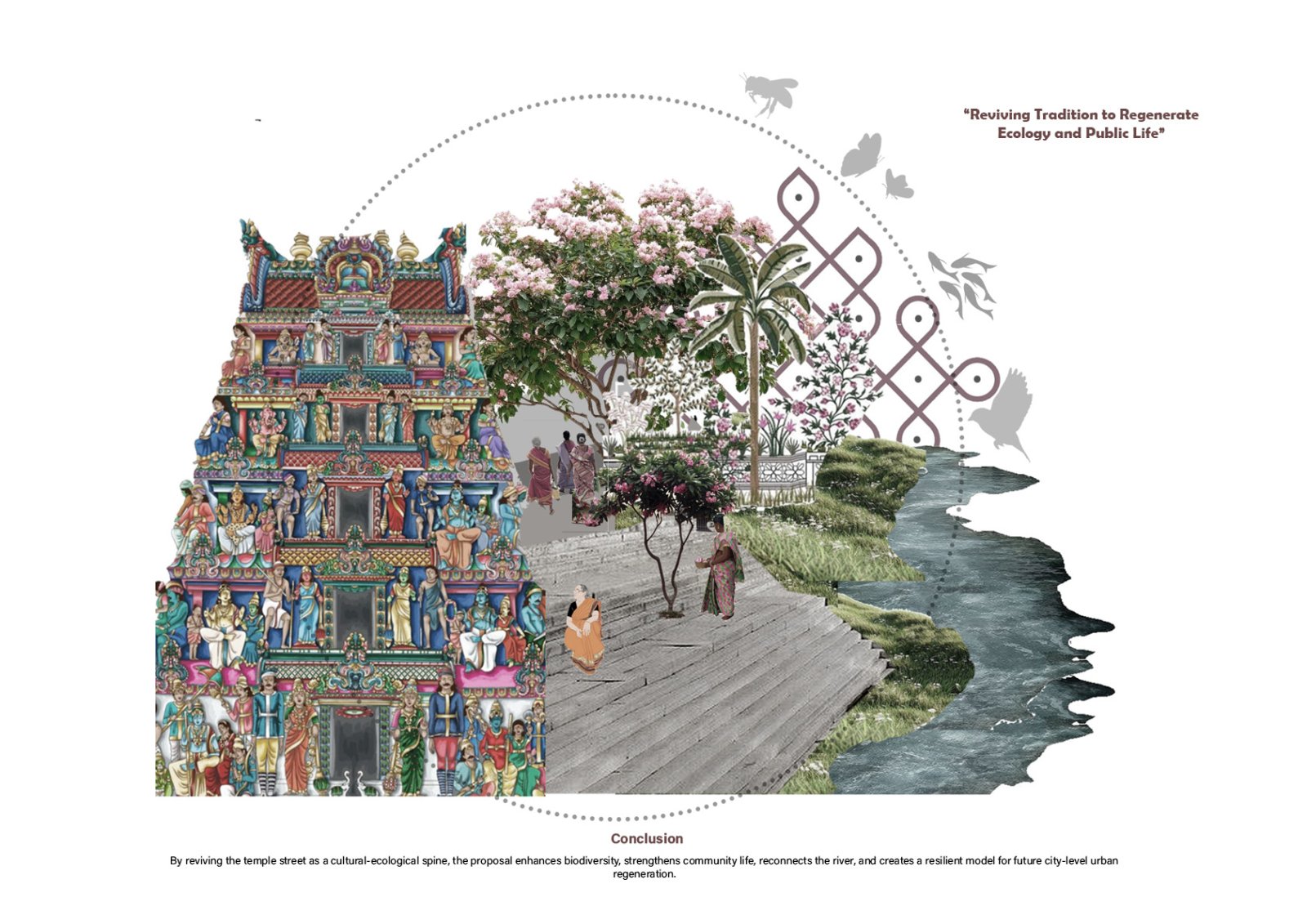
The temple streets of Salem historically functioned as active cultural corridors that connected temples, public life, markets, and the Thirumanimutharu River through ritual processions, shaded gathering spaces, and sacred landscapes. Over time, rapid urbanization, increasing vehicular movement, loss of native vegetation, and the transformation of the river into a hardened concrete canal have weakened the ecological and cultural identity of the corridor. The streets today experience reduced pedestrian comfort, fragmented public spaces, poor biodiversity, heat stress, and a disconnection between the temple, street, and river edge. In response, the proposal reinterprets the traditional concept of the Nandavanam as an urban cultural-ecological system integrated within the temple corridor. Through the introduction of native and sacred planting, flowering avenue trees, riparian restoration, permeable streetscapes, and pedestrian-oriented public spaces, the intervention reconnects the temple street with the river while enhancing biodiversity, thermal comfort, stormwater infiltration, and community interaction. By integrating cultural memory with ecological infrastructure, the corridor is reimagined as an Urban Nandavanam a resilient public realm where ritual life, biodiversity, and everyday urban experience coexist within the historic fabric of Salem.
View Additional Work