Phondekar Gargi Durgesh Nandini

ID4043

Book Forest

This project explores how a lattice of wood and glass can script a slow, introspective journey through space. The structure thickens, thins, and folds to guide movement, hold light, and shape quiet pockets for reading and pause. As one moves, the grid shifts from open to dense, revealing paths, ledges, and hovering planes that feel both grounded and weightless. The Book Forest becomes less a room and more a wandering field, where solitude is not isolation but a deliberate retreat shaped by material opacity, filtered light, and the rhythm of stepping, stopping, and looking.

View Additional Work
Report Content

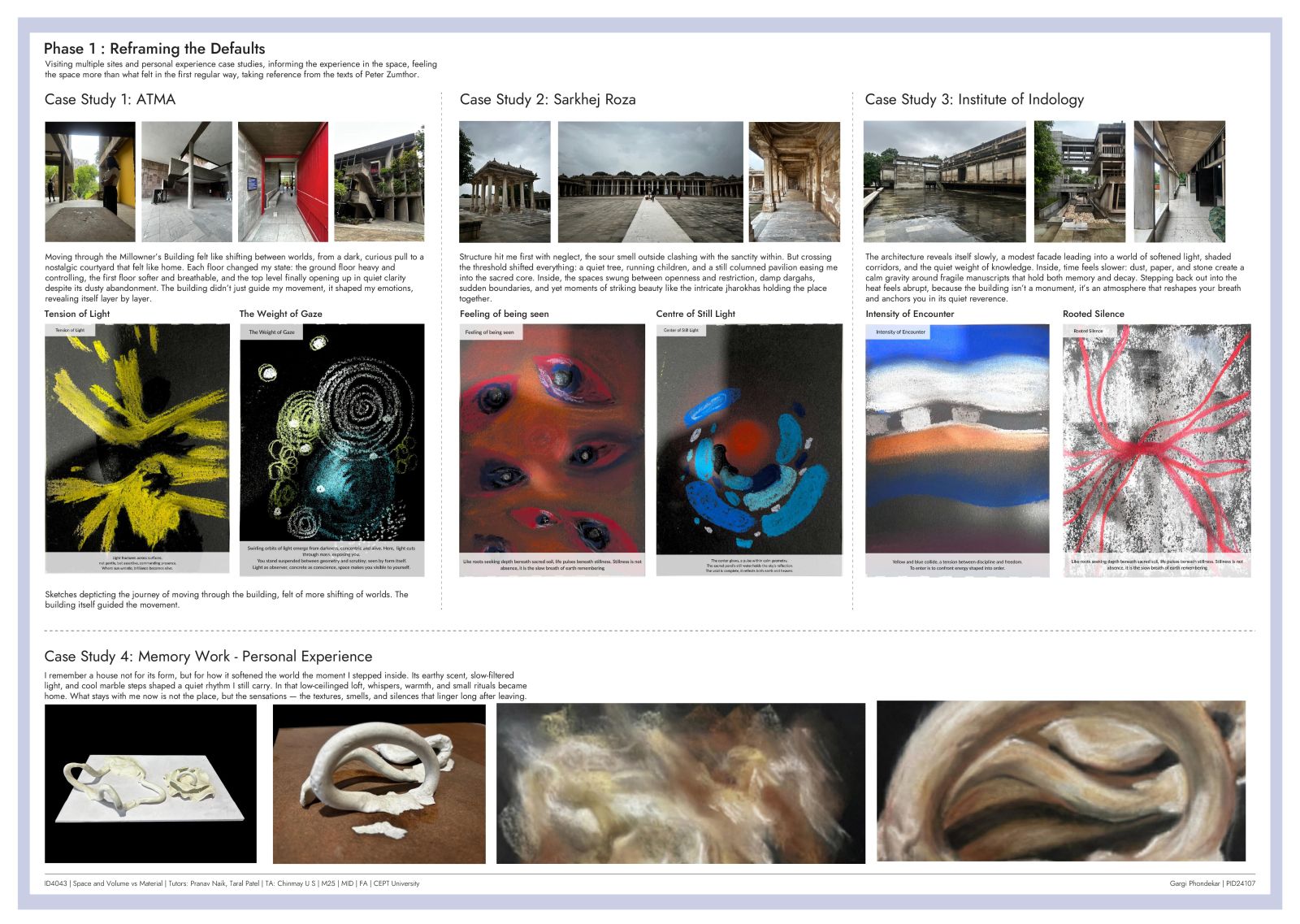
Phase 1 examines how light, thresholds, material memory, and spatial tension shape perception across ATMA, Sarkhej Roza, and the Institute of Indology, concluding with personal memory work that distills the core sensory experience.

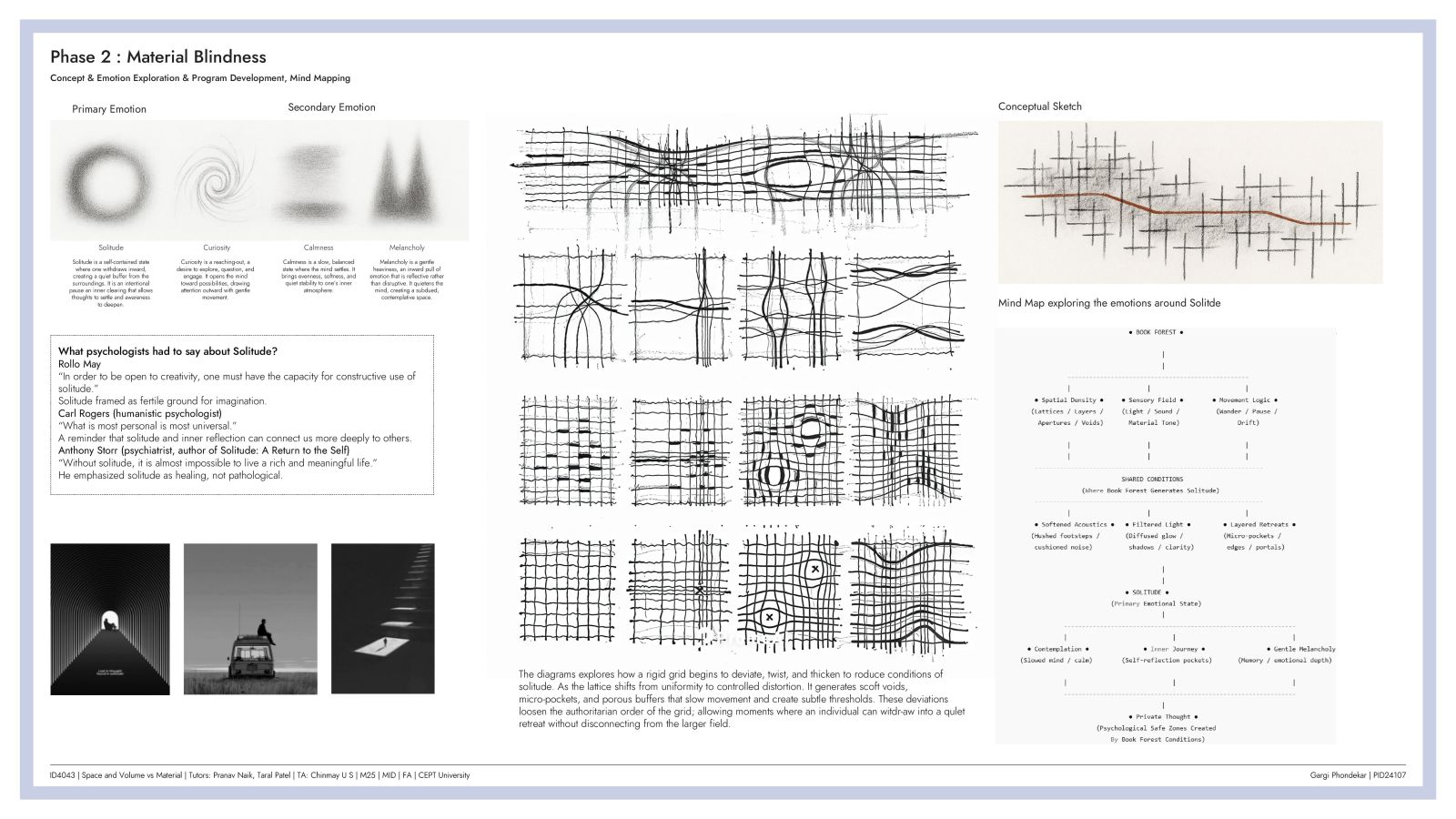
Phase 2 investigates how personal exploration of emotion leads to a clearer, self-formed understanding of emotional experience and its spatial behaviour.

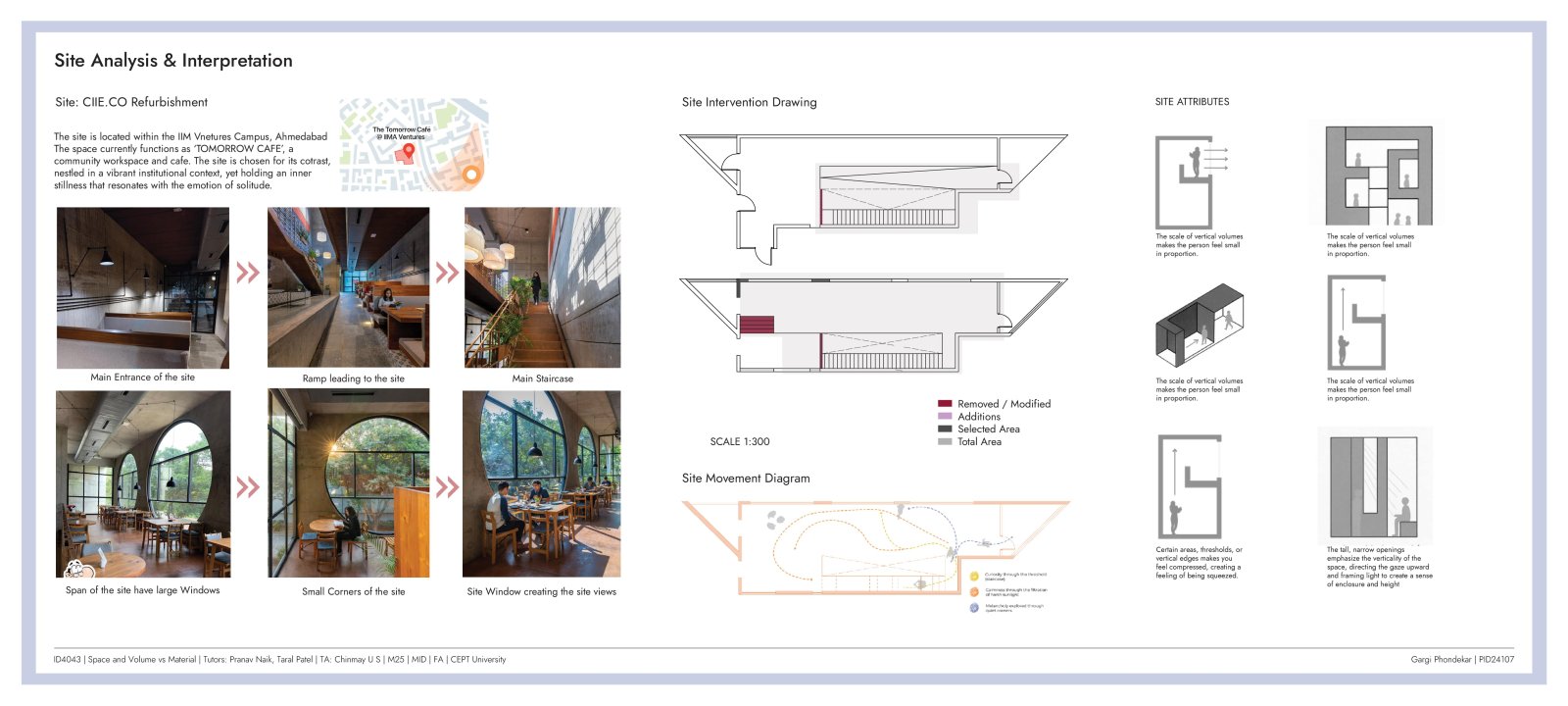
The study outlines how viewpoints, circulation paths, and vertical proportions structure the site’s spatial behaviour.

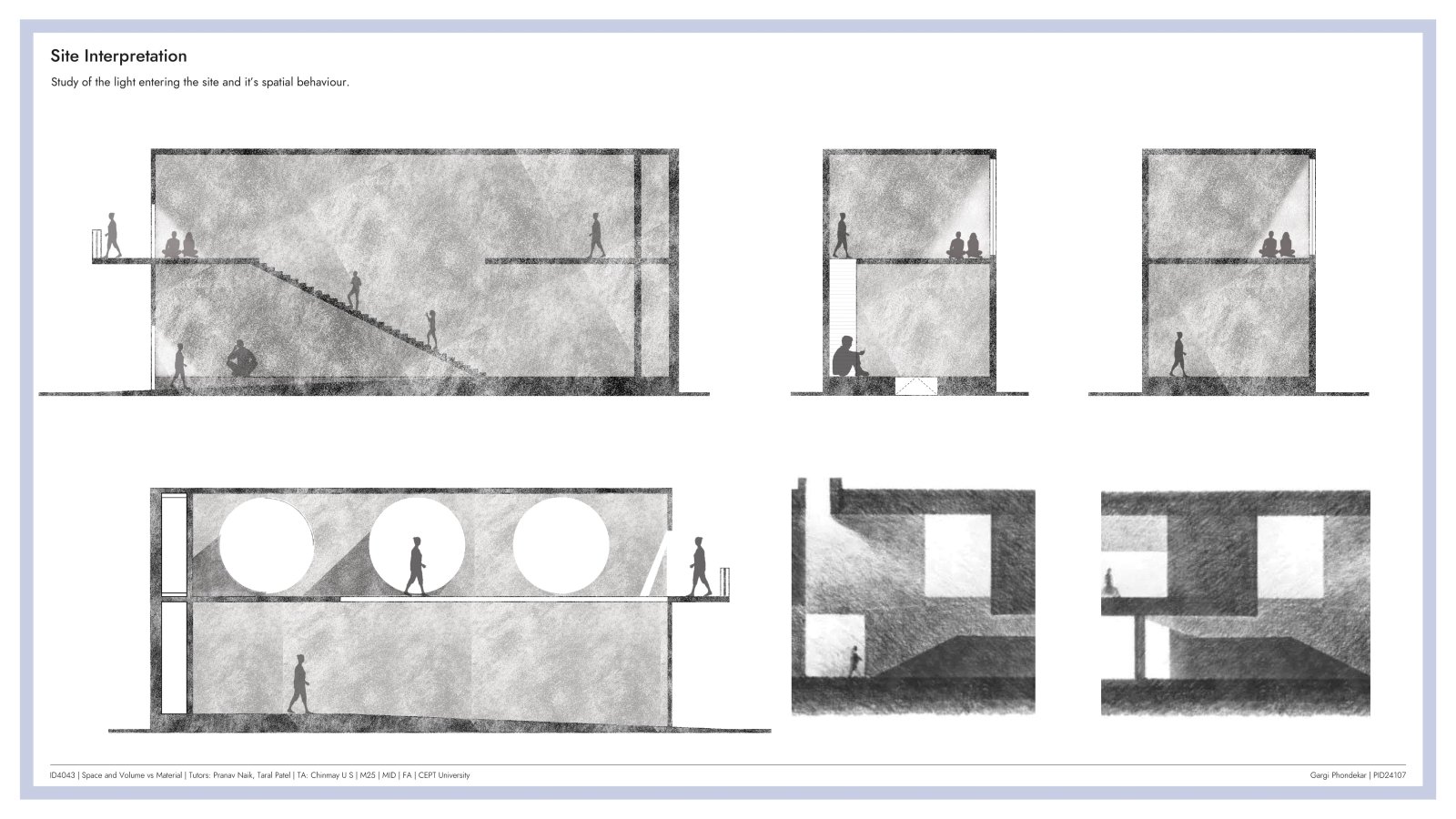
Sectional drawings interpretation showing how light shapes enclosure, movement, and spatial depth within the site.

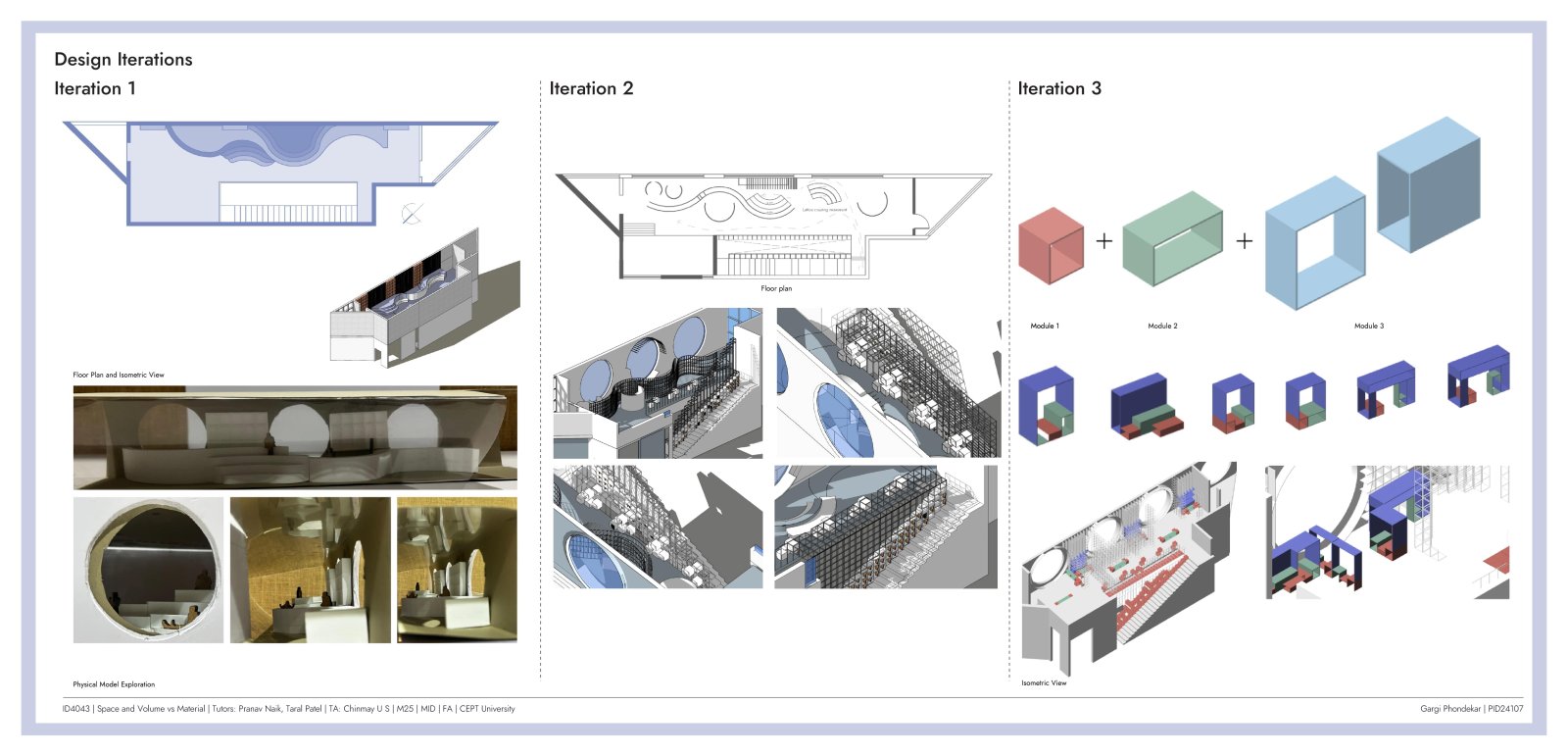
Design iterations showing the evolution from early volumetric layouts to modular spatial systems that define enclosure, seating, and movement within the intervention.

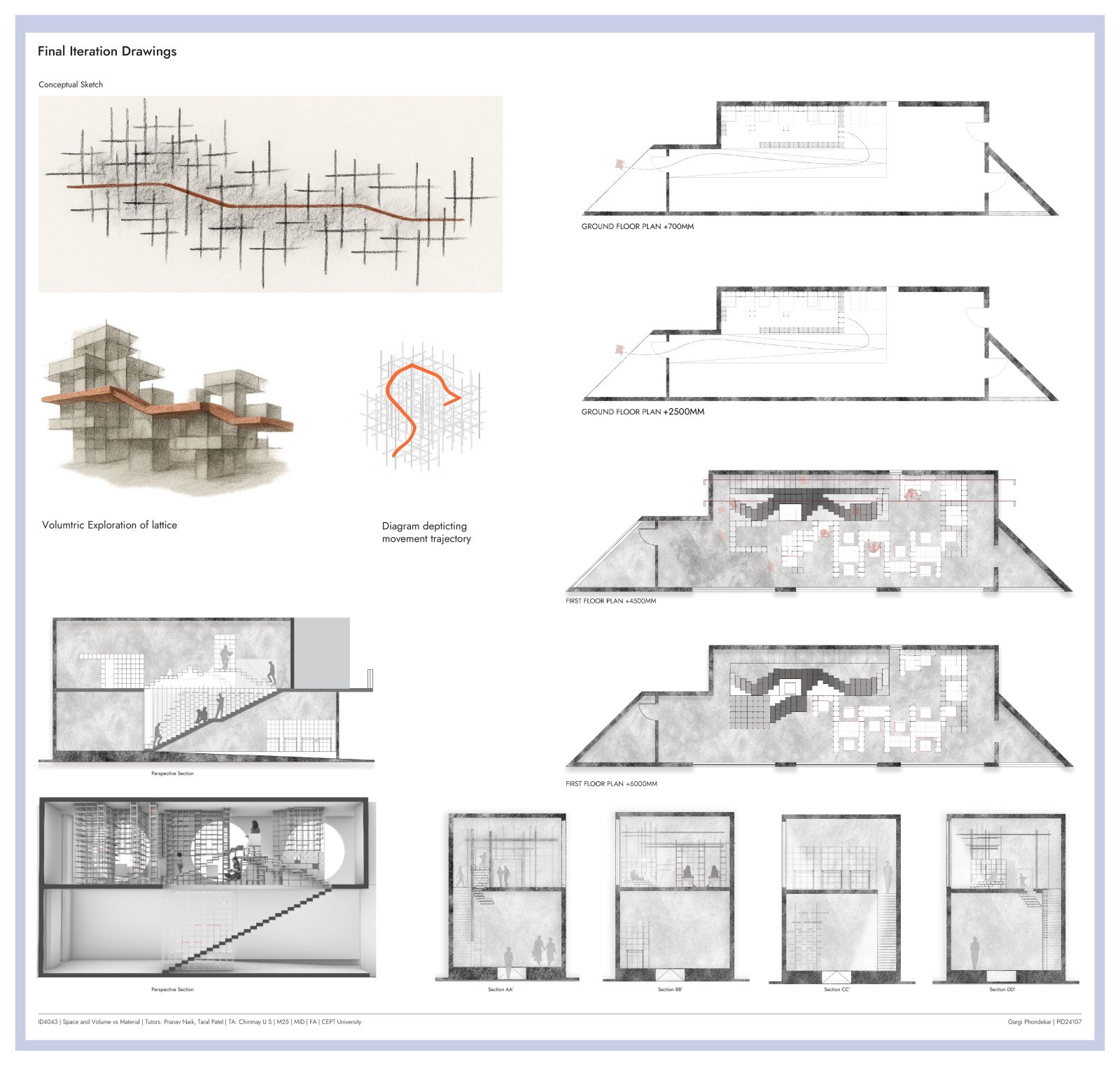
Design Proposal Drawings

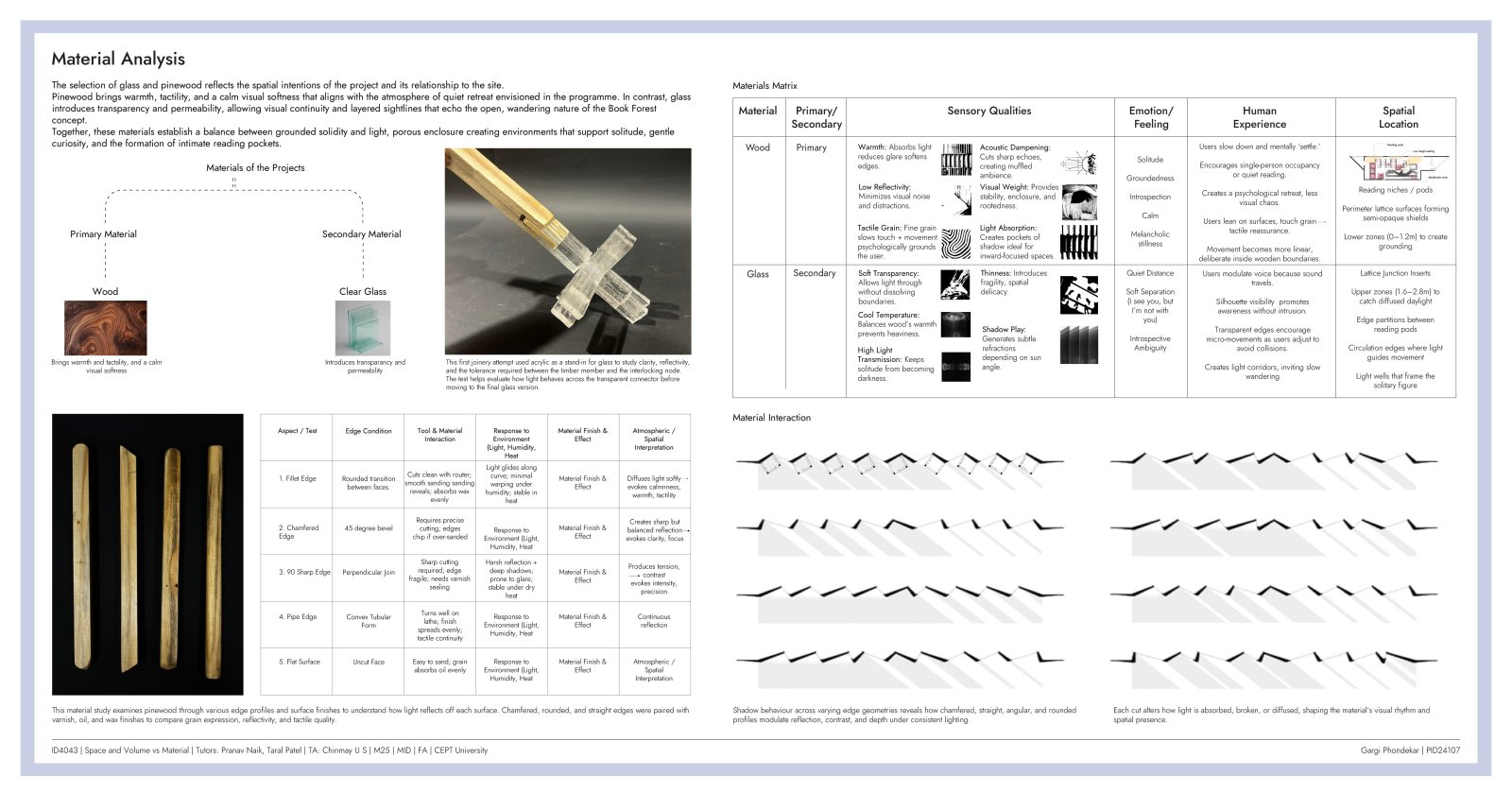
Material behaviour study showing how pinewood and glass, through edge conditions, finishes, and shadow response—construct the project’s visual rhythm, spatial softness, and solitude-driven atmosphere.

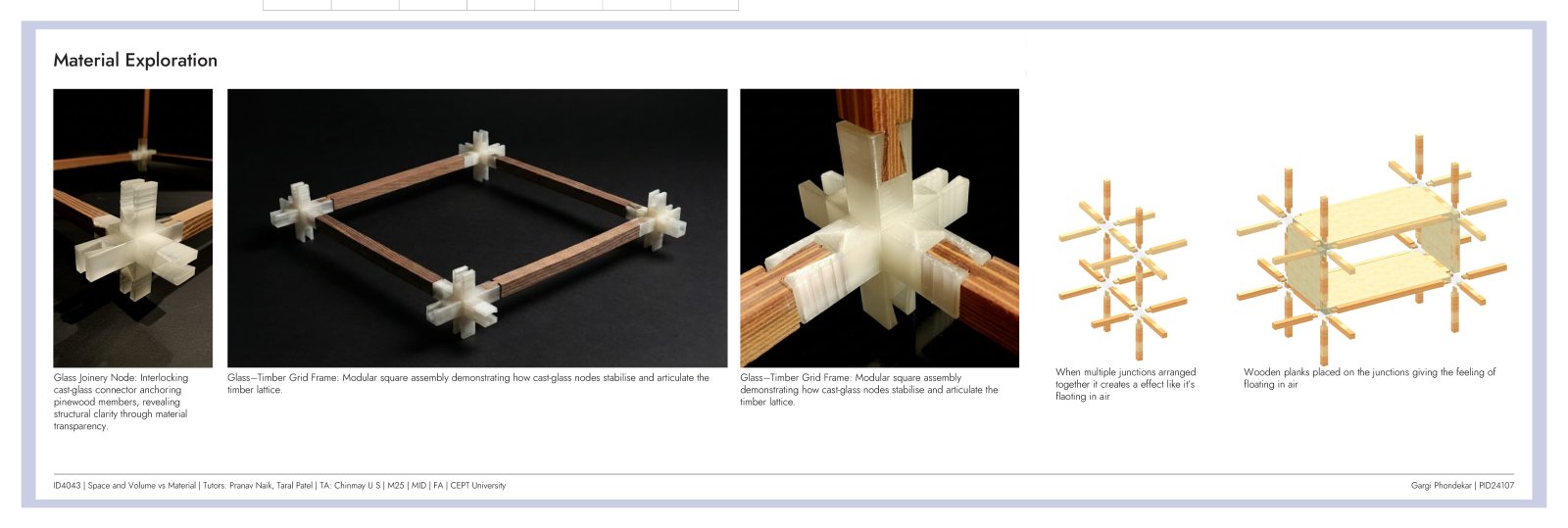
Material exploration demonstrating how cast-glass nodes lock timber members into a stable lattice, enabling modular assemblies, floating planes, and visually light structural volumes.

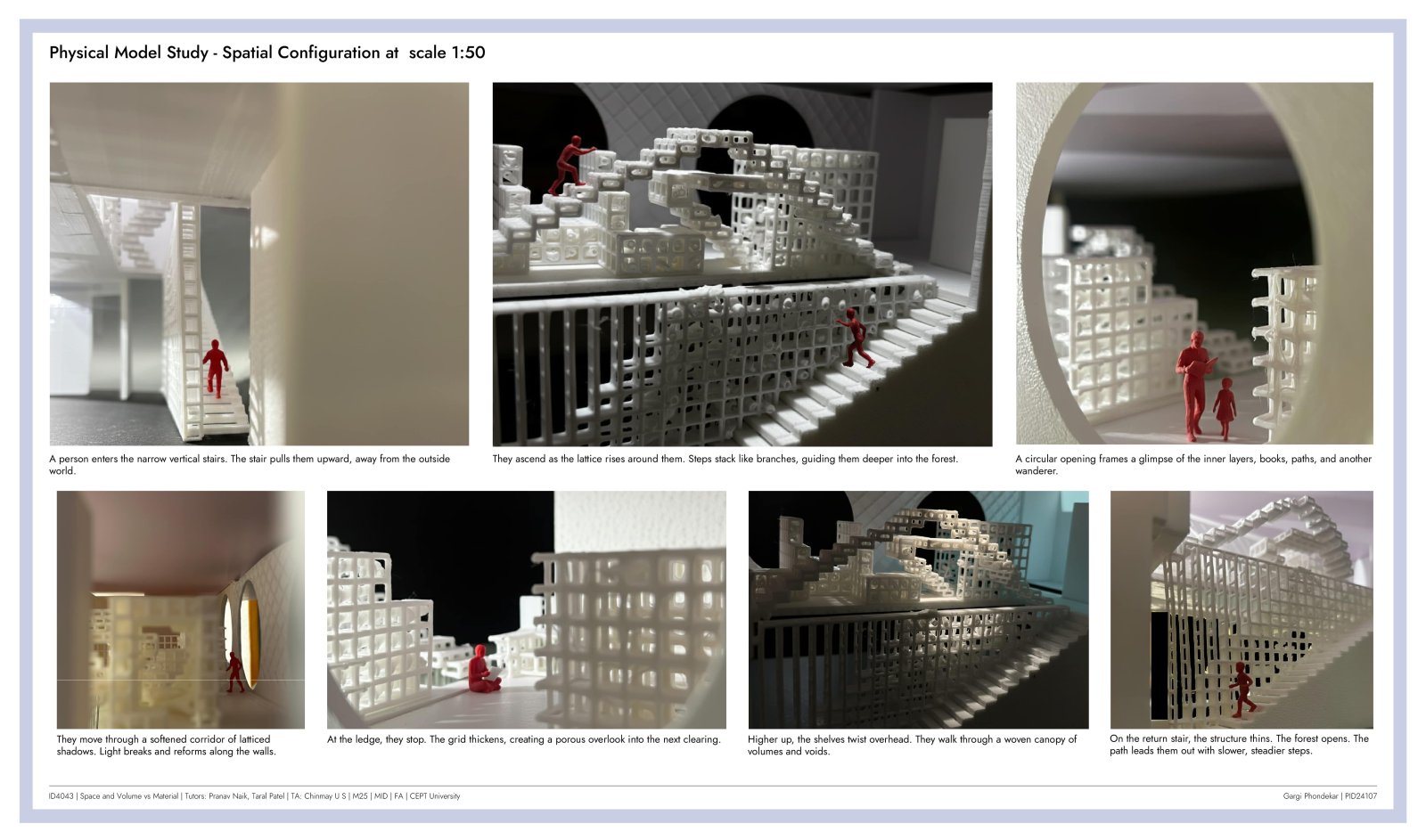
Physical model study mapping how lattice density, stepped volumes, and framed openings choreograph ascent, pause, and return within the Book Forest spatial sequence.

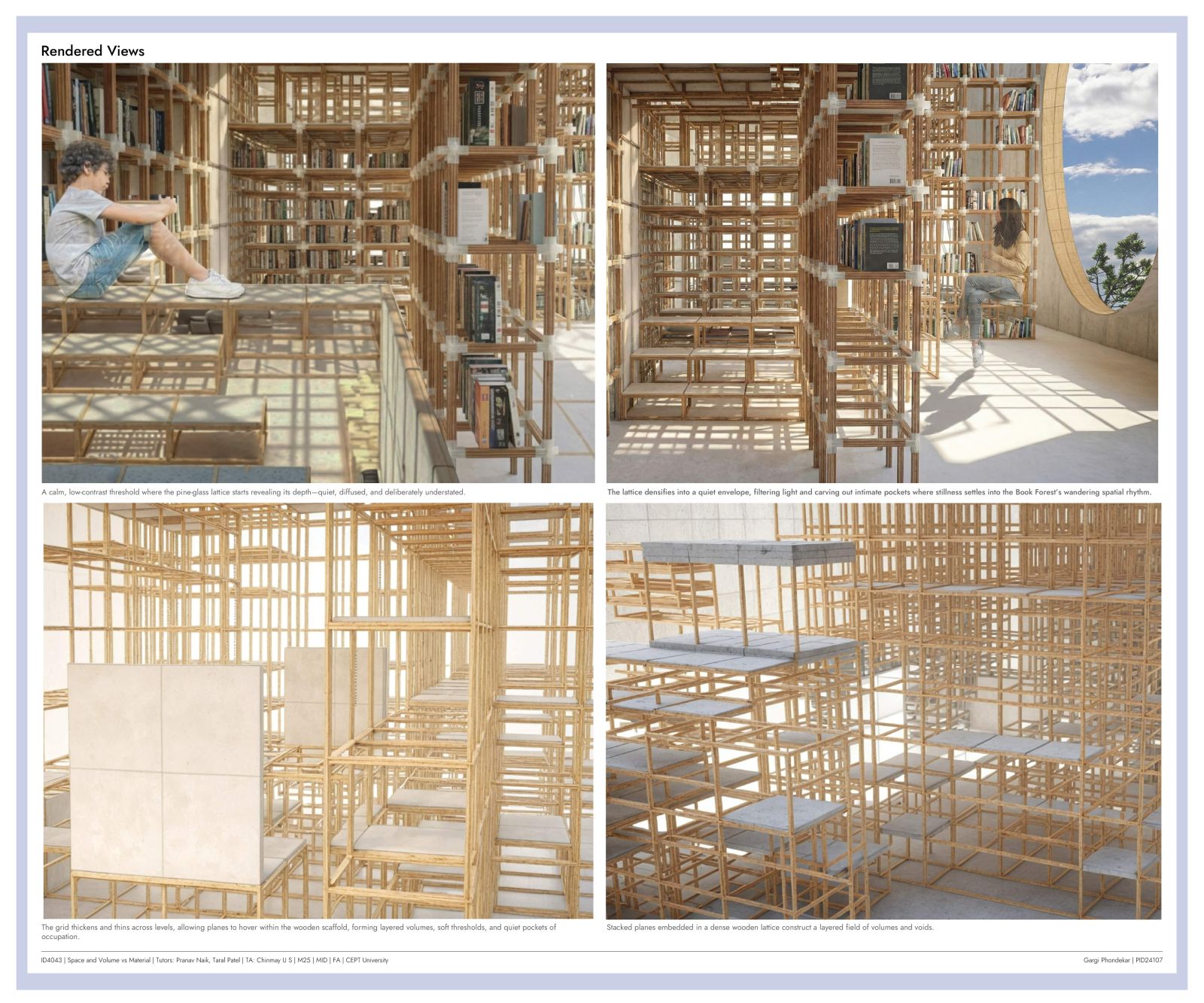
Rendered views illustrating how a dense pine – glass lattice filters light, thickens and thins across levels, and anchors hovering planes to construct a layered field of volumes, voids, and quiet occupiable pockets.