Your browser is out-of-date!
For a richer surfing experience on our website, please update your browser. Update my browser now!
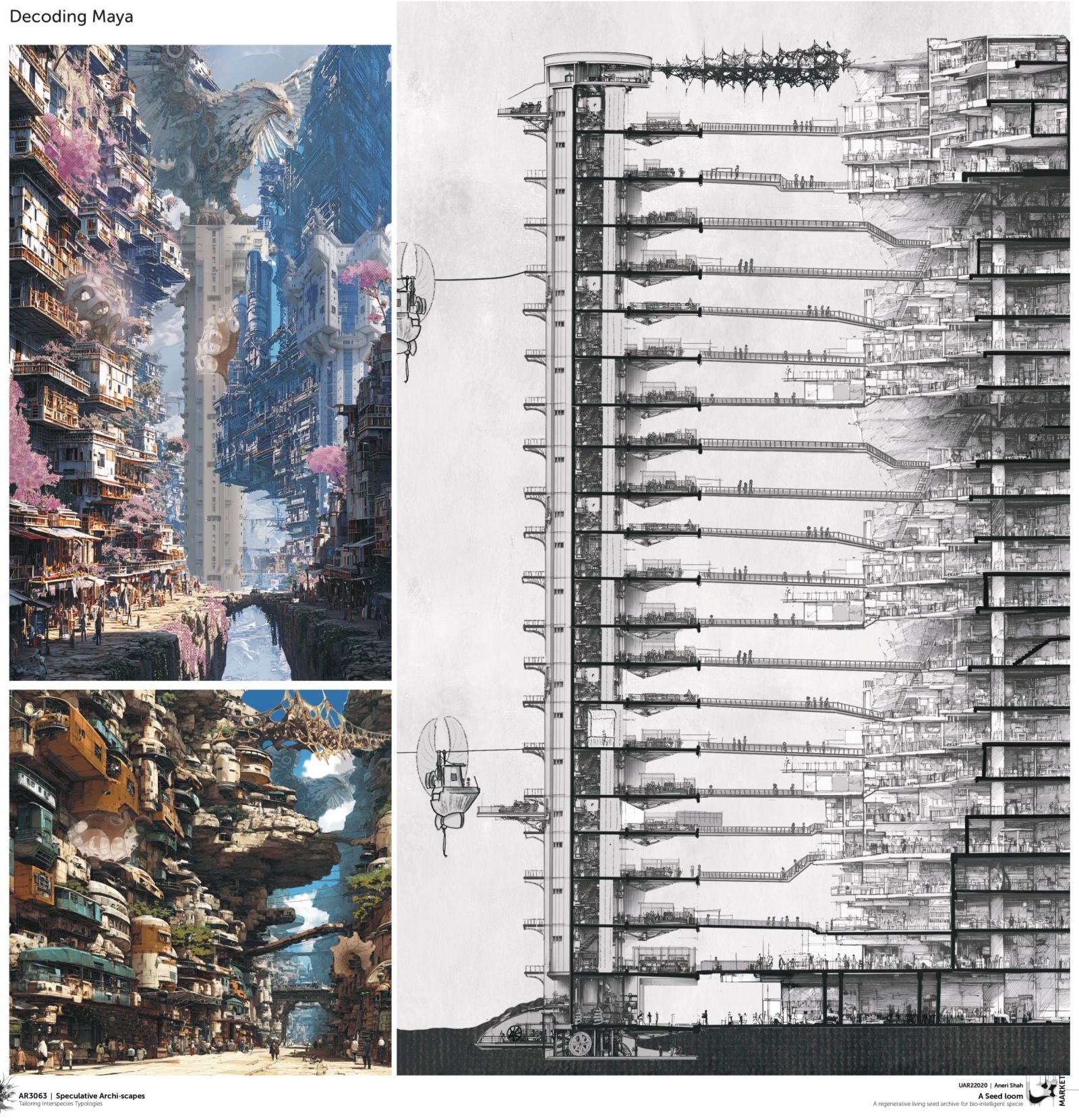
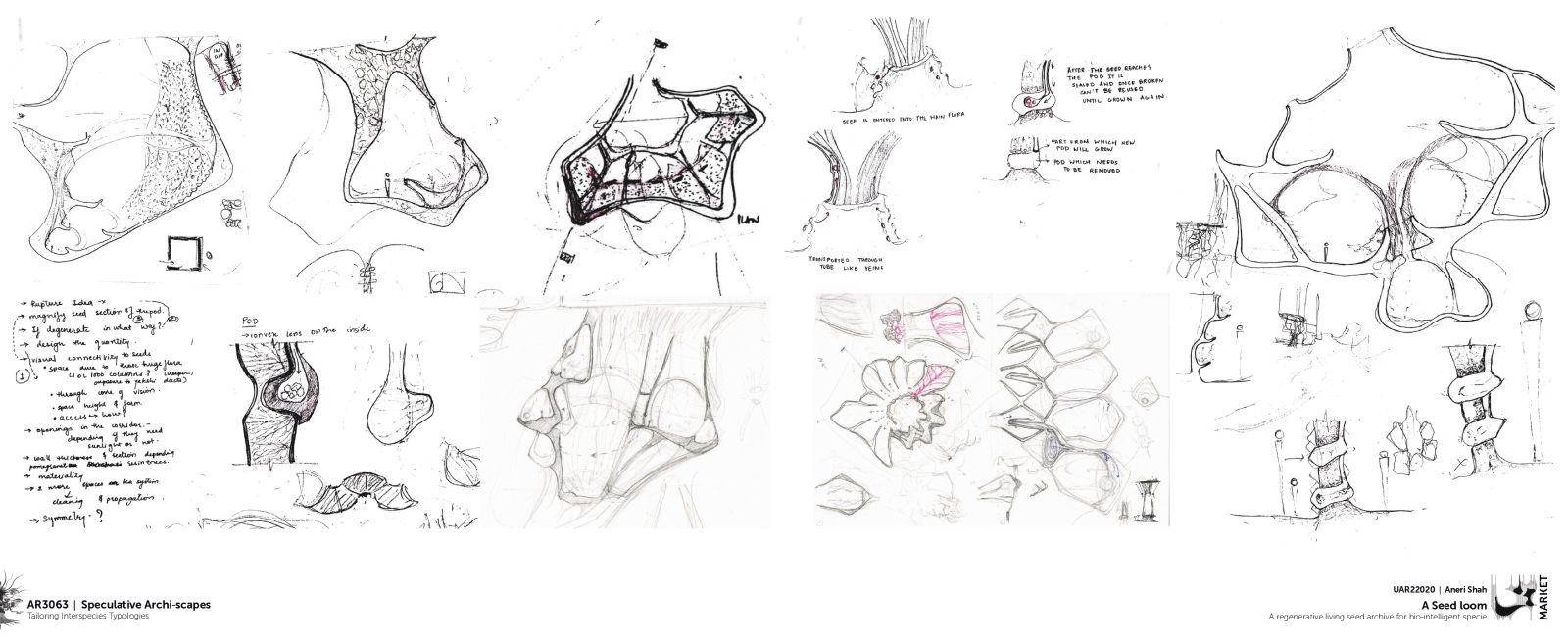
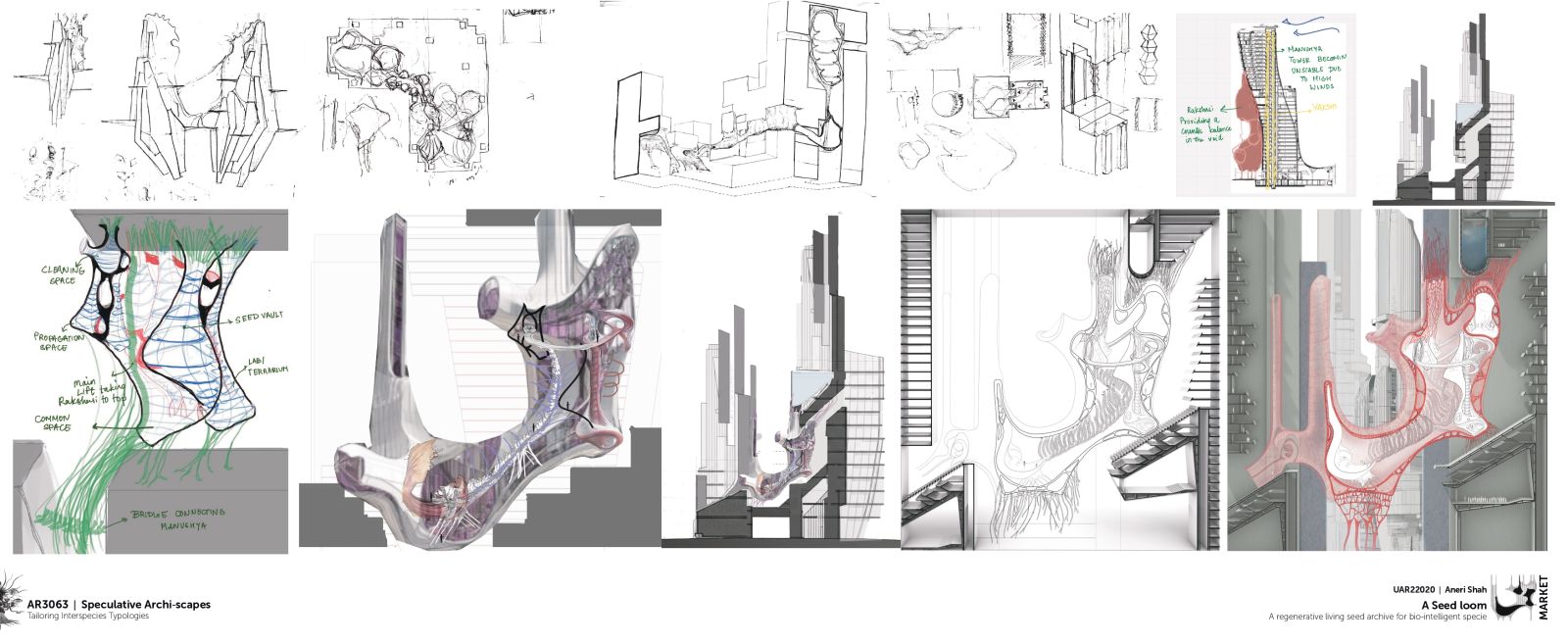
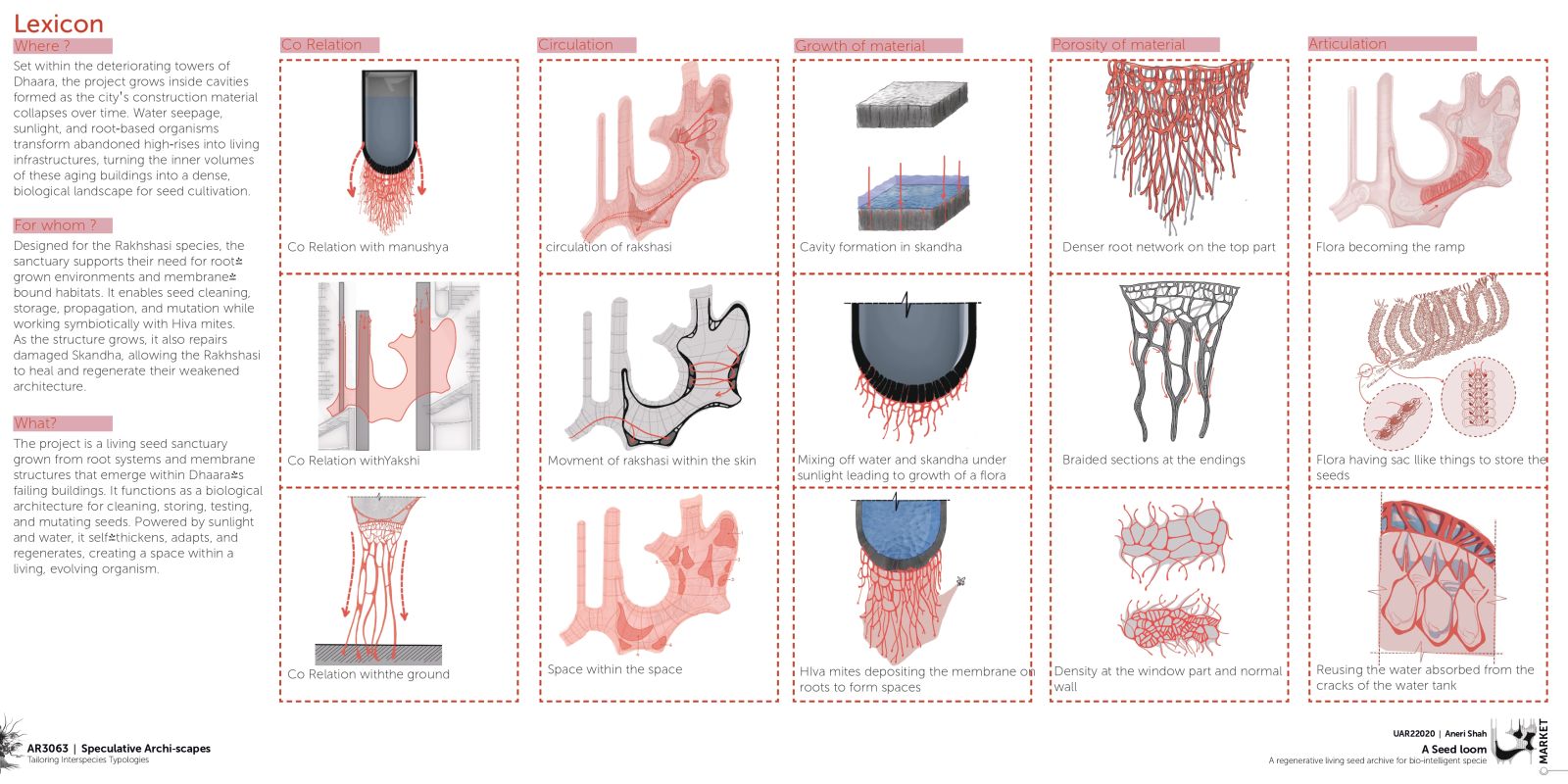
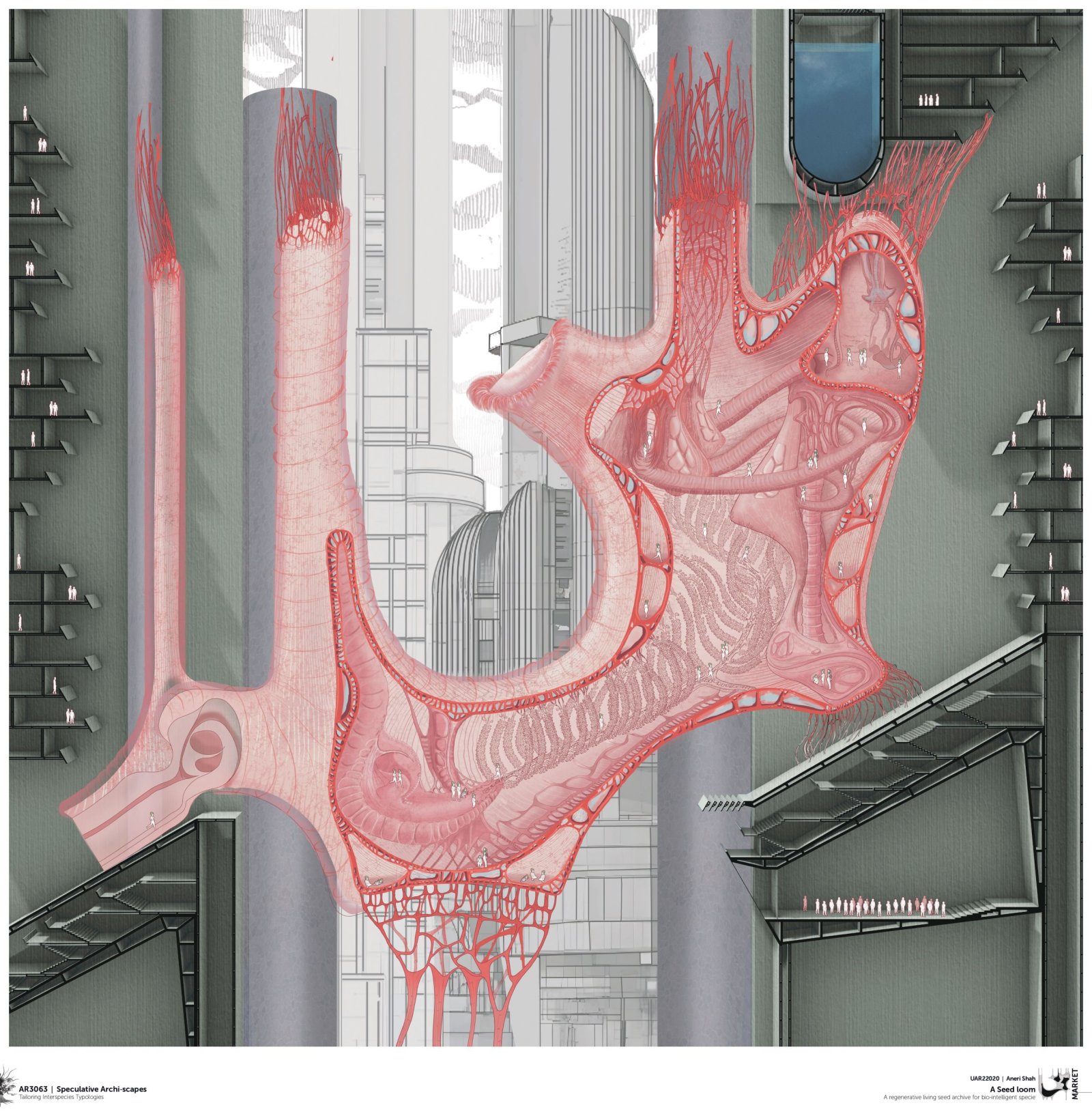
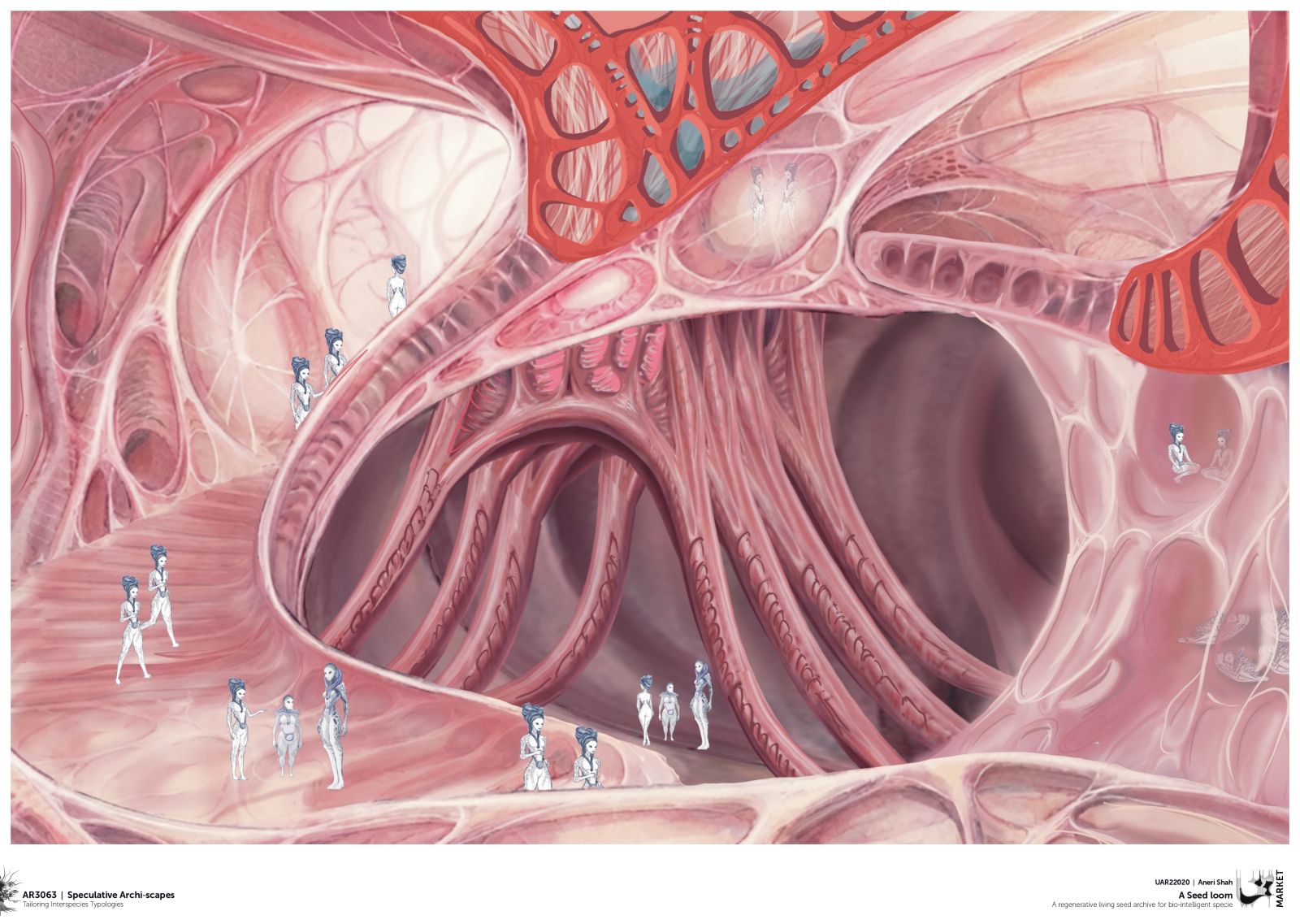
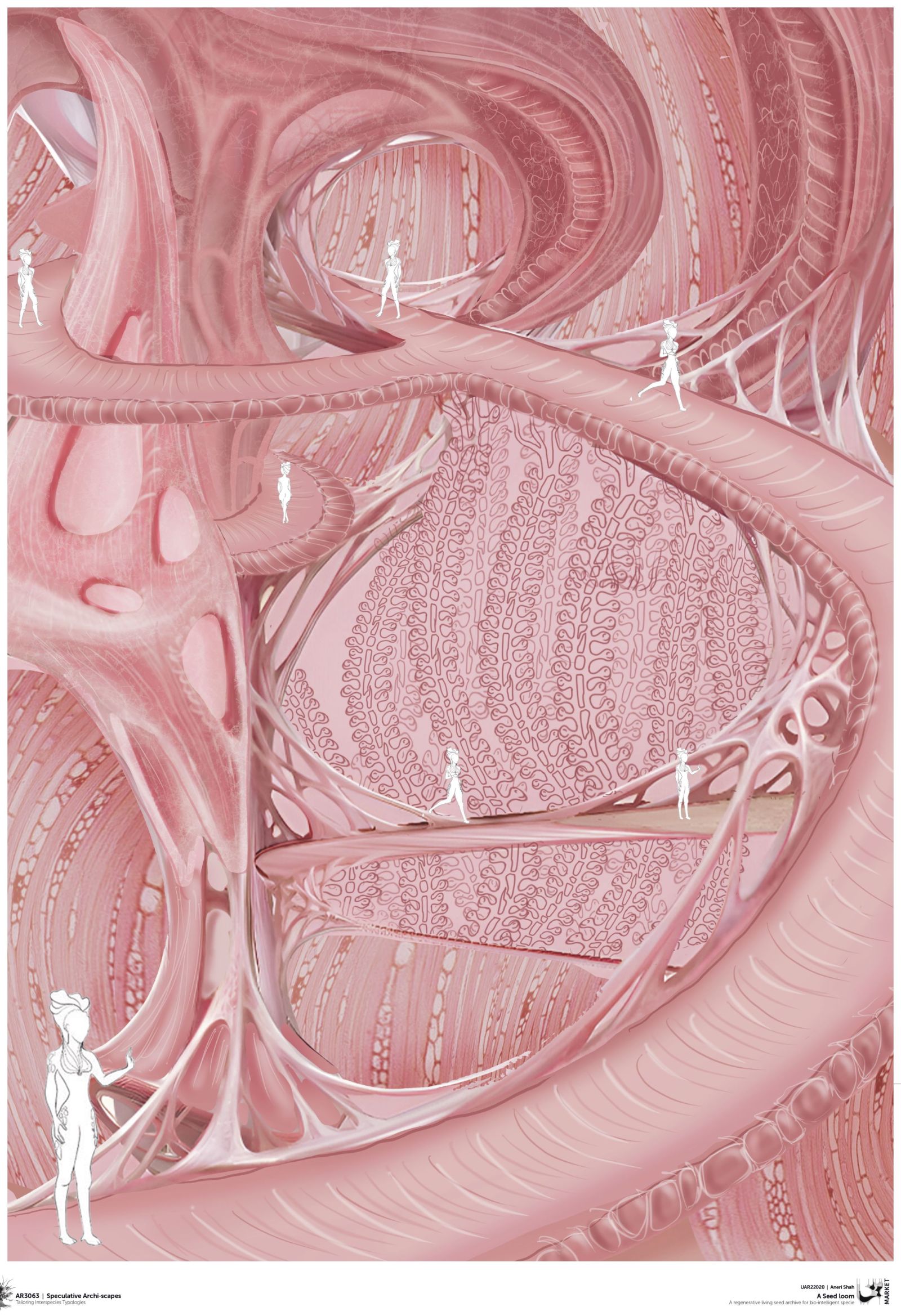
Amidst the decaying towers of Dhaara, the Rakhshasi cultivate a grown, not built, seed sanctuary emerging directly from the city’s failing materiality. As cavities formed within the aging structures, water seepage activated dormant floral organisms whose root-systems sprawled into dense, fibrous networks. Guided by the Rakhshasi, Hiva mites secrete binding membranes that weave these roots into inhabitable chambers, forming a living architecture of translucent sacs that cradle thousands of seeds. As it grows, this organism-architecture also reinforces and repairs the damaged Skandha, stabilizing weakened structures from within. A larger exterior membrane envelops nested spaces—zones for washing and sorting seeds, propagation chambers testing viability, and a mutable laboratory where new species are coaxed into existence. Fed entirely by sunlight and water, the architecture self-thickens, regenerates, and adapts. This project explores a spatial ecology where architecture, species, and environment co-evolve, creating a space within a space: an adaptive, breathing archive of regeneration shaped by symbiosis rather than construction.
View Additional Work