Your browser is out-of-date!
For a richer surfing experience on our website, please update your browser. Update my browser now!
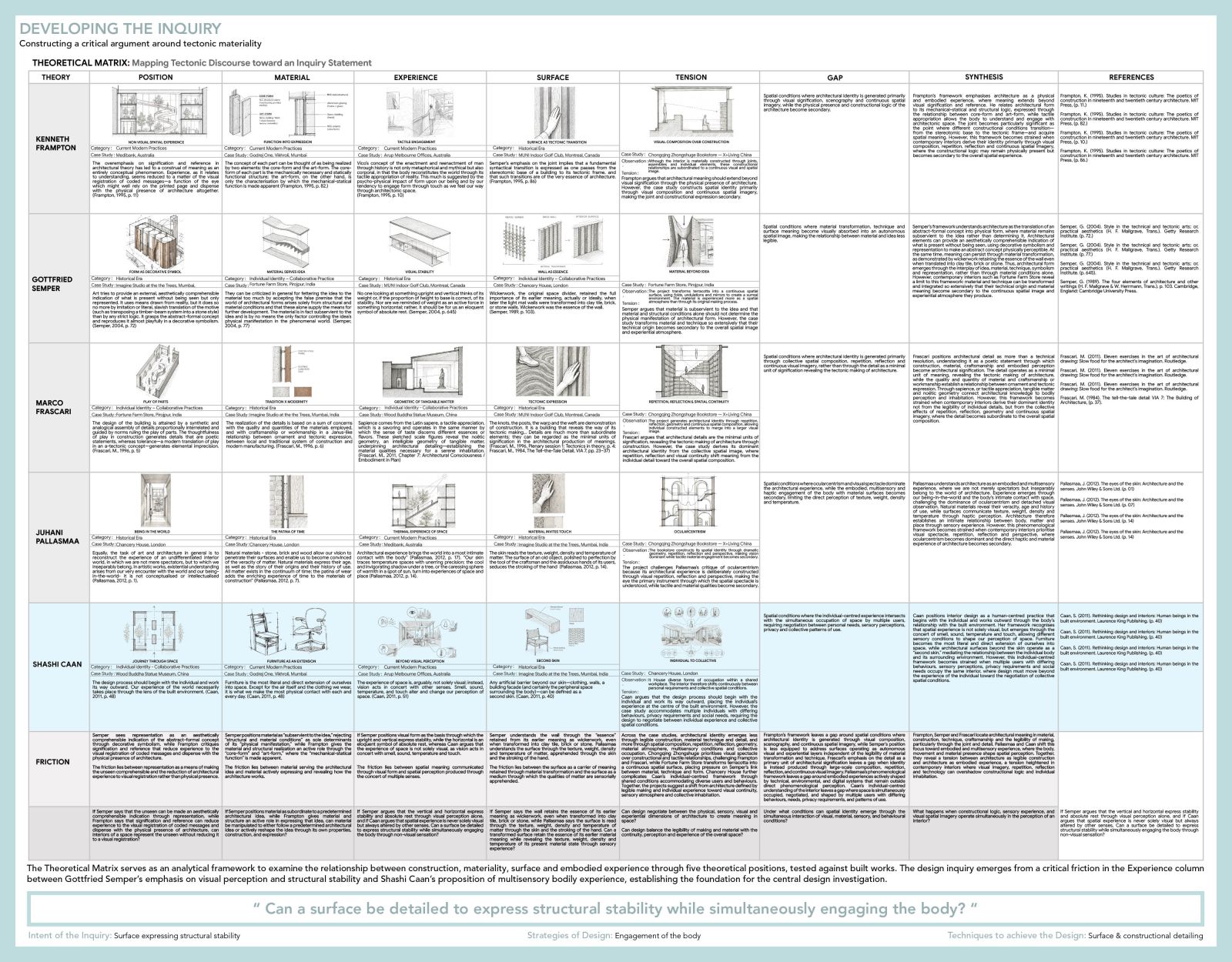
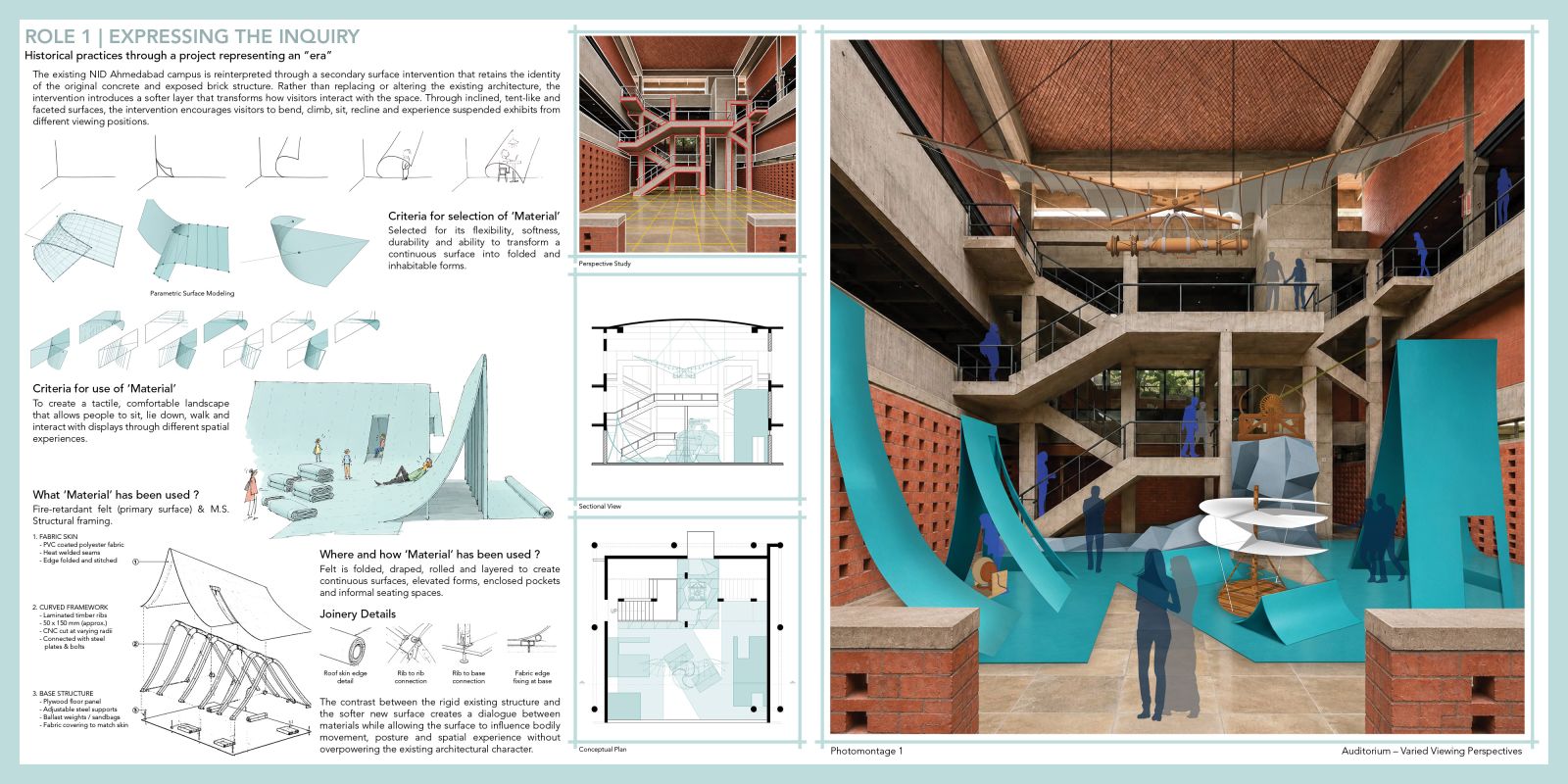
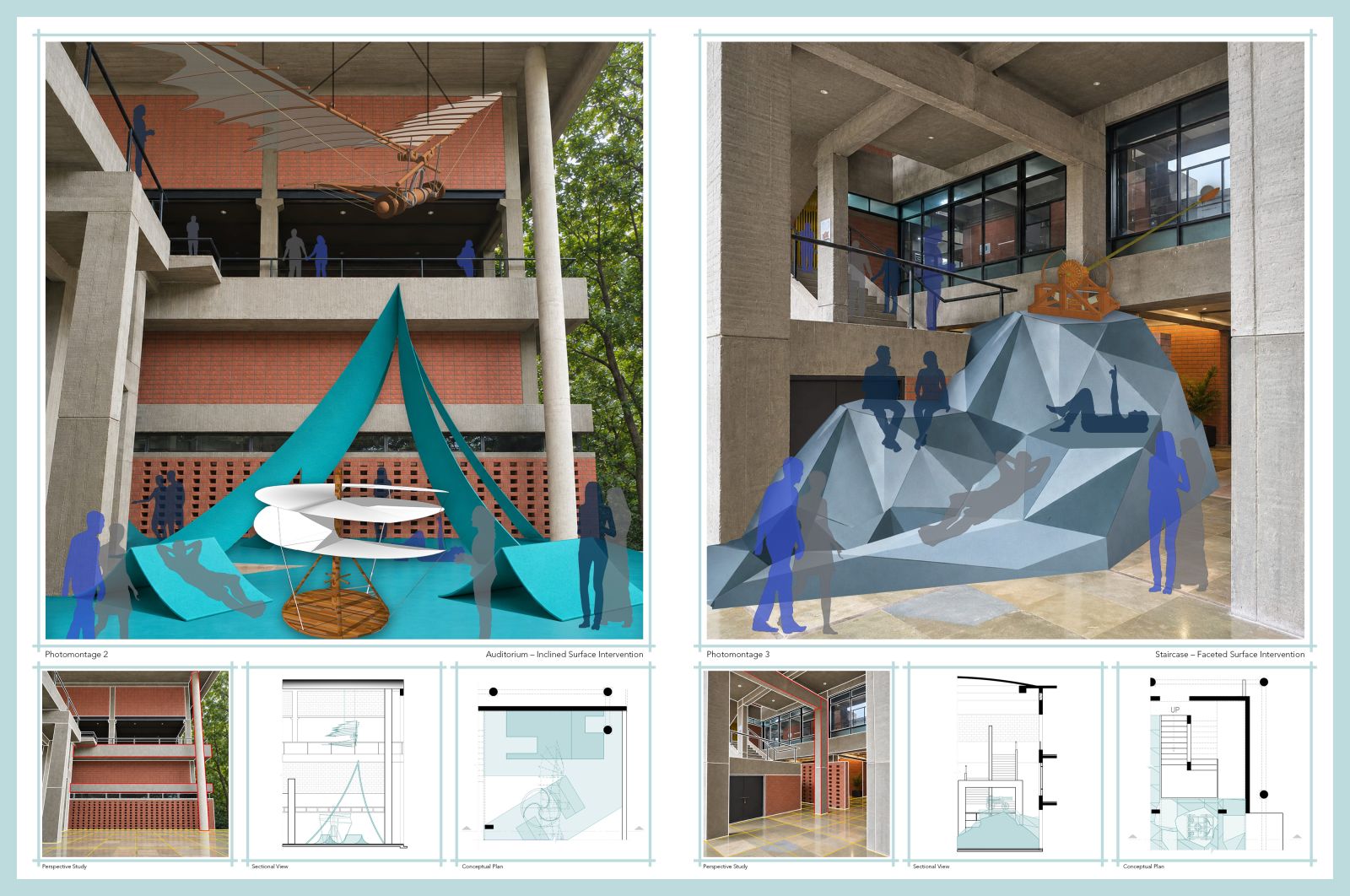
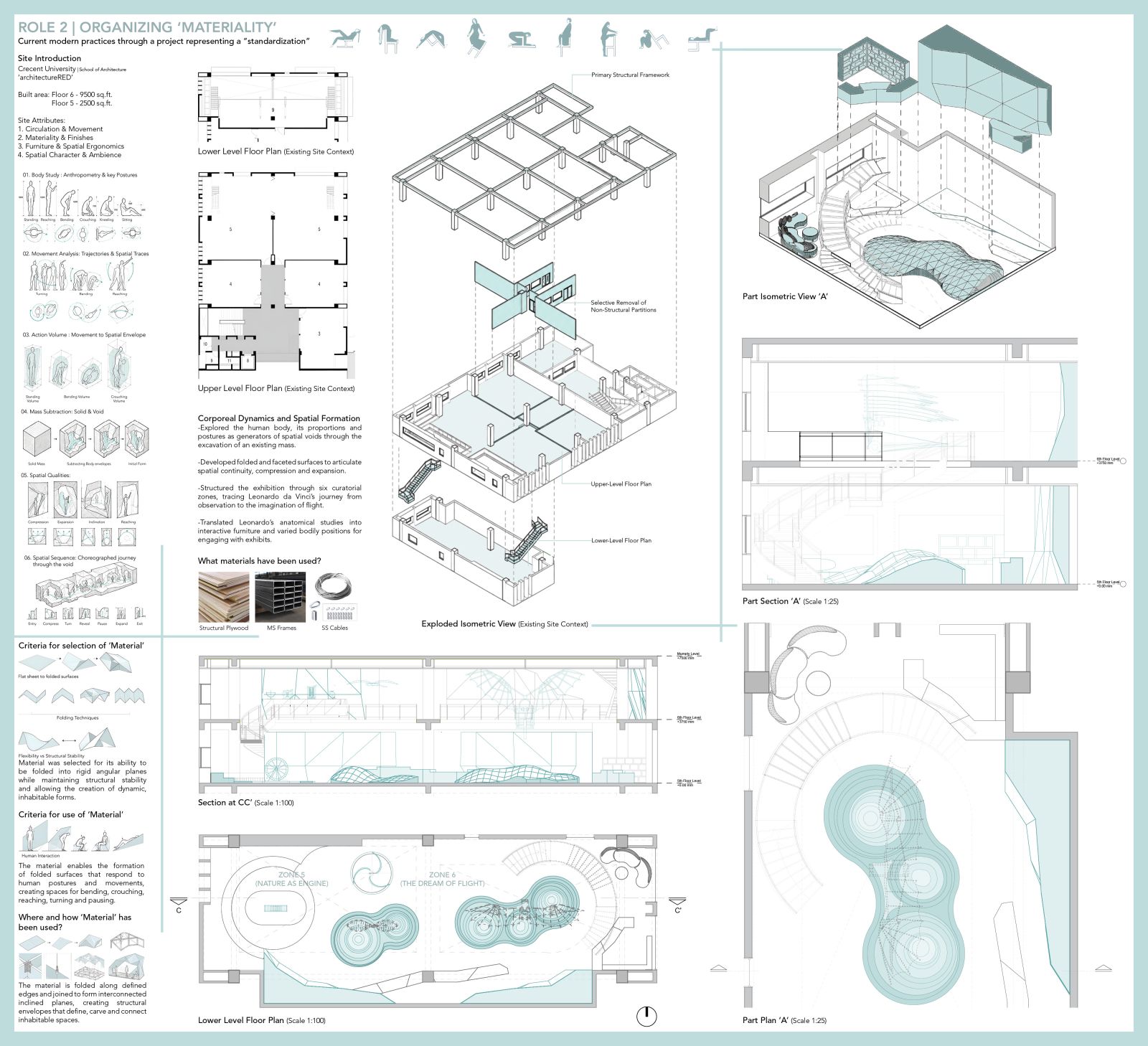
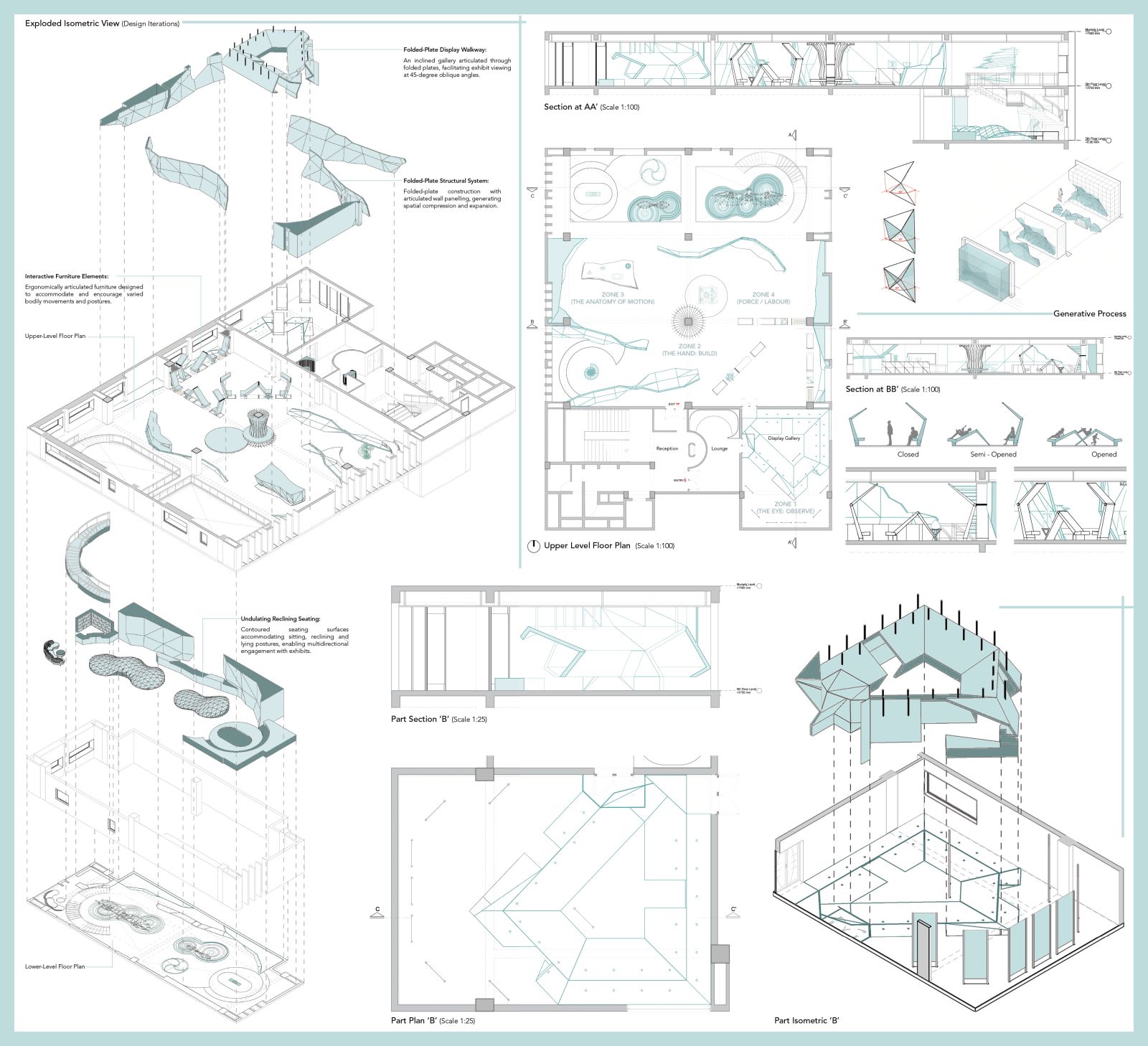
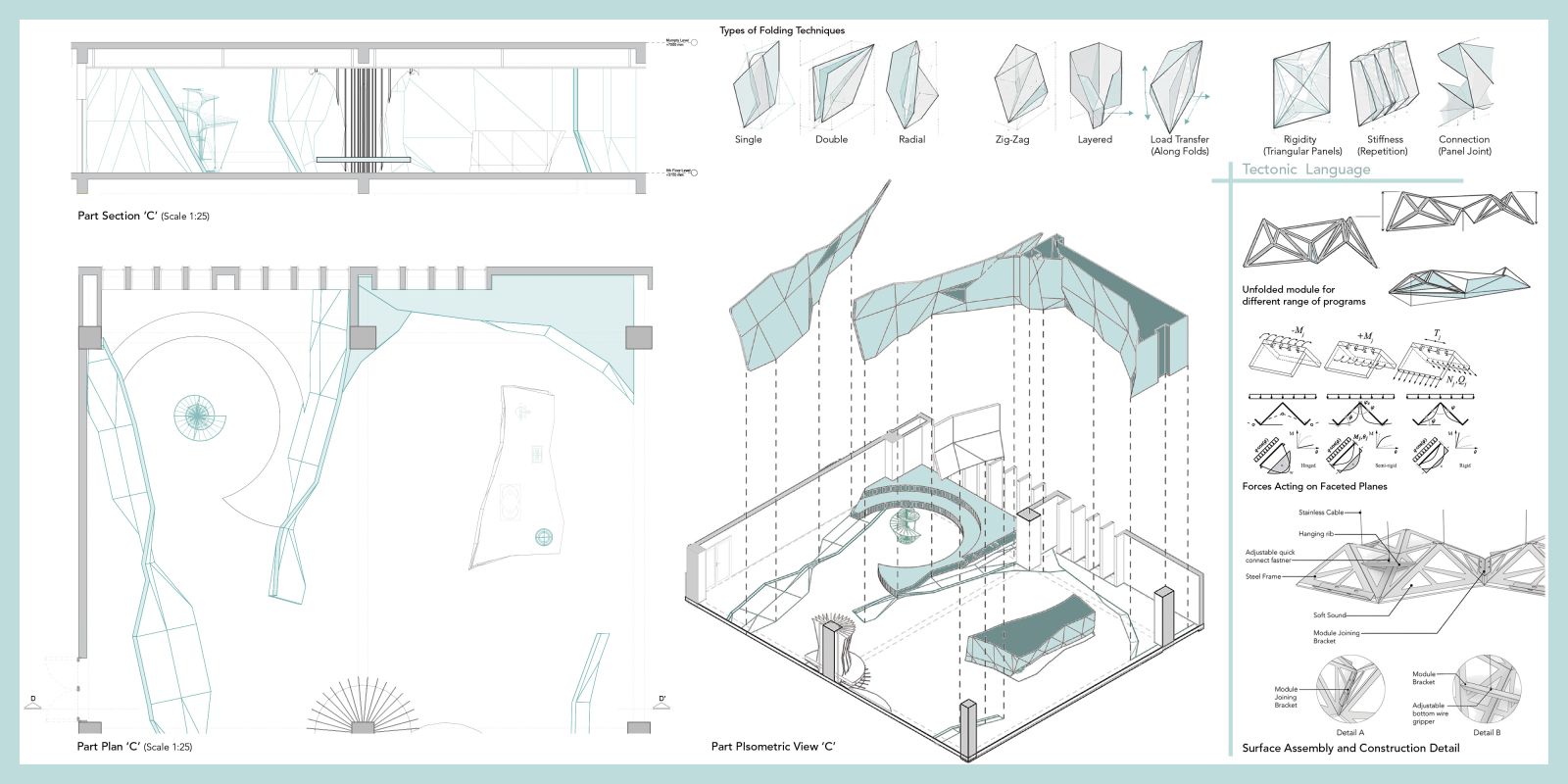
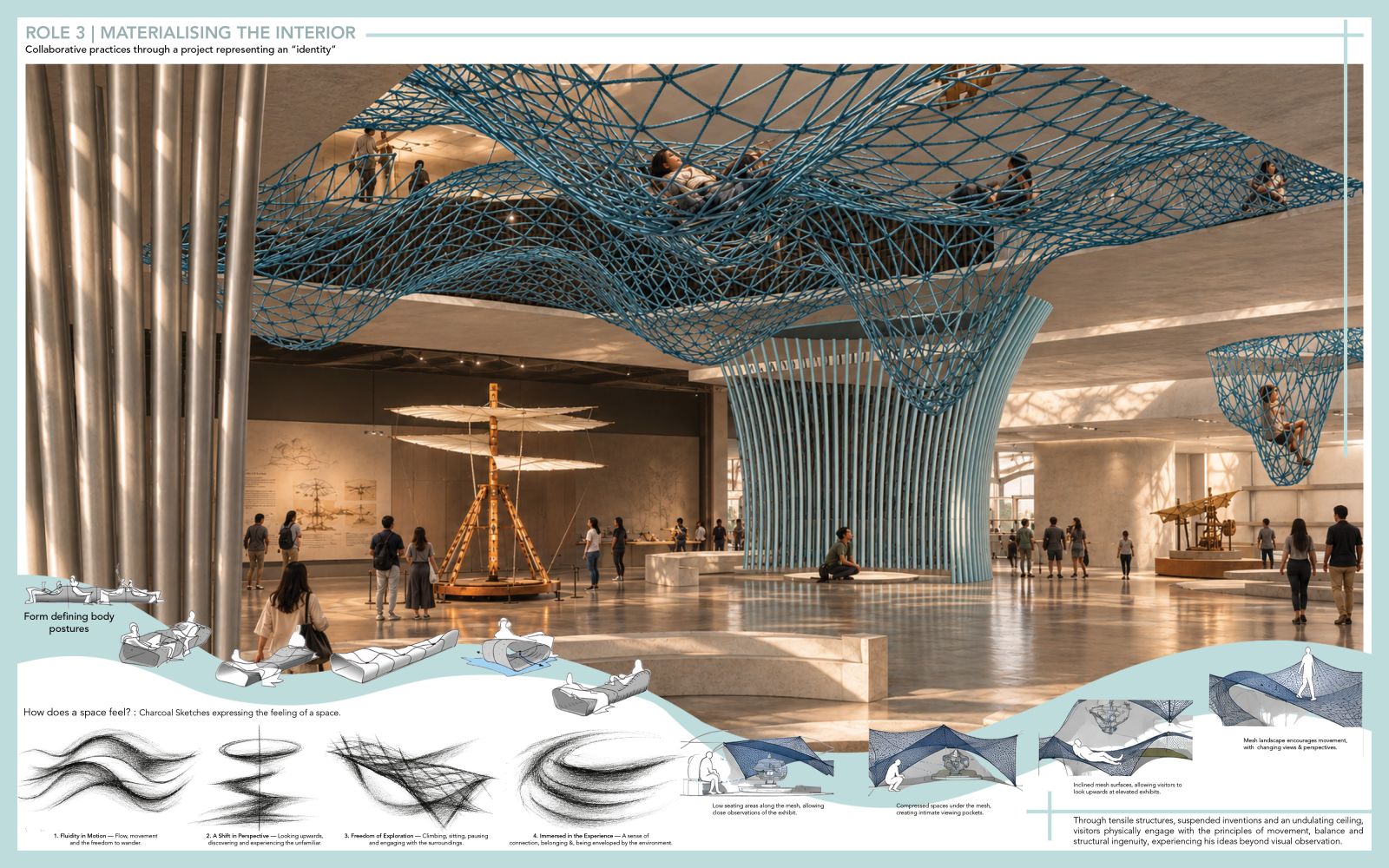
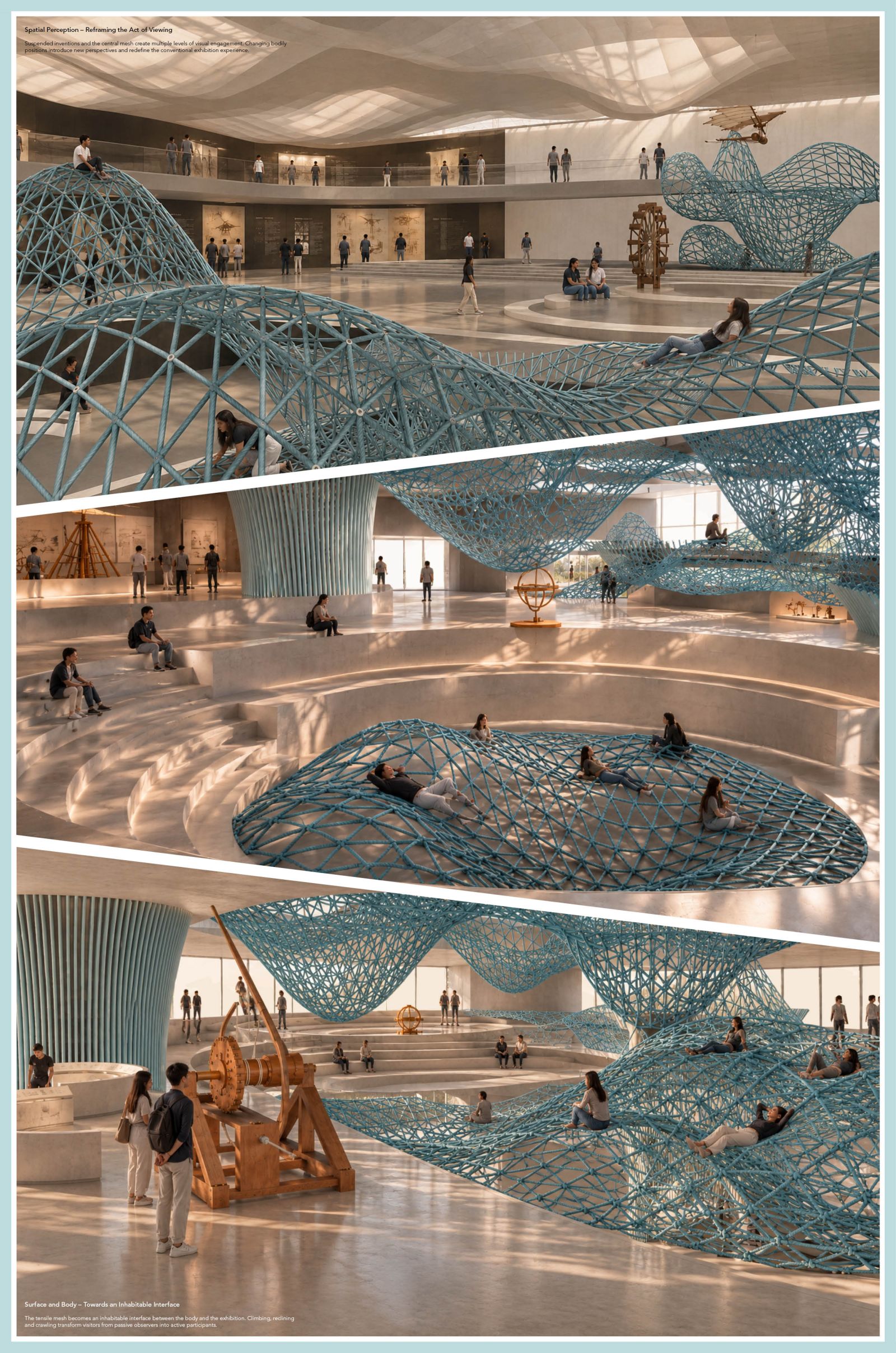
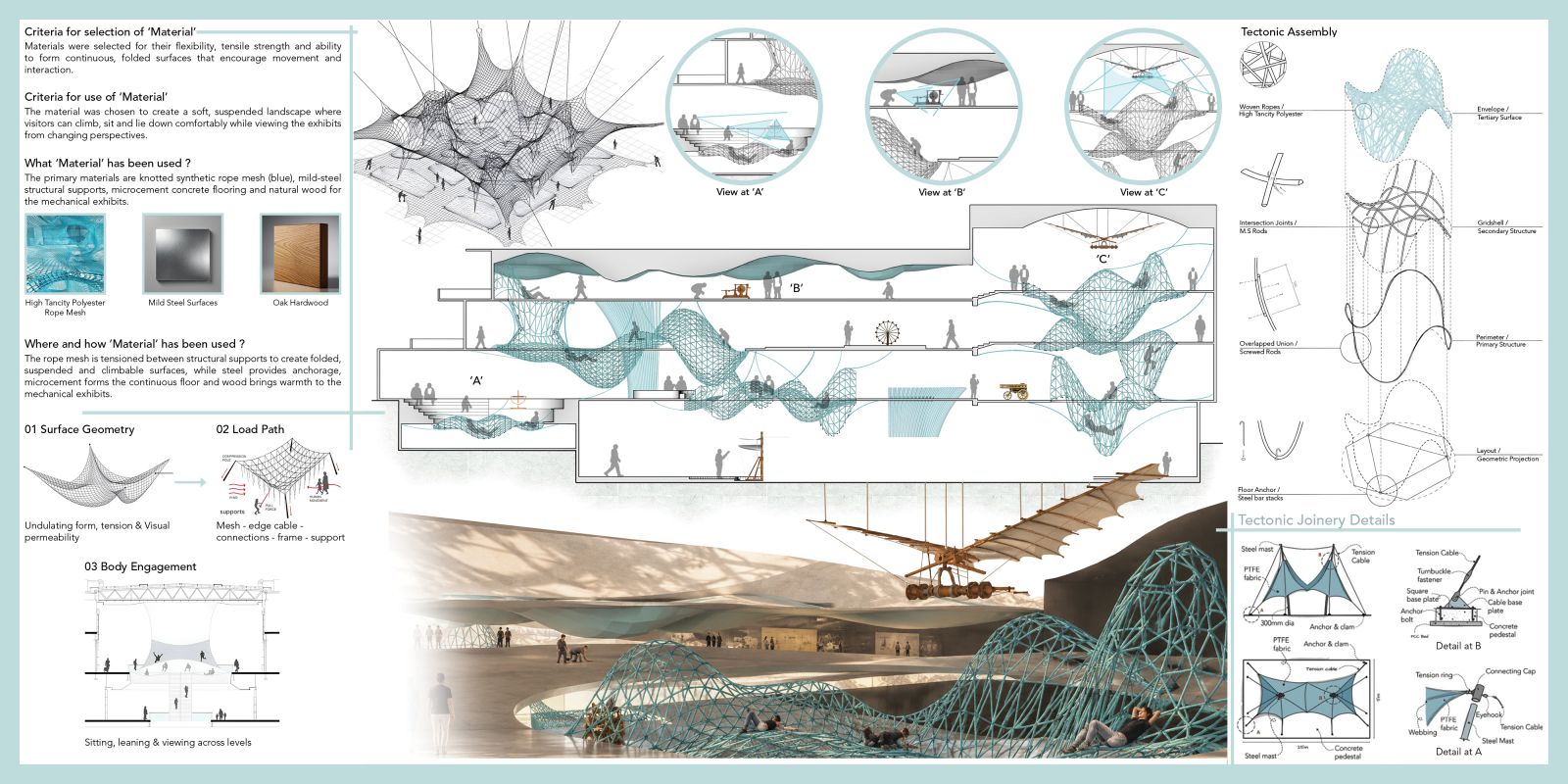
Emerging from the theoretical tension between Gottfried Semper’s conception of structural stability as a visually perceived condition of rest and Shashi Caan’s understanding of spatial experience as multisensory, this inquiry examines how surface detailing can communicate structural stability while engaging the body beyond visual perception. Framed through an exhibition of Leonardo da Vinci’s 15 Dream Machines, the investigation is developed across three spatial conditions: an existing historic structure, a standardized architectural setting and a siteless environment. Each condition examines the surface through a distinct mode of intervention: as a secondary tectonic layer within an existing structure, as a generator of spatial form through anthropometric derivation, and as an interlaced tensile system that can be physically inhabited. Through material articulation, geometric configuration, structural connections and bodily interaction, the explorations investigate how the surface mediates between structural expression and sensory experience. Collectively, they position the surface not merely as an enclosing element, but as the interface through which structural logic is articulated and encountered by the body.
View Additional Work