Your browser is out-of-date!
For a richer surfing experience on our website, please update your browser. Update my browser now!
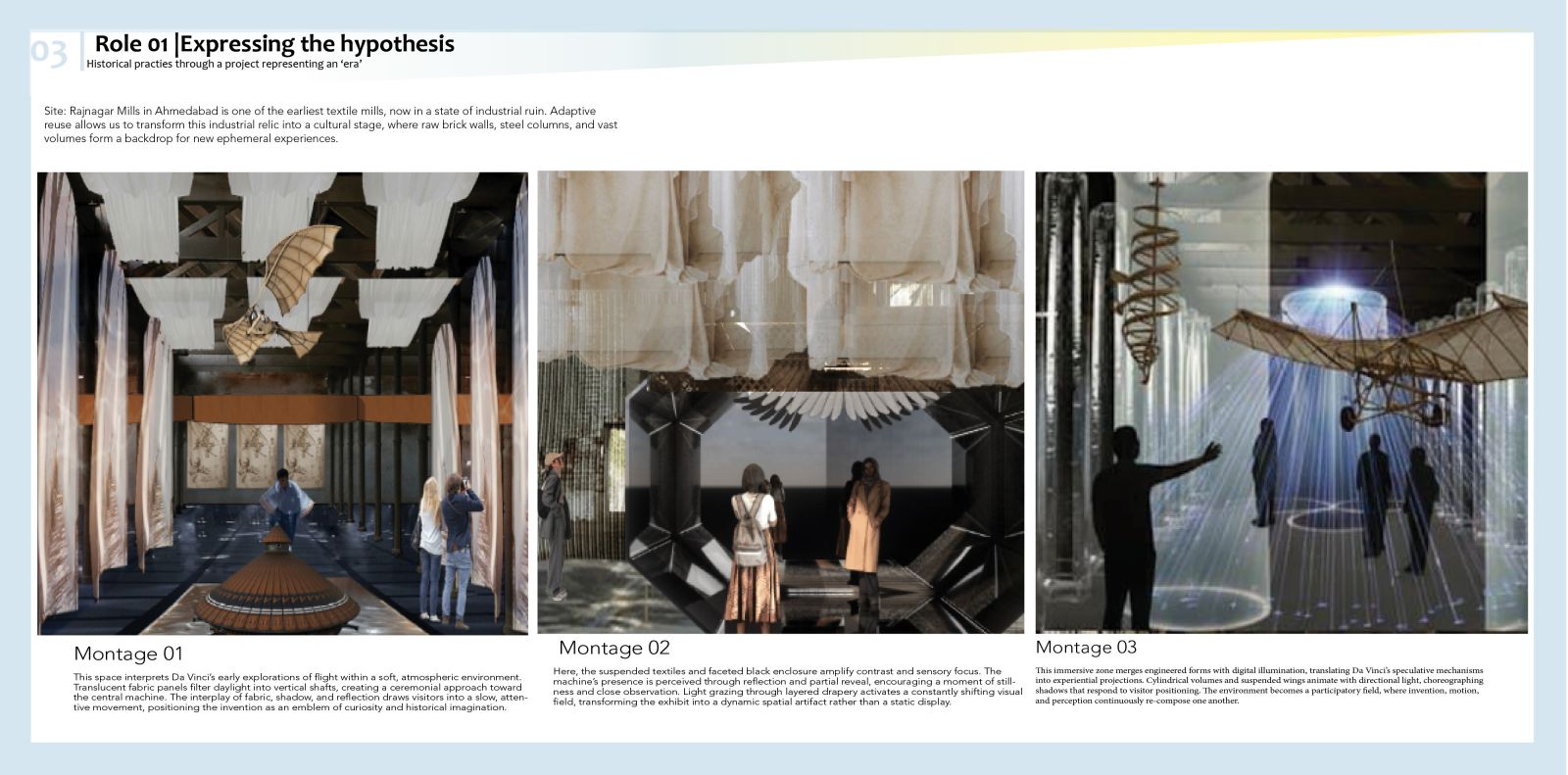
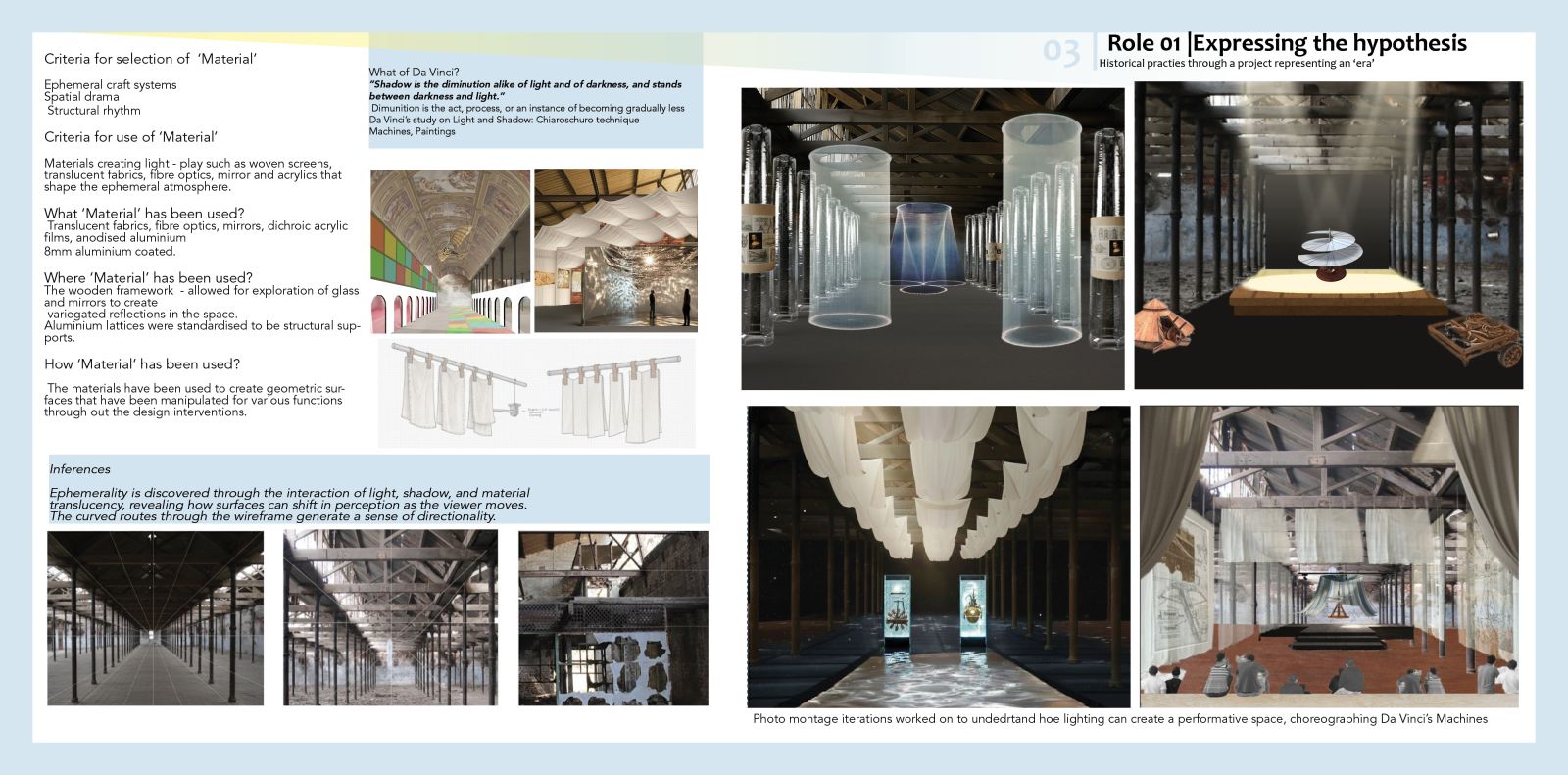
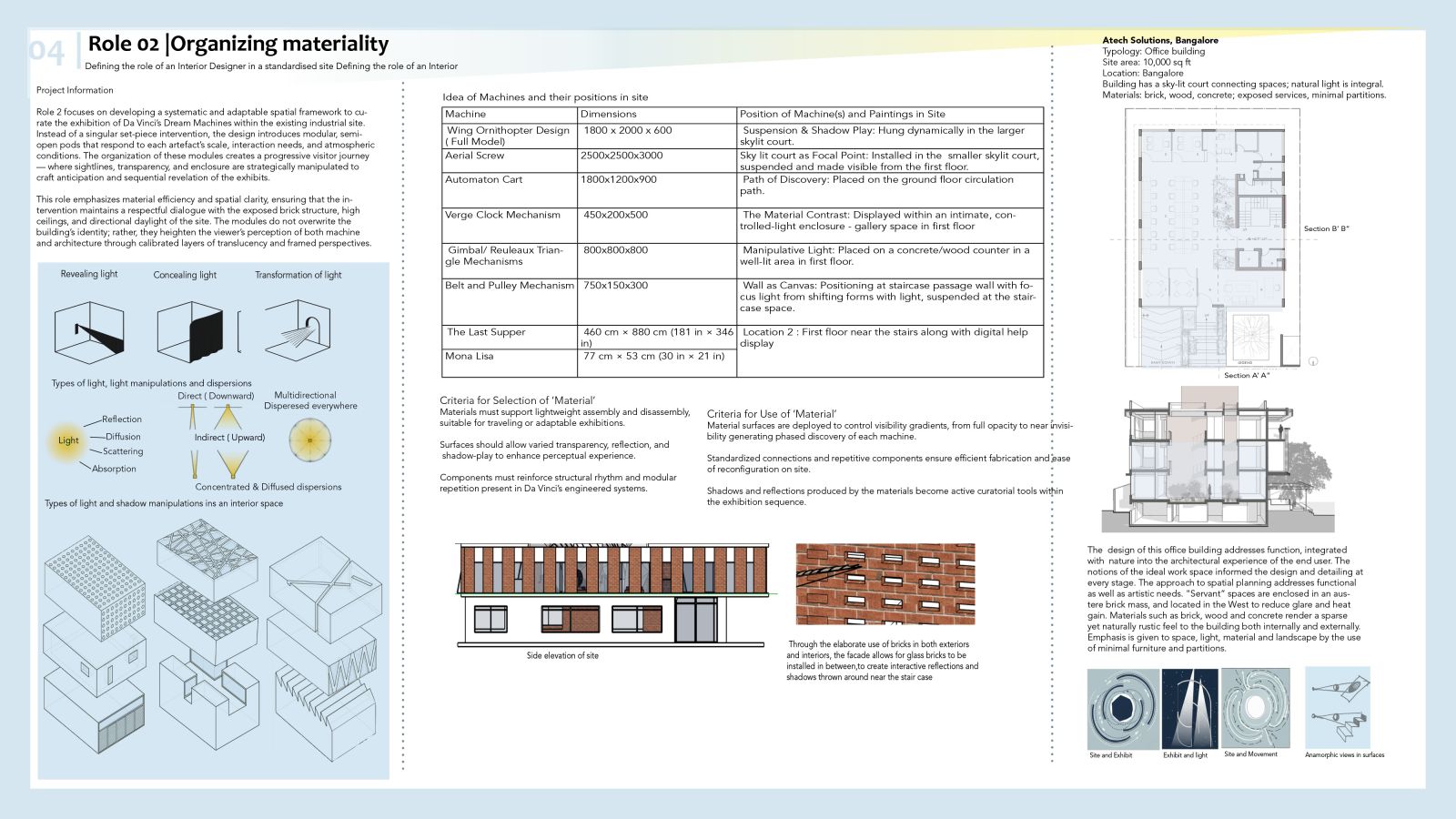
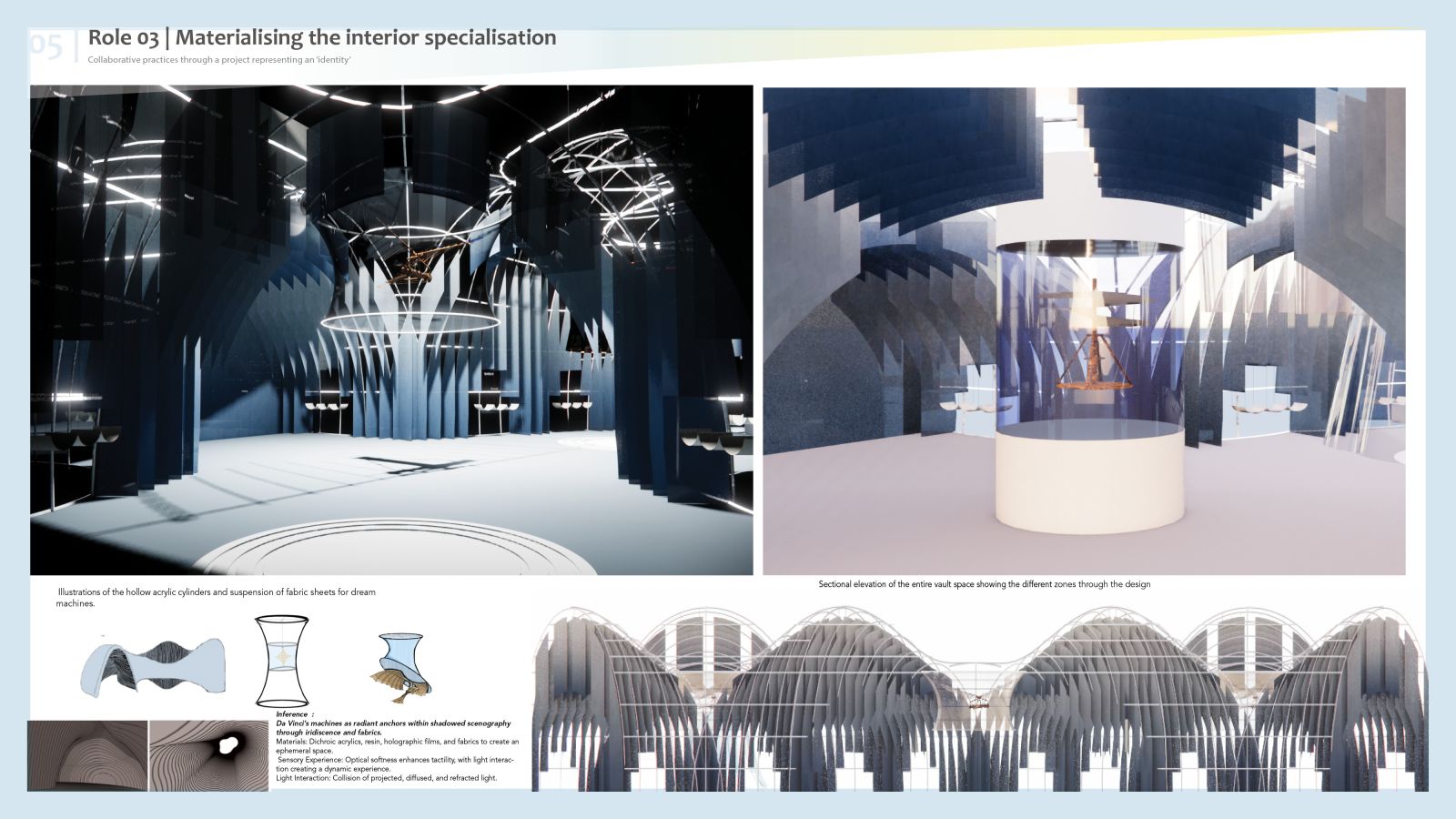
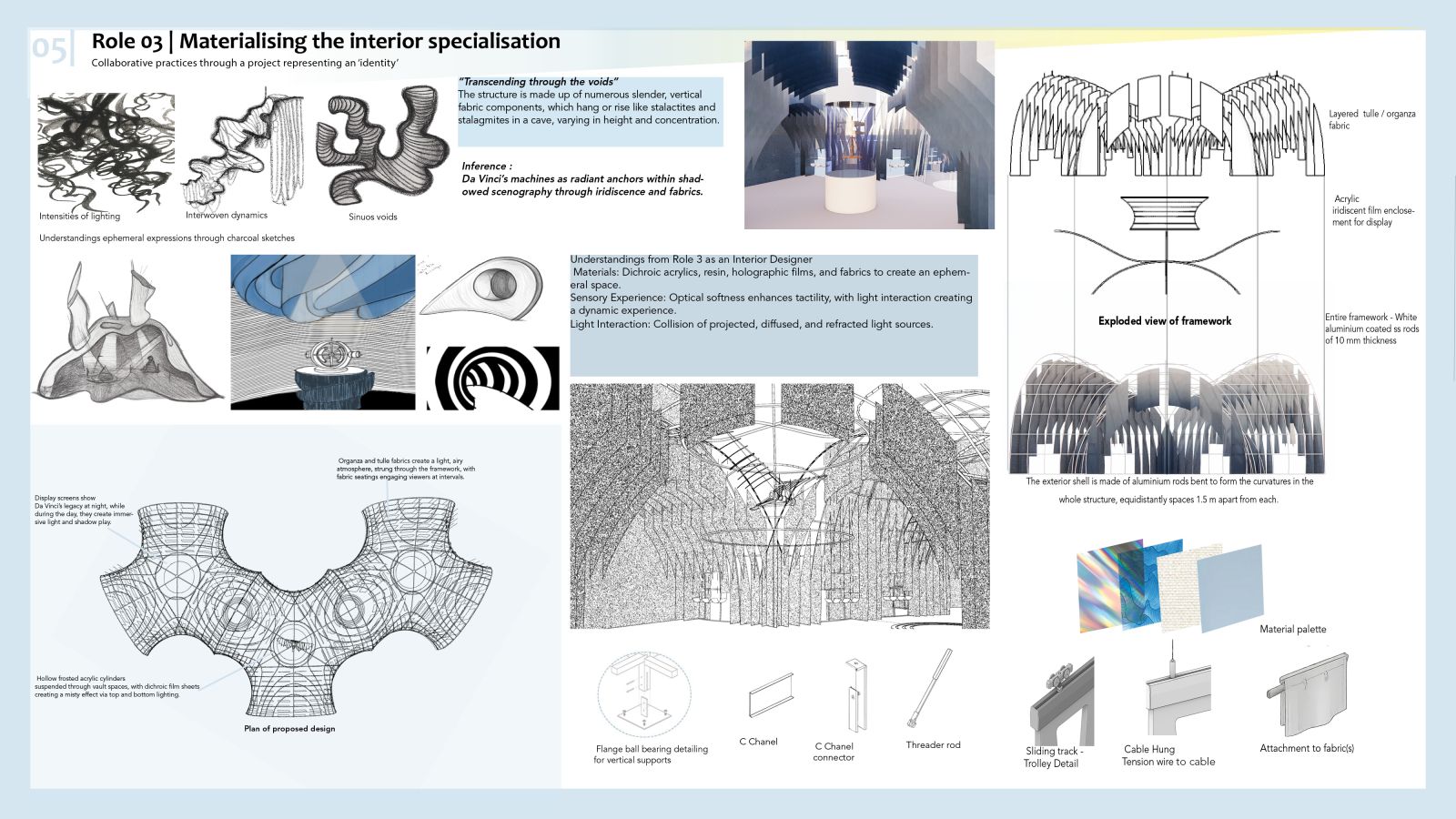
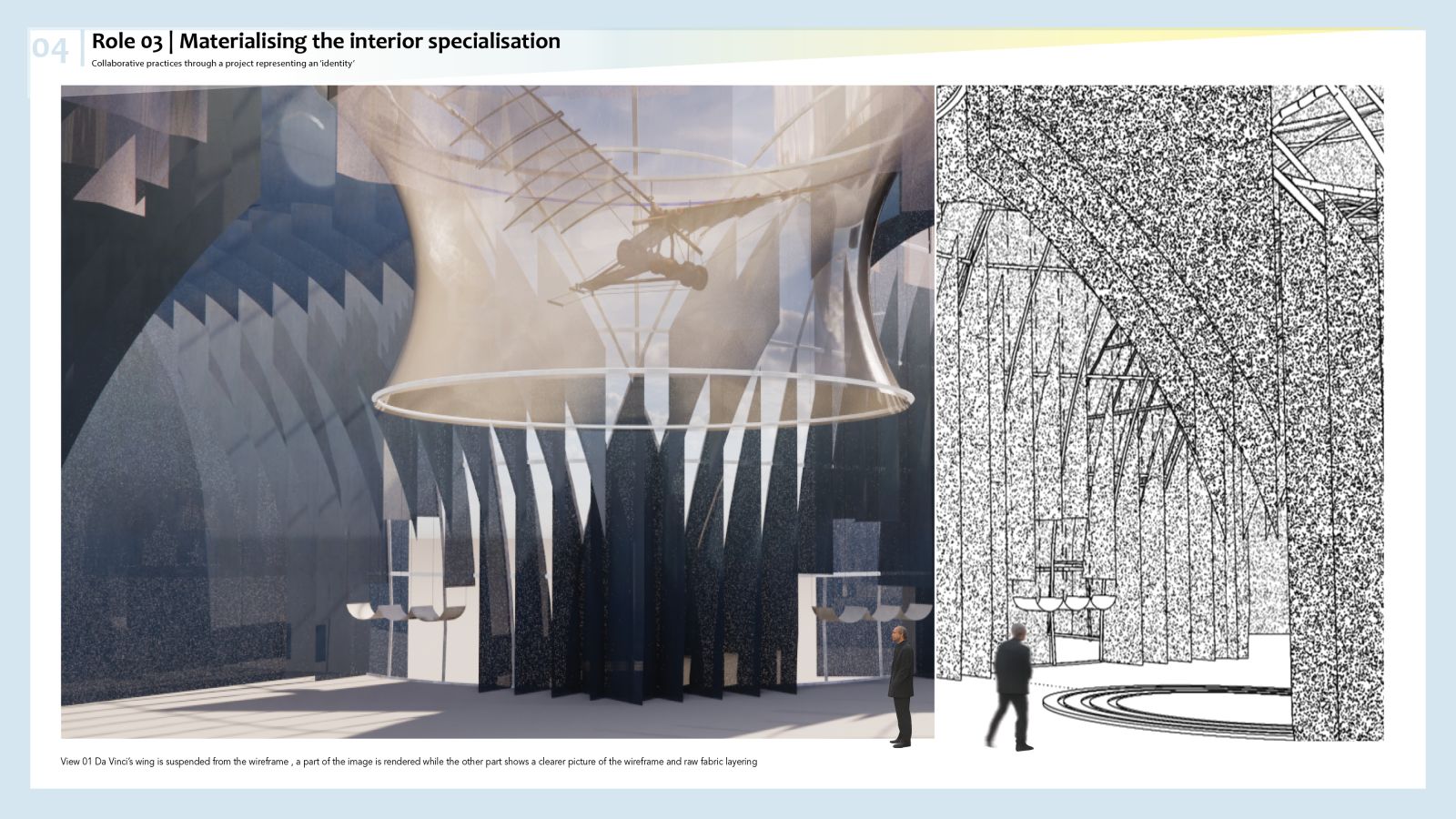
Light and shadow perform a precise choreography within exhibition spaces, shaping atmospheres that communicate far beyond surface aesthetics. Here, light becomes the interpreter of Da Vinci’s dream machines tracing the contours of wings, gears, and inventions onto curated surfaces. Its counterpart, shadow, deepens contrast and mystery, transforming the mechanical into the imaginative by revealing what lies between object and perception.
Together, they construct ephemeral environments where the presence of the machine is never static but constantly re-authored through movement and reflection. Surfaces - transparent, reflective, or diffusive act as active mediators in this dialogue, registering every shift in geometry, every change in proximity, every step taken by the visitor.
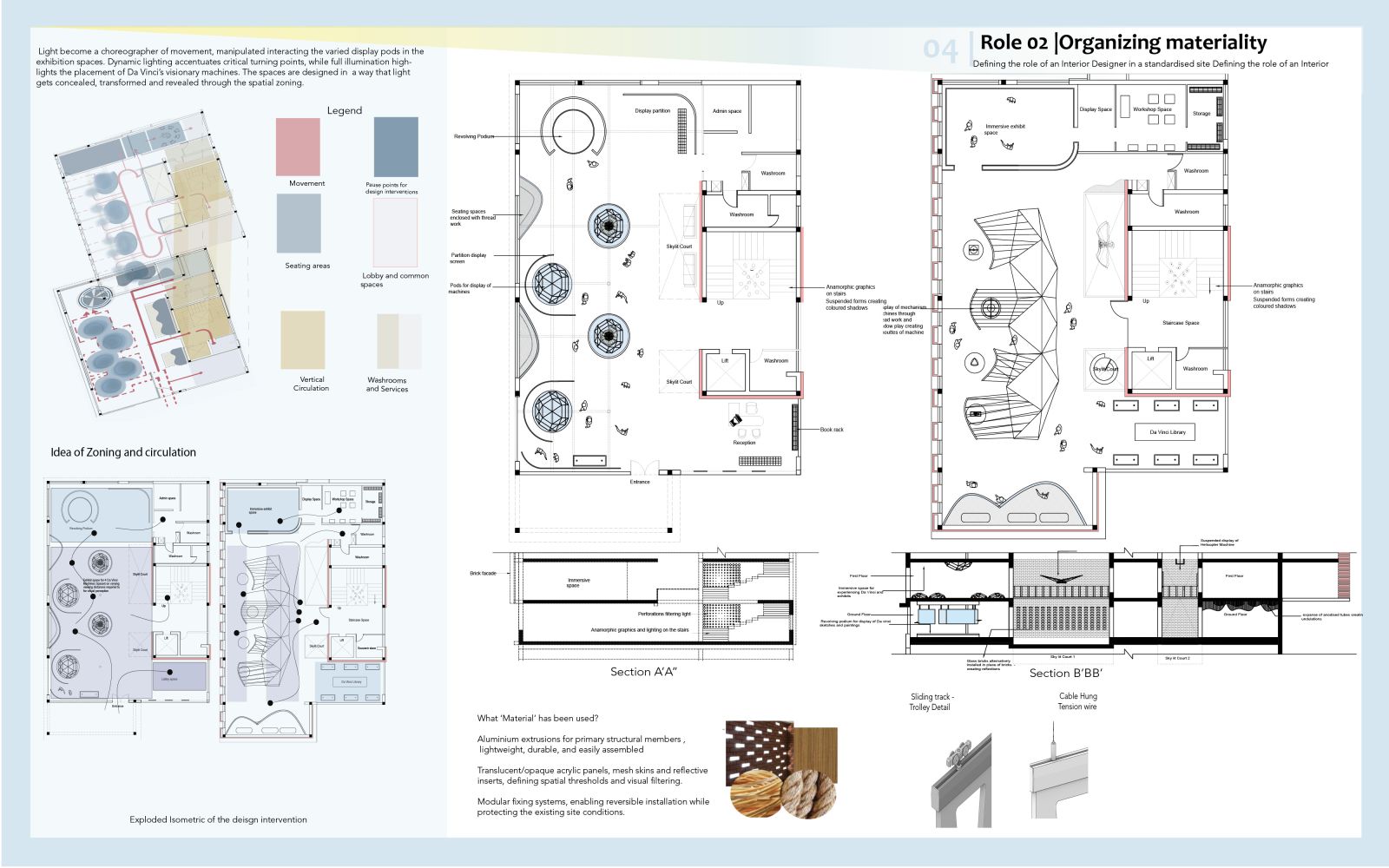
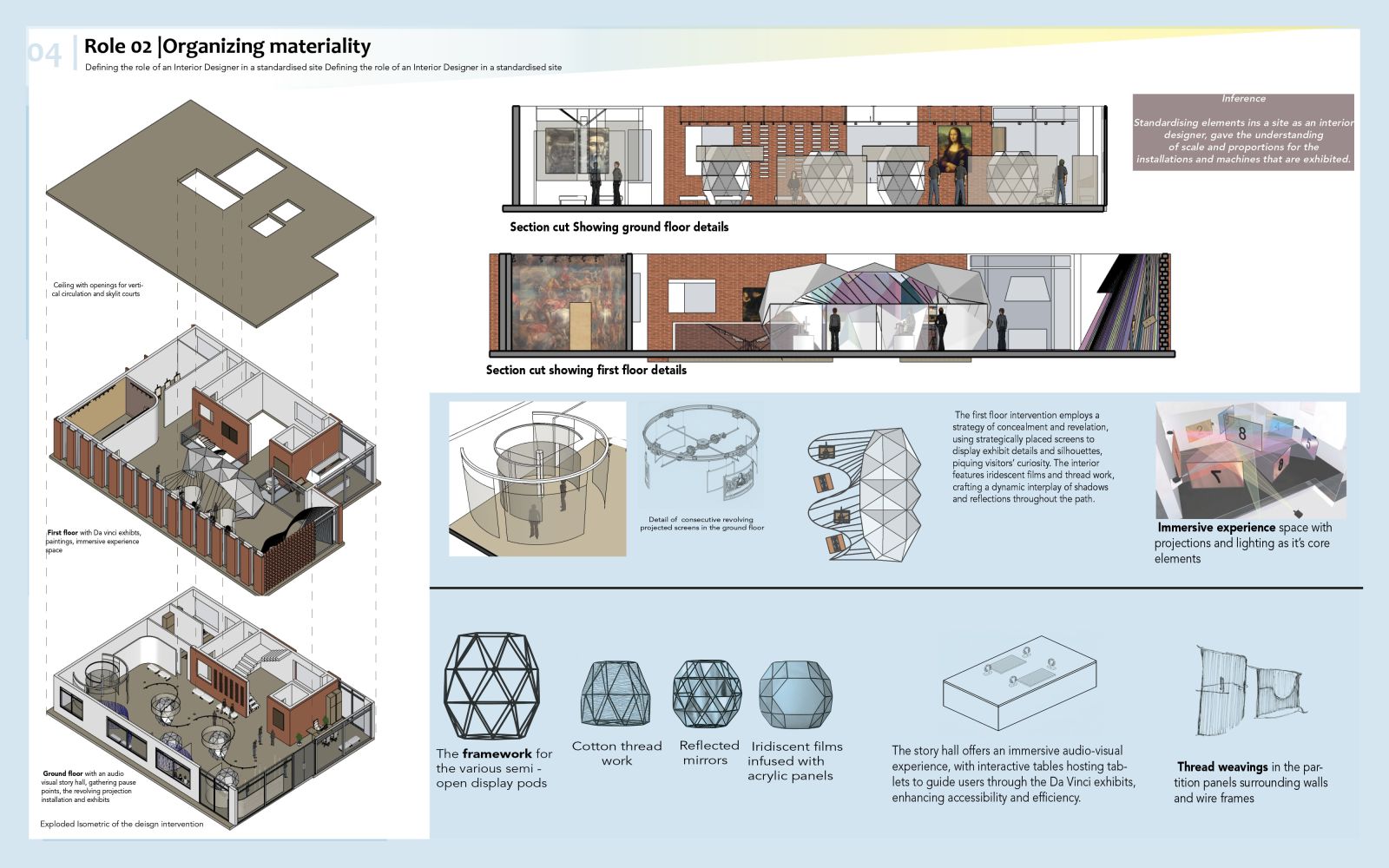
Throughout the three roles, the interaction of light and shadow becomes a spatial tool of storytelling, guiding perception, shaping emotion, and directing the body through sequences of anticipation and revelation. Through a careful orchestration of atmosphere, structure, and sensorial experience, the exhibition transforms into a living theatre where Da Vinci’s machines are not only observed, but felt their ingenuity translated into an immersive, ever-changing narrative.