Adarsh C S

ID4030

The Tactile Geometry of Identity

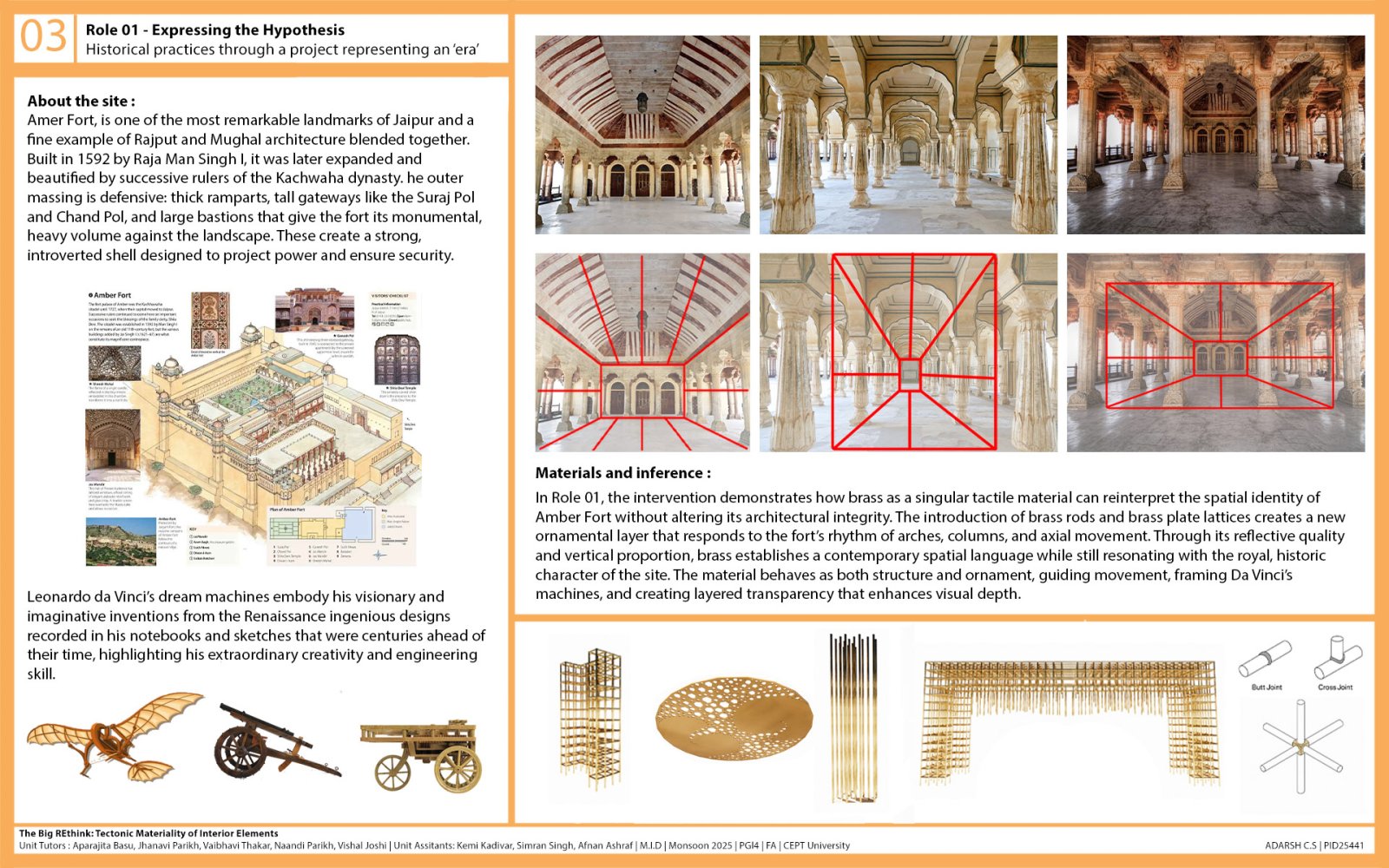
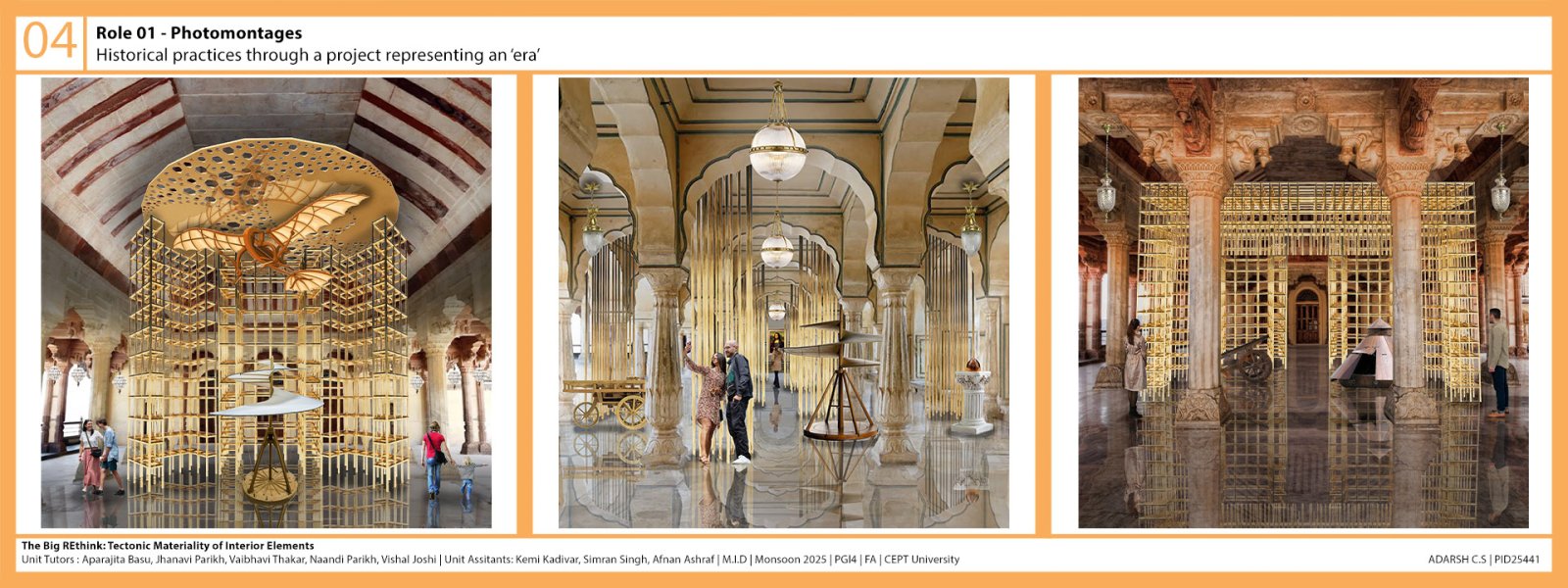
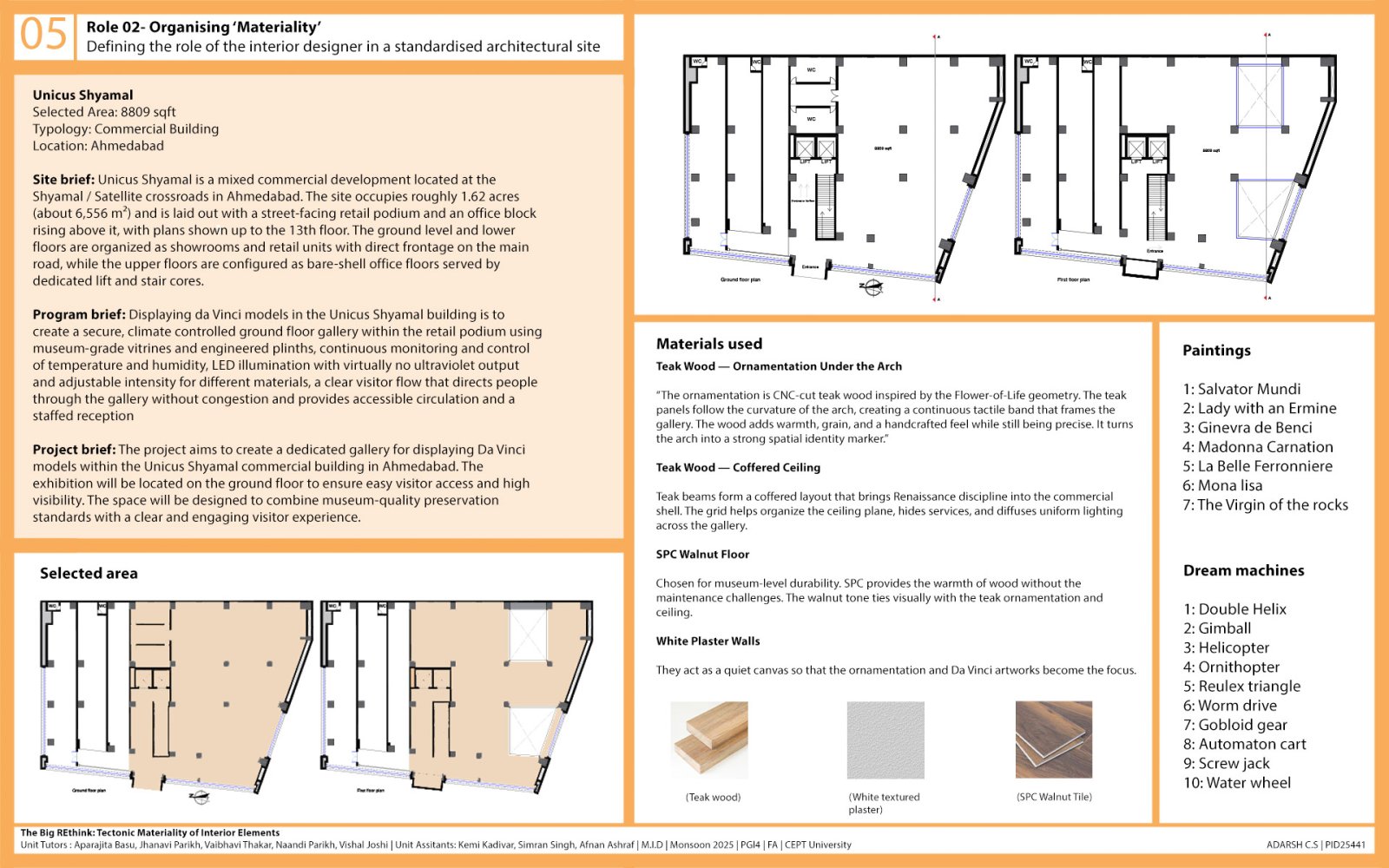
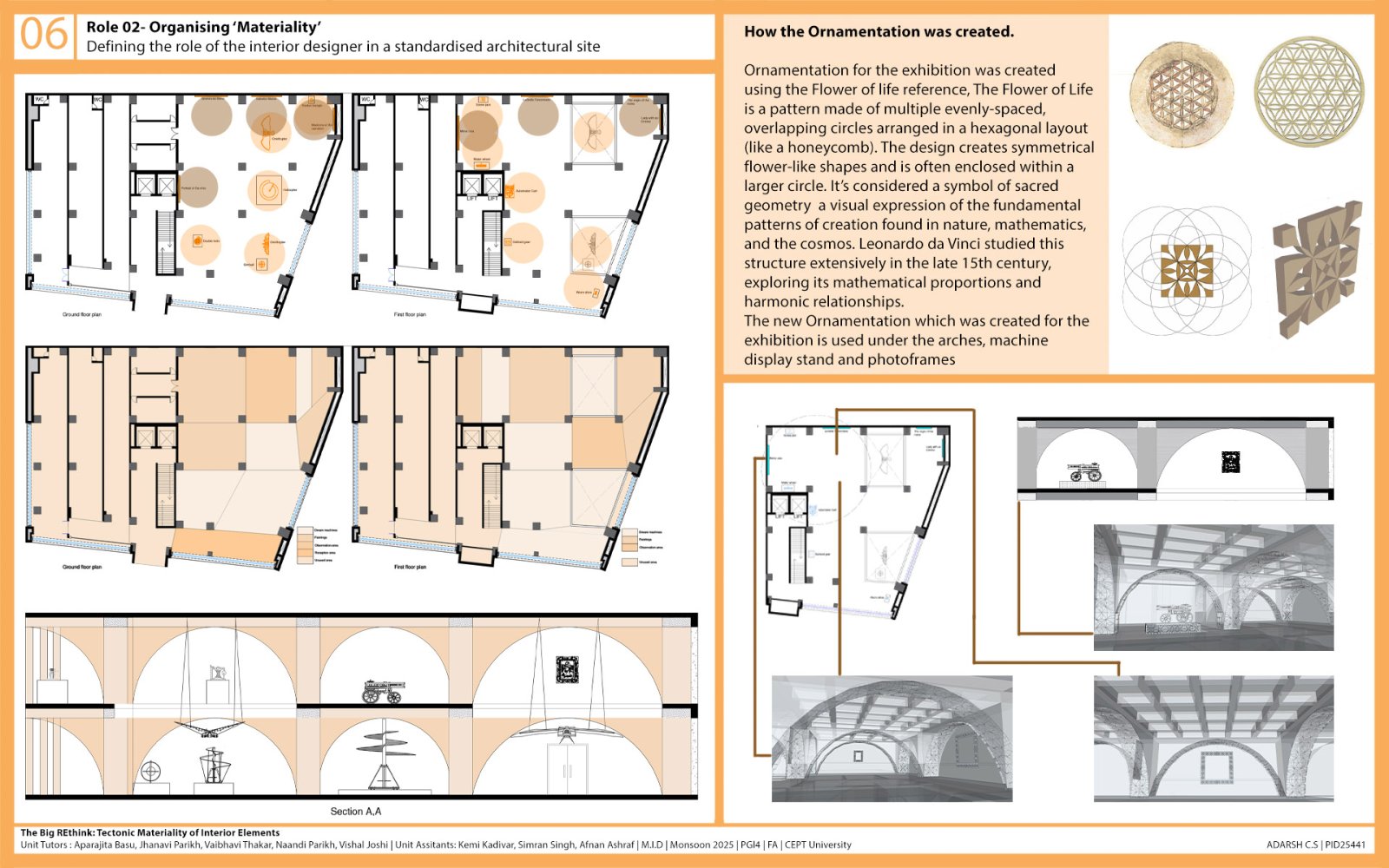
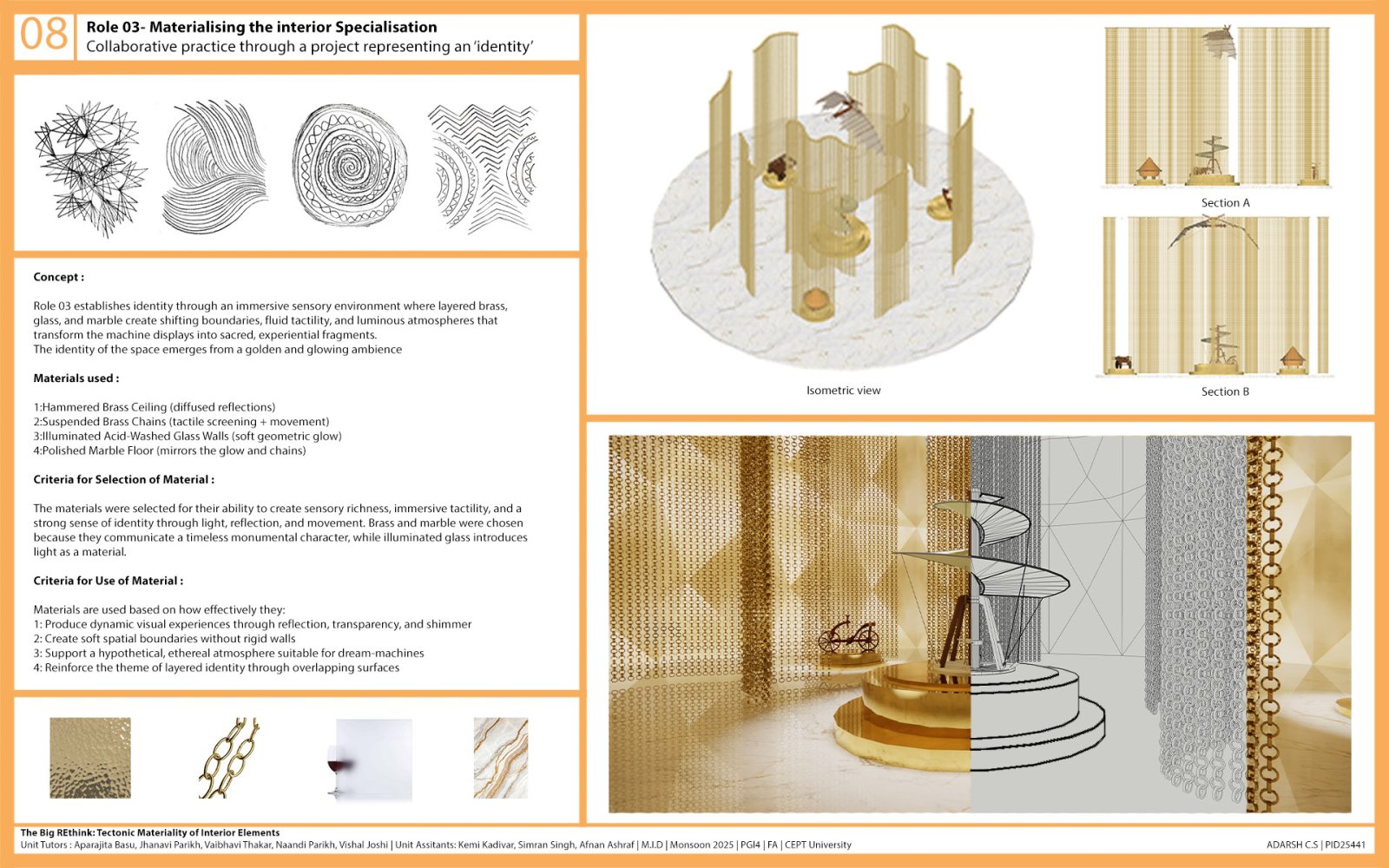
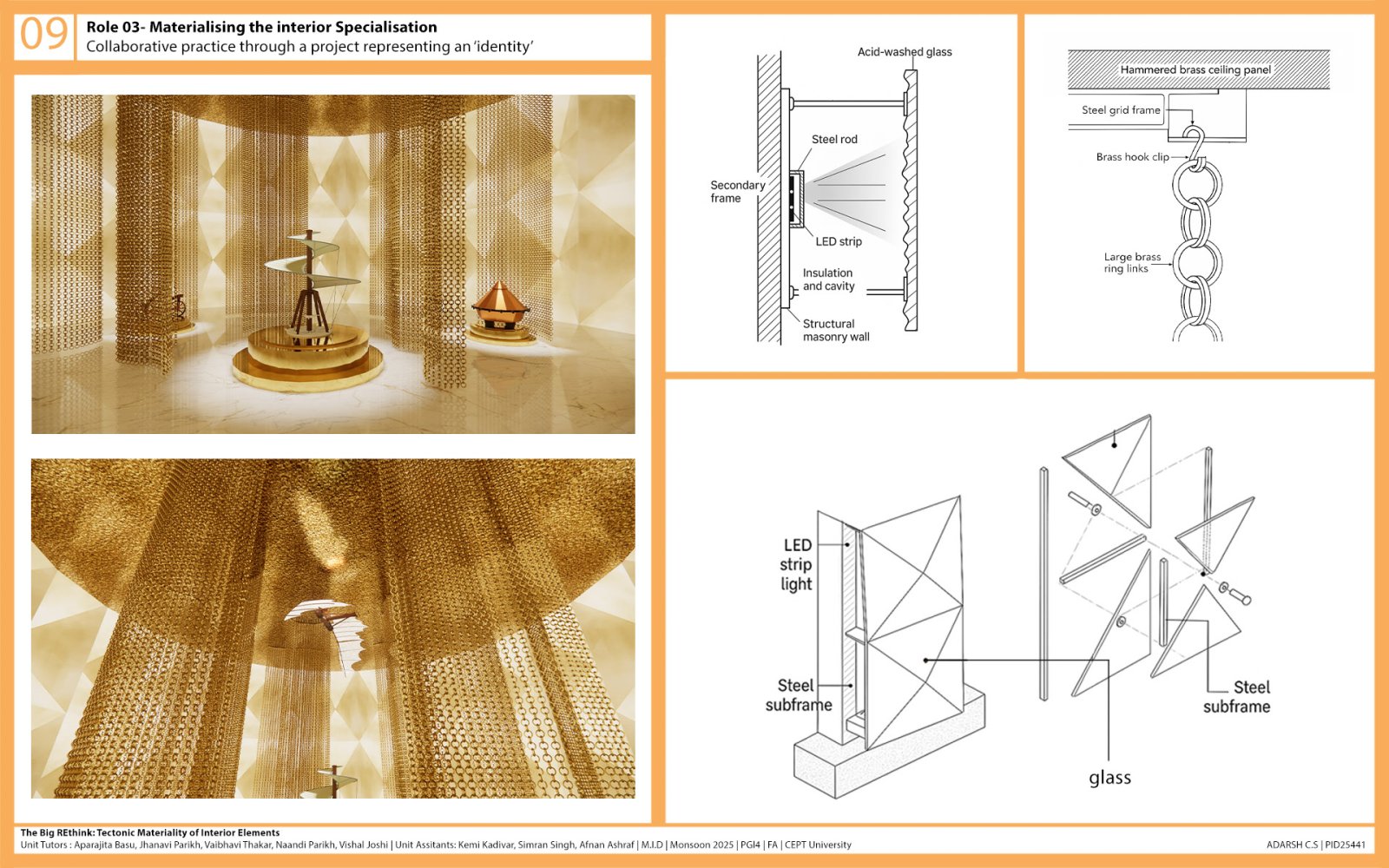
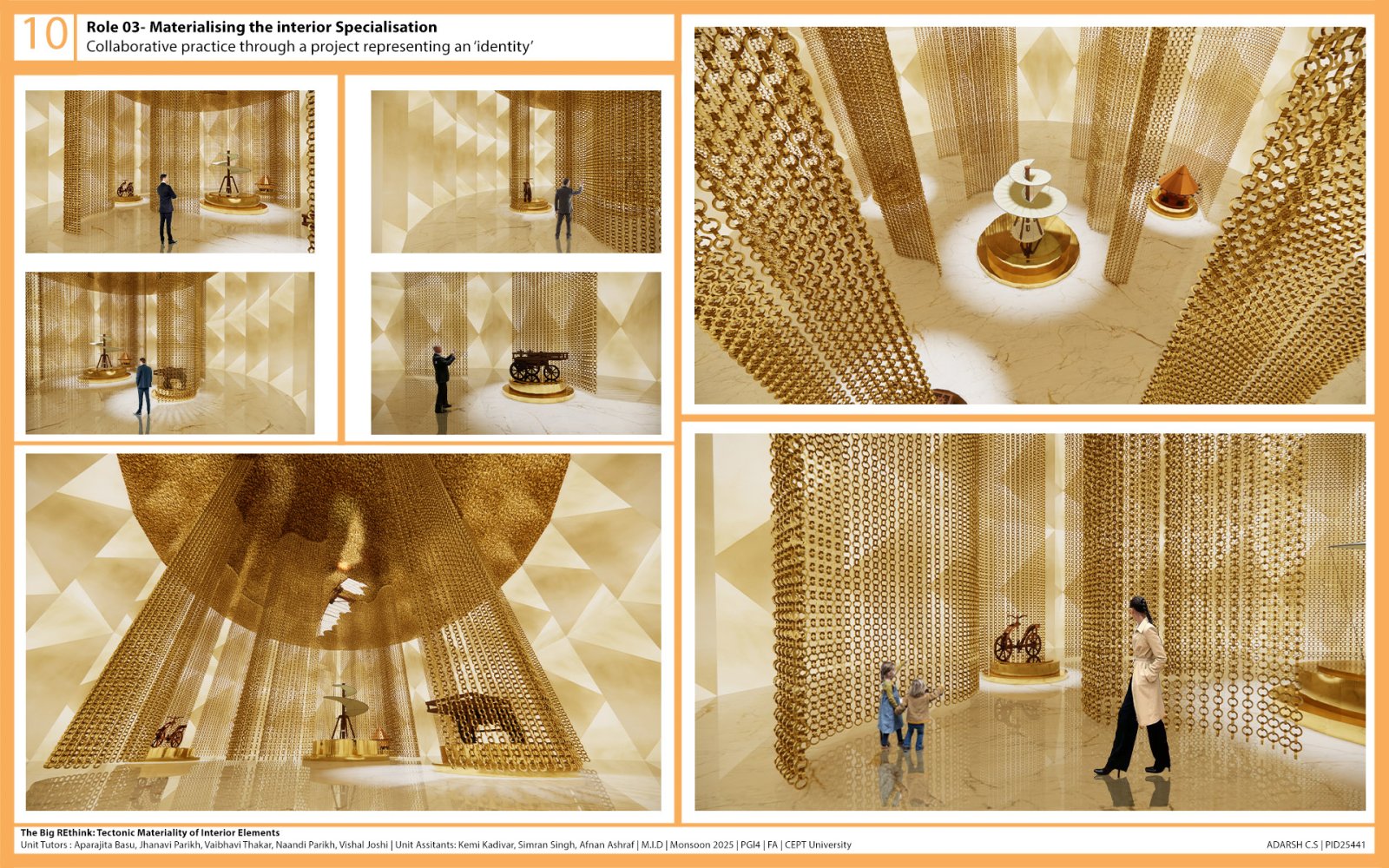
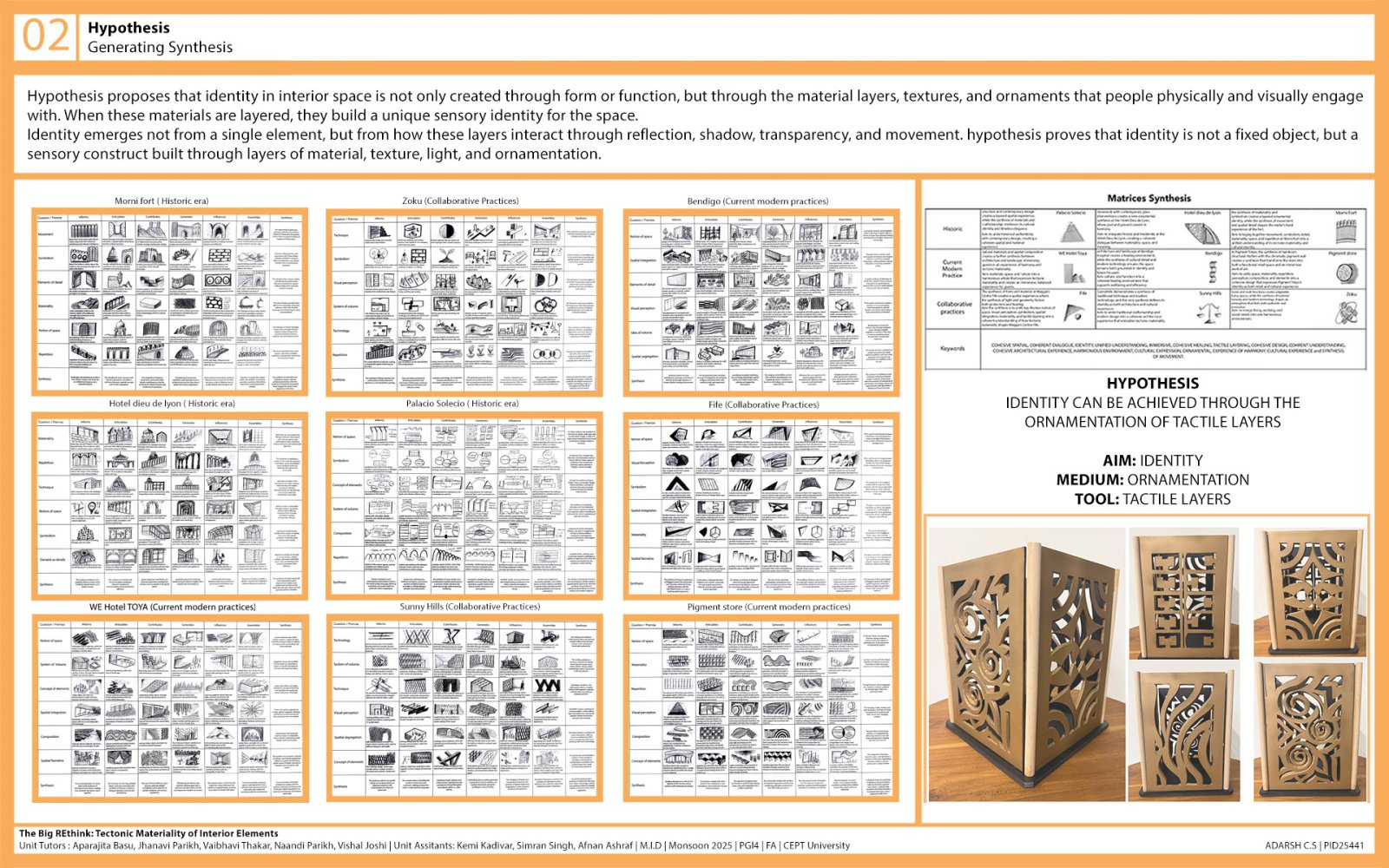
This project explores how identity can be achieved through the ornamentation of tactile layers across three progressive roles. In Role 01, brass interventions are inserted into Amber Fort to test how tactile ornament can transform historic space without altering heritage. Role 02 adapts an existing commercial building into a Da Vinci Museum using teak ornamentation, SPC flooring, and coffered ceilings to construct identity through material layering. Role 03 culminates in a hypothetical immersive chamber with marble flooring, illuminated acid-washed glass walls, brass chains, and hammered-brass ceilings, demonstrating how material tactility alone can generate spatial identity and experiential depth.

View Additional Work
Report Content

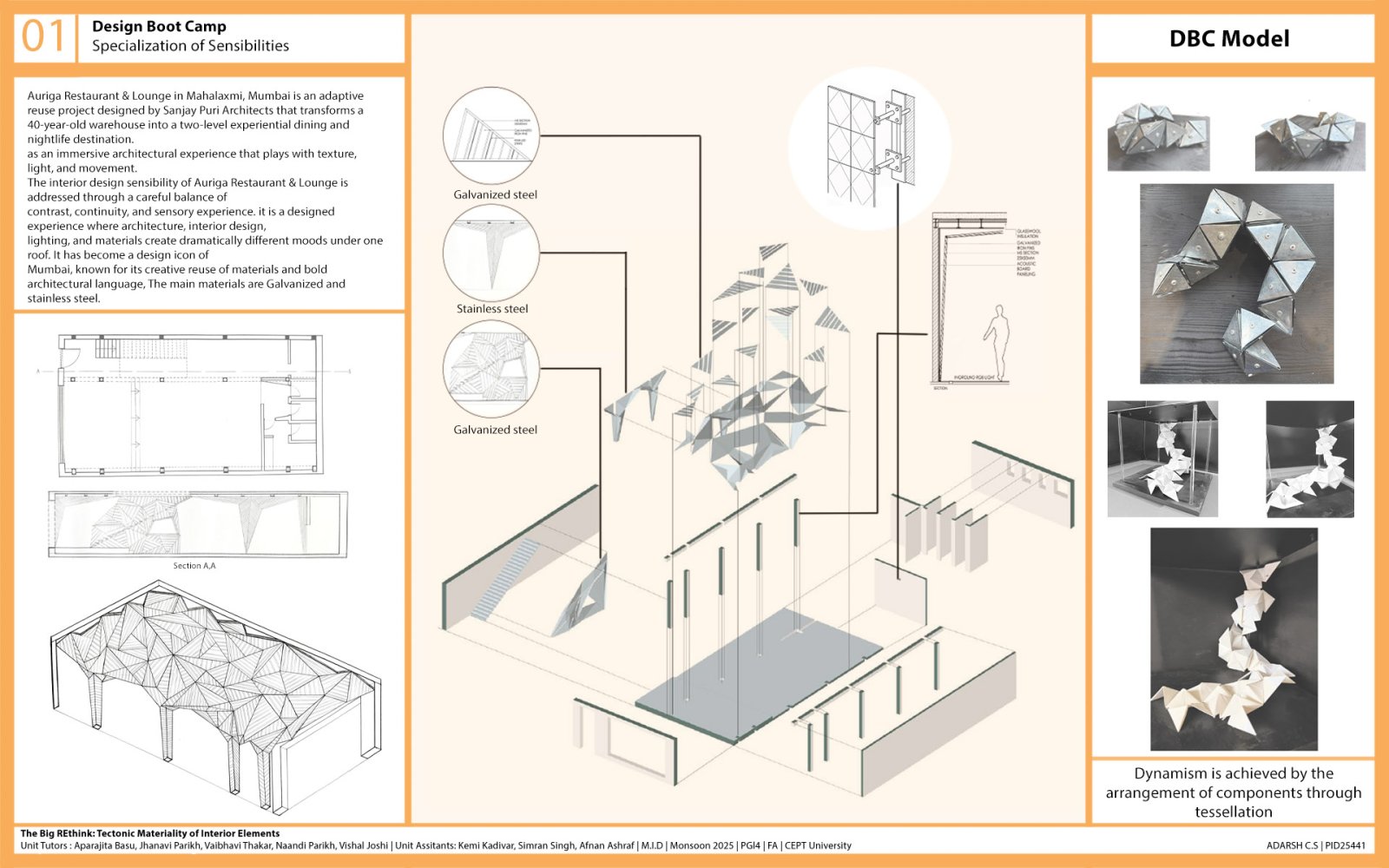
Design Boot Camp: Specialisation of Sensibilites

Hypothesis: Generating Synthesis

Role 01 - Expressing the Hypothesis Historical practices through a project representing an ‘era’

Role 01 - Photomontages Historical practices through a project representing an ‘era’

Role 02 - Organising ‘Materiality’ Defining the role of the interior designer in a standardised architectural site

Role 02 - Organising ‘Materiality’ Defining the role of the interior designer in a standardised architectural site

Role 02 - Organising ‘Materiality’ Defining the role of the interior designer in a standardised architectural site

Role 03- Materialising the interior Specialisation Collaborative practice through a project representing an ‘identity’

Role 03- Materialising the interior Specialisation Collaborative practice through a project representing an ‘identity’

Role 03- Materialising the interior Specialisation Collaborative practice through a project representing an ‘identity’

Project Video