Your browser is out-of-date!
For a richer surfing experience on our website, please update your browser. Update my browser now!
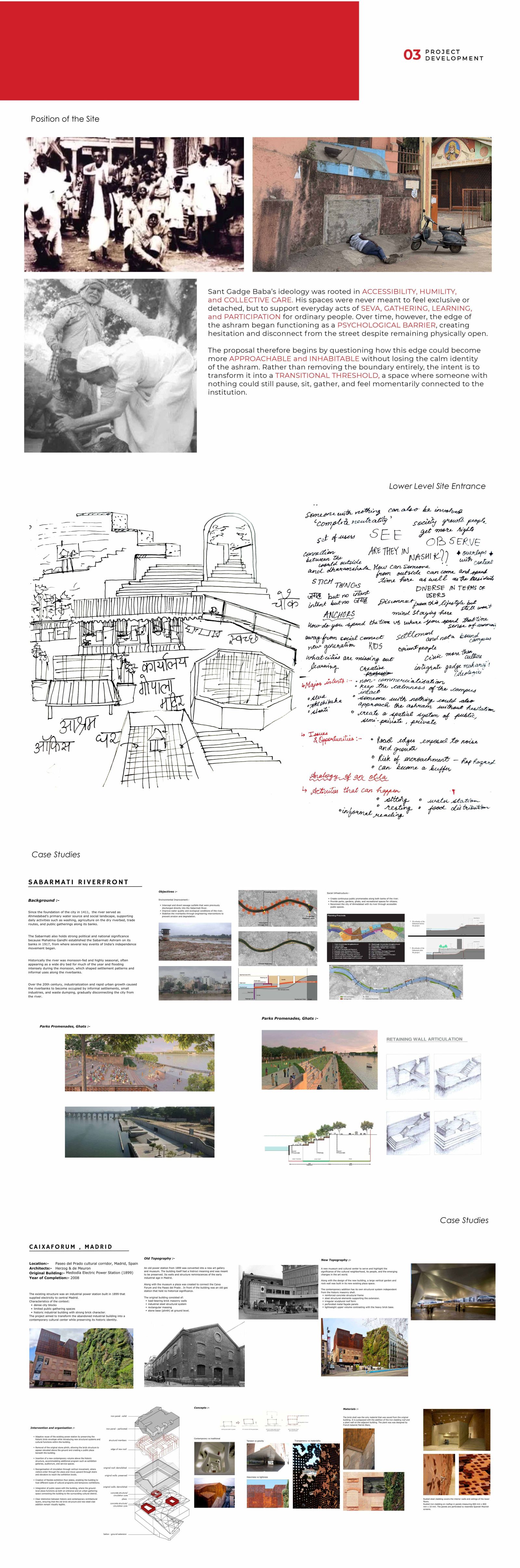
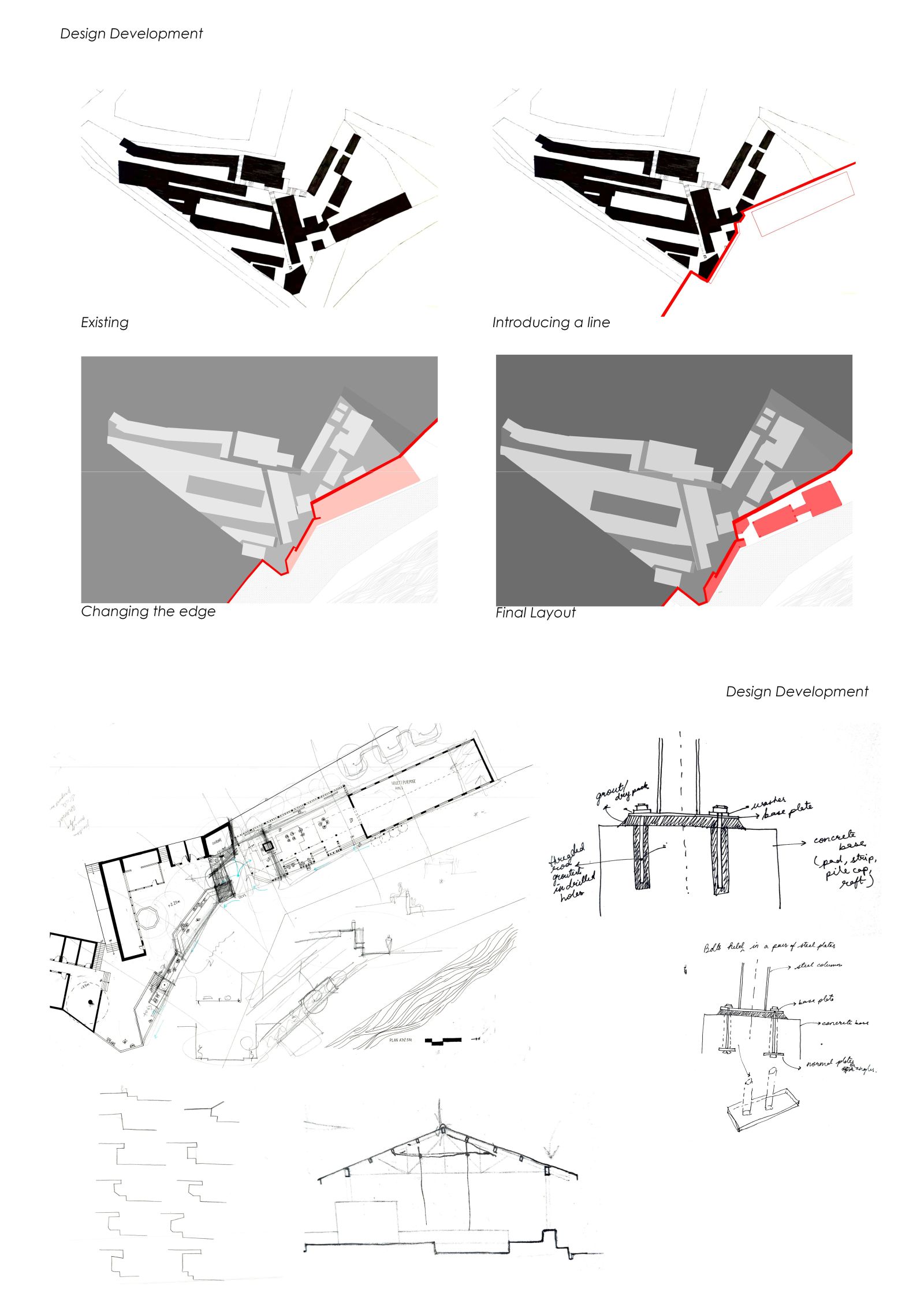
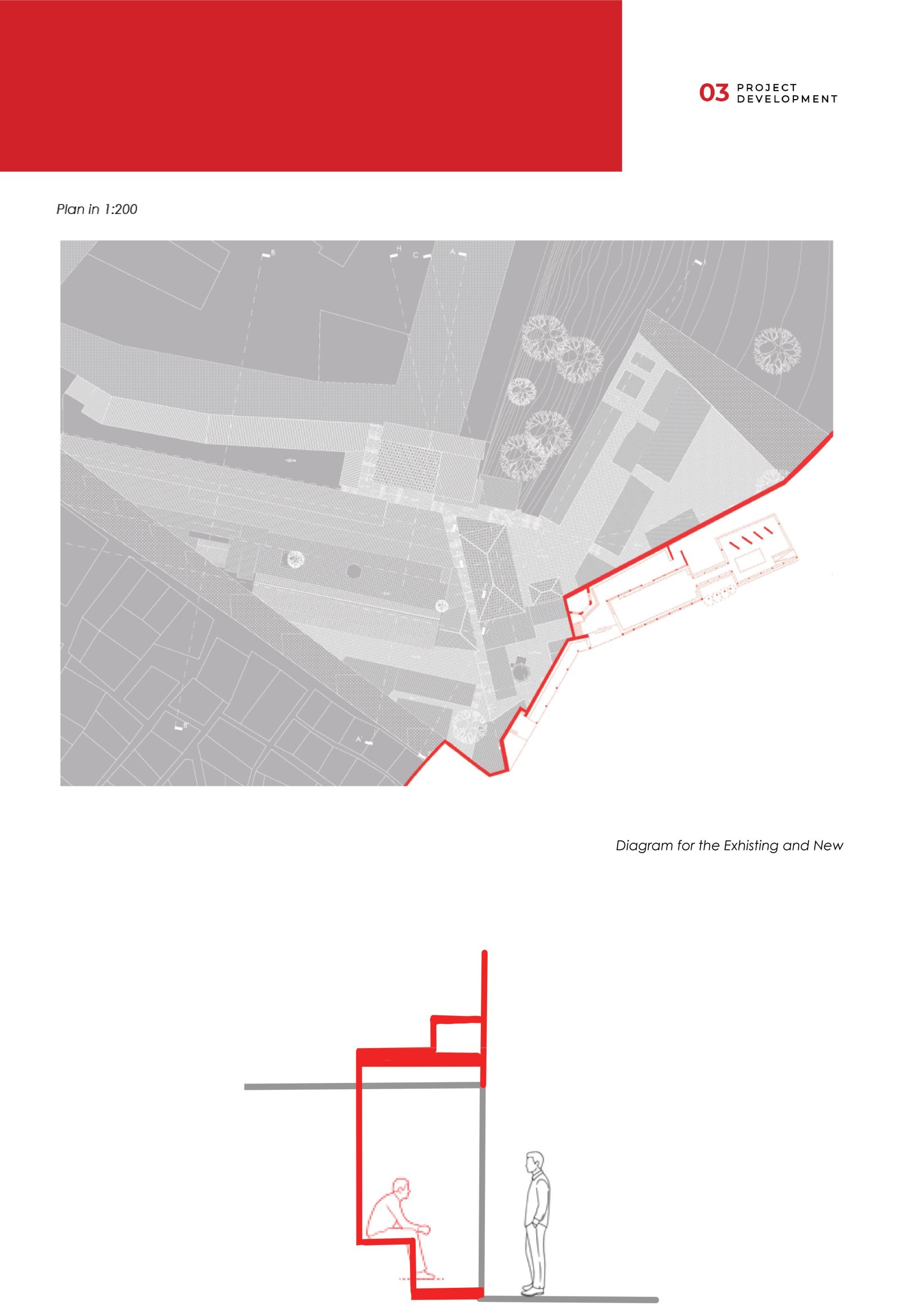
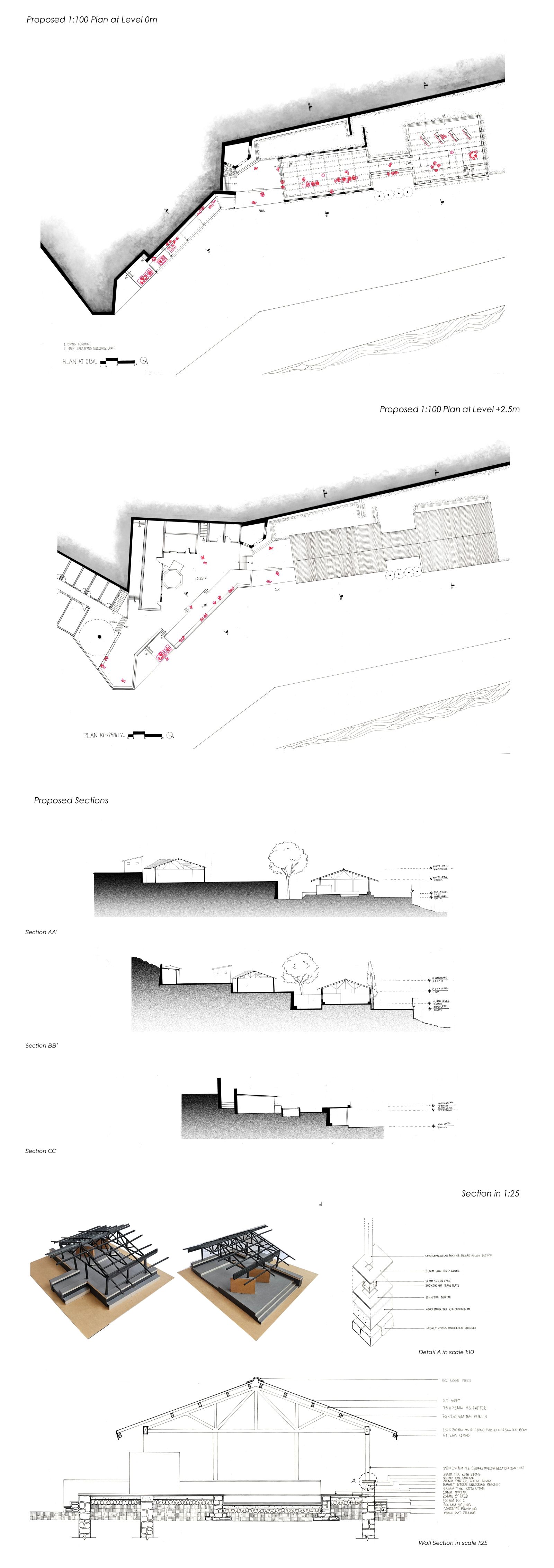
The project begins by questioning the ashram edge as a psychological barrier that creates hesitation despite remaining physically open. Instead of removing this boundary entirely, the proposal attempts to transform it into an inhabitable threshold that allows gradual engagement with the ashram. The intervention works through plinth, section, and layered spatial conditions rather than large built additions. The program is organized as a transition from public to quiet spaces, accommodating activities like sitting, eating, reading, discussion, gathering, and pause. Through these everyday acts, the edge becomes a shared commons where people can occupy the space informally and feel connected without fully entering the ashram.