Arya Deshpande

AR2072

Chakravyuh: A Fate Designed

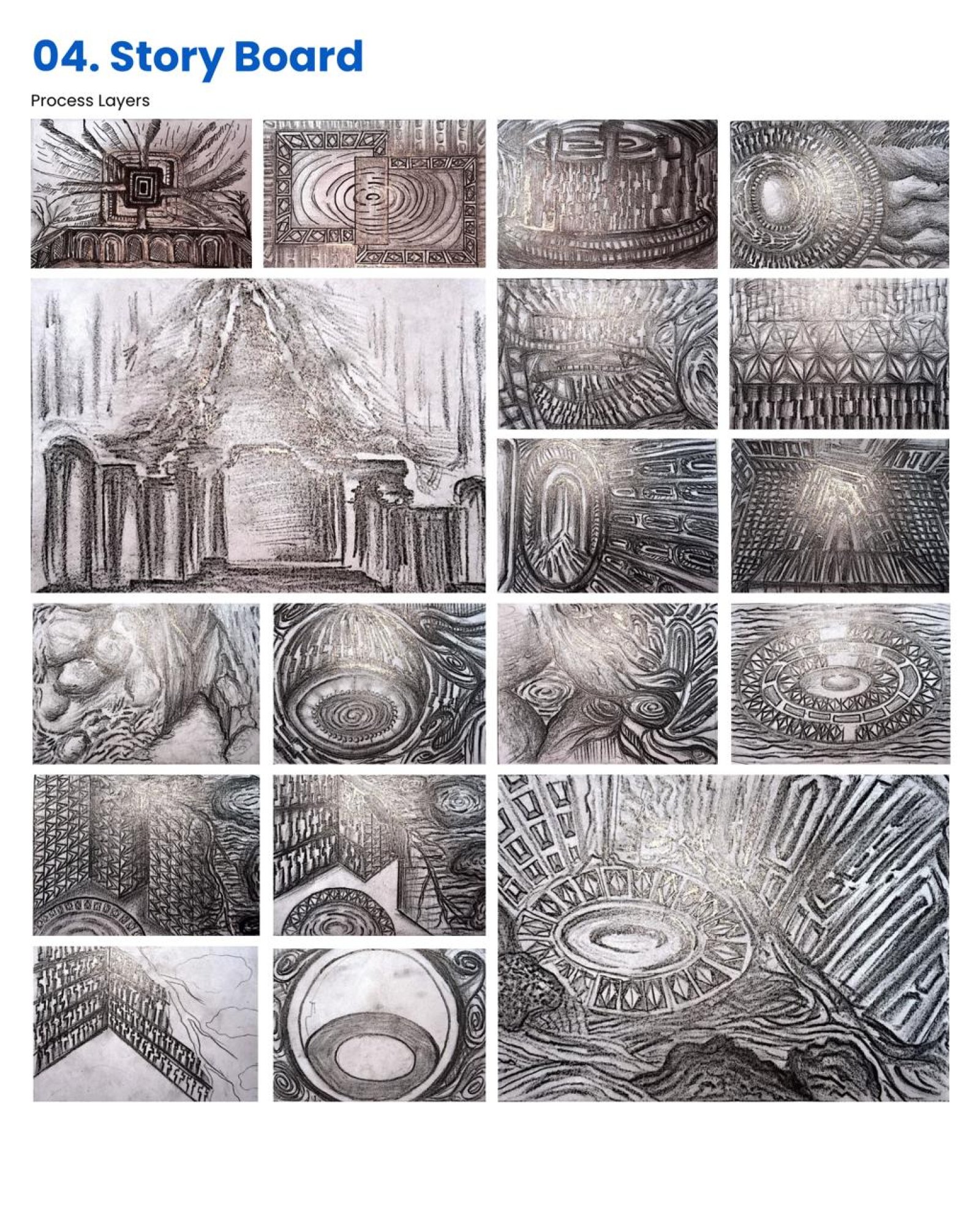
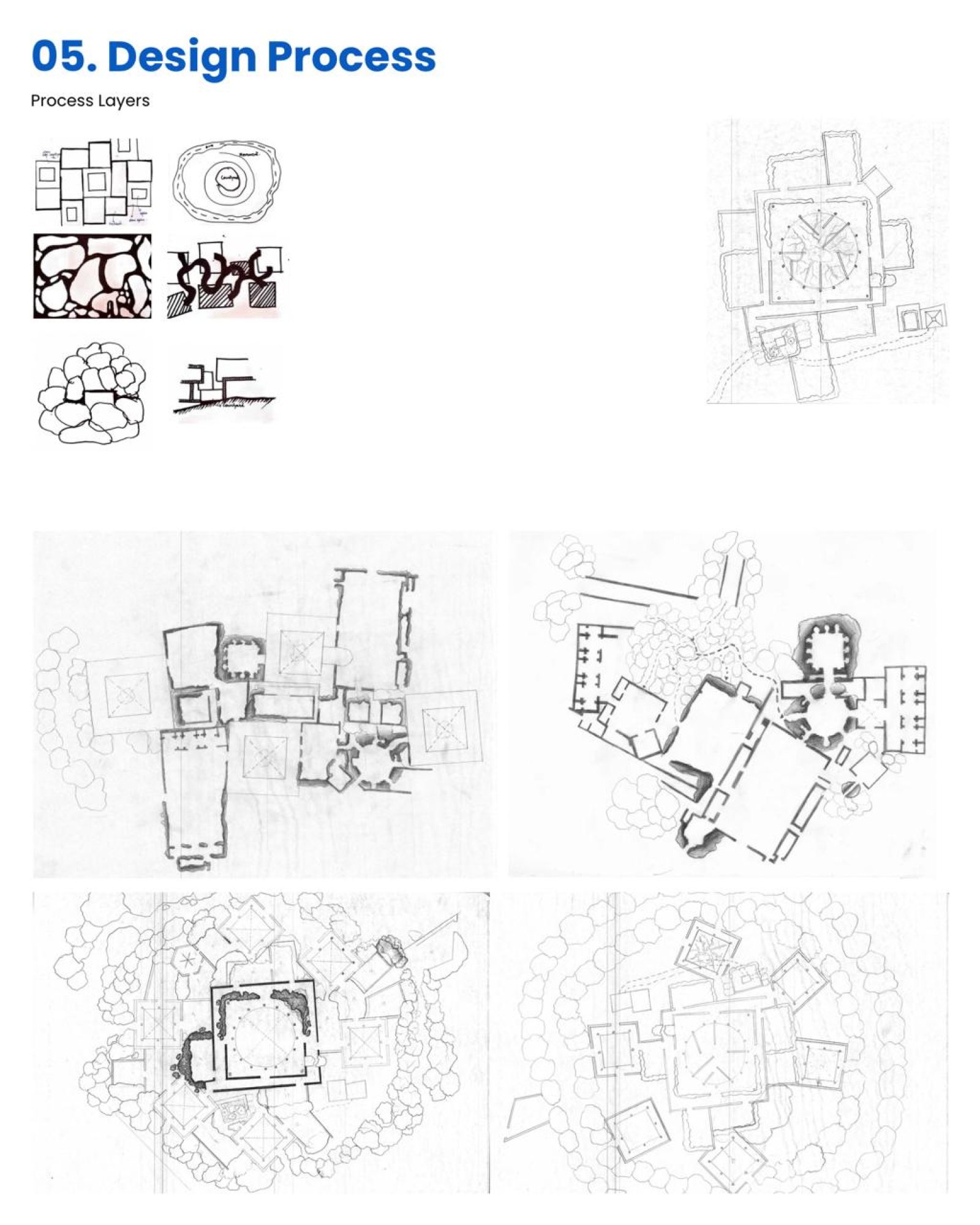
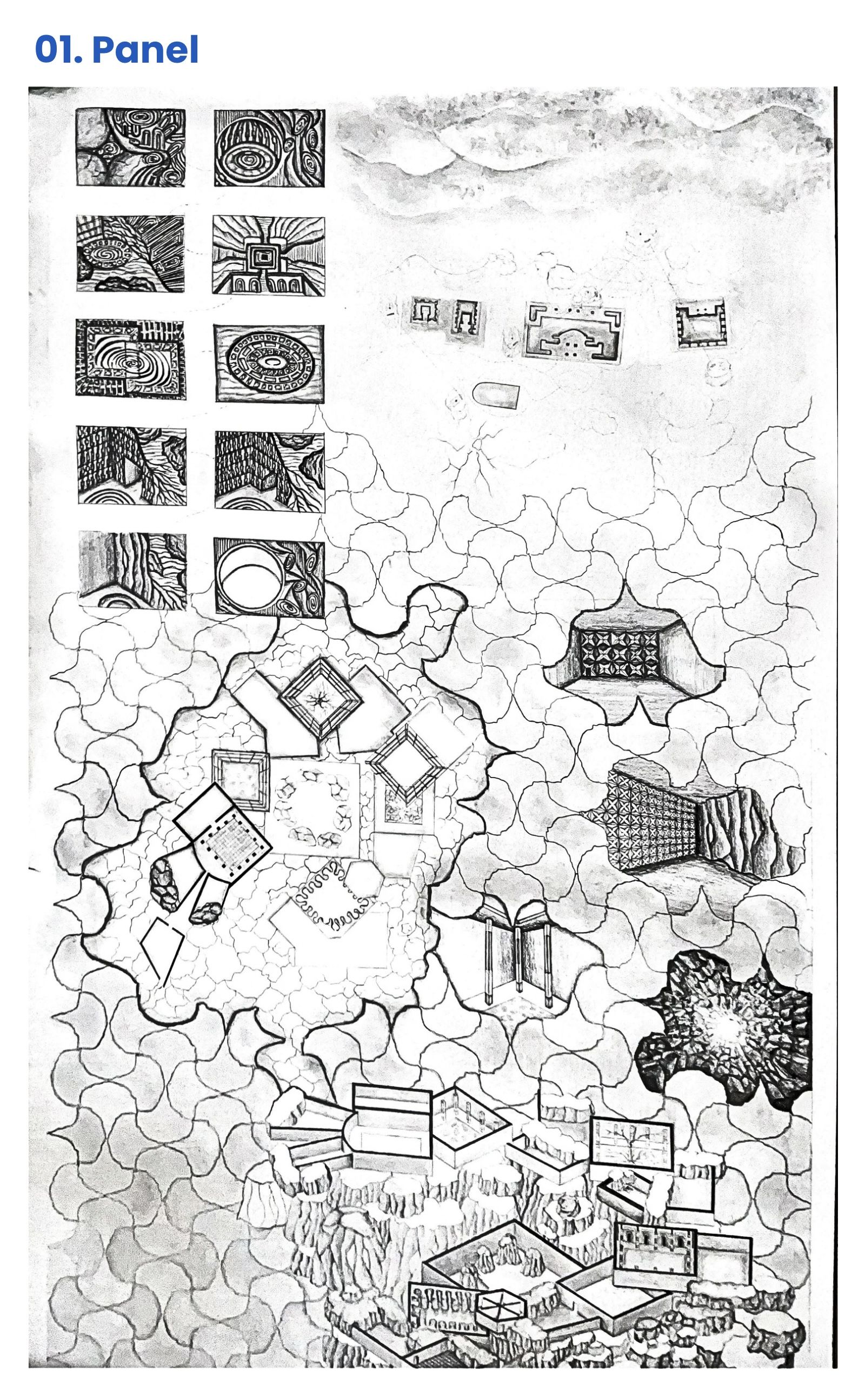
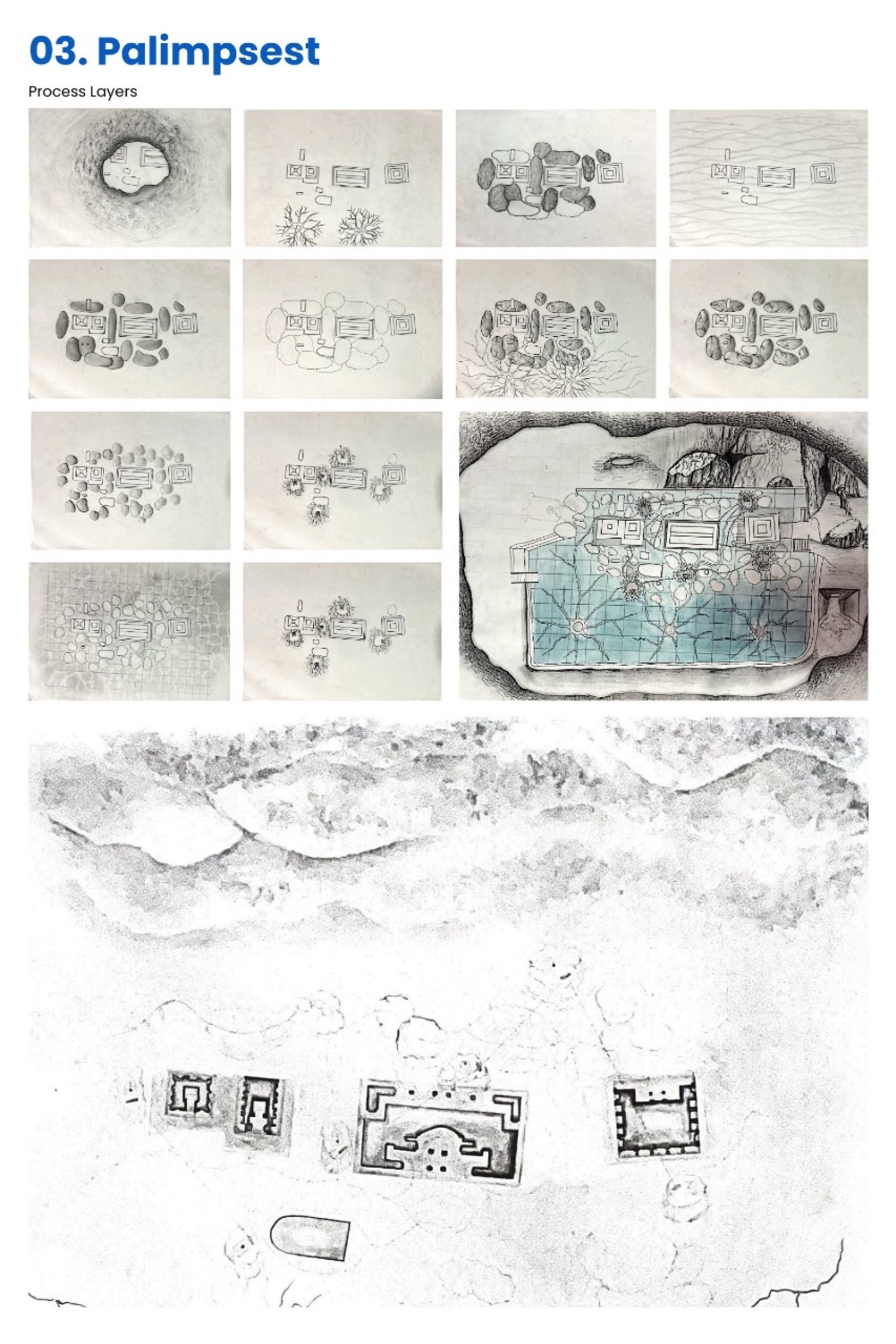
The palace begins quietly, hidden between cracked boulders, as though waiting to be discovered. The first space, an Ames Room, immediately unsettles perception. From there, movement follows a double-helix path: one route openly guiding the visitor inward while another remains subtle and hidden. Seven courtyards unfold one after another, each more demanding than the last. The architecture slowly shifts from finely crafted and ornamented spaces to exposed stone and raw earth, mirroring the unraveling of certainty. Rooted in Abhimanyu’s story, the design reflects incomplete knowledge, growing vulnerability and fate. At the centre lies a still battlefield where the journey ends. Here, the myth breathes through space.
Report Content

Final Panel (3 by 6 feet)

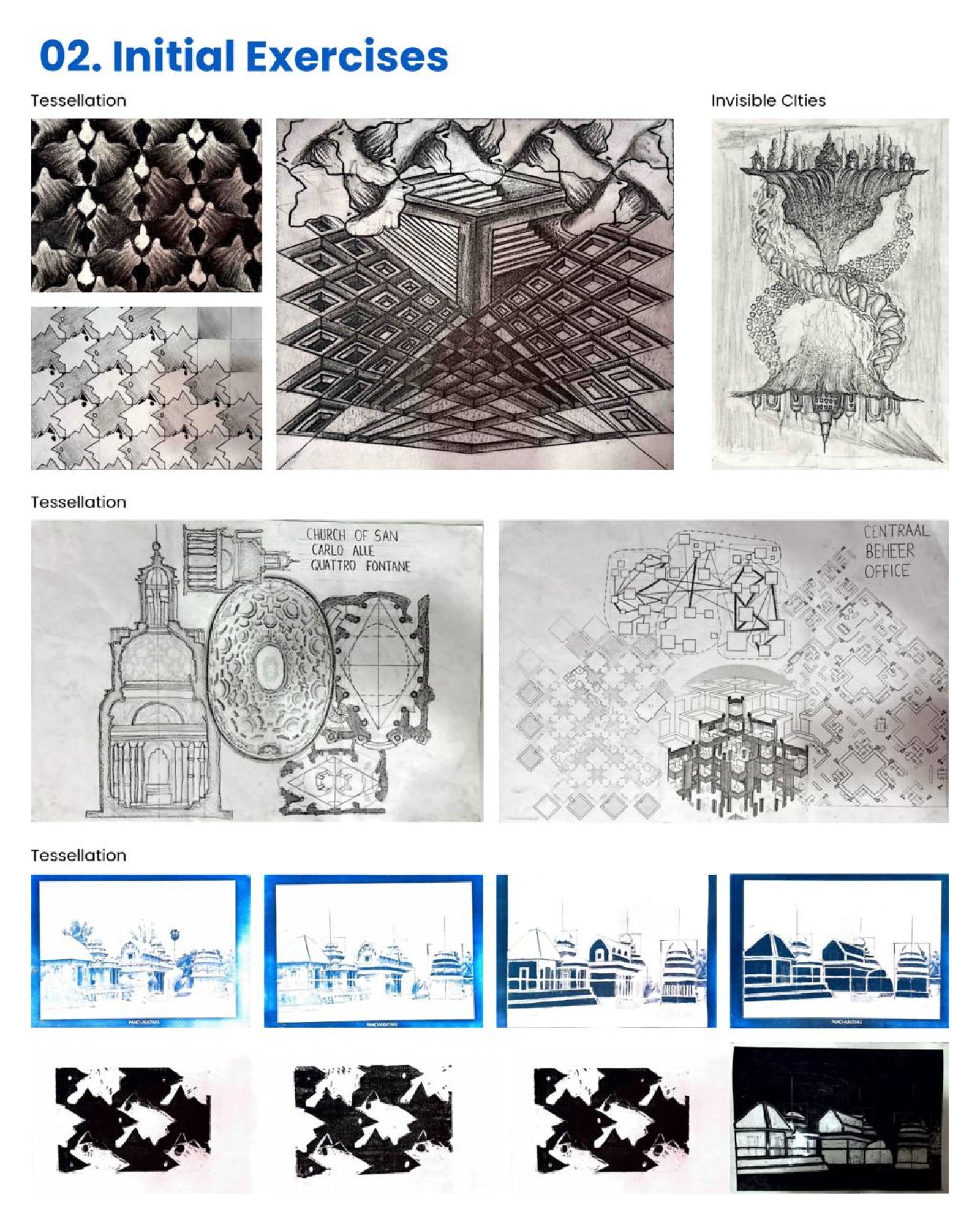
Tessellation, Invisible Cities, Case studies, Cyanotype and Wood Cut printing

Observations on Site

The Narrative driving the design is revolved around Abhimanyu. The narrative covers three main events. First is when Arjun was telling Subhadra (his second wife) the secret to entering the Chakravyuh formation but was interrupted by Draupadi before he could tell her how to exit. And so, Abhimanyu, who is in the womb is only knows the secret to enter the Chakravyuh. The second scene is about Draupadi meeting Karna in a secret garden, where she tells him about this incident and accidently reveals how Abhimanyu does not know how to exit the Chakravyuh. Draupadi is clueless of how this critical piece of information would eventually lead to Abhimanyu's death. The third scene is about how Karna uses this knowledge to lure Arjun away from his son, trap Abhimanyu into the Chakravyuh and eventually kill him.

Initial iteration using Alhambra’s plan

Interim Design