Your browser is out-of-date!
For a richer surfing experience on our website, please update your browser. Update my browser now!
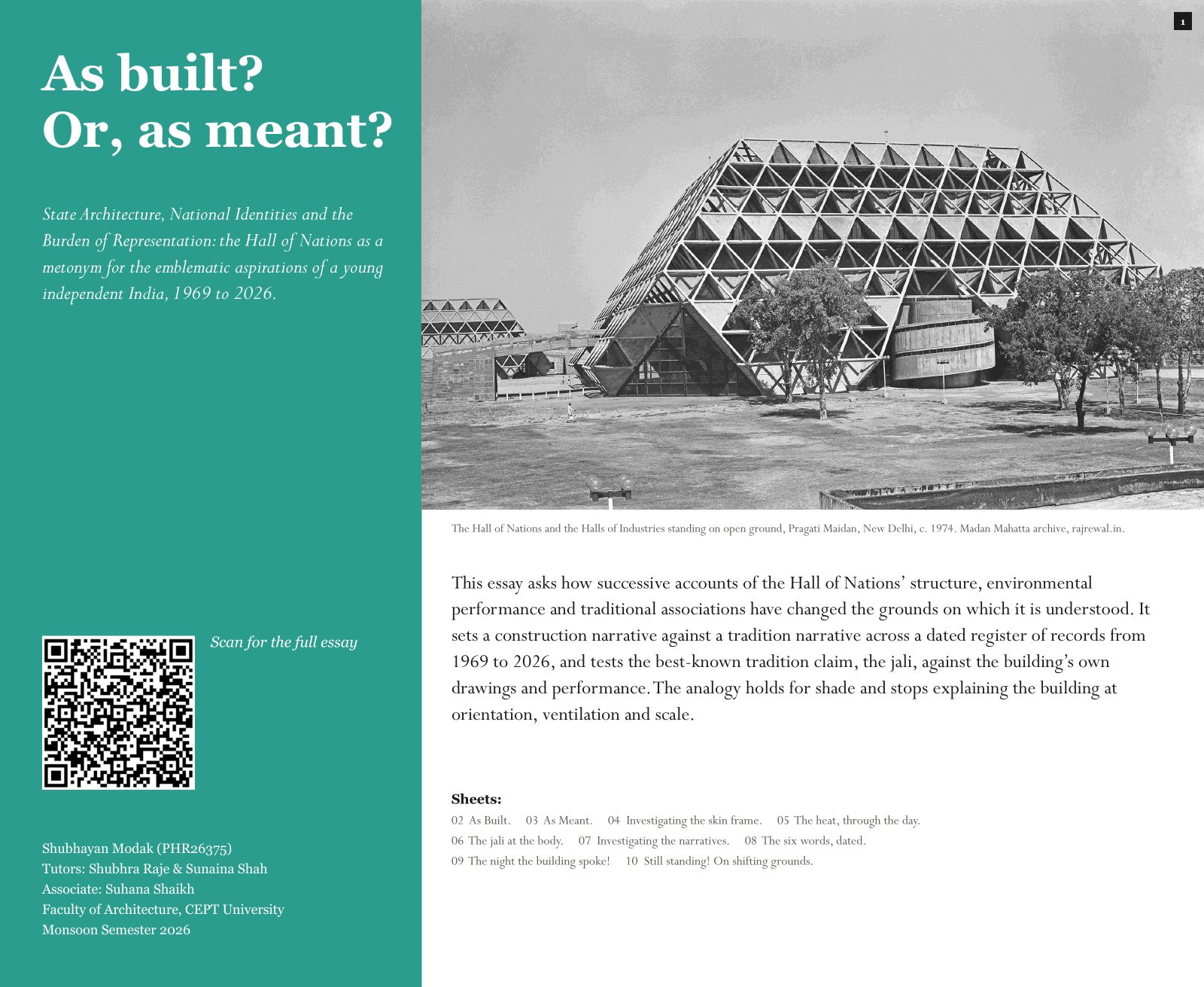
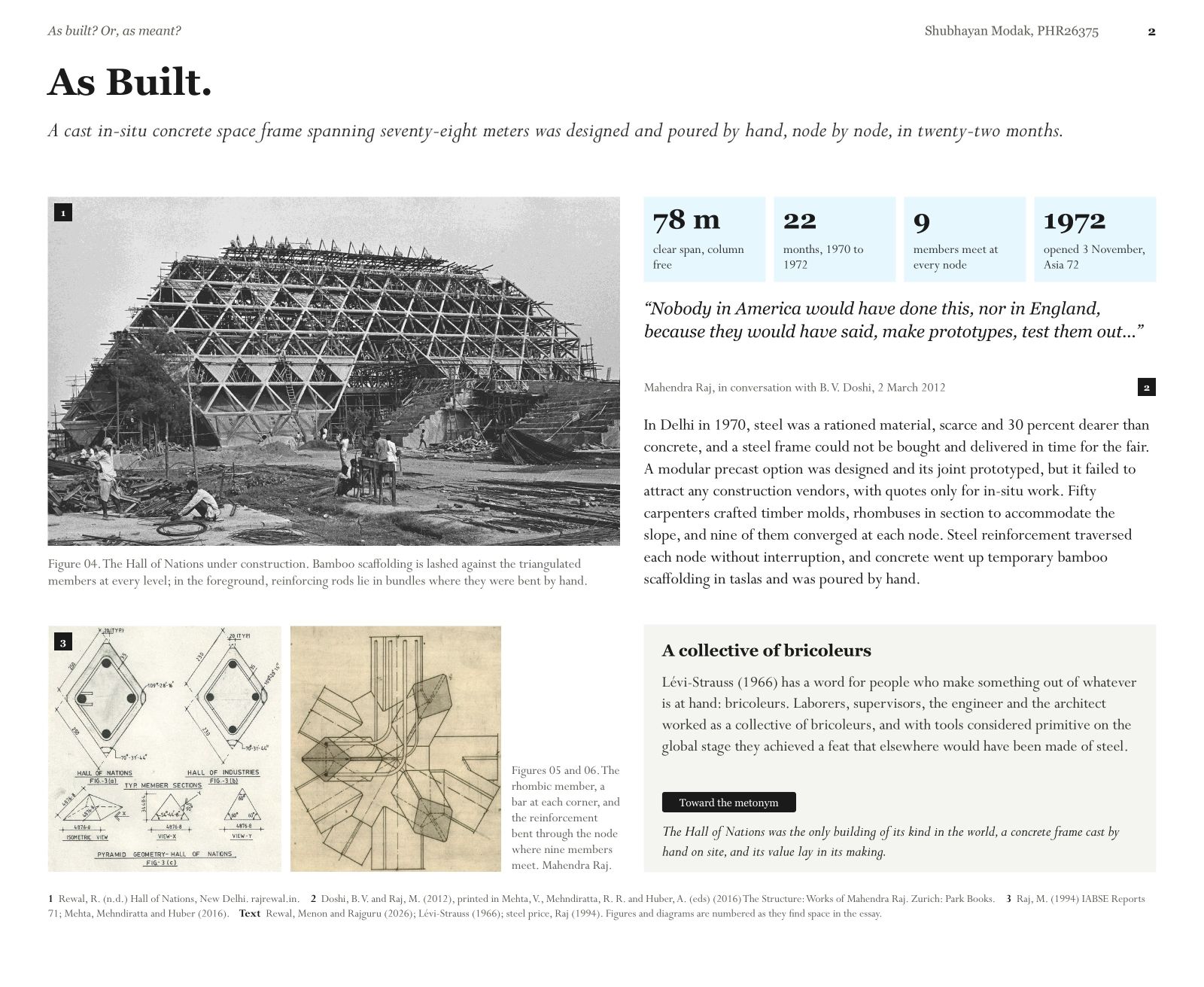
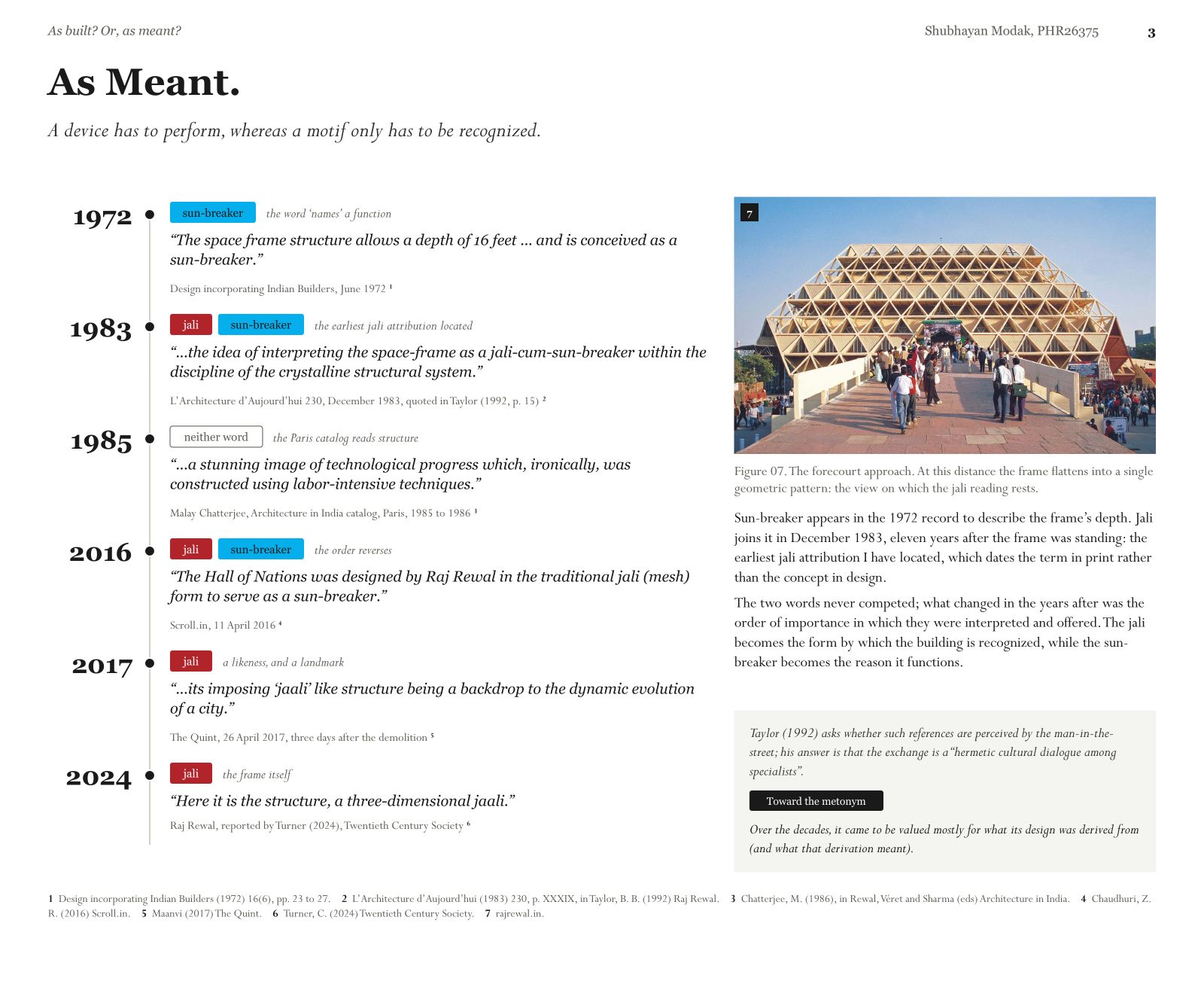
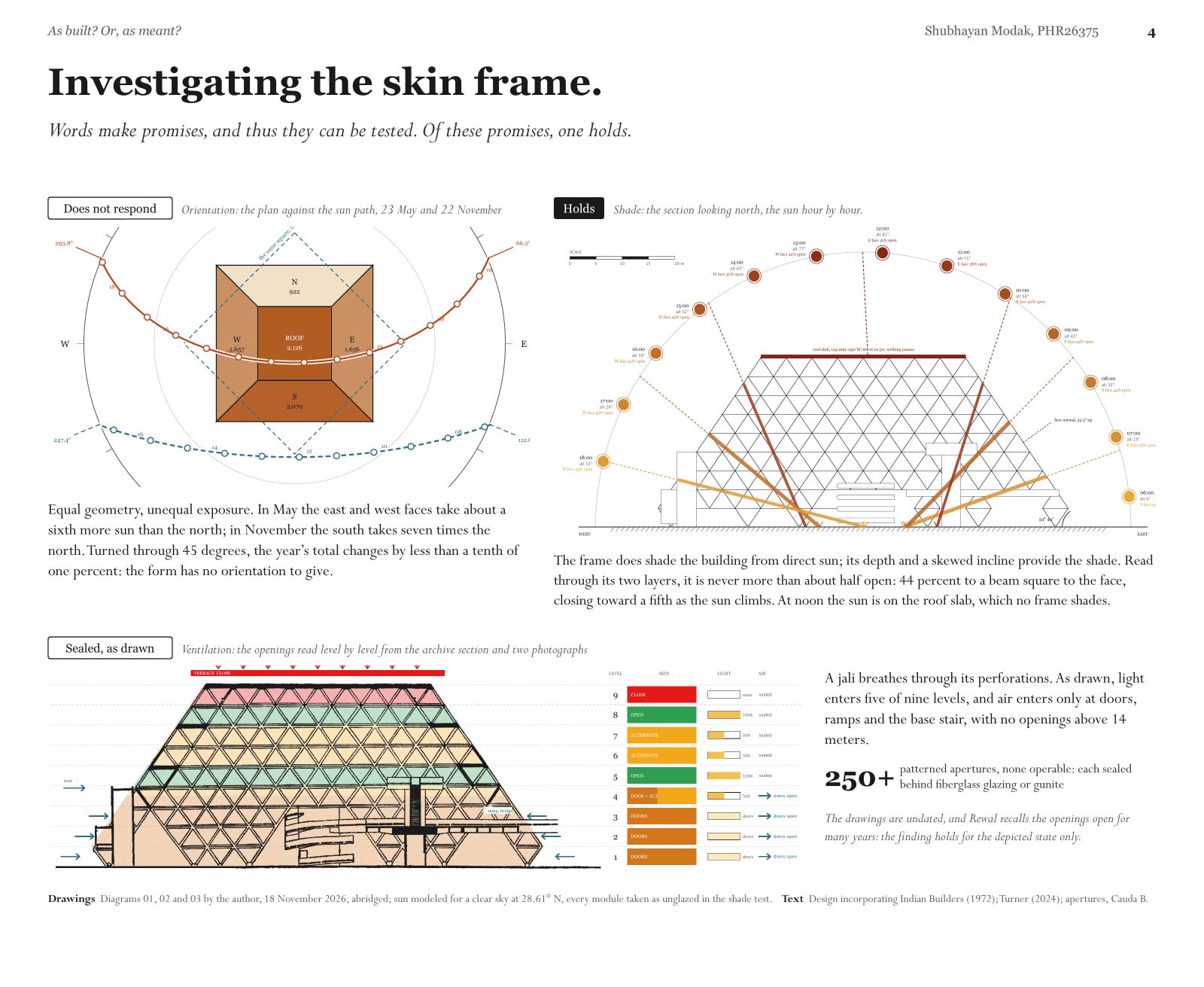
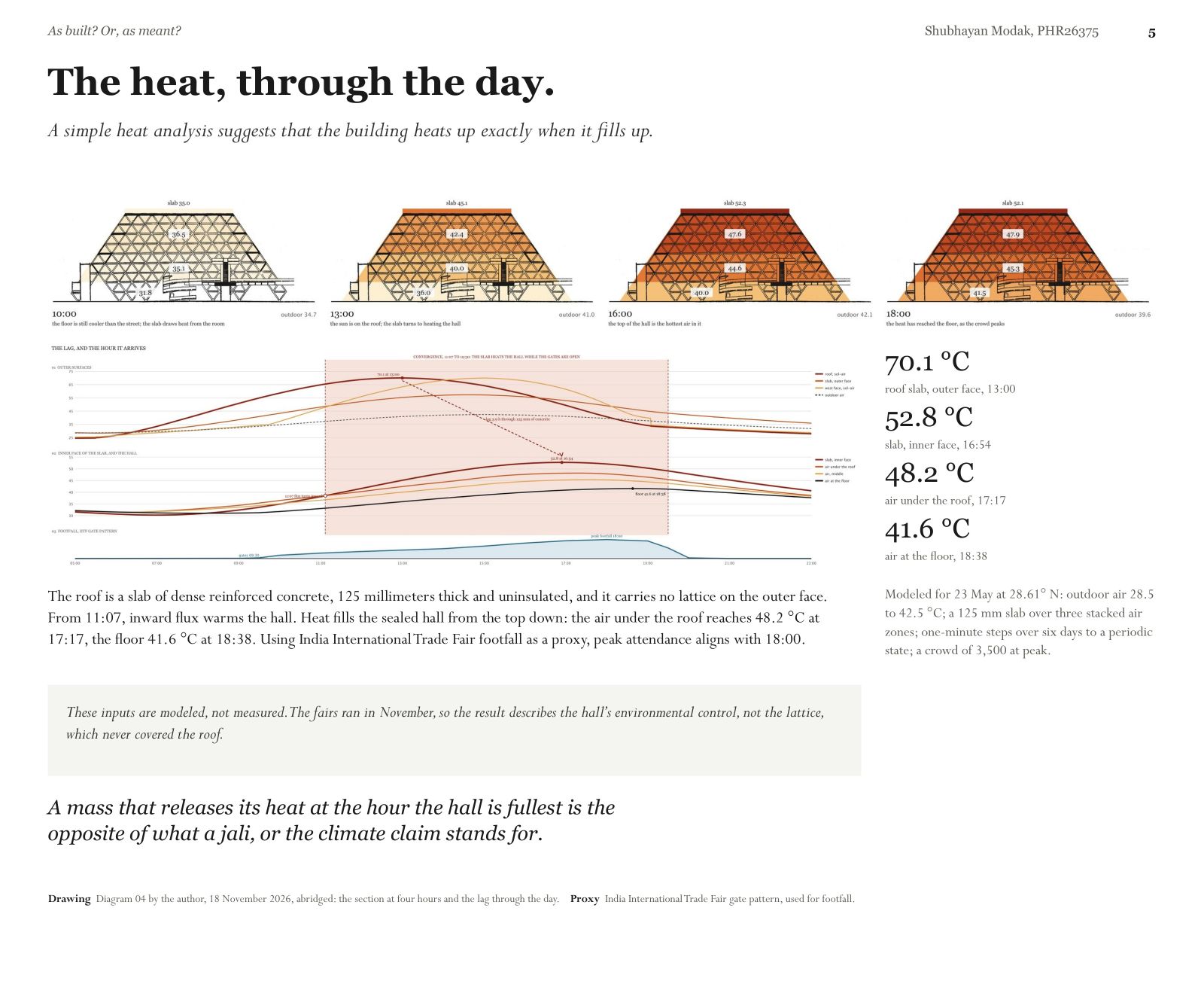
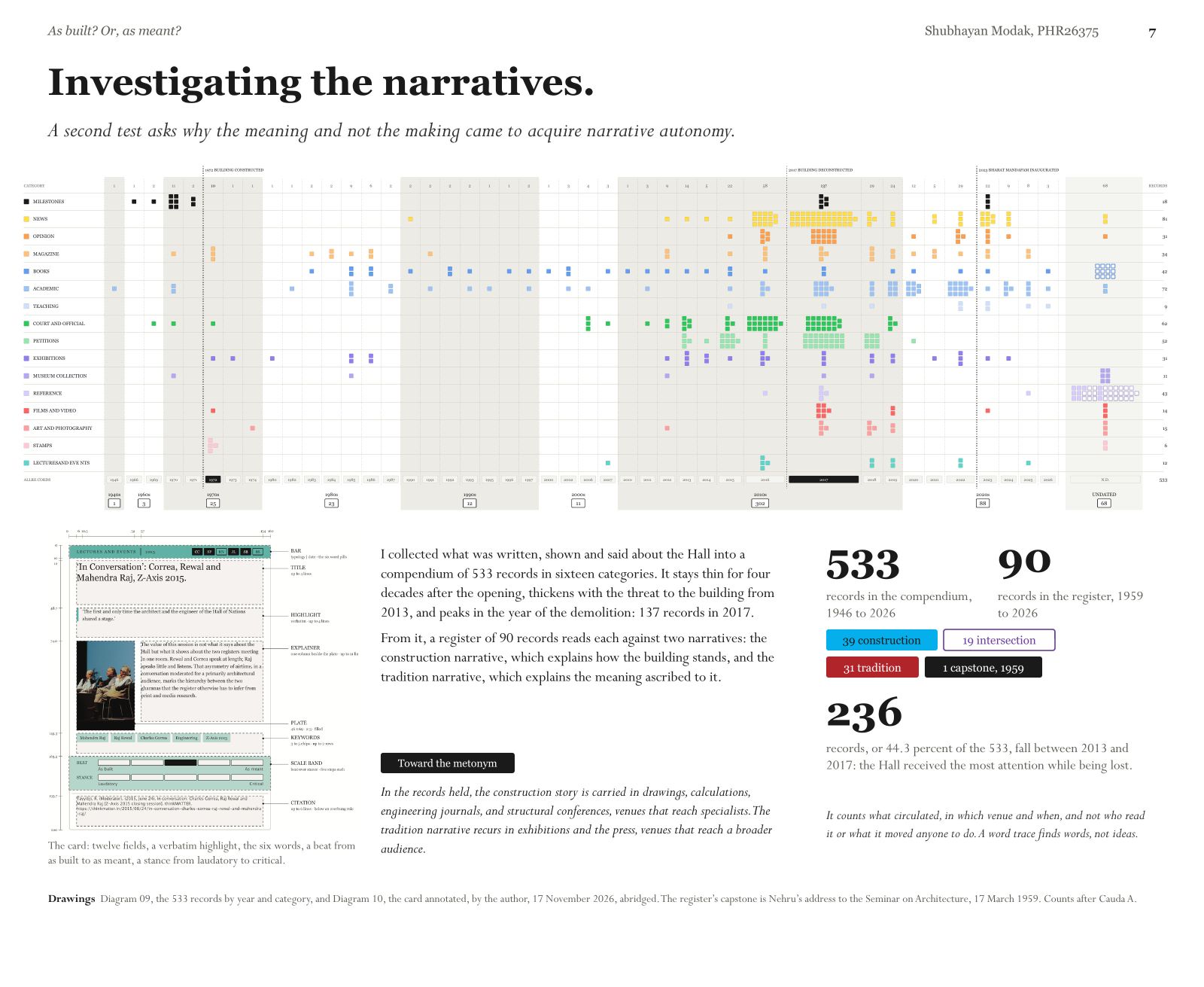
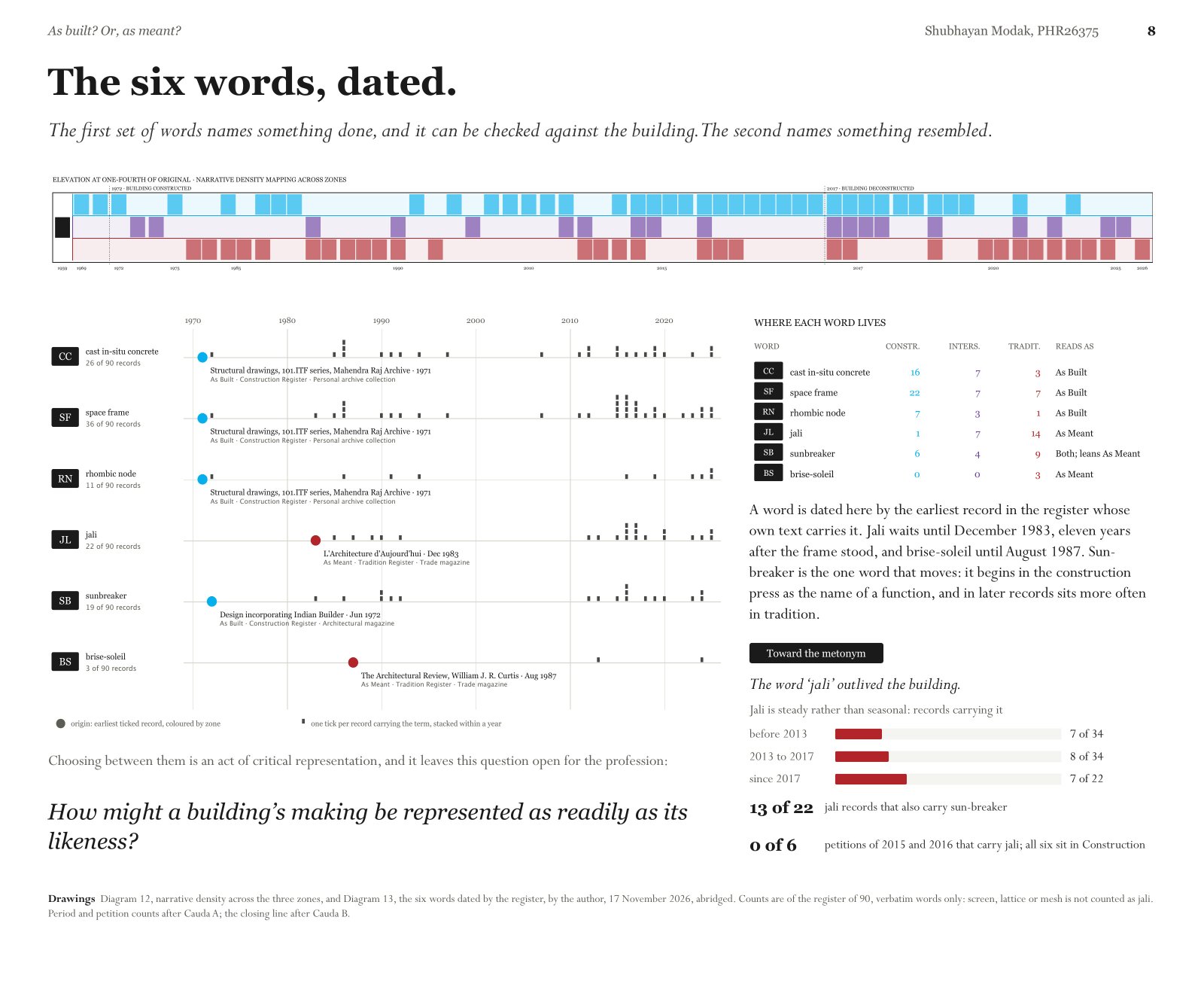
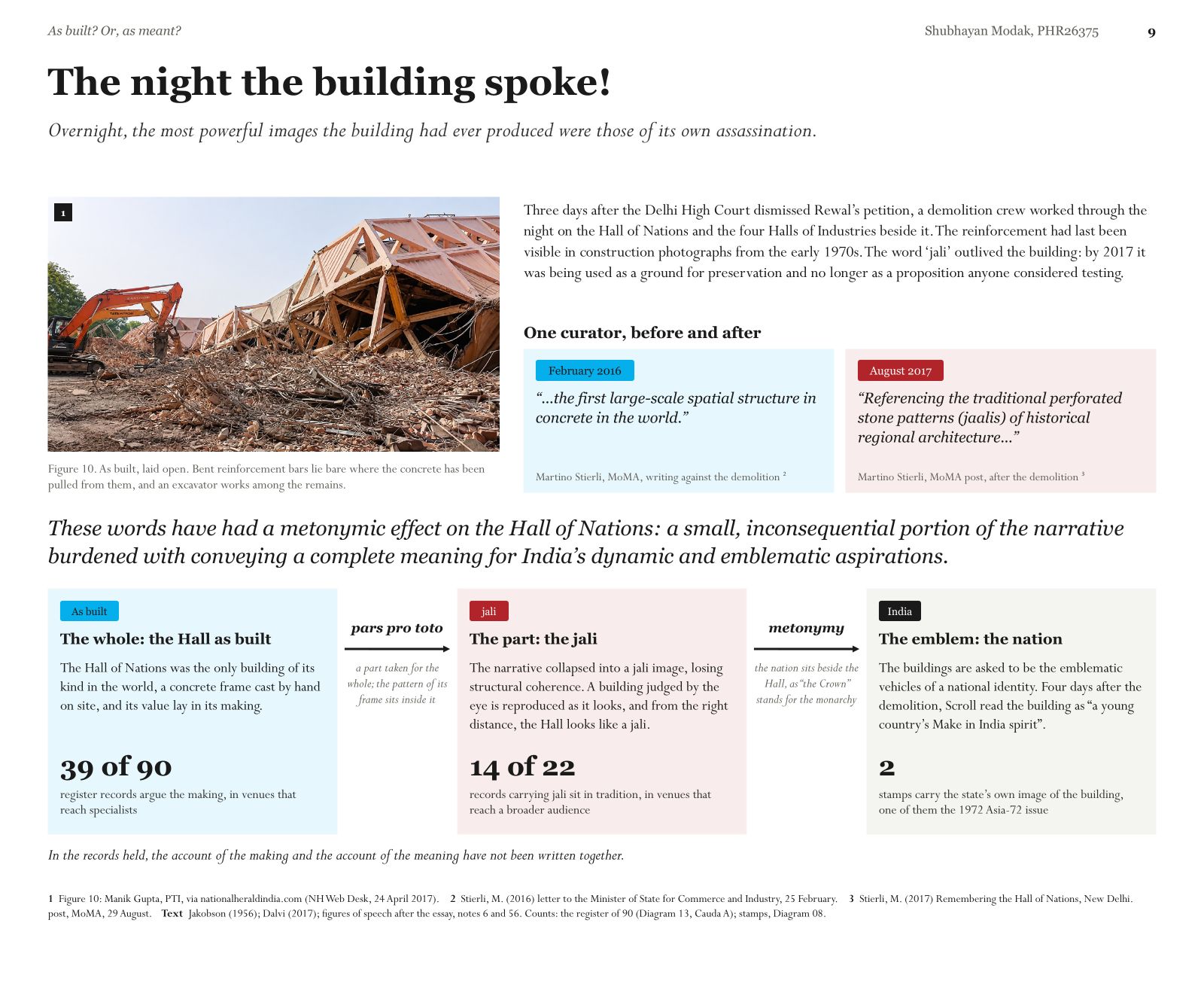
This essay asks how successive accounts of the Hall of Nations’ (as a representative vehicle for India) structure, environmental performance, and traditional associations have changed the grounds on which it is understood. It sets a construction narrative against a tradition narrative across a dated register of records from 1969 to 2026, and tests the best-known tradition claim, the “jali”, against the building’s own drawings and performance. The analogy holds for shade and stops explaining the building at orientation, ventilation, and scale. The study establishes that interpretation can recognize a building by what it resembles, and obscure the material knowledge and collective decisions through which it was made.
View Additional Work